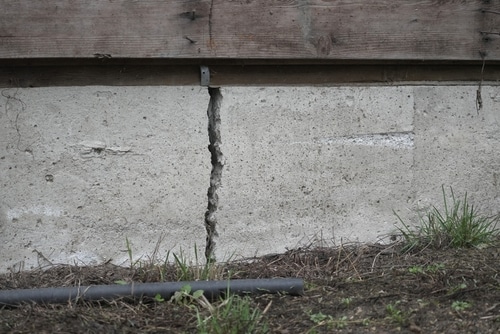
Direct Answer
Foundation cracks can look similar while being caused by very different conditions.
A stair-step crack may be associated with differential foundation movement. A diagonal crack near a window may involve foundation movement, masonry stress, or an issue around the opening itself. A stucco crack may be cosmetic—or it may reflect movement in the block wall behind it.
That is why a photograph can show you what a foundation symptom looks like, but it usually cannot diagnose the cause by itself.
This guide uses real examples from Florida homes evaluated or repaired by Helicon to show:
- What different foundation cracks can look like
- Where they commonly appear
- What other symptoms occurred with them
- What Helicon found during the evaluation
- Whether foundation repair was actually needed
- What repair was used when appropriate
- What homeowners can learn from each example
The crack tells you where to investigate. The pattern and supporting evidence help tell you why it occurred.
Read more: Foundation Cracks: When Should You Worry?
How to Use These Foundation Crack Examples
When comparing a crack in your own home with a photograph online, pay attention to more than appearance.
Ask:
- Where is the crack located?
- Is it in stucco, block, mortar, drywall, or concrete?
- Is it new or has it existed for years?
- Is it getting wider?
- Has it reopened after repair?
- Are nearby doors or windows sticking?
- Are there measurable elevation differences?
- Are several symptoms concentrated in the same area?
Two cracks can look nearly identical but have completely different causes.
Do not use one photograph to diagnose your home. Use it to understand what deserves further investigation.
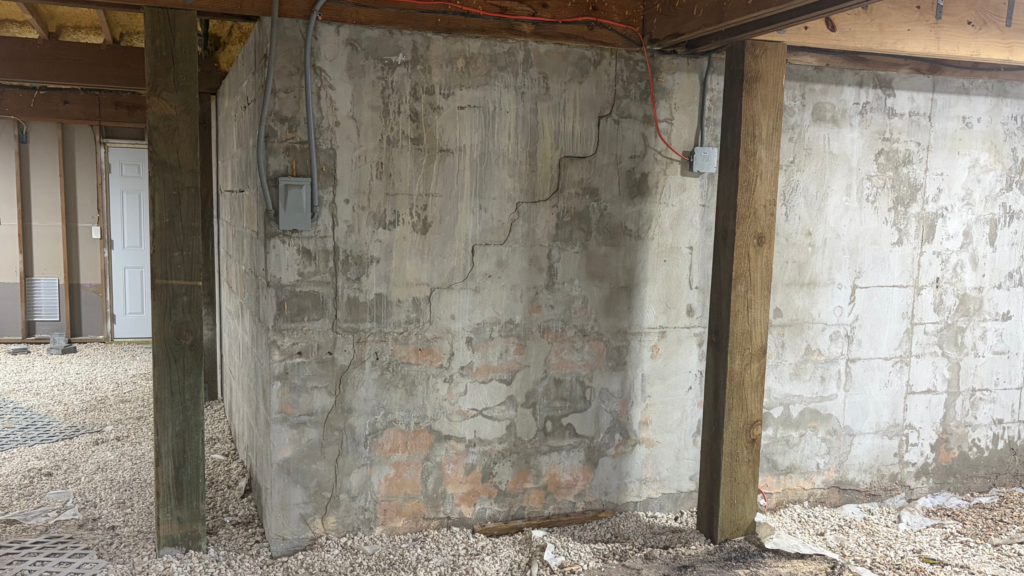
Example 1: Stair-Step Crack in a Concrete Block Wall
What the Homeowner Saw
The primary concern was located near a corner of the property accessed through a wood fence. The buyer requested an inspection because they wanted a clear plan for addressing the corner and protecting the rest of the pool stem wall. This was an important decision.
It can be tempting to wait when cracking is localized. But if settlement is active, delaying a repair may allow distress to become more widespread. The buyer wanted to stabilize the structure rather than simply repair the visible crack and hope the movement stopped.
What This Type of Crack Can Mean
Stair-step cracking can occur when one portion of a masonry wall moves differently from another.
Possible contributors can include:
- Differential foundation settlement
- Historic movement
- Weak or loose supporting soil
- Deeper support problems
- Other masonry or structural movement
A stair-step crack does not automatically mean foundation repair is required.
What Helicon Found
The water heater and pool equipment were positioned close to a tall pool stem wall. During the inspection, Helicon observed stair-step cracking at the corner, along with smaller cracks in the same general area.
What Was Recommended
Helical pier underpinning at the cracked corner, structural polyurethane stabilization, and concrete repair considerations
Key benefits included:
- Deeper support at the primary problem corner
- Improved soil support in designated surrounding areas
- Reduced risk of continued settlement in treated zones
- Targeted rather than broad structural intervention
- Better preparation for future cosmetic repairs
- Protection of a pool deck that appeared to be performing well at the time of inspection
The completed work materially improved the support conditions in the treated areas and addressed the buyer’s primary structural concerns.
Homeowner Takeaway
Stair-step cracking can be an important warning sign because it often indicates that one section of a masonry or concrete-supported structure is moving differently from another.
Read about the full project here
Read more: Is Stair-Step Cracking in Block Walls a Serious Foundation Issue?
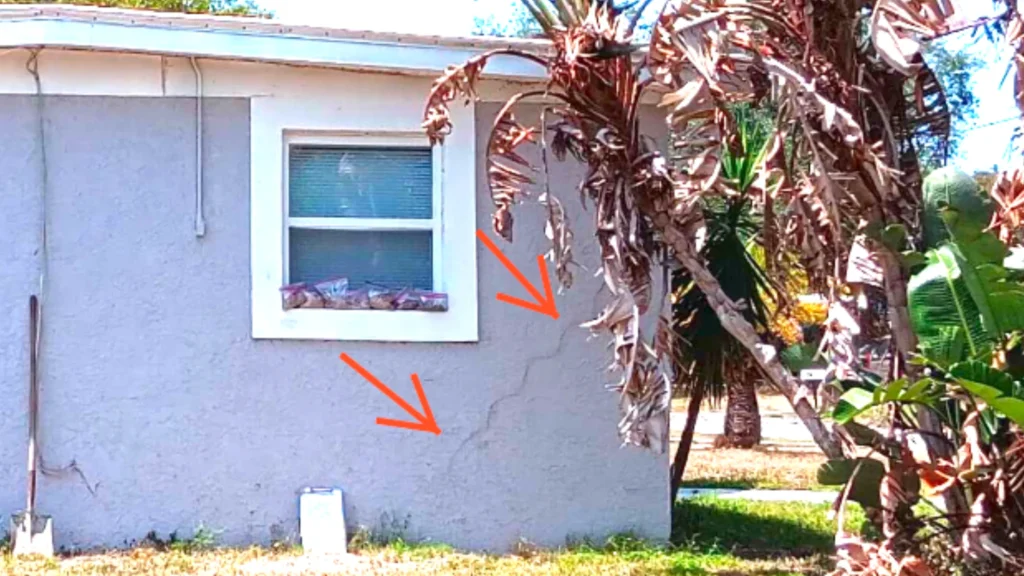
Example 2: Diagonal Crack Near a Window or Door
What the Homeowner Saw
- Stair‑step cracking on the front‑left corner masonry
- Interior cracking and localized settlement symptoms (doors binding, trim misalignment)
- Owner requests for lifetime stabilization and guidance on sequencing a future rear slab
What This Type of Crack Can Mean
Diagonal cracking near openings can sometimes be associated with foundation movement, but windows and doors are also natural stress points in masonry walls.
Other possibilities can include:
- Stucco movement
- Masonry movement
- Lintel deterioration
- Previous window or door replacement
- Localized structural conditions around the opening
A crack near a window should not automatically become a foundation diagnosis.
What Helicon Found
Pinellas County’s near‑surface soils commonly include loose sands with lenses of fines, occasional construction fill, and moisture‑sensitive zones near landscaping and irrigation. These conditions can allow differential settlement, especially at corners and re‑entrant wall lines where loads concentrate. An underpinning system with steel push piers is well-suited here because it relies on verified drive resistance to reach bearing strata.
What Was Recommended
Helicon designed and installed five (5) steel push piers along the front‑left foundation line. Push piers are hydraulically driven steel elements that advance in 5‑foot segments until refusal indicates competent bearing. Once capacity is verified, brackets transfer the structure’s weight to the deeper stratum.
Homeowner Takeaway
With five push piers carrying the front‑left corner on competent bearing, the foundation is now decoupled from problematic shallow soils. The owner can proceed with interior cosmetic repairs, confident the underlying cause has been addressed.
Read about the full project here
Read more: Why Are My Doors and Windows Sticking in My House?
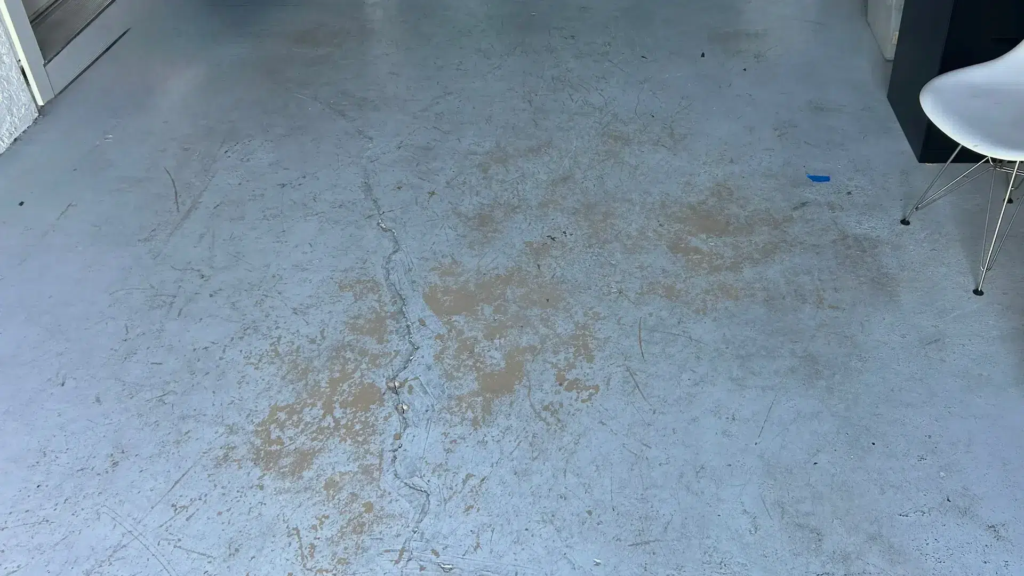
Example 3: Stucco Crack That Looked Structural
What the Homeowner Saw
This Naples project involved six separate condominium units spread across several closely positioned buildings, along with one additional unit farther away that required separate mobilization planning.
One of the most important parts of this project was organizing a variety of symptoms into one understandable structural picture. Each unit presented differently, but together they suggested a broader need for stabilization.
What This Type of Crack Can Mean
Stucco can crack from:
- Shrinkage
- Aging
- Expansion and contraction
- Application conditions
- Movement in the underlying masonry
- Foundation movement
The important question is whether the crack is limited to the finish or reflects movement in the structure behind it.
What Helicon Found
Helican found a host of issues consisting of, but not limited to: hairline stair-step cracks inside the garage on the left wall and at the front right corner of the building, garage slab problems, a crack on the foundation wall at the top left corner of the sliding door, crack on the foundation wall at the top left corner of the sliding door, and more.
What Was Recommended
The final repair strategy had two main components: deep structural support through helical piers and slab stabilization through structural polyurethane grout injections.
Homeowner Takeaway
The question is not simply whether the stucco cracked. It is whether the structure behind the stucco is moving.
Read about the full project here
Read more: Stucco Cracks vs Structural Cracks in Florida Homes: How to Tell the Difference
Example 4: Foundation Crack That Reopened After Repair
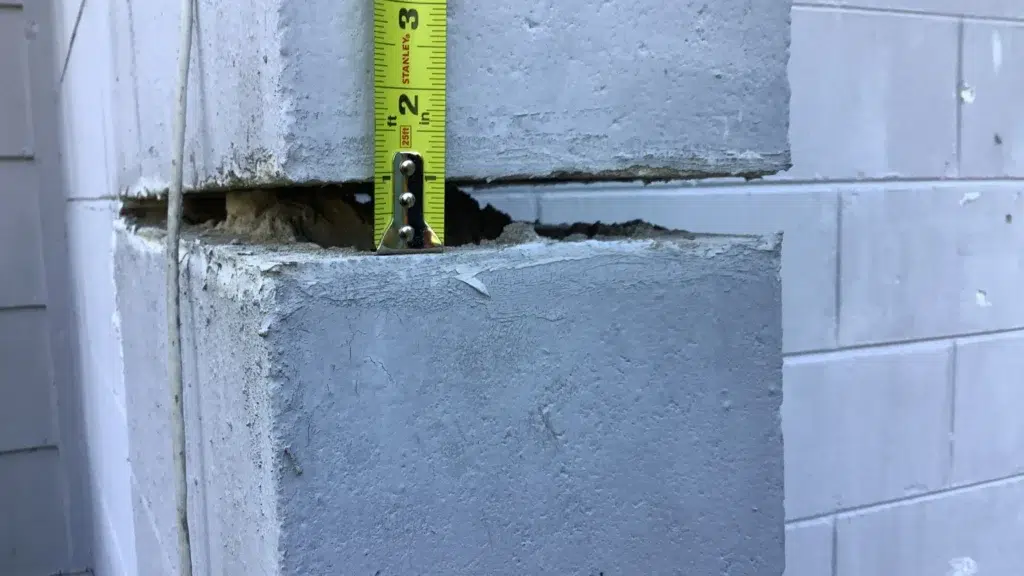
What the Homeowner Saw
The customer reported visible cracking and noticeable settlement at the back, right corner of the house.
Why a Reopening Crack Matters
A crack that repeatedly opens after cosmetic repair can provide useful evidence that movement may still be occurring.
But the repair history matters:
- How long did it stay closed?
- Has the opening changed?
- Are other symptoms progressing?
- Was the original cause ever evaluated?
What Helicon Found
We found ongoing settlement and aimed to restore reliable bearing capacity. The adjacent patio slab was also dropping—classic signs of loose or weakened soils beneath the foundation and slab.
What Was Recommended
We recommended a two-pronged repair: mechanical underpinning with a push pier beneath the sunken wall, followed by polyurethane foam injections to tighten the soil matrix and re-support the patio slab. This combination stabilizes the structure now and reduces the chance of future movement in the treated zone.
Homeowner Takeaway
An old repair can be part of the evidence. A crack that stayed closed for 15 years tells a different story from one repaired three times in two years.
Read about the full project here
Example 5: Interior Crack Caused by Slab Settlement Rather Than Perimeter Foundation Movement
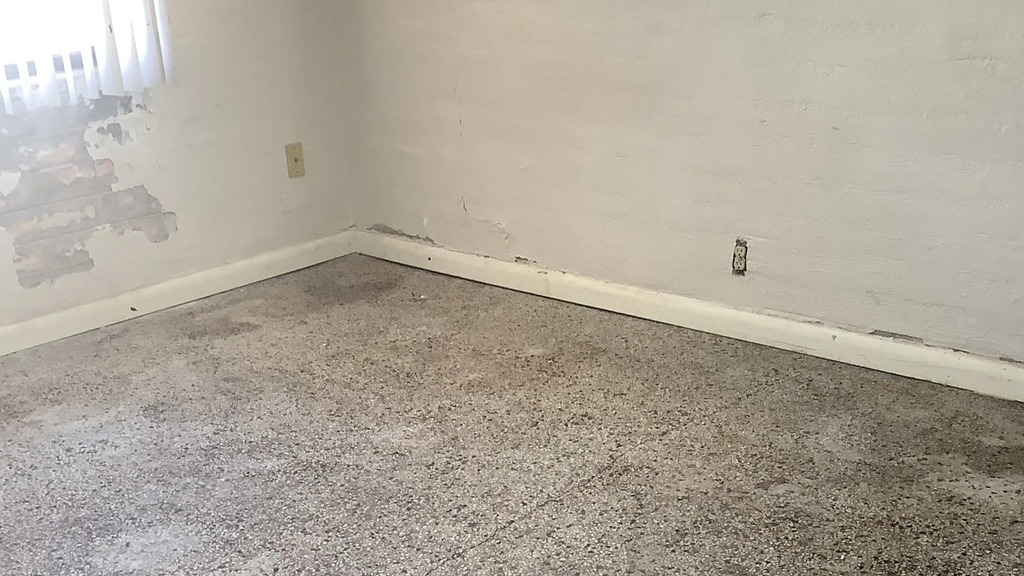
What the Homeowner Saw
The homeowner’s primary concern was clear from the beginning: the interior floors had settled enough that they no longer felt stable or level, and they would ultimately need to be replaced. However, he did not want to install new flooring over a moving slab. Like many owners dealing with floor settlement, he wanted to understand whether the answer was foundation repair, underpinning, or some other stabilization method.
Why This Case Is Important
An interior slab can lose support while the load-bearing perimeter foundation remains comparatively stable.
Possible causes can include:
- Loose fill
- Poor compaction
- Voids
- Plumbing-related soil loss
- Weak shallow soils
What Helicon Found
One of the most important parts of this project was helping the homeowner understand why underpinning was not the adequate solution for this specific settlement problem. In many residential foundation repair cases, underpinning is the best method when the structure’s load-bearing footings are moving. But in this home, the interior floor system was a floating slab.
What Was Recommended
Helicon recommended two-part structural polyurethane injections as the core solution because they offered the right combination of precision, adaptability, and performance for this type of floor settlement.
Homeowner Takeaway
A low interior floor does not automatically mean the structural foundation is sinking.
Read about the full project here
Read more: Interior Slab Settlement: Causes, Signs & Repair Options
Example 6: Crack at an Addition or Construction Transition
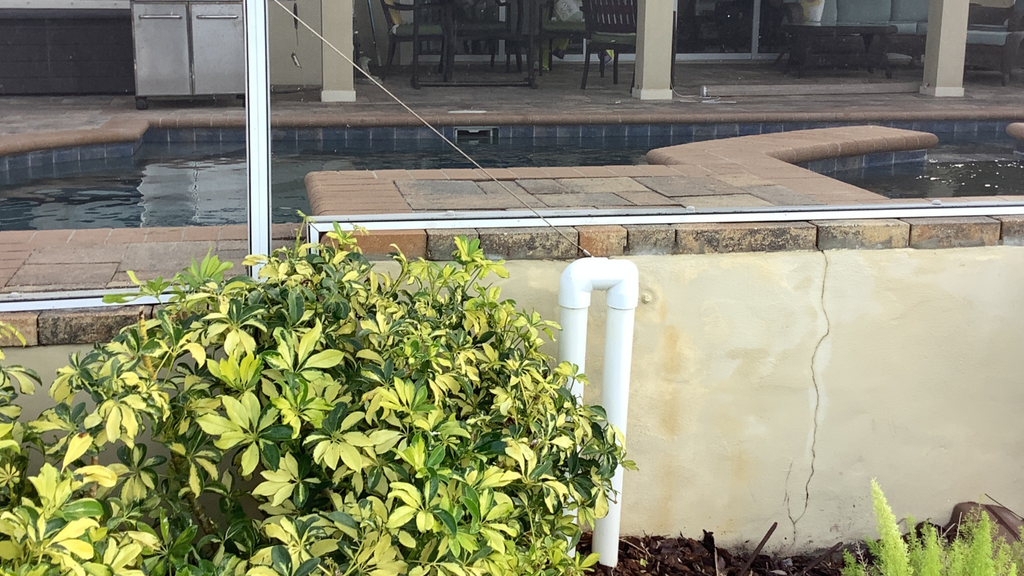
What the Homeowner Saw
The customer had a pool deck sitting on a stem wall that cracked and settled due to poor soil compaction and no proper footing. This is a classic recipe for long-term distress in hardscape and light structural support areas. When a wall element depends on inconsistent or under-compacted soils, even a well-finished surface above it can begin to show cracking, separation, or settlement over time. That is exactly what the homeowner was seeing.
Why Additions Can Behave Differently
An addition may have:
- Different fill
- Different compaction
- Different foundation construction
- Been built decades after the original home
Movement can therefore concentrate where two construction phases meet.
What Helicon Found
Another important challenge was that Helicon identified another small crack occurring a little farther down the stem wall—one the customer had not previously noticed. That changed the repair strategy. Instead of treating only the most obvious damaged section, the team had to decide whether to extend the stem wall pier scope or stabilize the additional concern another way. The customer ultimately chose deep soil injections for that secondary area, which allowed the repair to address both the known failure zone and the newly identified risk area.
What Was Recommended
Helicon recommended a layered repair strategy that matched the conditions on site. Rather than relying on one repair method alone, the project used both helical piers and two-part structural polyurethane injections to address different parts of the problem.
Homeowner Takeaway
A crack where two structures meet may indicate that the two portions are behaving differently—not that the entire foundation is failing.
Read about the full project here
Example 7: Foundation Settlement Repaired With Underpinning
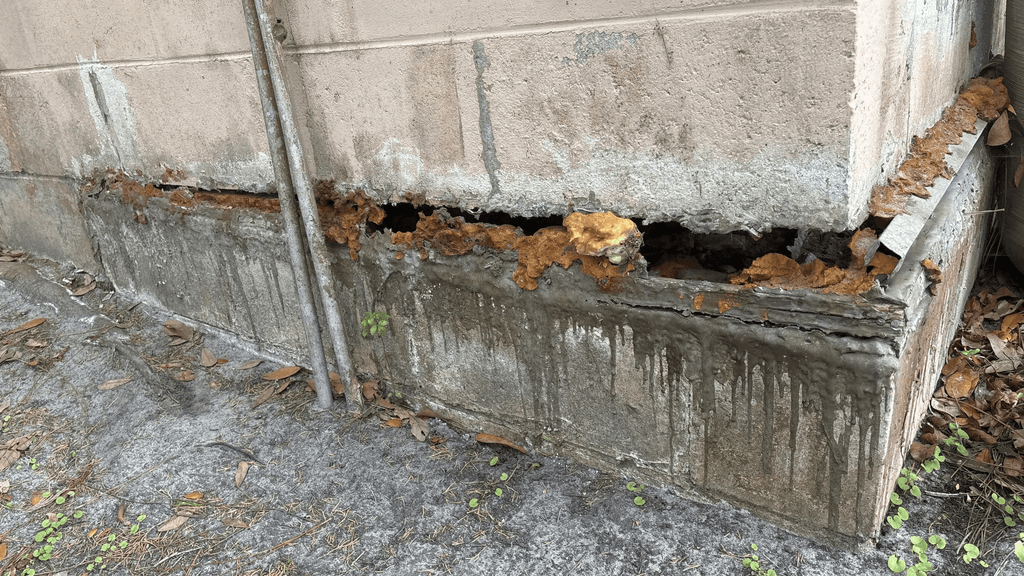
What the Homeowner Saw
The homeowner had already seen signs of movement over time. Some of the perimeter stair-step cracks had been patched previously, which suggested the problem was not new. Instead, the visible cracking had likely developed gradually as support was lost beneath the home. By the time Helicon was called in, the situation had become more severe: the rear right corner had opened up enough to create a large visible crack, confirming that movement was not only ongoing but significant.
What Helicon Found
In this Port Orange home, the warning signs were clear:
- A large open crack at one corner
- Repeated cracking despite earlier patching
- Structural movement severe enough to affect insurance eligibility
Those clues pointed to more than superficial distress. They suggested that the home was no longer being supported evenly. Once a corner begins to settle more than the rest of the structure, the walls above it begin to show the stress. Cracks widen, door and window openings may distort, and patched areas often reopen because the movement never stopped in the first place.
Repair
Helicon’s repair plan followed a logical sequence designed to restore support from the ground up.
Phase 1: Exterior Push Pier Installation
The first step was to install the 4 push piers outside the home. These piers were advanced into competent load-bearing soils, then used to support and lift the rear right corner.
Phase 2: Interior Slab Injections
After the deep support system was established, the crew moved inside to place 20 pounds of structural polyurethane beneath the slab. This helped restore support where shallow subsurface loss may have affected the floor system.
Phase 3: Exterior Soil Injections
Finally, the team completed 6 soil injection points totaling 180 pounds outside the home to strengthen and densify the shallow support zone around the treated perimeter.
This sequence matters because it addresses the deepest structural issue first, then improves the upper support conditions that can still affect slab performance and overall stability.
The goal was to provide direct structural support by transferring the affected foundation loads to deeper competent bearing soils or other suitable bearing material.
Homeowner Takeaway
Piers support the structure directly. They are used when the repair objective requires deeper structural support or controlled foundation lifting.
Read about the full project here
Read more: Helical Piers vs. Push Piers: What’s the Difference?
Example 8: Foundation Movement Addressed With Shallow Soil Stabilization
What the Homeowner Saw
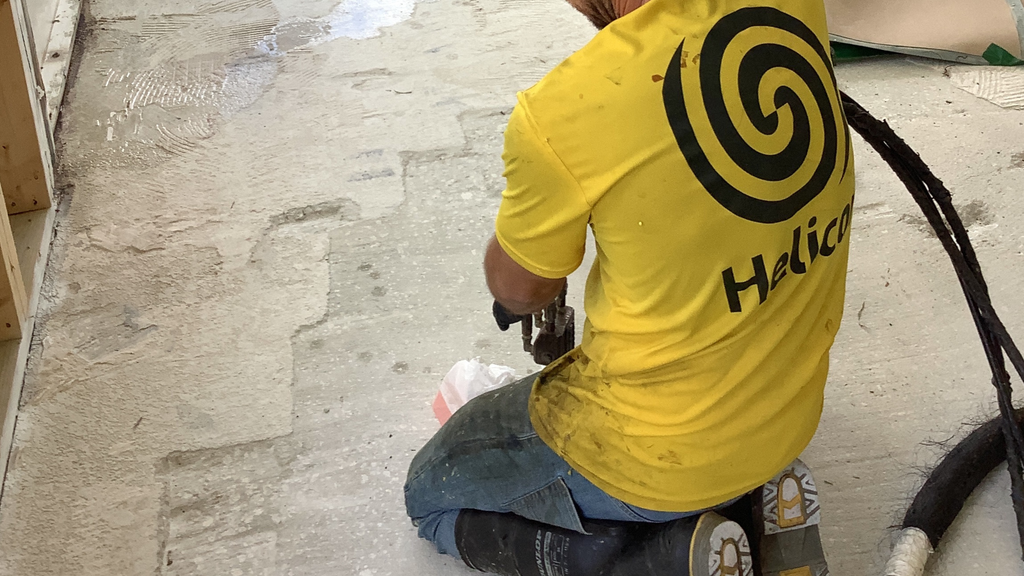
From the homeowner’s perspective, the project started as an interior remodeling effort. But once the finishes were removed and the broader condition of the space became easier to assess, the signs pointed to a larger issue. Water was entering the master bathroom through a window-related opening, and cracking along the side of the house suggested that support conditions beneath the slab or nearby soils may have shifted enough to affect the structure.
What Helicon Found
The findings point to a meaningful relationship between moisture and movement. Water intrusion into a bathroom and cracking along the side wall can often indicate that the building has experienced some combination of:
- Localized support loss beneath the slab
- Shallow soil erosion or weakening near the exterior wall line
- Movement that has affected rigid finishes, openings, or wall surfaces
- Stress concentrations around transitions between the slab, wall, and window openings
Repair
The final repair included both soil injections and slab injections.
Together, the soil and slab injection program was designed to:
- Stabilize the affected areas of the home
- Reduce the likelihood of ongoing support loss
- Provide a more reliable structural condition beneath the remodeled spaces
- Help protect the new bathroom and sunroom finishes from recurring movement-related issues
This was not simply a cosmetic intervention. It was a foundation-support strategy timed to align with the remodeling process.
Homeowner Takeaway
Polyurethane improves the ground supporting the foundation. Underpinning gives direct support and greater control of the foundation itself.
Read about the full project here
Read more: How Polyurethane Injection Works Under Your Home
What These Real Foundation Crack Examples Teach Us
Looking across actual Florida homes, several patterns become clear.
The Same Crack Can Have Different Causes
Two stair-step cracks can look similar while one reflects active settlement and another represents historic movement.
One Crack Is Rarely Enough to Diagnose a Foundation
Crack pattern, progression, floor elevations, openings, property history, and surrounding conditions all provide additional evidence.
The Visible Damage Is Not Always the Underlying Problem
The crack is often the result of movement elsewhere.
Different Parts of a Property Can Move Independently
The structural foundation, interior slab, exterior concrete, additions, and other components do not necessarily settle together.
Not Every Crack Requires Foundation Repair
Sometimes monitoring, masonry repair, drainage correction, plumbing work, or another response is more appropriate.
The repair method should follow the diagnosis—not the appearance of the crack.
Foundation Crack Photo Checklist
If you are documenting a crack in your own home, take more than one photograph.
Photograph the Crack
- Take a close-up showing the crack clearly
- Take a wider photograph showing where it is located
- Include a ruler or other scale when useful
- Photograph both sides of the wall when accessible
- Save the date of the photograph
Document Nearby Symptoms
- Sticking door or window
- Gap around trim or frame
- Other nearby cracks
- Low or sloping floor
- Separation between structures
- Exterior settlement nearby
Track Changes
- Compare photographs over time
- Note whether the crack widens
- Record whether a repaired crack reopens
- Note new doors or windows becoming difficult to operate
- Document new symptoms in the same area
Monitoring is a decision—not the same as doing nothing.
How Helicon Evaluates a Foundation Crack
Helicon has evaluated and repaired Florida foundations since 2004.
A useful evaluation considers more than the photograph.
Depending on the home and symptoms, that may include:
- Crack location and pattern
- Whether the crack is progressing
- Doors and windows
- Relative floor elevations using a Zip Level
- Interior slab conditions
- Exterior concrete
- Additions and construction transitions
- Drainage and erosion
- Previous repairs
- Plumbing history
- Shallow soil conditions where appropriate
Soil probing may sometimes provide useful field information about apparent loose or weak shallow zones, but it does not replace a complete geotechnical investigation.
The goal is to answer:
What is moving, where is the support problem, and what repair objective—if any—is actually required?
Have a Crack That Looks Like One of These?
If you have a stair-step crack, diagonal crack, recurring stucco crack, uneven floor, sticking opening, or other sign of possible movement, you do not need to diagnose it from a photograph.
Start by asking:
- Is it new or historic?
- Is it changing?
- Are other symptoms occurring nearby?
- Does the crack involve stucco, masonry, or both?
- Is the interior slab involved?
- Is there measurable foundation movement?
- Is the support problem shallow or deeper?
- Does the condition need repair at all?
The goal is not to assume the worst. The goal is to determine what the evidence actually supports.
Read more: Foundation Repair
FAQ
Can I tell whether I have a foundation problem from a photo?
Usually not with confidence. A photograph can show the crack pattern, but progression, floor elevations, nearby symptoms, construction details, and site conditions are also important.
What does a stair-step foundation crack look like?
It typically follows mortar joints in a stepped pattern through a concrete block or brick wall.
Does every stair-step crack require foundation repair?
No. Historic movement, masonry conditions, and other factors can create similar cracking. Progression and related evidence matter.
What foundation cracks are most concerning?
Cracks deserve greater attention when they are progressing, reopening after repair, showing displacement, or occurring with other symptoms such as sticking openings or measurable elevation changes.
Are diagonal cracks around windows always foundation problems?
No. They can be associated with foundation movement, but masonry stress, stucco movement, lintel problems, and previous window work can also cause cracking around openings.
Can stucco cracks look like foundation cracks?
Yes. Some stucco cracks are cosmetic, while others reflect movement in the masonry behind them.
Can an interior slab problem cause cracks without the perimeter foundation settling?
Yes. An interior slab can lose support independently from the load-bearing perimeter foundation.
Can an old foundation crack be harmless?
A crack may represent historic movement that is no longer active. Its history and whether it is changing are important.
Should I patch a crack before having it evaluated?
If you are concerned that it may be progressing, documenting it before cosmetic repair can preserve useful evidence.
How can I monitor a foundation crack?
Take dated photographs from the same location, measure it when practical, and track nearby symptoms such as sticking doors, gaps, or changes in floor elevation.
Does a repaired crack reopening mean the foundation is moving?
It can be useful evidence of continued movement, but the complete pattern still needs to be evaluated.
What does Helicon look at besides the crack?
Helicon may consider relative floor elevations, doors and windows, other crack patterns, interior slab conditions, exterior concrete, drainage, soil conditions, construction history, and previous repairs.
Does every foundation crack need to be repaired?
No. Some conditions may only need monitoring or a non-foundation repair.
How do I know whether polyurethane or foundation piers are needed?
That depends on where support has been lost and what the repair needs to accomplish. Weak shallow soil may call for stabilization, while deeper structural support or controlled lifting may call for underpinning.
Can a foundation be successfully repaired without making every crack disappear?
Yes. Stabilization and structural support are the primary objectives. Cosmetic recovery varies by structure, repair method, and the condition of the home.