Proudly serving all of Florida with offices in Tampa, Orlando, and Fort Myers

Helical Piers vs. Push Piers: What’s the Difference? 

by | Oct 1, 2026

Direct Answer 

Push piers and helical piers are both steel foundation-support systems used to transfer structural loads away from weak or unsuitable shallow soils to deeper competent bearing soils or other suitable bearing material. 

The biggest difference is how they are installed. 

  • Push piers are hydraulically advanced into the ground using the weight of the existing structure as the reaction force. 
  • Helical piers have one or more steel helix plates and are mechanically rotated into the ground. Installation torque is monitored as part of determining whether the required capacity has been achieved. 

Neither system is automatically better. 

Push piers are often well suited to existing structures that provide enough reaction force for installation. Helical piers can be especially useful for lighter structures, additions, and new construction because their installation does not depend on the weight of an existing building. 

The right system depends on: 

  • Foundation type 
  • Structural load 
  • Soil and bearing conditions 
  • Available installation reaction 
  • Access 
  • Existing versus new construction 
  • Stabilization or lifting objectives 
  • Engineering requirements 

The question should not be “Which pier is better?” It should be “Which pier is better suited to this structure, these soils, and this repair objective?” 

Read more: Foundation Repair 

What Are Foundation Piers? 

Foundation piers are a form of underpinning. 

When an affected portion of a foundation can no longer rely on the shallow soils beneath it, piers can transfer structural loads to deeper suitable bearing material. 

A typical underpinning process may involve: 

  1. Accessing the affected foundation. 
  1. Installing piers at designed locations. 
  1. Advancing the piers to the required bearing conditions. 
  1. Connecting them to the foundation with engineered brackets. 
  1. Transferring structural load onto the pier system. 
  1. Stabilizing the affected foundation and, when appropriate, attempting controlled elevation recovery. 

Push piers and helical piers accomplish this in different ways. 

Importantly, piers support the affected portions of the foundation where they are installed. They do not automatically improve all of the shallow soils beneath the property. 

Piers support the structure by transferring loads deeper. They do not necessarily repair the shallow soil itself. 

Read more: What Is Soil Stabilization and How Does It Work? 

What Is a Push Pier? 

A push pier—sometimes called a resistance pier—is typically made from sections of steel tubing installed beneath an existing foundation. 

An area beside the foundation is excavated and a steel bracket is positioned at the footing or grade beam. 

Steel pier sections are then hydraulically advanced into the ground. 

What Provides the Installation Force? 

The existing structure. 

As hydraulic equipment pushes the pier downward, the structure provides the reaction force in the opposite direction. 

Additional pier sections are added as the pier advances. 

Installation continues until the required installation force and design criteria are achieved, subject to the amount of reaction available from the structure. 

The foundation load can then be transferred through the bracket onto the pier. 

The structure helps install the pier that will ultimately support the structure. 

That concept is fundamental to understanding push piers. 

What Is a Helical Pier? 

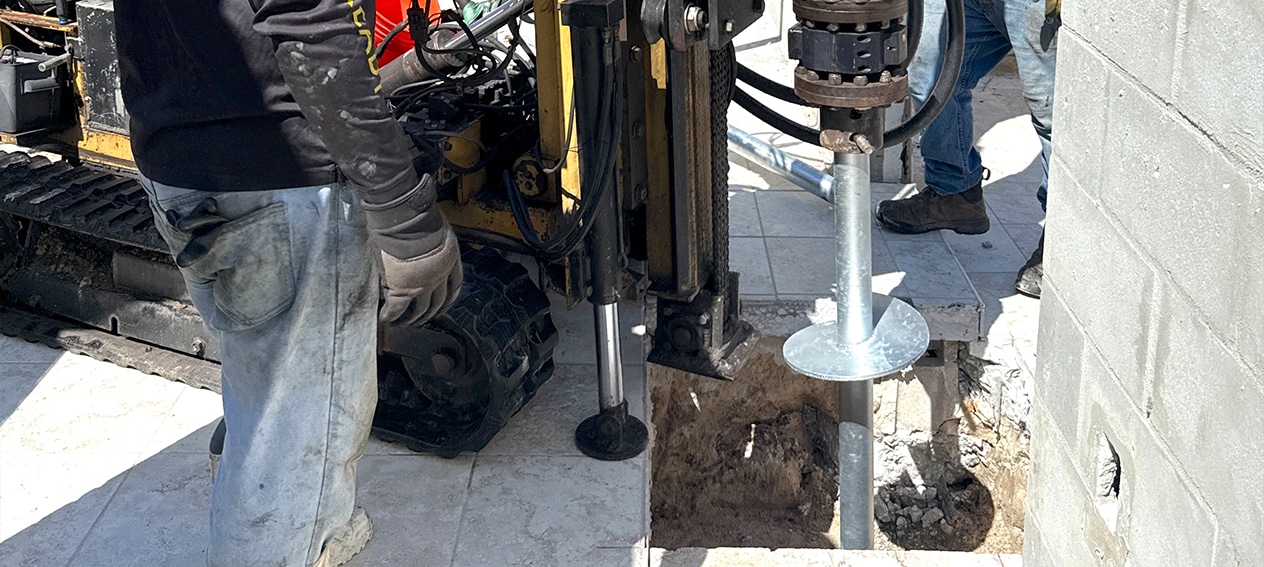
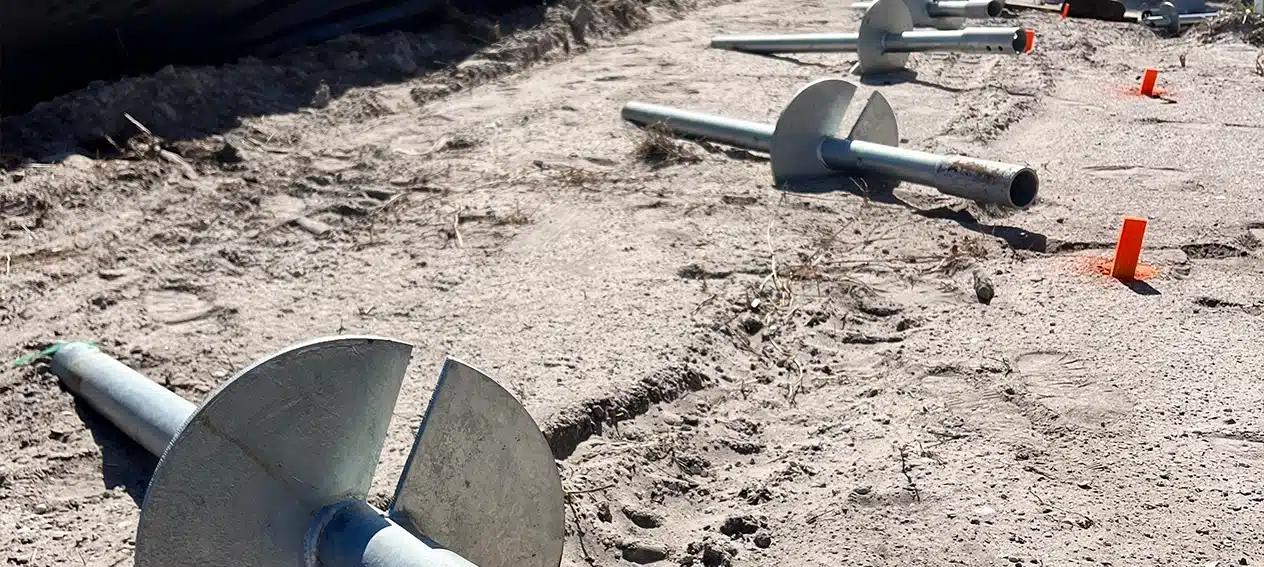
A helical pier uses a steel shaft with one or more helix-shaped bearing plates. 

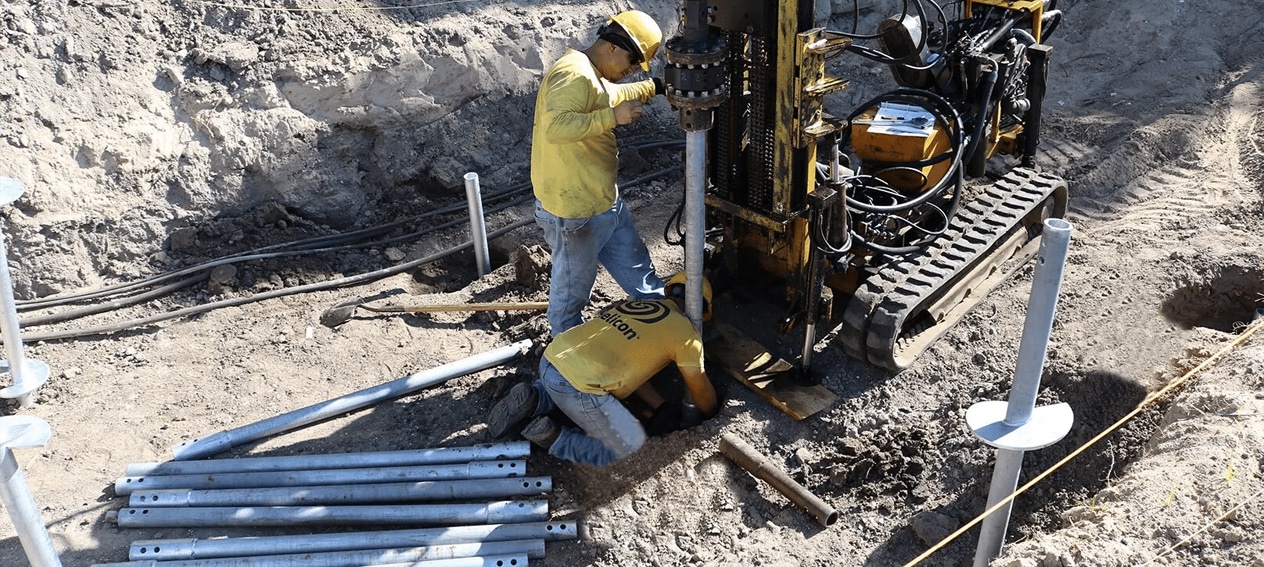
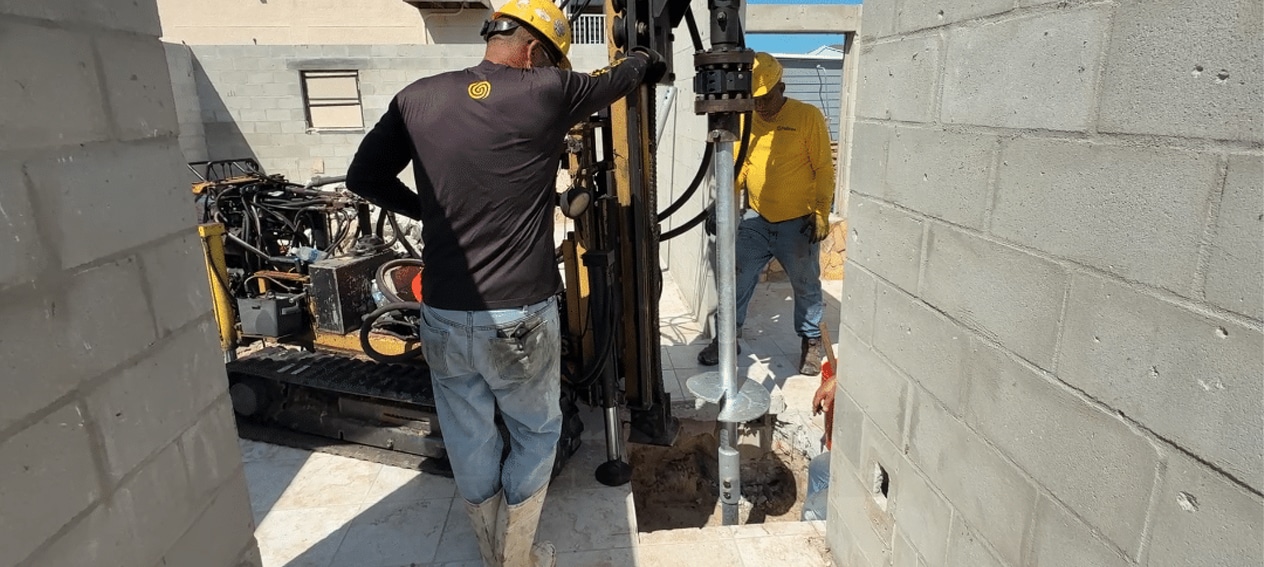
Instead of being hydraulically pushed into the ground, it is rotated into the soil. 

Additional shaft sections are connected as the pier advances. 

How Is Installation Monitored? 

Installation torque is measured as the pier is rotated into the ground. 

Within the engineered pier system, installation torque can be correlated with the pier’s axial capacity and is an important field measure used to verify installation. Final design capacity also depends on the pier configuration and engineering requirements. 

Once installed, a helical pier can be connected to an existing foundation with an engineered bracket. 

Helical piles can also be installed before a structure exists, allowing a new foundation to be designed to bear on them. 

That is an important advantage for new construction. 

Push Piers vs. Helical Piers: Quick Comparison 

Factor Push Piers Helical Piers 
Installation method Hydraulically pushed Mechanically rotated 
Pier configuration Straight steel pier sections Steel shaft with helix plates 
Installation reaction Uses existing structure Does not rely on structure weight 
Primary installation feedback Hydraulic force/resistance Installation torque 
Existing foundation repair Common application Common application 
New construction Generally not suited because an existing structure is needed for reaction Well suited 
Lighter structures Available reaction may be a limitation Often advantageous 
Heavier structures Often a strong application Can also be engineered for substantial loads 
Bearing concept Advanced to required bearing/resistance criteria Helices develop bearing in suitable soil 
Shallow competent rock Can be advantageous depending on conditions May limit conventional helical advancement 
Foundation lifting Possible when appropriate Possible when appropriate 
Best choice Depends on structure, soil, load, and design Depends on structure, soil, load, and design 

The table explains the general differences. 

It should not be used by itself to choose a foundation repair system.

Difference #1: They Are Installed Differently 

This is the fundamental distinction. 

Push Piers Are Pushed 

Hydraulic equipment advances steel pier sections into the ground using the existing structure as reaction. 

Helical Piers Are Rotated 

Hydraulic equipment applies rotational torque to advance the helix plates through the soil. 

That difference affects: 

  • Whether an existing structure is required 
  • How installation is monitored 
  • How the pier develops support 
  • Which soil and structural conditions may favor each system 

Difference #2: Push Piers Depend on the Existing Structure for Reaction 

Because push piers use the foundation as the reaction point, the structure must provide enough resistance to advance the pier to the required installation criteria. 

For a substantial existing home or building, that can work very well. 

But there may be less available reaction beneath: 

  • A lightweight porch 
  • A small addition 
  • A lightly loaded portion of a structure 
  • A building that has not yet been constructed 

Helical installation does not depend on the weight of the structure. 

That is why helicals are often considered for: 

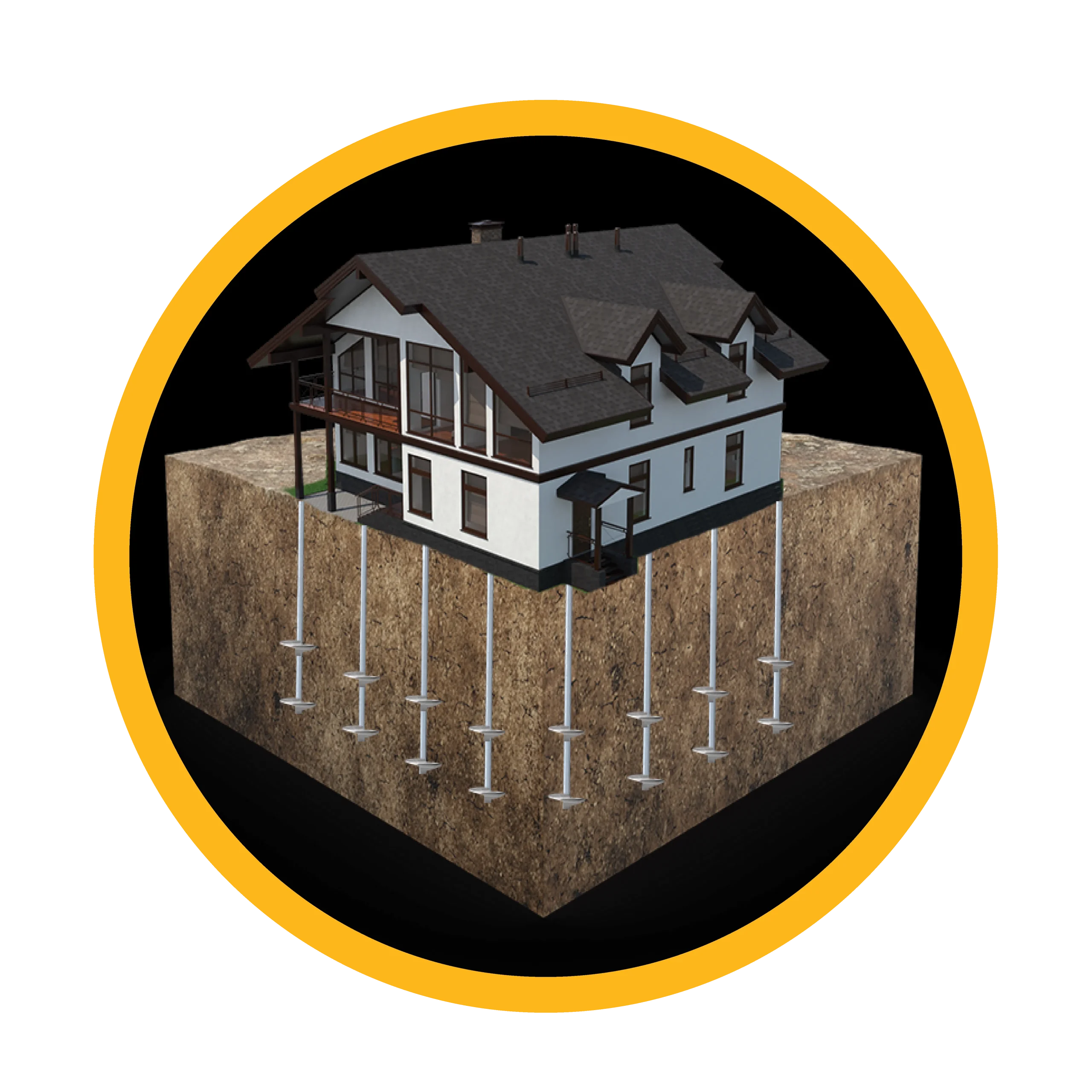
  • New construction 
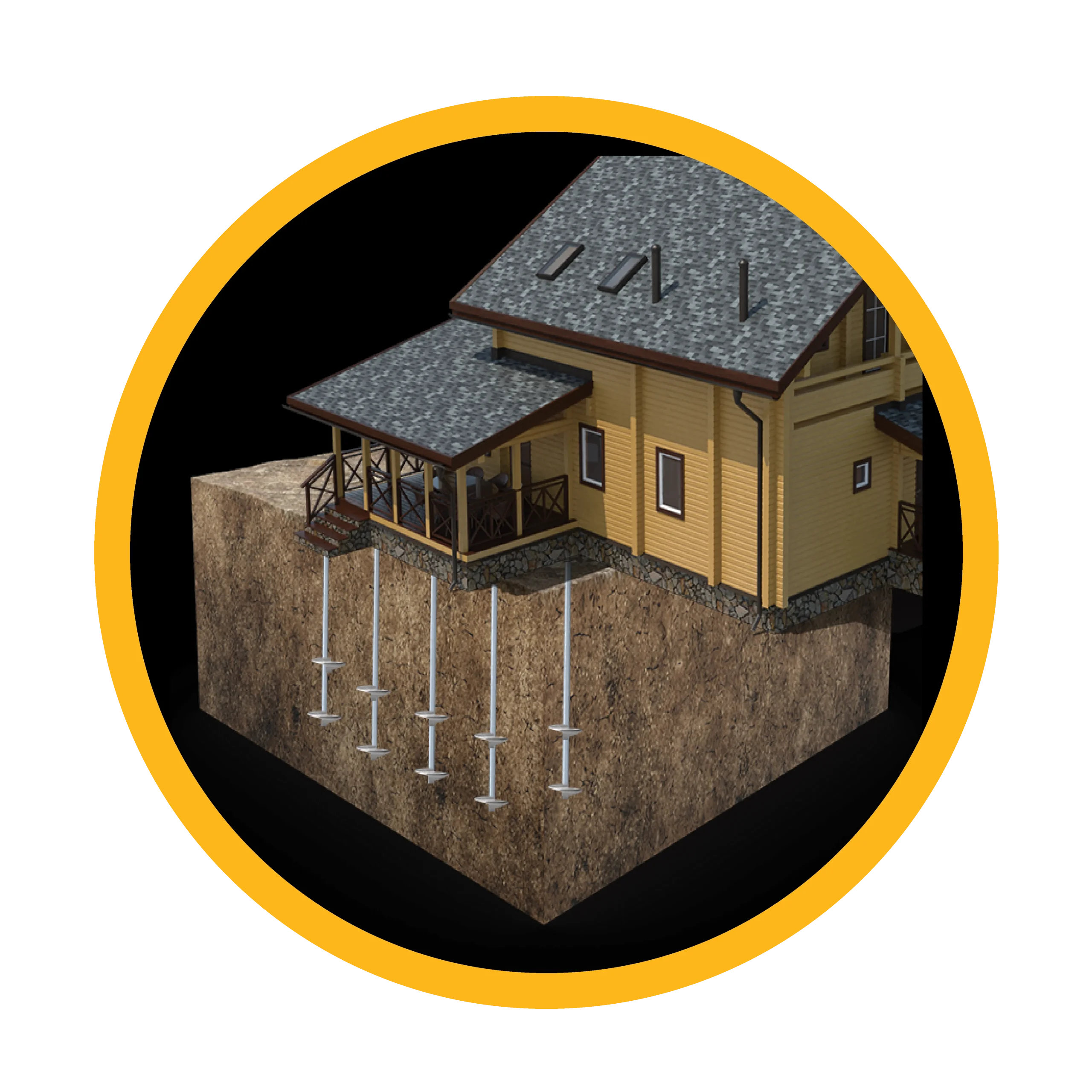
  • Additions 
  • Porches 
  • Lighter structures 
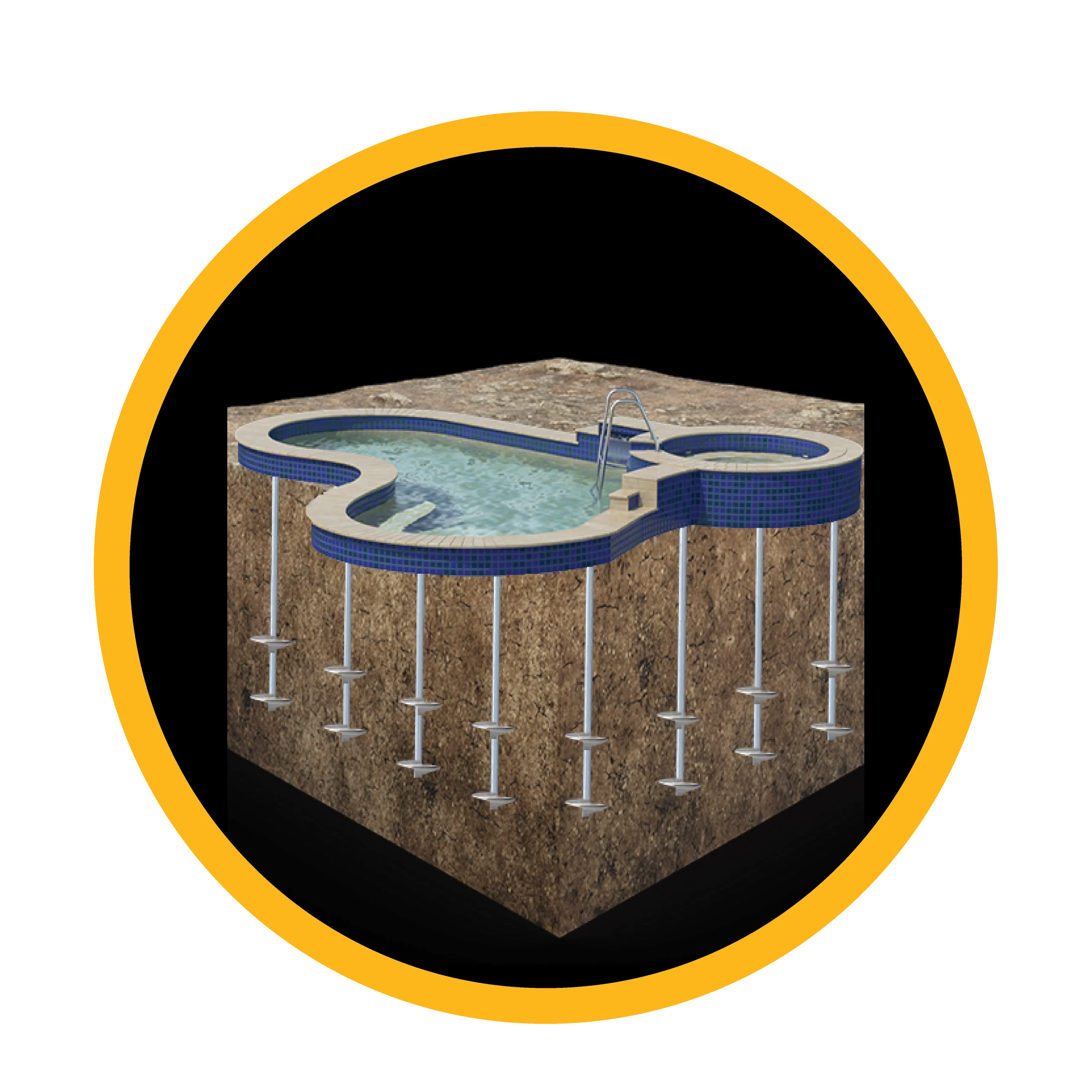
  • Certain pool, deck, or accessory-structure applications 
  • Other conditions with limited installation reaction 

This does not mean push piers are only for heavy buildings or helicals are only for light ones. 

Helical systems can be engineered for substantial structural loads. 

The more precise distinction is: 

Push-pier installation relies on structural reaction. Helical-pier installation does not. 

Difference #3: Installation Is Verified Differently 

Both systems provide measurable information during installation. 

Push Piers: Hydraulic Force and Resistance 

The crew monitors the force required to advance the pier. 

Installation criteria depend on the pier system, structural loads, bearing conditions, and engineering requirements. 

Helical Piers: Installation Torque 

Torque is monitored as the helical pier advances. 

Within the applicable engineered system and design criteria, installation torque can be correlated with the pier’s axial capacity. 

Neither system should simply be installed until it “feels solid.” 

Both systems should have defined installation and acceptance criteria. 

Do Helical Piers Require Soil Borings While Push Piers Do Not? 

Not necessarily. 

Soil borings and other geotechnical information can be valuable for either system, particularly on larger, unusual, engineered, or geologically complex projects. 

Helical piers provide installation information through torque. 

Push piers provide information through hydraulic installation force and resistance. 

Whether additional subsurface investigation is appropriate depends on factors such as: 

  • Project complexity 
  • Structure and loads 
  • Expected geology 
  • Engineering requirements 
  • Code or permitting requirements 
  • Uncertainty in the subsurface conditions 

So the better question is not: 

“Which pier doesn’t require soil testing?” 

It is: 

“What information is necessary to confidently design and verify this foundation repair?” 

Difference #4: They Develop Support Differently 

Both systems transfer foundation loads deeper, but they interact with the ground differently. 

Push Piers 

Push piers are advanced through unsuitable shallower soils until the required bearing and installation criteria are achieved. 

Depending on the soil profile, they may develop support from deeper competent soil, rock, or other suitable bearing material. 

Helical Piers 

Helical piers use their helix plates as bearing elements. 

The helices are advanced into suitable soil, with installation torque and the engineered design used to establish the required support. 

That difference can become important when actual subsurface conditions are considered. 

Difference #5: Helical Piers Can Be Installed Before a Building Exists 

This is one of the clearest differences between the systems. 

Conventional push-pier installation depends on an existing structure for reaction. 

A helical pile can be installed independently before construction begins. 

Helical piles may therefore be used beneath: 

  • New homes 
  • Additions 
  • Commercial structures 
  • Pools 
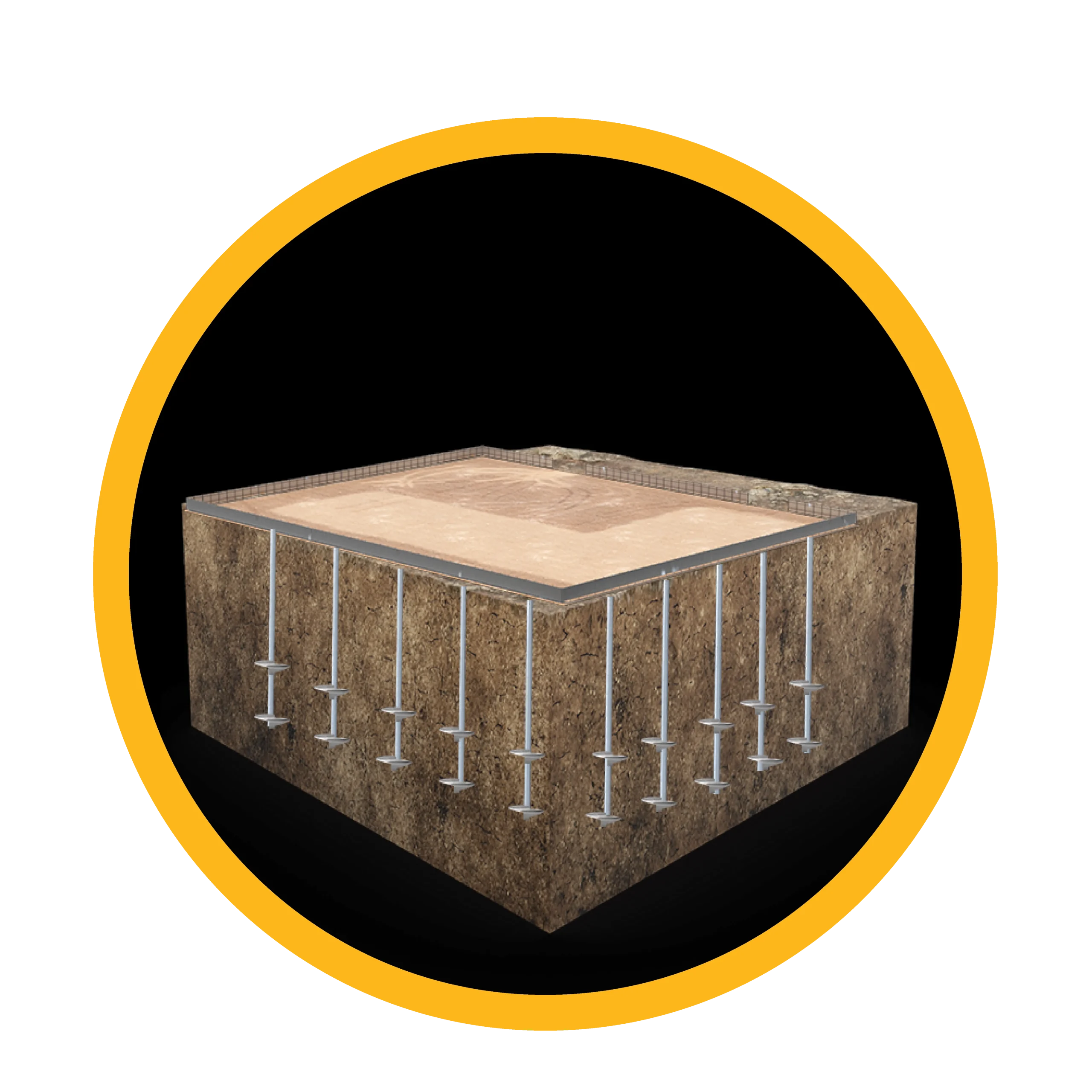
  • Equipment foundations 
  • Other structures requiring deep support 

The new foundation can then be constructed to transfer its load onto the installed piles. 

Read more: Pre-Construction Piers

Difference #6: Soil and Bearing Conditions Can Favor One System 

Florida does not have one universal soil profile. 

A property might contain: 

  • Loose shallow sand 
  • Dense sand at depth 
  • Fill 
  • Organic material 
  • Clay 
  • Variable soil layers 
  • Limestone or other bearing material 
Read more: How Florida Soil Conditions Affect Your Home Foundation

Push Piers May Make Sense When: 

  • An existing structure provides adequate installation reaction 
  • The foundation requires deeper support 
  • Appropriate deeper bearing conditions can be reached 
  • Competent bearing material is present at a suitable depth 
  • The project primarily involves retrofit underpinning 

Helical Piers May Make Sense When: 

  • Available structural reaction is limited 
  • The project involves new construction 
  • A lighter structure or addition requires support 
  • Soil conditions are appropriate for helical installation 
  • The engineered application requires compression and/or tension resistance 
  • Structural or access conditions favor a helical system 

These are general considerations. 

Actual pier selection should follow the structure, ground conditions, loads, and engineered requirements. 

Are Push Piers Better When the Soil Conditions Are Unknown? 

Not automatically. 

Push piers can be practical in uncertain subsurface conditions because installation resistance is monitored as the pier advances. 

But helicals also provide real-time installation information through torque. 

Either system can encounter unexpected: 

  • Fill 
  • Buried debris 
  • Dense layers 
  • Rock 
  • Very loose soils 
  • Changing geology 

Unknown subsurface conditions should therefore increase the importance of evaluation and installation control rather than automatically determining the pier type. 

Uncertainty is a reason to gather better evidence—not a reason to default blindly to one product. 

What If Limestone or Rock Is Shallow? 

Shallow competent rock can influence pier selection. 

A conventional helical pier must be able to rotate and advance through the subsurface material. 

If the helix encounters material it cannot penetrate, conventional advancement may stop. 

Specialized helical configurations or installation methods may be available for some conditions, so shallow rock does not automatically rule out every helical system. 

A push pier may be able to advance until it develops the required bearing against competent material. 

But “rock” is not one uniform condition. 

Florida sites can encounter: 

  • Limestone 
  • Weathered limestone 
  • Hard layers 
  • Soft or fractured rock 
  • Cavities 
  • Variable materials 

Pier selection should therefore be based on the actual bearing conditions—not simply the presence of the word “limestone” on a soil profile. 

Can Both Push Piers and Helical Piers Lift a Foundation? 

Potentially, yes. 

Once a pier system is installed and the structural load has been transferred, controlled elevation recovery may sometimes be attempted. 

But lifting is not guaranteed and should not automatically be the goal. 

A successful repair may involve: 

  • Stabilizing the affected foundation 
  • Reducing the potential for additional settlement 
  • Recovering some elevation 
  • Improving certain doors or windows 

It does not necessarily mean: 

  • Returning the entire home to perfectly level 
  • Closing every crack 
  • Restoring all cosmetic finishes 
  • Recovering all historic settlement 

The amount of recovery depends on the foundation, amount and age of movement, structure, plumbing, finishes, and other conditions. 

A successful pier installation does not necessarily mean a perfectly level home. 

Read more: What Most Companies Won’t Tell You About Foundation Repair

Does One Pier System Usually Go Deeper? 

Not necessarily. 

Both systems can be extended with additional pier or shaft sections. 

Required depth depends primarily on: 

  • Soil profile 
  • Bearing conditions 
  • Structural load 
  • Pier configuration 
  • Installation criteria 
  • Engineering design 

Depth alone does not determine which pier system is better. 

Does One System Support More Weight? 

Not automatically. 

Capacity depends on the specific system and application, including: 

  • Pier size and steel configuration 
  • Helix size and arrangement 
  • Bracket capacity 
  • Soil and bearing conditions 
  • Installation force or torque 
  • Structural load 
  • Pier spacing 
  • Engineering design 

Push piers are frequently used beneath substantial existing structures. 

Helical systems can also be designed for significant loads. 

Instead of asking: 

“Which pier is stronger?” 

ask: 

“Does the proposed pier system have the required capacity for this foundation and these site conditions?” 

Does One System Require More Piers? 

Not inherently. 

Pier quantity and spacing depend on: 

  • Affected foundation area 
  • Structural loads 
  • Foundation construction 
  • Pier and bracket capacity 
  • Soil conditions 
  • Repair design 

More piers are not automatically better. 

Fewer piers are not automatically more efficient. 

The right number of piers is the number needed to properly support the affected foundation—not the highest or lowest number a contractor can sell. 

Read more: The Biggest Mistakes Homeowners Make With Foundation Issues

What About Access and Disruption? 

Both systems normally require access to the affected foundation. 

For perimeter repairs, crews commonly excavate localized areas beside the foundation so brackets can be installed. 

Actual disruption depends on: 

  • Landscaping 
  • Pavers 
  • Pool decks 
  • Porches 
  • Driveways 
  • Utilities 
  • Interior finishes 
  • Foundation depth 
  • Number and location of piers 

Neither system should automatically be described as “non-invasive.” 

Underpinning is targeted structural work, but it still requires access around the foundation. 

The goal is the least invasive repair that properly addresses the movement. 

Push Piers vs. Helical Piers: Which Is Better for Florida Homes? 

There is no universal winner. 

For many existing Florida homes, push piers can be an excellent choice when the structure provides adequate reaction and deeper suitable bearing conditions can be reached. 

Helical piers may be preferable when: 

  • Installation reaction is limited 
  • The project involves new construction 
  • Structural or soil conditions favor helical installation 

The fact that one contractor installs mostly push piers while another installs mostly helical piers does not prove either system is superior. 

A contractor’s recommendation can also be influenced by the systems it sells, owns equipment for, or installs most often. 

The repair method should follow the diagnosis—not the product the contractor happens to sell. 

What Matters More Than Push vs. Helical? 

Before choosing either system, first determine whether the home actually needs foundation piers. 

A proper evaluation should consider: 

  • What is moving 
  • Whether movement appears active 
  • Relative elevation patterns 
  • Foundation construction 
  • Soil and site conditions 
  • Which foundation areas need support 
  • Whether deeper support is actually necessary 

Some symptoms may instead point toward: 

  • Soil stabilization 
  • Void filling 
  • Concrete lifting 
  • Drainage correction 
  • Plumbing repair 
  • Monitoring 
  • No foundation repair at all 

Choosing the correct repair objective matters more than choosing between two pier products. 

Read more: When You Do NOT Need Foundation Repair

Push Piers, Helical Piers, or Soil Stabilization? 

These approaches solve different problems. 

Push and Helical Piers 

Objective: Transfer structural loads deeper. 

Piers bypass unsuitable shallower support and provide deeper support to the affected foundation areas where they are installed. 

Soil Stabilization 

Objective: Improve weak or loose ground. 

Polyurethane or another ground-improvement method may make sense when the support problem exists within a treatable soil zone rather than requiring deeper structural support. 

Can They Be Used Together? 

Yes. 

For example, an affected foundation might require piers while an adjacent slab or shallow soil area needs polyurethane stabilization or void filling. 

One system does not need to solve every condition on the property. 

Where is the support problem, and what repair objective does it require? 

Read more: What Is Soil Stabilization and How Does It Work? 

Are Push Piers or Helical Piers Used for Sinkhole Repair? 

They can be used as part of an engineered sinkhole repair when the foundation requires underpinning. 

But foundation piers do not automatically constitute a complete sinkhole repair. 

An engineered sinkhole-remediation plan may also include: 

  • Compaction grouting 
  • Chemical grouting 
  • Other geotechnical treatment 

The engineer determines whether underpinning is required and which foundation-support system is appropriate. 

Read more: What Causes Sinkholes in Florida—and Should You Worry?

How Much Do Push Piers and Helical Piers Cost? 

Neither system has a universal price advantage. 

Total project cost can depend on: 

  • Number of piers 
  • Pier type 
  • Installation depth 
  • Access 
  • Excavation 
  • Foundation construction 
  • Engineering 
  • Permit requirements 
  • Lifting objectives 
  • Restoration requirements 

When comparing proposals, determine whether contractors are recommending comparable: 

  • Repair areas 
  • Pier quantities 
  • Installation objectives 
  • Capacities 
  • Engineering and permitting 
  • Warranties 
  • Restoration work 

Normalize the scope first. Compare the price second. 

Read more: Why Is One Foundation Repair Quote Much Higher Than Another? 

Checklist: Questions to Ask Before Approving Push or Helical Piers 

Diagnosis 

  • What evidence shows that the structural foundation is settling? 
  • Which areas actually require deeper support? 
  • Were relative floor elevations measured? 
  • Could the symptoms involve a slab or shallow-soil problem instead? 
  • Is the movement active, historic, or uncertain? 

Pier Selection 

  • Why are you recommending push piers or helical piers? 
  • What conditions make this system appropriate? 
  • If push piers are proposed, is adequate structural reaction available? 
  • If helicals are proposed, how will installation torque be monitored? 
  • What bearing conditions are expected? 

Installation 

  • What determines when each pier installation is complete? 
  • How is required capacity established? 
  • How are pier locations and spacing determined? 
  • What bracket system will connect the pier to the foundation? 
  • Will engineering or permitting be required? 

Expectations 

  • Is stabilization the objective, or will lifting be attempted? 
  • What elevation recovery is realistically expected? 
  • What foundation areas will not be supported? 
  • Could cosmetic cracks or floor variations remain? 
  • What happens if field conditions differ from expectations? 

Accountability 

  • What warranty applies? 
  • What exactly does it cover? 
  • Is the proposed pier system appropriately evaluated and documented for the application? 
  • Who handles unexpected field conditions? 
  • How will the completed installation be documented? 

A contractor should be able to explain not just which pier is recommended—but why. 

How Helicon Chooses Between Push Piers and Helical Piers 

Helicon has worked with Florida foundations and soils since 2004. 

Our capabilities include: 

  • Push piers 
  • Helical piers 
  • Drilled piers 
  • Deep foundations 
  • Polyurethane soil stabilization 
  • Compaction grouting 
  • Structural void filling 
  • Sinkhole remediation 

That breadth matters because Helicon does not need every foundation problem to fit one pier system. 

An evaluation may consider: 

  • Crack and symptom patterns 
  • Relative floor elevations using a ZipLevel when appropriate 
  • Foundation construction 
  • Exterior settlement 
  • Drainage and erosion 
  • Shallow soil conditions 
  • Property and repair history 

Then we ask: 

  1. Is the structural foundation actually settling? 
  1. Which areas require deeper support? 
  1. What bearing conditions are expected? 
  1. Is adequate reaction available for push-pier installation? 
  1. Would a helical or another foundation system better fit the project? 
  1. Is lifting appropriate? 
  1. Are piers needed at all? 

Sometimes the answer is push piers. 

Sometimes it is helical piers. 

Sometimes another system or repair objective makes more sense. 

The value of offering multiple foundation-repair systems is not finding a reason to use more of them. It is being able to choose the system that fits the problem. 

Schedule a Foundation Inspection 

If your home has progressing cracks, uneven floors, sticking doors or windows, gaps, or other signs of possible foundation movement, you do not need to decide whether you need push piers or helical piers before the property is evaluated. 

First determine: 

  • What is moving 
  • Why it is moving 
  • Whether deeper support is needed 
  • Which areas require support 
  • Which system fits the structure and site conditions 

The homeowner should not have to choose the pier. The evidence should.

Click Here to Get Started

FAQ 

What is the main difference between push piers and helical piers? 

Push piers are hydraulically advanced using the existing structure as reaction. Helical piers are mechanically rotated into the soil and use helix plates to develop bearing. 

Are push piers better than helical piers? 

Not universally. The better system depends on the structure, soil and bearing conditions, load, available reaction, access, and repair design. 

Are helical piers only for lightweight structures? 

No. Their installation is useful when structural reaction is limited, but engineered helical systems can support substantial loads. 

Are push piers only for heavy buildings? 

No. But the existing structure must provide enough reaction to install the pier to the required criteria. 

Which pier is better for an existing home? 

Either can be appropriate. Push piers are commonly used for existing foundation underpinning, while helicals can also support existing structures. 

Which pier is better for new construction? 

Helical piles are generally better suited because they can be installed before the structure exists. Conventional push piers require an existing structure for installation reaction. 

How is push-pier installation verified? 

Hydraulic installation force and resistance are monitored according to the pier system, structural loads, and applicable design requirements. 

Do helical piers require soil testing? 

Not on every project. Geotechnical information may be advisable or required depending on the structure, geology, engineering, and project complexity. 

Do push piers require soil testing? 

Not automatically on every residential repair, but subsurface information can still be valuable or required depending on the project. 

Which pier goes deeper? 

Either system can be extended. Required depth depends on the subsurface profile, bearing conditions, structural load, and design. 

Which system is stronger? 

Neither is universally stronger. Capacity depends on the specific pier system, soil, installation criteria, brackets, loads, spacing, and engineering. 

Can both systems lift a foundation? 

Potentially. Controlled elevation recovery may be attempted after installation when appropriate, but stabilization may be the primary objective. 

Will piers make my house perfectly level? 

Not necessarily. Complete elevation recovery may not be possible or advisable. 

Do foundation piers repair bad soil? 

Not directly. They transfer structural loads beyond unsuitable shallower support to deeper competent bearing soils or other suitable bearing material. 

Can push piers and helical piers be used on the same property? 

Yes. Different structures or areas may require different support systems. 

Which pier system costs less? 

Neither is universally cheaper. Total cost depends on the number of piers, installation conditions, depth, access, engineering, and overall scope. 

Which lasts longer, push piers or helical piers? 

Neither system has a universal durability advantage. Long-term performance depends on factors such as steel configuration, corrosion protection or corrosion allowance, soil conditions, installation quality, and the specific pier system being used. 

How do I know which pier my home needs? 

First determine whether the structural foundation actually requires underpinning. If it does, the structure, loads, soil and bearing conditions, and installation requirements should determine the system. 

i 3 Table of Contents

Recent Blogs:

What Causes Sinkholes in Florida—and Should You Worry? 

Direct Answer  Florida sinkholes form primarily because much of the state is underlain by limestone and other carbonate rock that can slowly dissolve when exposed to slightly acidic groundwater.  Over time, this process can create underground openings. A...

What Is Soil Stabilization and How Does It Work? 

Direct Answer  Soil stabilization is the process of improving weak, loose, eroded, or poorly compacted ground so it can provide better support for a foundation, slab, or other structure.  For many Florida residential foundation and slab problems, one...

How Florida Soil Conditions Affect Your Home Foundation 

Direct Answer  Florida soil conditions can affect a home foundation when the ground beneath it compresses, shifts, erodes, washes out, or loses the ability to support the structure evenly.  Conditions that can contribute include:  Loose sandy soils ...

Featured Projects:

About the Author:

Jay Silver

Jay Silver is the Founder and President of Helicon, a family-owned and operated Florida geotechnical construction company specializing in foundation repair, underpinning, soil stabilization, concrete lifting, sinkhole repair, seawall repair, deep foundations, and ground improvement solutions.

Since starting Helicon in 2004, Jay has helped grow the company into Florida’s most trusted foundation repair company, serving homeowners, realtors, engineers, contractors, property managers, municipalities, commercial property owners, and builders across the state. Jay is passionate about educating the market and helping customers make confident decisions about foundation repair, soil stabilization, seawall repair, and geotechnical construction solutions.

Secret Link