
Cocoa Beach, FL
The Project
The Challenge
The Solution
FREE INSPECTION REQUEST

Market: Residential
Solution: Two-Part Structural Polyurethane Injections (Soil and Slab)
Services: Foundation Repair
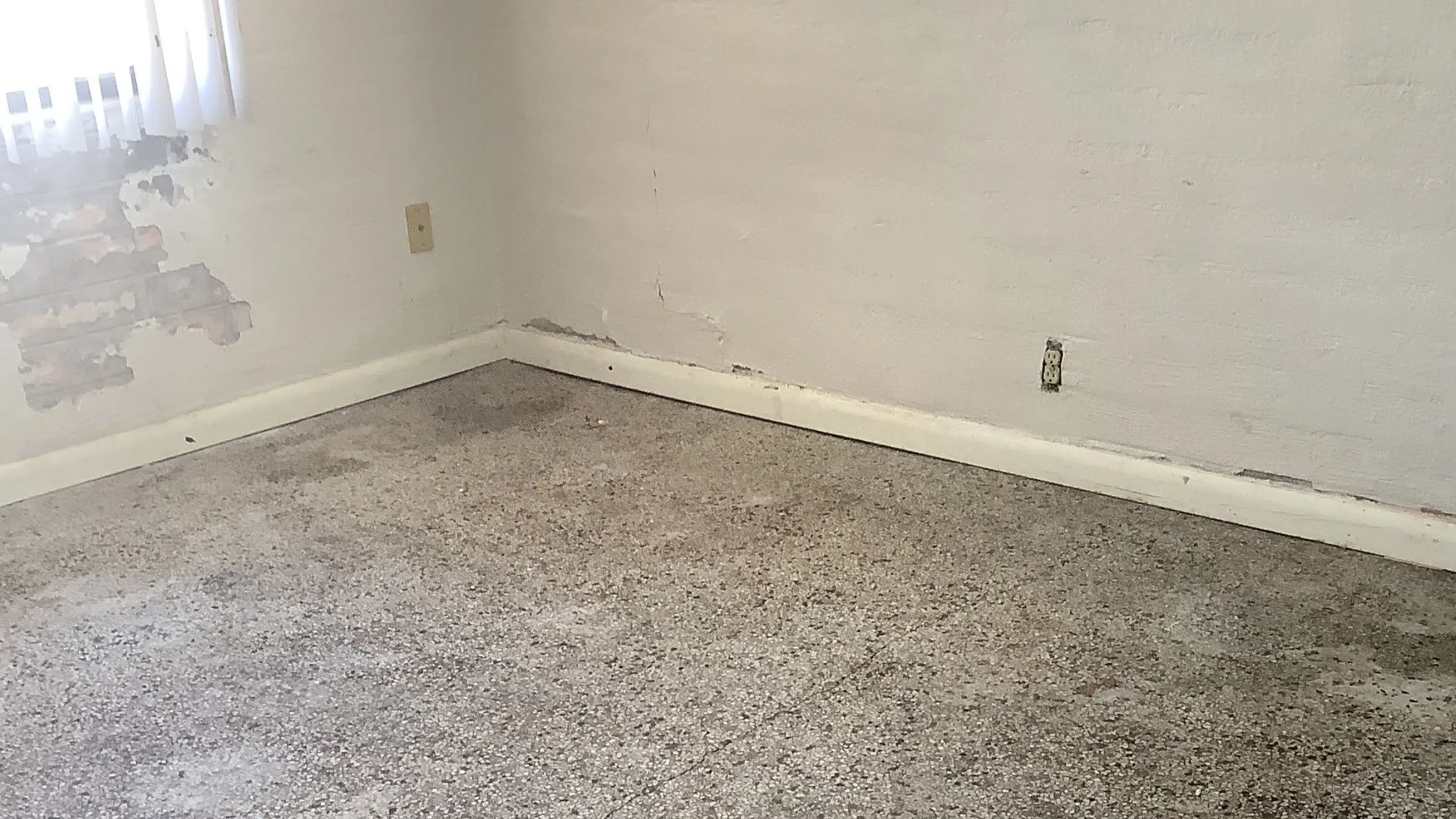
The homeowner’s primary concern was clear from the beginning: the interior floors had settled enough that they no longer felt stable or level, and they would ultimately need to be replaced. However, he did not want to install new flooring over a moving slab. Like many owners dealing with floor settlement, he wanted to understand whether the answer was foundation repair, underpinning, or some other stabilization method.
That question matters because not all settlement is the same. Some homes settle because a load-bearing wall or footing has lost support and needs deep underpinning. Others, like this one, have problems concentrated in a floating slab, where the interior slab rests on soil that has weakened or shifted, even while the perimeter structure remains a separate support system.
This distinction guided the entire repair plan.
One of the most important parts of this project was helping the homeowner understand why underpinning was not the adequate solution for this specific settlement problem. In many residential foundation repair cases, underpinning is the best method when the structure’s load-bearing footings are moving. But in this home, the interior floor system was a floating slab.
A floating slab behaves differently from a structurally supported footing. It depends heavily on the condition of the soils directly beneath it. If those soils become loose, washed out, under-compacted, or disturbed by plumbing activity, the slab can settle even if the rest of the structure is not failing in the same way.
That meant the repair had to focus on:
This was still very much a foundation repair project, but it required a different solution than traditional underpinning.
One of the biggest complications in this Cocoa Beach project had nothing to do with the injection material itself. The plumbing under the house needed to be replaced before injecting under the interior slab.
That created an important sequencing challenge. If Helicon had completed the slab injections first, only to have the slab opened or disturbed again for plumbing work, part of the stabilization benefit could have been reduced or disrupted. But if the plumbing contractor handled everything first and closed access immediately, the injection team would lose the paths needed to place material accurately.
The solution required coordination.
The field plan called for the work to occur in stages:
According to the project notes, that sequence was achieved, which was essential to the overall success of the repair.
This is a good example of why many successful foundation repair projects depend as much on coordination as on materials. The right solution only works if the trades are sequenced correctly.
Homes in Cocoa Beach and throughout Brevard County are often built in conditions where sand, moisture, and subsurface utility work can all affect floor performance over time. Floating slabs are especially sensitive to:
Because the slab is not fully supported by deep foundation elements, it relies on the consistency of the shallow soil layer below it. When that soil condition changes, the slab may settle unevenly, creating noticeable floor slope, cracking, or instability underfoot.
That is why two-part structural polyurethane injections can be such an effective answer in floating slab foundation repair projects. Rather than trying to underpin a system that is not the true source of the problem, the injections work to restore support where it has actually been lost.
Helicon recommended two-part structural polyurethane injections as the core solution because they offered the right combination of precision, adaptability, and performance for this type of floor settlement.
Two-part structural polyurethane is well-suited for floating slab and shallow soil stabilization because it can:
In this project, it was the only real answer because it directly addressed the slab-support problem without trying to solve the wrong issue with unnecessary underpinning.
Before injection work began, Helicon used ground penetrating radar (GPR) to help map the treatment areas beneath the slab.
That step was important because GPR can help the team:
For a project involving both perimeter soil work and interior slab stabilization, that kind of pre-mapping adds value. It helps make sure the repair is placed where it is most likely to improve structural support.
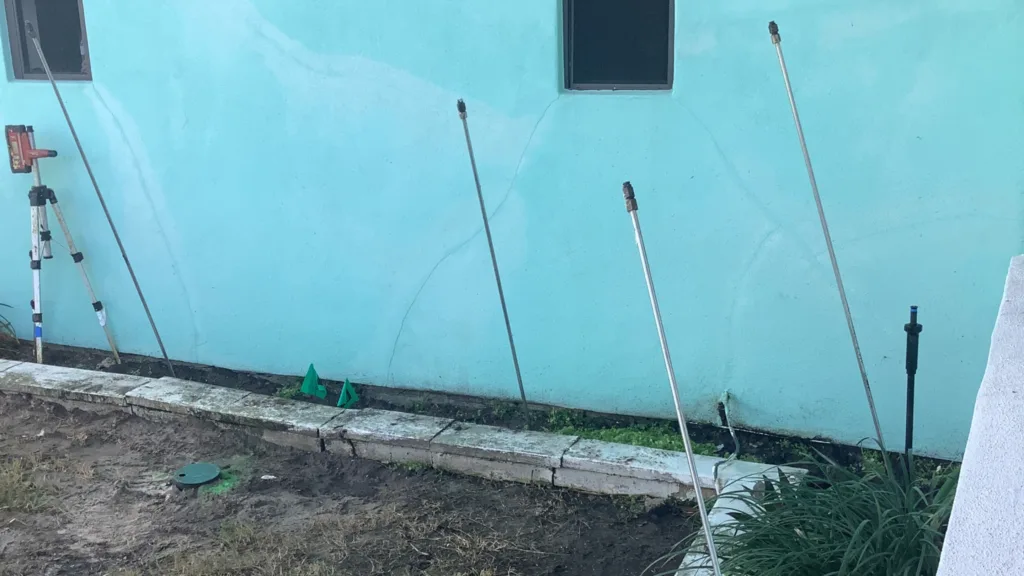
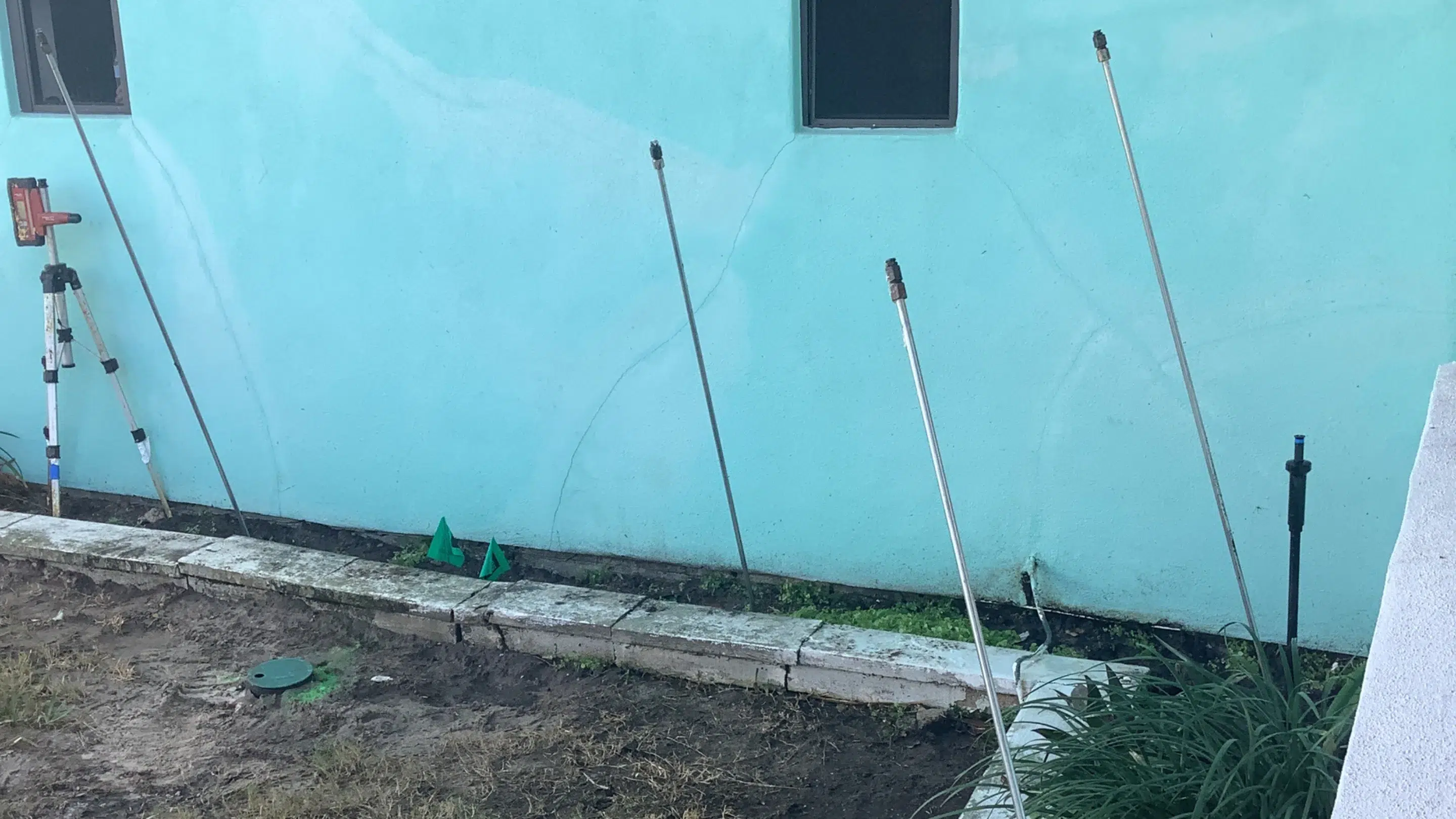
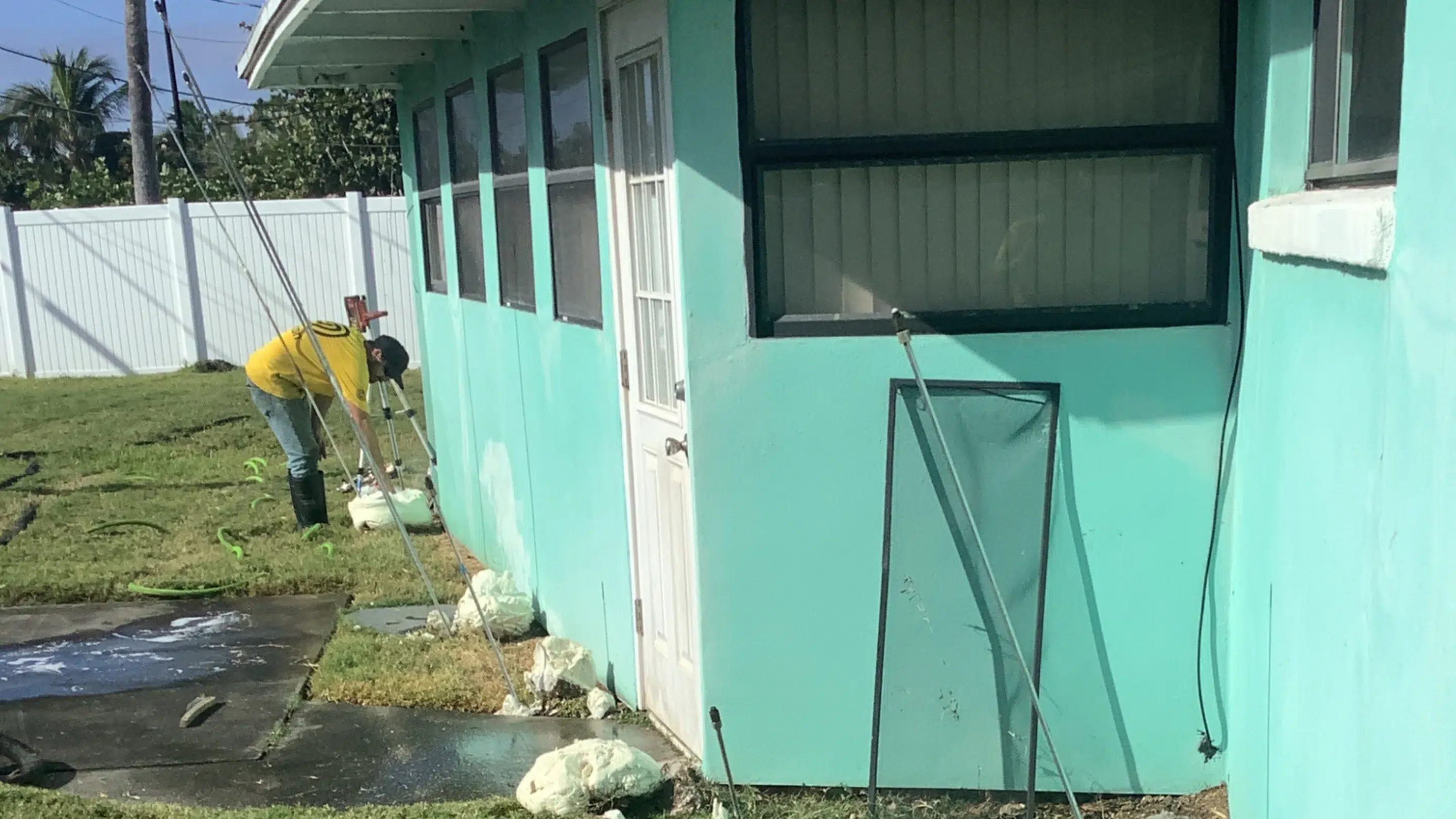
Helicon completed 48 soil injection points around the perimeter of the project. These treatments were intended to improve the surrounding support condition and help reinforce soils influencing the slab and adjacent structure.
The project used a total of 468 pounds of product under the slab. This was the core interior stabilization effort, aimed at improving support beneath the floating slab and helping level the floors as much as practically possible before finish replacement.
The homeowner understood that the floors would still need to be replaced and that stabilization does not mean a perfectly new floor system. Instead, the goal was to:
That is the right expectation in many slab stabilization projects. Structural improvement comes first. Finish replacement comes second.
After all phases were completed, the home had a much more dependable support condition beneath the interior floors.
This project also helped prevent a common mistake: replacing finishes before addressing the support problem below. By solving the structural issue first, the homeowner protected the value of the future flooring investment.
Helicon is Florida’s trusted expert in foundation repair, slab stabilization, soil stabilization, concrete lifting, and sinkhole remediation. We serve homeowners throughout Cocoa Beach, Brevard County, and across Florida, delivering engineered repair solutions that protect homes from the ground up.
If you are dealing with settling floors, slab movement, or floating slab issues in Cocoa Beach or Brevard County, Helicon can help. Our team provides professional foundation repair and slab stabilization solutions tailored to Florida homes and the real causes of movement beneath them.
Call 844-HELICON today to schedule your free inspection and learn whether structural polyurethane injections are the right solution for your home.
FREE INSPECTION REQUEST