
Longboat Key, FL
The Project
The Challenge
The Solution
FREE INSPECTION REQUEST

Market: Residential
Solution: One-Part and Two-Part Polyurethane Injections (Soil and Slab)
Services: Soil Stabilization and Seawall Repair
The homeowner’s first concern was the small back patio, which had started to settle enough that resurfacing without first correcting the support problem would have been a mistake. Any contractor can place a new finish over old concrete, but if the slab is still losing support from below, the fresh surface work may crack, separate, or fail prematurely.
The second issue was more serious from a structural standpoint. The seawall was experiencing void activity behind the wall, which suggested that soils had begun to loosen or migrate. In waterfront environments like Longboat Key, hidden voids behind seawalls can continue to grow through water movement, fines loss, or repeated tidal influence. If left untreated, those voids can compromise the wall’s ability to resist retained soil pressure and contribute to eventual seawall failure.
The homeowner wanted the problem solved the right way: stabilize first, resurface later.
On coastal residential properties, the line between hardscape movement and shoreline movement is often thinner than it looks. Patio slabs and paver systems may seem separate from seawalls, but both depend on the stability of surrounding soils.
When voids form behind a seawall, those same conditions may contribute to movement in nearby patios, decks, walks, or landscaping. In coastal Florida, several factors commonly drive these problems:
This is why a well-planned seawall repair project often overlaps with soil stabilization in adjacent structures. The goal is not just to fix what is visible. The goal is to improve the stability of the systems working together.
The challenge on this Longboat Key project was not simply filling a few voids. It was making sure the homeowner’s resurfacing plans would not be undermined by hidden instability—and doing so while working carefully around existing pavers and a waterfront structure.
The owner wanted the patio resurfaced, but only after Helicon completed the subsurface work. That sequence matters. If the slab were still moving or bridging voids, a fresh finish could crack or separate soon after installation. This meant the soil stabilization and concrete support work had to be complete and reliable before cosmetic improvements began.
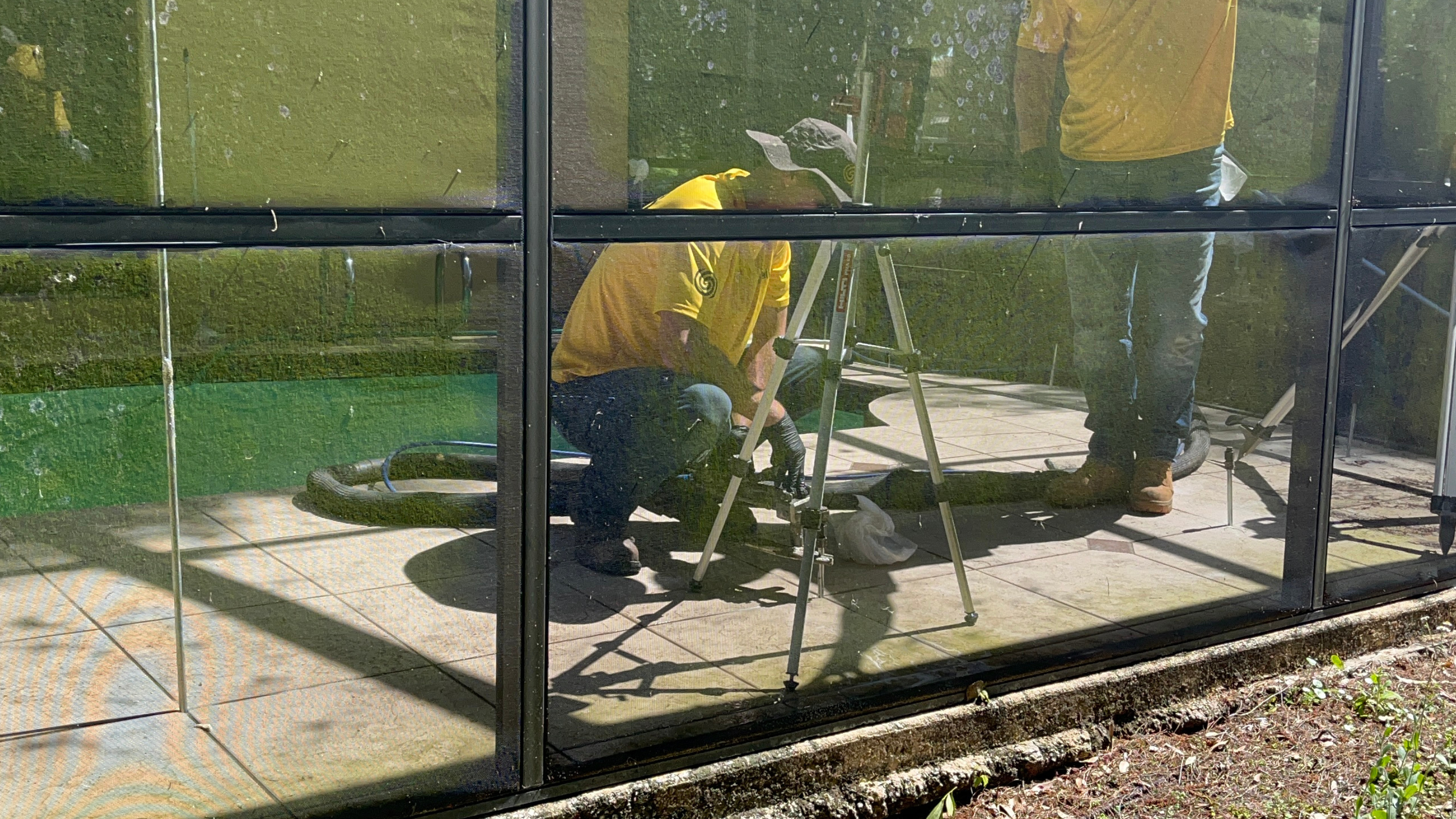
One side of the patio presented a practical challenge. The team needed deep injection coverage on the right side of the patio, but removing pavers would have created more disruption and additional restoration work. The crew therefore planned to perform those injections from the interior of the patio so the pavers could remain in place. That decision made the project more efficient and protected the appearance of the finished surface.
The seawall was not yet in failure, but the presence of void activity behind the wall was a warning sign. In coastal properties, waiting too long on seawall repair can turn a relatively controlled soil-grouting project into a much larger structural rehabilitation effort. The repair needed to fill the open spaces behind the wall and improve the supporting soil condition before more serious movement occurred.
On waterfront properties, materials must be delivered precisely. The team had to ensure the patio injections restored support where needed, while the seawall grout filled the target voids without unnecessary over-injection. This type of work depends on judgment, experience, and careful field control.
Helicon designed a two-part solution tailored to the property’s distinct but related issues.
For the patio, Helicon used a combination of two-part polyurethane soil and slab injections, totaling 182 pounds of material. These injections were designed to:
The installation approach was strategic. The crew performed deep injections along the patio exterior where direct access was available, then completed additional deep injection work from the interior of the patio on the right side to avoid removing pavers. That preserved the finished surface while still allowing the team to reach the weaker support zone beneath the slab.
In practical terms, this was not just a slab treatment. It was a true soil stabilization program meant to improve the bearing condition beneath the patio before any cosmetic contractor touched the surface.
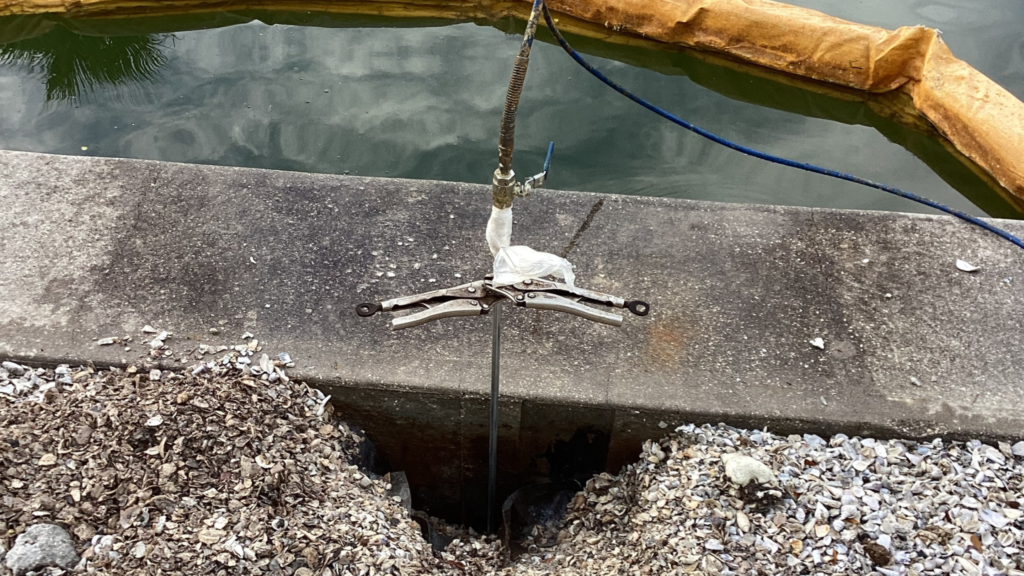
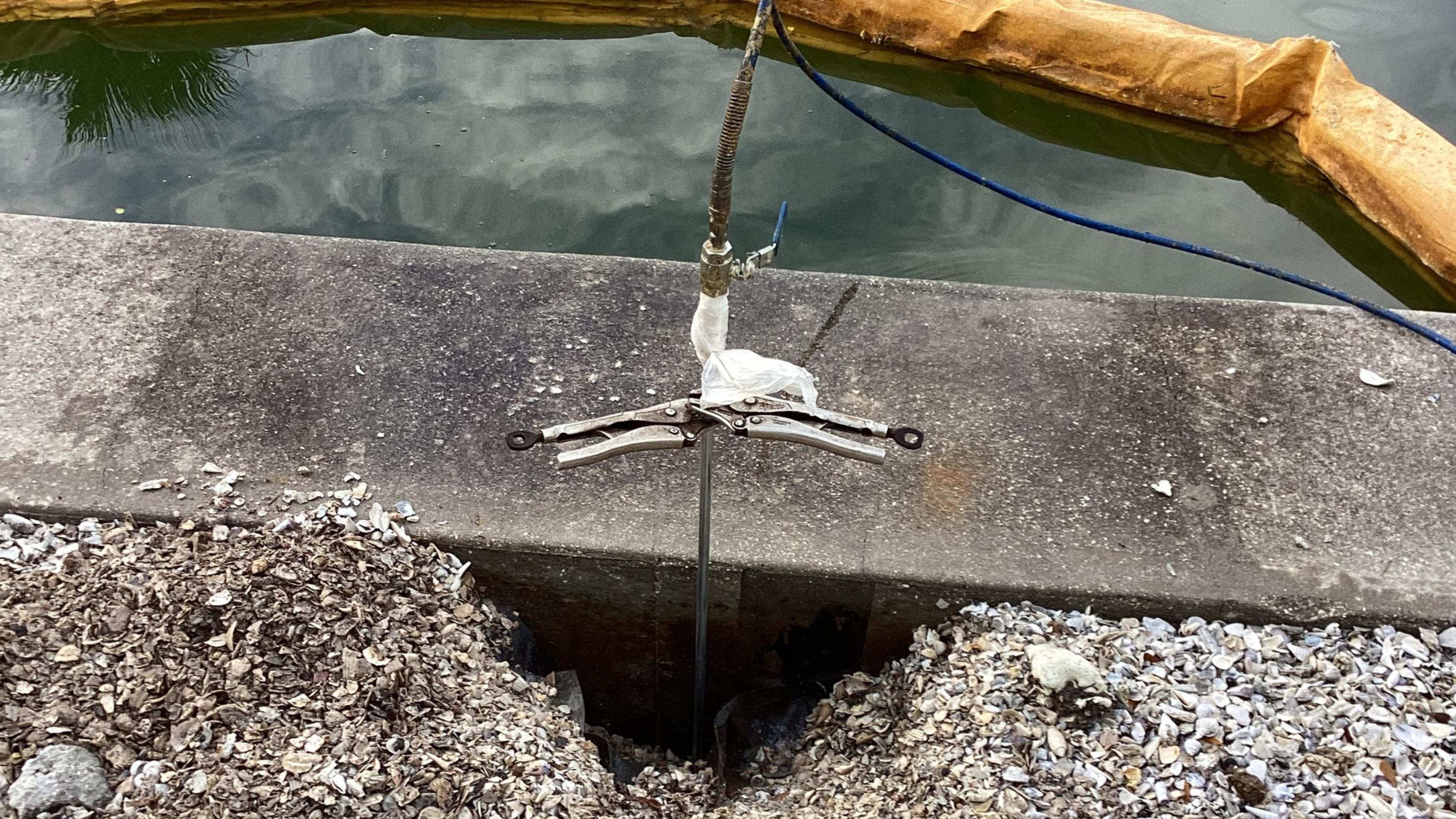
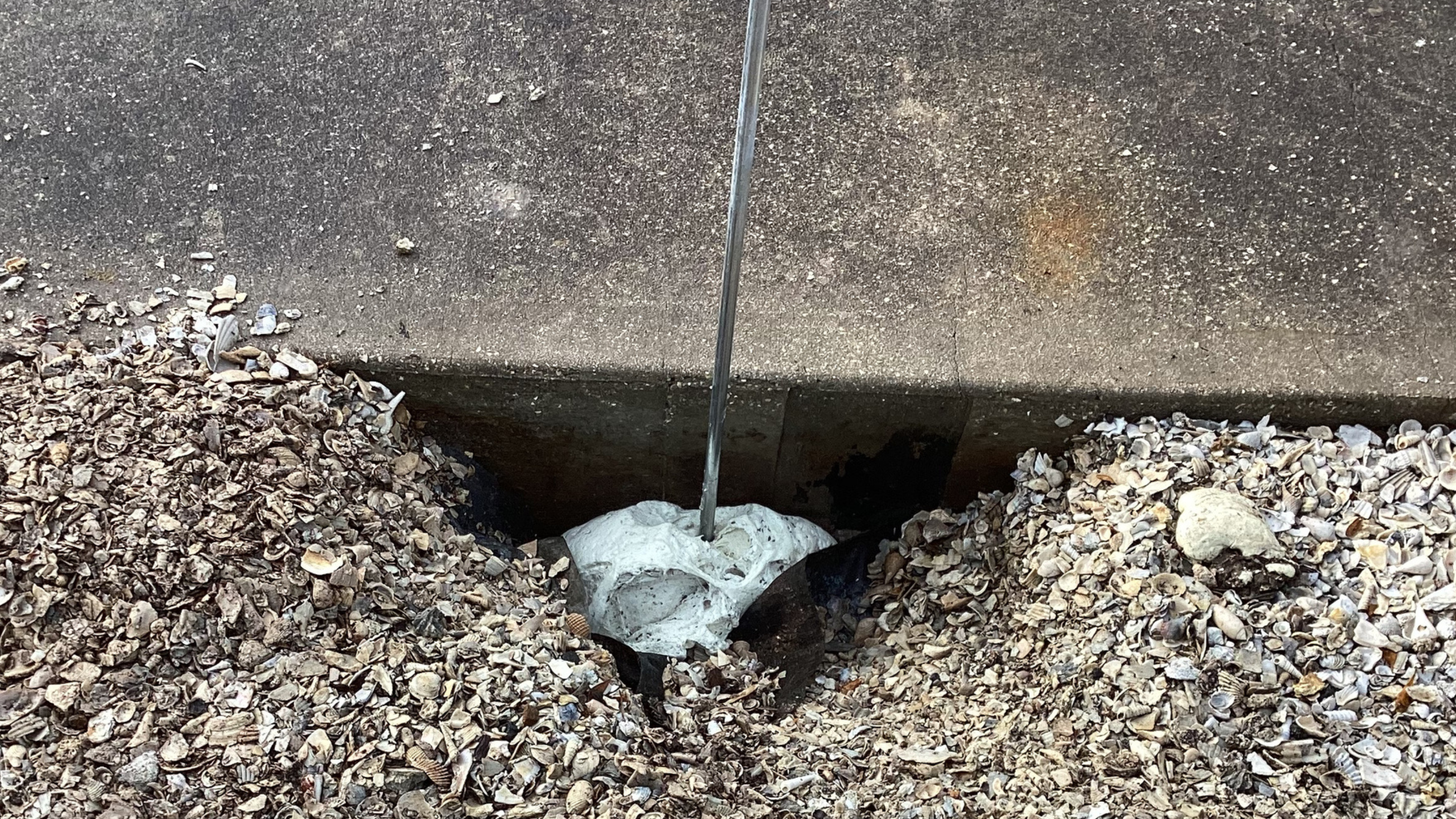
For the seawall, Helicon used one-part permeation grout, installing 70 gallons behind the wall to fill and stabilize open voids. This portion of the project was critical because seawall issues often begin invisibly. A wall may look intact at the surface while support conditions behind it continue to deteriorate.
The purpose of the seawall repair work was to:
Unlike the two-part structural foam used under the patio slab, the one-part permeation grout was selected because it is well-suited to migrate into and stabilize voided zones behind waterfront structures. In this application, it helped strengthen the area most vulnerable to future movement.
This project succeeded because the repair method matched the actual site conditions.
The patio did not need replacement. It needed support. Two-part polyurethane was an ideal fit because it could be placed precisely beneath the slab, expand into voids, and improve support without demolition.
The seawall did not yet need a full reconstruction. It needed void stabilization behind the wall before the issue worsened. One-part grout was appropriate because it could penetrate and secure those hidden spaces.
Together, the two systems addressed both the land-side and wall-side instability in a way that made sense for a waterfront residential property.
Once the work was complete, the property had significantly improved support where it mattered most.
This project also reduced the risk of future dissatisfaction. Had the resurfacing been done first and the patio remained unstable, the owner might have faced cracking or failure in a newly finished surface. Had the seawall voids been ignored, those hidden support losses could have grown into a much larger and more expensive problem.
Waterfront structures are rarely isolated problems. A settling patio may point to a local support issue, but in coastal settings, it can also signal broader soil movement near the waterline. Likewise, seawall voids may begin behind the wall yet eventually affect adjacent hardscape.
That is why the strongest results usually come from a system-based approach:
– Stabilize soils where the slab depends on them
– Repair seawall support before visible wall failure occurs
– Sequence cosmetic work after structural work is complete
This is a better long-term strategy than reacting only to the visible symptoms.
Helicon is Florida’s trusted expert in seawall repair, soil stabilization, foundation repair, concrete lifting, and sinkhole remediation. We serve homeowners throughout Longboat Key, Manatee County, and coastal Florida, delivering engineered ground-improvement solutions that protect property from the shoreline to the slab.
If you are seeing a settling patio, unstable pavers, or signs of voids behind your seawall on Longboat Key or along Florida’s Gulf Coast, Helicon can help. Our team provides targeted seawall repair, soil stabilization, and structural polyurethane injection solutions designed for coastal properties.
Call 844-HELICON today to schedule your free inspection and learn how early stabilization can prevent larger repairs later.
FREE INSPECTION REQUEST