
Ft. Myers, FL
The Project
The Challenge
The Solution
FREE INSPECTION REQUEST

Market: Residential
Solution: Two-Part Structural Polyurethane Injections
Services: Foundation Repair and Soil Stabilization
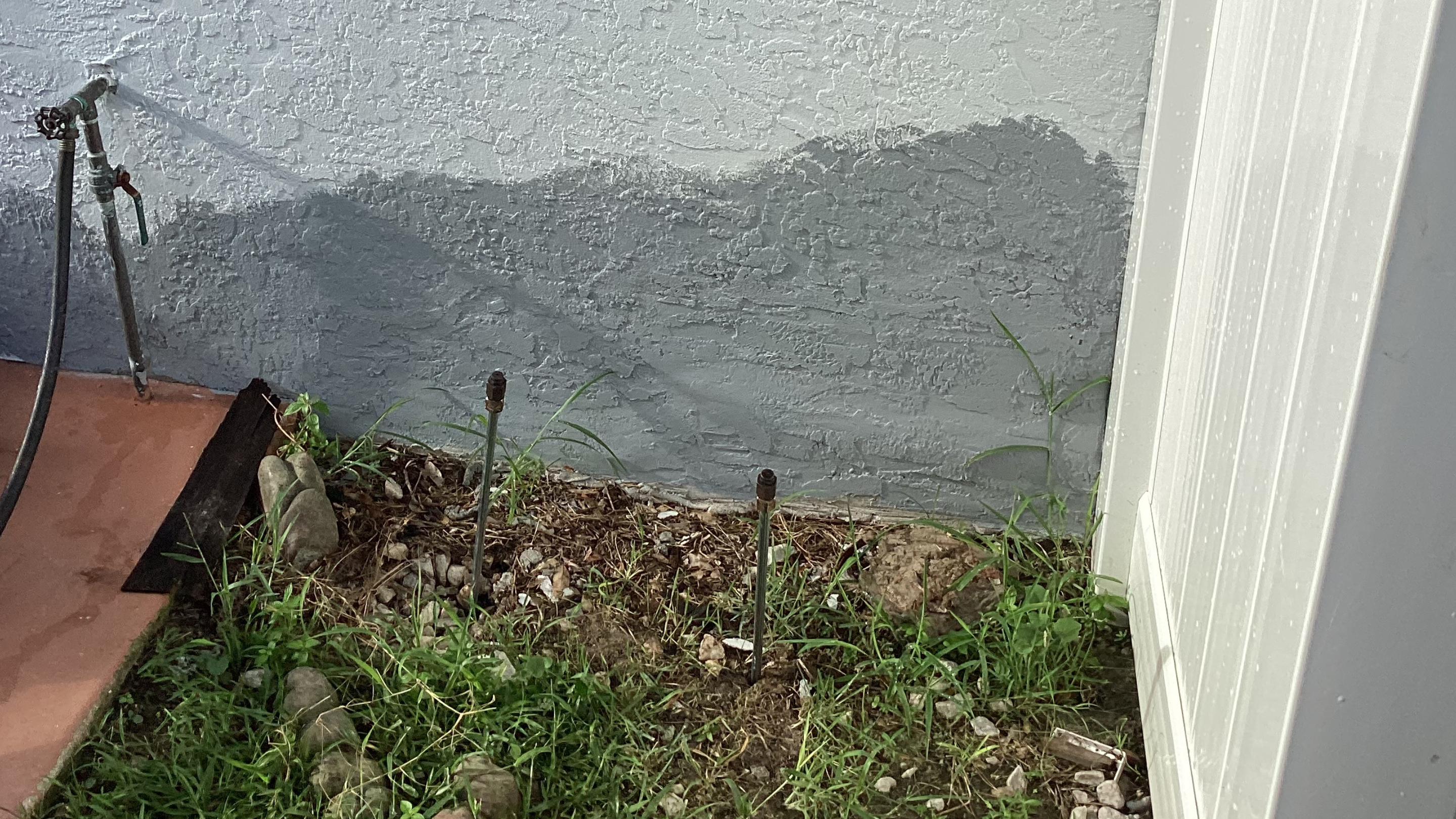
The home was approximately 25 years old, and the concern centered on the left-front corner. The homeowner noticed a crack along the left side of the house, behind a white gate.
The rest of the corner did not appear to show the same visible distress, which made this a focused stabilization project rather than a whole-house repair.
The homeowner’s goal was proactive.
He wanted to address the affected area before the problem had an opportunity to become more serious. He also planned to travel for work during the summer, so he wanted the stabilization completed beforehand.
His broader plan included three steps:
That order was strategically sound.
Repairing the appearance first could have resulted in repeated cosmetic work if movement continued beneath the corner. Addressing the subsurface support and drainage conditions first created a better foundation for the later cosmetic repairs.
The previous owners had allowed the gutter downspout to drain immediately beside the affected corner.
This did not prove that drainage caused the cracking, but it was an important condition to evaluate.
Roof runoff can concentrate a large amount of water into a relatively small area. When that water repeatedly enters the soil beside a foundation, it can change subsurface conditions over time.
Depending on the soil and property, concentrated water may contribute to:
For a Florida home, controlling roof runoff is an important part of protecting the area around the foundation.
The homeowner’s plan to route the gutter drainage underground and discharge it farther into the front yard was therefore a valuable complement to the structural work.
One of the most important lessons from this project is that structural stabilization should not be viewed in isolation.
Polyurethane injections can improve the support condition in a treated area, but they are not a substitute for correcting an active drainage problem.
If water continues to discharge directly beside a foundation corner, the surrounding environment may continue changing even after stabilization.
That is why a broader foundation repair strategy may involve more than one type of work.
For this Fort Myers homeowner, Helicon’s role was to stabilize the subsurface support. The homeowner planned to address the drainage separately.
Together, those steps created a more complete approach than either one alone.
The homeowner wanted the corner stabilized “100%” so future cracking would not occur.
That is understandable from a homeowner’s perspective, but it is not a responsible guarantee. No foundation contractor can promise that a structure will never move or crack again.
Homes can be affected by many changing conditions, including:
For that reason, the more accurate objective was to improve support beneath the affected corner and reduce the risk of continued settlement in the treated zone.
The homeowner also understood that the treatment was stabilization-only. He was not expecting visible lifting.
That expectation mattered because it allowed the production team to focus on support rather than trying to force the structure into a particular position.
Not every foundation-related repair requires lifting.
In some situations, the most important objective is to reduce further movement.
Trying to force a settled structure upward can introduce additional stress into:
If stabilization satisfies the structural objective, avoiding unnecessary lift can be the more conservative approach. That was the strategy for this project.
The homeowner knew the visible crack would remain and could be cosmetically repaired afterward. Helicon’s role was beneath the surface.
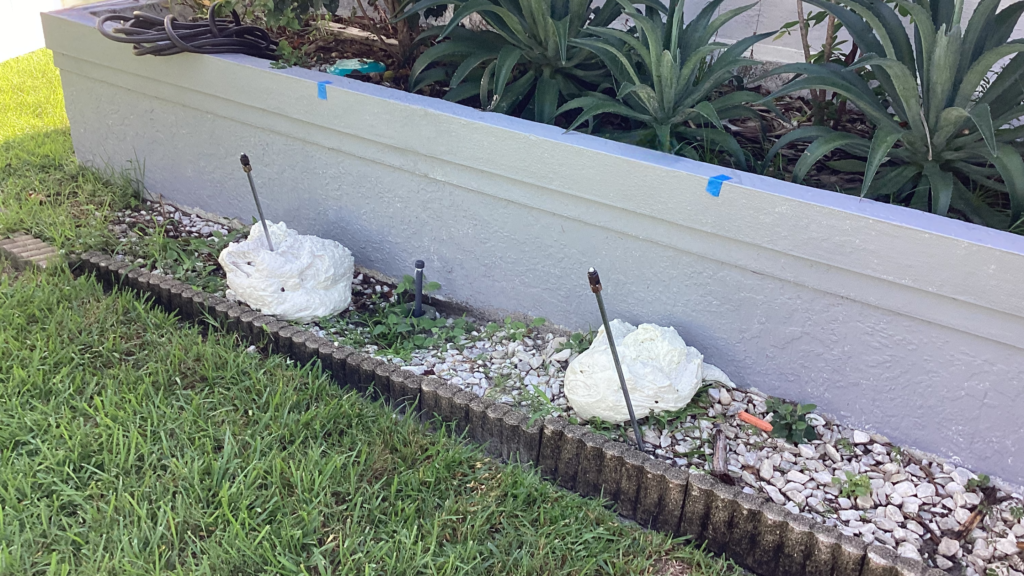
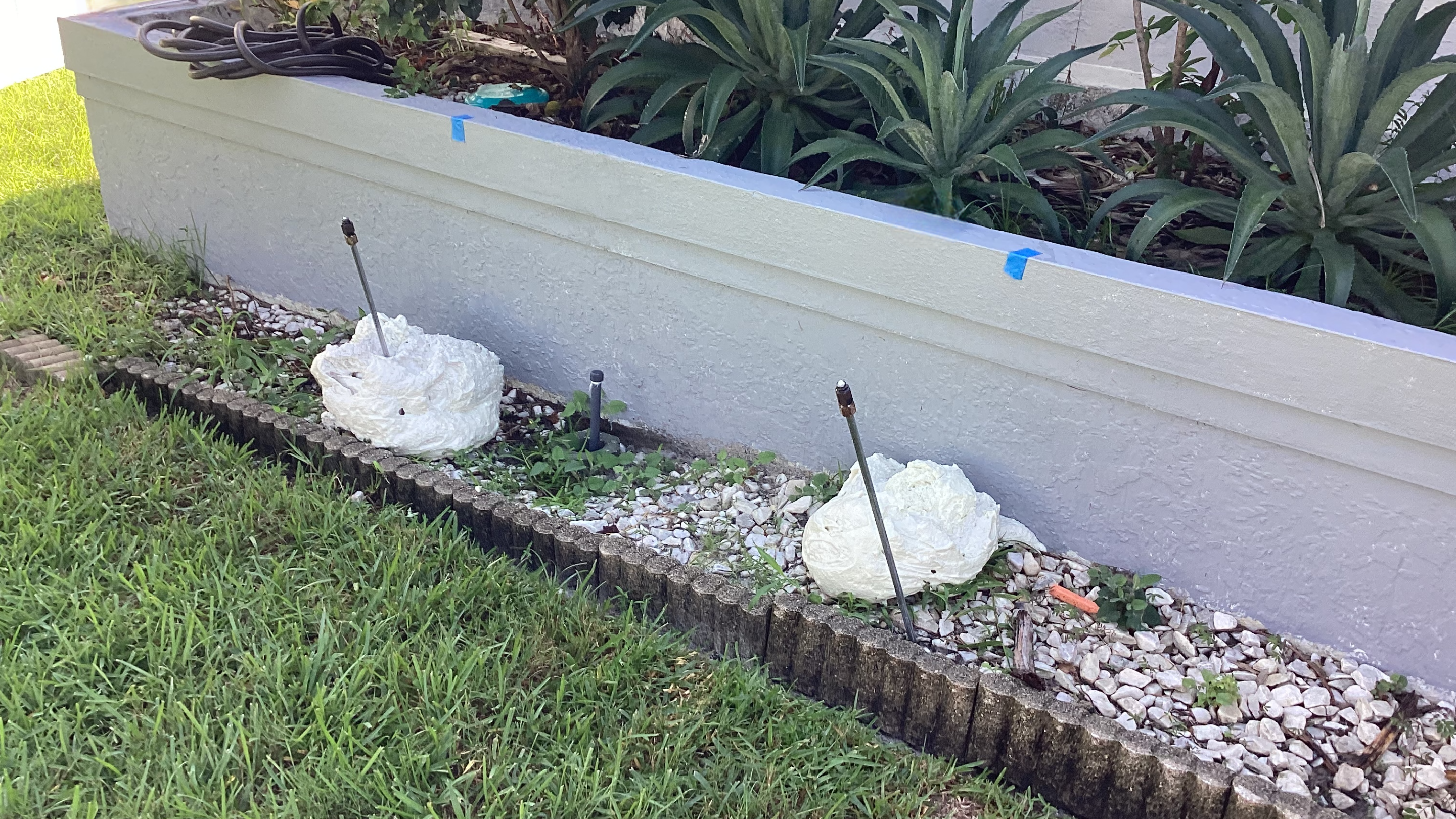
Helicon completed 4 structural polyurethane injections along the left side of the house. Approximately 200 pounds of two-part structural polyurethane grout was installed.
Structural polyurethane is introduced below grade through targeted injection locations. Once the two components react, the material expands within accessible voids and weaker soil zones.
For this Fort Myers project, the injections were intended to:
This is what turned the project from a simple crack-patching issue into a structural stabilization effort.
Foundation repair does not always mean installing push piers or helical piers.
Depending on the structure and the problem, a repair strategy may involve:
In this case, the problem was localized, and the chosen solution was polyurethane stabilization.
The key was matching the repair method to the documented condition rather than automatically using the most invasive system.
The project involved 4 targeted injection locations.
The source does not provide exact spacing, depths, or layout information, so those details should not be invented.
What is documented is that the four points collectively received approximately 200 pounds of structural polyurethane.
Using multiple injection locations allowed Helicon to distribute material through the designated treatment area instead of relying on one concentrated point.
The goal was to improve the support condition around the affected corner as a zone rather than simply treating the visible crack.
The homeowner planned to patch and paint the cracked area after the structural work. That was the correct order. Cosmetic repairs can improve appearance, but they do not improve the soil beneath a home.
If the visible crack were patched first and the support condition continued changing, the repaired area could reopen.
A more strategic sequence is: Stabilize first. Correct drainage. Repair the appearance afterward.
That gives the cosmetic repair a better opportunity to last.
Another positive aspect of this project was timing. The homeowner noticed the issue while it was still localized.
The rest of the corner appeared to be in good condition, and no broader cracking was documented.
Rather than waiting until movement became more obvious, he chose to address the affected zone early. That can help keep a repair focused.
A localized stabilization project involving four injection points is very different from a larger structural repair affecting multiple walls or sections of a home.
Early evaluation does not mean every crack requires immediate structural work. It means progressive or concerning cracking should be evaluated before it is dismissed as purely cosmetic.
The completed repair included:
The homeowner gained a focused structural solution without unnecessary excavation or a larger repair scope.
The project also reinforced an important point: the crack itself was not the only consideration.
Helicon addressed the support beneath the affected area, while the homeowner planned to redirect water away from the corner.
Together, those actions provided a more complete approach to protecting the treated area.
If you notice foundation cracking, settlement, sinking concrete, or changes around one corner of your home, repairing the surface alone may not address the underlying condition.
Helicon provides foundation repair, structural polyurethane stabilization, soil stabilization, concrete lifting, push piers, helical piers, underpinning, seawall repair, and related structural services throughout Fort Myers, Lee County, Southwest Florida, and communities across the state.
Call 844-HELICON to schedule an inspection and learn which foundation repair approach may be appropriate for your property.
FREE INSPECTION REQUEST