
Apollo Beach, FL
The Project
The Challenge
The Solution
FREE INSPECTION REQUEST

Market: Residential
Solution: Two-Part Structural Polyurethane Injections and Helical Piers
Services: Soil Stabilization and Foundation Repair
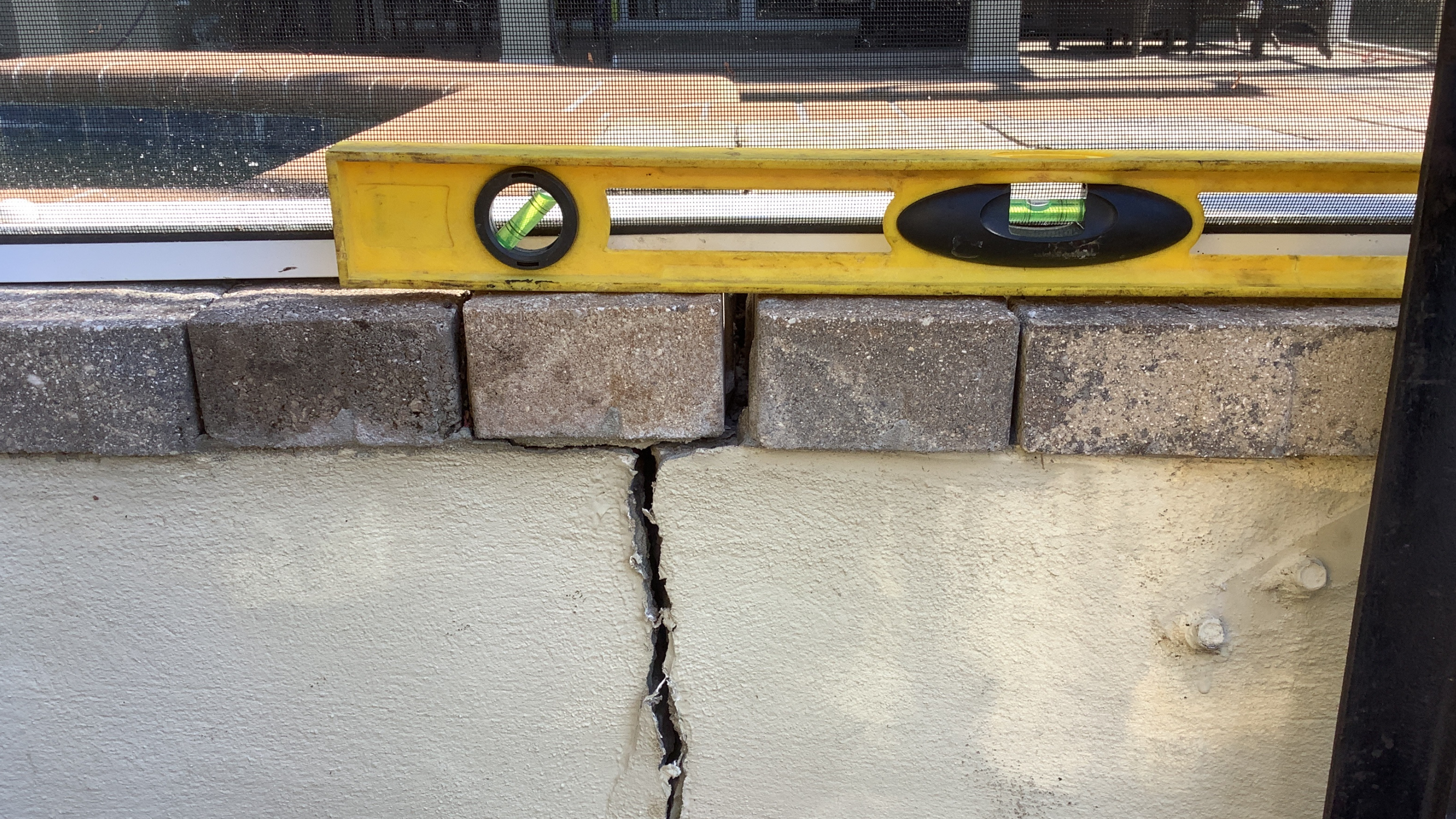
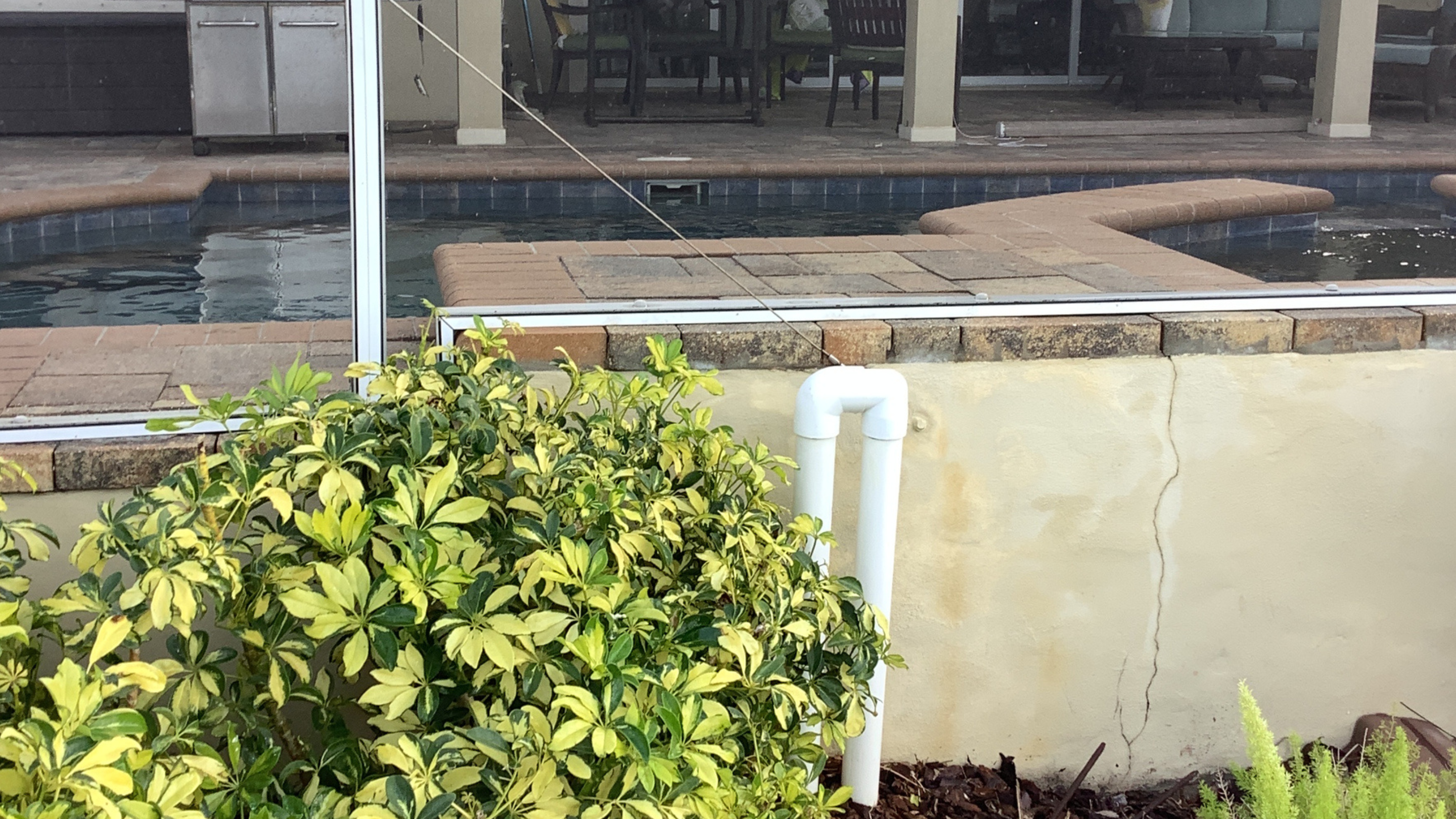
The customer had a pool deck sitting on a stem wall that cracked and settled due to poor soil compaction and no proper footing. This is a classic recipe for long-term distress in hardscape and light structural support areas. When a wall element depends on inconsistent or under-compacted soils, even a well-finished surface above it can begin to show cracking, separation, or settlement over time.
That is exactly what the homeowner was seeing. The stem wall had already moved enough to create distress, and the pavers in the same area were now part of the concern as well. The owner wanted to do the project the right way: restore the stem wall as much as practical, but also stabilize the soils under the pavers so the area would have a real chance of staying intact after the paver company returned to complete the visible finish work.
On poolside structures, visible cracking is often only the first signal of a deeper support issue. A stem wall may look like a small structural component compared to the pool shell or the main house foundation, but it plays an important role. It supports deck edges, hardscape transitions, and in many cases the finished visual line around the pool area. Once a stem wall settles, several secondary problems can follow:
That is why a depressed stem wall should not be treated like a purely cosmetic defect. The wall may be a relatively small element, but the consequences of ignoring it can spread into the broader pool deck area.
In Apollo Beach, where soil variability and moisture conditions can influence hardscape performance, this kind of movement is especially important to correct properly.
This project came with a few very real field challenges, and they mattered because the repair involved both deep support work and shallow stabilization in a pool environment.
One of the main concerns identified was pool plumbing in the area of the stem wall. Any time a repair is performed near a pool deck, plumbing becomes a major consideration. Stabilization work must be executed in a way that improves the support condition without damaging the very systems that make the pool functional. That required Helicon’s crew to monitor injection locations and pier placement carefully while working in a tight and sensitive zone.
An electrical cord running along the exterior stem wall had to be worked around or disconnected before pier installation. This added another layer of field coordination. The team could not simply focus on structural access; they also had to maintain safety and account for an active utility crossing in the work area.
The owner understandably wanted a lift of the stem wall if possible. But as Helicon discussed with him, the more important issue was making sure the soils below the pavers and the wall were stabilized enough to prevent repeat settlement after the paver company completed cosmetic work. In projects like this, lift without support correction can create a visually improved area that still moves later. Helicon had to frame the project around both goals: attempt lift where the structure responded well, but stabilize the support condition regardless.
Another important challenge was that Helicon identified another small crack occurring a little farther down the stem wall—one the customer had not previously noticed. That changed the repair strategy. Instead of treating only the most obvious damaged section, the team had to decide whether to extend the stem wall pier scope or stabilize the additional concern another way. The customer ultimately chose deep soil injections for that secondary area, which allowed the repair to address both the known failure zone and the newly identified risk area.
Helicon recommended a layered repair strategy that matched the conditions on site. Rather than relying on one repair method alone, the project used both helical piers and two-part structural polyurethane injections to address different parts of the problem.
Because the stem wall itself had cracked and depressed, the repair needed a way to provide more reliable support beneath that wall section. Helical piers were the right fit because they could give the stem wall a deeper and more dependable bearing path than the existing poorly compacted soils were providing.
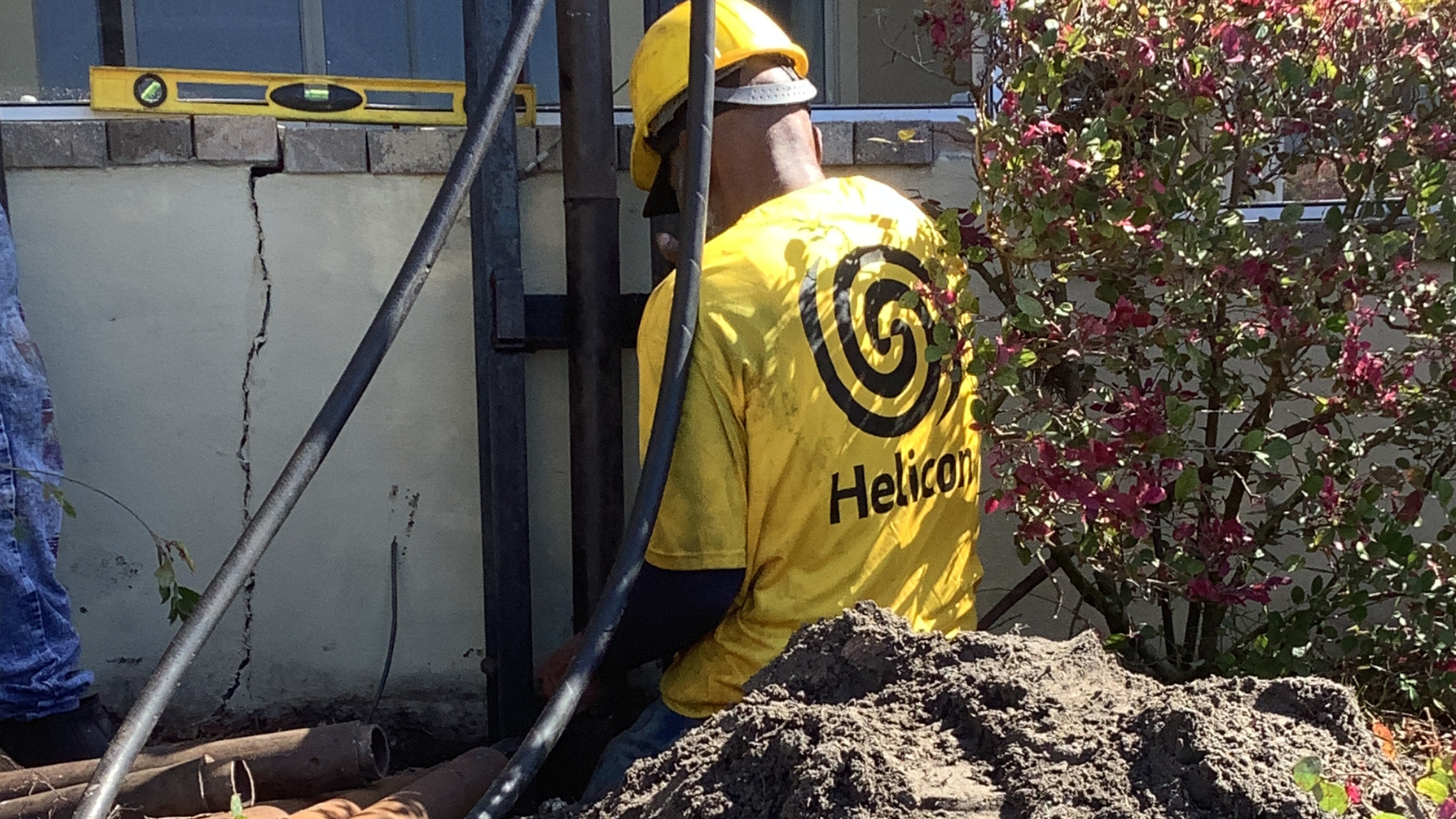
Helicon installed 4 helical piers under the stem wall. These piers served as the primary structural support solution for the depressed wall section and gave the team the ability to attempt a lift while improving the long-term support condition beneath the wall.
Helicon also discussed with the homeowner why it was so important to stabilize the soil under the pavers after the stem wall lift attempt. If the surrounding paver area were left untreated, the owner could end up paying for cosmetic paver repair only to see settlement return later. To prevent that, the project included 50 pounds of two-part structural polyurethane grout across 5 points under the pavers. This helped reinforce the paver support zone surrounding the stem wall repair.
For the additional small crack farther down the stem wall, the owner chose deep soil injections rather than adding more piers. Helicon completed 100 pounds across 5 points under the stem wall area to further stabilize the support condition there. This was a smart choice because it addressed the newly discovered risk area without unnecessarily expanding the pier installation, where another stabilization method could still provide meaningful structural value.
One of the strongest aspects of this project is that it did not rely on a single tool to solve everything. Different parts of the site had different needs.
The helical piers addressed the deeper structural support problem at the cracked and depressed stem wall.
The polyurethane injections under the pavers helped reduce the likelihood that the area would continue to settle after cosmetic work was completed.
The deep soil injections under the secondary stem wall crack area helped broaden the repair beyond the original visible failure zone. Together, these systems created a much more complete repair than a simple lift attempt or a paver reset would have delivered on its own.
This project added value in several ways.
Because the owner planned to have a paver company perform cosmetic work afterward, soil stabilization under the pavers was essential. Without that step, the same area could have settled again and undone the visible repair.
The helical piers and polyurethane work together to improve the support condition under the stem wall, reducing the risk that the existing crack and depression would worsen over time.
By identifying and treating the smaller crack farther down the wall, Helicon helped the homeowner avoid another likely future repair.
Once the project was complete, the poolside hardscape had a much stronger support condition than before.
Just as importantly, the homeowner now had a repair that reflected the actual conditions at the site—not just the visible crack that first drew attention.
Helicon is Florida’s trusted expert in soil stabilization, foundation repair, helical piers, concrete lifting, slab stabilization, seawall repair, and sinkhole remediation. We serve homeowners throughout Apollo Beach, Hillsborough County, and across Florida, delivering engineered repair solutions that protect structures from the ground up.
If you are seeing cracked pool deck walls, depressed hardscapes, or paver movement in Apollo Beach, Hillsborough County, or the Tampa Bay area, Helicon can help. Our team provides targeted stabilization solutions that improve support below the surface before cosmetic repairs are made.
Call 844-HELICON today to schedule your free inspection and find out whether helical piers and structural polyurethane stabilization are the right fit for your property.
FREE INSPECTION REQUEST