Direct Answer
Settled concrete does not always need to be torn out and replaced.
In the right conditions, polyurethane concrete lifting can restore support beneath a slab and raise settled concrete toward its proper elevation through small injection holes.
But the fact that concrete can potentially be lifted does not always mean it should be.
The condition of the concrete, the reason it settled, the support beneath it, and the amount of elevation recovery needed all matter.
This guide uses real Helicon concrete lifting projects from across Florida to show:
- What settled concrete looked like before repair
- Why the slab may have moved
- What Helicon found
- Why lifting was—or was not—the appropriate repair
- What the repair involved
- What the finished project looked like
The goal is not simply to raise the concrete. It is to restore appropriate support and address the condition causing the settlement when possible.
Read more: Concrete Settlement and Lifting in Florida Guide
What Concrete Lifting Can—and Cannot—Do
Polyurethane concrete lifting can be a good option when the concrete itself is still worth preserving but the soil or support beneath it has been lost.
Common applications include:
- Driveways
- Sidewalks
- Walkways
- Pool decks
- Patios
- Lanais
- Garage floors
- Interior slabs
- Other settled concrete surfaces
Depending on the project, polyurethane may be used to:
- Fill voids beneath the slab
- Restore contact between the slab and supporting material
- Improve support
- Attempt controlled elevation recovery
- Reduce trip hazards
- Improve transitions between adjacent slabs
But concrete lifting is not automatically the right solution for every damaged slab.
Replacement may make more sense when the concrete is:
- Severely cracked
- Heavily deteriorated
- Structurally broken
- Poorly configured for lifting
- Already near the end of its useful life
The fact that a slab can potentially be lifted does not always mean it should be.
Read more: Polyurethane vs. Mudjacking vs. Replacement: An Honest Comparison
How to Read These Before-and-After Projects
A dramatic after photo is useful—but it does not tell the entire story.
For each project below, we explain:
- What the homeowner saw
- What Helicon found
- Why the concrete settled
- Why lifting was appropriate
- What repair was performed
- What homeowners can learn from the project
Two slabs may look equally uneven but require different repairs.
Start with the cause. Then choose the repair.
Project 1: Sinking Driveway
Project location: Clearwater, FL
Concrete type: Driveway
What the Homeowner Saw
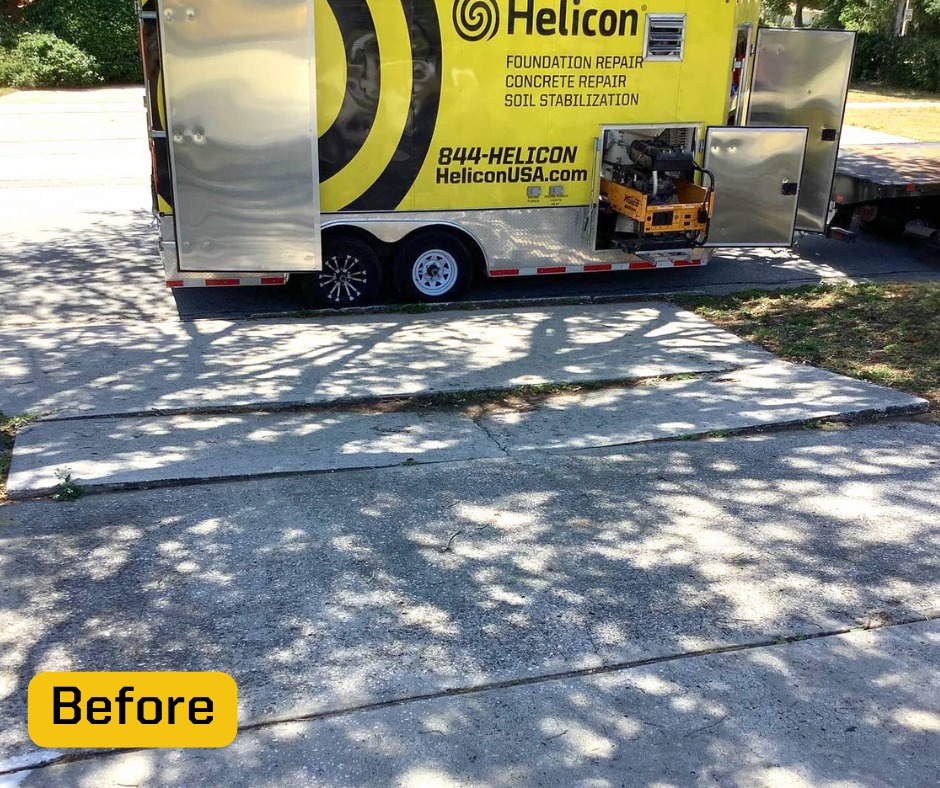
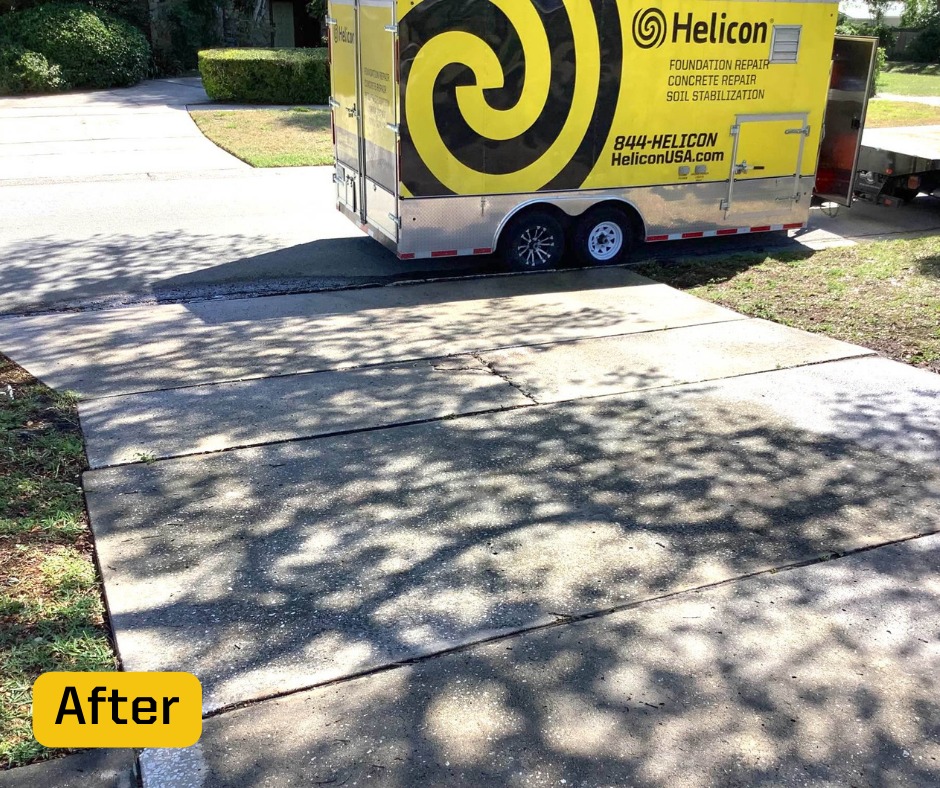
At a home in Clearwater, FL, the driveway and apron had settled unevenly, creating an unsightly trip hazard for the homeowner and visitors. Settlement like this is common in Florida due to soil erosion, void formation beneath slabs, and poor compaction during construction—all problems we see frequently across Tampa Bay neighborhoods.
What Helicon Found
Helicon found a scenario nearly identical to the one described. By choosing Helicon’s concrete lifting and soil stabilization services, the homeowner could fix the issue in hours instead of days—saving thousands compared to replacement.
Why Concrete Lifting Made Sense
While lifting a concrete slab may sound simple, achieving precise, long-lasting leveling requires skill. In Florida’s sandy soils, simply raising the slab isn’t enough—you must stabilize the base to ensure it won’t sink again.
The concrete itself remained in relatively good condition, so restoring support and attempting controlled elevation recovery offered a less disruptive alternative to removing and replacing the slab.
What Helicon Did
Helicon used polyurethane chemical grouting, a proven method for concrete lifting and soil stabilization in Florida’s unique geologic conditions.
Here’s how we solved the problem:
- Drilled small injection points in the affected driveway slabs
- Injected 174 pounds of high-strength polyurethane foam beneath the concrete
- The foam expanded instantly, filling voids, compacting loose soils, and gently raising the slabs
- Achieved a precise lift while ensuring proper drainage slope
The Result
In just one day, the Clearwater homeowner had:
- Extended lifespan of the driveway for years to come
- A level, hazard-free driveway
- Improved curb appeal without replacing concrete
- Stabilized soil to withstand future erosion
Homeowner Takeaway
Instead of tearing out and replacing the concrete, this smart, cost-effective solution restored safety and function while avoiding unnecessary waste.
Read about the full project here
Read more: Why Is My Driveway Sinking?
Project 2: Settled Pool Deck
Project location: Daytona Beach, FL
Concrete type: Pool deck
What the Homeowner Saw
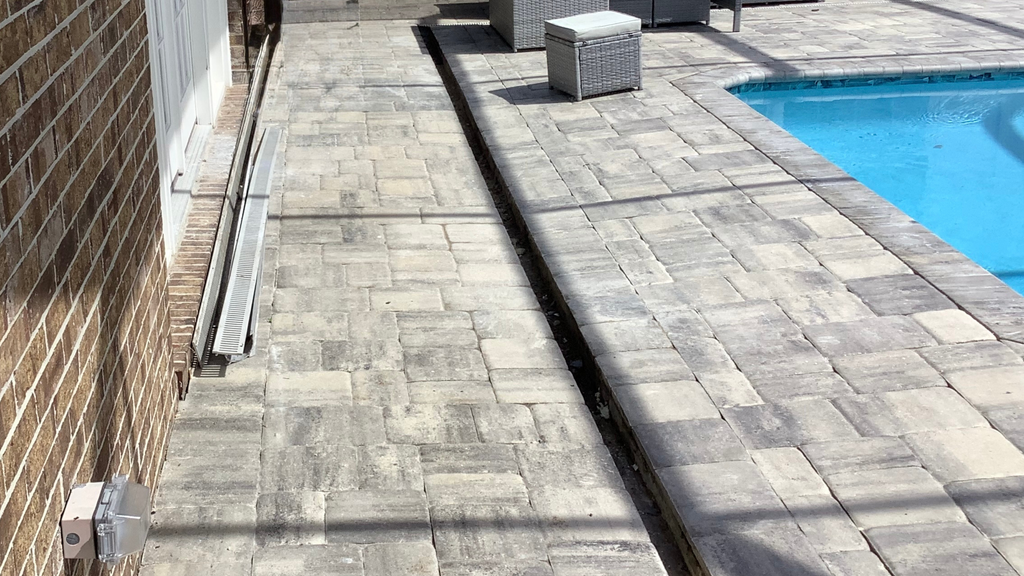
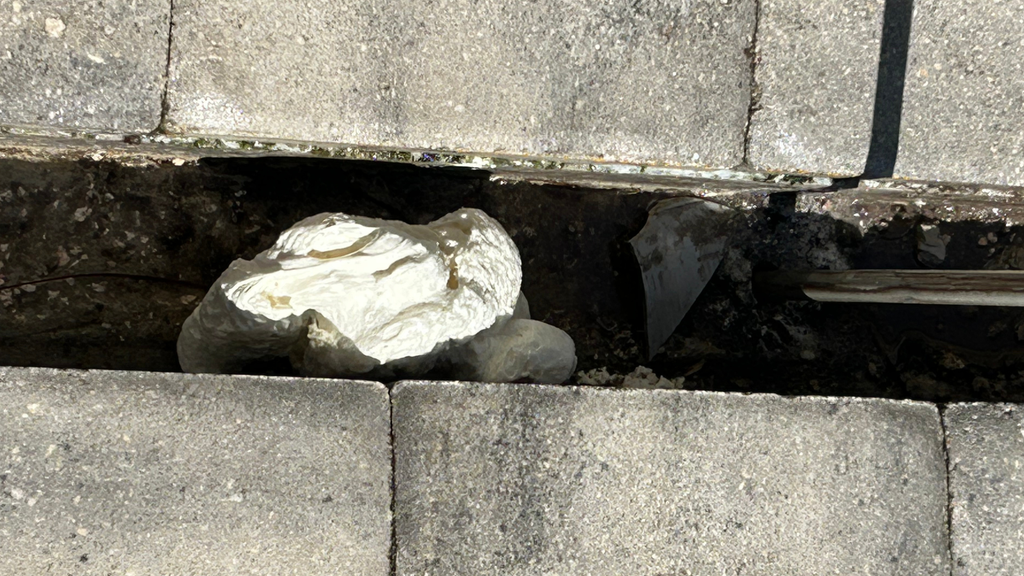
A recurring void beneath the drain and adjacent pavers that the owner repeatedly refilled without lasting success.
What Helicon Found
Progressive loss of support at the drain, paver settlement and rocking, moisture infiltration beneath the deck, and potential trip hazards.
What Helicon Did
Helicon deployed an injection grid specifically tailored to a channel drain within a paver system. Two‑part polyurethane is introduced as liquids; it flows to voids and low‑density areas, then reacts and expands in seconds to form a soil‑foam matrix that couples grains and re‑establishes uniform bearing—without adding significant dead load.
The Result
- Soil stabilization and void closure achieved: The chronic cavity beneath the Spee‑D channel was eliminated, and adjacent low‑density pockets were tightened.
- Uniform support restored: The drain channel and neighboring pavers now bear on a stiffened, uniform base, reducing rocking and edge settlement.
- Reduced water‑driven raveling: By interrupting soil migration paths, future washout risk at the drain is significantly reduced.
- No demolition, minimal downtime: Work completed via penny‑sized ports and limited paver handling; the area returned to use the same day under typical conditions.
- Ready for surface care: With soils stabilized, the owner can re‑seal pavers and perform routine deck maintenance with confidence.
Homeowner Takeaway
A settled pool deck can sometimes be restored without tearing out otherwise serviceable concrete—but the support problem beneath it should be understood first.
Read about the full project here
Read more: Why Is My Pool Deck Sinking?
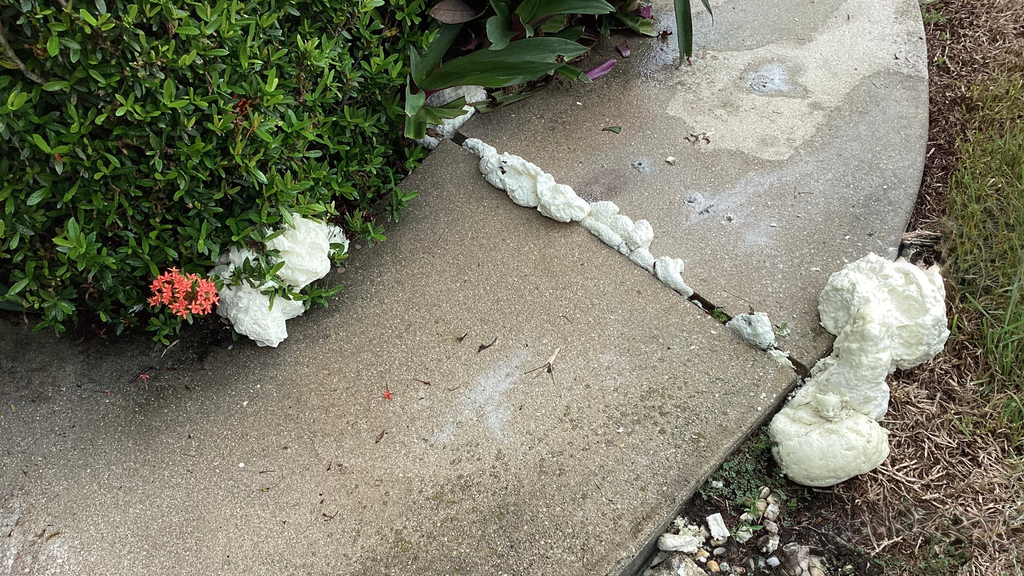
Project 3: Uneven Sidewalk or Walkway
Project location: Marco Island, FL
Concrete type: Sidewalk/walkway
What the Homeowner Saw
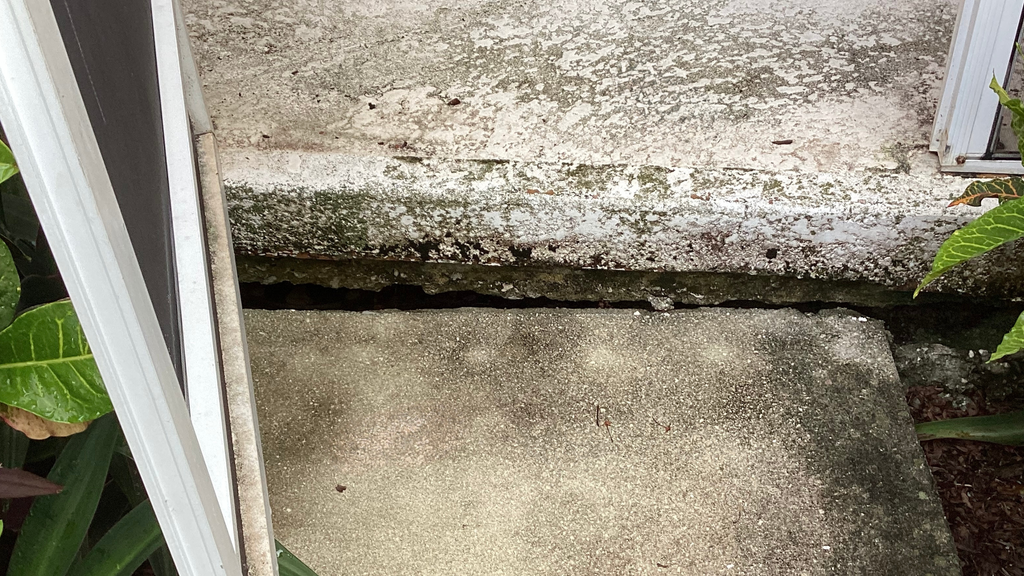
At the time of the appointment, the porch slab did not yet show major cracks on top of the concrete, which is an important detail. It means the homeowner acted at the right time—before the slab had fully telegraphed the void problem in a way that would likely make the eventual repair more extensive or more visibly damaging. In many stabilization projects, the best outcomes happen when the owner responds to the hidden support problem before the concrete deteriorates further.
What Helicon Found
The owner wanted the walkway and porch brought back as level and flush as possible, which is understandable. But Helicon also had to protect the long-term value of the project by making sure the slabs were actually stabilized, even if the full desired lift could not be achieved.
That is a hallmark of responsible slab work. A dramatic lift is not the only measure of success. In many cases, a slab that is safely stabilized and partially improved is a much better long-term result than a slab pushed too aggressively in pursuit of the perfect level.
What Helicon Did
Helicon selected two-part structural polyurethane injections because they offered the right balance of precision, minimal disruption, and structural benefit for a front porch and walkway stabilization project.
The Result
Once the injections were complete, the front entry condition had a much stronger support system beneath it.
Most importantly, the homeowner did not have to wait until the entry path became a bigger hazard. The repair addressed the issue while it was still highly treatable and before the porch slab itself showed major surface cracking.
Homeowner Takeaway
A relatively small amount of slab settlement can create a significant trip hazard even when the concrete itself remains usable.
Read about the full project here
Read more: Uneven Sidewalks: Causes and Repair Options
Project 4: Settled Patio or Lanai
Project location: Englewood, FL
Concrete type: Patio/lanai
What the Homeowner Saw
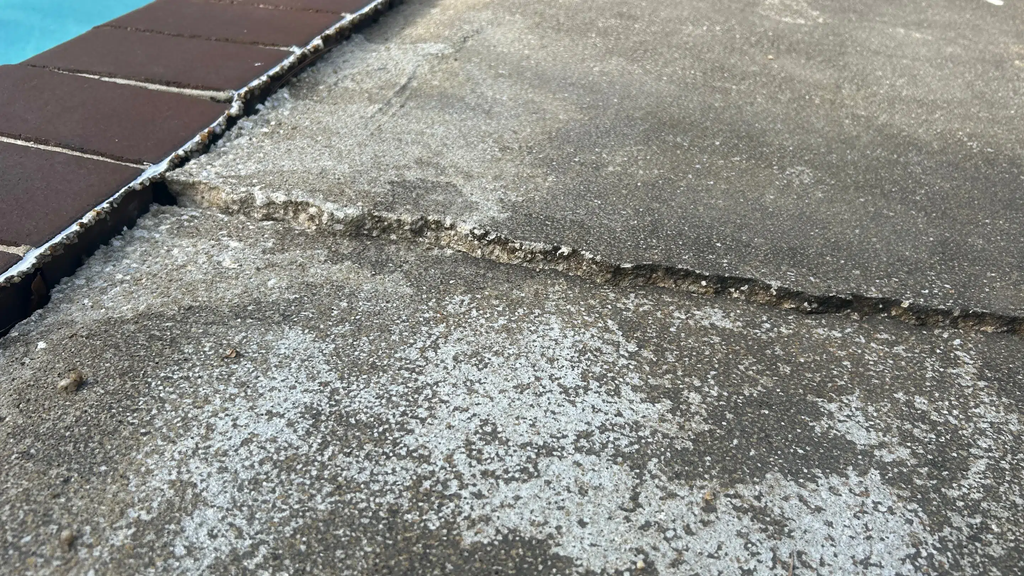
They saw uneven surfaces, loose soil, and hidden voids that needed to be addressed. The homeowner heard about Helicon from friends who had a positive experience.
What Helicon Found
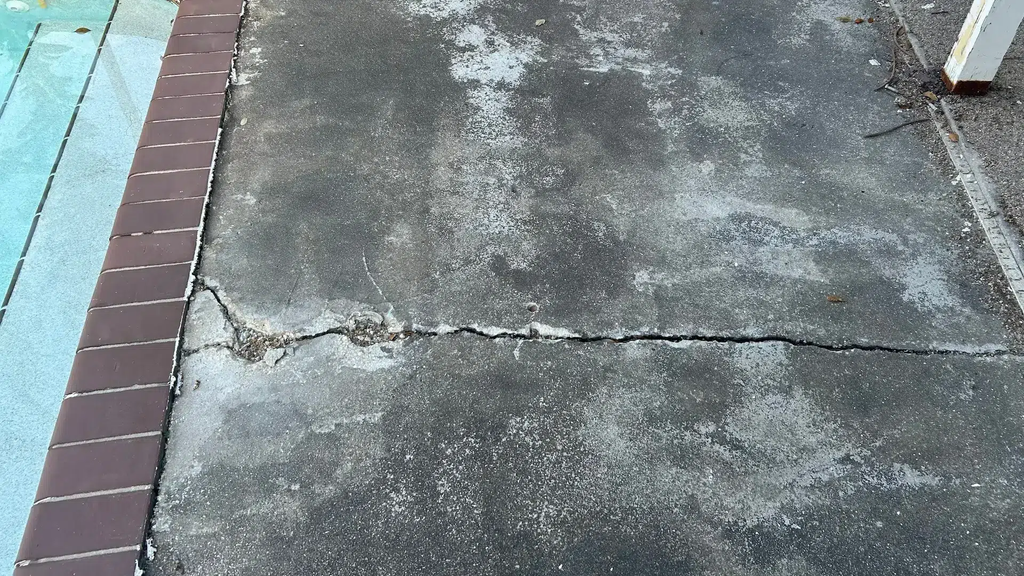
- Large subgrade void detected beneath the right‑hand pool deck—confirmed by percussion sounding and probe checks.
- Walkway cracking and settlement toward the front door, creating uneven joints and potential trip edges.
- Evidence of loose/under‑compacted soils near slab edges and re‑entrant corners.
Why Lifting Made Sense
Along the walkway and at the pool’s back right corner, micro‑corrections were made where the slab allowed, improving safety and appearance without over‑stressing the finish.
What Helicon Did
Helicon designed a two‑tier injection plan that combined soil stabilization (to address the cause) with slab interface injections (to re‑establish contact and enable controlled elevation recovery).
The Result
- Void closure & uniform support: Hidden voids under the pool deck and walkway were filled, and the shallow bearing layer was stiffened. The deck and approach now sit on a more uniform platform that won’t telegraph movement to new pavers
- Low disruption, fast turnaround: The work required no demolition and minimal equipment, making it ideal for an occupied residence; areas returned to light service the same day
- Paver‑ready substrate: The homeowner can proceed with paver installation confidently, knowing the subgrade has been stabilized and slab contact restored
Homeowner Takeaway
Patio settlement may be localized to the slab and supporting soils rather than indicating a structural foundation problem with the home.
Read about the full project here
Project 5: Garage or Interior Slab Settlement
Project location: Cape Coral, FL
Concrete type: Garage floor/interior slab
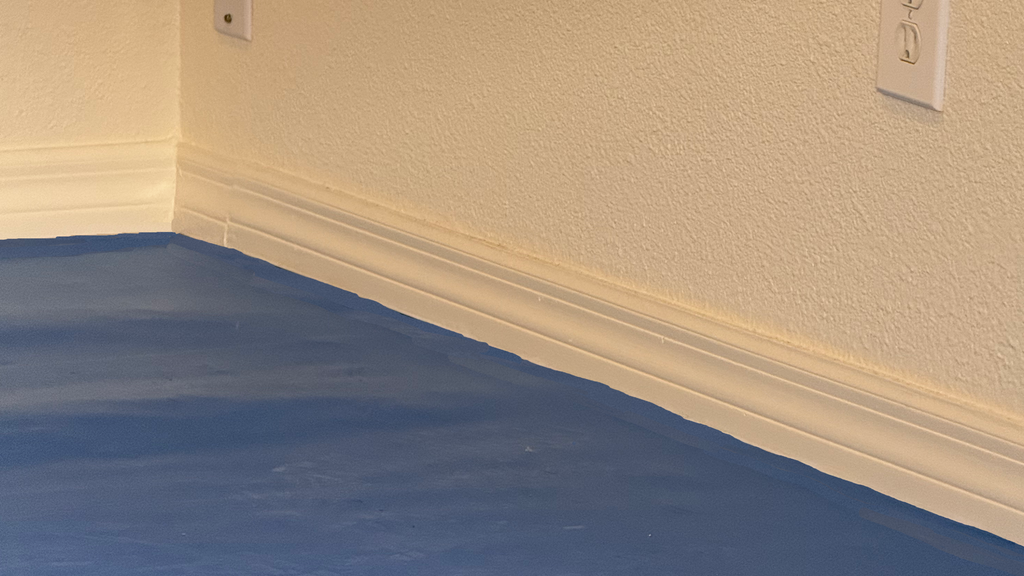
What the Homeowner Saw
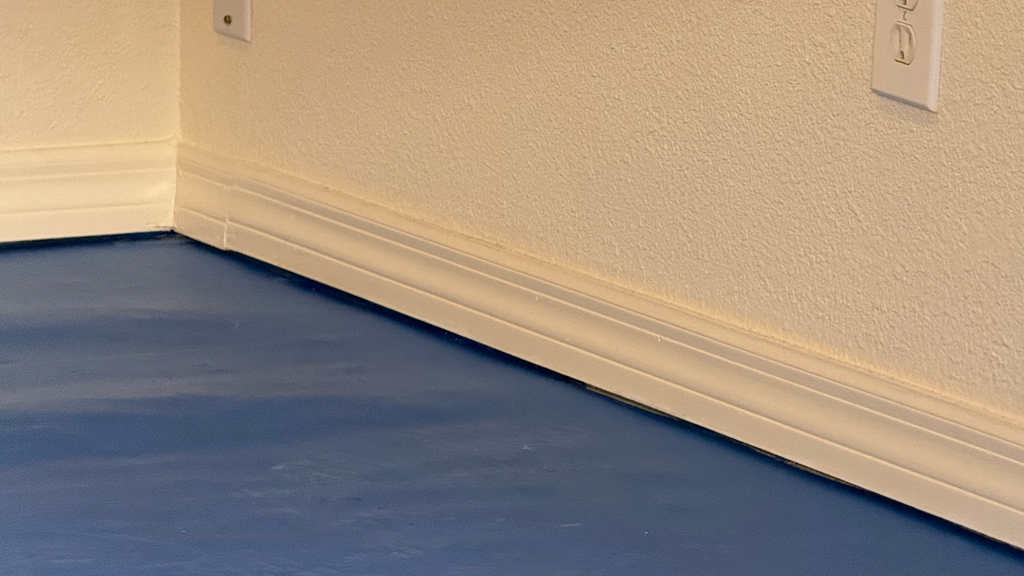
They saw ongoing settlement in the interior slab areas and at the trip edges that needed concrete lifting.
What Helicon Found
- Uneven thresholds between rooms and subtle trip edges.
- Localized hairline cracks and grout separations.
- Doors binding at the top/bottom—signs of racking related to slab movement.
- No evidence of plumbing leaks or broad karst activity; symptoms were localized to slab support rather than deep sinkhole behavior.
Why This Was Different From Foundation Underpinning
The settlement was concentrated within the slab rather than the load-bearing perimeter foundation, so structural underpinning was not the repair objective.
What Helicon Did
Helicon deployed a two‑tier injection strategy:
- Soil injections
- Slab Injections (Void Fill + Controlled Lift)
The Result
- Soil Stabilization Achieved: Voids filled and the bearing layer tightened—producing a uniform platform beneath the slab.
- Measured Lift Where Feasible: Select rooms saw noticeable elevation recovery, improving function and feel without over‑stressing finishes.
- Low Disruption: Small ports, rapid cure, and tidy staging allowed the homeowner to remain in residence; rooms were placed back in service quickly.
- SWFL‑Ready: The method directly addresses loose sands and moisture variability typical of Cape Coral and Fort Myers neighborhoods.
Homeowner Takeaway
An interior slab can settle independently from the structural perimeter foundation.
Read about the full project here
Read more: Interior Slab Settlement: Causes, Signs & Repair Options
Project 6: Concrete Settlement Caused by a Void
Project location: Mount Dora, FL
Concrete type: Driveway/walkway
What the Homeowner Saw
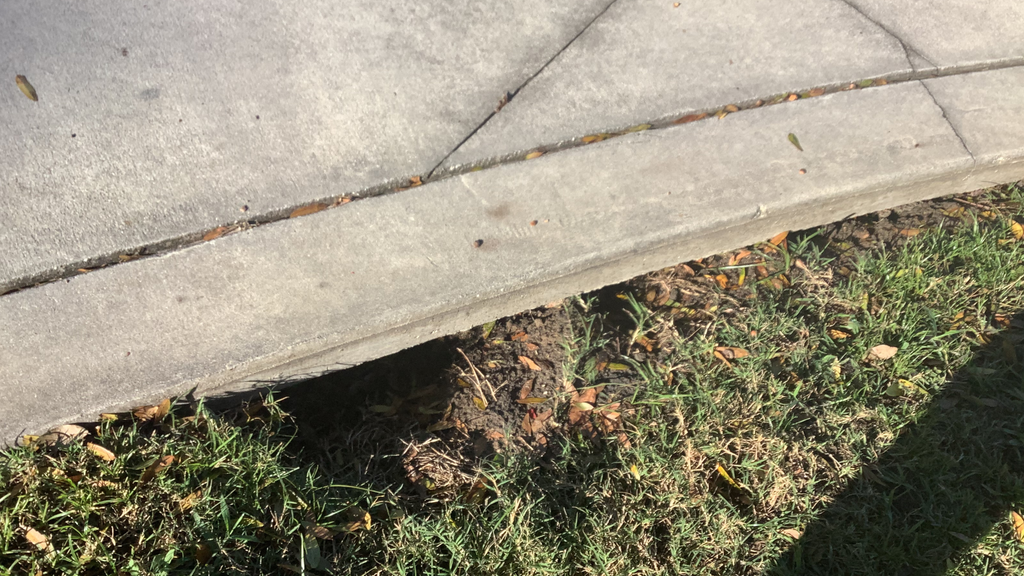
The homeowner’s issue involved both walkway slabs and driveway pads, making the problem more than just cosmetic. In residential properties, these are highly used surfaces. The owner understood that the problem had reached the point where it needed more than patching or a temporary surface repair. They wanted the unstable areas corrected at the source.
What Helicon Found
The walkway was no longer just uneven. It had become a real trip hazard. The driveway pads were also unstable enough that the owner no longer felt comfortable leaving a vehicle on them.
The voids under the slabs were deeper than anticipated. That is an important detail because it changes the repair requirements in real time.
Because the washout extended farther beneath the slabs than first expected, Helicon had to use more product than initially intended. That is one of the key advantages of an experienced stabilization crew: the willingness to adapt the plan in the field rather than under-treat the problem
Why the Void Mattered
A slab may bridge over an unsupported area temporarily.
As support is lost, the concrete can:
- Crack
- Settle
- Rock
- Develop uneven transitions
But:
Filling a void and improving weak soil beneath that void are related—but they are not always the same repair objective.
What Helicon Did
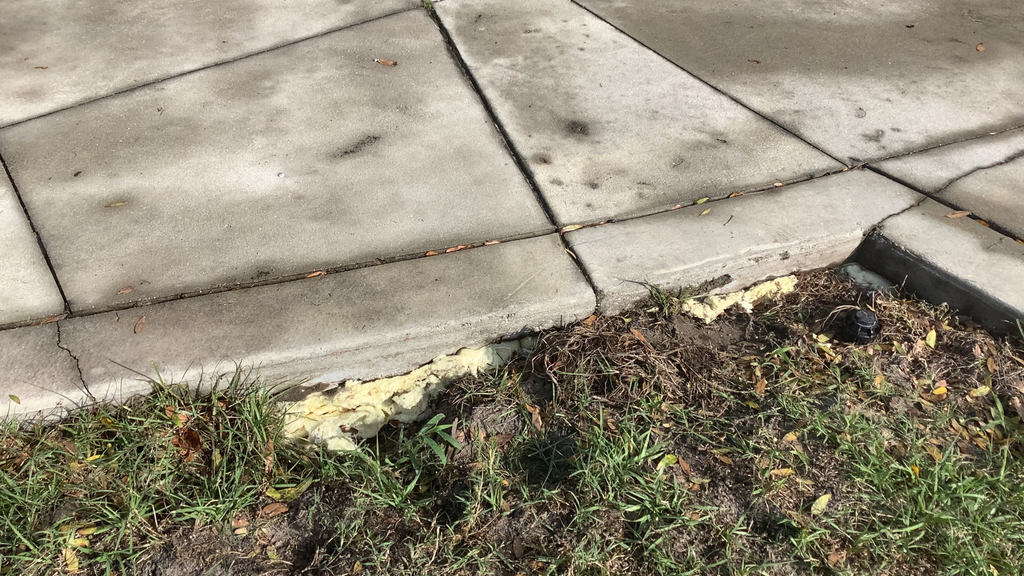
Helicon selected two-part polyurethane slab injection as the most effective solution for this project. This method is widely used in modern soil stabilization and slab-support work because it allows technicians to place material precisely where support has been lost, without excavation and without removing the slab.
The Result
To complete this stabilization successfully, Helicon used 212 pounds of two-part polyurethane injection material. That final amount reflects the actual field conditions rather than just the initial expectation. In other words, the repair was sized to solve the problem—not merely to match an early assumption.
Homeowner Takeaway
The visible settlement may be above the slab, but the actual repair objective is often beneath it.
Read about the full project here
Read more: Voids Under Concrete Slabs: What Causes Them and How to Fix Them
Project 7: Concrete Settlement Related to Drainage or Soil Washout
Project location: Lithia, FL
Concrete type: Pool deck
What the Homeowner Saw
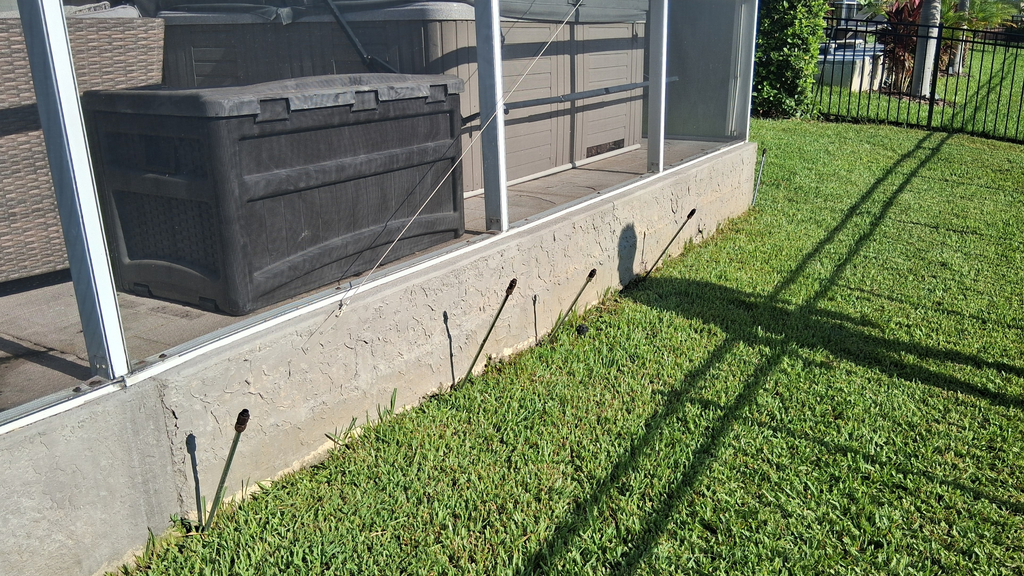
The homeowner’s concerns centered on two related conditions:
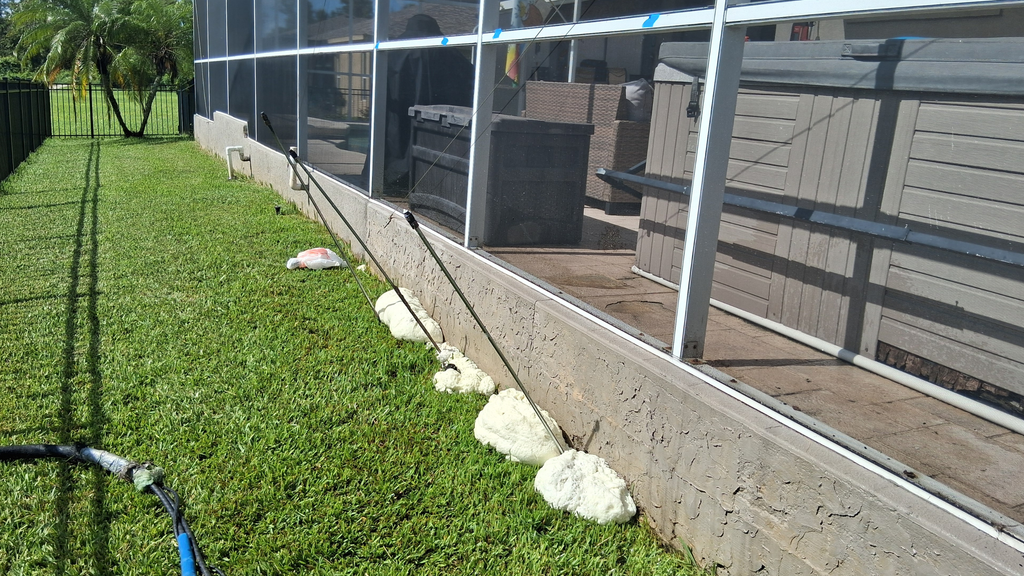
- Settlement of the pool deck
- Erosion associated with a leak in the deco drain
The homeowner wanted the affected soils and concrete slab stabilized.
Although the visible symptom was settlement in the pool deck, the drainage issue provided an important clue about why the support beneath the concrete may have been changing.
What Helicon Found
- Uneven sections of pool deck
- Gaps between adjacent slabs
- Cracking or separation
- Changes in drainage
- Water collecting in low areas
- Movement near pool coping or other hardscape
- Hollow or unsupported areas beneath concrete
Why Addressing the Cause Mattered
The presence of settlement does not automatically identify the exact cause. However, when erosion and a leaking drainage feature are already known to be present—as they were on this project—the subsurface support condition becomes an important part of the repair discussion.
Ignoring that condition and simply resurfacing the concrete could leave the underlying issue unresolved.
What Helicon Did
Helicon used two-part structural polyurethane injections for both the soil and slab portions of the project.
The repair was divided into two related treatment categories.
Soil Stabilization
The soil-stabilization portion included:
- 6 injection points
- 120 pounds of structural polyurethane material
Slab Stabilization
The project also required direct slab injections.
Helicon used 103 pounds of two-part structural polyurethane material for this portion of the repair.
The Result
The treatment improved support in the specified areas beneath the pool deck.
Key project benefits included:
- Targeted soil stabilization
- Improved slab support
- Treatment of areas affected by erosion
- Reduced risk of continued settlement in the repaired zones
- Minimal disruption compared with broader concrete replacement
- A stronger base for future cosmetic pool-deck improvements
Homeowner Takeaway
Concrete lifting works best when continuing soil-loss conditions are also addressed when they are contributing to the settlement.
Read about the full project here
Project 8: Pool Deck or Concrete Settlement Near a Seawall
Project location: Bonita Springs, FL
Concrete type: Seawall
What the Homeowner Saw
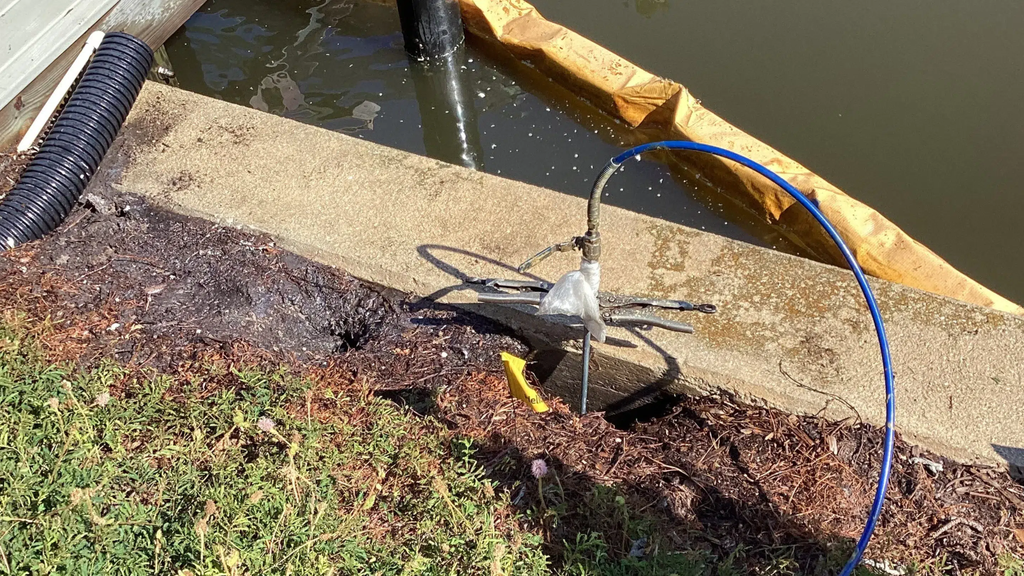
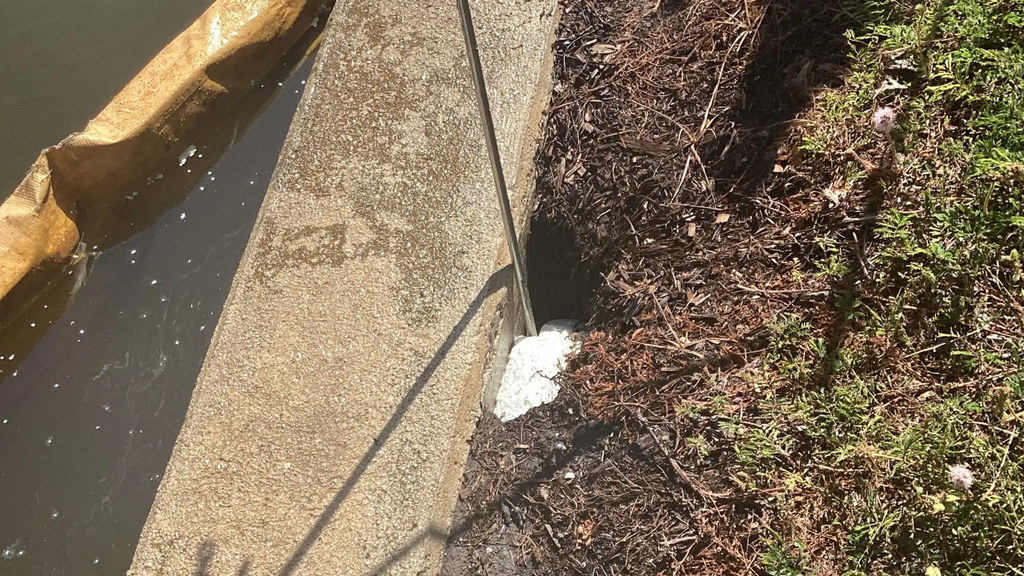
The homeowner originally contacted Helicon because of a large depression on the left side of the seawall and another problematic area near the jet ski lift. As the site was reviewed more closely, it became clear that the visible sinkage was only part of the story. Probing across the entire wall line showed that the soils behind the seawall were loose in multiple zones, meaning the wall had a broader support problem than the surface features alone suggested.
What Helicon Found
Helicon discovered the following issues:
- Water Was Actively Moving Through the System
- The Problem Extended Along the Whole Wall
- The Wall Needed Stabilization Before a More Serious Failure Developed
- Surface Safety Was Already Compromised
Why the Repair Sequence Mattered
If active seawall-related soil loss contributed to the settlement, simply lifting the concrete would not address the complete problem.
The sequence may need to be:
- Stop or reduce continuing soil loss
- Stabilize affected soil
- Restore slab support
- Attempt controlled lifting where appropriate
What Helicon Did
Helicon selected one-part permeation polyurethane grout for this project because it is well suited to the type of hidden support loss common behind seawalls. Unlike surface patching or simple top fill, permeation grout can move into voided or weakened subsurface zones and improve support where the washout is actually happening.
The Result
After the work was completed, the property had a significantly more stable support condition behind the seawall.
Key Project Outcomes
- The major depression on the left side was stabilize
- The smaller developing holes on the right were addressed before they could grow wors
- Loose soils behind the wall were reinforced
- Water movement pathways contributing to washout were reduce
- The seawall system was better protected against future support los
- The property became safer for the homeowner and guests
Most importantly, the homeowner no longer had to worry that the visible sinkage was quietly signaling a larger hidden failure in progress.
Homeowner Takeaway
When erosion is causing concrete settlement, repairing the soil-loss problem can be just as important as raising the slab.
Read about the full project here
Read more: Seawall Problems in Southwest Florida Homes
Project 9: Dramatic Multi-Slab Elevation Recovery
Project location: St. Cloud, FL
Concrete type: Patio/sidewalk
What the Homeowner Saw
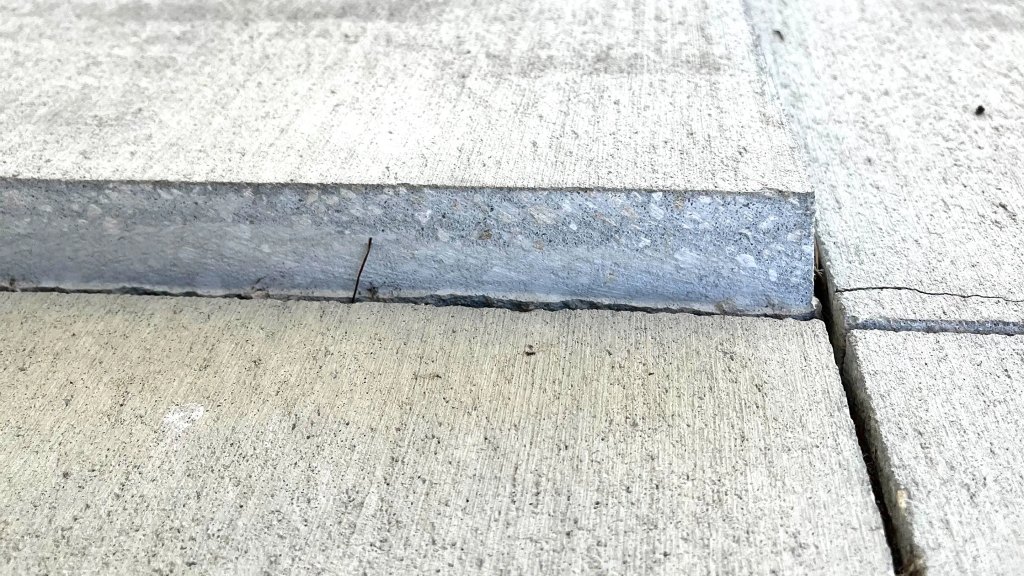
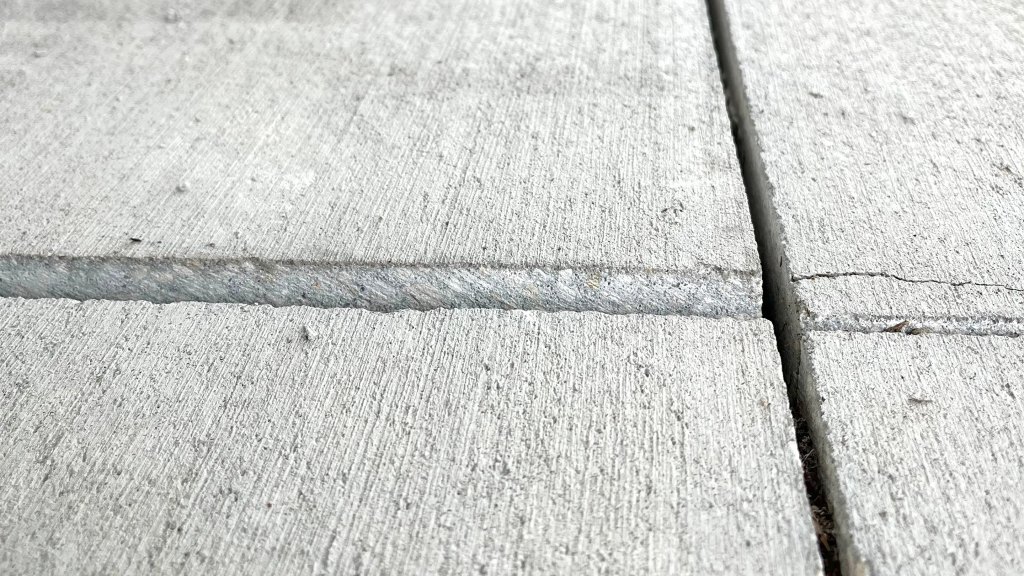
A homeowner in St. Cloud, FL, just southeast of Orlando, had multiple uneven concrete slabs across their patio and sidewalk area. These irregular surfaces created dangerous trip hazards throughout the backyard, posing a risk to family, guests, and especially elderly visitors.
What Helicon Found
The biggest challenge was the number of uneven slabs. With so many affected areas, achieving a uniform lift without damaging surrounding concrete required precision injections and expert control.
Florida’s soil conditions—particularly loose sands and organics common in Central Florida—make patios and sidewalks especially vulnerable to settlement.
Why Lifting Was Appropriate
By combining slab and soil injections, every concrete section was lifted, stabilized, and secured. The patio and sidewalks were transformed into safe, even walking paths—eliminating hazards while extending the lifespan of the concrete.
Left untreated, the slabs would continue to sink, worsening trip hazards and reducing property value.
What Helicon Did
Helicon injected 165 pounds of two-part polyurethane chemical grout directly beneath the concrete slabs. This expanding resin:
- Lifted slabs back toward their original position
- Re-leveled the walking surfaces
- Bonded with the concrete base to restore stability
To address deeper voids and weak soils, Helicon installed 17 soil injection points, using 340 pounds of grout. The resin expanded into surrounding soils, creating a dense, water-resistant foundation layer that prevents further settlement.
The Result
After completion, the St. Cloud home now has:
- Even, trip-free surfaces around the patio and sidewalk
- Stronger soils that prevent future settlement
- A safer, more valuable property with extended concrete life
The project demonstrates how polyurethane chemical grouting provides a fast, non-invasive, and permanent solution for uneven slabs.
Homeowner Takeaway
Controlled polyurethane lifting can sometimes recover significant elevation while preserving existing concrete, but the amount of recovery varies by project.
Read about the full project here
What These Florida Concrete Lifting Projects Teach Us
Looking across real projects, several patterns become clear.
The Concrete Is Only Part of the Problem
The visible slab may be uneven, but the underlying problem is often a loss of support beneath it.
Similar Settlement Can Have Different Causes
A sinking driveway might involve poor compaction.
A pool deck might have a void.
A patio may be affected by drainage.
Concrete near a seawall may be losing support because backfill is escaping.
The symptom can look similar even when the cause is different.
Lifting and Soil Stabilization Are Not Always the Same Objective
Polyurethane can be used for several different purposes.
Concrete Lifting
The objective is to restore support beneath a settled slab and attempt controlled elevation recovery.
Structural Void Filling
The objective is to fill unsupported space directly beneath concrete.
Soil Stabilization
The objective is to improve weak or loose soil beneath the slab or structure.
The material may be similar. The repair objective is what changes.
Read more: What Is Soil Stabilization and How Does It Work?
A Successful Repair Does Not Always Mean Perfectly Level Concrete
Existing:
- Cracks
- Joint geometry
- Adjacent structures
- Drainage
- Slab condition
- Previous movement
Can affect how much elevation recovery is practical.
The goal is controlled improvement and dependable support—not forcing every slab into an unrealistic condition.
Replacement Is Sometimes the Better Answer
If the slab is severely deteriorated or structurally broken, preserving it may not make sense.
Preferred does not mean universally superior.
What a Before-and-After Photo Does Not Tell You
Before-and-after photos are useful because they show visible improvement.
But a photograph alone does not tell you:
- Why the slab settled
- Whether a void existed
- Whether deeper soil was weak
- Whether drainage contributed
- Whether the concrete itself was worth preserving
- How much elevation recovery was appropriate
- Whether lifting or replacement offered better value
That is why the evaluation matters.
The repair method should follow the condition—not the marketing.
How Polyurethane Concrete Lifting Works
The exact process depends on the slab and site, but a typical project may involve:
- Identifying the settled areas and desired elevation recovery
- Drilling small injection holes through the concrete
- Injecting structural polyurethane beneath the slab
- Allowing the expanding material to fill unsupported areas
- Monitoring slab movement during injection
- Making controlled adjustments across multiple injection locations
- Sealing the injection holes when the work is complete
Polyurethane lifting generally requires much smaller access points than traditional mudjacking and adds relatively little weight beneath the slab.
The objective is controlled support restoration—not simply injecting more material.
Read more: Polyurethane vs. Mudjacking vs. Replacement: An Honest Comparison
Concrete Settlement Checklist for Florida Homeowners
Look at the Concrete
- Is one slab lower than the slab beside it?
- Has a new trip hazard developed?
- Are cracks increasing?
- Is the concrete rocking or moving?
- Are there gaps beneath slab edges?
- Does the concrete itself still appear worth preserving?
Look Around the Slab
- Is soil missing along the edge?
- Is water collecting nearby?
- Is drainage flowing toward the settled area?
- Is there an irrigation or plumbing leak?
- Is the slab near a seawall?
- Was the area recently excavated or disturbed?
Document the Change
- Take photographs
- Photograph the entire slab, not just the low spot
- Document the uneven transition
- Compare older photos when available
- Note whether settlement appears to be progressing
You do not need to determine the repair yourself.
The objective is to understand what moved and what may have caused the loss of support.
How Helicon Evaluates Settled Concrete
Helicon has worked with Florida soils, slabs, and foundations since 2004.
A concrete evaluation may consider:
- Slab condition
- Settlement pattern
- Existing cracks
- Elevation differences
- Visible voids
- Soil loss
- Drainage
- Nearby structures
- Seawalls
- Construction history
- Whether the slab is worth preserving
The important questions are:
- Why did the concrete settle?
- Is the slab still a good candidate for lifting?
- Is there a void beneath it?
- Does weak soil also need improvement?
- Is continuing erosion or drainage contributing?
- How much elevation recovery is appropriate?
- Would replacement make more sense?
The goal is the least invasive repair that properly addresses the movement.
Have Sinking Concrete at Your Florida Home?
If your driveway, sidewalk, pool deck, patio, lanai, garage floor, or interior slab has settled, start by determining:
- What moved?
- Why did it lose support?
- Is the concrete still worth preserving?
- Is there a void beneath the slab?
- Is the supporting soil weak?
- Is erosion or drainage contributing?
- Can the concrete be lifted safely?
- Would replacement be a better option?
Start with the cause. Then choose the repair.
Read more: Concrete Lifting
FAQ
Can settled concrete really be lifted?
Yes, in appropriate conditions. Structural polyurethane can be injected beneath a slab to restore support and attempt controlled elevation recovery.
What types of concrete can Helicon lift?
Depending on the condition, potential applications include driveways, sidewalks, pool decks, patios, lanais, garage floors, interior slabs, and other concrete surfaces.
Is concrete lifting better than replacement?
Not always. Lifting can make sense when the concrete is still worth preserving. Replacement may be better when the slab is severely cracked, deteriorated, or otherwise unsuitable for lifting.
Why did my concrete settle?
Common contributors include poor compaction, loose fill, voids, erosion, washout, organic material, and other loss of soil support.
Does a sinking driveway mean my foundation is sinking?
No. Exterior slabs can settle independently because they have different loads and support conditions from the home’s structural foundation.
Can a pool deck be lifted?
Yes, in appropriate conditions. The condition of the slab, surrounding structures, support beneath it, and cause of settlement all matter.
Can concrete near a seawall be lifted?
Sometimes. If seawall-related soil loss is contributing to settlement, that condition should generally be addressed as part of the overall repair plan.
What’s the difference between concrete lifting and void filling?
Concrete lifting is intended to restore support and attempt elevation recovery. Void filling restores contact beneath the slab without necessarily attempting significant lifting.
What’s the difference between concrete lifting and soil stabilization?
Concrete lifting focuses on the slab. Soil stabilization improves weak or loose soils beneath the slab or structure.
Does polyurethane add a lot of weight beneath the concrete?
No. Structural polyurethane is relatively lightweight compared with traditional cementitious mudjacking materials.
Will the concrete become perfectly level?
Not necessarily. The amount of recovery depends on slab condition, geometry, surrounding structures, cracks, and other site conditions.
Will existing cracks disappear when the slab is lifted?
Not necessarily. Elevation recovery may improve some conditions, but existing cracks do not automatically disappear.
How large are the injection holes?
Polyurethane lifting typically uses relatively small drilled injection holes compared with traditional mudjacking.
How quickly can the repaired concrete be used?
The structural polyurethane used for these applications reacts and cures rapidly. Exact return-to-service timing depends on the material, project, and repair conditions.
Can lifting fix the problem permanently?
No contractor should treat “permanent” as automatic. Long-term performance depends on the underlying cause, soil conditions, drainage, slab condition, and whether continuing support problems have been addressed.
What should I do first if my concrete is sinking?
Document the settlement and have the slab and surrounding conditions evaluated before deciding between lifting, stabilization, or replacement.