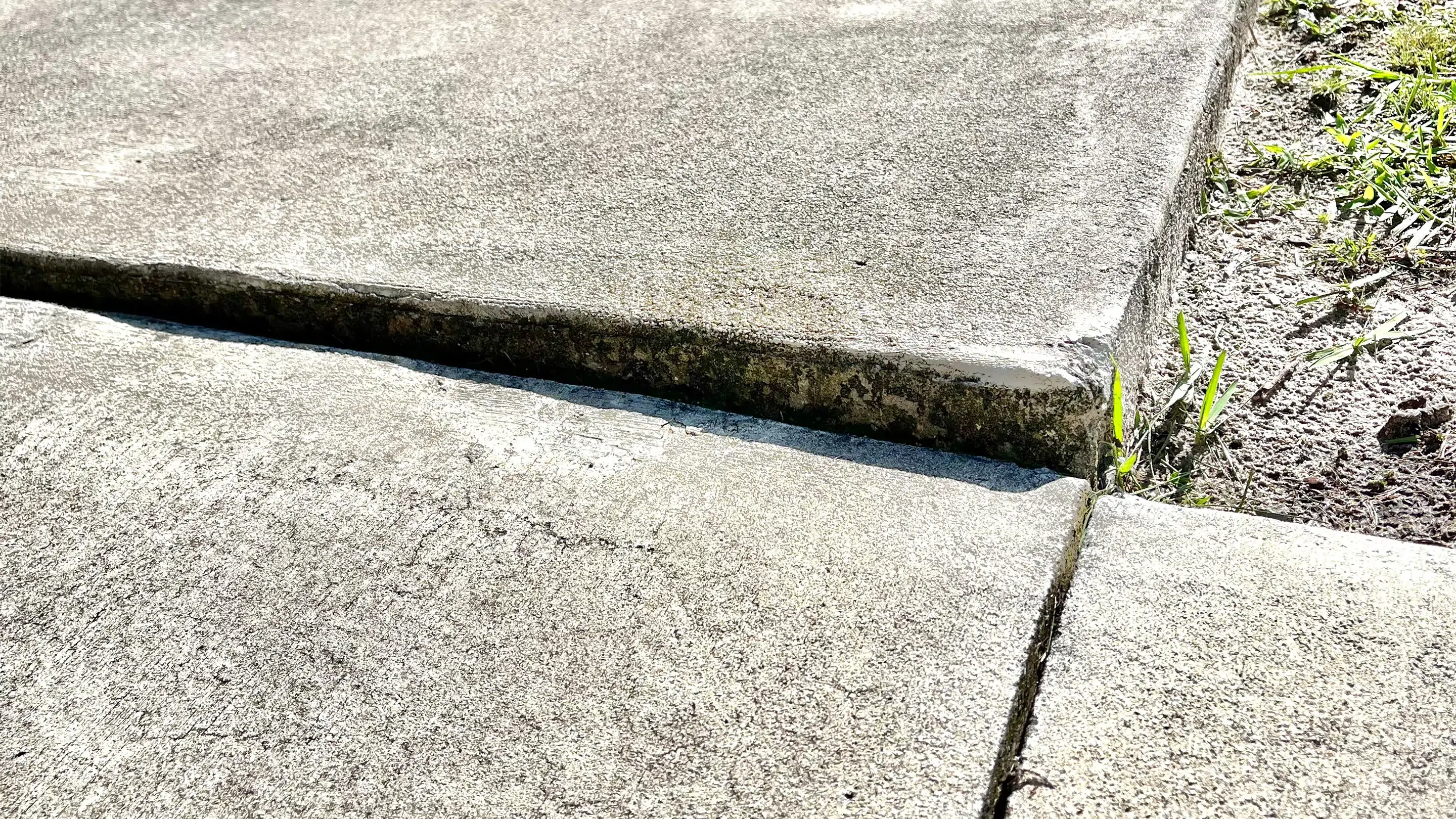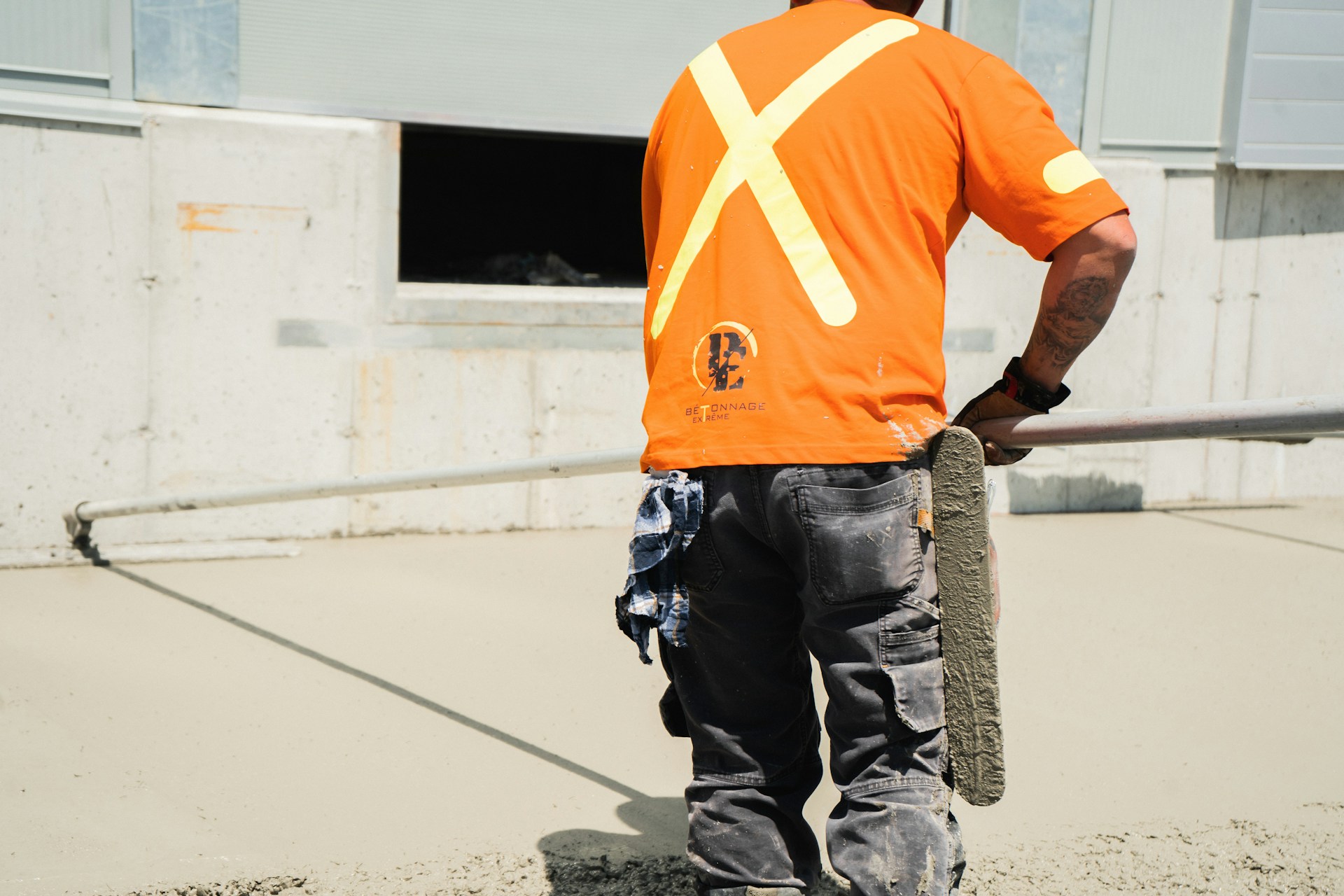
A raised sidewalk joint outside your leasing office or a cracked walkway near a loading dock rarely feels urgent on a Tuesday morning. But every day it sits unaddressed; that slab is an exposure your property carries, whether a tenant complains about it or not.
For commercial property managers, HOA boards, and multi-tenant site owners across Florida, concrete trip hazard liability is less about a single bad crack and more about whether you can show you were paying attention.
Florida’s sandy fill soils, seasonal downpours, and root systems from mature landscaping all push and pull at concrete in ways that create uneven walkways faster than in drier, more stable climates.
Ground conditions like these can turn a flat sidewalk into a liability within a few wet seasons, and the properties that manage that risk well are the ones that inspect on a schedule and document what they find.
What Should a Walkway Inspection Look For?
A walkway inspection should catch raised joints, settled slabs, and drainage problems before a tenant or visitor does. The goal is to catch changes in the walking surface early, while a small correction can still solve the problem.
Florida concrete moves for reasons that have little to do with poor original construction. Sandy fill soils compact unevenly under repeated rain, and tree roots near mature landscaping lift slab edges over a few seasons. A walkway that was flush last year can develop a quarter-inch lip this year without any dramatic event.
Measure Raised Joints and Broken Edges
Vertical displacement matters most. A straightedge and a tape measure, or a simple gap gauge, let you record the exact height difference at a joint or crack.
The U.S. Access Board’s accessibility standards treat level changes up to a quarter inch as acceptable without treatment, and up to a half inch only if beveled at a shallow slope. Anything beyond that generally needs correction. Write the measurement down every time, even when the defect looks minor.
Check Settled Slabs, Drainage, and High-Traffic Routes
Settled slabs often trace back to poor drainage. Water pooling against a foundation or walkway edge softens the soil beneath it, and the slab follows gravity.
Walk the property’s highest-traffic paths first: main entrances, parking lot crossings, and routes near dumpsters or delivery doors. These areas see the most foot traffic and the most exposure if a hazard goes unaddressed.
- Cracked or spalled panels near drain outlets
- Standing water after rain that lingers more than a few hours
- Grade that slopes toward the building instead of away from it
- Joints where one panel sits visibly higher than its neighbor
Once you know what to look for on a single walk, the next question is how to make that walk repeatable every quarter without missing sections of the property.
How Can Teams Run a Consistent Quarterly Walk-Through?
A consistent quarterly walk-through works when it follows the same route, uses the same tools, and produces the same kind of record every time. Consistency is what turns a one-time inspection into a maintenance program.
Sidewalk maintenance fails most often not because nobody looks, but because different people look in different ways at different times. One quarter someone eyeballs the lot from a golf cart. The next quarter, someone else photographs every crack in detail. Neither approach, on its own, builds a usable history.
Map Every Walkway the Property Maintains
Start by drawing or listing every walkway segment the property maintains, including connectors between buildings, ramps, and any path that crosses a parking area. Use this map as your route for every future walk.
Number or label each segment so findings can be tied to a specific location later, such as “north entrance, panel 3, east edge.” A property with ambiguous location labels ends up with a log that’s hard to act on months later.
Use the Same Measurement and Photo-Dating Process Each Time
Pick one measurement tool, whether that’s a straightedge, digital level, or gap gauge, and use it every quarter so numbers are comparable over time. A quarter-inch reading in March should mean the same thing in September.
Photos should include a wide shot of the full panel and a close-up with a measuring tool in frame, with the camera automatically dating them. This documented, comparable approach is what separates a defensible sidewalk maintenance routine from a casual glance.
- Fixed route: walk the same order every quarter so nothing gets skipped
- Fixed tools: use the same measuring device and camera settings each time
- Fixed fields: record location, measurement, photo, and date in the same format
Mapping the property and standardizing the process gives you consistent findings. The next step is deciding exactly what to do with each finding once you have it.
What Should Go in the Hazard and Repair Log?
A hazard and repair log should record where a defect is, how big it is, when you found it, and what happened next. Without those four pieces, a photo or a memory of “we knew about that” doesn’t hold up as a maintenance record.
Trip hazard repair decisions get easier when the log already organizes the facts. A property manager reviewing a raised joint six months later shouldn’t have to guess whether it moved, whether someone flagged it before, or whether a work order ever went out.
Record Location, Offset, Photos, and Inspection Date
Each entry needs a specific location description, not just “front walkway.” Use panel numbers or landmark references tied to your walkway map.
Pair every location with its measured offset in inches, a photo file reference, and the inspection date. This structure holds up under review because it answers the basic questions anyone reviewing the log will ask: where, how big, and when.
Track Work Orders, Interim Measures, and Completed Repairs
A hazard that gets flagged but not fixed still needs a record. If cones, tape, or paint mark a hazard temporarily, log when that interim measure went up and when it came down.
Sidewalk repair often can’t happen the same day a hazard is found, especially on a large property with multiple buildings. Your log should show the gap between discovery and resolution, along with the interim step taken to reduce exposure during that gap.
- Date flagged and who flagged it
- Interim control used, such as cones or paint marking
- Work order number and date submitted
- Repair method and completion date
A log built this way does more than track concrete. It shows a pattern of attention over time, which naturally raises the question of how accessibility rules fit into that same maintenance picture.
Where Do Accessibility Standards and Maintenance Duties Fit?
Accessibility standards and maintenance duties intersect at every accessible route on a commercial property, from parking to entrance. A trip hazard on that route is both a safety issue and a compliance question.
Under the Department of Justice’s Title III regulations, commercial properties that serve the public have an ongoing duty to remove architectural barriers in existing facilities whenever it’s readily achievable, including hazards along accessible routes.
Check Changes in Level Along Accessible Routes
Any accessible route, meaning the path a wheelchair or mobility device would use from parking to entrance, deserves closer scrutiny than a side walkway. A raised joint that’s a minor annoyance elsewhere can block access entirely along this path.
Walk these routes separately from your general sidewalk inspection and measure every level change, no matter how small it looks.
Confirm Who Maintains Sidewalks at Property Boundaries
Sidewalk maintenance duty isn’t always obvious at a property’s edge. Some segments belong to the municipality, some to the property owner, and some fall to a tenant depending on the lease.
Pull your site plan and any lease agreements to confirm which walkways are your responsibility versus the city’s. This distinction matters for who schedules repairs and who documents the inspection.
- Sidewalk sections within the property line
- Connector paths between parking and public right-of-way
- Shared walkways between adjacent tenant spaces
Take Legal and Coverage Questions to Counsel or Your Insurer
Questions about what a specific hazard means for your legal exposure, or how your policy responds to a claim, belong with your attorney or insurance carrier. A maintenance log supports those conversations, but it doesn’t replace legal or coverage guidance.
Once you know which walkways you must maintain and which routes carry accessibility weight, the next practical question is how to prioritize the repairs.
How Should Managers Prioritize Concrete Repairs?
Prioritize concrete repairs by matching the repair method to the size and cause of the defect, not by fixing whatever looks worst first. A small raised edge and a widely settled slab call for different solutions and different urgency.
Florida’s karst limestone geology, especially across the central and west-central parts of the state, means some soil movement traces back to void formation below the surface rather than simple surface wear. A sidewalk that keeps re-settling after repeated patching deserves a closer look at what’s happening underground, not just another surface fix.
Match Cutting or Grinding to a Localized Raised Edge
Concrete cutting and concrete grinding work well for a single raised joint or lip, where the rest of the slab sits flat and sound. These methods reshape the existing concrete instead of replacing it.
This approach suits smaller, isolated offsets and can often be completed within hours rather than days, though the final cost depends on slab condition and how many edges need blending.
Assess Leveling When a Sound Slab Has Settled
Concrete leveling, including concrete raising through polyurethane foam injection, fits situations where an entire slab has settled but the concrete itself remains structurally sound. This method lifts the panel back toward its original grade instead of cutting into it.
- Cutting or grinding: best for a single raised lip on an otherwise flat, sound slab
- Leveling or raising: best for a settled but structurally intact panel
- Replacement: best when the concrete is cracked, spalled, or the slab has broken into separately moving pieces
Commercial sidewalk leveling through foam injection is a non-invasive option that avoids demolition, which matters on properties that need walkways back in service quickly.
Plan Replacement When the Concrete or Route Geometry Cannot Be Restored
Replacement becomes the right call when the concrete itself has deteriorated, such as spalling or exposed rebar, or when the route’s slope can no longer meet accessible grade requirements through lifting alone. Weighing concrete slab lifting against full replacement can help clarify which category a given slab falls into.
Choosing the right repair method for each defect keeps your maintenance program efficient rather than reactive, which brings the process back to routine.
Make Walkway Safety a Documented Routine
A documented routine is what turns walkway safety from an occasional concern into a standing part of property operations. Properties that manage concrete trip-hazard liability well aren’t the ones with perfect concrete forever; they’re the ones with a clear, repeatable record of inspecting, measuring, and acting.
Florida’s soil conditions guarantee some amount of ground movement every year, whether from sandy fill settling, tropical storm rainfall saturating the ground, or tree roots pushing against slab edges. A quarterly walk, a consistent measurement method, and a hazard log that tracks each repair from flag to completion give a property a defensible answer to “what have you been doing about this?”
Reviewing your trip hazard mitigation options periodically alongside your own walk-through data can help confirm your team is catching the same warning signs professionals look for. A written routine, kept up consistently, is the strongest tool a commercial property has for managing this exposure over time.
Frequently Asked Questions
What Constitutes a Sidewalk Trip Hazard on a Commercial Property?
A sidewalk trip hazard is typically any abrupt change in walking surface level, commonly a quarter inch or more, along with cracks, spalling, or settled panels that catch a foot or wheel. The exact threshold for action can vary depending on location, traffic, and whether the walkway is part of an accessible route.
Who Is Responsible for Sidewalk Repair Outside a Florida Business?
Responsibility depends on property lines, lease terms, and local ordinances, so it varies from one commercial site to another. Review your site plan and lease agreements, or check with your property’s counsel, to clarify which walkway segments fall under your maintenance duty.
How Often Should Our Team Inspect Commercial Walkways?
A quarterly walk-through covers most commercial properties, with more frequent checks at high-traffic entrances or after major storms. Properties with recurring soil movement or root activity may benefit from monthly checks on specific problem areas.
What Should We Record When We Find an Uneven Concrete Joint?
At minimum, record the exact location, the measured vertical offset, a dated photo, and the inspection date. If the hazard isn’t repaired immediately, also log any interim measure used and the work order tied to the eventual repair.
Does Fixing a Raised Edge Automatically Make an Accessible Route ADA Compliant?
Not necessarily, since accessible routes have broader requirements than a single level change, including slope, width, and surface continuity. A property’s accessibility compliance is a legal and design question best confirmed with counsel or a qualified accessibility reviewer, not assumed from one repair.
If your commercial property has walkways that raise questions during your own inspections, a free inspection from Helicon can identify what’s happening beneath the surface and outline what a permanent fix involves.