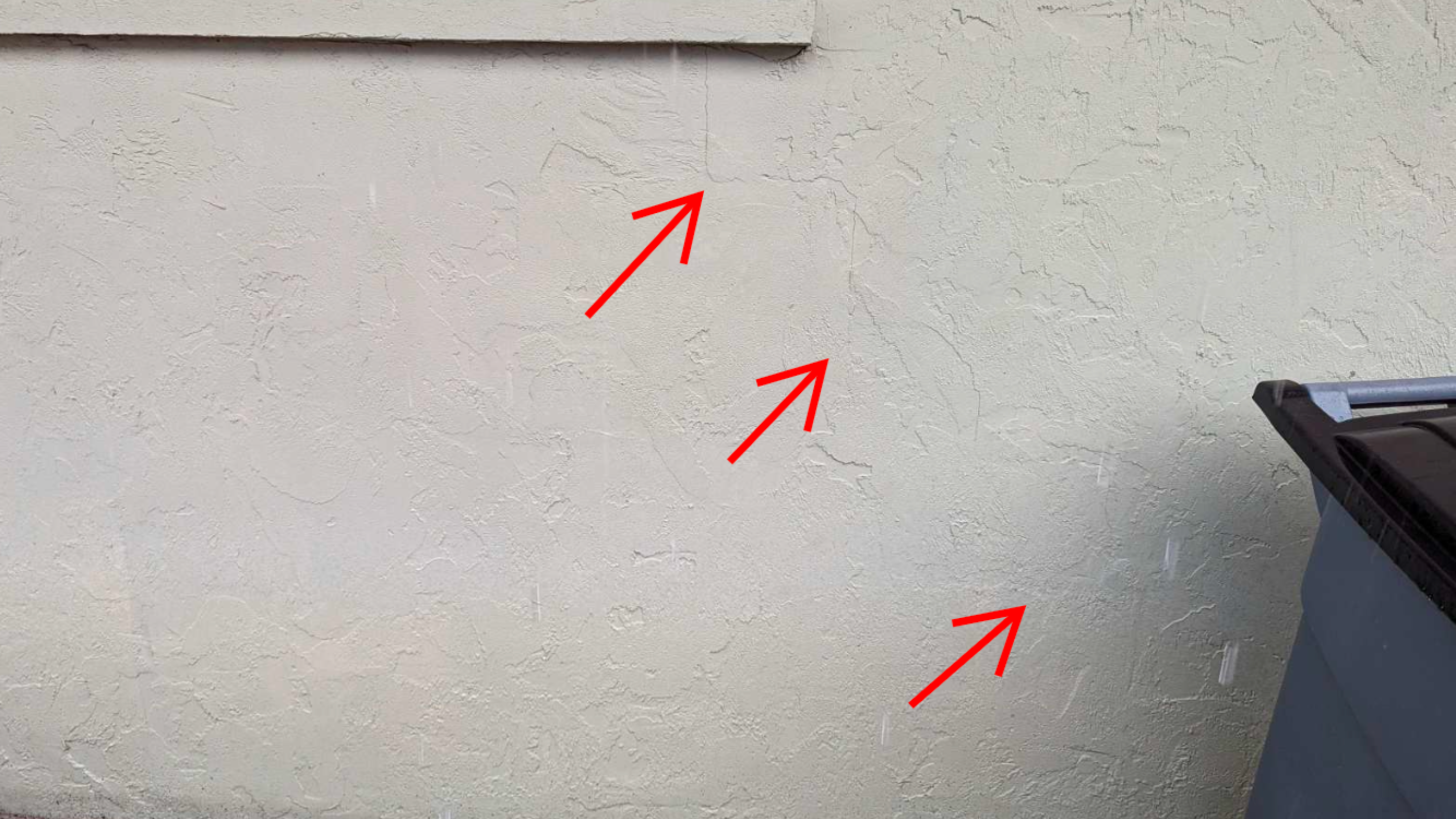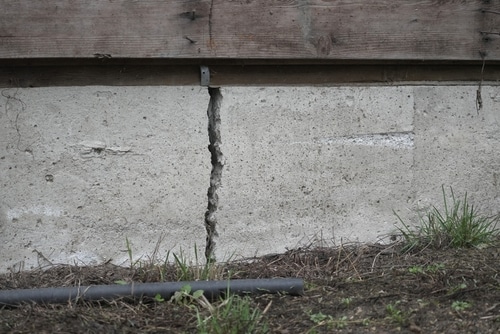
Direct Answer
Sometimes a foundation contractor may recommend more repair than your home actually needs.
That does not automatically mean the contractor is dishonest.
Different recommendations can result from:
- Different interpretations of the symptoms
- Limited experience with certain soil or slab conditions
- A company primarily offering one repair method
- A conservative approach that favors repairing a larger area
- Incomplete evaluation of drainage, leaks, or soil loss
- Confusing slab settlement with foundation movement
- Different assumptions about whether movement is active
- Sales incentives or processes that can sometimes favor larger projects
- Failure to consider monitoring or less invasive alternatives
- Simple professional error
The important question is:
“What evidence shows that this repair is necessary?”
A contractor should be able to explain what appears to be moving, what evidence supports that conclusion, which areas need repair, and why the proposed method fits the condition.
Different does not automatically mean dishonest. Unexplained does deserve scrutiny.
If you are questioning whether foundation repair is needed at all, see our related guide.
Read more: When You Do NOT Need Foundation Repair
Why Foundation Contractors Can Reach Different Conclusions
Foundation repair requires interpretation.
Contractors may evaluate:
- Crack patterns
- Doors and windows
- Floor elevations
- Exterior movement
- Drainage
- Soil conditions
- Slab settlement
- Water or plumbing history
- Construction details
- Whether symptoms are changing
Two experienced contractors can sometimes look at the same property and reach different conclusions.
One may believe a corner of the foundation is actively settling. Another may believe the movement is old and stable. A third may believe an interior slab or shallow-soil problem is creating symptoms that do not require underpinning.
The homeowner should not simply choose the contractor who sounds most certain.
The goal is to understand why the recommendations differ.
Read more: What a Foundation Inspection Looks Like
Different Opinion vs. Unsupported Recommendation
A different recommendation is not necessarily a bad recommendation.
What matters is whether the contractor can connect the proposed work to the conditions at your property.
| Situation | Reasonable Explanation | Deserves More Questions |
| Larger repair area | Symptoms, elevations, or design support the additional area | Cannot explain why more area is included |
| Piers instead of polyurethane | Evidence suggests deeper support is needed | Says one system is always better |
| Monitoring instead of repair | Symptoms appear stable and contractor explains what to watch | Meaningful symptoms are dismissed without evaluation |
| Immediate repair | Evidence indicates significant or progressing movement | Urgency is based mainly on sales pressure |
| Soil stabilization | Weak shallow soils or support loss are identified | Injections are recommended without explaining the soil condition |
| More piers | Locations relate to the affected structure and repair design | More piers are presented as automatically safer |
The issue is not whether a proposal is large or small.
It is whether the contractor can explain why that scope fits the property.
1. The Contractor May Be Interpreting the Symptoms Differently
Foundation evaluations involve professional judgment.
Consider a home with a stair-step crack, a sticking exterior door, a lower floor elevation near one corner, and a settled driveway nearby.
One contractor may see a pattern of foundation settlement. Another may believe the driveway is unrelated and the interior elevation difference is historic.
Those interpretations can produce very different repairs.
Ask:
“Which findings are most important to your recommendation?”
The answer should connect the observed symptoms to the proposed repair rather than simply repeat the conclusion.
Read more: What Questions Should I Ask a Foundation Contractor?
2. A Company May Primarily Sell One Repair Method
Specialization is not inherently bad.
A contractor that installs thousands of piers may be extremely good at underpinning. A polyurethane specialist may be highly skilled at soil stabilization and slab support.
The concern arises when the available product begins determining the diagnosis.
If every problem leads to the same repair method, ask:
“When would you not recommend this system?”
A knowledgeable contractor should understand where its preferred method does and does not fit.
Piers, soil stabilization, void filling, concrete lifting, and drainage correction address different conditions.
The repair method should follow the diagnosis—not the other way around.
Read more: How to Choose the Right Foundation Repair Company
3. Slab Settlement May Be Mistaken for Foundation Settlement
Interior slabs, garage floors, driveways, patios, and walkways can move independently from the structural foundation.
A garage slab, for example, may settle because of poor compaction, washout, voids, leaks, or settlement of the fill beneath it.
That does not automatically mean the surrounding foundation needs piers.
Likewise, an interior floor slab can develop low areas while the perimeter foundation remains relatively stable.
The contractor should distinguish:
“What slab is moving?”
from:
“What structural foundation is moving?”
Confusing the two can result in a repair that is much larger than the actual problem requires.
Read more: Why Is My Garage Floor Sinking?
Read more: Interior Slab Settlement: Causes, Signs, and Repair Options
4. Water or Drainage Problems May Be Overlooked
Water can contribute to settlement by causing erosion, washout, voids, or loss of shallow soil support.
Possible sources include:
- Poor grading
- Roof runoff
- Downspouts
- Plumbing leaks
- Irrigation leaks
- Stormwater problems
A contractor focused primarily on structural repair may address the resulting movement without adequately considering the water source.
That does not necessarily make the structural repair unnecessary. But the overall plan should account for relevant water problems.
Ask:
“Is water contributing to this condition, and how is that being addressed?”
Read more: Drainage Problems and Foundation Settlement in Florida
5. Old Damage May Be Interpreted as Active Movement
A visible crack proves that movement or material stress occurred at some point.
It does not necessarily prove that movement is progressing today.
Historical information can therefore be useful:
- Dated photographs
- Previous inspection reports
- Prior floor elevations
- Repair records
- Information from previous owners
An old crack or floor variation that has remained stable may justify a different recommendation from a condition that is actively changing.
Ask:
“What evidence suggests this movement is active now?”
When activity is unclear, deliberate monitoring may sometimes provide useful information before a major repair decision.
Read more: When You Do NOT Need Foundation Repair
6. A Contractor May Take a More Conservative Approach
Some contractors intentionally recommend a broader repair area because they prefer to support more of the structure rather than risk leaving potential movement untreated.
That can be a legitimate professional judgment.
A broader scope may also reflect structural continuity, load distribution, engineering requirements, or the contractor’s determination that adjacent areas are part of the same movement pattern.
For example, one contractor may recommend six piers while another recommends ten because they disagree about where the affected area ends.
The larger scope is not automatically unnecessary.
But the additional work should have a reason.
Ask:
“What evidence supports repairing this additional section?”
If the answer relates to movement patterns, loads, elevations, or repair design, the larger scope may make sense.
If the answer is simply “more is safer,” ask more questions.
7. More Piers Can Look More Reassuring Than They Really Are
Homeowners may assume that 16 piers must provide a better repair than 10.
Not necessarily.
Pier quantity should relate to:
- The affected area
- Support locations
- Structural loads
- Foundation configuration
- Spacing
- Pier system
- Repair design
On engineered projects, pier locations and spacing may also be determined by the engineer’s repair design.
A smaller scope can be insufficient. A larger scope can be unnecessary.
Ask the contractor to show each proposed location on the repair plan and explain why support is needed there.
More piers should mean more necessary support—not simply a larger proposal.
Read more: Why Is One Foundation Repair Quote Much Higher Than Another?
8. The Contractor May Lack Experience With Florida Soils
Florida foundation problems can involve:
- Loose sandy soils
- Poorly compacted fill
- Weak shallow soils
- Water-related erosion
- Voids
- Deeper settlement
- Sinkhole-related conditions in certain Florida regions
A contractor with limited experience in these conditions may misinterpret the source of movement.
A shallow soil-support problem and a deeper foundation-bearing problem may create some similar visible symptoms while requiring very different solutions.
Ask whether the contractor believes the condition is shallow, deeper, slab-related, water-related, or a combination—and why.
Local experience matters because the repair should address the soil and support condition actually present.
Read more: How Florida Soil Affects Foundations
9. Sales Incentives Can Influence Recommendations
Foundation repair companies are businesses.
Salespeople may be paid by salary, commission, bonuses, or some combination.
Commission does not automatically make a recommendation inappropriate. Many ethical professionals work on commission.
But incentives can influence behavior in any sales environment.
The homeowner’s best protection is not trying to determine exactly how a salesperson is paid.
It requires the recommendation to stand on its own.
Ask:
- What evidence supports the repair?
- Why is this area included?
- What alternatives were considered?
- What would make you recommend less work?
- Can I review the proposal before deciding?
A sound technical recommendation should remain sound regardless of the compensation structure.
10. Sales Pressure Can Turn Uncertainty Into Urgency
Foundation problems can be emotional because they involve a homeowner’s largest asset.
That can make statements about settlement, structural movement, or sinkholes especially persuasive.
Some conditions genuinely deserve timely repair.
But urgency should be connected to the property.
Be cautious when the main reason to act immediately is:
- A same-day discount
- A price that expires tonight
- Pressure to sign before getting another opinion
- Predictions of severe consequences without supporting evidence
Ask:
“What specific evidence makes this repair urgent?”
Real urgency should come from the condition—not the sales calendar.
11. The Contractor May Not Have Considered Monitoring
Repair is not the only possible recommendation.
When symptoms are minor, stable, or uncertain, monitoring may sometimes be appropriate.
That may include:
- Dated crack photographs
- Gap measurements
- Door and window observations
- Repeat floor elevations when appropriate
- Drainage correction
- A follow-up evaluation after a defined period
Monitoring is a decision—not the same as doing nothing.
If a contractor recommends immediate major work, it is reasonable to ask:
“Would monitoring provide useful information here, and if not, why?”
Read more: Can I Wait to Fix Foundation Issues or Will It Get Worse?
12. The Contractor May Simply Be Wrong
Contractors are human.
Experienced professionals can misinterpret symptoms, miss relevant information, or make an incorrect judgment.
A repair recommendation can therefore be wrong without being dishonest.
That is another reason to focus on evidence rather than confidence.
A contractor who appropriately acknowledges uncertainty may be more credible than one who presents every condition as obvious.
The concern is not uncertainty. The concern is unexplained certainty.
Read more: What Questions Should I Ask a Foundation Contractor?
Checklist: Does This Foundation Repair Recommendation Make Sense?
Before agreeing to a major repair, ask whether you can answer these questions.
Diagnosis
- Can the contractor explain what appears to be moving?
- Do I understand the evidence supporting that conclusion?
- Has the likely cause been explained?
- Were slab, soil, water, and drainage conditions considered when relevant?
Scope
- Can I see which areas are being repaired?
- Can the contractor explain why each area is included?
- Do I understand why other areas are excluded?
- Are pier or treatment locations explained?
Repair Method
- Do I understand why this method fits the problem?
- Were reasonable alternatives considered?
- Can the contractor explain when its preferred system would not be appropriate?
- Is the repair objective clear?
Timing
- Can the contractor explain why repair is needed now?
- Was monitoring considered when appropriate?
- Is the urgency based on the property rather than a sales deadline?
Contractor
- Does the company have relevant experience with this type of condition?
- Does it understand Florida soils?
- Can I ask questions without pressure?
- Does the written proposal match the explanation?
Unanswered questions do not automatically mean the repair is unnecessary.
They mean you need more information before deciding.
Signs a Recommendation Deserves More Scrutiny
| What You Hear or See | Why to Ask More Questions |
| “Every crack means foundation movement.” | Cracks have multiple possible causes |
| “More piers are always safer.” | Support should relate to the affected area and design |
| “This is the only repair system that works.” | Different conditions require different approaches |
| Major repair recommended without enough evaluation to clearly explain the diagnosis | The recommendation may not be adequately supported |
| No consideration of relevant water, drainage, or slab conditions | Other causes may be overlooked |
| Contractor cannot explain why the repair stops where it does | Scope may not be clearly tied to evidence |
| No meaningful answer to “What would change your recommendation?” | Recommendation may be product-driven |
| Significant pressure to sign immediately | Sales urgency may be replacing technical explanation |
| Every competing opinion is dismissed without explanation | Disagreement should be resolved with evidence |
No single item proves that a recommendation is wrong.
Look at the overall pattern.
What If One Contractor Recommends $50,000 and Another Recommends $15,000?
Do not begin by deciding which contractor is overpriced.
Determine whether they are proposing the same repair.
Compare:
- Diagnosis
- Repair area
- Pier quantity and locations
- Repair method
- Soil or slab treatment
- Engineering
- Access and restoration
- Warranty
- Potential additional charges
A $50,000 proposal may legitimately contain much more necessary work—or it may contain unnecessary work.
A $15,000 proposal may be appropriately targeted—or incomplete.
Normalize the scope first. Compare the price second.
What If One Contractor Says I Need Repair and Another Says I Do Not?
This disagreement deserves more attention than the price difference.
Ask both contractors:
- What do you believe is moving?
- What evidence supports that conclusion?
- Does the movement appear active?
- What do you believe caused it?
- What would change your recommendation?
- What happens if the property is monitored first?
Do not automatically choose “no repair” because it costs less.
And do not automatically choose a major repair because doing more feels safer.
If the disagreement remains substantial, another qualified opinion—or, for complex or high-cost conditions, an independent engineering evaluation—may be more useful than another sales estimate.
Read more: Do I Need Multiple Quotes for Foundation Repair?
What Homeowners Should Not Do
Do not assume:
- The largest repair is the safest
- The smallest repair is the smartest
- More piers automatically mean better protection
- A contractor recommending no repair must be more honest
- A contractor recommending a large repair must be dishonest
- The most confident salesperson has the best diagnosis
The goal is not to find the answer you prefer.
It is to find the recommendation best supported by the evidence.
How Helicon Approaches Repair Recommendations
Helicon has worked with Florida foundations and soils since 2004.
Our more than 22 years of experience includes foundation repair, sinkhole repair, soil stabilization, concrete lifting, structural void filling, compaction grouting, and deep foundation systems.
That breadth matters because not every foundation symptom requires the same solution.
More Than One Tool
Sometimes deeper foundation support is appropriate.
Sometimes weak shallow soils need stabilization.
Sometimes a slab needs void filling or lifting while the structural foundation remains stable.
Sometimes drainage, erosion, or plumbing needs attention.
And sometimes the evidence does not support immediate foundation repair.
The value of having multiple repair capabilities is not using more of them. It is being able to evaluate more than one practical approach and choose the method that fits the problem—or recommend no foundation repair when none is needed.
Experience With Complex Problems
Helicon also works alongside engineers on complex foundation repair and soil stabilization projects.
That collaboration combines practical experience with Florida soils, construction methods, materials, access, and field conditions with the appropriate engineering expertise when needed.
Complex problems benefit from asking:
“What is actually happening?”
before:
“Which product should we install?”
The Least Invasive Appropriate Repair
Our goal is to understand:
- What appears to be moving?
- Why is it moving?
- Which areas are affected?
- Is foundation repair actually needed?
- Are soil, slab, water, or other conditions involved?
- What is the least invasive repair that properly addresses the movement?
That may mean a significant repair.
It may mean a smaller repair, another type of repair, or monitoring.
And sometimes the appropriate recommendation is:
“You do not need foundation repair right now.”
The right recommendation should be driven by the evidence—not by how large a project can be sold.
Read more: About Helicon
Schedule a Free Foundation Inspection
If you have been told your home needs foundation repair and you are unsure whether the recommendation makes sense, Helicon can provide another evaluation.
Bring the existing proposal if you have one.
We can evaluate relevant symptoms, floor elevations when appropriate, exterior settlement, soils, drainage, and other conditions and explain how we reached our recommendation.
If we agree that foundation repair is appropriate, we can explain why.
If another repair, monitoring, or no immediate foundation repair makes more sense, we should be able to explain that too.
The goal is not simply another quote.
It is a recommendation you can understand.
Read more: Foundation Repair
FAQ
Why would a foundation contractor recommend repairs I may not need?
Possible reasons include a different diagnosis, limited repair options, conservative judgment, incomplete evaluation, sales incentives, or simple error. The recommendation should still be supported by evidence.
Do foundation contractors intentionally oversell repairs?
It can happen, but a large repair recommendation does not prove dishonesty. Qualified contractors can legitimately disagree about diagnosis and scope.
How can I tell whether foundation repair is really necessary?
Ask what appears to be moving, what evidence supports that conclusion, whether movement appears active, and why the proposed repair addresses the condition.
Can a contractor recommend too many piers?
A proposed scope can include more support than another contractor believes is necessary. Ask why each pier location is needed and how it relates to the affected foundation.
Does every foundation crack need piers?
No. Cracks can have multiple causes. The crack pattern, progression, location, and surrounding symptoms matter.
Can slab settlement be mistaken for a foundation problem?
Yes. Garage floors, interior slabs, driveways, and other concrete can sometimes settle independently from the structural foundation.
Can drainage problems cause foundation symptoms?
Yes. Water can contribute to erosion, washout, voids, and loss of soil support and should be considered when relevant.
Should I trust a contractor who recommends no repair?
Evaluate a no-repair recommendation the same way as a repair recommendation: ask what evidence supports it and what should be monitored.
Is a larger foundation repair safer?
Not automatically. Additional repair should correspond to areas that actually require additional support.
What if foundation contractors completely disagree?
Ask what evidence supports each recommendation and what would cause each contractor to change it. Additional technical evaluation may help when disagreement remains substantial.
Should I get another opinion before a major foundation repair?
For a significant repair, another qualified opinion can be helpful when the diagnosis, method, or scope remains unclear.
Can monitoring be better than immediate repair?
Sometimes. When symptoms are minor or active movement is unclear, deliberate monitoring may provide useful information before a major decision.
What is the biggest red flag in a foundation repair recommendation?
A significant recommendation that cannot be clearly connected to evidence deserves more scrutiny. Confidence alone is not a substitute for explaining the diagnosis and scope.