Direct Answer
Choose a foundation repair company that can explain the problem before selling the solution.
Look for a contractor that identifies what appears to be moving, explains the evidence behind the recommendation, and describes which areas need repair. The company should also provide a clear written scope, relevant installation experience, verifiable licensing and insurance, and written warranty responsibilities.
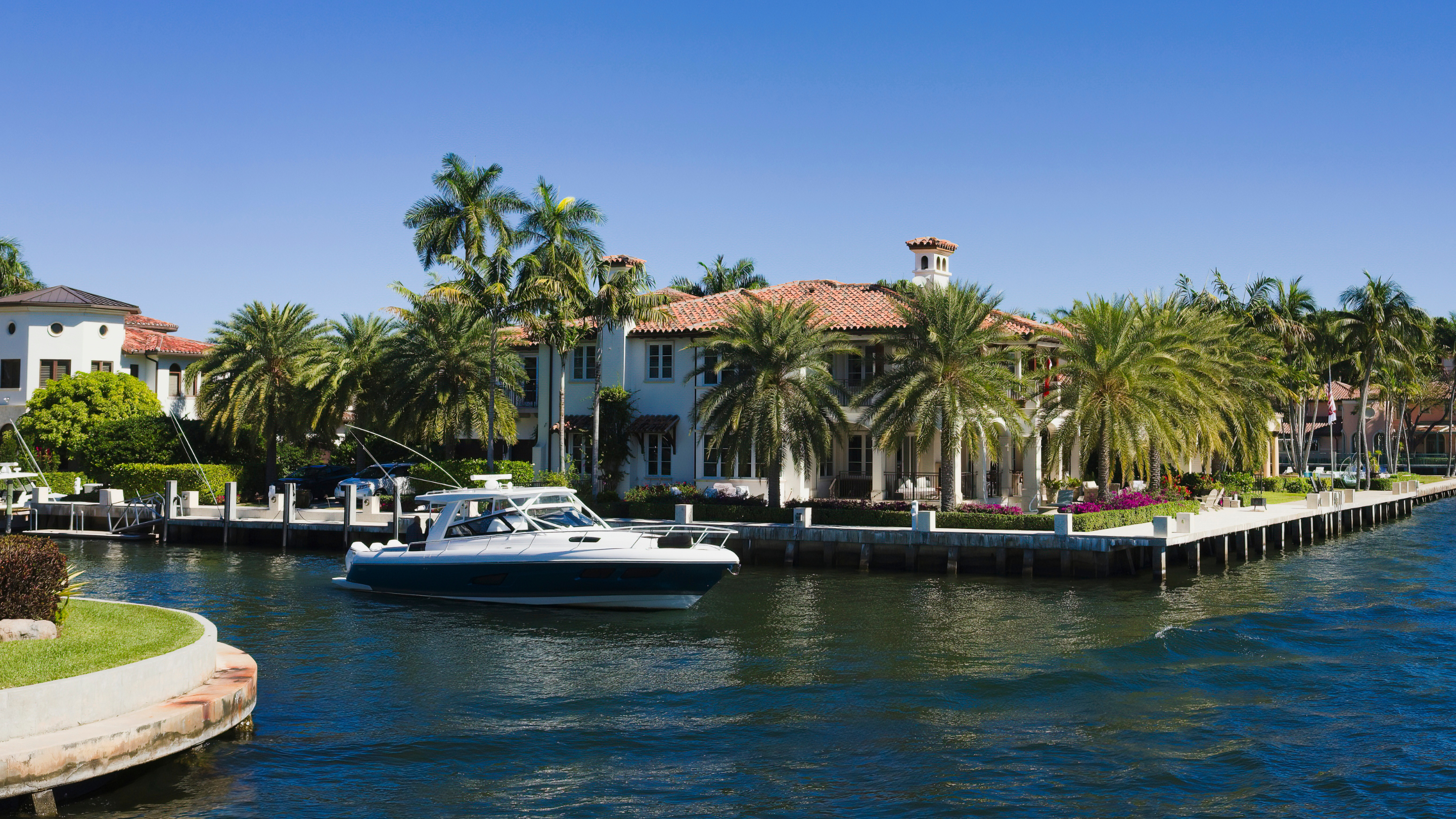
Local soil experience matters. Florida foundation concerns can involve loose sandy soils, poorly compacted fill, erosion, washout, voids, deeper settlement, and sinkhole-related conditions in certain Florida regions. The contractor should understand how those conditions affect the proposed repair.
The lowest price, longest warranty, or largest pier count does not automatically identify the best company. Choose one you can evaluate across three areas: diagnosis, repair, and accountability.
Homeowner Tip: Ask, “What evidence supports this recommendation, and why is this repair appropriate for my property?” The explanation should make the decision clearer, not leave you feeling pressured.
If you are deciding how many opinions to obtain, see our multiple-quotes guide.
Read more: Do I Need Multiple Quotes for Foundation Repair?
What Should You Look for in a Foundation Repair Company?
A good foundation contractor should provide confidence in three areas:
| Area | What You Need to Understand |
| Diagnosis | Does the company understand what appears to be moving and why? |
| Repair | Can the installation team properly perform the recommended work? |
| Accountability | Are responsibilities clear during construction and if service is needed afterward? |
An inexpensive repair is not good value if it addresses the wrong problem. An expensive repair is not better simply because it includes more work.
Use the following criteria to evaluate the company behind the proposal, not just its presentation.
1. Start With the Diagnosis, Not the Product
A foundation evaluation should not simply be, “You have cracks, so you need piers.”
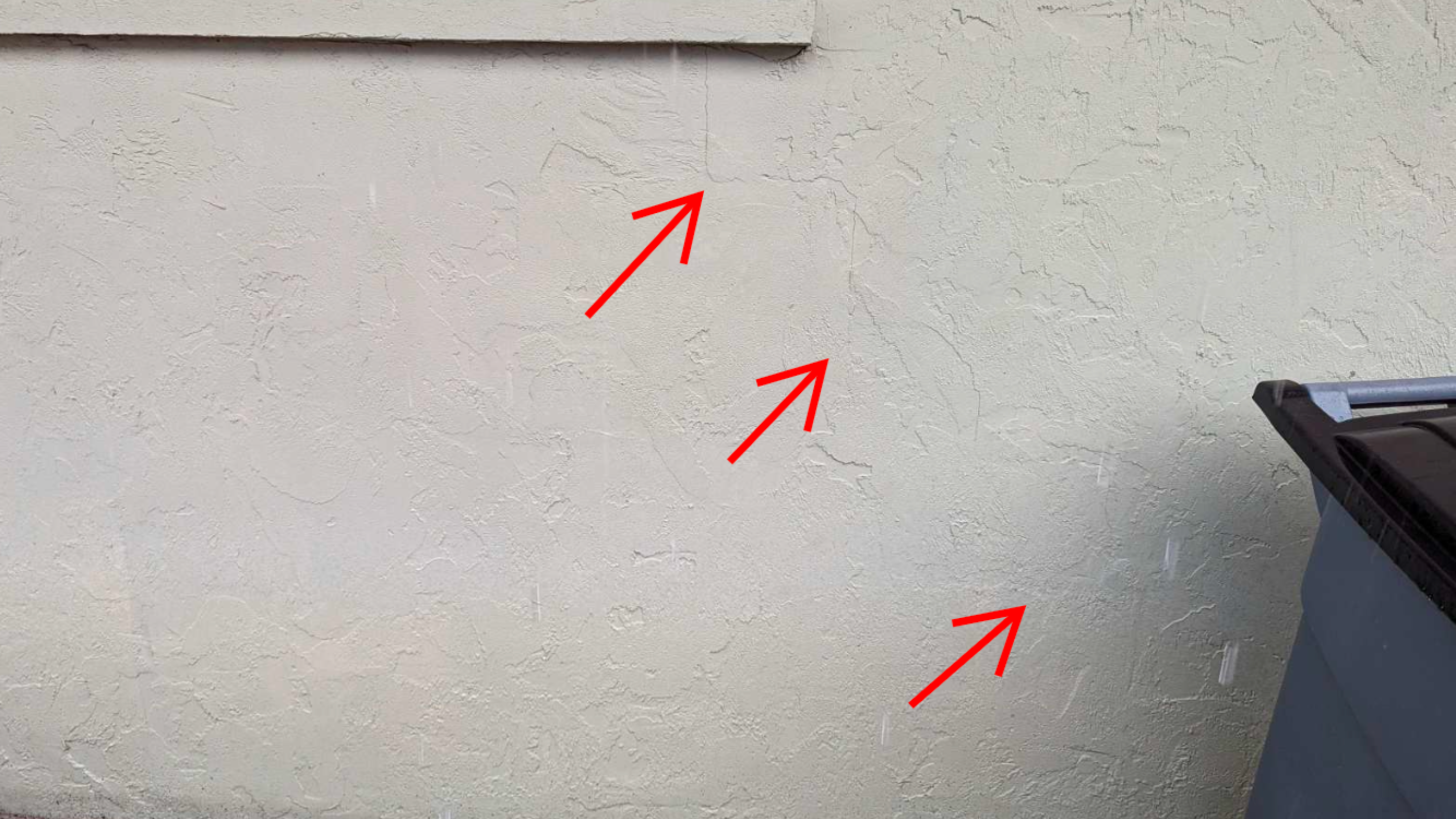
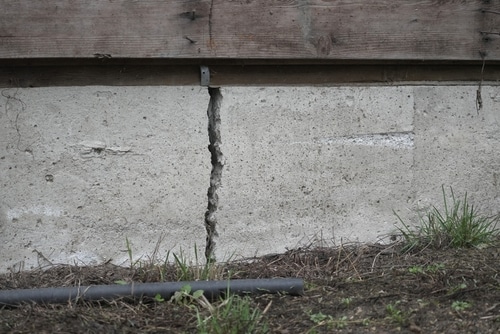
Cracks, sticking doors, uneven floors, gaps, and exterior concrete settlement can have different causes. The evaluation should connect the symptoms to the recommended repair.
Depending on the property, that may include reviewing crack patterns, door and window operation, nearby gaps, exterior foundation areas, and concrete settlement. Floor elevations may be measured with a ZipLevel when appropriate. Drainage, erosion, plumbing history, construction details, and accessible soil conditions may also be relevant.
Ask the contractor to identify the findings that matter most. Which observations support the recommendation? Why do they point to this repair rather than another?
No single symptom should automatically determine the solution. The explanation should account for the surrounding conditions instead of treating every crack as the same problem.
Our inspection guide describes the evaluation process in more detail.
Read more: What a Foundation Inspection Looks Like
2. Look for Experience With the Actual Problem You Have
“Foundation experience” can mean years installing one system or experience solving several kinds of support problems. Ask which experience applies to your property.
A contractor familiar with piers may not have the same experience with slab settlement, soil stabilization, void filling, washout, or sinkhole-related conditions in certain Florida regions.
| Condition | Possible Repair Direction |
| Deeper foundation settlement | Foundation underpinning such as piers |
| Weak shallow soils | Soil stabilization |
| Void beneath a slab | Void filling or slab support |
| Settled exterior concrete | Concrete lifting |
| Active soil washout | Correct the water source and restore support |
| Complex soil or structural condition | Additional engineering or investigation |
This table illustrates differences in repair objectives; it is not a diagnosis or a way to select a repair without an evaluation.
Ask for examples of comparable projects. What was the condition, what approach was used, and why? Relevant experience is more useful than a long list of services without an explanation of how they apply.
3. Florida Soil Experience Matters
A foundation depends on the ground beneath it. In Florida, that ground may include loose sands, poorly compacted fill, weak shallow soils, or variable deeper bearing conditions. Water, erosion, washout, and voids can further affect support.
Ask how much work the company has performed in your part of Florida and whether it regularly addresses both shallow soil problems and deeper settlement.
The important question is:
“How do the soil and water conditions at my property influence your recommendation?”
A useful answer connects local experience to the home being evaluated. Simply saying “Florida has sandy soil” does not explain the repair.
Technical expertise should make that connection understandable without overwhelming the homeowner with terminology.
Learn more about the relationship between soils and foundations here.
Read more: How Florida Soil Affects Foundations
4. Consider How Long the Company Itself Has Been in Business
Company longevity gives you a longer history to investigate. It also gives homeowners a longer track record for evaluating how the company handles completed projects, customer concerns, and warranty service.
It does not guarantee workmanship, but it may provide more completed projects, customer experiences, and service records to review.
Distinguish the company’s operating history from its employees’ combined experience. “40 years of combined experience” does not mean the business itself has operated for 40 years.
Ask how long the company has existed, whether it has operated continuously under the same name and ownership, and how much relevant experience the owners and installation team have.
Ownership or name changes are not automatically problems. Ask what changed and which company is responsible for the proposed work.
For a company operating fewer than about five years, additional scrutiny of experience, references, and warranty arrangements is reasonable. Treat that as a practical screening guideline, not an automatic rejection or a proven quality cutoff.
A newer company may have experienced installers. An established company still needs to demonstrate current performance.
5. Verify Licensing, Insurance, and Who You Are Actually Hiring
Before signing, identify the legal company on the proposal and request licensing and current insurance information you can verify.
Do not rely only on “We’re fully licensed and insured.” Ask whether the licensing is appropriate for the proposed work and clarify who handles required permits and engineering.
The company names on the contract, insurance documents, permits, and warranty should be understandable together. Different names may have a legitimate explanation, but you should know which entity is responsible for each obligation.
Also ask who handles concerns if property damage or another problem occurs during the project.
These questions are not accusations. They establish who you are hiring and whether the business information supports the promises in the proposal. A company should be comfortable providing clear answers.
6. Find Out Who Will Actually Perform the Repair
The installation team matters as much as the person presenting the proposal.
Ask whether employees or subcontractors perform the work, how they are trained, and who supervises the project. Find out how experienced the foreman is with the proposed system.
Neither staffing arrangement answers the quality question by itself. You still need to understand supervision, responsibilities, and who handles problems.
Ask who makes field decisions when conditions differ from expectations and how changes are communicated to you. The person selling the repair should be able to describe how the project reaches the installation team.
That process should cover the proposal, engineering and permitting when required, installation, quality control, and service afterward.
An appropriate repair concept still depends on proper execution. A strong sales presentation cannot substitute for a capable production team.
7. Compare the Written Scope Carefully
A professional proposal should identify the repair areas, method, support or treatment locations, quantities, objective, and limitations. Ask for a repair drawing when appropriate.
It should also explain access requirements, engineering and permit responsibilities, concrete removal, restoration, landscaping impacts, cleanup, potential additional charges, and payment terms.
Clarify whether the objective is stabilization, attempted lifting, soil improvement, or void filling. Do not assume those descriptions mean the same thing or that repairing the foundation includes restoring every existing crack or finish.
A description such as “Foundation stabilization: $28,000” does not provide enough information to understand those responsibilities.
Ask what is excluded as carefully as you ask what is included. If another trade must perform part of the work, determine who arranges it and whether its cost is separate.
The written proposal should support the explanation you received during the inspection. Important commitments should not remain only in conversation.
For a detailed scope comparison, see our pricing-difference guide.
Read more: Why Is One Foundation Repair Quote Much Higher Than Another?
8. Understand the Warranty and the Company Behind It
Compare actual warranty terms rather than labels such as “25-year,” “transferable,” or “limited lifetime.”
Ask which repaired areas are covered, what is excluded, and whether workmanship and materials have different coverage. Clarify future adjustments, labor, excavation, restoration, service fees, maintenance conditions, and transfer requirements.
Identify the legal company providing each commitment. Do not assume every party associated with the repair has the same responsibility.
Company history helps you investigate follow-through, but no one can promise a business will exist forever. Look for evidence of how service requests have been handled, not just a prediction about future availability.
Ask:
“If I need service years from now, whom do I contact, and what costs or conditions apply?”
9. Look Beyond the Star Rating
Online reviews can be useful when you read for substance.
Consider volume, recency, detailed repair descriptions, repeated complaints, company responses, and comments about communication after the sale. A review describing the completed work provides different information from one praising an initial consultation.
A large number of reviews is not an automatic endorsement, and a small number does not automatically disqualify a company. Use the available history to identify patterns and questions.
For a major repair, ask for a recent customer reference and, when available, a customer whose work was completed several years ago.
For references, request projects comparable to yours rather than only the company’s most impressive work. A similar repair gives you a more relevant basis for discussing communication, installation, and follow-through.
A useful question is:
“Did you ever need the company to return after the project, and how did it respond?”
That conversation helps you evaluate long-term service as well as installation-day satisfaction.
10. Pay Attention to How the Contractor Handles Questions
Notice whether reasonable questions lead to useful explanations or irritation and pressure.
Ask why certain areas are included, why others are excluded, what alternatives were considered, and what the repair can and cannot accomplish.
You do not need to understand geotechnical engineering to make an informed decision. You do need enough explanation to understand what you are purchasing.
If an answer is unclear, ask for it in simpler terms or request written clarification. A contractor should be able to discuss the recommendation without expecting you to accept every statement immediately.
Communication is part of evaluating accountability, not merely a matter of whether the salesperson is likable.
11. Be Cautious With One-Size-Fits-All Recommendations
The important question is whether the company recognizes when its preferred system is not the right solution.
A contractor offering one primary method may still make an appropriate recommendation. Ask:
“When would you not recommend this system, and what would you suggest instead?”
The answer should acknowledge that piers, soil stabilization, slab support, and other approaches serve different purposes.
Broader capabilities can be valuable, but offering more services does not automatically establish better judgment. What matters is selecting an appropriate method and recognizing when another contractor, engineer, or type of repair is needed.
12. Evaluate Engineering Relationships Without Confusing Roles
Contractors and engineers can bring complementary expertise to complex foundation problems.
A contractor contributes practical installation knowledge involving equipment, access, materials, sequencing, and field conditions. An engineer may provide structural or geotechnical analysis, design, or other professional services when appropriate.
Working with engineers does not make a contractor an engineering firm. Likewise, a design does not replace the need for proper installation.
Ask whether engineering is required, who provides it, what relationship exists between the engineer and contractor, and what services are included in the proposal. Clarify how the contractor and engineer coordinate field changes.
The value of collaboration is having the right expertise involved in the right decisions. A company should explain those responsibilities rather than simply use an engineering relationship as a sales credential.
13. Compare Price Only After You Understand the Repair
Price matters, but it becomes useful only when you understand the scope.
A $15,000 proposal may cover different areas or tasks than a $25,000 proposal. Neither total tells you which repair is appropriate.
Compare the diagnosis, repair map, method, objective, included work, exclusions, warranty, and possible additional charges. Then evaluate the cost.
Normalize the scope first. Compare the price second.
Our quote-comparison guide explains that process.
Read more: Why Is One Foundation Repair Quote Much Higher Than Another?
For typical pricing ranges, see our Florida cost guide.
Read more: How Much Does Foundation Repair Cost in Florida?
Red Flags When Choosing a Foundation Repair Company
Use warning signs to identify what needs clarification, not to substitute for investigating the company.
| What You Notice | Why to Ask More Questions |
| Immediate recommendation with little inspection | The repair may have been selected before the condition was understood |
| Pressure to sign for a same-day discount | A significant decision is being rushed |
| Large scope or preferred system without supporting evidence | The company has not explained why the work fits the property |
| Vague scope, exclusions, or installation responsibilities | You may not know what is being purchased or who performs it |
| Experience, licensing, or insurance information cannot be verified | Important qualifications remain unresolved |
| Impressive warranty language without written details | Coverage and future responsibility may be unclear |
| Low price with major exclusions | The complete project may cost more than the initial quote |
| Criticism of competitors instead of a site-specific explanation | The discussion is not resolving your property’s needs |
The common concern is a lack of transparency. Unanswered questions should be resolved before you commit, regardless of company size or reputation.
Checklist: Am I Ready to Hire This Company?
The sections above help you investigate. This checklist is the final decision check.
- I understand the evidence behind the recommendation and why the method fits.
- I have checked company history, relevant experience, licensing, and insurance.
- I know who will install, supervise, and handle field changes.
- I have a written scope identifying repair locations, responsibilities, and exclusions.
- I understand the repair objective, limitations, payment terms, and possible added costs.
- I have reviewed the warranty and know who provides future service.
- I have considered references and customer experiences beyond the initial sale.
- Important disagreements or unanswered questions have been addressed without pressure.
An unchecked item identifies a question to resolve. It does not automatically mean the company is unsuitable.
A Simple Foundation Repair Company Comparison Scorecard
Record the answers after each evaluation. Use notes or “not yet verified” rather than assuming something is included.
| What to Compare | Company A | Company B | Company C |
| Diagnosis and supporting evidence | |||
| Relevant Florida soil experience | |||
| Company operating history | |||
| Experience with the proposed repair | |||
| Alternatives and system limitations explained | |||
| Licensing and insurance verified | |||
| Installers, supervision, and field decisions | |||
| Repair map, scope, and exclusions | |||
| Engineering and permitting responsibility | |||
| Potential additional charges | |||
| Warranty coverage and responsible company | |||
| References and follow-up service history | |||
| Communication and transparency | |||
| Total project price |
This is not a mathematical contest. One extra checkmark cannot make up for a poorly explained diagnosis or unresolved qualifications. Use the comparison to identify meaningful differences.
What Homeowners Should Not Do
Avoid choosing solely by price, company size, review score, pier count, or warranty length.
Do not let a polished presentation or immediate-decision discount replace your investigation. Conversely, collecting more quotes is not useful if you never resolve why the recommendations differ.
The goal is a company you trust to diagnose, perform, explain, and stand behind the repair, with evidence supporting that confidence.
How Helicon Approaches Foundation Repair
Helicon has worked with Florida foundations and soils since 2004. Our more than 22 years of experience includes foundation repair, sinkhole repair, soil stabilization, concrete lifting, void filling, and deep foundation systems.
That background shapes how we evaluate the relationship between the visible symptoms and the support beneath a property.
Experience With Florida Soils
Our work includes shallow weak soils, poor compaction, erosion, washout, voids, deeper settlement, and sinkhole-related conditions in certain Florida regions. Understanding those differences helps us evaluate whether an issue is isolated to a slab or involves the surrounding foundation.
We look at the ground and the structure together rather than treating a crack as a complete diagnosis.
Multiple Repair Capabilities
Helicon’s capabilities include push piers, helical piers, drilled piers, polyurethane soil stabilization, structural polyurethane void filling, concrete lifting, compaction grouting, and other ground-improvement and deep-foundation methods.
The value of having multiple tools is not using more of them. It is selecting the approach that fits the conditions and recognizing when different parts of a project need different solutions.
Collaboration With Engineers
Helicon works alongside engineers on complex foundation repair and soil stabilization projects. Our team contributes practical experience with Florida soils, equipment, access, construction methods, materials, and field conditions.
That collaboration connects technical planning with installation while respecting the responsibilities of the engineering professionals involved.
A Value-Engineered Approach
We want to understand what appears to be moving, why it is moving, which areas are affected, and what repair properly addresses those conditions.
Sometimes that means piers. Sometimes shallow soils or slab voids need attention. Sometimes water-related problems must be addressed, multiple methods are appropriate, or immediate structural repair is not supported by the findings.
The goal is to recommend the least invasive repair that properly addresses the movement, not simply the largest scope.
Learn more about our history and approach. [
Read more: About Helicon
Schedule a Foundation Evaluation
If you are seeing cracks, sticking doors or windows, uneven floors, gaps, or exterior settlement, Helicon can evaluate the property and explain what we find.
If another contractor has recommended something different, we can explain the reasoning behind our recommendation and why the scopes may differ.
The goal is not simply another quote. It is a clearer understanding of the condition, repair options, and responsibilities.
Choose the company that can explain the problem before selling the solution.
Read more: Foundation Repair
FAQ
How do I choose a good foundation repair company?
Look for a well-explained assessment, relevant experience, verifiable licensing and insurance, capable installers, a clear written scope, and documented warranty responsibilities. Evaluate the company across diagnosis, repair, and accountability.
How many years should a foundation repair company be in business?
There is no minimum that guarantees quality. A shorter history warrants closer investigation of team experience and completed projects. Fewer than about five years is a practical screening guideline, not automatic disqualification.
Should I choose the company with the best warranty?
Not by duration alone. Compare covered areas, exclusions, labor, service conditions, transfer requirements, and the company responsible. Read the actual warranty before deciding.
Should I choose the cheapest foundation repair company?
Not automatically. Establish what each contractor proposes and why, then compare the complete scope and price. The lowest total may represent different work or significant exclusions.
Is the company proposing the most piers offering the better repair?
Not necessarily. The number should reflect the affected area, loads, foundation configuration, system, and design. Ask why those support locations are appropriate.
What questions should I ask a foundation repair contractor?
Ask what is moving, why, what evidence supports the assessment, and why this repair fits. Then clarify installation, exclusions, possible added costs, and warranty responsibility.
Should a foundation repair contractor understand soil conditions?
Yes. The supporting soils influence foundation performance. The contractor should explain how relevant Florida soil and water conditions affect the recommendation for your property.
Should I hire a company that installs only one repair system?
Specialization is not automatically a problem. Ask when its system would be unsuitable and what the company recommends in those circumstances.
Are online foundation repair reviews reliable?
Use them as one source of information. Look for detailed completed-project experiences, recurring issues, company responses, and follow-up service rather than relying on stars alone.
Should I get references from a foundation repair company?
For a major repair, references can be useful. A recent customer can discuss the project experience; an older customer may provide insight into follow-up service.
Should I get multiple foundation repair quotes?
Two or three qualified opinions can be useful for a significant repair. Focus on the explanations and evidence, not merely the totals.
What if companies recommend completely different repairs?
Ask each contractor to explain the supporting evidence and what would change the recommendation. An independent engineering evaluation may help when substantial disagreement remains.
Why consider a company with multiple repair methods?
Broader capabilities can support consideration of alternatives, but the service list alone is not enough. Look for sound judgment about which method fits and why.