Direct Answer
Foundation repair in Florida can cost anywhere from around a few thousand dollars to $60,000 depending on the cause of the problem, the repair method, soil conditions, access, and whether the home needs soil stabilization, slab support, foundation underpinning, or a combined repair.
For many Florida homes, common foundation-related repair ranges include:
- Foundation inspection: free when within Helicon’s service area
- Concrete lifting or slab support: often around $1,500 to $8,000
- Structural polyurethane void filling beneath slabs: often around $2,000 to $8,000
- Polyurethane soil stabilization for smaller exterior slab areas: often around$2,000 to $6,000
- Home or foundation polyurethane soil stabilization: often around $5,000 to $20,000
- Foundation pier systems: often around $10,000 to $60,000
- Combined foundation repair projects: project-specific
- Sinkhole repair or compaction grouting: project-specific and can vary widely
*These are typical Florida pricing examples based on published industry resources and contractor pricing guides. They are intended for educational purposes only and are not Helicon’s pricing. Every home is different, and a professional inspection is the only way to determine the appropriate repair and provide an accurate quote.
The most important thing to understand is that foundation repair cost depends on what is actually moving and why. A sinking driveway, settling pool deck, uneven interior slab, stair-step crack in a block wall, or sinking foundation corner may all have different causes and different repair costs.
The right question is not just, “How much does foundation repair cost?” The better question is, “What is causing the movement, and what repair is needed to stop it?”
Why Foundation Repair Costs Vary So Much in Florida
Foundation repair costs vary because not every foundation problem is the same.
Some Florida homes have shallow soil problems. Others have deeper settlement. Some have voids beneath slabs. Some have water-related washout. Some have poor compaction beneath footings or slab areas. Some have symptoms caused by concrete settlement rather than structural foundation movement.
The same visible symptom can have different causes.
For example:
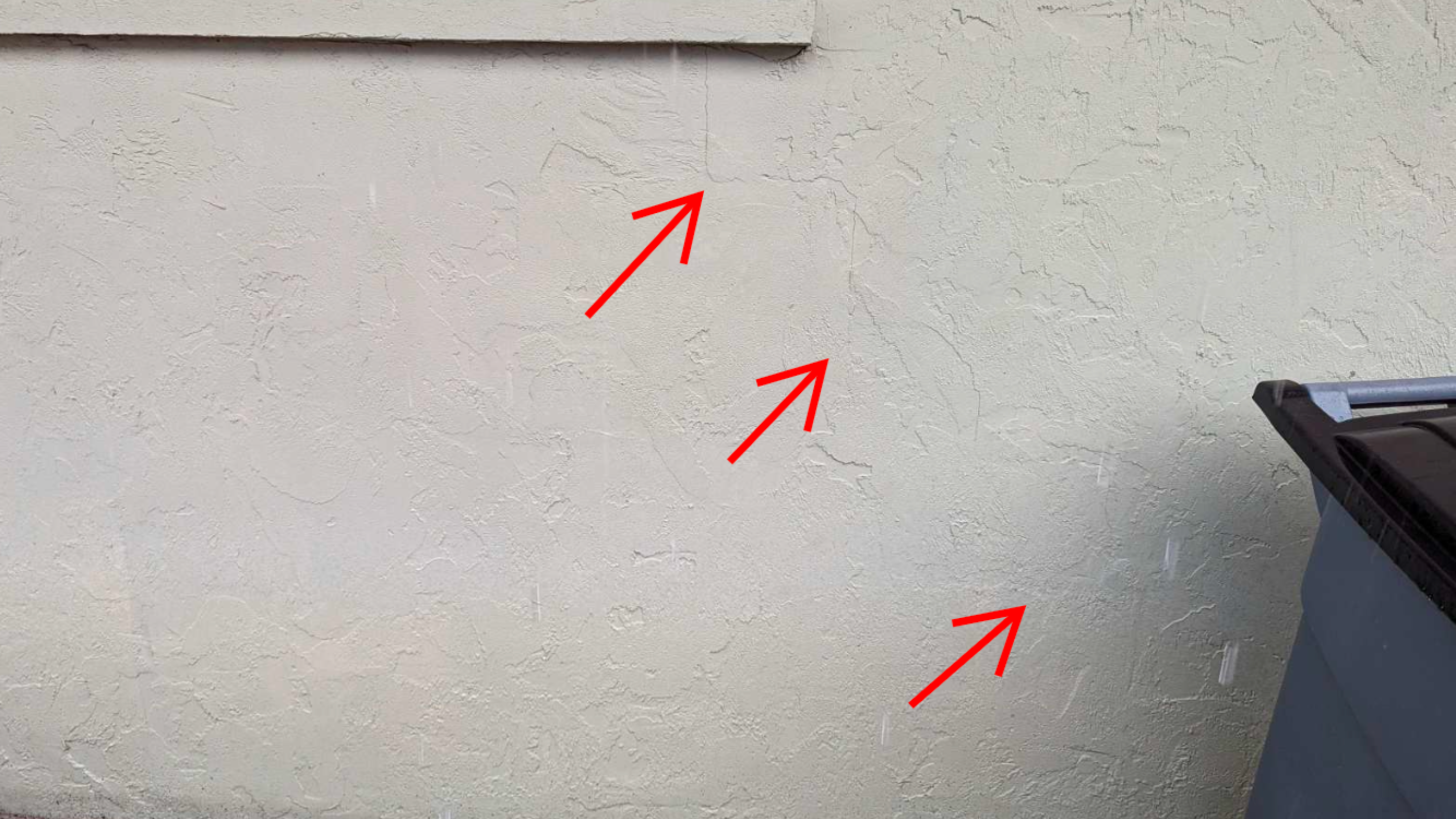
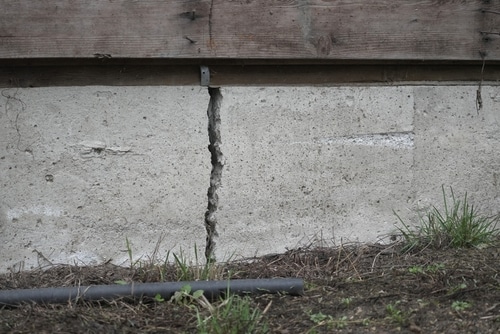
- A stair-step crack in a block wall may be caused by shallow weak soils or deeper foundation settlement.
- A sinking garage floor may be caused by voids under the slab, not necessarily the foundation wall.
- A pool deck may settle because of poor compaction, soil washout, or a plumbing leak.
- Uneven interior floors may come from slab settlement, foundation movement, or both.
- Sticking doors may be a framing issue, humidity issue, or foundation movement symptom.
That is why an accurate inspection matters. The cost depends on whether the home needs soil stabilization, slab support, pier underpinning, drainage correction, void filling, or a combined repair.
Before comparing prices, homeowners should understand the problem being priced.
Read more: Signs Your Home Foundation Is Sinking in Florida
Common Foundation Repair Cost Ranges in Florida
| Repair Type | Typical Cost Range | What It Usually Addresses |
| Foundation inspection | Free within Helicon’s service area | Identifies likely cause and repair options |
| Concrete lifting or slab support | Around $1,500 to $8,000 | Sinking driveways, sidewalks, patios, garage slabs, pool decks, or interior slabs |
| Structural polyurethane void filling beneath slabs | Around $2,000 to $8,000 | Voids beneath interior slabs, garage slabs, patios, or other concrete areas |
| Polyurethane soil stabilization for smaller exterior slab areas | Around 2,000 to $6,000 | Shallow weak soils beneath exterior concrete areas |
| Home or foundation polyurethane soil stabilization | Around $5,000 to $20,000 | Shallow weak or loose soils affecting a home or foundation area |
| Foundation pier systems | Around $10,000 to $60,000 | Deeper foundation settlement requiring structural support |
| Combined foundation repair | Project-specific | Homes needing both pier support and soil/slab stabilization |
| Sinkhole repair or compaction grouting | Project-specific | Deeper voids, sinkhole-related conditions, or engineered ground improvement |
These ranges are general planning numbers. The actual cost depends on the inspection findings, soil conditions, structure type, depth of treatment, number of repair points, access, and repair method.
A lower-cost repair is not automatically better. A higher-cost repair is not automatically necessary. The right repair is the one that matches the cause of the movement.
Foundation Inspection Cost
Helicon offers free foundation inspections within its service area.
A foundation inspection helps determine whether the issue appears to be:
- Cosmetic movement
- Concrete settlement
- Interior slab settlement
- Shallow soil weakness
- Voids beneath concrete
- Foundation settlement
- Deeper soil movement
- Sinkhole-related activity
- Water or drainage-related soil movement
- A combination of issues
During an evaluation, Helicon may review exterior wall cracks, stair-step cracks in block walls, cracks around windows and doors, gaps around frames or trim, sticking doors and windows, uneven floors, interior slab settlement, garage floor settlement, nearby concrete settlement, drainage patterns, and soil conditions near the home.
The inspection should answer a simple question: is this a foundation problem, a concrete problem, a slab problem, a soil problem, a water problem, or a combination?
That answer determines the cost.
Cost of Concrete Lifting and Slab Support
Concrete lifting or slab support in Florida often ranges from around $1,500 to $8,000 depending on the size of the slab, amount of settlement, void depth, access, and repair area.
This type of repair may be used for:
- Sinking driveways
- Uneven sidewalks
- Settled patios
- Pool deck settlement
- Garage slab settlement
- Interior slab settlement
- Walkway trip hazards
- Concrete areas with voids beneath them
Concrete lifting is usually less expensive and less disruptive than removing and replacing concrete when the existing slab is still in usable condition.
Helicon often uses expanding structural polyurethane foam for concrete lifting and slab support. The material is injected through small holes in the concrete. It expands beneath the slab, fills voids, and helps restore support.
Concrete lifting may be a good fit when the slab is settled but not too broken, the concrete is still structurally usable, voids are present beneath the slab, and the goal is to restore support or reduce trip hazards.
Concrete replacement may be better when the slab is severely cracked, crumbling, scaling, spalling, too thin, deteriorated, or poorly constructed.
Read more: Concrete Lifting vs Replacement: What Is the Better Option?
Cost of Structural Polyurethane Void Filling
Structural polyurethane void filling beneath slabs often ranges from around $2,000 to $8,000 depending on the size, depth, and location of the voided area.
Void filling may be needed when soil has washed out or settled beneath concrete. This can happen under:
- Interior slabs
- Garage floors
- Pool decks
- Patios
- Driveways
- Sidewalks
- Walkways
- Concrete near foundations
- Concrete near stormwater structures or drains
A void beneath a slab means the concrete has lost support. The slab may sound hollow, crack, settle, slope, or move under load.
Filling the void helps restore support beneath the slab, but the cause of the void also matters. If water, plumbing leaks, poor drainage, or soil washout caused the void, those contributing conditions should be evaluated.
Read more: Voids Under Concrete Slabs: What Causes Them and How to Fix Them
Cost of Polyurethane Soil Stabilization
Polyurethane soil stabilization can vary widely depending on whether the repair is for a small exterior concrete area or a larger foundation-related area.
Smaller exterior slab stabilization projects often range from $2,000 to $6,000.
Home or foundation polyurethane soil stabilization projects often range from $5,000 to $20,000.
Polyurethane soil stabilization may be used when shallow weak or loose soils are contributing to movement. In many Florida homes, shallow loose sandy soils, poor compaction, or water-related soil disturbance can reduce support beneath slabs, footings, or nearby concrete areas.
This type of repair may be appropriate when:
- The issue is related to shallow weak soils
- The foundation or slab area needs improved soil support
- Voids or loose soils are present near the structure
- The goal is stabilization rather than major structural lifting
- Deeper pier support is not required
Polyurethane soil stabilization is different from concrete lifting. Concrete lifting focuses on raising and supporting a slab. Soil stabilization focuses on improving the supporting soils beneath or near the structure.
For foundation-related work, the inspection should determine whether the issue is shallow enough for soil stabilization or whether deeper foundation support is needed.
Read more: Polyurethane Soil Stabilization
Cost of Foundation Piers
Foundation pier systems in Florida often range from around $10,000 to $60,000 depending on the number of piers, pier type, depth, access, structure type, engineering requirements, and amount of foundation movement.
Piers may be needed when a foundation needs deeper structural support.
Common pier systems may include:
- Push piers
- Helical piers
- Drilled piers
- Other deep foundation support systems depending on the structure and site conditions
Foundation piers are commonly used when the affected part of the structure needs to be transferred to deeper, more stable supporting soils or load-bearing strata.
Piers may be needed when:
- Foundation settlement is deeper or more structural
- Stair-step cracks indicate foundation movement
- A foundation corner or wall has dropped
- Doors and windows are sticking because of frame movement
- Floors are sloping because the foundation has moved
- Soil stabilization alone is not enough
- The structure needs lifting or more precise elevation correction
Pier projects cost more than many slab or soil stabilization projects because they involve deeper structural support, more equipment, more labor, and often more engineering or layout considerations.
In some cases, piers may be combined with polyurethane void filling or soil stabilization to address both deep support and shallow voids.
Read more: Foundation Repair
Push Piers vs Helical Piers: Does Cost Differ?
Push piers and helical piers can both be used to support foundations, but the right choice depends on structure type, soil conditions, access, load, and engineering needs.
Push piers are often used when the structure has enough weight to drive the pier system to competent support. Helical piers are often used when torque-installed support is needed, when loads are lighter, or when the structure or site conditions make helical piers more appropriate.
Cost can vary depending on:
- Number of piers
- Pier depth
- Installation access
- Soil conditions
- Structure load
- Bracket requirements
- Engineering requirements
- Whether lifting is needed
- Whether interior access is required
Homeowners should not choose a pier system based only on price. The pier type should match the structure, load, soil conditions, and repair objective.
Cost of Combined Foundation Repairs
Some Florida foundation projects require more than one repair method.
For example, a home may need:
- Piers to stabilize deeper foundation settlement
- Polyurethane soil stabilization for shallow weak soils
- Structural polyurethane void filling beneath slabs
- Concrete lifting for settled driveways, patios, garage slabs, or pool decks
- Drainage correction to reduce ongoing water-related soil movement
Combined repairs are project-specific because they depend on the complete repair plan.
A combined repair may be needed when the foundation has deeper settlement and shallow voids, a slab has lost support after foundation movement, a home has both perimeter foundation movement and interior slab settlement, or drainage is contributing to repeated movement.
A combined project may cost more up front, but it may be the most appropriate approach when multiple causes are contributing to the problem.
The goal is not to use every repair method. The goal is to use the right repair method for each part of the problem.
Cost of Sinkhole Repair or Compaction Grouting
Sinkhole repair, compaction grouting, and engineered ground improvement are project-specific and can vary widely.
These repairs are different from typical slab lifting or shallow soil stabilization. They may involve deeper soils, engineered plans, larger material volumes, specialized equipment, and more extensive site evaluation.
Compaction grouting may be used when weak or loose soils need to be densified at depth. Cementitious grout is injected into the ground to form grout bulbs that compact surrounding soils and improve ground support.
Sinkhole-related repairs may require engineering, testing, insurance coordination, permits, or specialized repair designs depending on the project.
Costs can vary based on depth of treatment, size of affected area, soil conditions, engineering requirements, material volume, access, structure type, repair design, and whether the repair is residential, commercial, or insurance-related.
For most homeowners, the key point is that sinkhole repair and compaction grouting should not be priced the same way as simple concrete lifting or slab support. They are different scopes of work.
Read more: Sinkhole Repair
What Factors Affect Foundation Repair Cost?
Foundation repair cost depends on several factors.
The most important include:
- Cause of movement
- Repair method
- Size of affected area
- Depth of treatment
- Number of piers or injection points
- Soil conditions
- Amount of settlement
- Whether lifting is needed
- Structure type
- Slab type
- Foundation type
- Access around the home
- Interior vs exterior work
- Obstructions such as landscaping, pools, decks, pavers, or utilities
- Engineering requirements
- Drainage or water issues
- Whether the project requires one repair method or a combined repair
A small exterior slab issue may be a few thousand dollars. A full foundation underpinning project may be tens of thousands of dollars. A sinkhole or compaction grouting project may be entirely project-specific.
That is why cost ranges are helpful for planning, but inspection findings are needed for accurate pricing.
- What is moving
- Why it is moving
- What repair is recommended
- What the repair is designed to do
- What the repair is not designed to do
- Whether soil stabilization, slab support, piers, or a combination is needed
- Whether drainage or water issues should be addressed
- What warranty or limitations apply
A good foundation repair plan should be based on diagnosis, not guesswork.
Why Foundation Repair Can Cost Less Than Waiting
Waiting can make foundation repair more expensive.
Minor movement may become more advanced if the cause remains active. Soil loss can continue. Voids can grow. Cracks can widen. Doors and windows can become harder to operate. Slabs can settle further. Cosmetic repairs may fail repeatedly.
Waiting may lead to:
- Larger cracks
- More wall movement
- More slab settlement
- More interior damage
- More expensive cosmetic repairs
- More repair points
- More complex stabilization
- Need for piers instead of soil stabilization alone
- Combined repair instead of single-method repair
Not every crack requires urgent repair. Some minor cosmetic issues can be monitored. But if symptoms are active, spreading, or appearing together, waiting may increase the scope of work.
Movement rarely becomes easier to fix by ignoring it.
Read more: Can I Wait to Fix Foundation Issues or Will It Get Worse?
Repair Cost by Common Homeowner Symptom
| Symptom | Possible Cause | Common Repair Category |
| Stair-step cracks in block wall | Foundation settlement or soil movement | Soil stabilization, piers, or combined repair |
| Cracks around windows or doors | Foundation movement, wall stress, or settlement | Inspection, soil stabilization, or pier support |
| Sticking doors and windows | Frame movement, settlement, or non-foundation causes | Inspection first, repair depends on cause |
| Uneven or sloping floors | Interior slab settlement or foundation movement | Slab support, soil stabilization, piers, or combined repair |
| Garage floor sinking | Slab voids, soil washout, or foundation-related movement | Void filling, slab lifting, soil stabilization |
| Pool deck sinking | Soil washout, poor compaction, leaks, or voids | Leak detection, slab lifting, soil stabilization |
| Driveway sinking | Poor compaction, washout, or voids | Concrete lifting or replacement |
| Voids under slab | Soil washout or loss of support | Structural polyurethane void filling |
| Cracks that reopen after repair | Active movement | Inspection and stabilization |
| Multiple symptoms together | Broader settlement pattern | Foundation evaluation needed |
The same symptom can have more than one cause. The repair category should be based on the inspection, not the symptom alone.
How Helicon Evaluates Foundation Repair Cost
When Helicon evaluates a foundation concern, the goal is to understand the cause before recommending a repair.
A proper evaluation may include:
- Reviewing exterior cracks
- Looking for stair-step cracks in block walls
- Checking cracks around windows and doors
- Reviewing gaps around frames, trim, walls, or ceilings
- Checking doors and windows
- Looking at floor elevation changes where appropriate
- Evaluating interior slab movement
- Reviewing garage slab settlement
- Checking nearby concrete settlement
- Looking for voids or hollow areas beneath slabs
- Reviewing drainage and water movement
- Evaluating soil conditions near the foundation
- Using a soil probe where appropriate
- Determining whether the issue appears shallow, deep, slab-related, foundation-related, water-related, or a combination
The inspection should answer:
- Is this a foundation problem, concrete problem, slab problem, soil problem, or water problem?
- Is the movement active or stable?
- Is the issue shallow or deeper?
- Does the home need stabilization, lifting, pier support, slab support, or a combined repair?
- Are drainage or water conditions contributing?
- What repair method is most appropriate?
- What is the expected cost range?
The best cost estimate comes after the cause is understood.
What Homeowners Should Not Do
The biggest mistake homeowners make is spending money on cosmetic repairs before understanding the cause of the movement.
Homeowners should avoid:
- Patching cracks before knowing if movement is active
- Replacing flooring before checking for slab settlement
- Replacing doors or windows before evaluating frame movement
- Resurfacing concrete before stabilizing voids or soils
- Choosing the cheapest quote without understanding the scope
- Assuming every crack means foundation failure
- Assuming every crack is cosmetic
- Waiting while multiple symptoms worsen
- Ignoring drainage or water problems
- Comparing repair prices without comparing repair methods
A cosmetic repair can hide a warning sign. The better approach is to identify the cause first, then decide what repair, if any, is needed.
When to Schedule a Foundation Inspection
You should schedule a foundation inspection if you notice symptoms that are growing, recurring, or appearing together.
Call an expert if you notice:
- Stair-step cracks in block walls
- Cracks around windows and doors
- Cracks that reopen after repair
- Sticking doors or windows with other symptoms
- Uneven or sloping floors
- Gaps around windows, doors, trim, walls, or ceilings
- Interior slab settlement
- Garage floor settlement
- Sinking driveway, patio, walkway, or pool deck near the home
- Voids beneath slabs
- Water draining toward the foundation
- Soil washout near the home
- Multiple symptoms in the same area
The sooner the cause is identified, the easier it is to understand the repair options and likely cost.
Why Florida Homeowners Trust Helicon
Helicon has been helping Florida homeowners solve foundation repair, soil stabilization, concrete lifting, sinkhole repair, compaction grouting, seawall erosion repair, void filling, and slab support problems since 2004.
As a family-owned Florida company, Helicon understands the soil conditions, water movement, drainage issues, construction styles, slab types, and settlement patterns that affect homes across Tampa Bay, Orlando, Southwest Florida, and surrounding areas.
We are not there to tell every homeowner that every crack requires piers. We are also not there to dismiss serious movement as cosmetic. We are there to determine whether the issue is shallow soil movement, deeper foundation settlement, slab support loss, water-related washout, sinkhole-related activity, or a combination.
Sometimes the right repair is polyurethane soil stabilization. Sometimes it is structural polyurethane slab support. Sometimes it is foundation piers. Sometimes it is compaction grouting. Sometimes it is monitoring.
The goal is always the same: identify the cause, protect the property, and recommend the least invasive repair that provides a long-term solution.
Schedule a Free Foundation Repair Cost Inspection
If you are wondering how much foundation repair may cost for your Florida home, Helicon can help.
Our team can evaluate the symptoms, soil conditions, slab movement, foundation movement, drainage concerns, and repair options to help determine what is causing the issue and what repair may be needed.
Schedule a free foundation inspection with Helicon to get a clear understanding of the problem, the repair options, and the likely cost range.
FAQ
How much does foundation repair cost in Florida?
Foundation repair in Florida can range from a few thousand dollars to around $60,000 depending on the cause, repair method, soil conditions, access, and size of the affected area. Concrete lifting may cost around $1,500 to $8,000, foundation soil stabilization may cost around $5,000 to $20,000, and pier systems may cost around $10,000 to $60,000.
Why does foundation repair cost so much?
Foundation repair can cost more when the problem involves deeper settlement, multiple repair areas, pier systems, engineering, difficult access, large voids, or combined repairs. The cost reflects the labor, equipment, materials, depth of support, and complexity of the repair.
Is foundation repair always expensive?
No. Some slab support, concrete lifting, or smaller soil stabilization repairs may be a few thousand dollars. Larger foundation underpinning or combined repair projects can be much more expensive. The cost depends on the cause and scope.
What is the cheapest foundation repair method?
The cheapest method is not always the right method. Concrete lifting or small-area polyurethane stabilization may cost less than pier systems, but they only work when they match the cause of the problem. The repair should be selected based on diagnosis, not price alone.
How much do foundation piers cost in Florida?
Foundation pier projects often range from $10,000 to $60,000 depending on the number of piers, pier depth, access, structure type, and whether lifting is needed.
How much does polyurethane soil stabilization cost?
Smaller exterior polyurethane soil stabilization projects often range from $2,000 to $6,000. Home or foundation polyurethane soil stabilization projects often range from $5,000 to $20,000 depending on the size and scope of the repair.
How much does concrete lifting cost?
Concrete lifting and slab support often range from $1,500 to $8,000 depending on the size of the slab, amount of settlement, void depth, access, and repair area.
Is foundation repair covered by insurance?
Foundation repair may or may not be covered by insurance depending on the cause of the damage, the policy, and any applicable exclusions or endorsements. Homeowners should review their policy and speak with their insurance provider. Sinkhole-related claims may involve specific testing, engineering, and policy requirements.
Can I wait to repair foundation problems?
Some minor, stable cosmetic symptoms can be monitored. However, active movement, growing cracks, recurring cracks, uneven floors, soil washout, or multiple symptoms in the same area should be evaluated. Waiting can allow the problem to become more expensive.
How do I get an accurate foundation repair cost?
The best way to get an accurate cost is to schedule an inspection. A foundation repair estimate should be based on what is moving, why it is moving, soil conditions, repair method, access, and whether the home needs soil stabilization, slab support, piers, or a combined repair.