Direct Answer
Florida soil conditions can affect a home foundation when the ground beneath it compresses, shifts, erodes, washes out, or loses the ability to support the structure evenly.
Conditions that can contribute include:
- Loose sandy soils
- Poorly compacted fill
- Weak shallow soils
- Erosion or washout
- Heavy rainfall and poor drainage
- Groundwater conditions
- Organic soils
- Certain clay layers
- Voids
- Deeper weak soil layers
- Karst and sinkhole-related conditions in some areas
But there is an important distinction:
Florida sand is not automatically bad foundation soil.
Dense, properly compacted sand can provide good support. Problems are more likely when soils are loose, poorly compacted, disturbed, layered unevenly, eroding, or affected by water.
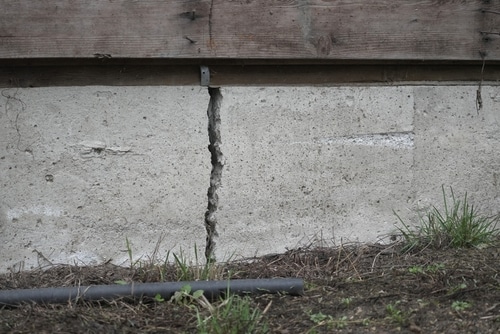
The same is true of visible foundation symptoms. A crack cannot tell you by itself whether the problem involves shallow soil, deeper settlement, an isolated slab, drainage, old movement, or another condition.
The goal is to determine:
- What is moving?
- What soil or site condition may be contributing?
- How deep is the support problem?
- Does anything need repair?
- Which repair method fits that condition?
The soil beneath the home matters—but the repair should be based on how that soil is behaving, not simply what type of soil it is.
Read more: Foundation Problems in Florida: The Complete Homeowner Guide
Why Florida Soil Conditions Matter to Your Foundation
Every home transfers its weight into the ground beneath it.
When supporting soils are reasonably dense, stable, and properly prepared, those loads can be distributed effectively.
Problems can develop when one area behaves differently from another.
One section of a foundation may sit over dense soil while another is supported by loose fill, an eroded zone, organic material, a poorly compacted trench, or a weaker layer below.
If one area compresses or loses support while another remains relatively stable, differential settlement can occur.
That uneven movement can contribute to:
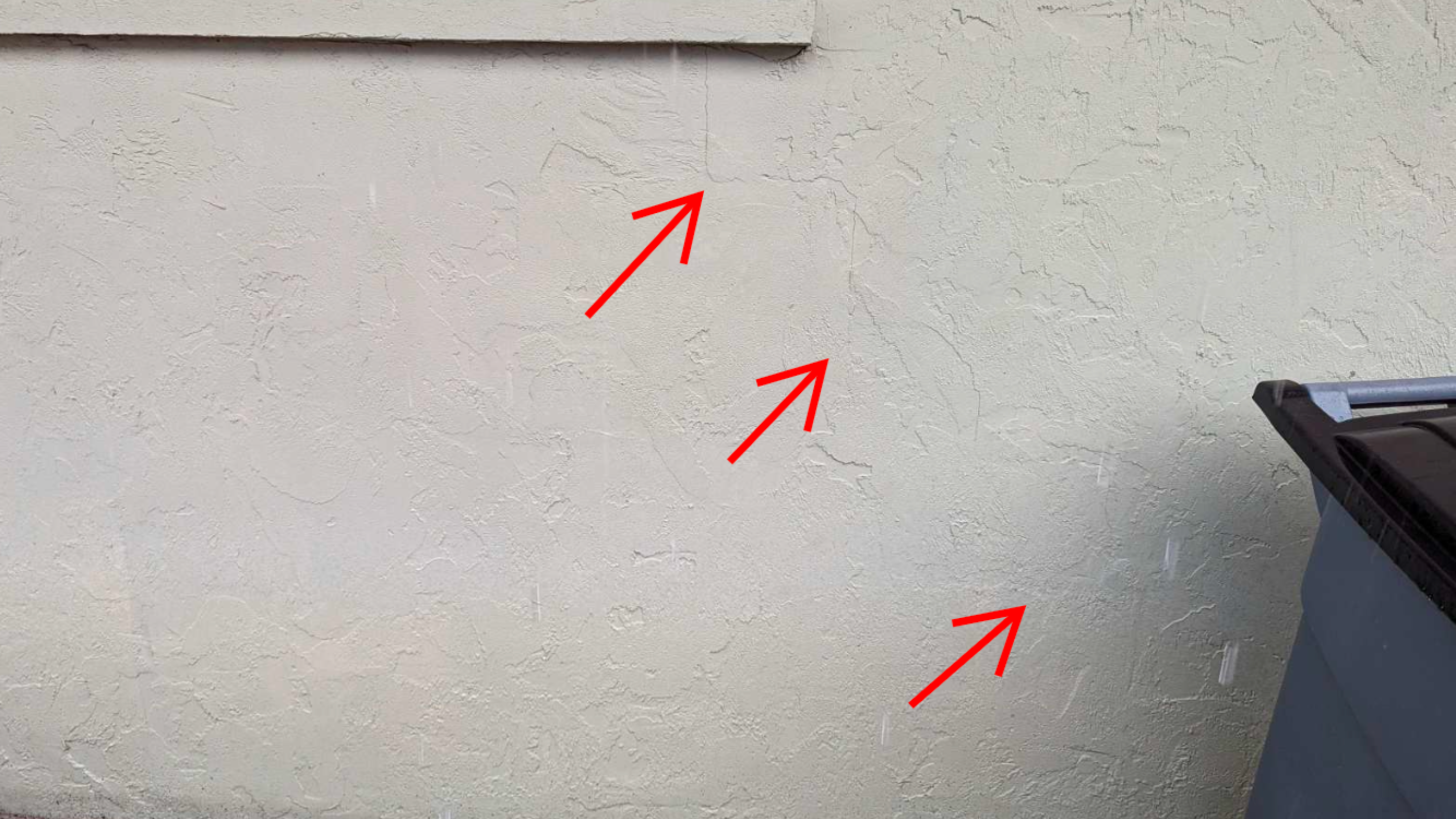
- Stair-step cracking
- Cracks around windows and doors
- Sticking doors or windows
- Uneven floors
- Gaps around openings
- Repeated cosmetic cracking
- Separation at additions
- Exterior concrete settlement
Understanding Florida foundation movement therefore requires looking beyond the concrete to the conditions supporting it.
Florida Soil Conditions at a Glance
| Florida Soil or Ground Condition | How It Can Affect Support | What a Homeowner May Notice |
| Dense, properly compacted sand | Can provide good support | Often no problem |
| Loose sandy soil | May compress or rearrange under load | Settlement, cracks, uneven floors |
| Poorly compacted fill | May continue consolidating | Localized or differential settlement |
| Erosion or washout | Removes supporting material | Voids, sinking slabs, settlement |
| Weak shallow soils | Reduce support close to the structure | Localized settlement |
| Groundwater conditions | Can influence erosion and subsurface behavior | Site-dependent movement |
| Organic soils | Can compress or lose volume | Gradual settlement |
| Certain clay layers | May change volume with moisture | Moisture-related movement |
| Layered soils | Layers may behave differently | Differential settlement |
| Deeper weak soils | May allow continued structural settlement | Foundation movement requiring deeper support |
| Karst/limestone conditions | Can create subsurface voids in some areas | Subsidence or structural movement |
| Poor drainage | Can concentrate water near supporting soils | Erosion, washout, voids |
The same symptom can result from several different conditions.
That is why the cause should be evaluated rather than assumed.
1. Sandy Soil Is Not Automatically a Foundation Problem
Florida is widely associated with sandy soils.
That can lead homeowners to assume:
“My house is settling because it was built on sand.”
Sometimes loose sand is part of the problem, but sand itself is not the diagnosis.
Dense, properly compacted sand can provide good bearing support.
Concern increases when the sand is:
- Loose
- Poorly compacted
- Disturbed
- Eroding
- Washing out
- Unevenly distributed
Two neighboring homes may therefore both sit on sandy soil and perform very differently.
The important question is not simply whether sand is present.
It is what condition the supporting sand is in.
2. Poorly Compacted Fill Can Cause Settlement Years After Construction
Florida lots are often graded, filled, excavated, and reshaped during construction.
Utilities, pools, additions, driveways, and patios can also require excavation and backfilling.
Whenever soil is disturbed and replaced, compaction matters.
If fill beneath a foundation or slab was not sufficiently compacted, it can continue to compress under load after construction.
Settlement may affect:
- Foundations
- Interior slabs
- Garage floors
- Driveways
- Pool decks
- Patios
- Additions
This is one reason different concrete elements on the same property can move independently.
3. Weak Shallow Soils Can Affect Foundations Differently From Deeper Soil Problems
Not every support problem occurs at the same depth.
That distinction can completely change the repair approach.
Shallow Soil Problems
Helicon frequently encounters loose or weak sandy soils within the upper several feet of Florida properties.
On some sites, these weak zones are limited to the upper several feet; on others, they may extend deeper. Every soil profile is different.
Shallow conditions may involve:
- Loose sand
- Poorly compacted fill
- Voids
- Erosion
- Washout
- Disturbed soil
Depending on the structure and condition, shallow soil improvement may be appropriate.
Deeper Support Problems
Other foundations need support well below the shallow weak zone.
In those cases, underpinning systems such as push piers, helical piers, drilled piers, or other deep-foundation methods may be considered.
These systems support affected foundation areas by transferring loads to deeper competent bearing soils or other suitable bearing material.
The better question is therefore not:
“Do I have weak soil?”
It is:
“Where is the support problem, and what repair objective does it require?”
4. Water Can Change the Way Soil Supports a Home
Florida combines sandy soils with heavy rainfall, irrigation, stormwater, plumbing systems, and varying groundwater conditions.
Water becomes important when it changes the soil supporting a structure.
Potential sources include:
- Roof runoff
- Poor grading
- Concentrated drainage
- Irrigation leaks
- Plumbing leaks
- Pool plumbing
- Stormwater
Water can contribute to erosion, washout, void formation, and loss of shallow support.
But water should not become an automatic diagnosis.
A wet yard does not prove drainage caused foundation settlement, and correcting drainage does not automatically restore support that has already been lost.
The question is whether water is actually contributing to the condition at that property.
Read more: Drainage Problems and Foundation Settlement in Florida
5. High Groundwater Does Not Affect Every Property the Same Way
Groundwater varies across Florida by location, season, elevation, geology, and site conditions.
A high or fluctuating water table can influence subsurface behavior, but it is not a universal explanation for foundation movement.
Its significance may depend on:
- Soil type and density
- Drainage
- Site elevation
- Subsurface layering
- Groundwater flow
- Nearby excavation or pumping
- Local geology
Instead of asking only whether groundwater is high, ask:
“Is groundwater contributing to the support problem at this property?”
That is a site-specific question.
6. Florida Also Has Clay Soils—and Not All Clay Behaves the Same
Florida is not made entirely of sand.
Clay-bearing soils occur in parts of the state, and some clay minerals can change volume as moisture conditions change.
Certain clays may swell when wetter and shrink as they dry.
If that movement occurs unevenly beneath a structure, it can contribute to foundation movement.
However:
The presence of clay does not automatically mean a home has an expansive-soil problem.
The type of clay, thickness, moisture conditions, depth, and foundation design all matter.
Soil labels alone are rarely enough to diagnose a foundation problem.
7. Organic Soils Can Compress Over Time
Some Florida properties contain subsurface organic material associated with former wetlands, low-lying areas, or other natural deposits.
Organic soils can be compressible and may lose volume over time through processes such as compression and decomposition.
If a structure or fill is supported over weak organic material, gradual settlement can occur.
These materials may also lie beneath more typical-looking surface soils.
What is visible in the yard does not necessarily represent the full soil profile beneath the home.
8. Soil Layers Matter as Much as Soil Type
Real soil profiles are rarely uniform.
A Florida property may contain layers of:
- Sand
- Fill
- Silt
- Clay
- Shell
- Organic material
- Weathered material
- Limestone at greater depth
Those layers may differ in density, strength, thickness, and drainage characteristics.
A foundation responds to the combined behavior of the soils carrying its load, not simply the material visible at the surface.
That also helps explain why conditions can vary across relatively short distances.
One portion of a home may be supported over competent soil while another sits over loose fill or a compressible zone.
The result can be differential settlement on the same lot.
9. Erosion and Washout Can Remove Support Beneath Concrete
Concentrated moving water can carry loose soil away.
This often matters near:
- Roof discharge points
- Broken drain lines
- Plumbing leaks
- Pool plumbing
- Poorly graded areas
- Slab edges
- Seawalls
- Stormwater systems
As material is removed, voids can develop beneath concrete.
A slab may then:
- Settle
- Rock
- Crack
- Become uneven
- Lose support before significant settlement becomes visible
This distinction matters because void filling and concrete lifting are not the same repair objective.
A slab may need support restored without needing substantial lifting.
Read more: Voids Under Concrete Slabs: What Causes Them and How to Fix Them
10. Interior Slab Settlement Is Not Always Foundation Settlement
Homeowners often use slab and foundation interchangeably, but they may behave differently.
An interior slab can lose support while the structural foundation around it remains relatively stable.
Possible causes include:
- Poorly compacted fill
- Fill settlement
- Voids
- Plumbing leaks
- Washout
- Weak shallow soils
If an interior slab is moving independently, perimeter foundation piers may not correct the slab problem.
Likewise, supporting the slab does not automatically correct structural foundation settlement.
The first question is:
“What exactly is moving?”
Read more: Interior Slab Settlement: Causes, Signs, and Repair Options
11. Sinkhole Activity Is Only One Possible Cause of Florida Settlement
Florida’s limestone geology makes sinkholes an important concern.
But homeowners should not assume:
Crack + Florida = sinkhole.
Other causes of settlement or subsidence can include:
- Loose soil
- Poor compaction
- Organic material
- Erosion
- Utility-related conditions
- Buried debris
- Other subsurface conditions
Sinkhole-related movement is a legitimate possibility in appropriate geologic settings, but determining whether a more complex geologic condition exists may require additional investigation.
A foundation evaluation by itself generally cannot confirm or rule out whether a subsurface condition is sinkhole-related.
When warranted, evaluation by qualified engineers, geologists, or other specialists may be appropriate.
A sinking foundation is not automatically a sinkhole.
Read more: Sinkhole Repair
12. Coastal and Waterfront Properties Can Have Additional Soil Challenges
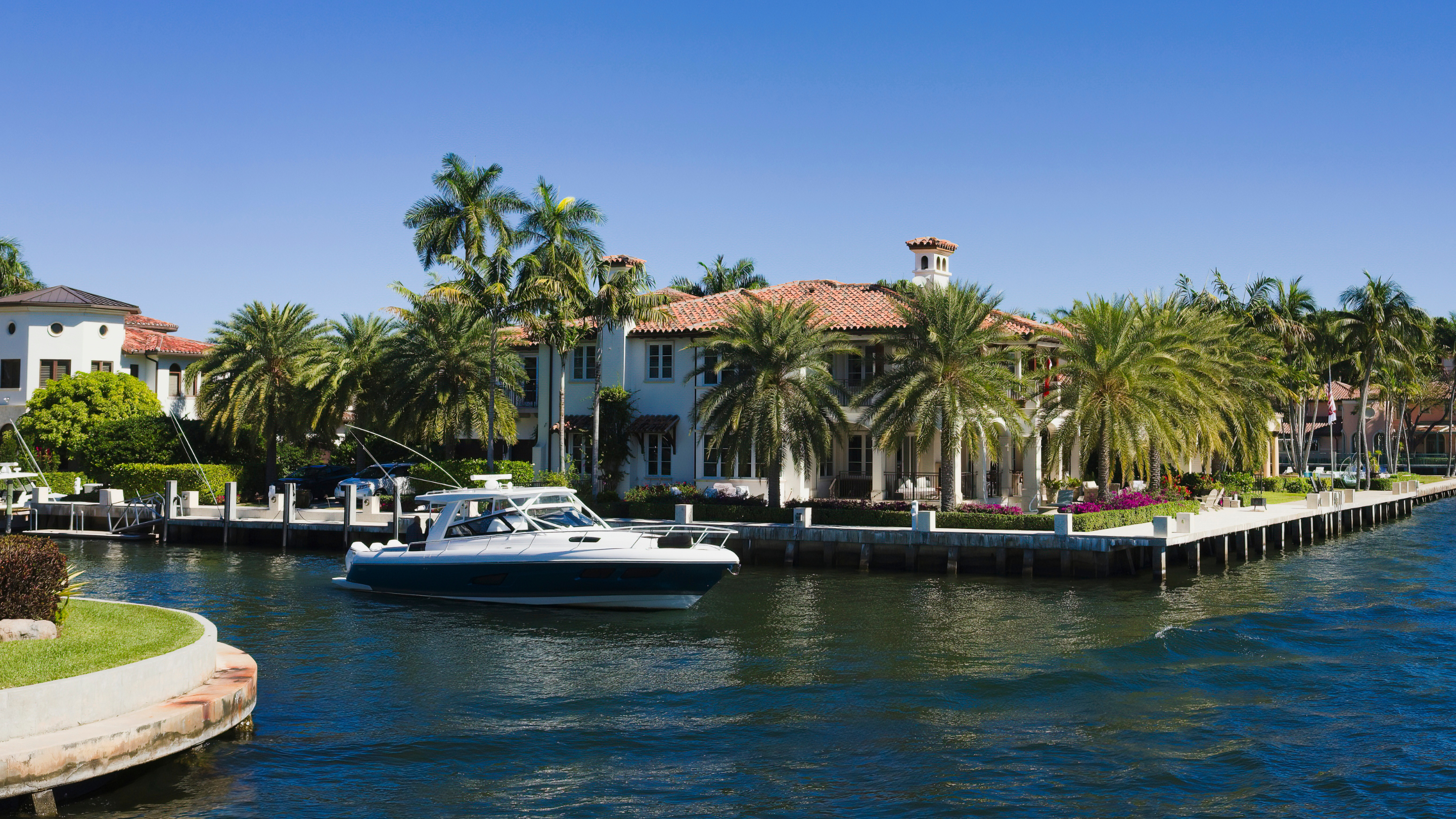
Waterfront properties may experience the same soil conditions as inland homes plus additional exposure to soil migration and moving water.
Potential concerns include:
- Erosion
- Soil loss
- Seawall-related washout
- Groundwater
- Tidal influence
- Poor fill
- Voids behind waterfront structures
For example, soil may escape through seawall joints, cracks, penetrations, or other pathways while the wall itself remains standing.
That can contribute to:
- Depressions or sinkholes behind the wall
- Settled patios
- Pool deck movement
- Voids
- Loss of support near structures
That condition is different from structural seawall failure and may require a different repair objective.
Read more: Seawall Failure & Soil Erosion in Florida: A Homeowner’s Guide
The Important Distinction: Shallow Soil, Deep Soil, or Slab?
Homeowners do not need to become geotechnical engineers.
But this basic framework helps explain why foundation recommendations can differ.
| Condition | Repair Objective | Possible Approach When Appropriate |
| Weak shallow soil | Improve shallow soil support | Polyurethane soil stabilization |
| Void beneath slab | Restore contact/support | Structural polyurethane void filling |
| Settled repairable slab | Restore support and elevation | Concrete lifting |
| Deep foundation settlement | Transfer foundation loads deeper | Push, helical, drilled, or other pier systems |
| Deeper weak soil requiring improvement | Improve or densify ground | Compaction grouting in appropriate conditions |
| Active drainage or leak | Stop contributing water source | Drainage or plumbing correction |
| Severely deteriorated concrete | Replace unsuitable slab | Concrete replacement |
| Minor or uncertain movement | Determine whether it is progressing | Monitoring |
| Complex subsurface condition | Determine underlying cause | Engineering or geologic evaluation |
These methods are not interchangeable.
A pier is not a substitute for drainage correction.
Void filling is not automatically slab lifting.
Polyurethane soil stabilization is not a substitute for deeper support when deeper support is required.
The repair method should follow the soil behavior and repair objective—not simply the symptom visible above ground.
How Soil Problems Show Up Inside and Outside a Home
Possible signs of soil-related movement include:
- Stair-step cracks
- Diagonal cracks near openings
- Cracks that repeatedly reopen
- Sticking doors or windows
- Uneven floors
- Increasing gaps
- Separation at additions
- Settled exterior concrete
- Garage or interior slab settlement
- Pool deck movement
- Voids
- Visible erosion or soil loss
None of those symptoms identifies the soil condition by itself.
The pattern and progression matter.
A single stable crack is different from increasing cracks, changing elevations, and sticking doors developing in the same area.
Read more: Signs Your Home Foundation Is Sinking in Florida
How Helicon Evaluates Whether Soil Is Affecting a Foundation
A useful foundation evaluation is not simply a search for cracks.
The objective is to understand how the symptoms relate to the structure and supporting ground.
Depending on the property, Helicon may consider:
Symptom Patterns
Where are cracks, gaps, sticking doors, or other symptoms located, and do they appear related?
Relative Floor Elevations
A Zip Level may be used when appropriate to map relative floor-elevation patterns.
Elevations are useful evidence, but they do not establish the cause by themselves.
Exterior Conditions
We may look for:
- Settled concrete
- Erosion or washout
- Drainage patterns
- Soil loss
- Addition transitions
- Nearby slab movement
Shallow Soil Conditions
Soil probing near the foundation may sometimes provide useful field information about apparent loose or weak shallow zones.
A soil probe is not a substitute for a full geotechnical investigation, but it can provide useful field information in appropriate situations.
Property History
Relevant history may include:
- Previous repairs
- Plumbing leaks
- Drainage changes
- Additions
- Pool construction
- Nearby excavation
- Whether symptoms are progressing
Complex conditions may require deeper testing or evaluation by an engineer, geologist, or geotechnical professional.
The objective is not to perform every possible test.
It is to gather enough evidence to make an informed decision about the next step.
Why Two Homes in the Same Neighborhood Can Settle Differently
Homeowners sometimes ask:
“If the soil is the problem, why isn’t my neighbor’s house cracking?”
Because nearby homes are not necessarily supported by identical conditions.
Differences can include:
- Fill depth
- Compaction
- Buried organic material
- Utility trenches
- Drainage
- Plumbing leaks
- Foundation design
- Additions
- Structural loads
- Soil layering
- Localized erosion
- Construction conditions
Even homes built by the same builder can perform differently.
Soil and construction conditions can vary over surprisingly short distances.
Your neighbor’s house therefore should not become the diagnosis for yours.
Can You Prevent Soil-Related Foundation Problems?
Homeowners cannot control the geology beneath their property.
But some avoidable contributors can be managed.
Useful steps include:
- Correct plumbing and irrigation leaks promptly
- Avoid concentrated water discharge beside the foundation
- Maintain appropriate drainage
- Watch for erosion or disappearing soil
- Investigate recurring voids or washout
- Document symptoms that appear to be changing
- Investigate unexplained settlement instead of repeatedly patching it
None of these steps guarantees that settlement will never occur.
They can, however, help reduce avoidable water- and erosion-related support problems.
Checklist: Could Soil Conditions Be Affecting My Foundation?
Around the Home
- Are cracks getting wider or longer?
- Do repaired cracks keep reopening?
- Are several doors or windows beginning to stick?
- Are floor conditions noticeably changing?
- Are gaps increasing around openings?
- Is an addition separating?
Around the Property
- Is soil washing away?
- Does water repeatedly collect or flow toward one area?
- Have there been plumbing or irrigation leaks?
- Are nearby exterior slabs settling?
- Are voids visible beneath concrete?
- Has soil or fill been disturbed?
Property History
- Was the property built on fill?
- Have there been previous foundation or slab repairs?
- Has a pool, addition, or major excavation been added?
- Are symptoms new or clearly progressing?
- Do you have photographs or prior floor elevations for comparison?
Before Choosing a Repair
- Do I know what is actually moving?
- Does the support problem appear shallow, deeper, or slab-specific?
- Has water or drainage been considered?
- Does the proposed repair match the suspected condition?
- Do I understand what the repair will and will not address?
- Were reasonable alternatives considered?
Checking several boxes does not diagnose a soil or foundation problem.
It means a closer evaluation may be worthwhile.
Common Misunderstandings About Florida Soil and Foundations
“Florida Sand Is Bad Soil”
Not necessarily. Dense, properly compacted sand can provide good support. The concern is loose, disturbed, poorly compacted, or eroding soil.
“If My Foundation Is Settling, I Have a Sinkhole”
No. Sinkholes are one possible cause in appropriate geologic conditions, but many other soil and construction conditions can cause settlement.
“If I Fix the Drainage, the Foundation Will Come Back Up”
Not necessarily. Correcting the water source may prevent continued soil loss, but existing settlement may require a separate solution.
“If I Install Piers, All the Soil Under My Home Is Fixed”
No. Piers support affected foundation areas by transferring loads deeper. They do not automatically improve every shallow soil or slab condition.
“Polyurethane Fixes Every Weak Soil Problem”
No. Polyurethane soil stabilization may be useful for certain shallow weak-soil conditions but does not replace deeper support when deeper support is required.
“One Crack Can Tell Me What the Soil Is Doing”
No. A crack is one piece of evidence, not a complete diagnosis.
How the Correct Repair Depends on the Soil Problem
Different problems require different repair objectives.
Polyurethane Soil Stabilization
May be appropriate for certain weak or loose shallow-soil conditions.
Structural Polyurethane Void Filling
May restore support beneath a repairable slab that has lost contact with the soils below.
Concrete Lifting
May restore support and elevation when settled concrete remains suitable for lifting.
Foundation Piers
May support affected foundation areas by transferring loads to deeper competent bearing soils or other suitable bearing material.
Compaction Grouting
May be appropriate for deeper soil improvement or densification in certain conditions.
Monitoring or No Repair
May be appropriate when the evidence does not support immediate intervention.
The value of having several repair capabilities is not finding a way to use more of them.
It is being able to evaluate different possibilities and choose the method that fits the problem.
How Helicon Approaches Florida Soil Problems
Helicon has worked with Florida foundations and soils since 2004, including foundation underpinning, soil stabilization, structural void filling, concrete lifting, compaction grouting, sinkhole repair, and deep foundations.
That experience reinforces a simple point:
Florida soil problems are rarely as simple as:
Sand = bad foundation.
A useful evaluation considers the relationship between:
- Soil condition
- Depth
- Compaction
- Water
- Erosion
- Layering
- Foundation or slab type
- Symptom pattern
- Amount and location of movement
The goal is to determine whether the condition involves:
- Shallow weak soil
- Deeper foundation support
- An isolated slab
- Water or erosion
- Multiple conditions
- Or no current repair need
Then the question becomes:
“What is the least invasive repair that properly addresses the movement?”
Sometimes that is soil stabilization.
Sometimes it is deeper foundation support.
Sometimes it is a slab-specific repair or correction of a contributing water source.
And sometimes monitoring is appropriate.
Good foundation repair starts with understanding the structure and the ground beneath it—not choosing the product first.
Read more: About Helicon
Schedule a Free Foundation Inspection
If you are noticing cracks, sticking doors, uneven floors, gaps, slab settlement, erosion, or other possible signs of movement, you do not need to determine the soil type yourself.
Helicon can evaluate the symptom pattern, relative floor elevations when appropriate, exterior conditions, drainage, shallow soils, and other relevant site factors.
The goal is to determine:
- What appears to be moving
- Whether soil conditions may be contributing
- Whether the issue appears shallow, deeper, or slab-specific
- Whether anything needs repair
- Which repair objective makes sense if it does
The right foundation solution depends less on what Florida soil is called and more on how the soil beneath your home is actually behaving.
Read more: Foundation Repair
FAQ
What type of soil causes the most foundation problems in Florida?
There is no single problem soil. Loose sand, poorly compacted fill, organic material, certain clay layers, erosion, and deeper weak zones can all contribute depending on the property.
Is sandy soil bad for foundations?
Not automatically. Dense, properly compacted sand can provide good support. Loose, disturbed, poorly compacted, or eroding sand is more concerning.
Why do Florida homes settle?
Possible contributors include loose or weak soils, poor compaction, fill settlement, erosion, washout, voids, deeper support conditions, water, and certain geologic conditions.
How does poor compaction affect a foundation?
Poorly compacted soil can continue compressing under load, allowing one part of a foundation or slab to settle more than another.
Can heavy rain cause foundation settlement in Florida?
Heavy rain can contribute when it causes erosion, washout, concentrated runoff, or changes in soil support. Rain by itself does not mean a foundation will settle.
Can a high water table damage my foundation?
Groundwater can influence subsurface conditions, but its effect depends on the soils, drainage, geology, elevation, and foundation. A high water table alone does not diagnose a problem.
Does Florida have expansive clay?
Yes, clay-bearing soils occur in parts of Florida, and some can change volume with moisture. Their significance depends on the specific site and soil characteristics.
What are organic soils?
Organic soils contain decomposed organic material and can be compressible, potentially contributing to settlement when they occur beneath structures or fill.
Does foundation settlement mean I have a sinkhole?
No. Sinkhole-related conditions are only one possible cause of settlement.
How do I know whether my soil problem is shallow or deep?
Visible symptoms alone may not establish depth. Evaluations can consider symptom patterns, floor elevations, shallow probing, site conditions, property history, and additional testing when necessary.
Can polyurethane stabilize weak Florida soil?
It may be appropriate for certain weak or loose shallow-soil conditions. It is not the right solution for every soil problem.
When are foundation piers used?
Piers may be appropriate when affected foundation areas require deeper support by transferring loads to deeper competent bearing soils or other suitable bearing material.
Can drainage repair fix foundation settlement?
Correcting drainage may address a contributing source of erosion or soil loss, but it does not necessarily reverse settlement that has already occurred.
Can soil under an interior slab settle without the foundation moving?
Yes. Interior slabs can sometimes lose support or settle independently from the structural foundation.
How does Helicon determine the right foundation repair?
Helicon evaluates the structure, symptom pattern, relative floor elevations when appropriate, exterior conditions, drainage, shallow soils, and other relevant factors before determining whether the situation calls for soil stabilization, void filling, concrete lifting, deeper support, another corrective measure, monitoring, or no immediate foundation repair.