A contractor just walked your driveway or patio and said the word you weren’t expecting: replacement. Maybe your own research turned up the same conclusion. Either way, you’re standing at a real fork in the road, wondering why a settled slab that looks mostly fine might not be a candidate for lifting at all.
Across thousands of Florida slabs, the pattern is consistent: the difference between concrete leveling vs. slab replacement almost never comes down to preference. It comes down to what the concrete and the soil beneath it can actually support.
When Is a Settled Slab Still Worth Leveling?
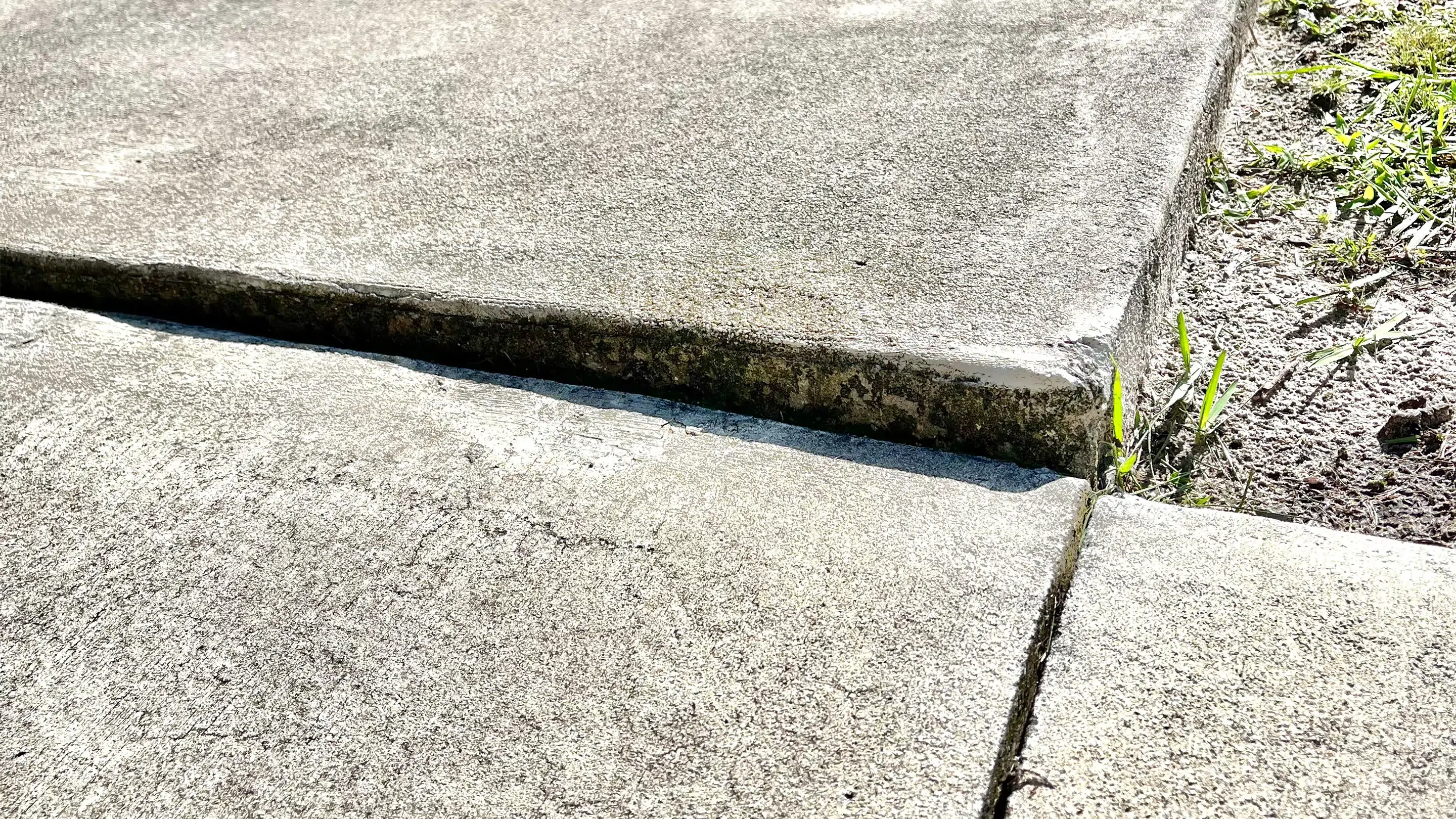
A settled slab is worth leveling when the concrete itself is still one solid, intact piece and the problem is really happening underground. Lifting restores position. It doesn’t repair broken concrete, so the slab’s structural condition has to check out first.
Concrete leveling works by pumping material, either a cement-based slurry or polyurethane foam, beneath a sunken slab to fill the void and push it back toward level. This is a well-established fix for uneven concrete caused by soil settling, erosion, or poor original compaction.
Florida’s sandy fill soils are especially prone to this kind of gradual settling, since sand shifts and washes out under a slab far more easily than denser clay or rock-based soils found elsewhere.
The decision to level rests on two separate questions that get evaluated independently.
Is the Slab Intact Enough to Lift as One Piece?
A slab that lifts cleanly has no widespread cracking, no crumbling edges, and no sections that move independently. If pressing on one corner doesn’t shift or flex a different section, that’s a good early sign the piece is structurally whole.
Engineers also look at how far the slab has dropped. A settlement gap under roughly 2 to 3 inches on an otherwise sound slab is generally within reach for lifting equipment. Beyond that, the void underneath is often too large for lifting material to fill reliably without risking the slab cracking during the lift itself.
What Can Leveling Fix, and What Will It Leave Behind?
Leveling corrects elevation and closes the void beneath the concrete. It will not repair a crack that’s already there, seal off spalled or flaking surface concrete, or strengthen a slab that has thinned or weakened over the years.
That distinction matters because a lifted slab with existing surface damage still has that damage after the lift, just at the correct height. Homeowners sometimes expect leveling to erase cosmetic problems along with the settling, and it’s worth setting that expectation early.
Once a slab passes both tests, intact structure and a manageable void, leveling is usually the faster, less disruptive answer. The next question is what happens when a slab fails either check.
When Does Damaged Concrete Need Replacement?
Damaged concrete needs replacement when the material itself has failed, not just its position. Broken, crumbling, or badly cracked concrete cannot be lifted back into a usable, safe surface, no matter how skilled the crew is.
Concrete replacement means removing the old slab entirely and pouring a new one, ideally over a properly prepared and compacted base. It costs more and takes longer than leveling, but it resets the surface completely, including grade, thickness, and reinforcement, rather than working around whatever is already there.
Do Cracks Divide the Slab Into Moving Sections?
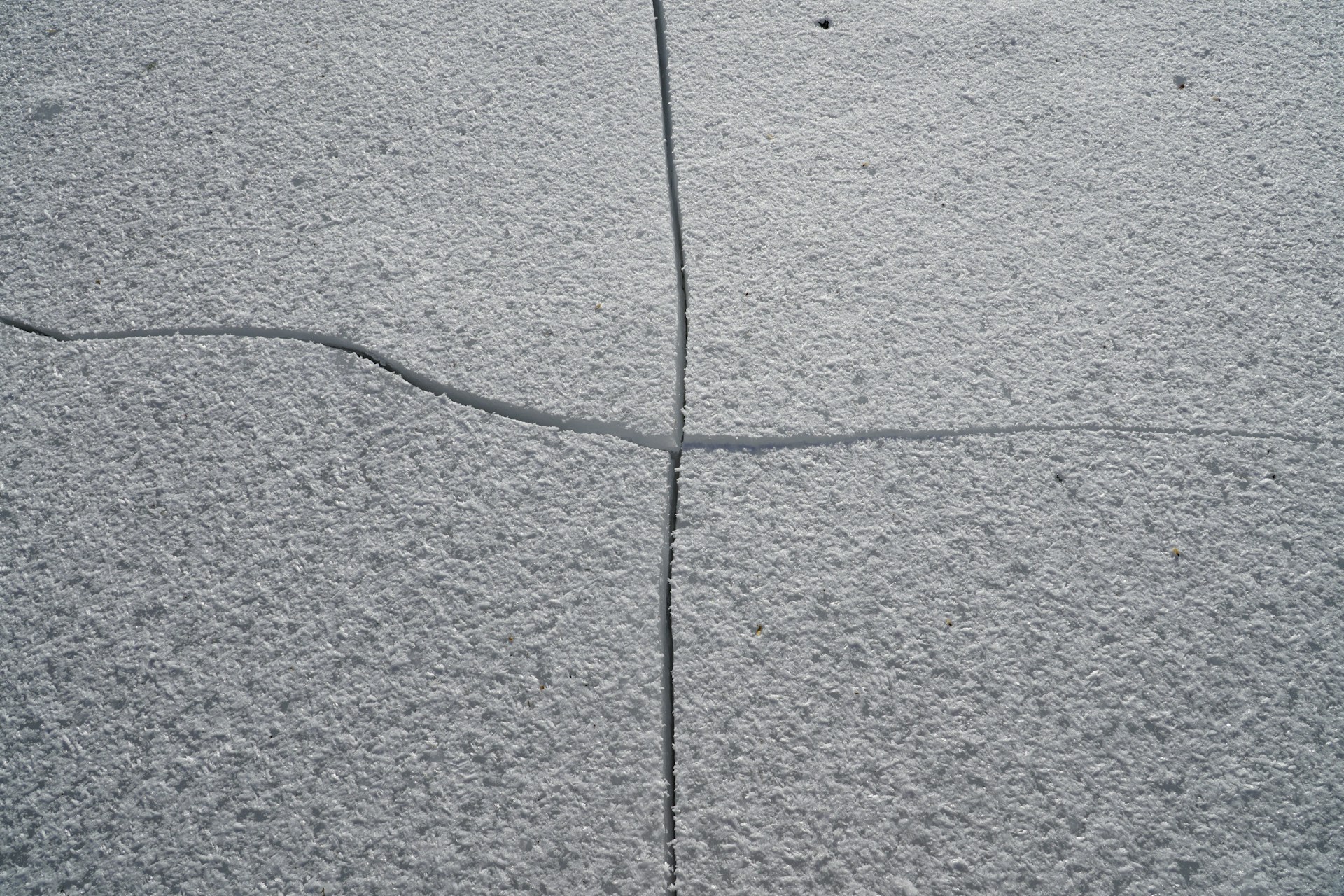
A single hairline crack rarely disqualifies a slab from leveling. Multiple intersecting cracks that split the concrete into separate pieces are a different story, because each piece can move independently once lifting material goes underneath it.
When cracks form a grid or web pattern rather than one clean line, the slab is effectively several small slabs pretending to be one. Lifting that kind of concrete risks uneven results, since one section can rise faster than its neighbor and create new tripping hazards instead of fixing old ones.
Is the Concrete Spalling, Crumbling, or Exposing Rebar?
Spalling, where the surface flakes, pits, or crumbles away, signals that the concrete’s internal structure is degrading, not just its looks. Once rebar is visible or edges are crumbling under light pressure, the material has lost the strength needed to hold together during a lift.
Florida’s humidity and salt exposure near coastal areas accelerate this kind of deterioration in slabs with inadequate rebar cover or lower-grade original pours. A slab in that condition needs replacement rather than lifting, since leveling would only further stress already-weak material.
Would a New Slab Solve a Problem Lifting Cannot?
Sometimes the slab is technically liftable, but a fresh pour still makes more sense. If the original slab was poured too thin, has no rebar or wire mesh, or sits on a base that was never properly compacted, lifting it just returns a weak slab to level, not a durable one.
Replacement also allows changes to slope, thickness, or drainage patterns that a lift cannot correct. When a homeowner wants a design change alongside the fix, a new pour is the more direct route.
- Cracks forming a grid pattern that splits the slab into independent pieces
- Spalling, flaking, or crumbling concrete with exposed rebar
- Settlement deeper than the lifting method can reliably correct
- A base or reinforcement issue that predates the current settling
- A desired change in slope, thickness, or layout the existing slab can’t support
Structural condition is one half of the equation. The other half is what’s actually happening in the ground underneath, which determines whether either repair will hold.
How Do the Soil and Drainage Affect the Decision?
The soil beneath a Florida slab often determines the outcome before the concrete condition is even considered. Soil erosion and soil movement create the voids that cause settling in the first place, and the size and cause of that void shape which repair will actually last.
Florida’s geology plays a direct role here. In parts of the state sitting over karst limestone, subsurface voids can form from slow limestone dissolution, not just surface erosion. A slab settling over that kind of geology needs a different level of investigation than one settling because of a leaking irrigation line or storm runoff washing out sandy fill.
How Extensive Is the Void Beneath the Slab?
A small, contained void from localized soil washout is a straightforward lift. A void that’s spread out, deep, or connected to ongoing erosion is a different problem entirely, since filling it may not stop the underlying cause.
Contractors typically confirm void size with a small test hole or probe before quoting a repair. Skipping that step is one of the most common ways a leveling job fails within a year or two, because the crew fills what they can see without confirming how far the void actually extends.
Can Lifting Restore the Needed Drainage Slope?
Concrete lifting can often restore a slab’s original drainage slope, provided the slab is intact enough to move as one piece, and the lift amount is modest. Florida’s heavy tropical storm rainfall makes proper slope around driveways, patios, and pool decks more than cosmetic.
When water pools against a home’s foundation instead of running away from it, that standing water contributes to more settling over time. If a slab has settled unevenly enough that a lift can’t recreate a workable slope, replacement is often the more reliable fix, since a new pour can be graded correctly from the start.
Soil conditions decide whether a repair holds long-term. Cost and disruption decide whether it’s the right call for the homeowner’s timeline and budget.
What Will Each Option Cost in Time, Money, and Disruption?
Concrete leveling costs less and takes far less time than replacement, but the gap between the two options is bigger than most homeowners expect. Knowing what drives that gap helps make sense of any quote that comes in.
Concrete leveling cost typically runs $500 to $5,000, while slab replacement generally runs $3,000 to $10,000 or more. The spread within each range depends heavily on square footage, the method used, and how much prep work the site needs.
What Do Mudjacking and Foam Lifting Involve?
Mudjacking, also called slab jacking, pumps a cement-based slurry beneath the slab through small drilled holes and typically costs around $5 to $8 per square foot. It’s a proven, budget-conscious option for slabs with a smaller drop and stable soil underneath.
Polyurethane foam injection, sometimes called polyjacking, uses lightweight expanding foam instead of slurry and generally costs $10 to $25 per square foot. Foam cures fast, often walkable within 15 to 30 minutes, which matters on a driveway or walkway a household needs back quickly.
What Does Removing and Rebuilding a Slab Involve?
Replacement starts with demolition and haul-off, followed by base prep, forming, pouring, and curing. Full replacement typically costs three to five times more than leveling and needs 3 to 7 days before the area is usable again.
That downtime matters for driveways, entryways, or pool decks a family relies on daily. It’s worth planning around, especially during Florida’s rainy season when an open excavation site is exposed to storm runoff.
How Should You Compare Quotes and Expected Results?
A fair quote explains why a method was chosen, not just the price. Ask each contractor how they measured settlement, whether they confirmed soil conditions with a test hole, and what result to expect a year out.
- Cost: leveling generally runs lower than replacement per square foot
- Time: leveling finishes in hours; replacement takes days due to cure time
- Disruption: leveling uses small drilled holes; replacement requires full demolition
- Longevity: depends on whether the cause of settling was addressed, not just the method
Cost and timeline only tell part of the story. The real answer comes from what an on-site assessment finds underneath and around the slab.
What Should an On-Site Assessment Answer?
A proper on-site assessment should tell you what caused the settlement, whether it’s ongoing, and which repair category the slab actually falls into. Anything less than that is a guess dressed up as a quote.
A qualified concrete leveling contractor or concrete leveling company will inspect the visible slab, probe the soil, and measure the settlement before recommending anything. Reputable concrete leveling services also carry general liability insurance, which protects the homeowner if something goes wrong during drilling or lifting.
What Caused the Settlement, and Will It Continue?
The cause matters more than the slab’s current appearance. A slab that settled because of a one-time construction issue is a different case than one settling because of an active drainage problem or ongoing soil erosion nearby.
Florida’s mix of sandy fill soils, seasonal storm rainfall, and occasional karst limestone activity means the “why” behind settlement varies block by block. An assessment that skips this question can lead to a repair, either lift or replacement, that fails again within a few years.
What Evidence Supports Leveling or Replacement?
A solid assessment points to specific evidence: test hole findings, crack mapping, measured settlement depth, and the slab’s overall condition. That evidence should lead directly to a recommendation the homeowner can understand, not just a number.
Ask to see or hear about that evidence before agreeing to either path. A contractor who can explain their reasoning in plain terms is giving a far more useful answer than one who jumps straight to a price.
Once the cause and the evidence are clear, the decision between leveling and replacement usually becomes straightforward rather than a guessing game.
Choose the Repair That Fits Your Slab
The right repair fits the slab’s actual condition, not a general preference for saving money or avoiding a mess. A settled but intact slab over a manageable void is a strong candidate for leveling. A cracked, spalling, or structurally compromised slab needs a new pour.
Florida’s soil conditions, from sandy fill to occasional karst limestone activity, mean two nearly identical-looking driveways down the street from each other can need completely different repairs. That’s why a visual guess, whether from a homeowner or an unlicensed handyman, rarely holds up as well as a proper inspection.
Weighing concrete leveling vs. replacement always comes back to the same short list: is the concrete sound, is the void manageable, and has the cause of settlement been identified? Get those three answers, and the right repair becomes obvious.
Frequently Asked Questions
Can a Cracked Driveway Slab Still Be Leveled?
It depends on the crack pattern. A single hairline crack on an otherwise solid slab often doesn’t prevent lifting, but multiple intersecting cracks that split the slab into separate pieces usually point toward replacement.
Will Replacing My Slab Prevent It From Sinking Again?
Only if you address the cause of the original settling. A brand-new slab poured over the same unstable soil or poor drainage will eventually settle again, so fixing the underlying soil or drainage issue matters as much as the new concrete itself.
Does Foam Lifting Fix the Soil Problem Beneath My Concrete?
Foam lifting fills the existing void and restores the slab’s position, but it doesn’t stop an active soil problem, like an ongoing leak or drainage issue. You need to correct those causes separately, or the settling is likely to return.
How Long Will I Be Unable to Use My Driveway After Each Repair?
Foam injection is often walkable in 15 to 30 minutes and fully cured within 24 hours, while mudjacking needs roughly 24 to 48 hours before vehicle traffic. Full slab replacement generally keeps the area closed for 3 to 7 days while it cures.
Should I Get Both Leveling and Replacement Quotes?
Getting both quotes makes sense whenever a slab’s condition is borderline. Comparing prices side by side also helps confirm that a contractor’s recommendation is based on the slab’s actual condition, not which service they’d rather sell.
If your concrete is sinking or cracked, a free inspection from Helicon will tell you exactly what is happening beneath the surface and what it takes to fix it permanently.