
Lithia, FL
The Project
The Challenge
The Solution
FREE INSPECTION REQUEST

Market: Residential
Solution: Two-Part Structural Polyurethane Injections
Services: Soil Stabilization
The homeowner’s concerns centered on two related conditions:
The homeowner wanted the affected soils and concrete slab stabilized.
Although the visible symptom was settlement in the pool deck, the drainage issue provided an important clue about why the support beneath the concrete may have been changing.
Deco drains are commonly used around pool decks and patios to collect and direct surface water away from the area. When those drainage systems are functioning properly, they help prevent water from accumulating in areas that could affect surrounding improvements.
When a drain leaks, however, water may begin entering the supporting material beneath the pool deck.
Over time, this can contribute to localized erosion or loss of support. The concrete above may then begin settling toward the weakened area. That is why this project required more than a cosmetic concrete repair.
The homeowner’s goal was to stabilize the affected areas before the settlement progressed further.
Helicon approached the repair with two related strategies:
Together, these treatments addressed both the support material and the concrete resting above it.
Minor pool-deck settlement can initially seem like a cosmetic issue.
A slab may sit slightly lower than the adjacent section. A small gap may develop. Water may start collecting in an area where it did not previously pond.
But concrete generally settles for a reason.
When the supporting material beneath a slab changes, the concrete can no longer distribute its load as evenly as it did when originally installed.
Potential warning signs can include:
The presence of settlement does not automatically identify the exact cause. However, when erosion and a leaking drainage feature are already known to be present—as they were on this project—the subsurface support condition becomes an important part of the repair discussion.
Ignoring that condition and simply resurfacing the concrete could leave the underlying issue unresolved.
The original project notes identify erosion from a leak in the deco drain as one of the homeowner’s concerns.
That detail is important because water can significantly affect the performance of the materials supporting an exterior concrete slab.
When water repeatedly enters the same area, it can potentially:
Once a void or weak support zone begins developing, the slab above it may remain suspended temporarily. Eventually, the concrete may move toward the unsupported area. That movement is what homeowners often see as settlement.
This is why effective soil stabilization is not simply about filling an empty space. The objective is to improve the behavior of the treated support zone so the slab above has a more dependable base.
Because the settlement was associated with erosion around the deco-drain area, a reasonable field consideration was ensuring that polyurethane was delivered into the intended support zones without unnecessarily stressing the surrounding pool-deck concrete.
The crew therefore needed to approach the injection sequence conservatively.
As structural polyurethane reacts beneath concrete, it can expand and exert controlled pressure. That expansion is useful for restoring support, but the installation must be monitored carefully, especially around existing drainage features and settled slabs.
The objective was not to force dramatic movement.
It was to:
This was a relatively small technical consideration rather than a major project obstacle, which matches the original project notes stating that no significant challenges arose.
Helicon used two-part structural polyurethane injections for both the soil and slab portions of the project.
The repair was divided into two related treatment categories.
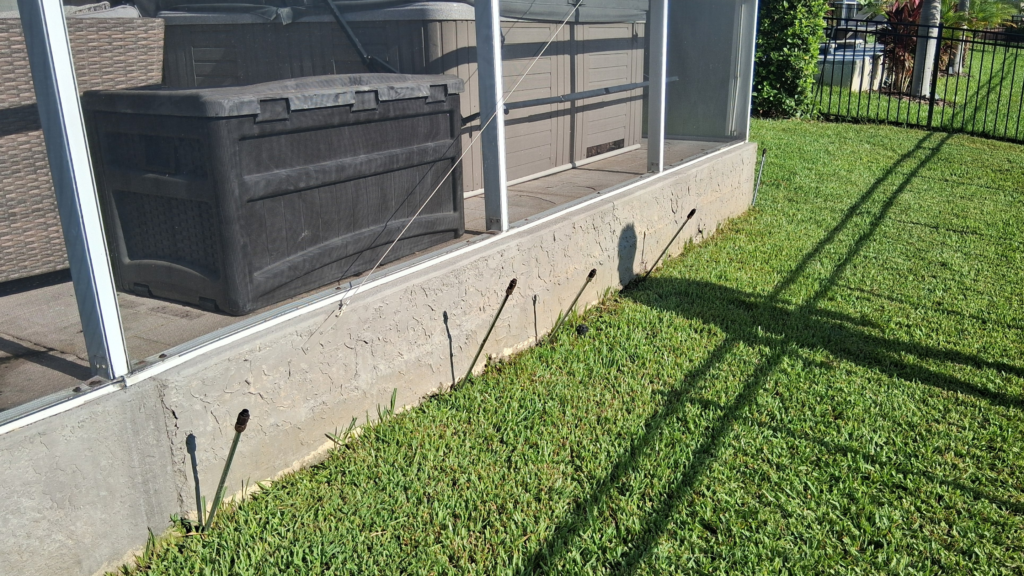
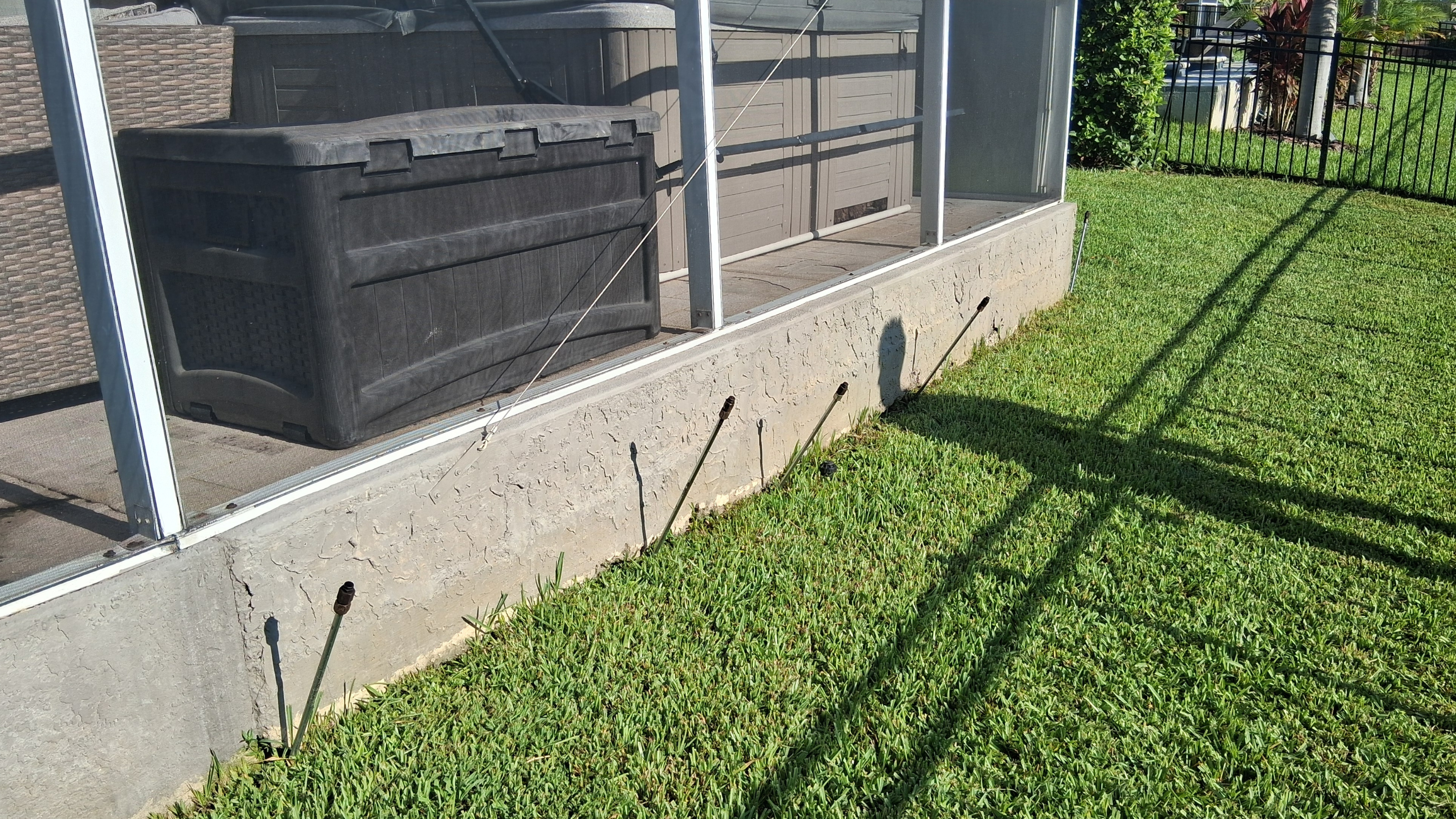
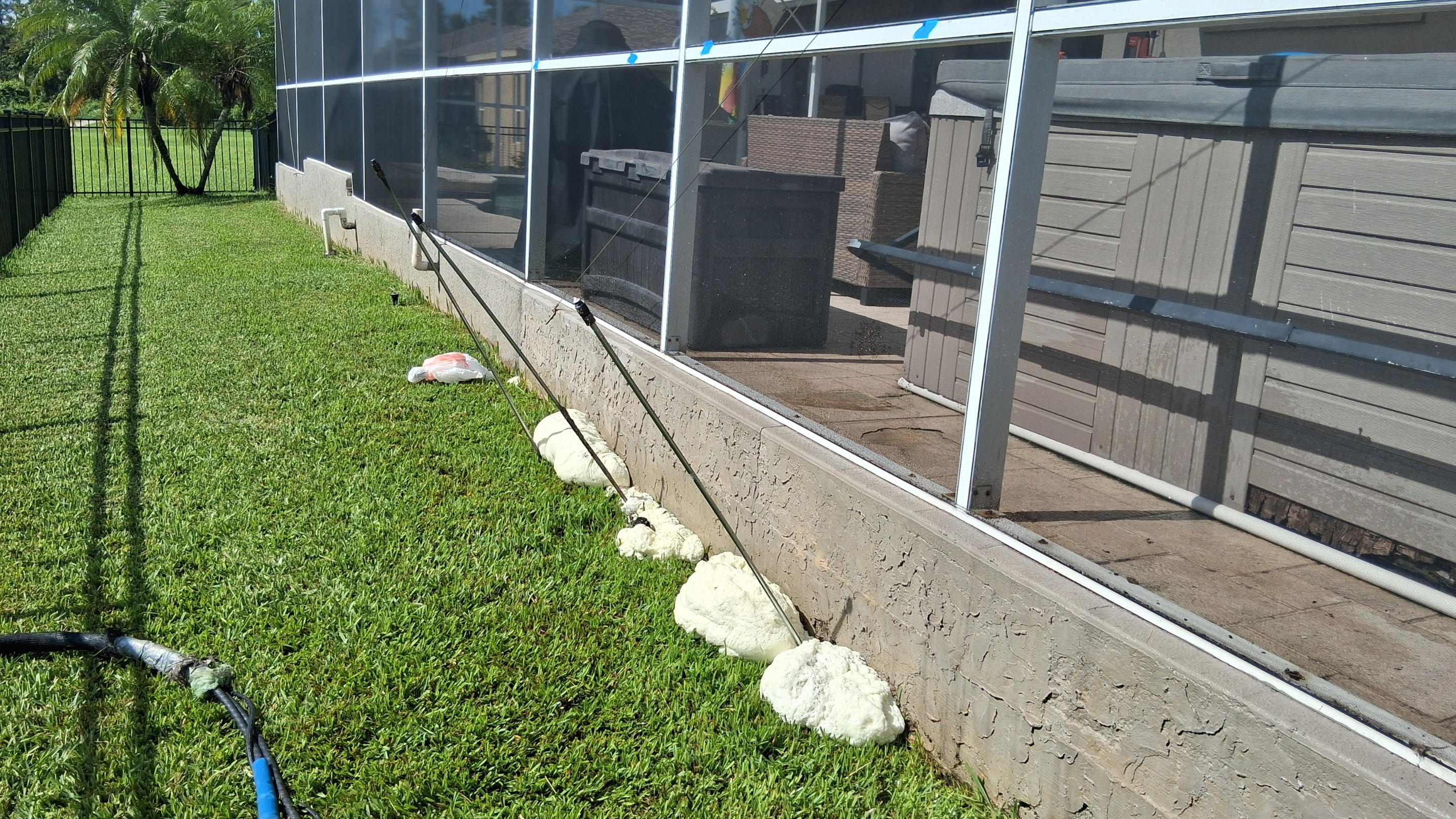
The soil-stabilization portion included:
These injection points were used to treat the affected subsurface areas associated with the pool-deck settlement and erosion. The purpose of the soil injections was to improve the stability of the treated support zones beneath the concrete.
Rather than excavating broad sections of the pool deck, Helicon could introduce the polyurethane through targeted access points. The material reacts after installation, expanding into available weak zones and helping reinforce the treated area.
For this Lithia project, the soil injections were intended to:
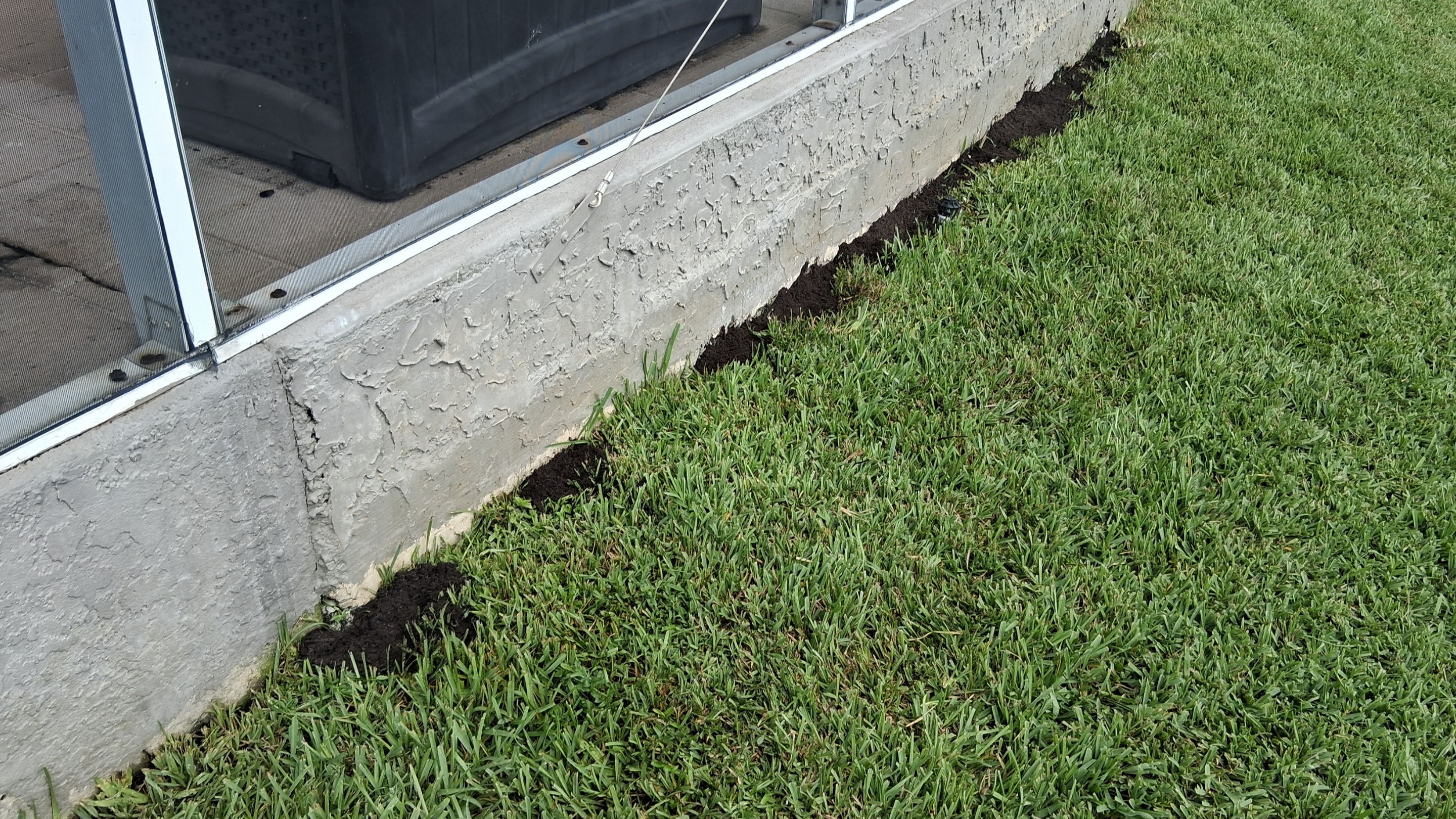
The project also required direct slab injections.
Helicon used 103 pounds of two-part structural polyurethane material for this portion of the repair.
While the soil injections focused on the broader support condition, the slab injections were intended to improve contact directly beneath the pool-deck concrete.
This combination is important. A slab can settle because the material beneath it is weak, but it may also develop localized unsupported areas directly beneath the concrete. By addressing both conditions, Helicon created a more complete stabilization plan.
The slab injections helped:
This project demonstrates why the terms soil stabilization and slab stabilization should not always be treated as interchangeable.
They address related but different parts of the repair.
The soil injections focus on strengthening and improving the material supporting the slab.
The slab injections focus more directly on restoring support immediately beneath the concrete.
In the Lithia project, both were appropriate because the homeowner had:
Using both treatment methods allowed Helicon to address the problem from below the slab upward.
Structural polyurethane provided several advantages for this project.
Pool decks are highly visible and frequently used areas of a home.
Broad excavation or removal of large sections of concrete could create significant inconvenience and additional restoration work.
Polyurethane injections allowed Helicon to target the affected areas through comparatively small injection locations.
The project did not require treatment of the entire property. The known issue was concentrated around the pool-deck settlement and erosion area.
Using designated injection locations allowed Helicon to focus material where additional support was needed.
Two-part structural polyurethane could be used as part of both the soil and slab treatment program, making it possible to address multiple aspects of the support problem in one coordinated repair.
The homeowner’s goal was stabilization. There was no need to remove and replace the entire pool deck simply because certain areas had begun to settle.
The polyurethane approach allowed the existing concrete to remain in place while the support beneath it was improved.
The treatment improved support in the specified areas beneath the pool deck.
Key project benefits included:
The repair addressed the problem beneath the surface rather than simply covering the visible signs of settlement.
No structural repair contractor should promise that outdoor soils or concrete will never experience movement again. Drainage, rainfall, plumbing conditions, and environmental factors can change over time.
However, Helicon’s polyurethane injections provided a meaningful structural improvement to the treated areas and addressed the support conditions associated with the homeowner’s concerns.
Helicon helps Florida homeowners and property owners address foundation settlement, weak support conditions, sinking concrete, seawall erosion, and other structural concerns.
Our team develops repair solutions based on the property, observed conditions, and project objectives to correct problems where they begin: below the surface.
If your pool deck, patio, driveway, walkway, or other concrete surface is settling, erosion or weakened support beneath the slab may be contributing to the problem.
Helicon provides soil stabilization, slab stabilization, concrete lifting, foundation repair, seawall repair, and related structural solutions throughout Lithia, Tampa Bay, and communities across Florida.
Call 844-HELICON to schedule a free inspection and learn whether structural polyurethane injections may be appropriate for your property.
FREE INSPECTION REQUEST