
Crystal River, FL
The Project
The Challenge
The Solution
FREE INSPECTION REQUEST
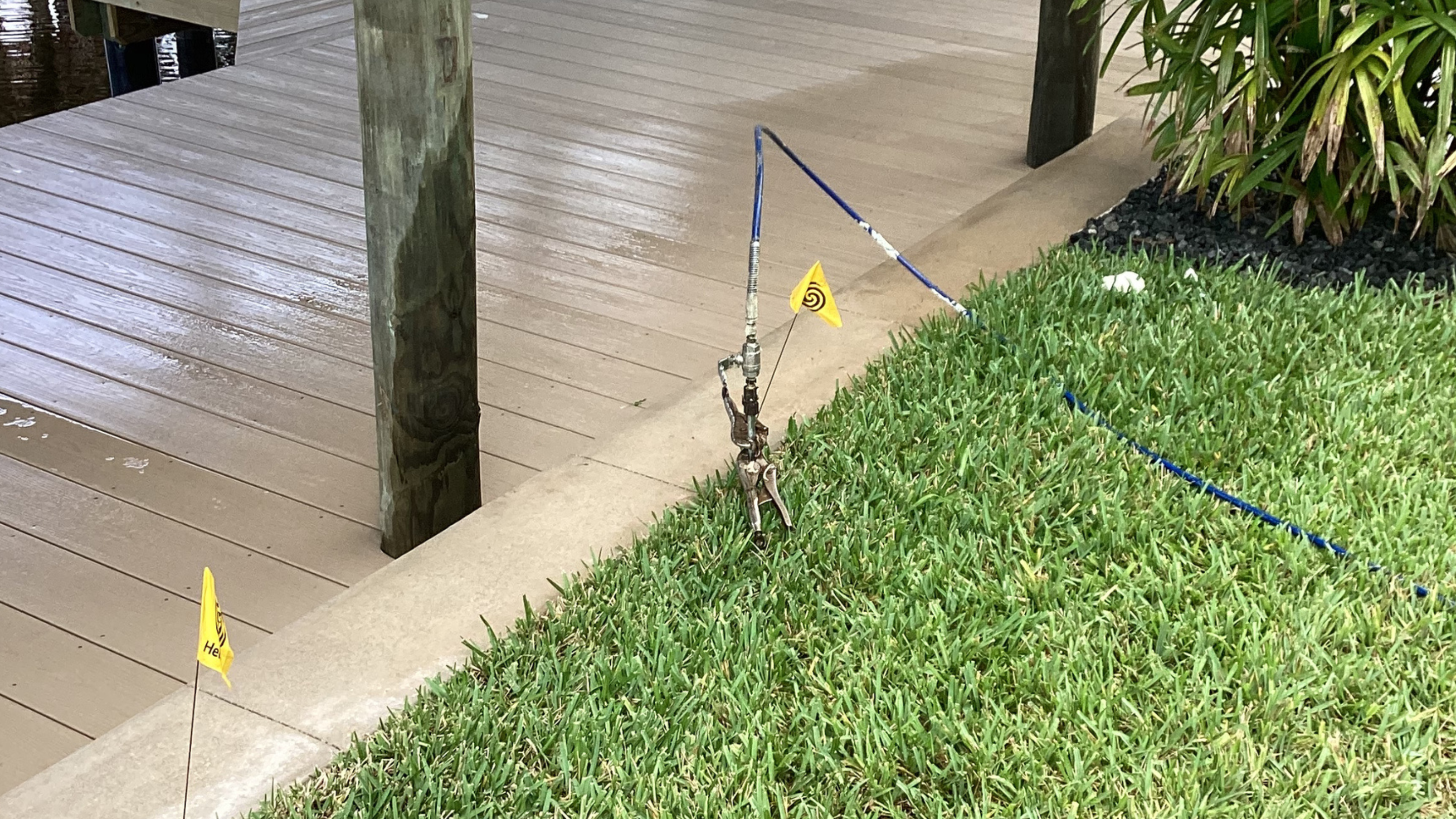

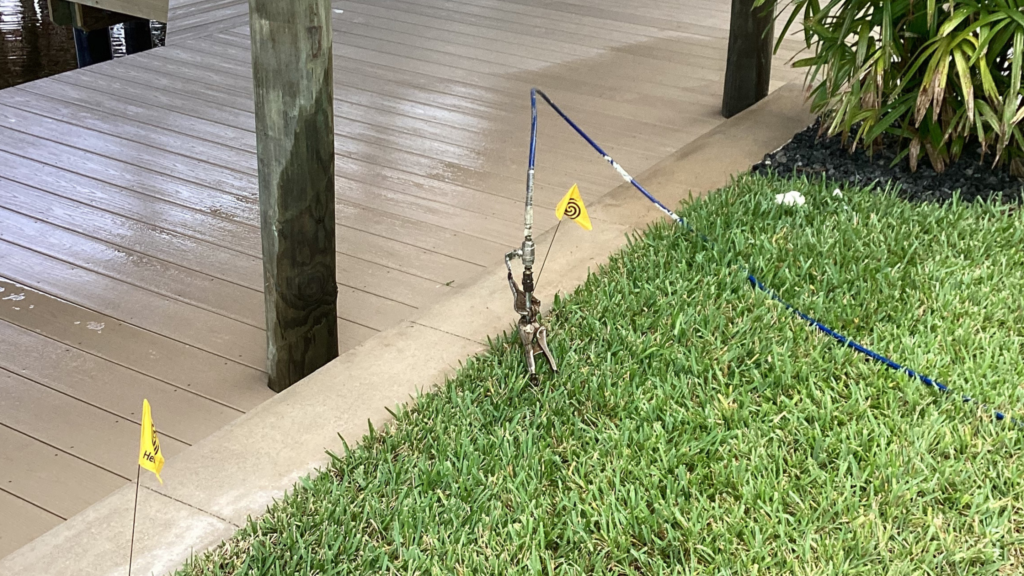
Market: Residential
Solution: One-Part Permeation Grout Injections and JET Filter Installation
Services: Seawall Repair & Soil Stabilization
This property presented a somewhat unusual situation.
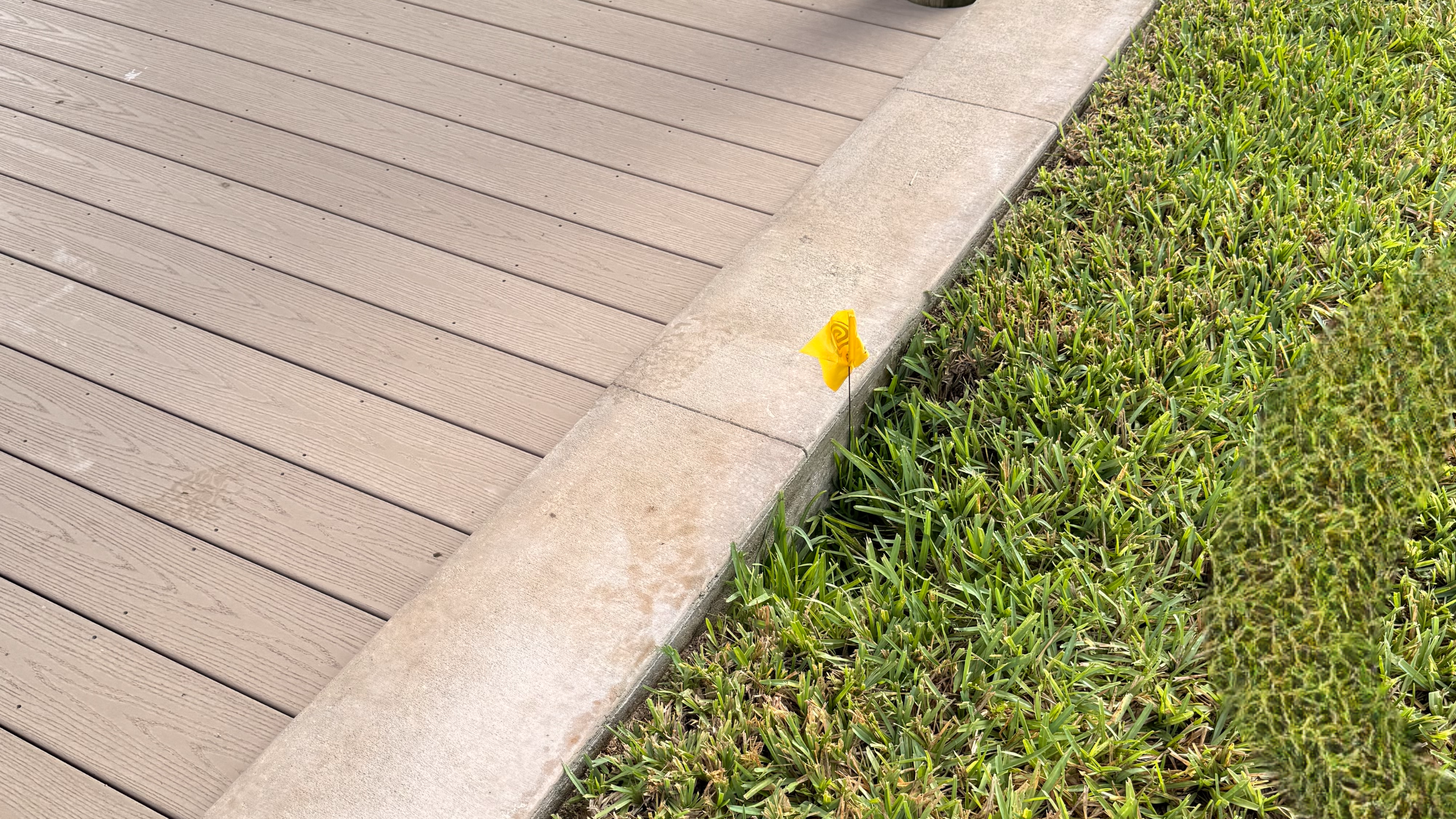
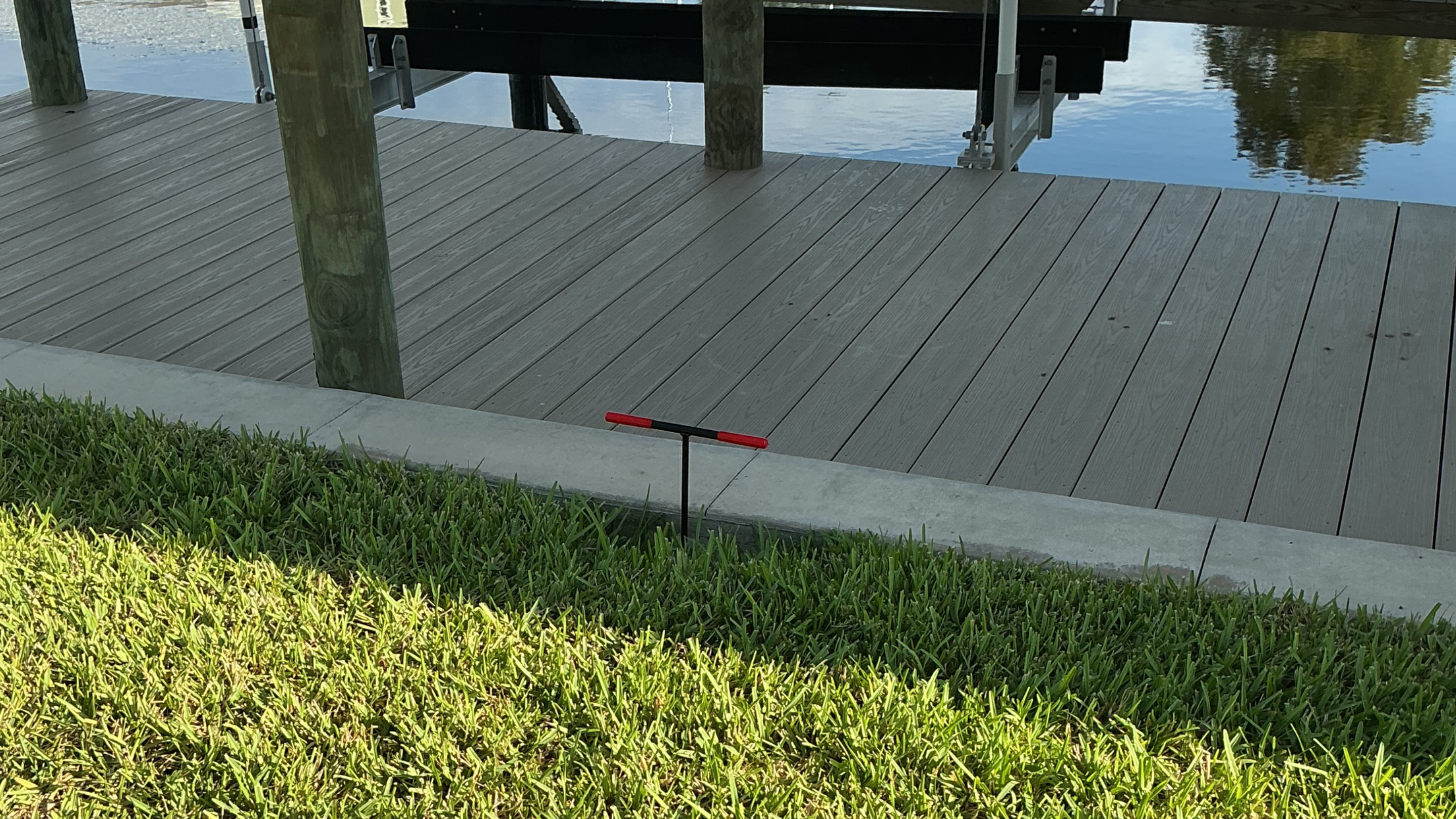
The home was brand new, and the primary seawall and cap were newly constructed as well. At the same time, a portion of the property’s older rip-rap shoreline protection remained in place.
The legacy rip-rap was still in good condition. That meant Helicon was not dealing with a deteriorated waterfront system from end to end. Instead, the concern was localized specifically where the new seawall transitioned into the older rip-rap section.
At that interface, the homeowner was losing soil.
The customer’s expectation was straightforward: repair the localized soil-loss problem while leaving the rest of the shoreline system alone.
That distinction drove the project strategy.
Rather than proposing an unnecessarily broad repair, Helicon focused on the affected transition zone and designed a targeted permeation-grouting program to restore soil stability behind the wall.
Whenever two different shoreline systems meet, the transition between them deserves careful attention.
A newer vertical seawall and an older rip-rap system manage water, soil, and shoreline forces differently.
The source material does not identify the exact mechanism causing the soil loss at this Crystal River property, so this case study does not assign a cause that was not documented.
However, the known site condition was clear:
That made the transition point the logical focus of the repair.
Localized soil loss can worsen if left unaddressed because voids may gradually enlarge behind or adjacent to waterfront structures.
Potential warning signs at waterfront properties may include:
Addressing these symptoms early can help keep a focused maintenance issue from developing into a more involved structural repair.
The homeowner did not need a new wall.The wall was already new.
The goal was to restore support in the area where soil was being lost.
That made soil stabilization the core of the repair.
Helicon selected a one-part permeation grout system because the material could be injected into the affected soil zone without requiring broad excavation or removal of the seawall.
The purpose of the treatment was to improve the condition of the soil behind the affected shoreline area and reduce the potential for continued migration in the repaired zone.
This type of targeted stabilization can be especially valuable when the primary structure is still performing well.
Instead of replacing a good seawall to reach a localized soil problem, Helicon could treat the support condition directly.
The challenge on this project was not widespread seawall deterioration. It was the opposite.
Most of the shoreline system appeared to be in good condition, which meant the repair needed to remain focused.
The crew had to address the soil loss where the new seawall met the legacy rip-rap without turning the project into unnecessary reconstruction.
That requires good judgment.
A repair contractor can easily over-treat a property when visible distress appears near an older structure.
The practical objective was therefore to:
This was a precision repair rather than a full-system replacement.
Helicon used SW-RP1 one-part permeation grout to treat the affected area.
The project required 63 gallons of SW-RP1 material.
The grout was injected into the designated soil-loss zone to improve stability behind the seawall transition.
The treatment was designed to:
The material was used as a subsurface stabilization tool rather than a cosmetic patch.
That distinction is important.
Replacing missing soil at the surface might make a depression look better temporarily, but it may not address the pathways or weakened zones that allowed the soil to move in the first place.
The SW-RP1 injections allowed Helicon to focus directly on those subsurface conditions.
Professional seawall repair often involves more than repairing the wall itself.
A seawall can remain structurally intact while the soil behind it begins moving.
When that happens, the repair strategy needs to consider both the wall and the retained ground.
Permeation grouting is useful because it allows the treatment material to be introduced into the soil behind or adjacent to the wall.
For this Crystal River property, the grout provided several advantages:
The problem was localized, so the treatment could remain focused on the affected area.
There was no need to remove the entire new seawall or disturb large sections of functioning rip-rap.
The repair addressed the soil behind the structure rather than only improving the appearance of the surface.
The one-part grout could be used as part of a repair strategy that preserved both the new wall and the older rip-rap.
After the SW-RP1 injection work was completed, Helicon installed 3 JET Filters.
The filters were included to help manage hydrostatic pressure behind the seawall.
Hydrostatic pressure can develop when water accumulates behind a wall faster than it can drain away.
Depending on site conditions, that pressure may place additional stress on the wall and contribute to soil movement through openings or weak locations.
The JET Filters provide a controlled drainage pathway that allows water to escape while helping limit soil migration through the drainage points.
For this project, the filters complemented the soil-stabilization work.
The grout improved the retained soil condition. The filters addressed water pressure.
Together, the two components created a more complete repair strategy than either one would have provided on its own.
A good waterfront repair should consider how the soil and water interact.
If a contractor focuses only on soil loss but ignores trapped water pressure, the wall may continue experiencing unnecessary stress.
If a contractor installs drainage but ignores existing voids and weakened soils, the support problem may remain.
That is why the combination used on this Crystal River project made sense.
The permeation grout treated the localized soil-loss zone and improved support.
The filters provided dedicated pressure relief behind the wall.
This combined approach addressed both the material being retained and one of the forces acting on the seawall.
This project is a good example of proportionate repair.
The entire seawall did not need to be replaced.
The legacy rip-rap did not need to be removed.
The homeowner did not need a large reconstruction project.
The concern was localized, and the solution was localized.
That approach can benefit homeowners by:
For a homeowner with a new property and new seawall, that was a much more practical strategy than rebuilding systems that were otherwise in good condition.
The principal benefits included:
No waterfront repair can responsibly guarantee that erosion or soil movement will never occur again. Water levels, rainfall, storms, drainage, and shoreline conditions continue to change.
However, the completed soil stabilization and seawall repair work materially improved the problem area and addressed the condition before it became more extensive.
Helicon helps Florida homeowners, contractors, property managers, and commercial clients address seawall erosion, weak soils, foundation settlement, sinking concrete, and other structural concerns.
Our team develops repair solutions based on site conditions, observed distress, and project objectives—with a focus on addressing problems where they often begin: beneath the surface.
If you are seeing soil washout, depressions, voids, or erosion behind your seawall, replacing surface soil alone may not address the underlying problem.
Helicon provides soil stabilization, seawall repair, permeation grouting, JET Filter installation, foundation repair, concrete lifting, and related structural solutions throughout Crystal River and communities across Florida.
Call 844-HELICON to schedule a free inspection and learn which repair approach may be appropriate for your waterfront property.
FREE INSPECTION REQUEST