- Helicon
- 9
- Daytona Beach Pool Deck Soil Stabilization: Two‑Part Structural Polyurethane Ends Chronic Void Problem
Daytona Beach Pool Deck Soil Stabilization: Two‑Part Structural Polyurethane Ends Chronic Void Problem
Daytona Beach, Florida
Market: Residential
Solution: Soil Stabilization
Services: Two‑Part Structural Polyurethane Injections
The Project
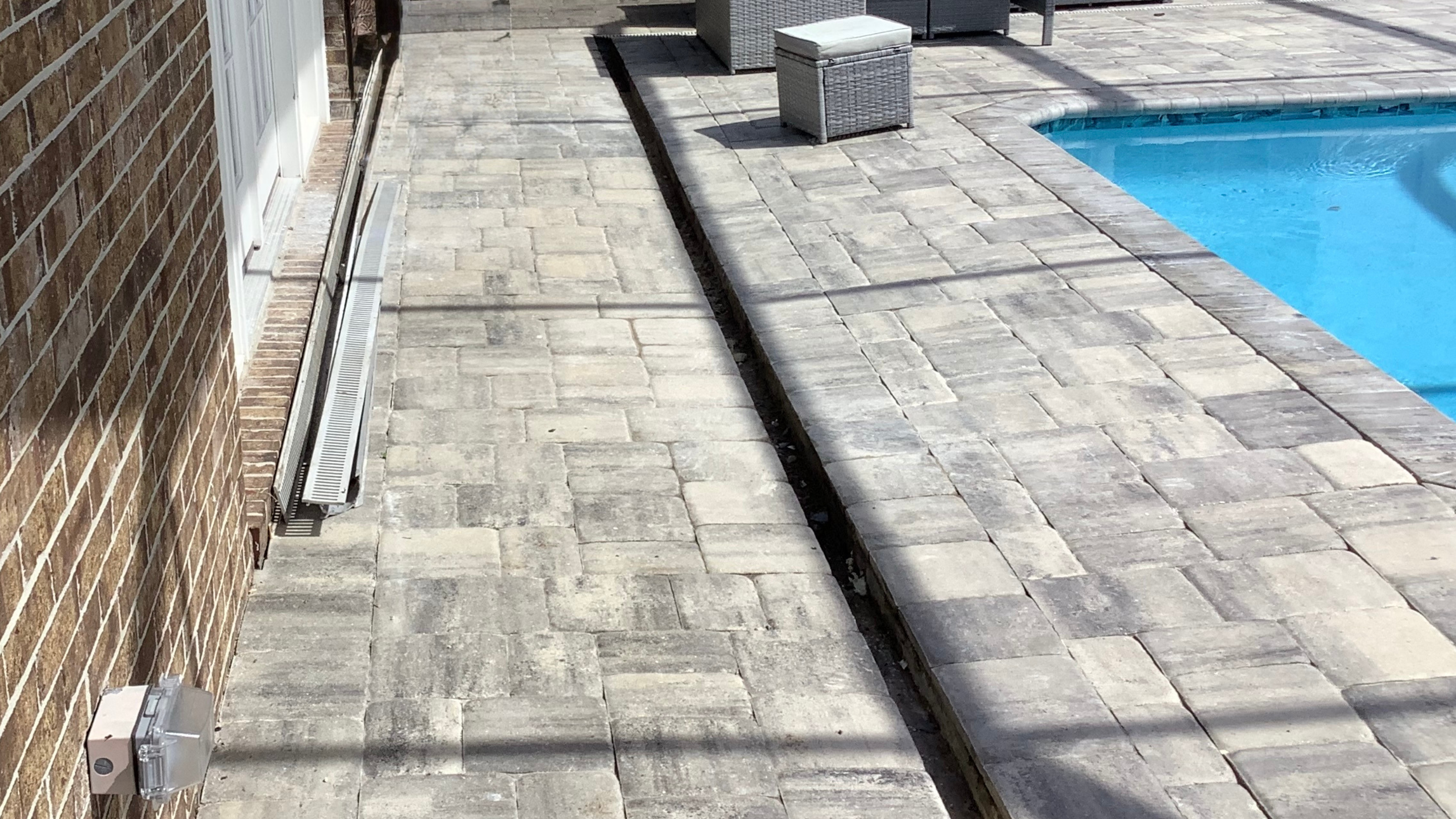
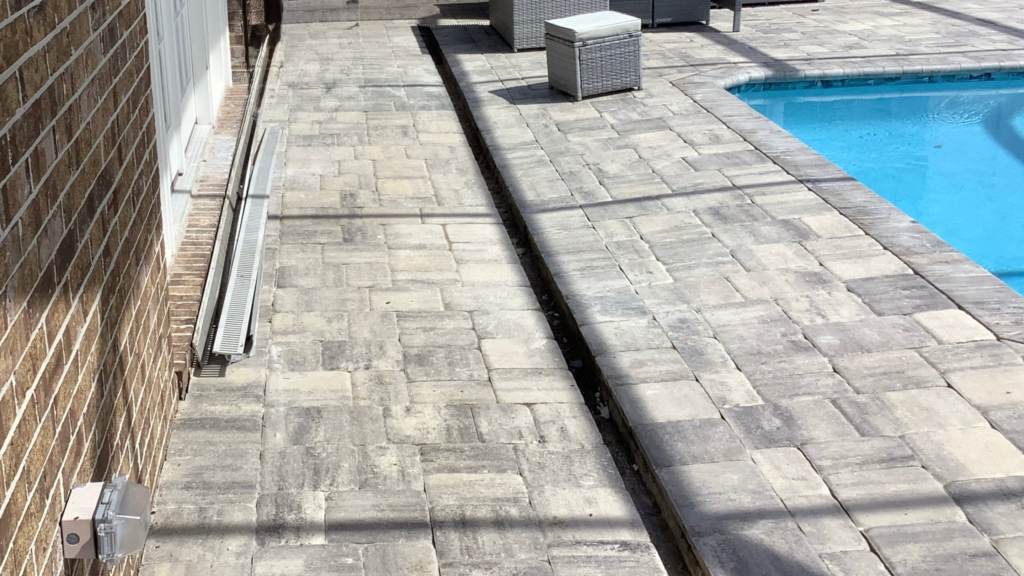
Asset: Residential pool deck with Spee‑D™ channel drain set within a sealed paver field
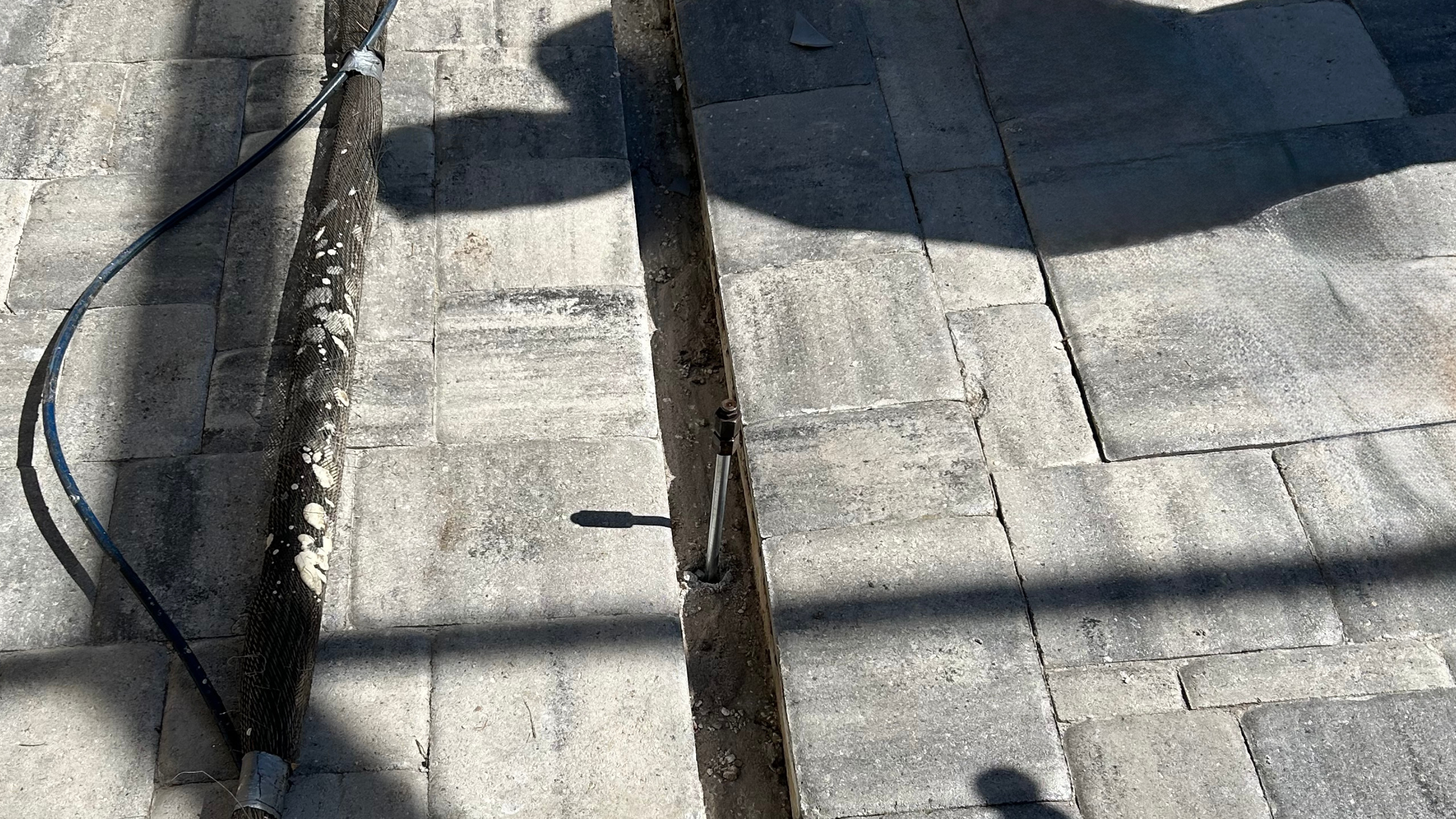
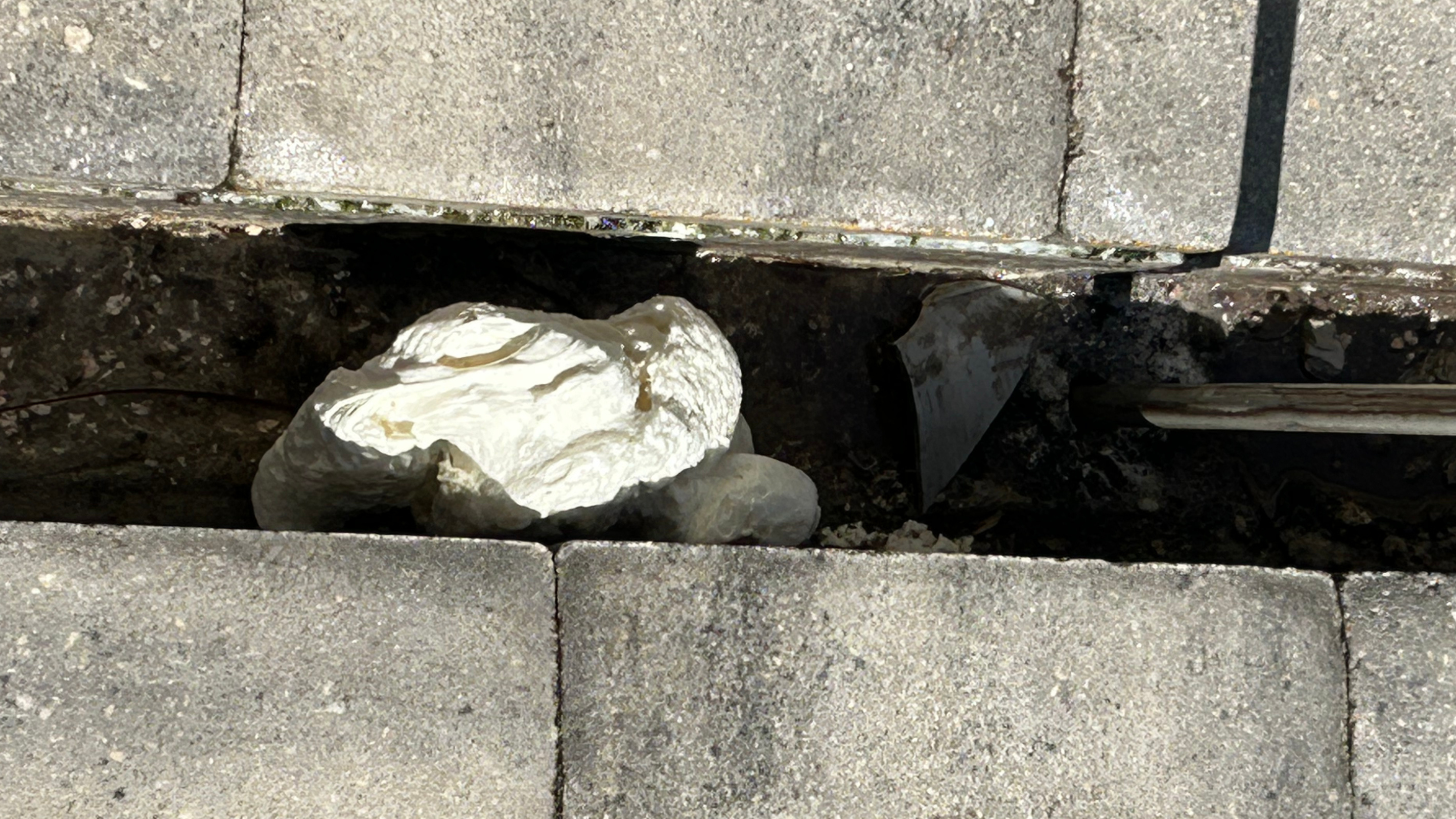
Primary Symptom: A recurring void beneath the drain and adjacent pavers that the owner repeatedly refilled without lasting success
Risks: Progressive loss of support at the drain, paver settlement and rocking, moisture infiltration beneath the deck, potential trip hazards
Owner Goals:
- Eliminate the void beneath the Spee‑D channel and stop the cycle of refilling.
- Stabilize soils in the shallow influence zone so the drain and pavers remain supported.
- Keep the repair non‑invasive, preserving sealed pavers wherever possible and minimizing downtime.
- Provide a documented, professional solution aligned with Florida’s coastal conditions.
The Challenge
Three realities shaped the means and methods:
- Access through sealed pavers. The paver field was sealed, so gaining access to the subgrade required careful lift and relaying of select pavers and low‑profile drilling through the drain body to reach voided soils. Housekeeping and pattern restoration mattered.
- Hydraulic environment at a surface drain. By definition, a channel drain concentrates runoff; if fines can escape, the zone beneath becomes a preferred washout path. The fix needed to be lightweight and void‑seeking, not a heavy slurry that could add dead load.
- Durable performance in sandy soils. Volusia County backfills are typically loose to medium‑dense sands; long‑term success depends on locking grains and restoring contact across the drain and neighboring pavers, not just filling a single hole.
The Solution
Two‑Part Structural Polyurethane Soil Stabilization
Helicon deployed an injection grid specifically tailored to a channel drain within a paver system. Two‑part polyurethane is introduced as liquids; it flows to voids and low‑density areas, then reacts and expands in seconds to form a soil‑foam matrix that couples grains and re‑establishes uniform bearing—without adding significant dead load.
Materials & Production
- Injection points: 15 total
- 14 points under pavers → ~140 lbs of structural polyurethane
- 1 point outside paver field → ~50 lbs
- Grand total installed: ~190 lbs of foam
- Port size: Penny‑sized, patched flush at completion
- Access method: Select paver lift/relay and low‑profile drilling through the Spee‑D channel where optimal
Why Polyurethane vs. Replacement
- Lightweight: Adds negligible dead load compared with cementitious slurries—critical above sandy subgrades and near drainage components.
- Void‑seeking behavior: Low‑viscosity liquids penetrate hidden paths, then expand to lock grains; cementitious materials may bridge over cavities.
- Precision: Short, controlled shots allow millimeter‑scale corrections at sensitive interfaces (drain body, paver bedding).
- Rapid cure & clean finish: Return to service in minutes; ports are small and discreet; sealed pavers are relayed and re‑sealed
Results & Benefits
- Soil stabilization and void closure achieved: The chronic cavity beneath the Spee‑D channel was eliminated, and adjacent low‑density pockets were tightened.
- Uniform support restored: The drain channel and neighboring pavers now bear on a stiffened, uniform base, reducing rocking and edge settlement.
- Reduced water‑driven raveling: By interrupting soil migration paths, future washout risk at the drain is significantly reduced.
- No demolition, minimal downtime: Work completed via penny‑sized ports and limited paver handling; the area returned to use the same day under typical conditions.
- Ready for surface care: With soils stabilized, the owner can re‑seal pavers and perform routine deck maintenance with confidence.
Homeowner FAQs
Can you guarantee the void won’t come back?
Stabilization shuts down the current mechanism at treated zones. Long‑term performance depends on drainage housekeeping—keeping joints sealed and managing runoff—but polyurethane provides a durable base.
Will you need to remove lots of pavers?
No. We target minimal lift/relay and use low‑profile ports—then re‑set and re‑seal the pavers to preserve aesthetics.
Is the foam safe around the drain and pool?
Yes. After cure, it’s inert and moisture‑resistant. We meter shots to avoid migration into open flow paths and seal any access points.
Couldn’t we just pour concrete into the void?
Concrete is heavy and can worsen settlement. Polyurethane is lightweight and seeks the actual void network, locking soils where support is missing.
Maintenance & Prevention
- Drainage discipline: Keep the Spee‑D channel clear; ensure end outlets/tools do not discharge directly into unconfined sand.
- Joint care: Maintain paver joint sand/sealant to reduce infiltration and fines migration.
- Perimeter grading: Preserve a positive slope away from the pool deck to direct runoff.
- Seasonal checks: After major storms, walk the drain line; if a section sounds hollow, call early; small voids are easier and cheaper to treat.
About Helicon
Helicon is Florida’s trusted partner for foundation repair, soil stabilization, concrete lifting, and sinkhole remediation. We serve homeowners across Volusia County and the Greater Daytona region, delivering engineered, minimally disruptive solutions that protect your property for the long term.
Seeing voids, rocking pavers, or drain settlement around your pool deck in Daytona Beach, Ormond Beach, or Port Orange? Helicon’s soil stabilization and concrete lifting methods fill voids, tighten soils, and restore support—often in a single mobilization. Call 844‑HELICON to schedule a free inspection.
FREE INSPECTION REQUEST