
Englewood, Florida
The Project
The Challenge
The Solution
FREE INSPECTION REQUEST

Market: Residential
Solution: Two‑Part Structural Polyurethane Injections (Soil Stabilization + Slab Support/Lift)
Services: Concrete Repair & Soil Stabilization
Assets: Cast‑in‑place pool deck and concrete walkway to the front entry
Location: Englewood (Sarasota & Charlotte County)
Referral: Homeowner heard about Helicon from friends who had a positive experience
Owner Priorities:
1. Fill all voids beneath the pool deck and walkway.
2. Stabilize soils to resist future washout or raveling.
3. Attempt concrete lifting at the back right corner of the pool (if feasible) and along the front walkway to reduce trip hazards and improve curb appeal.
4. Deliver a clean, non‑demolition solution that keeps the home usable and sets a reliable base for new pavers.
Observed Symptoms (Pre‑Work):
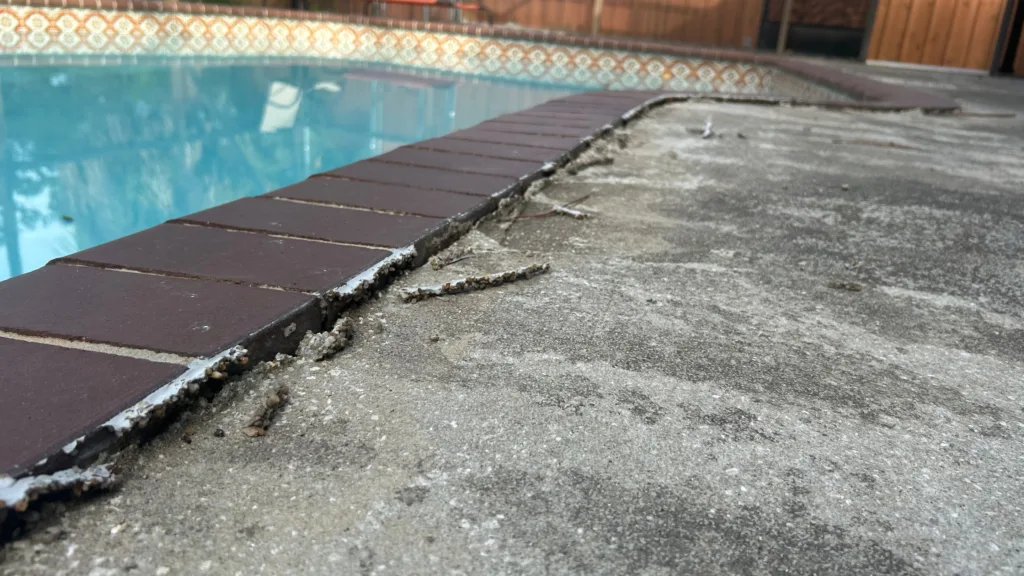
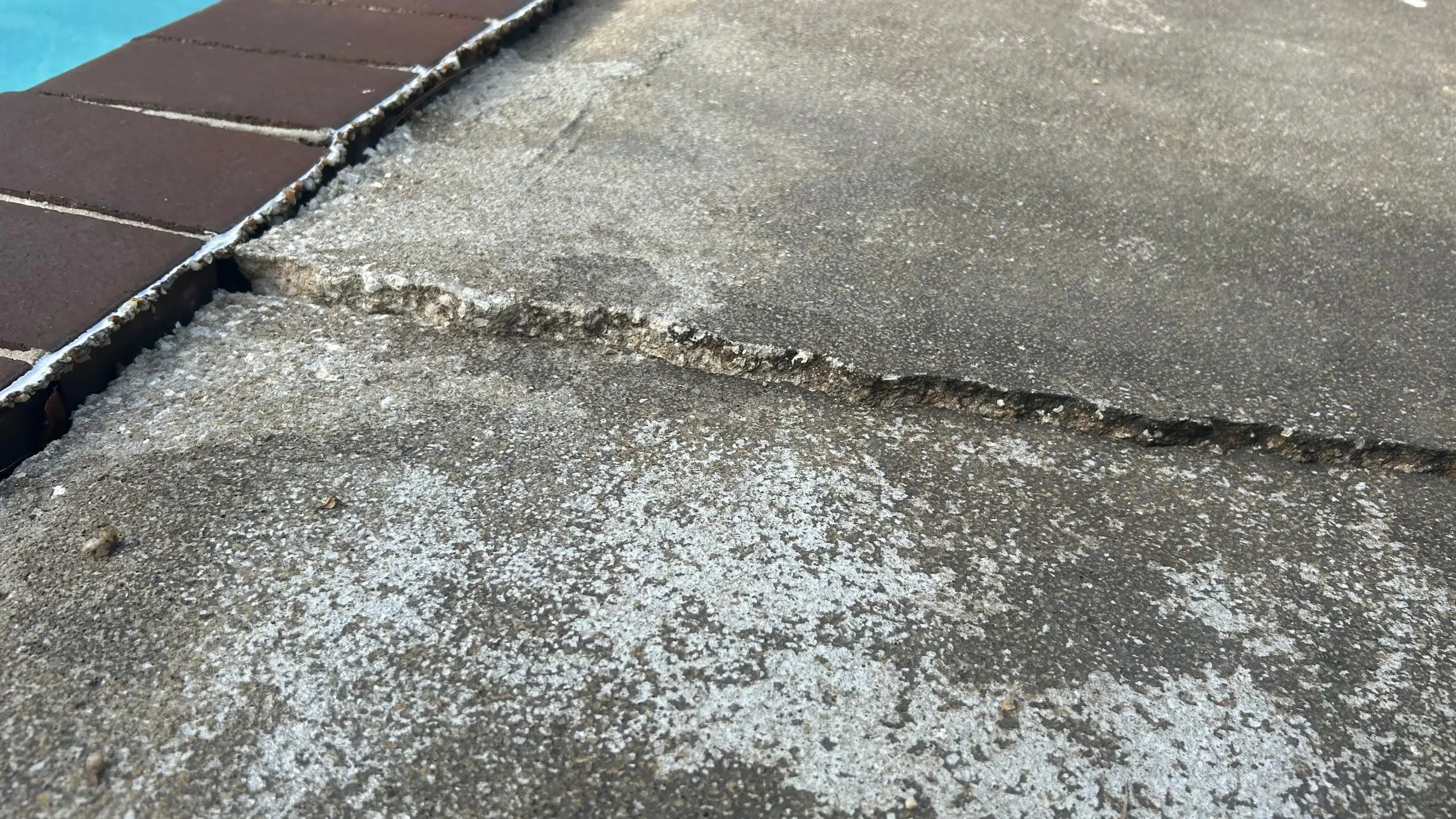
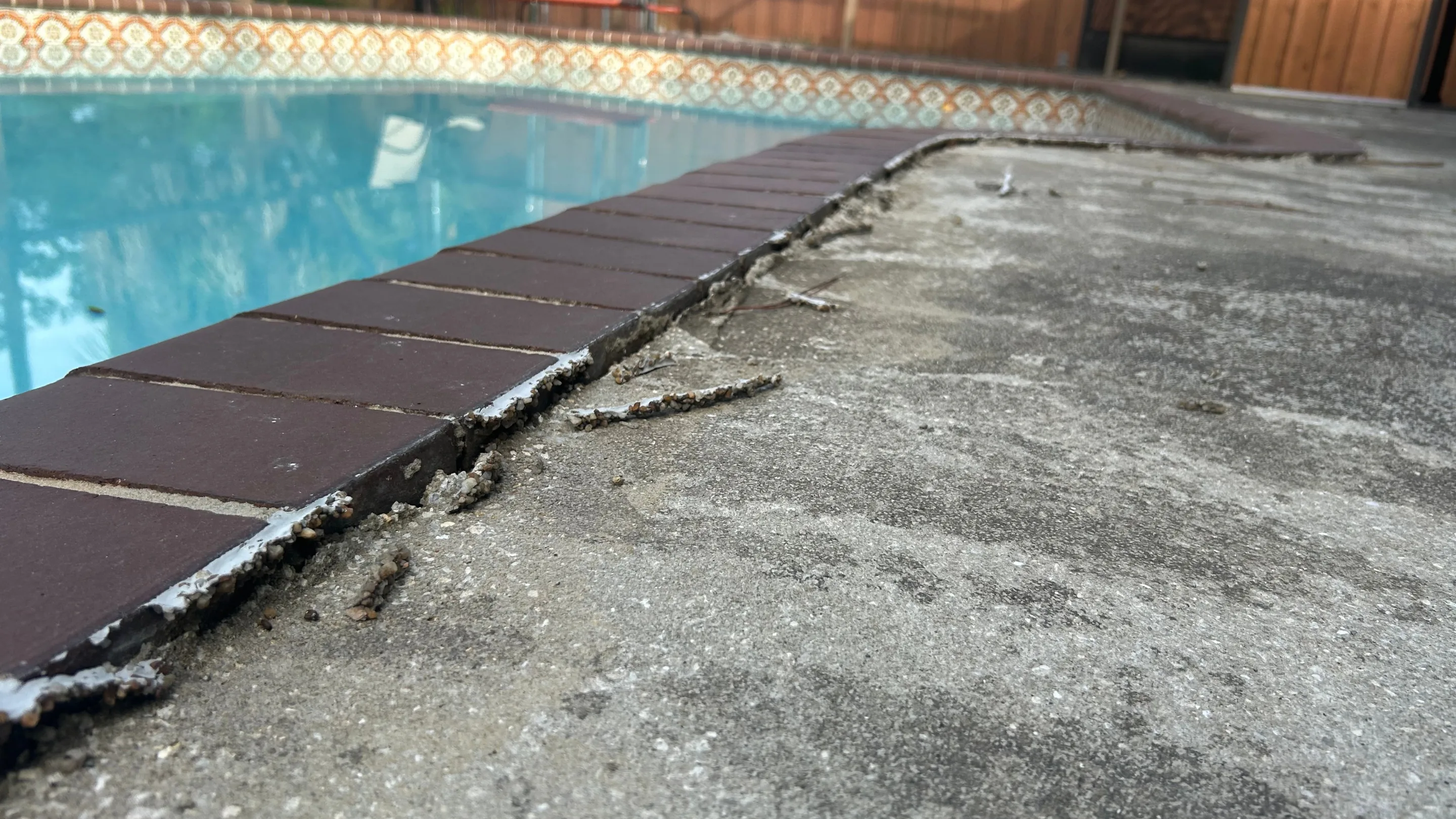
– Large subgrade void detected beneath the right‑hand pool deck—confirmed by percussion sounding and probe checks.
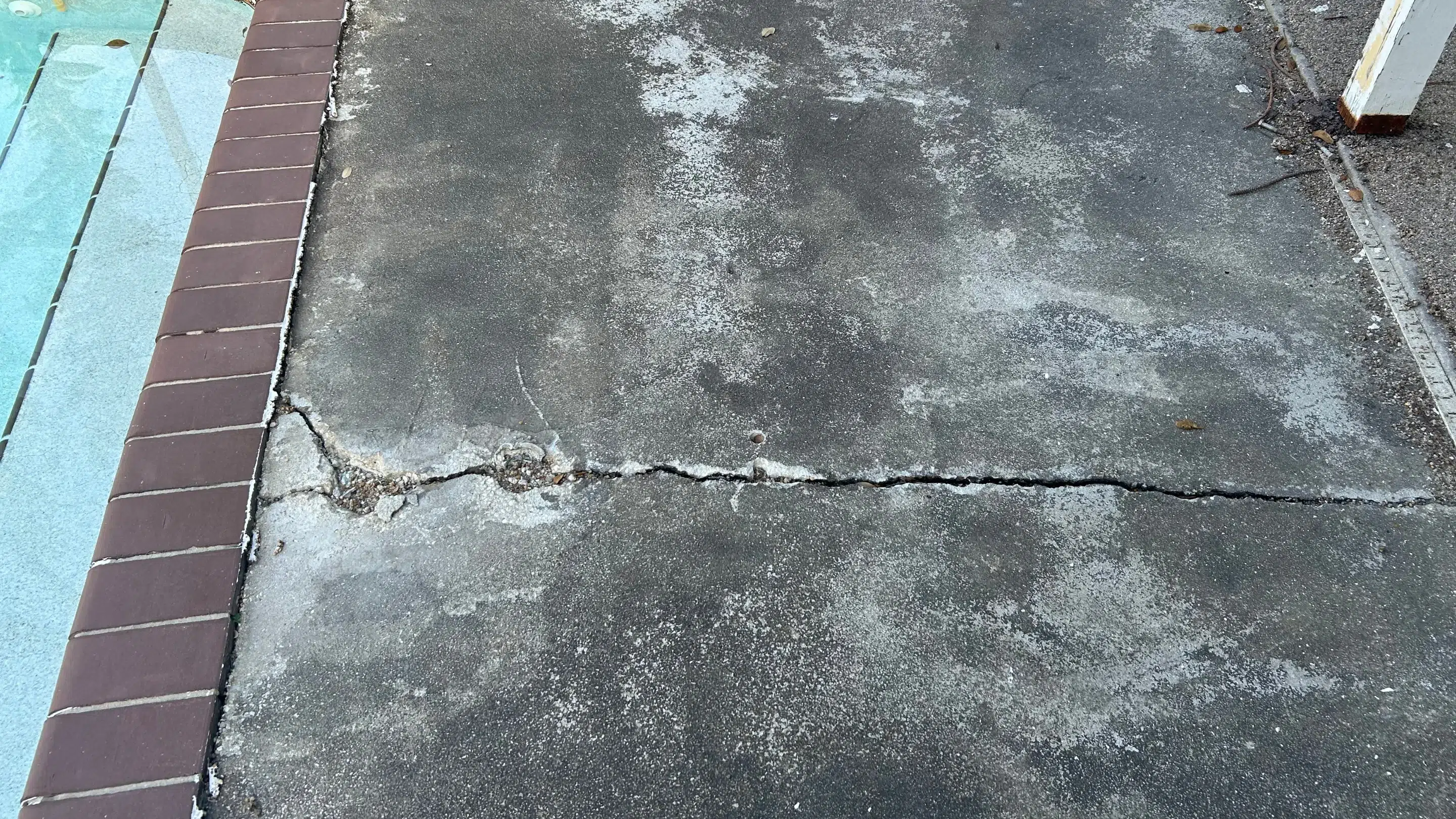
– Walkway cracking and settlement toward the front door, creating uneven joints and potential trip edges.
– Evidence of loose/under‑compacted soils near slab edges and re‑entrant corners.
Assets: Cast‑in‑place pool deck and concrete walkway to the front entry
Location: Englewood (Sarasota & Charlotte County)
Referral: Homeowner heard about Helicon from friends who had a positive experience
Owner Priorities:
Observed Symptoms (Pre‑Work):
– Large subgrade void detected beneath the right‑hand pool deck—confirmed by percussion sounding and probe checks.
– Walkway cracking and settlement toward the front door, creating uneven joints and potential trip edges.
– Evidence of loose/under‑compacted soils near slab edges and re‑entrant corners.
Structural Polyurethane – Soil + Slab Injections
Helicon designed a two‑tier injection plan that combined soil stabilization (to address the cause) with slab interface injections (to re‑establish contact and enable controlled elevation recovery).
Slab Interface Injections
Why Polyurethane (vs. mudjacking or replacement):
– Lightweight performance—reduces the risk of creating new settlement drivers in sandy backfills.
– Precision control—supports millimeter‑scale corrections at edges and transitions.
– Rapid cure—areas typically return to light service in minutes, not days.
– Clean aesthetics—ports are small and patched flush; ideal when a paver overlay is planned.
Why “Stabilize First, Lift Second”
Leveling unsupported concrete is short‑lived. The durable sequence is:
Stabilize soils → close voids and increase density in the influence zone
Restore contact → ensure the slab is fully supported across its footprint.
Lift carefully → pursue gentle, controlled elevation recovery only where the structure responds uniformly and finishes can tolerate movement.
This order protects finishes, increases longevity, and reduces the chance of re‑settlement or new cracking.
Homeowner FAQs
Can you guarantee everything will be perfectly level?
No. We guarantee a best‑practice stabilization and a measured lift attempt only when the slab and soils respond safely. The goal is predictable performance and a paver‑ready base, not risky over‑corrections.
How long do polyurethane injections last?
Once cured, the foam is inert and moisture‑resistant. Longevity depends on drainage, loading, and joint maintenance. With good practices, results are long‑lasting.
Is the process messy or noisy?
No demolition is required. We use small ports, contain dust at the source, and maintain tidy housekeeping. Noise is brief and localized.
Will this interfere with future paver work?
No. Ports are patched flush and typically sit below new paver bedding or within discreet spots that are easy to conceal. Stabilization improves paver performance.
Maintenance & Prevention
Helicon is Florida’s trusted partner for foundation repair, soil stabilization, concrete lifting, and sinkhole remediation. We serve homeowners across Sarasota and Charlotte County, delivering clean, documented, and durable solutions tailored to Florida soils.
Seeing voids, trip edges, or a sinking walkway in Englewood, Venice, or Port Charlotte? Helicon’s soil stabilization and concrete lifting programs fill voids, restore support, and prepare surfaces for pavers—often in a single mobilization. Call 844‑HELICON to schedule a free inspection and protect your investment.
FREE INSPECTION REQUEST