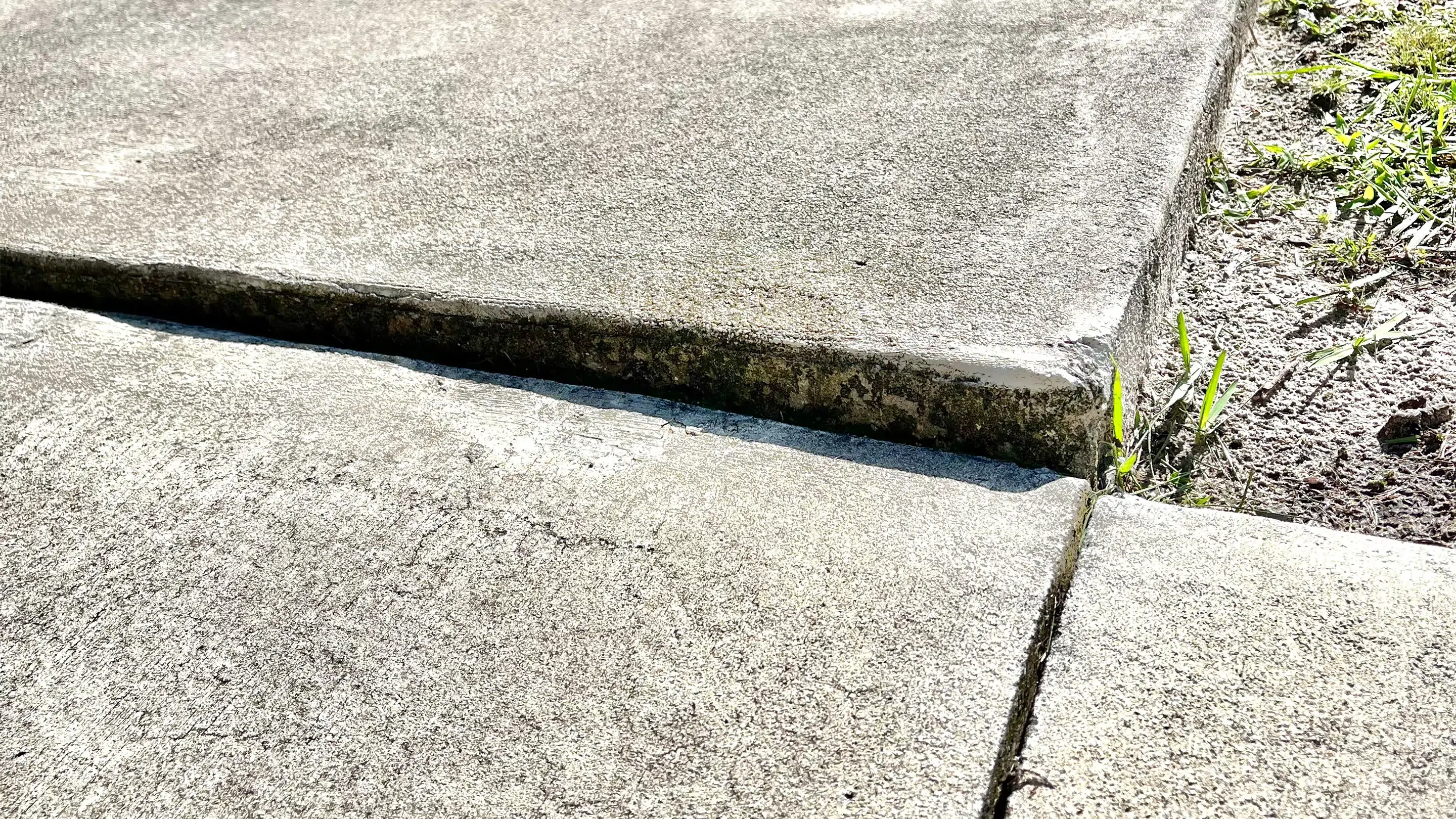
One edge of your driveway slab sits lower than the rest, and the gap keeps catching your tire. Maybe it’s a pool deck panel tipping water toward the house, or a sidewalk section that’s dropped enough to trip a visitor. Either way, the question is the same: fix what’s there, or tear it out and start over?
A full slab replacement can run thousands of dollars, and a crew jackhammering your driveway for days isn’t appealing. The good news: most sunken slabs don’t need replacement; they just need to be lifted back into place.
This guide compares leveling and replacement by cost, timeline, and long-term results for a Florida property, so you know which signs point to a simple repair and which point to a new pour.
Start With the Condition of the Existing Slab
That crack running across your driveway or the dip near your front steps did not appear overnight. It formed slowly as the ground underneath shifted, and now you are stuck staring at it, wondering how bad it really is.
The condition of the slab itself is the first thing worth checking before anyone talks about repair methods. A concrete slab that has settled evenly, with no major breaks, behaves very differently from one that has cracked into separate pieces.
Settled concrete that is still structurally sound is usually a strong candidate for lifting rather than removal. Settling concrete that has crumbled or split tells a different story, and that difference determines almost everything about your next step.
Signs a Settled Slab May Be Worth Lifting
A settled slab is often still worth saving. Look for these signs before assuming the worst:
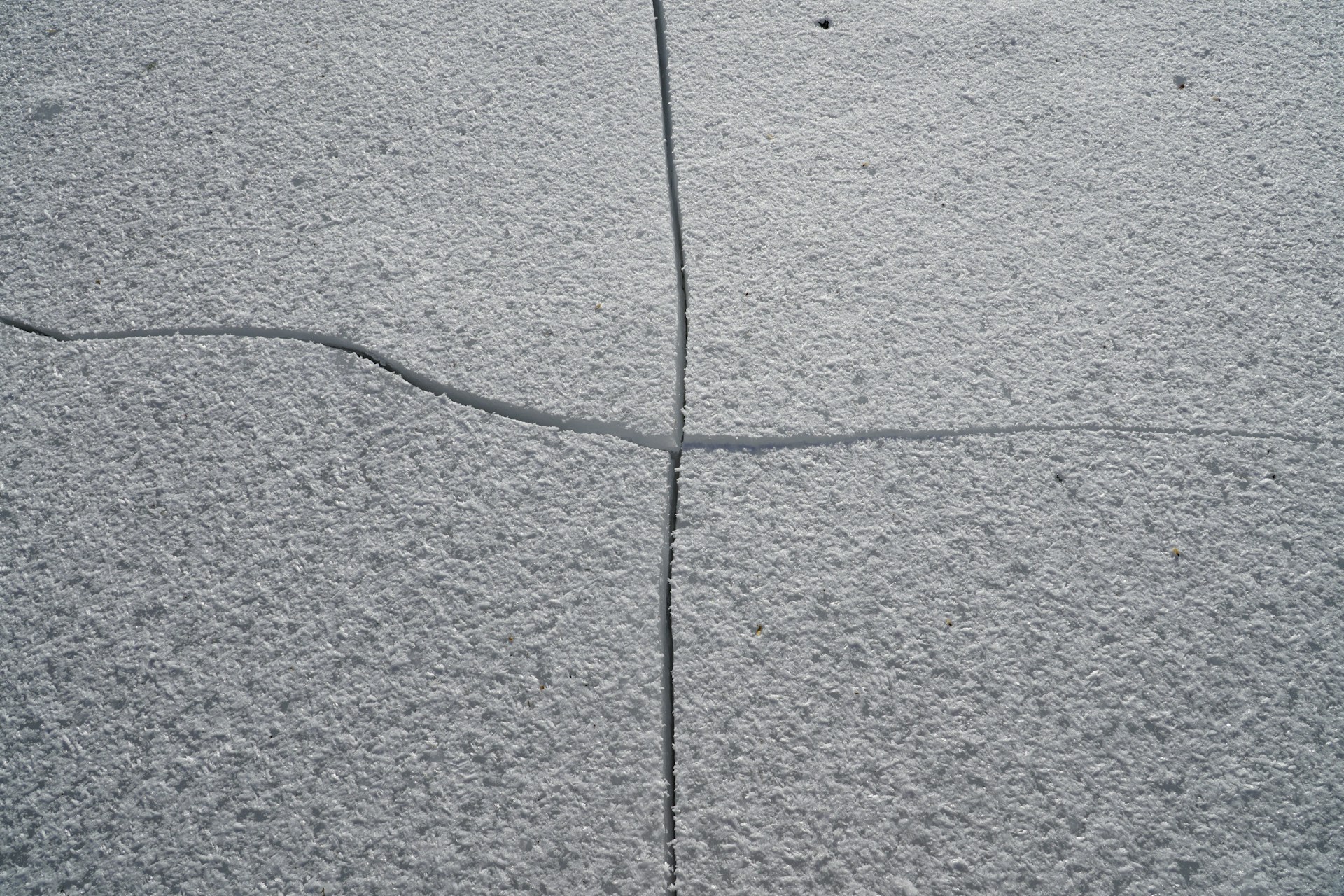
- Hairline or single straight cracks caused by gradual settling, not stress fractures
- Settlement of less than four inches when checked with a level or straightedge
- A surface that is intact, without flaking or crumbling
- A slab under 25 to 30 years old with no widespread wear
Driveways, sidewalks, walkways, and patios that show these traits typically respond well to lifting.
Damage That Usually Calls for a New Pour
Some damage goes beyond what lifting can fix. Watch for slabs broken into three or more separate pieces, wide cracks running in multiple directions, or exposed and rusting rebar. These trip hazards and structural failures usually mean concrete replacement is the more honest answer.
How the Repair and Rebuild Options Work
Standing over a sunken driveway panel, it is hard to picture what actually happens during a repair. Do workers pump something under the slab, or does the whole thing get torn out no matter what?
Both approaches exist for good reason, and each solves a different kind of problem. Concrete lifting, sometimes called concrete raising, works by filling the void underneath a slab so it rises back to its original position. Concrete replacement removes the old slab completely and starts fresh from the ground up.
Here is what each method actually involves, from the moment a crew arrives to the moment you can walk or drive on the surface again. Florida’s shifting sandy soils mean the chosen method must account for how the ground moves after heavy rain, not just how it looks today.
Lifting With Polyurethane Foam Injection
Foam injection uses small holes drilled into the slab, through which technicians pump polyurethane foam. The foam expands within minutes, filling voids and lifting the concrete evenly. It cures fast, resists water, and adds very little extra weight to soil that may already be unstable.
Mudjacking With Cement-Based Slurry
Mudjacking, also called slab jacking, is an older method. It uses a cement-based slurry pumped beneath the slab to raise it. The slurry is heavier than foam and takes longer to cure, which matters in Florida’s wet, sandy ground.
Demolition, Base Preparation, and New Concrete Installation
Full replacement starts with breaking out and hauling away the old slab. Crews then prepare a new base, often adding compacted fill or gravel, before pouring fresh concrete. New concrete installation typically takes several days, including demolition, curing, and finishing.
Compare Cost, Downtime, and Disruption
Every homeowner staring at a sunken slab eventually asks the same practical question: what will this actually cost, and how long will my driveway be unusable? That worry is fair, especially if the driveway is the only way in or out of the garage.
Cost and downtime are where leveling and replacement diverge the most. A concrete leveling service typically finishes a driveway repair in a single day, while replacement can take several days once you factor in demolition, curing, and finishing.
Working with an established concrete leveling company means getting a clear estimate based on your specific slab, not a generic number pulled from an average. Below is what actually drives the difference between the two options.
What Drives the Total Project Cost
Leveling costs a fraction of full replacement for the same slab. Skipping demolition, disposal, and a full new pour is what keeps the price down, so most driveway sections that qualify for leveling run well under half of what a full tear-out and repour would cost.
Cost depends on square footage, how far the slab has settled, and whether the base beneath it needs correction. Replacement adds demolition and haul-away fees that leveling avoids entirely.
When You Can Use the Surface Again
Foam leveling typically allows foot traffic within an hour and vehicle traffic the same day. Replacement requires several days of curing before the new concrete can bear weight, and driveways often stay off-limits during that window.
Landscape, Access, and Cleanup Considerations
Replacement involves heavy equipment, debris removal, and potential disruption to nearby landscaping or irrigation lines. Leveling uses small injection holes and leaves the surrounding yard untouched, which matters if mature landscaping sits close to the slab.
Why Florida Ground Conditions Favor Foam Lifting
If your driveway sank a year after a previous repair, the ground underneath is probably still the problem. That frustration is common in Florida, where soil conditions do not behave the way they might in a drier, more stable climate.
Florida’s sandy soils shift and erode more easily than clay-heavy soils found elsewhere, which is why settling concrete and sunken concrete show up so often here. Heavy rain washes fine particles out from under slabs, leaving voids that eventually cause the surface above to drop.
The Florida Department of Environmental Protection lists improperly compacted soil and water intrusion among the common causes of ground subsidence beneath structures statewide, the same underlying process at work under a sunken driveway slab.
Sandy Soil, Rainfall, and Voids Beneath Slabs
Florida’s sandy soils let water move through quickly, which sounds like a benefit until you realize it also carries soil particles away. Over years of rain, this creates air pockets under driveways, patios, and pool decks that eventually collapse under the slab’s own weight.
Why Added Weight and Moisture Matter With Mudjacking
Mudjacking’s cement slurry is far heavier than polyurethane foam, and it takes longer to cure. In already-saturated Florida soil, that added weight and moisture can contribute to renewed settling, which is one reason foam injection has become the more common choice in the state.
Drainage Corrections That Help Protect the Repair
A lasting repair often includes correcting grade and drainage around the slab. Redirecting water away from the repaired area helps prevent the same void formation from happening again a few years down the road.
Cases Where Starting Over Is the Better Investment
Not every sunken slab can be saved, and that is worth saying plainly. If your concrete slab looks like it has been through more than simple settling, cracked into chunks, crumbling at the edges, or visibly failing, replacement may be the more honest path forward.
Being upfront about this matters. A concrete repair company that always recommends the cheaper fix, regardless of the slab’s actual condition, isn’t doing you any favors long term.
Keep reading to see the specific situations where a fresh concrete pour genuinely makes more sense than lifting the old slab.
Severe Cracking, Spalling, and Broken Sections
A slab broken into three or more separate pieces, with cracks wider than half an inch running in multiple directions, is usually beyond what lifting can fix. Spalling that has progressed to crumbling or flaking across large areas often means the concrete itself has lost its structural integrity.
Poor Original Construction and Major Base Failure
If the original base beneath the slab was never properly compacted, or if erosion has created large voids that fill material cannot fully correct, replacement addresses the root problem in a way lifting cannot.
Redesign Needs That Lifting Cannot Solve
Sometimes the decision has nothing to do with damage. If you want to change the slab’s shape, thickness, finish, or size as part of a larger landscaping project, new concrete installation is the only option that gets you there.
Frequently Asked Questions
Is it cheaper to level a sunken concrete driveway or replace it?
Leveling almost always costs less, often less than half the price of a full replacement for the same slab, and roughly a quarter the cost when a full foundation replacement is involved. A driveway that might cost a few thousand dollars to level could run several times that amount to tear out and repour.
How long does concrete leveling last in Florida’s sandy soil?
Foam-lifted slabs can last many years when you also address the underlying drainage issue. Without correcting the water flow that caused the original settling, any repair method, leveling or replacement, faces a higher risk of repeat sinking.
What are the drawbacks of lifting settled concrete instead of replacing it?
Lifting cannot fix a slab that is already broken into pieces or badly deteriorated on the surface. It also will not change the slab’s shape, thickness, or finish if you are looking to redesign the space.
When does a cracked driveway need full replacement rather than repair?
Replacement becomes the better call when the slab has split into three or more separate pieces, when cracks are wider than half an inch and run in multiple directions, or when rebar is exposed and corroding.
Can concrete leveling safely support cars on a driveway?
Yes. Properly executed foam injection restores a slab’s original support and can bear vehicle weight the same day, as long as the concrete itself remains structurally sound before lifting begins.
Will concrete leveling fix drainage problems caused by a sunken slab?
Leveling corrects the slab’s position, but drainage correction is often a separate step. Addressing grade and water flow around the repaired area helps prevent the void from reforming under the slab.
Get a Clear Answer Before You Commit
Staring at a cracked or sunken slab and trying to guess whether it needs a simple lift or a full teardown is not a fair position to be in. Most homeowners do not have the training to tell the difference just by looking.
Helicon has worked with Florida property owners since 2004, evaluating exactly this kind of situation on driveways, walkways, and patios across the state. That experience means a technician can look at your slab and tell you plainly which category it falls into, without guesswork.
Not sure if that crack is cosmetic or structural? Helicon’s free inspection gives you a clear answer with no obligation. Schedule a foundation inspection to learn exactly what your property needs, backed by an understanding of the sandy, moisture-heavy soils that shape every repair decision in this state.