You noticed it after the last big rain: the driveway slab near the garage sits lower than the rest, and water pools right where you park.
Or maybe it’s the pool deck, tilting just enough that a chair rocks when you set it down. Or a sidewalk slab that’s become a trip hazard for anyone walking the dog after dark. In Florida, sandy soils, high water tables, and storm-driven saturation make sunken concrete a common sight rather than a rare fluke.
Helicon has engineered repairs for Florida’s specific ground conditions since 2004, backed by more than 20 years in the field and a 4.9-star customer rating. The guiding principle across all of it: a sunken slab is a soil problem first and a concrete problem second.
This guide compares a traditional concrete mud jack against polyurethane foam injection, and explains which one actually holds up in sandy, water-heavy ground. Knowing the difference now can keep you from paying twice for the same repair.
Why Florida Concrete Slabs Settle
Some slabs sink slowly over months. Others drop suddenly after a hurricane dumps inches of rain in a single afternoon. Either way, the concrete itself rarely fails first. The ground underneath gives way.
Florida’s sandy soils drain fast and shift easily, so water infiltration can wash out the subgrade beneath a slab in ways that aren’t visible from the surface. Once that support disappears, filling the resulting void is the only thing standing between a level slab and one that keeps dropping.
Identifying the cause before choosing a method protects both the slab and your foundation’s structural integrity.
Erosion, Saturation, and Hidden Voids
Sandy soil erodes easily when water moves through it repeatedly. Over time, this carves out hidden voids beneath a slab that nobody sees until the concrete drops.
Weak Subgrade and Concrete Settlement
A subgrade that was never properly compacted, or one weakened by years of saturation, can no longer carry the slab’s weight. That loss of bearing capacity is what produces uneven concrete surfaces.
When Uneven Surfaces Need Prompt Attention
A slab that’s off by a quarter inch is cosmetic. One that’s off by an inch or more, especially near steps or a pool, is a trip hazard worth addressing sooner rather than later.
How Traditional Slurry Lifting Works
If you’ve searched “concrete mud jack” while staring at a sunken patio, you’ve probably come across mudjacking, also called slabjacking or slab jacking. It’s one of the oldest methods for lifting settled concrete, and Florida’s moisture-heavy ground has tested every version of it for decades.
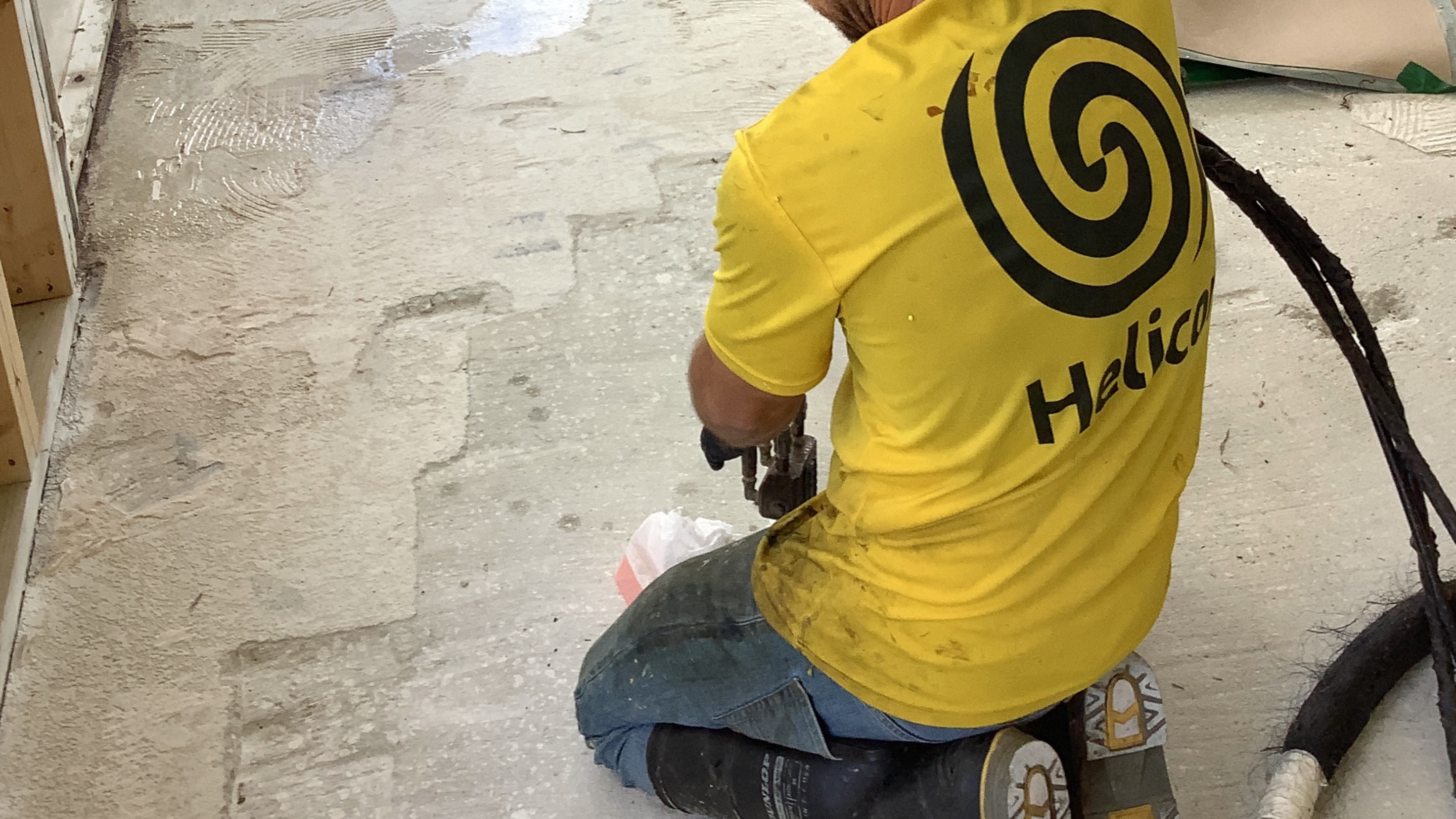
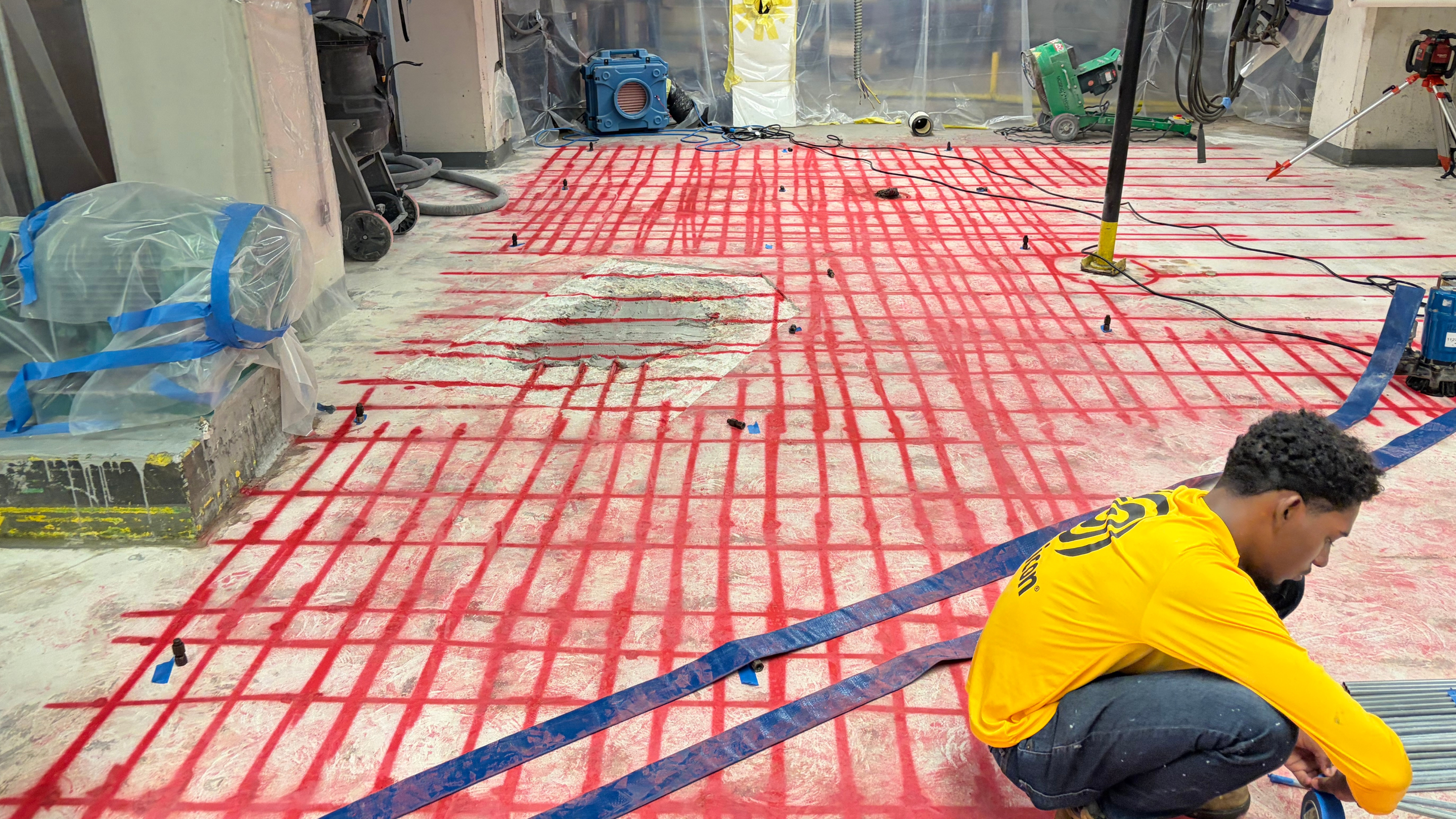
Drilling and Injection Access Points
Crews drill holes roughly 1.5 to 3 inches across at strategic points in the slab, as described in this mudjacking process overview. These access points reach the voids without breaking up the surrounding concrete.
What Goes Into a Mudjacking Mixture
The classic slurry combines Portland cement, sand, soil, and water into a pumpable mix. Some formulas add stone dust for extra body and faster setting.
Pressure-Controlled Slab Raising
Grout pumps push the slurry through a hose under hydraulic pressure, filling voids until the slab floats back toward grade. Crews watch the lift closely, since raising a slab too fast can crack concrete that’s already stressed.
Patching the Surface After the Lift
Once the slab reaches the right height, the drill holes get patched with a compound color-matched to the surrounding concrete. Cleanup typically finishes the same day.
How Polyurethane Foam Stabilizes Concrete
If the slab in question sits over sandy fill or near a coastline exposed to saltwater spray, a lighter repair material may serve it better. Polyurethane foam works differently underground than a cement-based slurry, which is why it shows up so often on slabs near seawalls, pools, and low-lying yards.
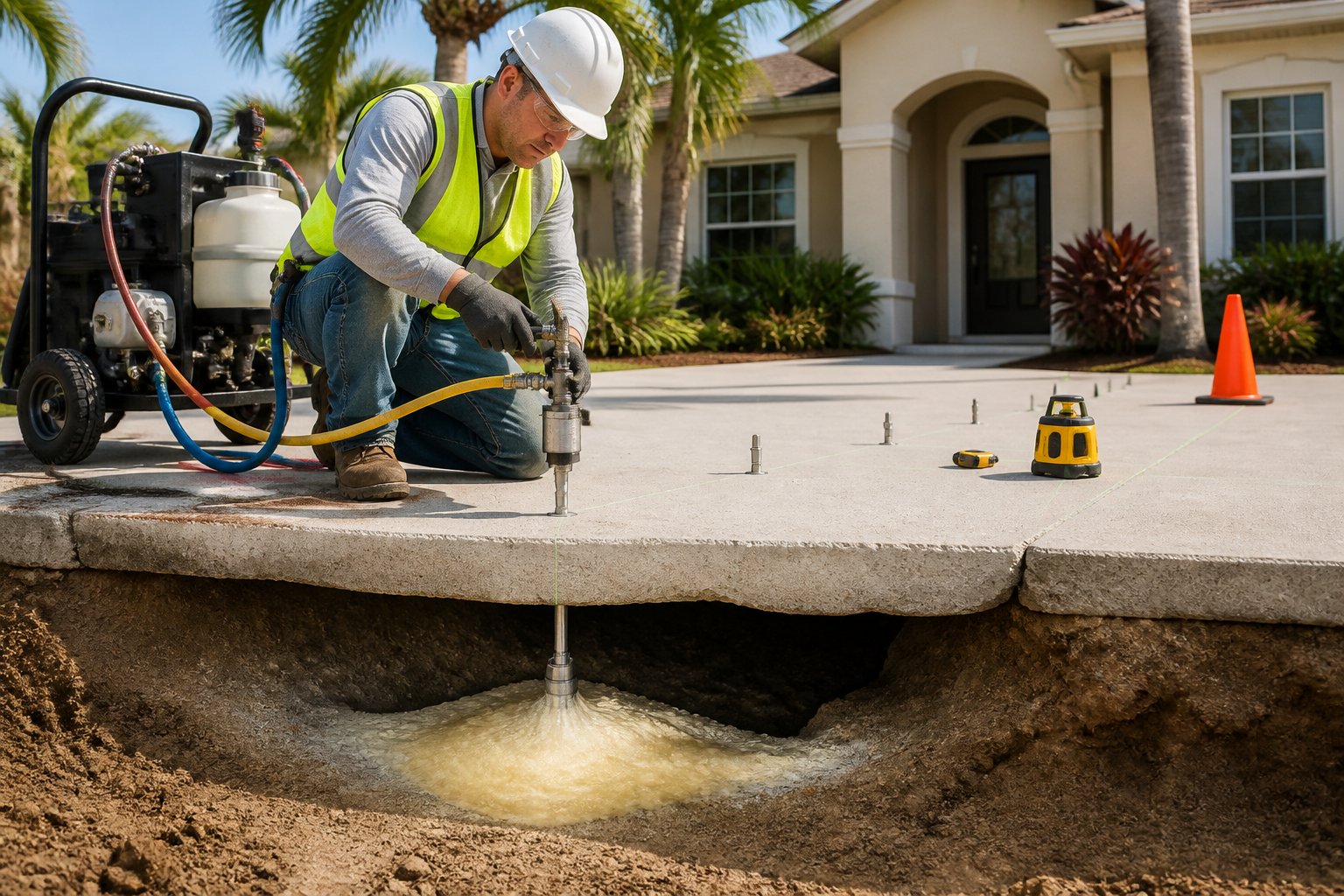
Small-Port Injection and Controlled Expansion
Foam is injected through ports far smaller than mudjacking holes, often under half an inch wide. It expands within minutes, filling voids and applying gentle, even lifting pressure to the slab above.
Lightweight Support for Sandy, Moisture-Prone Soil
Cured foam weighs a fraction of a cement slurry, which matters on soil that’s already struggling to bear weight. Less added load means less risk of that same soil giving out again later.
Cure Time and Returning a Surface to Use
Foam cures in roughly 15 to 30 minutes, so driveways, patios, and pool decks go back into normal use the same day. That turnaround is a real advantage on surfaces that see daily foot or vehicle traffic.
Comparing Weight, Durability, and Project Cost
With two quotes in hand, cost is usually the question at the front of your mind. It’s a fair one, especially with sinkhole activity and coastal moisture both in play across much of the state. But weight, water resistance, and access requirements shape long-term durability as much as they shape price.
Adding heavy slurry to unstable sandy soil can accelerate future settlement in some cases, and Florida’s high water tables keep constant moisture pressure on whatever material sits beneath the slab. Those two factors are the core of the durability argument for foam.
What Shapes the Price of a Slab Repair
Slab size, void depth, soil type, and site access all feed into the final quote. Mudjacking typical projects run $1,200 to $7,500. An on-site inspection is the only way to get an accurate number for your specific slab.
Choose a Repair Based on the Cause of Settlement
Not every settled slab needs the same fix, and guessing wrong either wastes money or makes the problem worse. A wrong diagnosis is what turns a simple lift into a repeat repair. So if you’re weighing a DIY attempt against calling a professional, start with why the slab moved.
Why DIY Lifting Can Create Costly Damage
A DIY mudjacking kit can’t measure void depth or soil density the way calibrated equipment can. Over-pumping slurry or drilling in the wrong spot can crack a slab that was otherwise repairable.
When Replacement or Structural Evaluation May Be Needed
Cracked, spalling, or broken sections often can’t be lifted as a single piece and may need replacement instead. Slabs over confirmed sinkhole activity require a structural evaluation before any lifting begins.
The Florida Department of Environmental Protection’s sinkhole FAQ explains how the state distinguishes a verified sinkhole from a general subsidence incident, and what to do if you suspect one on your property.
Schedule a Free Professional Inspection
Helicon offers a free, no-obligation inspection to pinpoint the cause of settlement before recommending mudjacking, foam injection, or another repair path. That first visit produces a diagnosis instead of a guess.
Frequently Asked Questions
Why Has My Concrete Slab Started To Sink Or Become Uneven?
Slabs sink when the soil underneath erodes, washes out, or was never compacted properly. In Florida, sandy soil, heavy rain, and high water tables speed up this process compared to other states.
How Much Does It Cost To Lift A Sunken Concrete Slab?
Costs typically range from $1,200 to $7,500 depending on slab size, void depth, and which method is used. A free inspection gives you an exact number instead of a rough estimate.
Does Mudjacking Provide A Lasting Repair For Settled Concrete?
Mudjacking can lift a slab back to grade, but the added weight of the slurry can stress already weak Florida soil over time. Foam injection tends to hold up better in sandy, saturated ground.
How Long Does A Mudjacking Repair Typically Last?
A well-done mudjacking repair can last several years, though results vary based on soil conditions and drainage. Homes with ongoing water infiltration issues may see settling return sooner than expected.
Should I Lift My Settled Concrete Or Replace The Entire Slab?
Lifting works well for intact slabs with minor to moderate settlement. Cracked, broken, or spalling sections usually need replacement instead of a lift.
What Is The Difference Between Mudjacking And Polyurethane Foam Lifting?
Mudjacking uses a heavier cement-based slurry pumped through larger drill holes, while foam uses a lightweight, water-resistant material injected through smaller ports. Foam generally cures faster and holds up better against Florida’s moisture-heavy soil.
Restore a Safer, More Stable Surface
A sunken slab doesn’t just look uneven. It’s a trip hazard waiting for a guest at a pool party or a delivery driver on your walkway.
More than 20 years of concrete lifting and foam leveling across Florida’s sandy, storm-exposed soil is what stands behind Helicon’s 4.9-star reputation. That track record matters when structural integrity, not just appearance, is on the line.
Fixing sinking concrete correctly the first time protects your property’s value and keeps everyday areas safe to use. A free inspection is a low-pressure way to find out exactly what your slab needs.