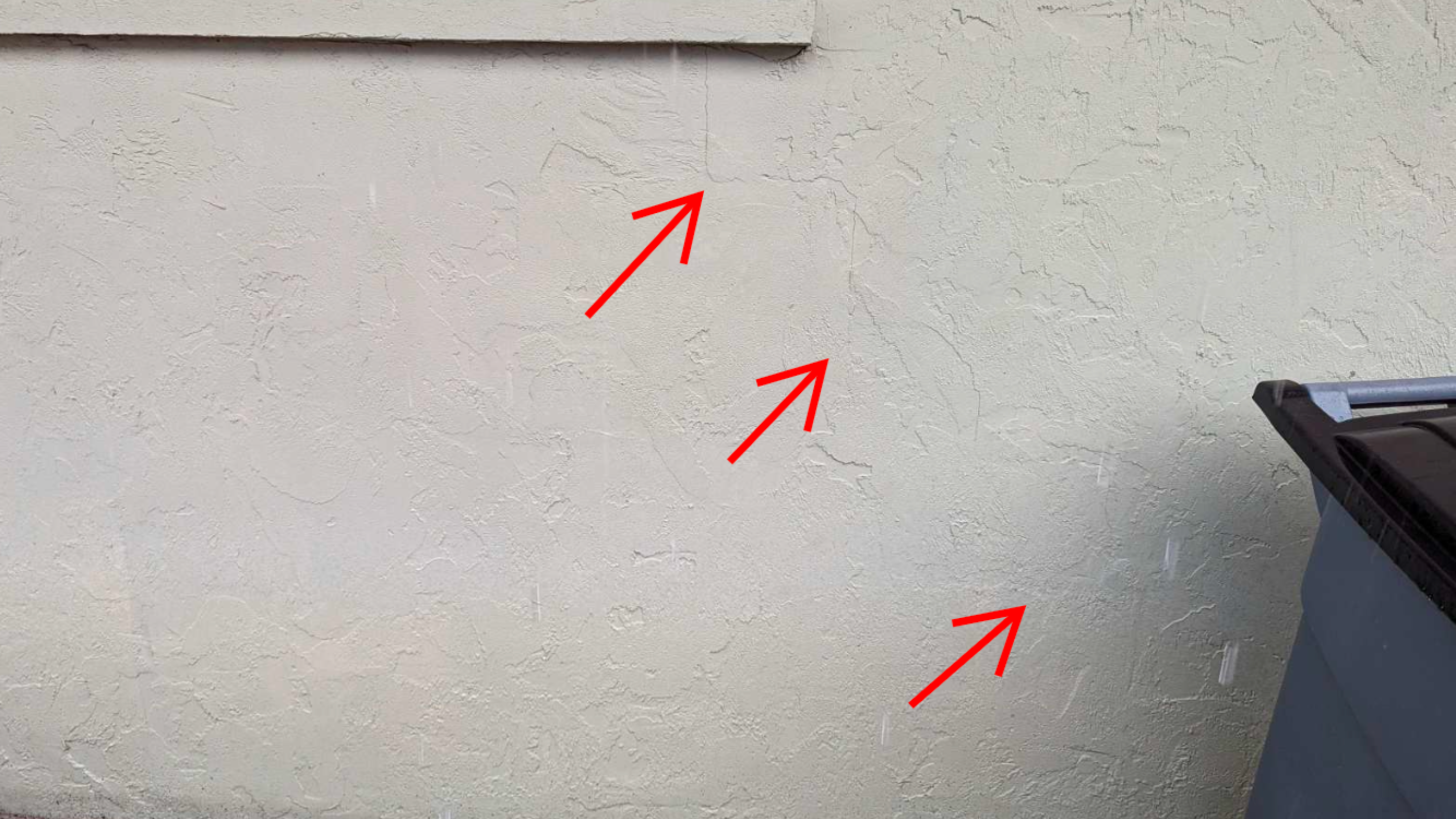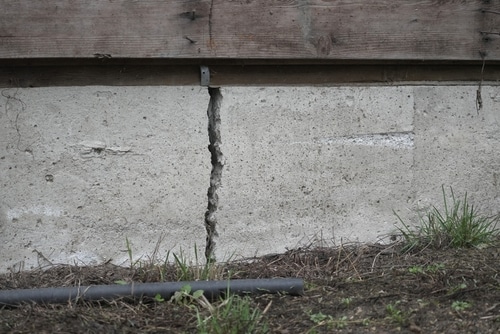
You noticed it in the living room: the floor tilts just enough that a dropped coin rolls toward the wall. Maybe a door that used to close easily now sticks, or a thin crack has opened near a window corner.
In Florida, these changes often trace to a settled foundation, shaped by sandy soils, heavy summer rain, and the karst limestone sitting beneath much of the state. Helicon has engineered repairs for those conditions since 2004, with more than two decades in the field and a 4.9-star rating from homeowners from Tampa to Fort Myers.
This guide covers how to tell ordinary settling from a structural problem, why settlement happens more readily here, and which permanent repair methods restore support without a rebuild.
Visible Signs That Deserve a Closer Look
A single hairline crack rarely means much. A stair-step crack climbing a block wall, or a diagonal crack running from a window corner toward the roofline, is a different matter.
Crack Patterns Around Walls, Windows, and Doors
Stair-step cracks that zigzag along mortar joints, usually near corners, are among the more recognizable signs of foundation movement. Diagonal cracks radiating from window and door frames follow the same stress lines.
Vertical cracks are generally less urgent, particularly when thin and consistent in width from top to bottom. Wide, horizontal, or step-pattern cracking suggests movement that is active rather than finished.
Changes in Floors, Openings, and Interior Gaps
Sloping floors are among the clearest interior signs. A ball that rolls on its own, or a hallway that reads as tilted, both point to the same cause below.
Sticking doors and windows, new gaps between walls and floors, and baseboards pulling away from drywall tend to appear together, because the structure above is adjusting to movement underneath it.
Why Worsening or Combined Symptoms Matter
One crack or one sticking door rarely signals a crisis. Several symptoms at once, or a single crack that keeps widening, usually means movement is ongoing. Watch for these combinations:
- Stair-step or diagonal cracks paired with sloping floors
- Sticking doors coinciding with new wall gaps
- Cracks that reappear after being patched
- Creaking floors alongside visible settling in the yard
Structural damage progresses in clusters rather than isolated events, which is why the pattern matters more than any single crack.
Normal Settling vs. Uneven Structural Movement
Nearly every Florida home settles somewhat after construction on loosely compacted sandy soil. The question is not whether settling happened, but whether it stopped.
When Uniform Settlement Is Usually Less Concerning
Uniform settlement means the whole foundation has sunk at roughly the same rate. It rarely threatens structural integrity, though it can still strain plumbing and utility connections.
Hairline cracks under about an eighth of an inch that are not widening generally fall into this lower-concern category. Treat that figure as a rule of thumb rather than a threshold, because a thin crack that grows month over month matters more than a slightly wider one that has been static for years.
How Differential and Tipping Settlement Affect a Home
Differential settlement occurs when one part of the foundation sinks further than another, often from variable soil or poorly compacted fill under a single section. That uneven load is what produces stair-step cracks, sloping floors, and misaligned doors.
Tipping settlement happens when soil under one side can no longer carry the load and the structure leans rather than sinking evenly. Both patterns call for evaluation rather than a wait-and-see approach.
Tracking Changes Before an Inspection
Mark crack ends with a pencil and write the date. Photograph gaps monthly. Note whether doors that used to stick seasonally now stick year-round. That record is the most useful thing you can hand an inspector, and it shortens the diagnostic part of the visit.
Why Florida Soil Conditions Reduce Foundation Support
Florida’s ground does not behave like dense northern clay or rocky soil. Sand shifts under load, high water tables saturate the ground after storms, and limestone lies beneath much of the peninsula.
Sandy Soils, Loose Fill, and Variable Bearing Capacity
Native sand drains fast but offers inconsistent bearing capacity, especially where site preparation involved poorly compacted fill. Soil testing is sometimes skipped or under-scoped before construction, leaving weaker pockets under the slab. Where the soil itself is the problem, soil stabilization addresses the cause rather than the symptom.
Expansive clay is less common here but present in pockets, swelling with moisture and shrinking in drought. Even modest moisture swings can reduce bearing capacity unevenly across a single footprint.
Rain, Drainage, and Hidden Water Sources
Heavy rain and poor drainage drive most moisture swings beneath a slab. Clogged gutters discharging beside the foundation and undetected plumbing leaks both saturate soil in ways that erode support from below. Flat lots compound it, since standing water has nowhere to go.
Erosion, Sinkhole Activity, and Other Ground Changes
Erosion around foundations gradually removes the material holding a structure in place. Where limestone sits close to the surface, dissolution can create voids that undermine support, and sinkhole conditions sometimes have to be resolved before any repair makes sense.
Not every depression is a sinkhole, though. The Florida Geological Survey notes that subsidence often traces to causes that merely mimic sinkhole activity: broken sewer or drain lines, failed septic tanks, soil never properly compacted after excavation, and buried debris or organic material that decomposes and compresses over years. Tree roots drawing moisture from soil near a footing can also produce localized movement on one side of a home.
What a Professional Assessment Should Identify
A crack or sloped floor raises a fair question: is this active, or did it happen years ago and never get addressed? That distinction changes the entire response.
Confirming Whether Movement Is Active or Historic
An engineer or foundation contractor checks crack edges for fresh breakage, measures floor elevation at multiple points, and compares current gaps against earlier photos or records. Historic damage that has stabilized calls for a different plan than movement still underway.
Connecting Surface Symptoms to Soil Support
Cracks and slopes are clues rather than diagnoses. A thorough assessment traces them to conditions below the slab, whether that is poorly compacted fill, moisture saturation, or a developing void.
Matching the Repair Scope to the Cause
Once the cause is established, the scope should follow it rather than defaulting to the most extensive option. A plan built around the actual cause avoids paying for work the property does not need, and it is the reason a credible estimate follows an inspection rather than preceding one.
Permanent Options for Restoring Support
Which method fits depends on whether the problem is loose fill, a void beneath a slab, or weak soil that needs strengthening.
Steel Pier Underpinning for Deep Load Transfer
Underpinning drives steel piers, or screws helical piers, down to soil or rock that can carry real load, then transfers the structure’s weight onto them. This suits differential and tipping settlement where near-surface soil can no longer be trusted.
Polyurethane Foam Injection for Voids and Settled Slabs
Structural polyurethane foam fills voids beneath sunken slabs, driveways, and pool decks and lifts them back toward level. It cures in minutes, adds little weight to soil that is already struggling, and leaves a far smaller footprint than traditional mudjacking.
Grouting to Densify and Stabilize Weak Soils
Compaction grouting injects a stabilizing mixture into loose or sandy soil to increase its density and bearing capacity. It strengthens the ground itself rather than only supporting the structure above it, which is what makes it a fit for foundations on variable or poorly compacted fill.
Frequently Asked Questions
What does foundation settlement mean?
The ground beneath a structure has compressed or shifted, causing the foundation to sink or move unevenly. It happens to some degree in nearly every building. The amount and the pattern of movement determine whether it is a concern.
How much foundation settlement is normal?
Hairline cracks under roughly an eighth of an inch that stop widening are generally considered routine. Wider cracks, stair-step patterns, and any crack still moving point to a problem rather than settling. Width alone is not the test; whether it is changing matters more.
What are the warning signs of foundation settling?
Stair-step or diagonal cracks, sloping or uneven floors, sticking doors and windows, and new gaps between walls and floors. In Florida, these often appear alongside cracking in exterior slabs and driveways.
How can I tell whether the movement is still active?
Mark each crack end with a pencil, date it, and photograph it monthly for two to three months. Movement over that window means active settlement. Static cracks with no other symptoms are usually historic damage that has already stabilized.
Can a settled foundation be repaired without a rebuild?
In most cases, yes, using underpinning, polyurethane foam injection, or compaction grouting. Full replacement is reserved for structures too damaged for stabilization to correct.
Which repair method is right for my foundation?
It follows the cause. Weak bearing soil under a load-bearing wall points toward piers. A void under a slab points toward foam. Loose or variable fill across an area points toward grouting. Many projects combine two, and the assessment is what determines the mix.
How much does foundation settlement repair cost?
Cost tracks the method, the extent of settlement, how much of the foundation is affected, and site access. Those variables are wide enough that an online range is close to meaningless for a specific house, which is why a firm number follows an inspection.
Does homeowners insurance cover foundation settling in Florida?
Ordinary settlement is typically excluded. Florida policies are required to cover catastrophic ground cover collapse, which is narrowly defined and demands specific conditions including structural damage and condemnation, while broader sinkhole loss coverage is usually a separate endorsement you buy.
Damage from a sudden covered event, such as a plumbing failure, may be treated differently. Review your own policy language, and the Florida Department of Financial Services Division of Consumer Services can help with coverage questions and disputes.
Get Clear Answers Before Damage Progresses
A sloped floor or a growing crack will not tell you how serious it is on its own, and in sandy, karst-influenced ground the difference between cosmetic and structural is decided below the slab rather than at the wall.
Helicon has engineered foundation repairs for Florida’s ground conditions since 2004. A free, no-obligation inspection gives you a documented diagnosis, which is what most homeowners want before making any decisions.