A crack in your home can be easy to ignore.
At first, it may look like a cosmetic issue. Maybe it appears near a corner. Maybe it follows the mortar joints in a concrete block wall. Maybe someone patches it, paints over it, and hopes it is finished.
When that same crack returns, widens, or appears with other warning signs, it may be telling a much bigger story.
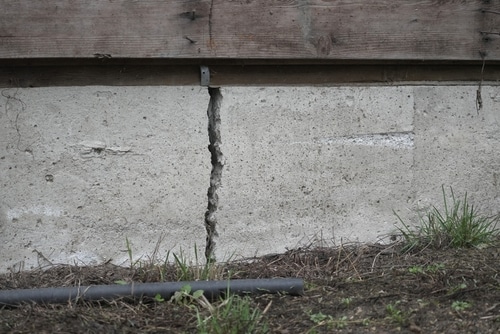
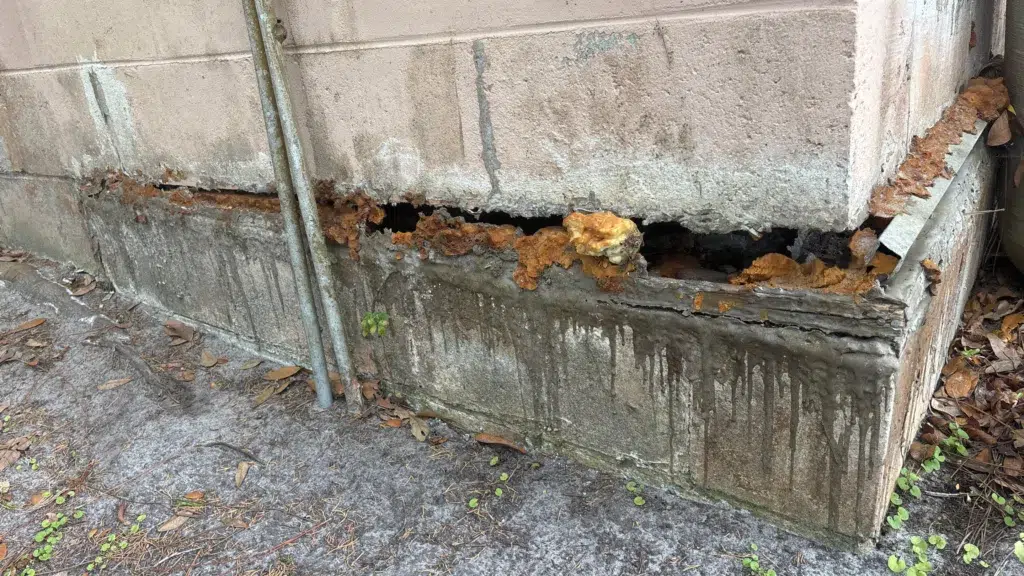
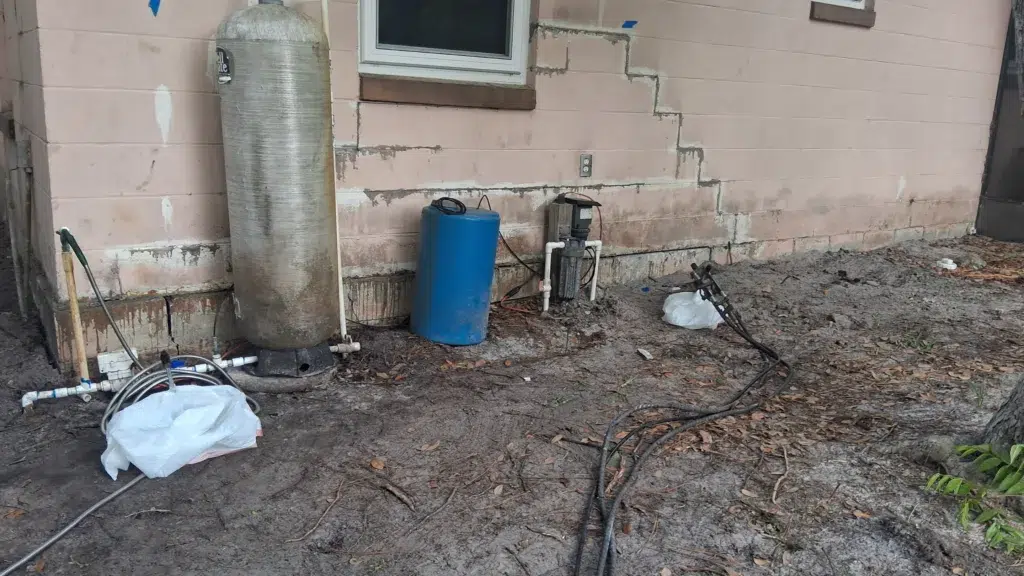
That was the situation for a homeowner in Port Orange, Florida, in Volusia County. Their residential home had visible signs of foundation movement, including a large open crack at the rear right corner, multiple stair-step cracks around the perimeter, and evidence that some cracks had been patched before.
The issue was no longer just about appearance.
The home needed professional foundation repair before the problem got worse. There was also a serious deadline: the repair needed to be completed by May to avoid losing insurance coverage.
Helicon was called in to design and complete a repair plan that addressed the real cause of the settlement, not just the surface cracking.
The Foundation Problem: A Settling Rear Corner
The most serious movement was concentrated at the rear right corner of the home.
That specific detail matters.
When one corner of a home settles more than the rest of the structure, the home is no longer being supported evenly. The walls above that area begin to absorb stress. Cracks can form in block walls, stucco, interior finishes, and around windows or doors.
In this Port Orange home, the warning signs included:
- A large open crack at the rear corner
- Multiple stair-step cracks around the perimeter
- Prior patching that suggested movement had occurred before
- Settlement severe enough to create an insurance concern
For many Florida homeowners, stair-step cracks can be confusing. Some minor cracks are cosmetic, especially in stucco or surface finishes. However, stair-step cracks in concrete block walls are often more concerning because they can follow the mortar joints in a pattern that indicates differential settlement.
Differential settlement means one part of the structure is moving differently than another part.
That is exactly what appeared to be happening here. The rear right corner had lost support beneath the foundation, and the structure was showing the effects.
Why Patching Cracks Was Not Enough
One of the biggest mistakes homeowners make is assuming a crack repair is the same thing as a foundation repair. It is not.
Patching can improve appearance. It can seal an opening. It can temporarily hide the symptom.
If soil movement, settlement, voids, or weak support beneath the foundation are still present, the crack may reopen. New cracks may form. Doors and windows may begin to stick. Floors may become uneven. Insurance, resale, and long-term structural concerns can become more complicated.
In this case, prior patching was an important clue.
The home had likely been moving gradually over time. The previous cosmetic repairs did not stop the underlying settlement. By the time Helicon was called, the rear corner had opened enough to make the movement obvious.
The homeowner needed a true structural repair strategy. That meant restoring support beneath the home.
Why Florida Homes Experience Foundation Settlement
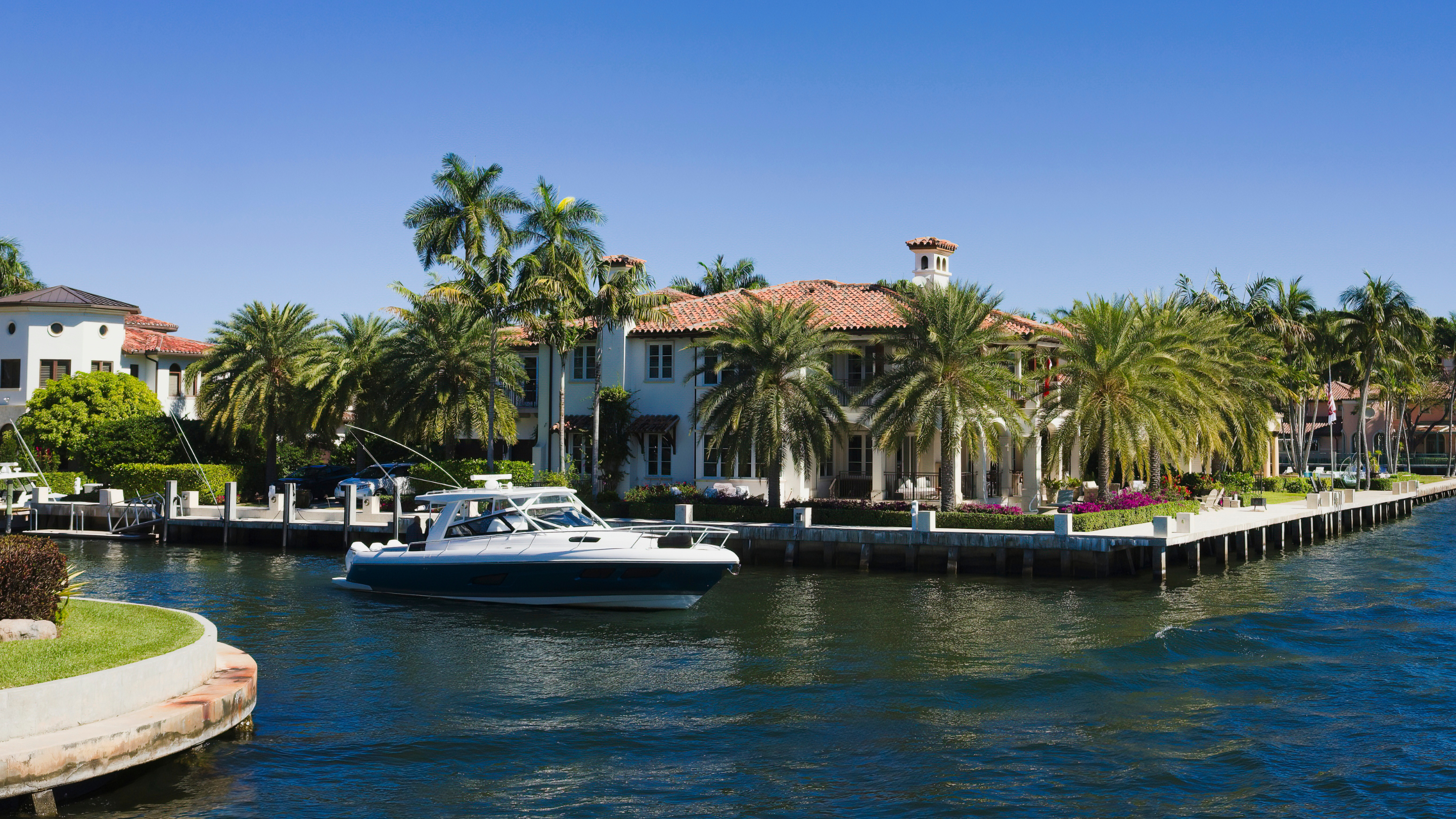
Foundation settlement is common throughout Florida, including areas like Port Orange, Daytona Beach, New Smyrna Beach, DeLand, Deltona, Palm Coast, Orlando, Tampa Bay, Sarasota, Fort Myers, Naples, Lakeland, Kissimmee, and surrounding communities.
Florida homes often sit on sandy soils, fill soils, or shallow soil zones that can change over time. Heavy rain, drainage issues, erosion, poor compaction, groundwater movement, and organic material in the soil can all affect support beneath a slab or footing.
When the soil beneath part of a home weakens or shifts, the structure above it may begin to settle.
That settlement often shows up as:
- Stair-step cracks in block walls
- Cracks near corners
- Gaps around doors or windows
- Doors and windows that stick
- Sloping or uneven floors
- Cracks in tile or interior slabs
- Separation between baseboards and flooring
- Recurring cracks after patching
For homeowners, the key question is not simply, “Can I patch this crack?”
The better question is, “Why did this crack happen in the first place?” That is the question a foundation repair inspection is meant to answer.
Stabilize the Home and Bring It Back Toward Level
This project had three major challenges.
First, the rear right corner had settled enough that the goal was not only to stop future movement. The team also needed to bring the home back toward level where the structure responded safely.
That requires careful control.
Lifting a home is not something that should be rushed. The structure must be monitored throughout the process. Too much lift, too fast, or in the wrong location can create stress elsewhere. Underpinning requires experience, communication, and precise coordination from the field team.
Second, the home had both deep and shallow support concerns.
The settling corner needed deeper structural support, which is why push piers were selected. The project also required structural polyurethane injections inside and outside the home. That meant Helicon needed to address more than one layer of the problem:
- Deep foundation support for the settled corner
- Shallow slab stabilization around the affected area
Third, timing mattered.
Because the homeowner had an insurance deadline, the repair needed to be completed quickly and correctly. In foundation repair, urgency can never replace quality. But it does make planning, communication, and execution even more important.
Why Push Piers Were Used for This Port Orange Foundation Repair
For homes with significant settlement at a corner or along a wall line, push piers can be one of the most effective residential foundation repair solutions.
Push piers are steel underpinning elements installed along the exterior foundation. They are driven downward until they reach competent load-bearing soils. Once installed, the weight of the structure can be transferred away from unstable shallow soils and onto deeper, stronger bearing layers.
For this Port Orange home, push piers were the right fit because they could:
- Stabilize the settling rear right corner
- Transfer structural load to deeper support
- Allow for a controlled lift where the home responded safely
- Provide a long-term repair instead of another surface patch
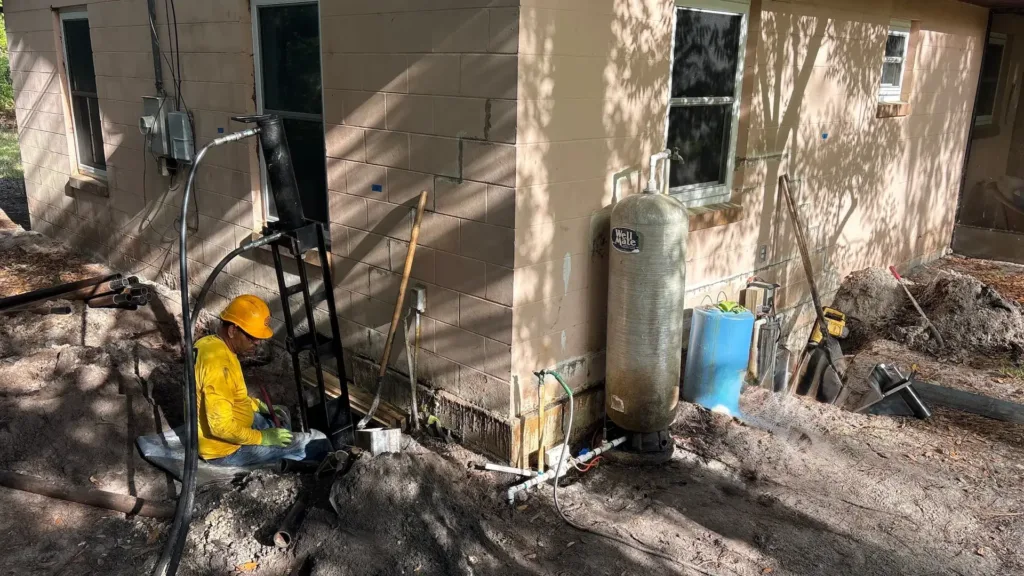
Helicon installed 4 push piers on the exterior of the home.
Once the piers were advanced and brought into load, the crew used them to help lift the rear right corner. This improved the home’s alignment and helped restore stronger support at the most distressed area.
That lift was not just about closing a crack. It was about re-establishing a more stable structural position for the home.
Why Polyurethane Injections Were Added After the Push Piers
Push piers addressed the deeper structural load issue, but that was only part of the repair plan.
The home also needed shallow support improvement beneath the interior slab and around the exterior treatment area. That is why Helicon followed the underpinning work with two-part structural polyurethane injections.
This is an important point for homeowners to understand.
A successful foundation repair project may require more than one repair method. The right plan depends on what is happening beneath the structure.
In this case:
- Push piers stabilized the deeper load path
- Polyurethane injections improved shallow support conditions
Together, they created a more complete stabilization strategy.
Interior Slab Stabilization
Helicon injected 20 pounds of structural polyurethane beneath the interior slab.
These injections helped restore support below slab areas that may have been affected by settlement or weakened shallow soils. When voids or loose soils exist beneath a slab, the concrete can begin to bridge over unsupported areas. Over time, that can contribute to cracking, movement, or uneven floors.
Structural polyurethane is valuable because it can be injected through small access points and expand beneath the slab to help fill voids and improve support.
For homeowners, this can often be a less disruptive option than tearing out and replacing interior concrete.
Exterior Soil Stabilization
Helicon also completed 6 exterior soil injection points, using a total of 180 pounds of structural polyurethane outside the home.
These injections were placed around the affected exterior treatment area to help densify shallow weak zones and reinforce support conditions near the settling corner.
This step mattered because the problem was not limited to the footing alone. The surrounding soil conditions also needed improvement.
If the deeper support is stabilized but shallow soil loss remains unaddressed, the home may still experience slab-related issues or continued movement in nearby areas. By combining underpinning with exterior soil stabilization, Helicon created a repair plan that addressed the structure from the ground up.
The Repair Sequence: Why the Order Matters
Helicon’s repair plan followed a logical sequence.
Phase 1: Install Exterior Push Piers
The first step was installing the 4 exterior push piers at the settled rear right corner. These piers were advanced to competent bearing soils and used to stabilize and lift the affected portion of the home.
This addressed the deepest structural issue first.
Phase 2: Stabilize the Interior Slab
Next, Helicon injected 20 pounds of structural polyurethane beneath the interior slab. This helped improve support under areas where shallow subsurface conditions may have contributed to slab movement.
Phase 3: Stabilize Exterior Shallow Soils
Finally, the team installed 6 exterior soil injection points totaling 180 pounds of structural polyurethane. This reinforced the shallow support zone around the affected perimeter.
The order was intentional.
Deep support came first. Shallow stabilization followed. That sequence helped create a stronger overall repair.
What Homeowners Can Learn From This Port Orange Project
This project is a strong example of why foundation problems should not be evaluated by appearance alone.
A crack is not always “just a crack.”
In this home, the combination of a large open corner crack, stair-step cracks, prior patching, and insurance urgency pointed to a deeper issue. The visible symptoms were only the surface-level evidence of a support problem below the home.
Here are the biggest takeaways for Florida homeowners.
1. Recurring cracks should be taken seriously
If a crack has already been patched and comes back, the original cause may still be active.
2. Corner settlement can create major stress
When one corner settles more than the rest of the home, the structure can twist, crack, or shift around that area.
3. Cosmetic repairs do not solve structural movement
Paint, patching, and caulk may hide the symptom, but they do not restore support beneath the foundation.
4. The best repair plan may use more than one method
Push piers, polyurethane injections, slab support, and soil stabilization each solve different problems. The right design depends on what the home needs.
5. Insurance deadlines can make quick action important
If an insurance company flags foundation movement, delaying repairs may create coverage or renewal issues. Homeowners should act quickly, but still choose a company that prioritizes proper diagnosis and long-term repair quality.
Why Port Orange and Volusia County Homeowners Call Helicon
Helicon has been helping Florida homeowners solve foundation repair, soil stabilization, concrete lifting, sinkhole repair, and seawall stabilization problems since 2004.
What makes Helicon different is not just the equipment or repair products. It is the depth of Florida soil experience behind the repair plan.
Helicon began in the sinkhole repair industry, giving the team decades of experience working with Florida’s unique subsurface conditions. That background matters when designing value-engineered repair plans for residential homes.
Every home is different.
Some homes need underpinning. Some need polyurethane injection. Some need slab support. Some cracks are cosmetic and do not require structural repair. A trustworthy foundation repair company should be willing to explain the difference.
Helicon’s approach is built around doing what is right for the customer, not selling unnecessary work. That means inspecting the problem, explaining what is happening, and recommending a repair plan designed for the actual conditions at the home.
For homeowners in Port Orange, Volusia County, Daytona Beach, New Smyrna Beach, DeLand, Deltona, Orlando, Tampa Bay, Sarasota, Fort Myers, Naples, and throughout Florida, that experience can make a major difference.
Seeing Cracks, Settlement, or Slab Movement at Your Home?
If you are seeing stair-step cracks, open corner cracks, sinking slabs, sloping floors, sticking doors, or recurring cracks after patching, do not ignore the warning signs.
Your home may not need major foundation repair. If it does, early action can help prevent the problem from becoming more expensive, more disruptive, or more stressful later.
Helicon provides professional residential foundation inspections and repair solutions throughout Florida, including:
- Foundation repair
- Push piers
- Helical piers
- Structural polyurethane injections
- Slab stabilization
- Soil stabilization
- Concrete lifting
- Sinkhole repair
- Seawall soil stabilization
Call 844-Helicon today for a free inspection or fill out the form on our site.
A crack may be the first thing you see, but the real solution starts beneath the surface.