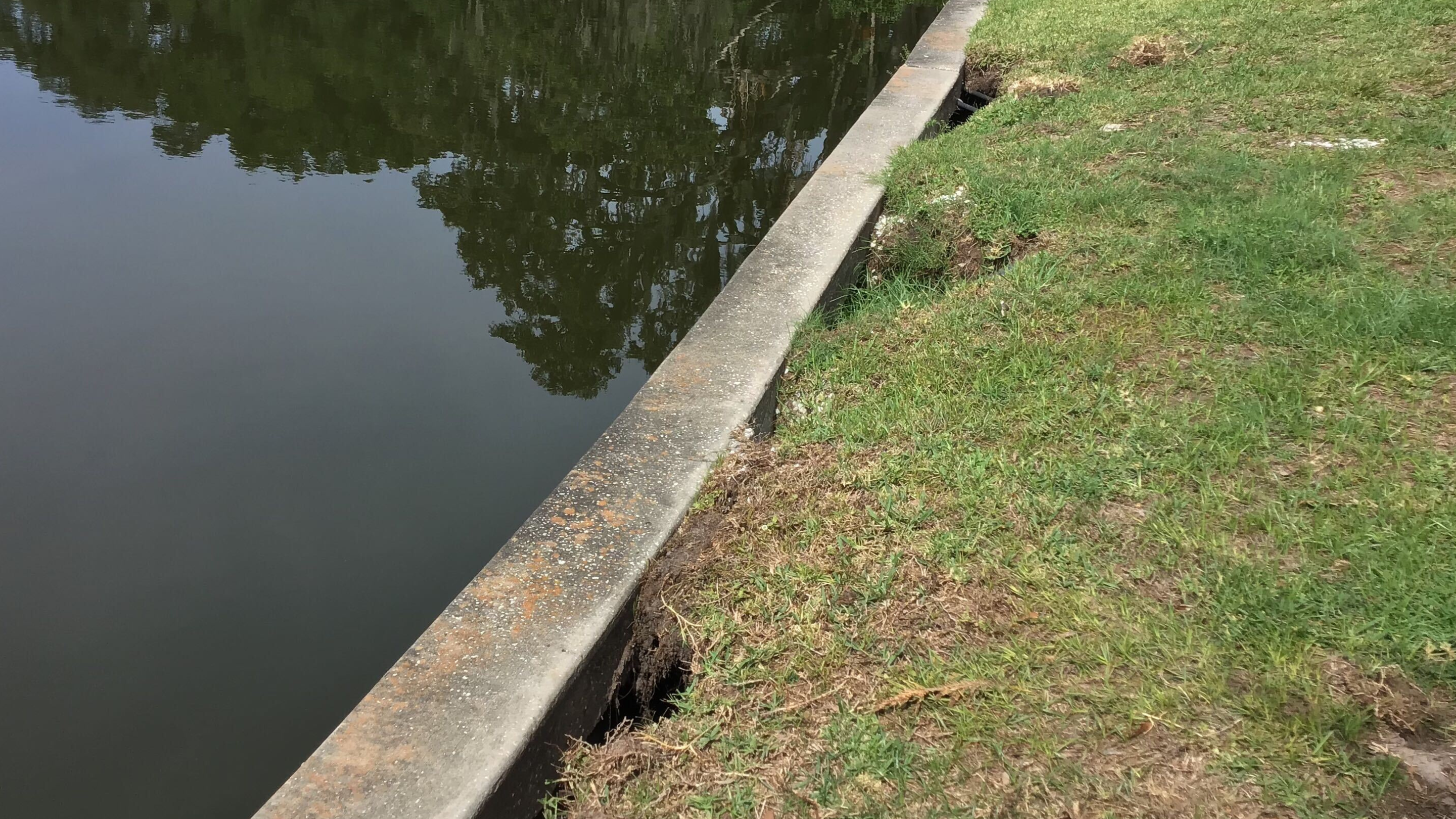
A cracked driveway at a fire station is more than a maintenance issue.
It can threaten the reliability of a critical access route used by fire engines, rescue vehicles, and emergency crews every day. Even small surface cracks may signal that the soil beneath the pavement is no longer providing consistent support.
That was the concern at a fire station in Clearwater, Florida.
Cracks had begun appearing across the asphalt driveway leading into the station. The pavement damage was visible, but the real problem was underground. Gaps in a deteriorating storm drain system were allowing surrounding soil to wash into the pipe during rain events. As that soil disappeared, voids formed beneath the roadway.
Left untreated, those voids could continue growing until the pavement settled, fractured or collapsed.
A conventional repair would have required removing the roadway, excavating down to the storm drain and rebuilding the affected area. That process could have disrupted emergency access, created a large construction zone and kept portions of the driveway out of service for an extended period.
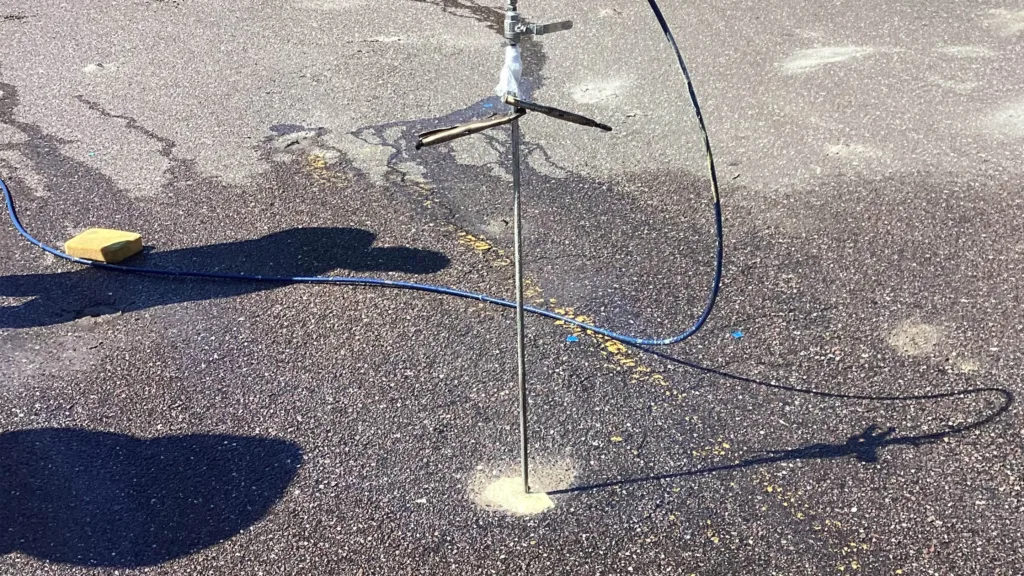
Instead, Helicon stabilized the storm drain and surrounding soil using targeted one-part polyurethane injections.
The repair addressed the underground source of the roadway damage while avoiding full excavation. It also allowed the fire station to remain operational throughout the work.
Why Cracks Can Signal a Larger Issue
Asphalt cracking can develop for many reasons, including age, traffic loads, temperature changes, and surface wear.
However, cracks that continue spreading or appear over an underground drainage system may indicate a subgrade problem.
The pavement depends on compacted soil and aggregate beneath it. When those materials lose density or wash away, the roadway is no longer supported uniformly. Heavy vehicles can then cause the pavement to flex into the weakened area.
At the Clearwater fire station, the storm drain seams had become compromised. Water entering the drainage system carried nearby soil through gaps in the pipe.
This process is sometimes called soil migration or soil piping.
It can occur gradually. Fine soil particles move first, leaving slightly larger openings behind. Continued water flow then removes more material. Eventually, a significant void may develop around the storm drain and beneath the pavement.
Surface warning signs can include:
- Cracks that repeatedly return after patching
- Depressions in asphalt or concrete
- Pavement that feels soft or flexible
- Gaps around drainage structures
- Settlement near catch basins or manholes
- Erosion around pipe joints
- Water entering a drain with visible soil
- Sudden changes in roadway elevation
A surface patch may temporarily cover the crack, but it does not stop soil from continuing to migrate through a failed storm drain seam.
The underground leak must be sealed, and the lost support must be restored.
Why Full Excavation Was Not the Best First Option
Traditional storm drain repair often begins from the surface.
The roadway is cut and removed. Crews excavate through the pavement, base material, and soil until they reach the damaged pipe. The affected section is then repaired or replaced before the excavation is backfilled and the pavement rebuilt.
That method can be necessary when a pipe has collapsed or suffered extensive structural failure.
But excavation comes with major tradeoffs.
For the Clearwater fire station, those tradeoffs included:
- Restricted access for emergency vehicles
- A larger construction footprint
- Heavy equipment operating near an active station
- Removal and replacement of the existing pavement
- Longer project duration
- Higher restoration costs
- Noise, dust and traffic-control requirements
- The possibility of disturbing nearby utilities
- Continued risk of future leakage at replacement seams
The driveway was not an ordinary parking area. It was an operational route that needed to remain available.
Closing or narrowing it could interfere with how quickly emergency vehicles entered and exited the station. Even a carefully phased excavation could create logistical challenges for crews responding to calls.
The goal was therefore not just to repair the storm drain. It was to complete the repair while preserving access.
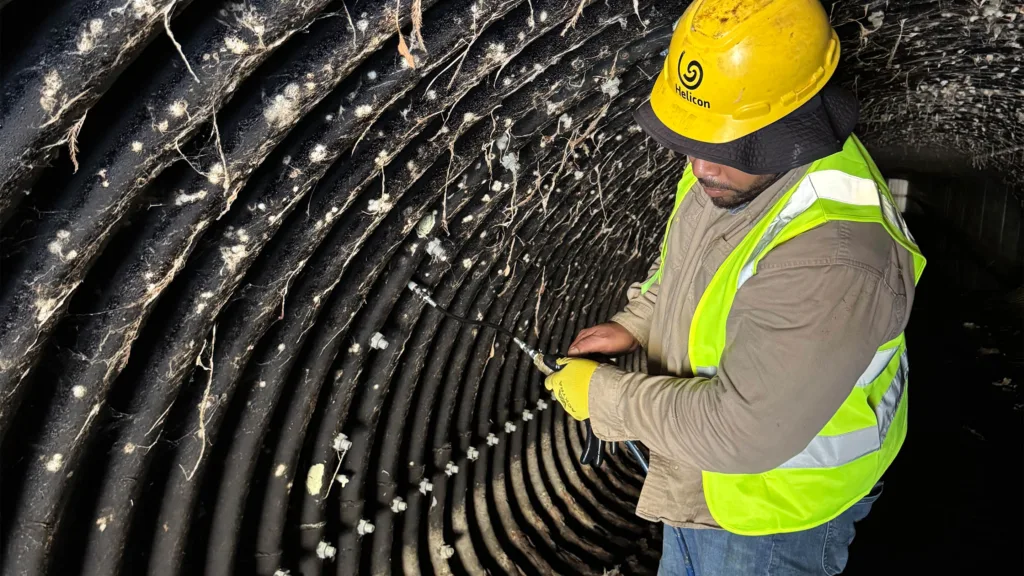
Stabilizing the Storm Drain From the Inside Out
Helicon used a one-part polyurethane resin designed for soil permeation, water control, and infrastructure stabilization.
Unlike two-part expanding foams often used for slab lifting, one-part polyurethane reacts when it encounters moisture. The material can travel through cracks, joints and loose soil pathways before curing into a water-resistant mass.
This made it well suited for the Clearwater storm drain.
The repair strategy worked from the inside out:
- Identify the compromised drain sections and surrounding void zones.
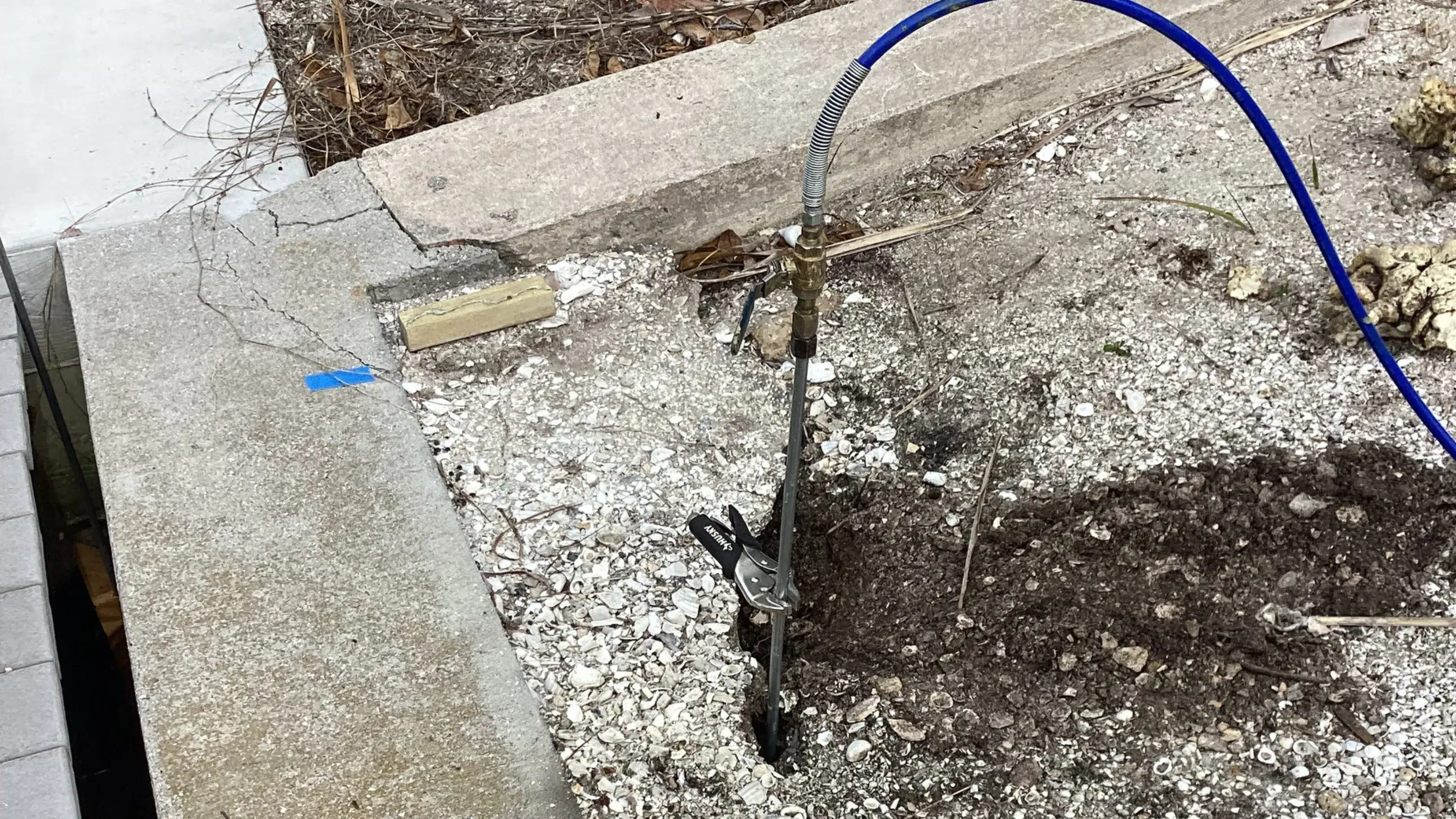
- Place injection points where the resin could reach the leaking seams and unstable soils.
- Inject the polyurethane into and around the storm drain.
- Allow the material to follow moisture paths and low-resistance zones.
- Seal gaps that were allowing soil to enter the drainage system.
- Fill voids and strengthen the soil supporting the roadway.
This approach addressed two related problems at the same time.
The polyurethane helped seal the storm drain against continued soil loss, while also restoring support to the surrounding subgrade.
How One-Part Polyurethane Injection Works
One-part polyurethane begins as a liquid resin.
When injected into a moist environment, the material reacts with water and expands. The reaction allows it to move into cracks, seams, voids, and loose soil zones that may be difficult to reach through conventional surface repair.
As it cures, the polyurethane forms a durable, water-resistant barrier.
Depending on the formulation and site conditions, one-part polyurethane can be used to:
- Seal leaking pipe joints
- Stop active water intrusion
- Fill voids for ground improvement
- Reduce continued soil migration
- Improve cohesion in loose soil
- Stabilize areas around drainage structures
- Protect pavement from additional support loss
- Reach difficult areas without broad excavation
For this project, Helicon used approximately 237 gallons of polyurethane resin.
That volume was distributed through strategically selected injection locations around the compromised storm drain.
The placement process required careful control. Too little material could leave untreated pathways. A poorly directed injection could also risk placing material where it might interfere with the storm drain’s function. The objective was to reinforce and seal the system – not obstruct it.
Why Material Placement Had to Be Precise
Storm drain stabilization is not simply a matter of pumping grout into the ground.
The repair must account for:
- The direction of groundwater movement
- The location of leaking seams
- The size and shape of underground voids
- The pipe’s internal geometry
- The surrounding soil type
- The pavement loads above
- The storm drain’s required flow capacity
Material naturally follows paths of lower resistance. That can be useful because the same pathways often represent cracks, voids, and washed-out soil zones.
However, technicians must monitor pressure, volume and response throughout the injection.
At the Clearwater site, injection points were positioned to provide coverage around the compromised sections. The resin was introduced inside and around the storm drain so it could move upward into the surrounding soils.
This created a dual effect:
- Drain seams were sealed against additional soil loss.
- Voids beneath the roadway were filled and stabilized.
The injection plan strengthened the system while maintaining the drain’s ability to carry stormwater.
How the Repair Protected the Roadway Above
The roadway depended on the soil surrounding the storm drain.
Once erosion created voids, the asphalt and underlying base materials had fewer support points. Heavy fire engines could concentrate loads over those weakened areas.
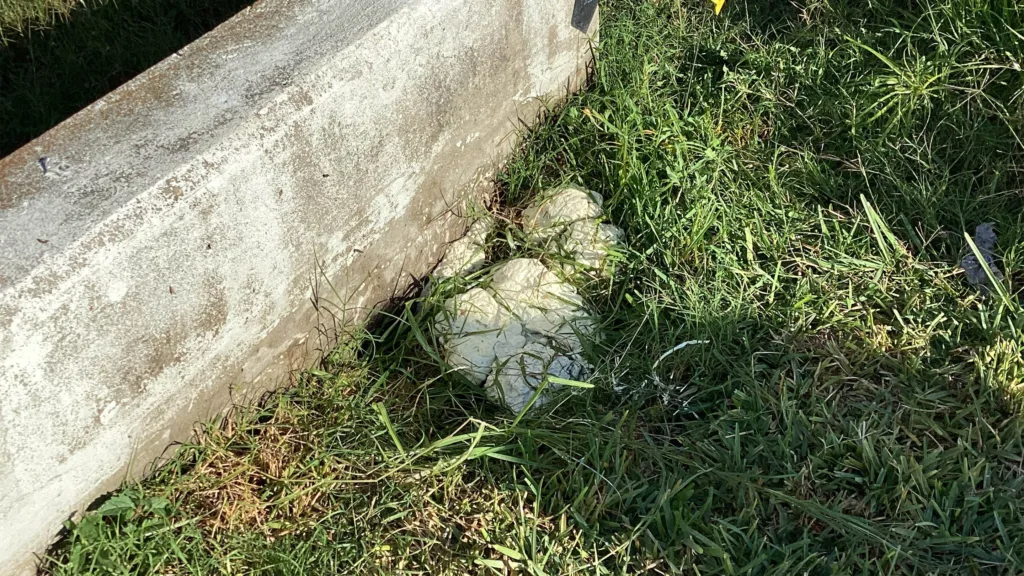
Polyurethane injection helped restore that support by filling accessible voids and binding loose soil around the drain.
The treated area became more resistant to further movement because water could no longer travel as easily through the failed seams and carry soil into the pipe.
This is important because simply filling a void without sealing the source of erosion may only provide temporary relief.
If water continues removing soil, a new void can form beside the repaired area.
By treating both the storm drain gaps and the surrounding soil, the repair interrupted the erosion cycle.
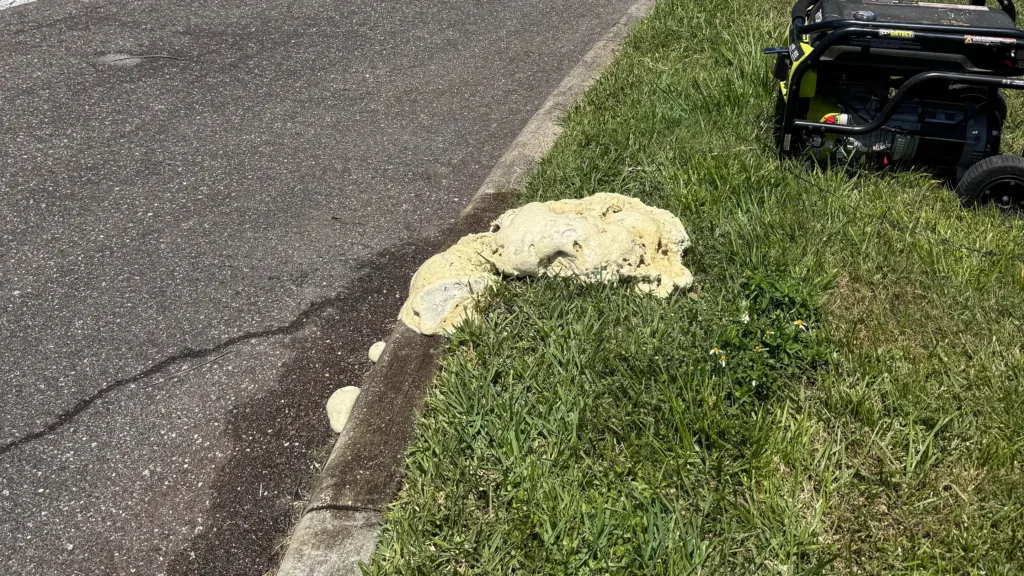
Why This Method Was Well Suited to a Fire Station
Infrastructure repairs at emergency facilities require more than technical performance.
They also require operational planning.
The Clearwater fire station needed a solution that could be completed within a controlled footprint while allowing emergency vehicles to continue using the property.
Polyurethane injection offered several advantages.
No full roadway removal
The driveway did not need to be demolished to reach the storm drain.
Limited work area
Injection equipment and access points required less space than a major excavation.
Faster installation
The resin reacted and cured rapidly, reducing the time required to stabilize the affected area.
Lower restoration demands
Because the roadway remained largely intact, there was less pavement, base and landscaping to replace afterward.
Continued emergency access
The repair plan could be managed around active station operations without lengthy shutdowns.
Treatment beyond a single pipe joint
The resin could move through connected cracks and weak soil pathways around the storm drain, creating broader stabilization than a localized surface patch.
For municipal and commercial properties, these operational benefits can be as important as the repair itself.
Extending the Life of the Existing Storm Drain
Avoiding excavation did not mean ignoring the deteriorated infrastructure.
The polyurethane treatment was designed to extend the storm drain’s useful life by sealing the leakage pathways that were driving soil loss.
Once cured, the material created a water-resistant barrier around compromised areas. This reduced the ability of stormwater to pull surrounding soil into the drainage system.
By slowing or stopping that process, the repair helped protect both the pipe and the roadway above it.
This approach can be especially valuable when the existing storm drain remains structurally serviceable but has leaking seams or joints.
Replacing an entire system may not be necessary when the main failure mechanism can be controlled through targeted grouting.
A thorough evaluation is still required. Severely collapsed, crushed, or undersized pipes may need replacement. But where joint leakage and surrounding soil instability are the primary concerns, permeation grouting may offer a lower-disruption alternative.
Preventing Further Erosion and Void Formation
The central technical objective of the project was to stop the continuing loss of soil.
Every heavy rain event created another opportunity for water to move through the compromised drain seams. Each event could carry more soil away and enlarge the void beneath the driveway.
The injection repair reduced that risk in two ways.
First, it sealed the gaps that were allowing soil to enter the storm drain.
Second, it filled and reinforced the weakened zones that had already developed.
The result was a more stable subgrade capable of supporting the roadway and the heavy vehicles that used it.
Preventing future erosion also protected the fire station from several secondary problems, including:
- Recurring pavement cracks
- Increasing roadway settlement
- Trip hazards
- Damage to nearby drainage components
- Emergency vehicle access limitations
- Sudden pavement failure
- More expensive reconstruction later
Early stabilization can be significantly less disruptive than waiting until the pavement has already collapsed.
Keeping the Fire Station Operational
One of the most important outcomes was the lack of operational downtime.
The fire station remained active while the repair was performed.
This would have been far more difficult with a conventional open-cut excavation. Removing the driveway could have required temporary access routes, staged construction or partial closure of the station entrance.
By using targeted injection, Helicon kept the work zone compact and coordinated the project around emergency operations.
That allowed the station to protect its infrastructure without compromising its public-safety responsibilities. For facilities that operate continuously, such as fire stations, hospitals, utility plants, warehouses, and transportation hubs, this can be a decisive advantage.
Why Surface Patching Alone Would Have Failed
Cracked asphalt can often be sealed or patched quickly.
But at this site, a surface-only repair would not have addressed the cause of the cracking.
The pavement was responding to support loss beneath it. Until the storm drain leakage and underground voids were treated, new cracks could continue forming.
This principle applies to many infrastructure problems:
- A sunken slab may indicate a void beneath the concrete.
- A depression near a catch basin may indicate soil migration.
- A recurring roadway crack may follow a failed pipe seam.
- A settling manhole may be surrounded by washed-out material.
Surface damage should be evaluated as part of the entire system. Repairing only what is visible can allow the hidden problem to grow.
When Should a Storm Drain Be Evaluated for Soil Stabilization?
Municipalities and commercial property owners should consider an underground assessment when they notice:
- Pavement cracking above a drain line
- Depressions near inlets or manholes
- Soil appearing inside a storm drain
- Repeated patch failures
- Unexpected settlement in traffic areas
- Water escaping through pipe joints
- Voids discovered during maintenance
- Sinkholes or surface openings near drainage infrastructure
- Movement after heavy rain
- Signs of erosion around culverts or outfalls
The earlier the problem is identified, the more repair options may be available.
Once a pipe collapses or the roadway fails, full excavation may become unavoidable.
A Smarter Alternative to Digging Up the Road
The Clearwater fire station project shows why infrastructure repair should begin with the failure mechanism—not with the assumption that everything must be removed and replaced.
The visible symptom was cracked asphalt.
The actual problem was soil loss through compromised storm drain seams.
By using 237 gallons of one-part polyurethane resin, Helicon sealed the leakage pathways, stabilized the surrounding soil, and restored support beneath the roadway. The repair extended the service life of the drainage system, reduced the risk of continued erosion and allowed the fire station to remain fully operational.
Most importantly, it accomplished those goals without tearing apart the primary emergency access route. For municipalities, utilities and commercial property owners, that can mean less disruption, lower restoration costs and faster protection of critical infrastructure.
Frequently Asked Questions
Can polyurethane repair every damaged storm drain?
No. Polyurethane injection is best suited for conditions such as leaking seams, voids and surrounding soil loss. A severely collapsed or structurally failed pipe may still require excavation and replacement.
Will the polyurethane block the storm drain?
The material must be placed by experienced technicians using controlled injection methods. The goal is to seal compromised areas and stabilize surrounding soil without restricting required water flow.
Why use one-part polyurethane instead of two-part foam?
One-part polyurethane is moisture-activated and can travel through fine cracks, joints, and soil pathways. It is often selected for water control, permeation grouting, and leaking underground infrastructure.
How does the repair stop roadway settlement?
The resin seals the pathways, causing soil loss and filling accessible voids around the storm drain. This helps restore support beneath the roadway and reduces the conditions that drive additional settlement.
Is injection less expensive than excavation?
It can be, particularly when pavement demolition, deep excavation, traffic control and site restoration would otherwise be required. Final cost depends on access, depth, soil conditions, and the extent of the damaged area.
Can the facility remain open during the repair?
Often, yes. One of the main benefits of targeted injection is the ability to maintain access and limit the work zone. The specific traffic plan depends on site conditions and operational requirements.
Final Takeaway
Roadway cracks above a storm drain should never be treated as a surface problem alone. At the Clearwater fire station, the damage was being driven by soil loss through deteriorated drain seams beneath a critical emergency access route. Helicon’s one-part polyurethane injection method stabilized the soil, sealed the erosion pathways and protected the pavement without a disruptive open excavation. The result was longer infrastructure life, reduced risk of future void formation, and uninterrupted fire station operations.
Helicon provides storm drain stabilization, permeation grouting, soil stabilization, and infrastructure repair throughout Clearwater, Tampa Bay, and communities across Florida. If pavement cracking, drainage leaks, or underground voids are threatening an active roadway, parking area, or facility entrance, call 844-HELICON to schedule an evaluation or fill out the form on our site to explore whether a low-disruption injection solution is appropriate.