You notice a crack above your bedroom door. A few weeks later, your back door starts sticking in a way it never did before. These small changes are easy to brush off as normal house aging, but they can also be your first warning that foundation settlement is already underway beneath your feet.
When you catch settlement early, your repair options are broader, less invasive, and significantly less expensive than if you wait until the damage is obvious. This article walks you through what causes settlement, how to read the signs your home is giving you, and what a professional repair process actually looks like.
The guidance here draws on the kind of practical, on-the-ground experience that Helicon Foundation Experts has applied across thousands of Florida properties since 2004. Keep reading, and you will walk away knowing exactly what to watch for and what to do about it.
Why Homes Start Shifting Below The Surface
Florida’s soil conditions are genuinely unlike most other states, and that geology is the primary reason so many homeowners here deal with foundation movement that homeowners in other regions rarely encounter.
The specific combination of soil type, water table depth, and organic soil composition makes even well-built homes vulnerable to gradual movement over time. Understanding the nuances of soil subsidence vs settlement is key to recognizing why these shifts occur in Florida.
How Florida Soil And Water Conditions Affect Support
Florida’s ground is largely made up of sandy and silty soils that do not support loads the way dense clay or bedrock does. These soils compress under a structure’s weight and shift when moisture levels change, which happens frequently given the state’s heavy rain cycles and high water tables.
When the water table rises after a heavy storm, saturated soil loses much of its load-bearing strength. As it dries back out, it contracts. That repeated cycle of expansion and contraction puts continuous stress on the foundation above it.
Karst topography adds another layer of risk. Much of Florida sits above limestone bedrock that dissolves over time, creating underground voids that can cause sudden and severe ground movement. Effective Florida soil settlement prevention often starts with understanding these unique geological risks.
Drainage Problems, Erosion, And Washout Around The Home
Poor drainage is one of the most common contributors to foundation movement and one of the most preventable. Identifying these foundation sinking causes and fixes early can prevent significant structural damage.
Gutters that discharge too close to the foundation and grading that slopes toward the house rather than away from it both funnel water into the wrong places. Over time, that water erodes the soil, creating voids beneath the slab.
Plumbing leaks beneath the slab are another source of hidden washout. A slow leak beneath a concrete floor can erode soil for months before any surface symptoms appear.
When Poor Compaction Or Construction Choices Add Risk
If the soil beneath a structure was not properly compacted before construction, the ground will continue to settle under load long after the building is complete. Fill soils are particularly prone to this because they often contain organic material that decomposes over time, reducing volume and creating voids.
Organic decomposition beneath a slab is a slow but steady process. As plant matter and other organic content break down, the soil shrinks, and the slab loses support from below.
Trees planted too close to the foundation draw moisture from the surrounding soil, causing the soil to contract unevenly. That uneven contraction, rather than uniform movement, is what tends to cause the most visible damage.
The Earliest Clues Homeowners Tend To Notice
Settlement does not announce itself with a loud crack or a sudden drop. Most of the time, it shows up as subtle changes that are easy to attribute to something else, which is exactly why these early signals are worth knowing by name.
Cracks Around Doors, Windows, And Interior Walls
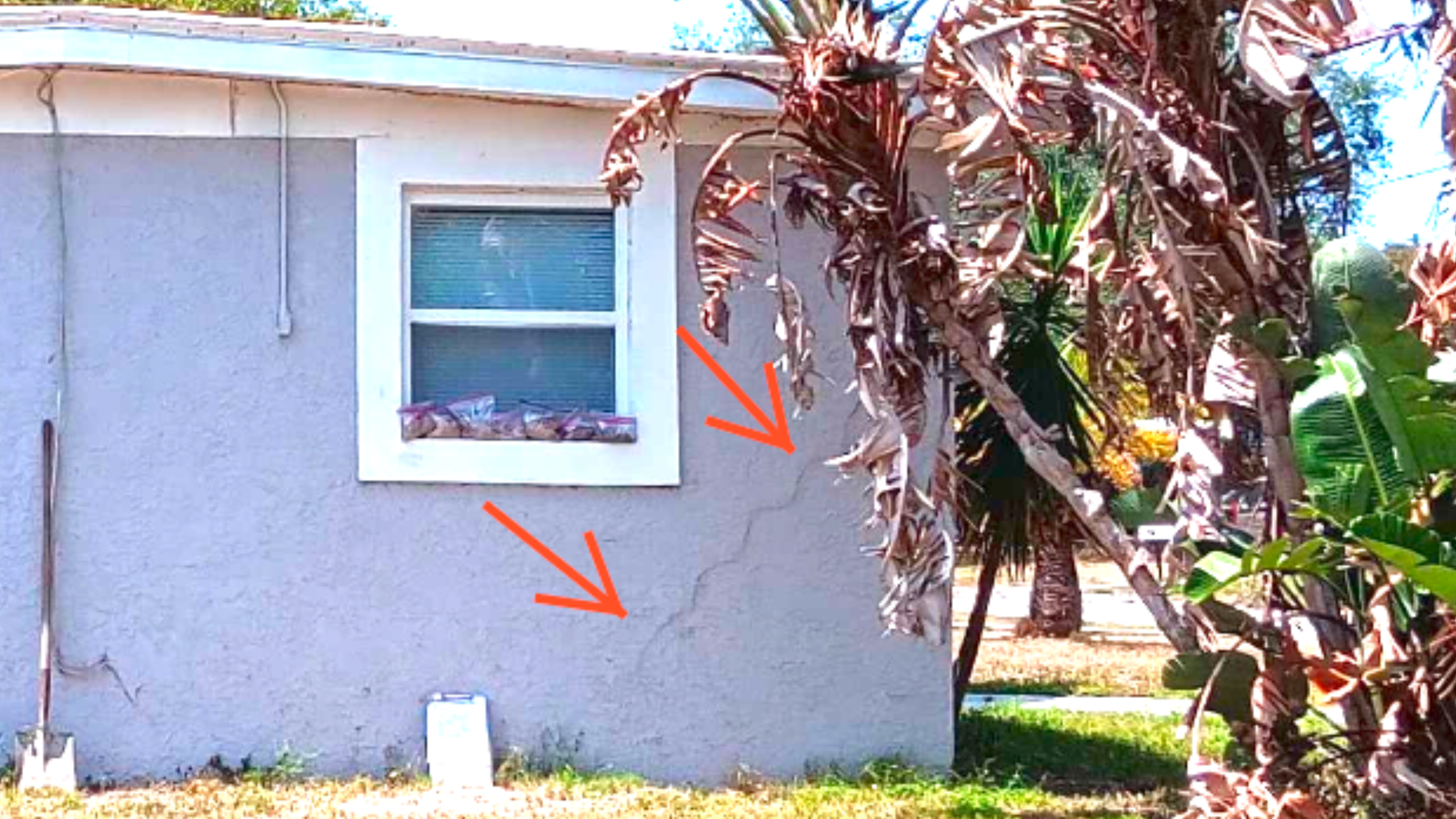
Diagonal cracks that run from the corners of door frames and window openings are one of the most telling early signs of structural foundation failure. The frame is rigid, but the surrounding wall is being pulled by movement below, so stress concentrates at the corners where resistance changes.
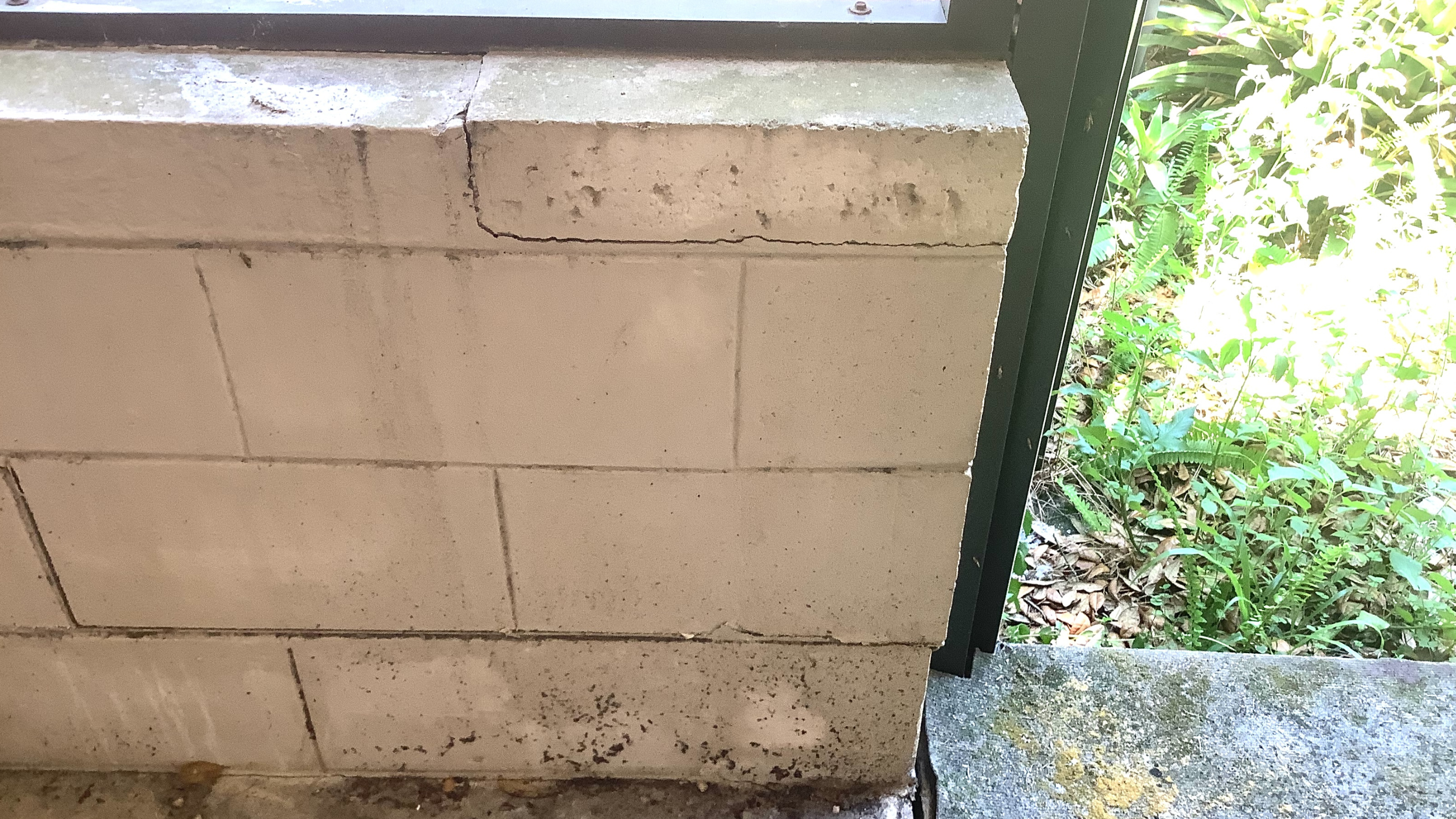
Stair-step cracks in brick or block exteriors follow the mortar joints in a diagonal pattern and indicate that one section of the foundation is dropping while an adjacent section stays put. That pattern is specific to settlement and is different from a crack caused by surface impact or thermal expansion.
Hairline cracks in drywall are common in any home, but cracks that return after patching or widen over time deserve closer attention. A crack that was 1/16 inch wide six months ago and is now 1/4 inch wide is active, not stable.
Floors That Slope, Bounce, Or Feel Uneven
A floor that was once flat and now noticeably slopes toward one corner of a room is a classic indicator of differential movement beneath the slab. You can confirm this with a simple marble test: place a marble on the floor and watch whether it rolls consistently in one direction.
Soft spots or bouncy sections in a concrete-backed floor can point to voids beneath the surface. When soil erodes or compresses beneath a slab, the concrete spans air rather than resting on solid ground, causing it to flex slightly underfoot.
Tile floors that crack along grout lines in a pattern radiating from one area of the room often indicate that the slab beneath has shifted or cracked at that point.
Sticking Doors, Gaps In Trim, And Exterior Warning Signs
Doors that stick along the top edge, or that swing open or closed on their own, are responding to the fact that the frame around them is no longer square. Foundation movement distorts the geometry of the entire structure, and doors are among the first places where that distortion becomes functional rather than just visual.
Gaps between the baseboard trim and the floor, or between the crown molding and the ceiling, indicate that the wall has moved relative to the floor or ceiling plane. These gaps are worth measuring and monitoring over the next few weeks to see whether they stay the same or grow.
Outside the home, look for depressions in the yard near the foundation, cracks in the concrete driveway or walkway that radiate away from the house, and any visible gap between the base of the exterior wall and the ground below it.
How To Tell Cosmetic Movement From Structural Concern
Not every crack requires a contractor. Knowing the difference between normal house aging and ongoing structural movement helps you direct your attention and your money to the right place. The key distinction is not what a crack looks like today, but whether it is stable or still growing.
Signs That Suggest Normal House Aging
Hairline cracks, typically under 1/16 inch wide, in drywall or plaster are extremely common in homes of any age. They form as building materials respond to temperature changes and minor shifts in humidity throughout the year.
Vertical cracks in poured concrete foundations that are narrow, dry, and have not changed in size over several months are usually non-structural. They often result from the curing process of the original concrete pour rather than from load-related movement.
Paint bubbling or peeling near the base of interior walls can sometimes be mistaken for structural movement, but it often indicates a humidity or moisture vapor issue rather than shifting soil below.
Patterns That Point To Ongoing Structural Movement
The clearest sign of an active structural problem is change over time. A crack that was not there six months ago, or one that has widened measurably since you first noticed it, indicates movement that has not stopped.
Diagonal cracks at 45 degrees originating from door and window corners, horizontal cracks in foundation walls, and stair-step patterns in brick or block are all associated with differential settlement rather than normal aging. Horizontal cracks in basement or stem walls are particularly serious because they can indicate lateral soil pressure pushing the wall inward.
Multiple symptoms appearing in the same area of the house at the same time, such as a sticking door, a sloping floor, and a wall crack all in the same corner, suggest a localized settlement issue rather than scattered cosmetic damage.
When A Professional Inspection Makes Sense
Schedule a professional inspection if any crack has grown wider over a period of weeks, if you are seeing multiple symptoms in the same part of the home, or if you notice any sudden change in how your doors or windows operate. These combinations suggest active movement rather than old, stable settling.
You should also book an inspection before listing a home for sale, after a major storm or flood event, and anytime you notice a depression forming in the yard near the foundation. A qualified specialist can measure the extent of movement, identify the likely cause, and give you a clear picture of what is actually happening below the surface.
What Happens During An Inspection And Diagnosis
A professional inspection is not just a visual walk-through. Specialists use specific tools and techniques to measure movement precisely, and that precision is what separates a reliable repair recommendation from a guess. Knowing what to expect makes the process less intimidating and helps you ask better questions.
How Specialists Measure Movement And Track Damage
During an inspection, a specialist will typically measure floor elevations at multiple points across the home using a digital level or laser measurement tool. These readings create a settlement map showing where the floor has dropped and by how much, helping the team determine the most efficient way to fix foundation settlement.
Exterior walls and foundation surfaces are examined for crack patterns, their width, orientation, and whether there is any displacement between the two edges of the crack. Displacement, meaning one side of a crack sits higher than the other, confirms active structural movement rather than surface shrinkage.
The specialist will also look at the soil conditions around the perimeter, drainage patterns, the condition of gutters and downspouts, and any visible signs of erosion or washout near the footing. All of this information feeds into the diagnosis before any repair option is proposed.
Questions To Ask Before Any Repair Plan Is Recommended
Before agreeing to any repair work, ask what is specifically causing the movement. A credible specialist should be able to name the likely source, such as soil erosion, a plumbing leak, poor compaction, or void formation, not just describe the visible damage.
Ask how the recommended repair method addresses the root cause rather than just the symptom. Filling a crack without stabilizing the soil that caused it will not stop the crack from returning. Ask also whether the repair is backed by a transferable warranty, which is relevant if you plan to sell the home.
Ask for a written estimate that separates the inspection findings from the repair proposal so you can evaluate each independently.
What To Expect If You Need To Stay In The Home During Work
Most foundation repair work does not require you to vacate your home. Techniques like helical pier installation and polyurethane foam injection are relatively non-invasive, generate minimal noise and vibration, and do not require major demolition.
Larger projects that involve excavation around the perimeter or significant interior work may require you to stay out of specific areas during active work phases for safety reasons. Ask your project consultant upfront whether any part of the work will restrict your access to certain rooms or require temporary utility shutoffs. Getting that information before work begins makes scheduling easier and eliminates surprises.
Repair Paths That Address The Cause, Not Just The Crack
Effective foundation repair focuses on why the ground moved, not just on what the movement damaged. The three most widely used repair methods each target a different aspect of the problem, from deep-soil support to surface-level slab restoration.
Helical Piers For Long-Term Support
Helical piers are steel shafts with helical plates that are mechanically screwed into the ground beneath a settling foundation. This method of underpinning involves advancing the piers until they reach soil or bedrock capable of carrying the structure’s load.
The key advantage of helical piers is permanence. When deciding on a solution, understanding push piers vs helical piers helps homeowners choose the right anchor for their specific soil conditions.
Installation requires no excavation of the surrounding yard in most cases. Piers are typically installed from inside or close to the footing perimeter, which limits disruption to landscaping and finished surfaces.
Soil Stabilization And Void Filling Options
When the primary problem is weak, loose, or eroded soil, polyurethane foam injection offers a minimally invasive way to repair a settling foundation without excavation. The foam is injected through small-diameter holes drilled in the slab or along the perimeter, expanding to fill voids and densify the surrounding soil as it cures.
Polyurethane foam reaches full strength within minutes of injection, which is significantly faster than traditional grout-based methods. It is also lightweight, so it does not add meaningful load to already compromised soil.
For more complex situations, such as sinkhole-adjacent areas or zones with extensive void networks, targeted grout injection can seal cracks, fill deeper voids, and stabilize larger volumes of soil. The right method depends on the soil conditions and the extent of the void system, which is why a proper site assessment matters before any injection work begins.
Concrete Lifting For Settled Slabs And Surrounding Surfaces
When a concrete slab, driveway section, pool deck panel, or patio has settled due to soil compression or void formation beneath it, Concrete Lifting using polyurethane foam injection can raise it back toward its original elevation. The foam fills the void, expands, and lifts the slab from below without requiring removal or replacement of the concrete.
This method works well for surfaces that have settled uniformly in one area and are otherwise structurally sound. Slabs that are heavily cracked, damaged by freeze-thaw cycles, or significantly deteriorated may need replacement rather than lifting.
The work area is typically small. Technicians drill holes roughly pencil-sized through the concrete, inject the foam, and patch the holes once the slab reaches the target elevation, usually within a single workday.
Getting Ahead Of Future Movement
Preventing further settlement is largely about consistency, catching small changes before they become large ones and managing water before it reaches the soil beneath your foundation. Two habits, practiced regularly, account for the majority of what proactive homeowners can do between professional inspections.
A Simple Home Monitoring Routine You Can Start This Week
Pick one day each season to walk your home’s interior and exterior with a notepad. You do not need special equipment, just a consistent process.
Your seasonal walk-through checklist:
- Check the corners of every door and window opening for new diagonal cracks
- Open and close every exterior door and note any new sticking or dragging
- Walk each room slowly and feel for soft spots or slope changes in the floor
- Look at the baseboard along every wall for new gaps between the trim and floor
- Step outside and walk the full perimeter, looking for new cracks in concrete flatwork or depressions in the lawn near the foundation
- Check gutters and downspouts to confirm they are clear and discharging water away from the house
Write down what you see, including “nothing new” when that is the case. A dated record of stable conditions is just as useful as a record of change, because it establishes your baseline.
Water Management Habits That Help Protect Stability
Keep gutters clean and make sure every downspout extension directs water at least 4 to 6 feet from the foundation. If your grading slopes toward the house, adding soil to pitch the grade away from the perimeter is a low-cost step with meaningful long-term impact.
Avoid overwatering plants and shrubs planted close to the foundation. Irrigation systems that run too long or too frequently near the perimeter keep the soil in a constant state of saturation, which weakens its load-bearing capacity over time.
If you have trees within 15 feet of the foundation, monitor the ground near the foundation for depressions or soil shrinkage during dry spells. Root systems draw significant moisture out of the soil, creating localized contraction that can contribute to differential settlement directly beneath the structure.
Frequently Asked Questions
Foundation settlement questions tend to fall into two categories: what is normal and what signals a real problem. These answers address the questions homeowners ask most often once they start paying closer attention to their home’s condition.
How much settling in a house is considered normal or acceptable?
Minor, uniform settling of a few millimeters over many years is normal in most homes, especially in the years shortly after construction. Settlement becomes a concern when it is uneven, ongoing, or exceeds roughly one inch of differential movement across the structure.
What are the common signs that a home’s foundation is moving?
The most frequently noticed signs include diagonal cracks at door and window corners, stair-step cracks in brick exteriors, floors that slope noticeably in one direction, and doors or windows that suddenly stick or no longer latch properly. Multiple symptoms appearing together in the same area of the home suggest a localized settlement issue worth investigating.
Are cracks in walls or floors always a sign of a serious structural issue?
Not always. Hairline cracks under 1/16 inch wide in drywall or plaster are common and often cosmetic. The signs that point toward structural concern include cracks that grow wider over time, diagonal patterns originating from door and window corners, horizontal cracks in foundation walls, and any crack where one edge sits higher than the other.
What are the main types of soil-related movement that can affect a home’s structure?
The three most common types are uniform settlement, where the entire structure sinks evenly; tipping settlement, where one side drops more than another; and differential settlement, where different sections of the foundation move at different rates. Differential settlement causes the most visible damage because it distorts the building’s geometry unevenly.
What is the typical cost range to repair structural movement under a house?
Repair costs vary significantly depending on the cause, severity, and method required. Minor concrete lifting jobs using polyurethane foam can run in the low thousands of dollars. More extensive helical pier installations across multiple corners of a home can range from $10,000 to considerably more. A professional inspection and written estimate is the only reliable way to get an accurate number for your specific situation.
Will homeowners insurance typically cover repairs for structural movement or shifting?
Standard homeowners insurance policies generally do not cover foundation repair caused by settlement or soil movement. Coverage may apply if the damage results from a sudden covered event, such as a burst pipe or a named storm. Some Florida policies include limited coverage for sinkhole-related foundation damage, but the terms vary by insurer and policy, so reviewing your specific policy with your agent is essential before assuming coverage.
The Best Time To Act Is Before It Gets Worse
Small signs of foundation movement are not always small problems. A diagonal crack above a door frame or a floor that dips slightly in one corner may be the first visible signal of soil that has been shifting beneath your home for months.
The good news is that settlement caught early is much more straightforward to address than settlement that has been ignored through several seasons of rain, drought, and load cycling. The repair methods available today, from helical piers to polyurethane soil stabilization, are designed to reach the actual source of the movement rather than just treating what you can see on the surface.Walk your home this week using the seasonal checklist above, make note of anything that looks different, and if something concerns you, schedule a free inspection with Helicon. Taking that one step now puts you in control of the situation before it becomes more costly.