
Tampa, FL
The Project
The Challenge
The Solution
FREE INSPECTION REQUEST

Market: Residential
Solution: Concrete and Soil Stabilization
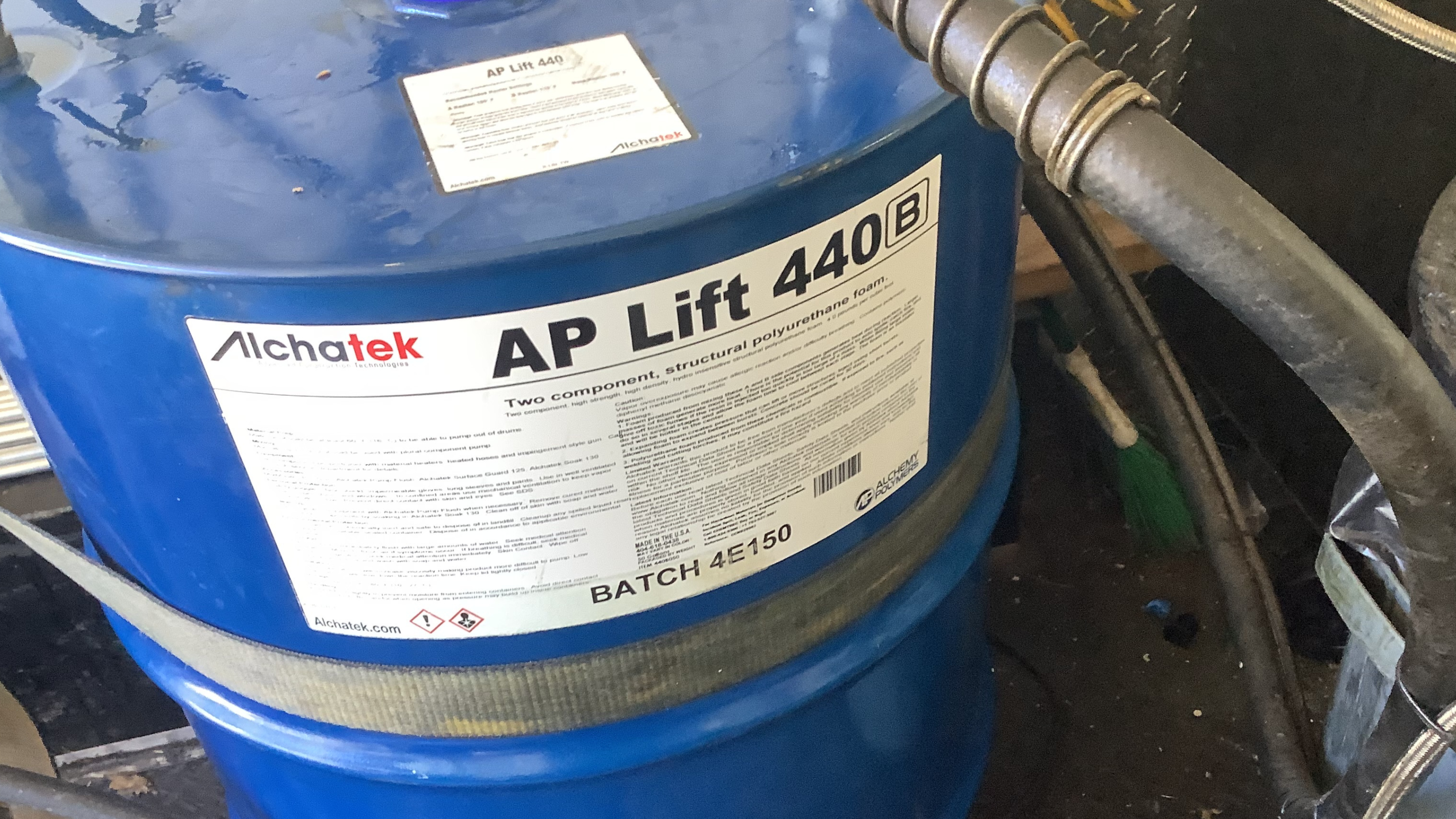
Services: Structural Two-Part Polyurethane Injections
A Tampa property owner contacted Helicon after a neighbor noticed a depression forming on a waterfront lot used for storing and launching kayaks. The property does not contain a residence or other primary building. Instead, it includes a dock, boat-storage areas, a kayak rack, and open space used to access the river.
Because the owner was not living at the property following the storm, she did not initially see the soil movement herself. Her neighbor alerted her after the depression opened in the lot. The affected area was located between the kayak-storage rack and a nearby tree, approximately five feet from the river.
This was not the first time the area had required attention. The depression had previously been filled, and a tree had also been removed from the general area. After the problem reappeared, the owner wanted more than another surface-level fill. She wanted to address the weak soil and reduce the risk that newly placed fill would migrate again.
Helicon evaluated the site and determined that the depression was approximately three feet deep. The soil appeared to become firmer at an estimated depth of three to four feet. Although the affected area was relatively wide—approximately 15 feet by 20 feet—it did not appear excessively deep, and the surrounding soils did not seem unusually soft far beyond the open depression.
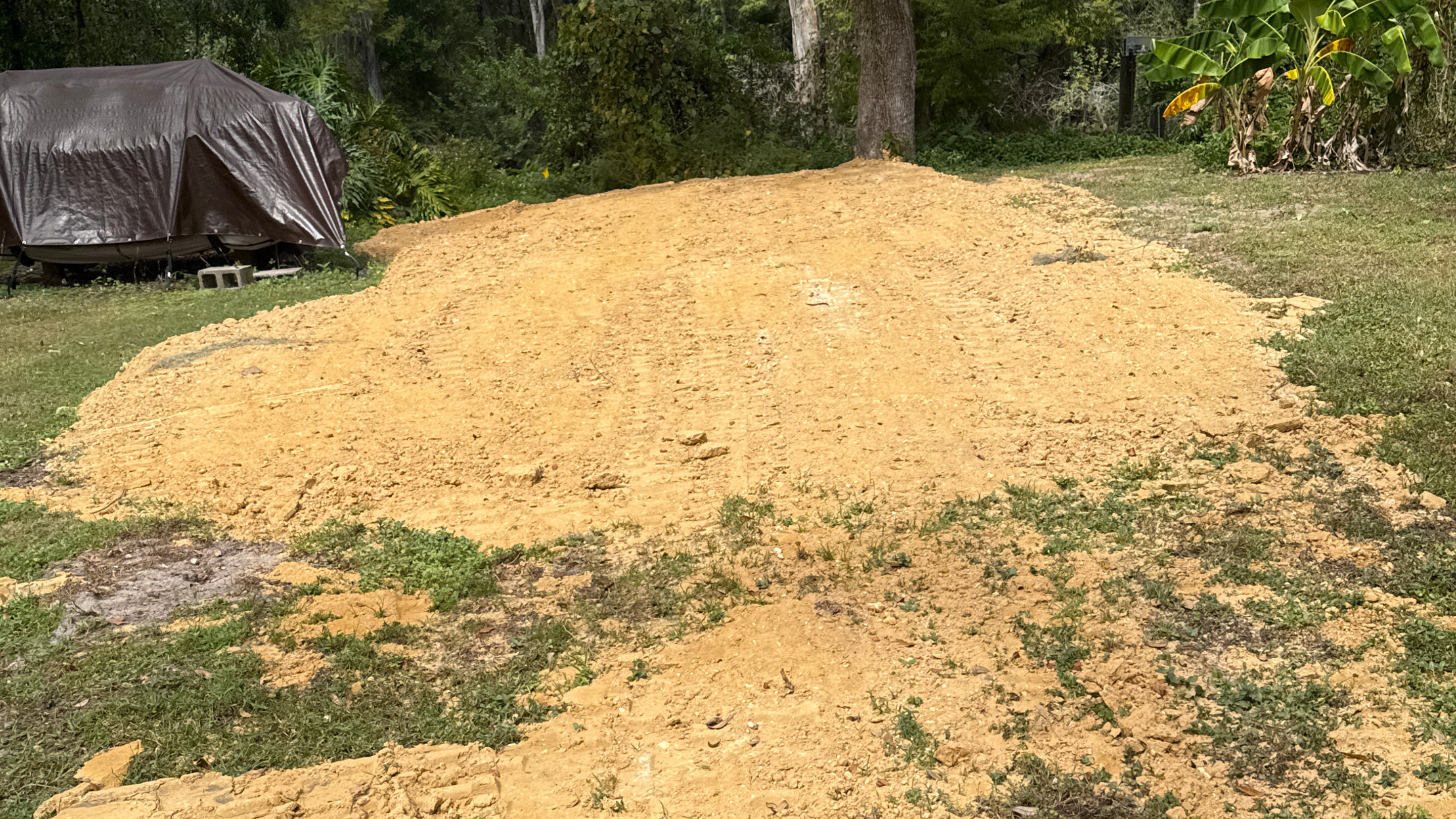
The owner planned to coordinate with a separate contractor or personal connection to place new fill soil and bring the depression back to the surrounding lot elevation. Once that grading work was complete, Helicon would stabilize the newly placed soil using structural two-part polyurethane injections.
The objective was clear: reinforce the filled area, reduce future soil migration, and create a more dependable surface near the kayak-storage and launching area.
When a depression forms on a waterfront property, simply placing more soil into the low area may improve the surface temporarily. However, fill alone does not necessarily correct the condition that allowed the soil to migrate or settle in the first place.
That distinction was especially important on this project because the area had previously been filled. The fact that the depression returned suggested that the property needed a stabilization strategy below the finished surface—not just another round of grading.
Waterfront soils can be affected by several overlapping conditions, including water movement, storm activity, drainage patterns, loose fill, organic material, and changes caused by removed vegetation. The repair was designed around the condition that could be confirmed: a localized zone of weak or displaced soil that needed reinforcement after new fill was installed.
The location also made the issue more important. The depression was close to the river and positioned in an area used for kayak access and storage. Continued settlement could create uneven ground, make it harder to move equipment safely, or allow the newly graded area to deteriorate again.
By stabilizing the filled zone, Helicon could help the owner move beyond repeated surface repairs and improve the performance of the soil beneath the lot.
The customer was not requesting concrete lifting or structural elevation correction. No building foundation or slab in the treatment area needed to be raised. Instead, the owner had three practical goals:
This distinction helped define the scope of work. The project was not a lifting project. It was a targeted soil-stabilization project focused on improving the performance of a localized area near the waterfront.
The owner also hoped the installation could be completed sooner than the typical scheduling window and asked to be placed on Helicon’s cancellation or move-up list. Because she had already begun coordinating the fill work, timing the stabilization after grading was an important part of the overall project sequence.
The property was located at the end of the street and shared a gravel driveway. There was ample room for a trailer, along with a gravel parking area approximately 50 feet from the work zone.
Although the property did not have a house or other major structure that could be used as a reference point, the work area was identifiable by the kayak-storage rack, dock, nearby tree, and riverfront location.
The depression measured approximately 15 feet by 20 feet. The affected area was relatively contained, and the soils outside the depression did not appear excessively soft during the initial assessment. That allowed Helicon to focus the injection plan on the area that showed the clearest need for stabilization.
Good access also helped the crew mobilize equipment without requiring extensive preparation or disruption to an occupied residence.
The main challenge was coordinating the stabilization with the owner’s fill operation.
Helicon could not stabilize the final treatment area until the depression had first been filled and leveled. That meant the work had to occur in the correct sequence:
Performing the work in the wrong order would have reduced the value of the repair. Injecting before the depression was properly filled would not have addressed the final soil profile the owner intended to create.
A second challenge involved setting appropriate expectations. Because there was no slab or foundation in the area, the project would not produce a visible “lift.” The value of the work would be below the surface: improving the stability of the newly filled soil and reducing the potential for renewed migration.
The owner understood that this was a stabilization project rather than a lifting project. That alignment allowed the work to remain focused on the property’s actual needs.
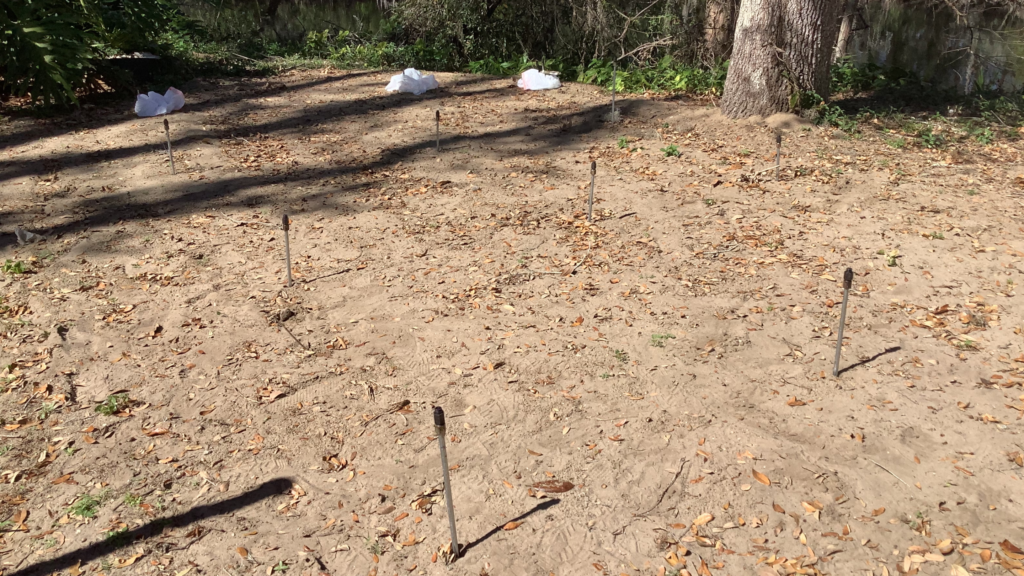
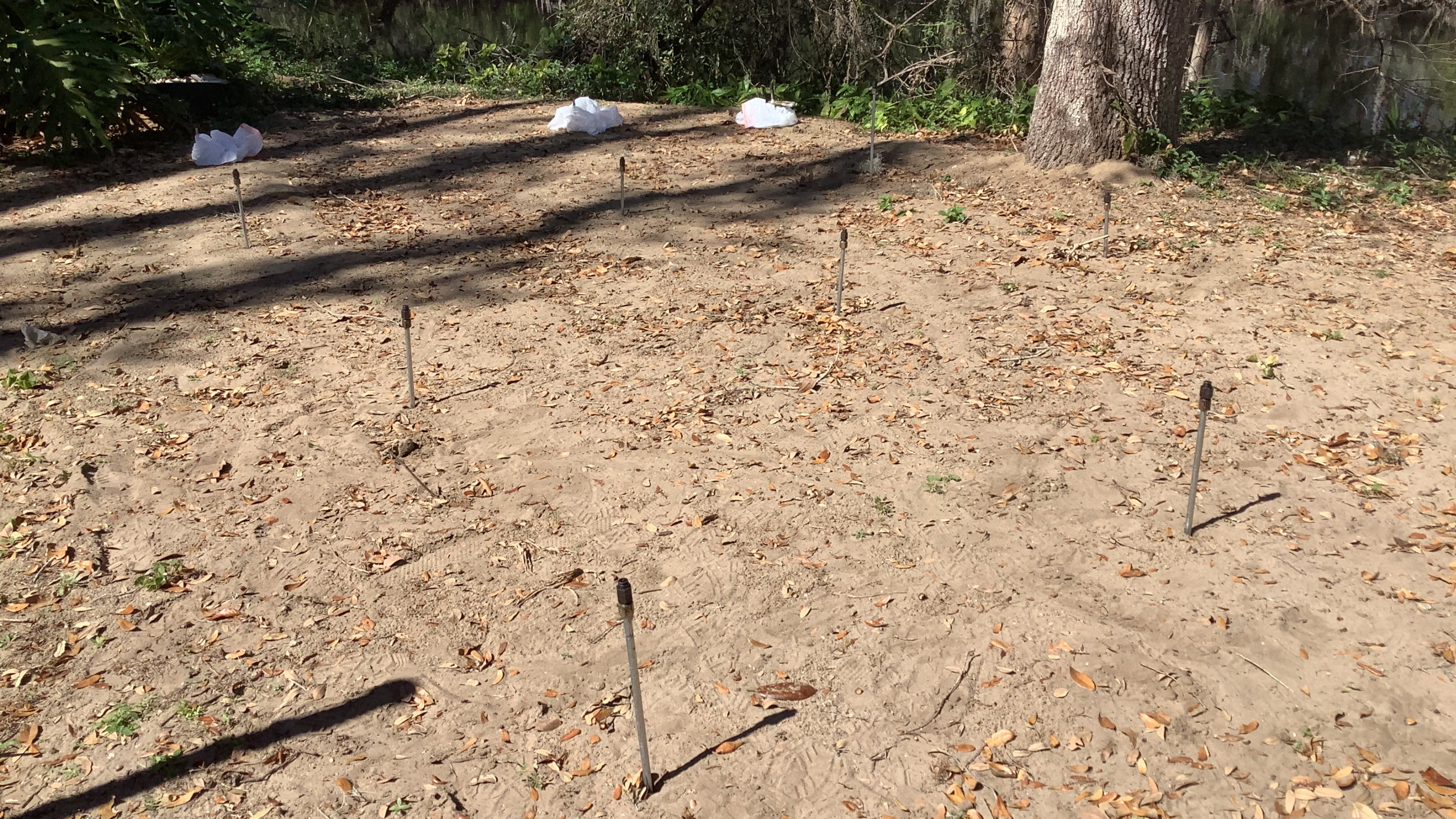
After the depression was filled and brought back to grade, Helicon used structural two-part polyurethane injections to stabilize the treatment area.
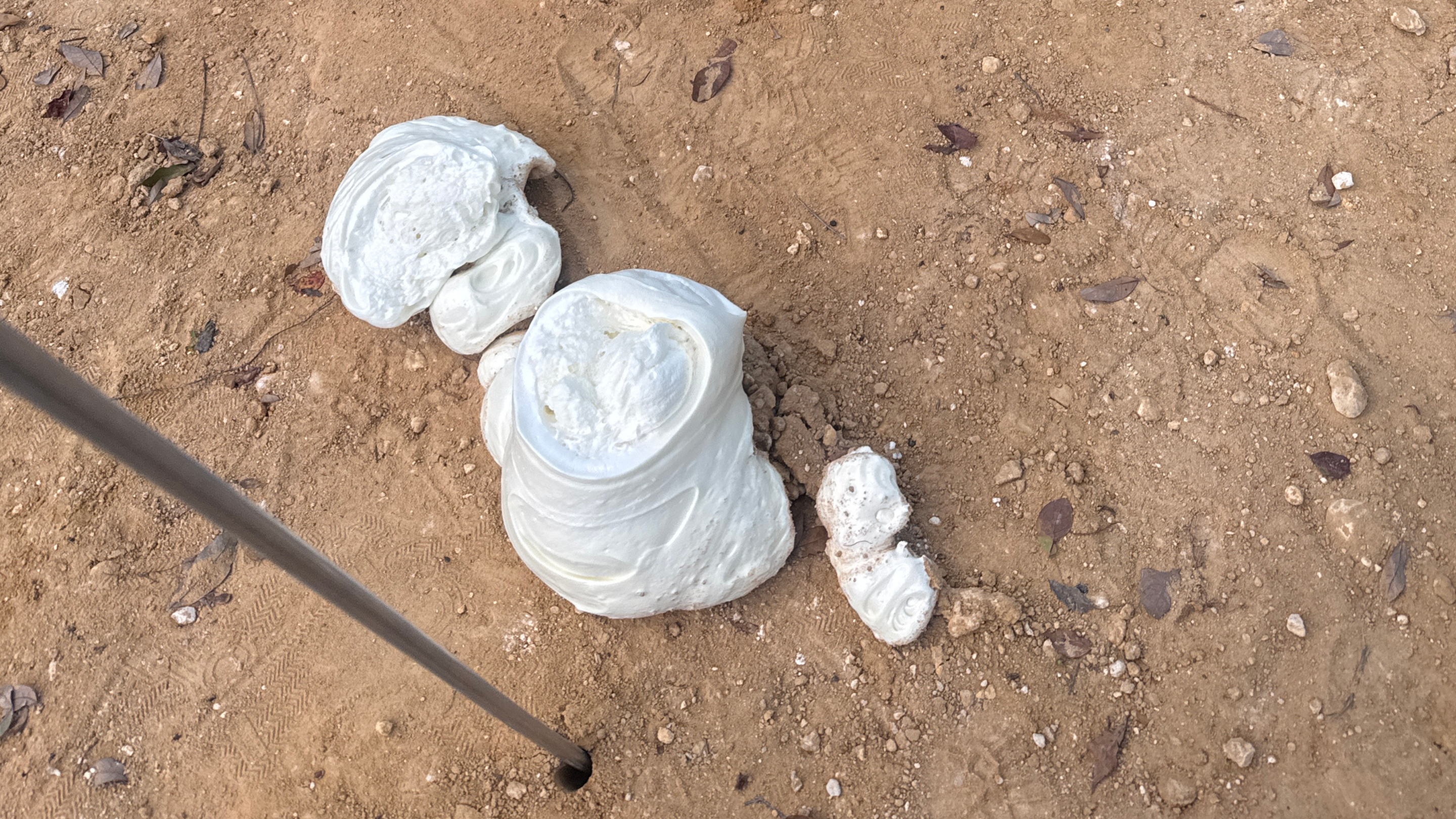
The completed installation used approximately 380 pounds of structural polyurethane material across 19 injection points. The points were distributed throughout the affected area to treat the newly placed fill and improve soil stability within the repair zone.
Structural polyurethane is useful for targeted soil stabilization because it can be introduced beneath the surface through relatively small injection points. As the material reacts, it expands within available voids and weak zones, helping reinforce the surrounding soil mass.
For this project, the injections were intended to:
This approach allowed Helicon to treat the soil without excavating the entire area or installing a large structural system that the site did not require.
The property needed a focused repair rather than a broad reconstruction project. The weak area was relatively localized, surrounding soils appeared firmer outside the depression, and there was no building foundation requiring underpinning.
Structural polyurethane injections matched those conditions well.
The process also complemented the owner’s plan to import fill. Instead of asking the polyurethane material to replace a large volume of missing soil, the project team used conventional fill to rebuild the lot elevation and polyurethane to reinforce that fill after placement.
This division of work was both practical and efficient:
By combining those steps, the project addressed both the visible depression and the underlying concern about renewed soil movement.
Following the installation, the approximately 15-by-20-foot treatment area had been reinforced through 19 injection points using approximately 380 pounds of structural two-part polyurethane.
The repair provided several important benefits:
No responsible soil-stabilization contractor can guarantee that natural waterfront soils will never experience movement again. However, the completed injections materially improved the treated area and addressed the owner’s concern more comprehensively than surface fill alone.
Not every soil problem occurs beneath a home, driveway, or concrete slab. Vacant waterfront parcels, kayak-launch areas, boat-storage lots, and recreational access points can also develop depressions or weak zones that require professional attention.
These areas may be overlooked because no building is present. However, continued erosion or settlement can still affect safety, access, equipment storage, and the long-term usability of the property.
This Tampa project demonstrates the value of addressing a recurring depression in the correct order:
The owner did not simply repeat the same fill-only approach that had been used previously. She chose to add structural soil stabilization to improve the durability of the repair.
Helicon provides foundation repair, soil stabilization, concrete lifting, sinkhole repair, seawall repair, and related structural solutions throughout Florida. Our team works with homeowners, contractors, property managers, and commercial clients to address problems where they begin below the surface.
Depressions, soft ground, recurring washout, and migrating fill can make waterfront property difficult or unsafe to use. Repeatedly adding soil may not be enough when the underlying treatment zone remains unstable.
Helicon provides targeted soil-stabilization solutions for residential, commercial, and waterfront properties throughout Tampa Bay and Florida.
Call 844-HELICON to schedule a free inspection and learn whether structural polyurethane soil injections may be appropriate for your property.
FREE INSPECTION REQUEST