You notice a few chips near your pool deck edge and assume it is just normal wear. Then a month later, the surface is flaking in patches, the edges are crumbling, and you can see the rough aggregate underneath. Concrete spalling is not a cosmetic issue you can paint over and forget; it is a physical breakdown of the surface that tends to spread quickly in Florida’s climate.
Catching it early means the difference between a straightforward repair and a full slab replacement. Florida’s combination of intense heat, heavy rainfall, coastal salt air, and shifting sandy soils creates conditions that accelerate surface deterioration faster than most property owners expect.
This article breaks down exactly why spalling happens in Florida, where you will spot it first, and how to know when a patch job is enough versus when something deeper is going on. The guidance here draws from Helicon’s real-world experience with Florida concrete conditions, so you get practical answers, not generic advice.
What Surface Breakage Actually Means
Not all concrete damage looks the same, and the type of breakage tells you a lot about what caused it and how serious it is. Spalling specifically refers to material breaking away from the surface, and the depth of that loss matters more than most people realize.
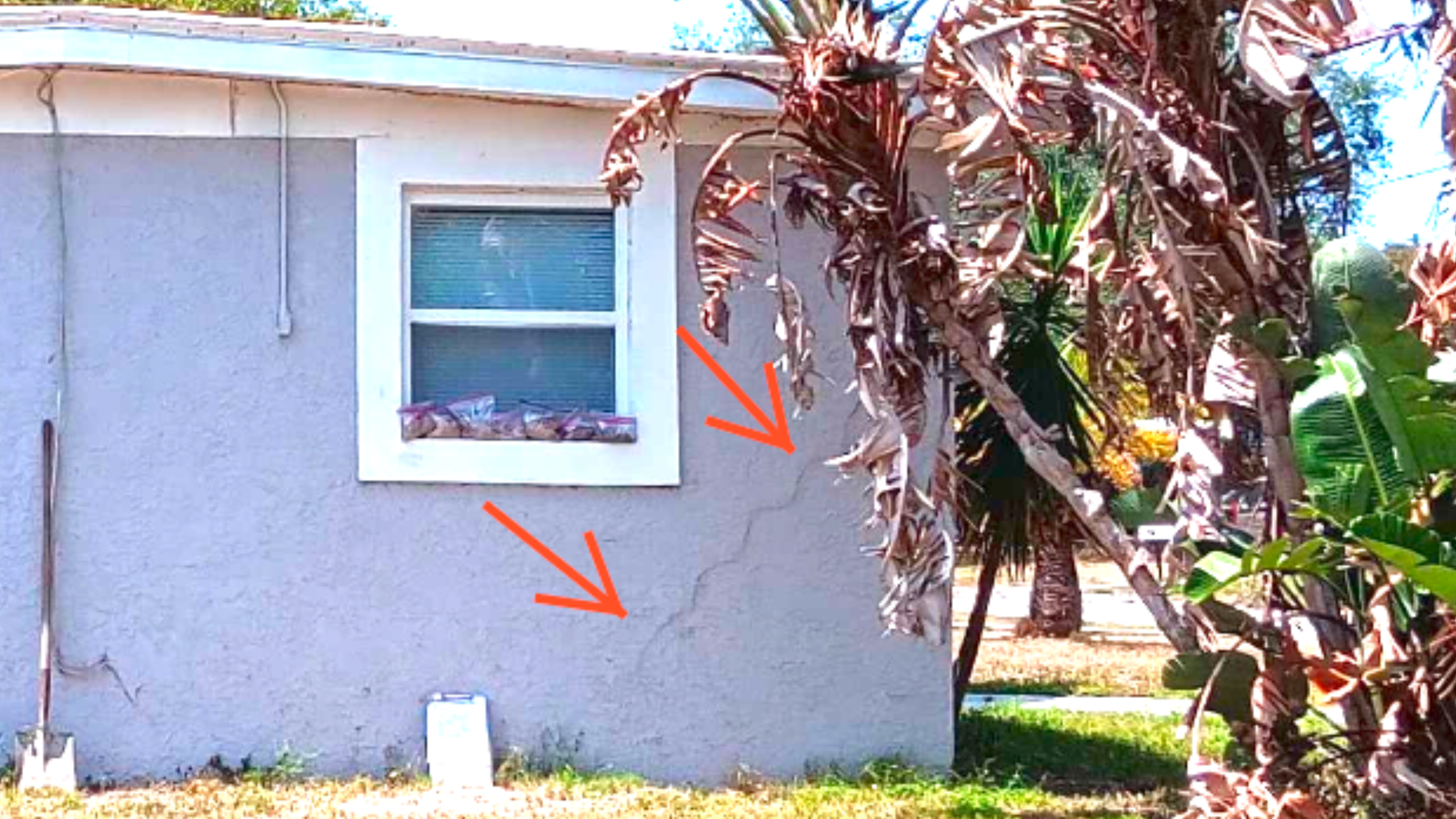
How It Differs From Hairline Cracks
Hairline cracks are narrow, shallow lines that run along the surface without displacing any material. Spalling is different because actual concrete mass breaks away, leaving a pit, chip, or flaked depression behind.
While hairline cracks can stay stable for years, larger breaks may eventually require professional foundation crack repair to prevent structural compromise. Spalling creates an open wound where moisture penetrates aggressively, worsening the damage after each rain event.
Why Small Chips Can Point To Bigger Wear
A single small chip might seem insignificant, but it often signals that the surface layer has already weakened across a larger area. When the paste layer at the top separates from the aggregate below, chips and pop-outs appear where stress concentrates first, typically at edges, joints, and high-traffic zones.
The visible chip is rarely the full story. Understanding what causes foundation cracks in Florida helps determine if the damage extends beyond what is visible at a glance.
Why It Happens In Florida
Florida’s environment places concrete under a specific kind of stress that differs from that in colder northern climates, where freeze-thaw cycles drive most spalling. Here, the culprits are moisture, salt, poor drainage, and soil movement working in combination.
Moisture Intrusion And Repeated Saturation
Florida averages over 50 inches of rain per year in many parts of the state, and concrete that sits in standing water after storms repeatedly absorbs moisture through its pores. Learning how to maintain concrete foundations involves managing moisture exposure to prevent early degradation. Over time, water infiltration dissolves the cement paste, weakening the surface layer.
The wet-dry cycling that happens after each rain event creates expansion and contraction in the slab. That repeated stress breaks down the bond between the surface and the underlying aggregate, producing the flaking and chipping characteristic of spalling.
Salt Exposure Near Coasts And Pools
Airborne salt particles from coastal environments deposit on concrete surfaces and draw moisture into the material, accelerating surface breakdown. Pool decks face a related problem, where chlorinated water and pool chemicals create a chemical environment that degrades the surface paste layer over time.
Salt penetration is particularly damaging because it also corrodes embedded steel reinforcement. Once rebar starts to rust, it expands within the concrete, cracking it from the inside out and causing spalling that extends well beyond the surface.
Poor Drainage, Soil Movement, And Settlement
When water has no clear path away from a concrete slab, it pools against or beneath it, saturating the soil underneath. In Florida’s sandy and silty soils, that saturation causes the ground to shift, which creates voids beneath the slab.
A slab with no support beneath it will flex under load. That flexing stresses the surface, cracks form, and spalling follows at those stress points. Poor drainage does not just damage the concrete surface; it destabilizes the ground the concrete depends on.
Where Property Owners Usually Notice It First
Spalling rarely appears across an entire property at once. It tends to show up in the spots that take the most abuse, where moisture collects, or where the concrete was poured thinner or finished improperly.
Driveways, Sidewalks, And Entry Walks
Driveways experience repeated load stress from vehicles, and that weight can amplify any weakness in the surface layer. Entry walks and sidewalks near the street often collect water runoff, keeping them wet longer after rain.
Both surfaces are also exposed to full sun, which dries them rapidly after saturation and accelerates the wet-dry cycling that breaks down concrete paste. Spalling near expansion joints and at the edges of slabs is especially common here.
Patios, Pool Decks, And Outdoor Slabs
Pool decks are exposed to a chemically aggressive environment. Between chlorine splash-out, pool water seepage, and the slab’s constant exposure to Florida sun and rain, the surface paste layer breaks down faster than on most other concrete surfaces.
Patios adjacent to garden beds or lawn irrigation also absorb more moisture, especially if the grade slopes slightly toward the slab rather than away from it. Watch for flaking and soft spots in those areas first.
Garages, Foundations, And Structural Concrete
Garage floors often spall near the entrance, where rainwater tracks in and sits, and near the base of walls where moisture migrates up from the ground. These areas tend to stay damp longer than the center of the slab.
Structural concrete, including foundation slabs and grade beams, is the most critical location to notice spalling. Knowing concrete foundation repair essentials is vital, as damage at this depth can affect structural integrity over time.
Warning Signs You Should Not Ignore
Some signs of concrete surface damage are easy to write off as cosmetic. These specific patterns are worth taking seriously, because each one points to a different stage or type of deterioration.
Flaking, Scaling, And Pop-outs
Scaling looks like thin layers peeling away uniformly from the surface, often in sheets. It usually happens when the surface paste layer was weakened during finishing or curing. Pop-outs are small, cone-shaped holes caused by reactive aggregates or trapped moisture expanding under the surface.
Both scaling and pop-outs are early-stage warnings. They tell you the surface bond has failed in at least one way, which makes the concrete more vulnerable to deeper moisture damage going forward.
Rust Stains And Exposed Reinforcement
Rust stains on a concrete surface are a serious signal. They mean moisture has reached the embedded steel reinforcement, the rebar has started to oxidize, and the rust is migrating outward through the concrete. Rust expands at roughly three times the volume of the original steel, which creates internal pressure that cracks and spalls the surrounding concrete.
If you can see the rebar itself, the situation is urgent. Exposed steel corrodes faster when it comes into contact with air, and the structural capacity of the slab or wall begins to decline.
Uneven Areas, Soft Spots, And Water Pooling
A surface that was once flat but now has a slight depression or raised lip often signals that the ground beneath has shifted. Soft spots, areas where the concrete surface feels spongy or gives slightly underfoot, can mean the slab has lost support from below.
Water that pools on a concrete surface that used to drain is another sign. It means the slab has settled unevenly, and those low spots now hold water after every rain, which accelerates surface deterioration considerably.
How Damage Is Evaluated And Repaired
The right repair depends on how deep the damage goes, what caused it, and whether the ground beneath the slab is stable. Getting that diagnosis right before committing to a repair method saves both time and money.
When A Surface Patch May Be Enough
Surface-level spalling that affects only the top quarter-inch of the concrete, with no exposed reinforcement, soft spots, or evidence of settlement, is often a candidate for resurfacing or patching. A bonding overlay or polymer-modified repair mortar can restore the surface and seal it against further moisture intrusion.
The key condition is that the slab beneath the damage is still structurally sound and fully supported. When determining a fix, choosing between polyurethane vs epoxy for concrete repair depends on the specific nature of the failure.
When Lifting Or Stabilization May Be Needed
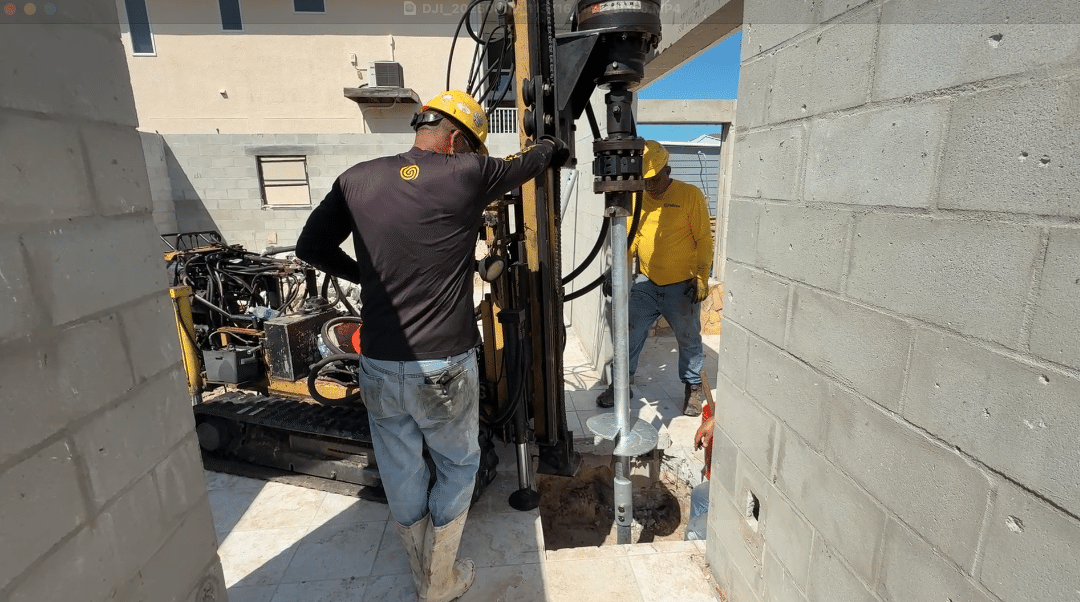
When spalling appears alongside uneven surfaces, water pooling, or visible settlement, the concrete itself may not be the primary problem. Voids beneath the slab can form when saturated soil erodes or shifts, leaving the concrete unsupported and prone to cracking and surface failure under load.
Professional concrete lifting and repair utilizes polyurethane foam injection to fill those voids and restore support. This addresses the root cause rather than just the surface symptom.
When Structural Assessment Matters Most
Spalling near a foundation, at a structural wall, or on load-bearing concrete elements calls for professional evaluation before any repair work begins. The concern is not just surface aesthetics; it is whether the structural capacity of that concrete member has been compromised.
If reinforcement is exposed or cracking runs through the slab, various cracked foundation repair techniques may be considered. A structural assessment determines whether repair is viable or if replacement is safer.
Keeping Concrete In Better Shape Over Time
Small, consistent habits protect concrete from the moisture and drainage conditions that drive spalling in Florida’s climate. The goal is to interrupt the cycles of saturation and surface stress before they accumulate into real damage.
A Simple Inspection Routine For Homeowners
Walk the concrete surfaces on your property every three to four months, specifically after heavy rain events. Look for:
- New chips, flaking, or shallow depressions in the surface
- Discoloration or rust streaks near joints or edges
- Areas where water is pooling that did not pool before
- Any surface that sounds hollow when you tap it with your knuckle
Catching changes early means repairs stay small. A chip repaired in month three is far simpler than the same area left unaddressed for a year in Florida’s wet season.
Drainage And Water Control Habits That Help
Keep gutters and downspouts clear so roof runoff moves away from concrete slabs and foundation edges. Make sure soil grading around the perimeter of your home slopes away from the foundation at a rate of about six inches over the first ten feet.
Seal concrete surfaces every two to five years with a penetrating water repellent sealer. Sealing does not make concrete waterproof, but it significantly slows moisture absorption and reduces the wet-dry cycling that breaks down the surface paste layer over time.
Avoid letting sprinkler systems spray directly onto driveways, patios, or pool decks. Repeated irrigation overspray keeps surfaces wet longer than necessary and introduces additional moisture cycles that compound the effects of natural rain exposure.
Frequently Asked Questions
These questions often come up when property owners begin investigating concrete surface damage, so the answers here are specific to Florida conditions and practical situations rather than general textbook definitions.
What causes concrete to chip, flake, or break apart on the surface?
Spalling happens when the surface layer of concrete separates from the material beneath it. In Florida, the main drivers are repeated moisture saturation and drying cycles, salt exposure near coastal areas and pools, and soil movement beneath the slab that causes flexing and cracking under load.
How much does it typically cost to repair damaged concrete surfaces?
Surface-level repairs using patching or resurfacing products generally run between $3 and $8 per square foot. Deeper damage that requires full slab sections or polyurethane foam lifting to address voids beneath the surface costs more and depends on the extent of settlement and the area involved.
What is the difference between surface scaling and deeper concrete damage?
Scaling is a thin, uniform peeling of the top layer and typically results from finishing or curing issues. Deeper spalling removes more material, exposes the aggregate or rebar below, and often signals moisture intrusion, reinforcement corrosion, or structural movement rather than a surface-only problem.
What are the best repair methods for fixing chipped or broken concrete?
For shallow damage without settlement, a bonded polymer-modified patch mortar or concrete resurfacer works well when applied to a properly prepared surface. When voids exist beneath the slab or the concrete has settled, polyurethane foam injection restores support and lifts the slab before any surface repair is applied.
Is damaged or flaking concrete a safety hazard, and when should it be addressed urgently?
Yes, it can be. Uneven spalled surfaces create trip hazards, especially on pool decks, walkways, and driveways. Exposed reinforcement corrodes quickly once it contacts air, and that corrosion accelerates structural damage. Any slab that has settled unevenly or has soft spots should be assessed promptly rather than deferred.
Why can concrete start deteriorating within just a couple of years after installation?
Early deterioration usually points to a problem during the original pour, such as overworking the surface during finishing, which brings excess water to the top and creates a weak paste layer. Inadequate curing time and a concrete mix without proper water-to-cement ratios also produce surfaces that fail within the first few years, particularly in Florida’s humid climate.
Stop Guessing and Start Fixing From the Ground Up
Concrete spalling rarely stays the same size. Once the surface layer starts breaking down, moisture gets in faster, the damage accelerates, and what started as a few chips becomes a large-scale repair project. Acting while the signs are still minor keeps your costs and your stress considerably lower.
Florida’s climate adds a layer of urgency that property owners in drier states do not face. The combination of heavy seasonal rain, salt air, sandy soil, and intense sun creates conditions in which concrete deteriorates faster, and the ground beneath a slab can shift with little warning.If you are seeing surface flaking, uneven slabs, or water pooling where there was none before, schedule a free inspection with Helicon. Getting a professional set of eyes on the damage costs nothing and gives you a clear answer on whether a surface repair is enough or whether something deeper needs to be addressed before the problem gets worse.