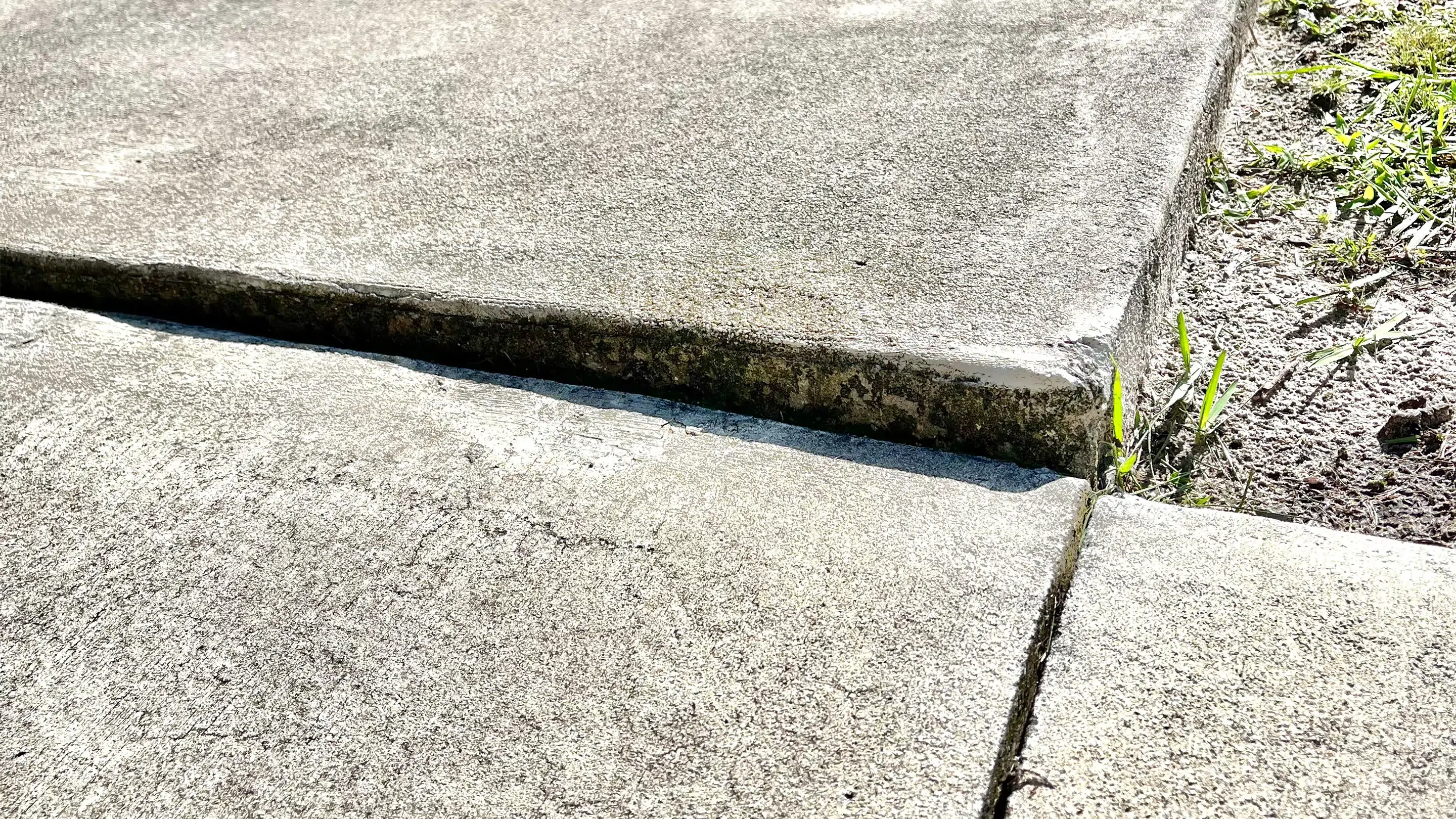
You notice it every time you walk to the mailbox: one slab of your sidewalk sits a half inch higher than the next, and your toe catches it more often than you’d like to admit. Maybe it’s the driveway instead, where a panel near the garage has sunk enough to hold a puddle after every storm, or the pool deck, where a lifted edge has become the spot you warn guests about before they head outside barefoot.
Concrete trip hazards form when one section of a walkway, driveway, or patio settles or lifts relative to the slab beside it, creating a ledge that can catch a foot mid-step. In Florida, this happens more often and faster than in most states because of what’s happening beneath the ground.
Helicon has worked on problems like this since 2004, and a raised edge or sunken panel is almost always a symptom of movement underneath, not just surface wear. This guide covers how to spot a dangerous offset, what’s causing the movement, and which repair actually fixes the problem instead of masking it.
How to Spot a Dangerous Slab Offset
You’ve probably already spotted the section that worries you: a raised joint by the front steps or a dip in the walkway that fills with water after rain. The question is whether it’s just cosmetic or something you need to deal with soon. Not every uneven spot is dangerous, but some clearly are.
Measure Changes in Level and Document the Area
Grab a tape measure and check the height difference between two sections of concrete at the joint or crack. The U.S. Access Board’s ADA Standards for Accessible Design set the bright line for public and commercial walkways: a change in level up to a quarter inch can stay square-edged, anything between a quarter and half inch must be beveled, and anything beyond half an inch needs a ramp. Many contractors use that same quarter-inch to half-inch range as a rule of thumb for residential trip-hazard risk too.
Take a photo dated with a timestamp, and note the location on your property. This documentation matters if you ever need to show when a hazard first appeared, especially for rental or commercial properties.
Watch for Cracks, Broken Edges, and Discoloration
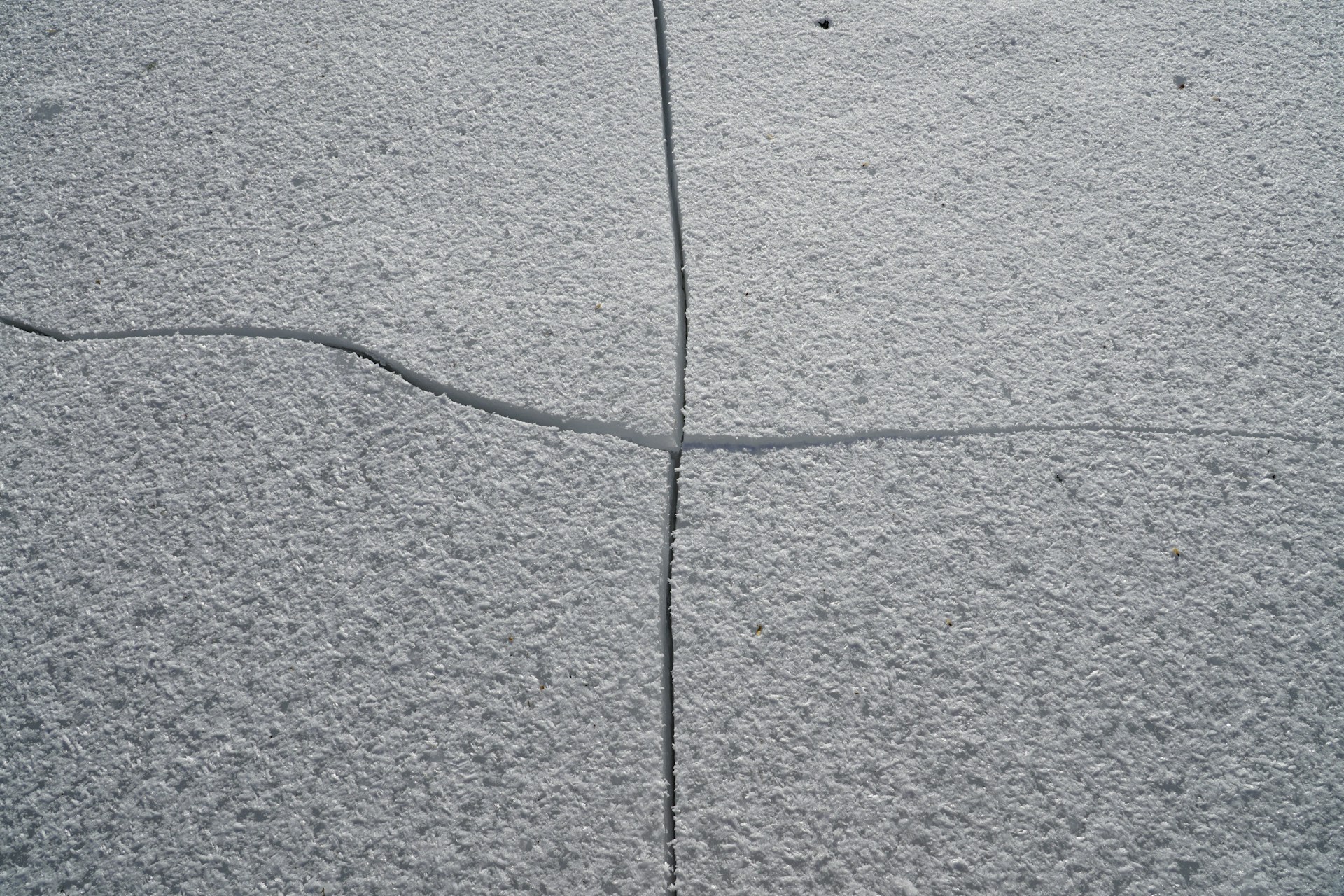
Cracks that run wide or deep often mean the slab is losing support underneath, not just aging on the surface. Broken or crumbling edges are also common where a lifted panel rubs against its neighbor over time.
Discoloration and water pooling near a crack usually point to drainage problems feeding soil erosion below the slab.
Check Driveways, Sidewalks, Pool Decks, and Entry Paths
These four areas take the most foot and vehicle traffic, and they sit closest to gutters, downspouts, and irrigation lines. That makes them the most common spots for uneven sidewalks and driveways to develop in Florida homes.
Pool decks deserve extra attention since ADA compliance often comes into play for shared or rental properties.
Why Florida Concrete Sinks, Tilts, or Lifts
That sinking driveway panel didn’t happen overnight, even if you only noticed it recently. Somewhere below the surface, soil has shifted, washed away, or compressed enough that the concrete above it no longer has full support. It’s a slow process until, suddenly, you’re stepping over a ledge every day.
Helicon’s crews have traced this pattern across driveways, walkways, and patios throughout the state since 2004, and the underlying cause almost always comes back to what’s happening in the soil, not the concrete itself.
Sandy Soil Settlement and Washout Beneath Slabs
Florida soil is loose and granular by nature, which means it doesn’t compact the way denser soils do. Over time, water moves through it and carries fine particles away, leaving small voids beneath the slab.
Once a void forms, the concrete above it has nothing left to rest on. It sinks under its own weight or a car, creating the sunken panel you’ve noticed.
Heavy Rain, Poor Drainage, and Erosion
Florida’s rainy season delivers heavy, repeated downpours that overwhelm poor drainage systems. Water that should flow away from your foundation instead pools next to it, seeping into the soil below your slab.
This constant cycle of saturation and drying accelerates erosion, especially where gutters, downspouts, or grading direct water toward the concrete instead of away from it.
Tree Roots, Root Intrusion, and Seasonal Movement
Root intrusion is another common driver of uneven slabs, particularly in older, established neighborhoods. As tree roots grow, they push against the underside of a slab, lifting one section while leaving the rest at its original grade.
Even without dramatic root growth, Florida’s seasonal wet and dry cycles cause soil to expand and contract, contributing to gradual structural damage over the years.
Choose the Right Repair for the Cause
That raised edge on your walkway might look like a quick fix, but the right repair depends entirely on what’s happening underneath it. A small lip calls for a different solution than a slab that’s sunk several inches into a void.
Helicon has repaired driveways, sidewalks, and patios across Florida since 2004, matching the method to the cause rather than defaulting to the same fix for every job. That distinction is often what separates a repair that lasts from one that fails again within a year.
Keep reading to learn the three most common approaches: grinding, foam injection, and replacement, and when each one makes sense. Because Florida’s sandy soils create voids rather than solid, stable ground, lifting the slab back into place often works better than simply patching the surface.
When Concrete Grinding Can Remove a Small Raised Edge
Concrete grinding uses a mechanical grinder to shave down a raised lip until it’s flush with the surrounding slab. It’s fast, affordable, and works well for offsets under roughly an inch with no ongoing settlement.
However, grinding alone can fail when the offset is too large, or the slab is too thin, since shaving the surface doesn’t address a void underneath. Surface preparation and proper PPE matter here, since grinding produces fine concrete dust.
How Polyurethane Foam Injection Lifts a Settled Slab
Foam injection, sometimes called concrete raising or slab jacking, involves drilling small holes into the sunken slab and injecting an expanding polyurethane foam beneath it. The foam fills the void, then lifts the concrete back to its original level.
This method is non-invasive compared to replacement, and it cures fast enough that walkways are often usable again within hours.
When Cracks and Severe Damage Call for Replacement
Sometimes a slab has cracked so extensively, or settled so unevenly, that lifting it isn’t practical. In these cases, slab replacement is the more reliable long-term option, even though it costs more and takes longer.
A professional assessment can tell you which category your concrete falls into before you commit to either path.
Stop the Problem From Returning
Fixing a raised or sunken slab feels like the end of the problem, until a similar bump shows up somewhere else on the same walkway a year later. That’s frustrating, especially after you’ve already paid for a repair once.
Correct Drainage Before It Creates New Voids
If gutters, downspouts, or grading are directing water toward your slab, fix that first. Poor drainage is one of the most common reasons soil erosion continues even after a repair.
Extending downspouts, regrading soil away from the slab, and adding drainage channels near problem areas all reduce the water reaching the ground beneath your concrete.
Manage Tree Roots Without Harming the Tree
Root barriers installed between a tree and your walkway can redirect root growth away from the slab without requiring you to remove a mature tree. This is a common approach for Florida properties where established trees sit close to sidewalks or driveways.
Early tree root management prevents the kind of root intrusion that lifts concrete years down the road.
Plan Joints and Maintenance Around Future Movement
Proper joint spacing allows concrete to expand and contract without cracking under pressure. If your expansion joints are too far apart or poorly placed, keep this in mind during any repair or replacement project.
A few maintenance habits worth building into your routine:
- Walk your property every few months looking for new cracks or height changes
- Clear debris from expansion joints so they can function properly
- Watch for water pooling after rain and address drainage issues early
- Keep an eye on tree roots near walkways as they mature
Protect Visitors, Tenants, and Your Property
If you manage rental units, an HOA community, or a commercial property, that uneven sidewalk isn’t just an inconvenience; it’s a potential liability. A guest, tenant, or customer who trips can turn a delayed repair into a much bigger problem.
Address Accessibility Concerns on Public Routes
Public and commercial walkways generally need to meet ADA standards for accessibility, which set specific limits on surface changes and slopes. A raised joint that seems minor to you may still violate ADA compliance requirements if your property serves the public.
Municipalities can and do cite property owners for accessibility violations tied to damaged concrete, so it’s worth checking your walkways against these standards directly.
Use Routine Inspections to Reduce Risk
A quarterly walk-through of your property, checking sidewalks, parking areas, and entry paths, catches problems while they’re still small and inexpensive to fix. Documenting each inspection also protects you if a liability question ever comes up later.
Know When to Request a Professional Assessment
If you’re unsure whether a hazard needs immediate attention, a free consultation with a concrete specialist removes the guesswork. Not sure if that crack is cosmetic or structural? Helicon’s free inspection gives you a clear answer with no obligation.
Frequently Asked Questions
How can I fix an uneven concrete sidewalk that creates a tripping risk?
The right fix depends on the offset size and whether the slab is still settling. Small edges under an inch often respond well to grinding, while sunken panels usually need foam injection to lift and stabilize the slab from below.
Can concrete grinding level a raised section of my driveway or walkway?
Grinding works well for offsets under about an inch where the slab itself is stable and not actively sinking. For larger offsets or slabs still settling into a void, grinding alone won’t solve the underlying problem.
What height difference in concrete is considered a tripping hazard under accessibility standards?
The U.S. Access Board’s ADA Standards for Accessible Design set a quarter-inch threshold for changes in level on public and commercial walkways, where anything taller must be beveled or ramped. Many contractors also treat anything beyond a half inch as hazardous enough to warrant repair on residential surfaces.
Is concrete grinding or replacement the better option for a lifted slab?
Grinding suits minor, stable offsets, while replacement makes more sense for slabs with extensive cracking or repeated settlement. A professional assessment can confirm which category your specific slab falls into before you commit to either approach.
What causes concrete slabs to lift, sink, or become uneven in Florida?
Sandy soil erosion, poor drainage, tree root growth, and heavy seasonal rainfall are the leading causes statewide. These conditions create voids beneath slabs, leading to sinking, tilting, or lifting over time.
Can a contractor repair a concrete trip hazard without removing the entire slab?
Yes, methods like grinding and polyurethane foam injection both repair trip hazards without full slab removal in most cases. These non-invasive options restore a level surface faster and with less disruption than tearing out and replacing the concrete.
Restore a Safe, Even Surface With Confidence
You’ve looked at the raised edge or sunken panel enough times now to know it isn’t going away on its own. The good news is that fixing it doesn’t have to mean tearing out your driveway or living with a mismatched patch of new concrete.
Helicon has restored uneven walkways, driveways, and pool decks across Florida since 2004, using methods suited to the specific cause behind each one. Homeowners who’ve dealt with the same nagging offset you’re seeing now have found the right fix is often faster and less disruptive than expected.
Schedule your free inspection and find out exactly what your property needs. A trip hazard doesn’t need to stay a daily risk once you know which repair fits your situation.