You notice a crack running across your living room floor, and a door that closed fine last year now sticks every time you try to close it. These signs often point to movement beneath the slab, and slab foundation repair in Florida is one of those problems that gets significantly more expensive the longer you wait.
When the ground under your home shifts, the concrete slab shifts with it. That can mean uneven floors, cracked walls, and gaps where walls meet the floor. The good news is that once you understand what is happening and why, the path to a stable, safe home becomes much clearer.
This article walks you through exactly what causes slab problems in Florida, how to spot them early, how professionals diagnose the real issue, and which repair methods actually hold up long-term. Helicon Foundation Experts contributed practical guidance here, and by the end, you will know which questions to ask and which steps to take next.
Why Slab Foundations Struggle In Florida
Florida’s geology creates conditions that constantly challenge slab foundations, making soil movement and moisture the two biggest factors homeowners need to understand. What happens below the slab is almost always more significant than what you can see above it.
Soil Movement, Moisture Swings, And High Water Tables
Florida’s soils are often sandy or silty, which means they shift easily under load and do not hold their shape well when water moves through them. During the rainy season, water saturates the ground, leading to expansive soil foundation problems as the earth pushes against the concrete. When dry conditions follow, that same soil contracts and shrinks, leaving voids or gaps directly beneath the slab.
High water tables compound the problem. In many parts of Florida, the water table sits close enough to the surface that even minor changes in rainfall can affect soil stability. That cycle of expansion and contraction, repeated over months and years, gradually undermines the support your slab depends on.
Sandy soils also do a poor job of distributing a structure’s weight evenly. When one section of soil weakens faster than another, differential settlement occurs. That means one corner or edge of your slab sinks while the rest stays put, which is what creates those telltale cracks and sloped floors.
Drainage Problems, Erosion, And Sinkhole Risk
Implementing proper drainage solutions for slab homes is critical, as poor drainage is one of the most overlooked causes of foundation damage. When gutters direct water toward the house instead of away from it, or when yard grading slopes toward the foundation, water collects around the perimeter and slowly erodes the soil underneath. Over time, that erosion creates voids, and voids mean unsupported concrete.
Florida’s karst topography adds another layer of risk. Much of the state sits on limestone bedrock that can dissolve when acidic groundwater passes through it. That dissolution process creates underground cavities, which are the precondition for sinkholes. A slab sitting above a developing void has no support, and it will crack or drop when that void grows large enough.
Coastal properties and homes near bodies of water face additional erosion pressure from tidal movement and storm surge, which can strip soil away from beneath slabs more quickly than rainfall alone.
Early Clues Something Is Moving Under The House
Most slab movement gives you warning signs weeks or months before the damage becomes severe. The challenge is knowing which signs are minor cosmetic issues and which indicate structural movement that needs professional attention.
Cracks, Sticking Doors, And Uneven Floors
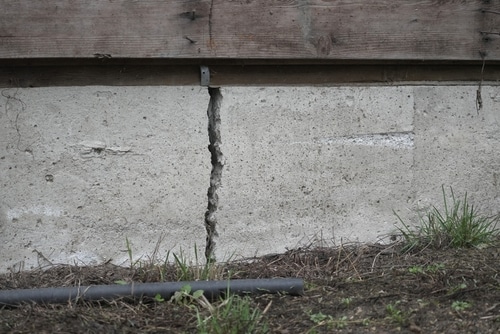
Cracks in a concrete slab are not all equal. Hairline surface cracks from curing or temperature changes are common and usually not structural. The ones that warrant concern are wider than a quarter inch, run diagonally, or show vertical displacement, with one side of the crack sitting higher than the other.
Stair-step cracks in brick or block walls run at an angle along the mortar joints and are a classic sign that foundation repair for Florida homes is necessary. Doors and windows that suddenly stick or refuse to latch are another reliable signal. When a slab shifts, it distorts the frame of the building above it. Door frames go slightly out of square, which is why a door that always worked fine suddenly drags against the floor or jams at the top.
Uneven floors are easy to feel but easy to dismiss. If you place a marble on your floor and it rolls consistently in one direction, that is a measurable sign of slope. A difference of more than an inch over ten feet is a threshold worth taking seriously.
Outdoor Warning Signs Around The Perimeter
The outside of your home can tell you just as much as the inside. Walk the perimeter and look for gaps between the foundation wall and any attached structures, such as a porch, garage slab, or front steps. When the main slab settles but attached concrete does not, those gaps widen visibly.
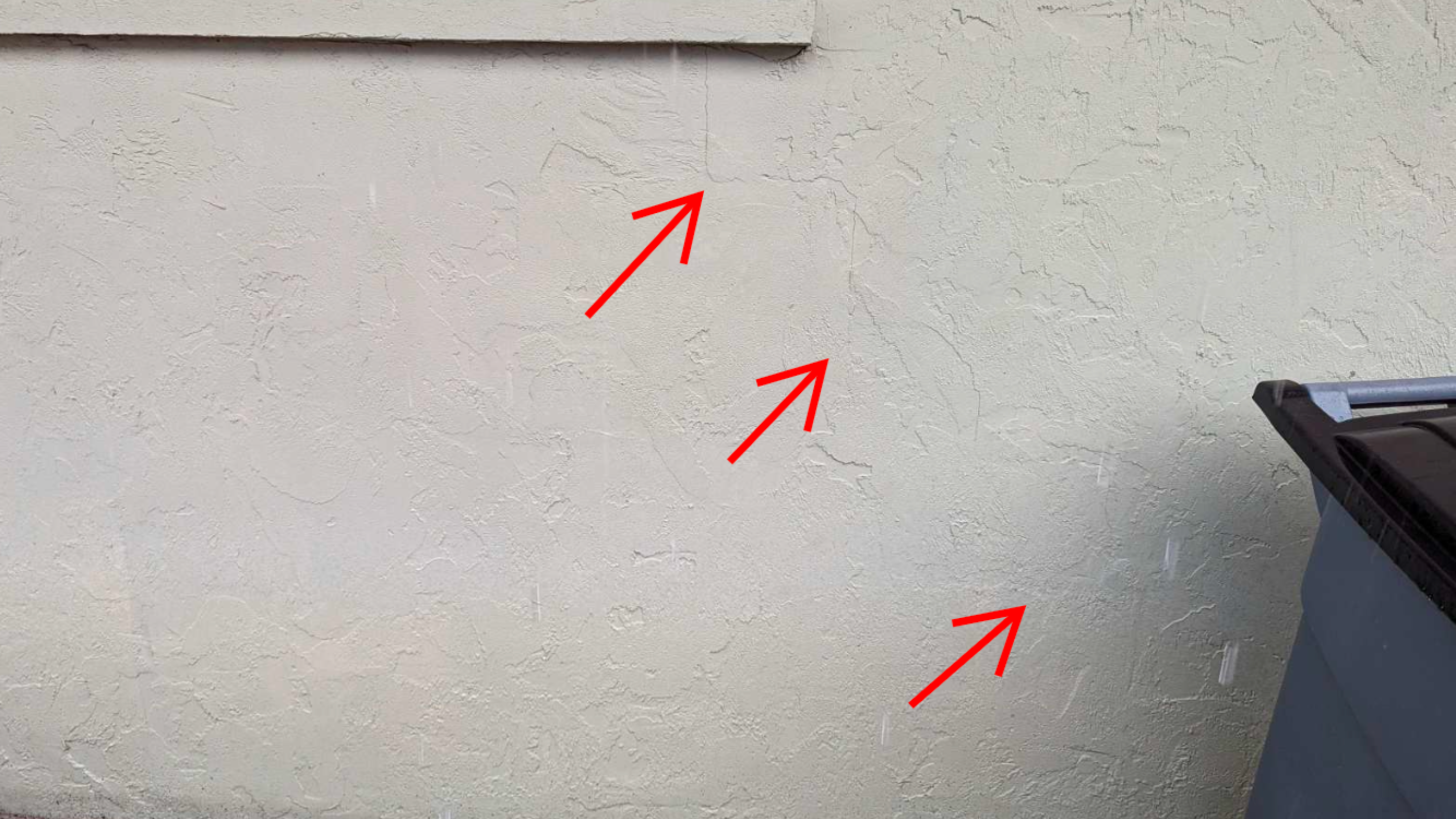
Depressions in the yard, especially circular ones that appear after rain, can indicate subsurface erosion or developing voids. Water that pools against the foundation and does not drain within a few hours points to both a drainage problem and a potential soil risk. Cracks in exterior brick or stucco that run diagonally from window corners are worth photographing and monitoring for growth.
How Professionals Diagnose The Real Problem
A thorough inspection covers far more than visible cracks, because the soil conditions beneath the slab often tell a more complete story than the surface damage alone. Getting the diagnosis right determines whether the repair actually holds.
What An Inspection Usually Looks At
A professional foundation inspection starts with a visual survey of the entire property, both inside and out. To understand how foundation repair is done effectively, the inspector checks walls, floors, door frames, and ceilings for patterns in the cracking. A level or slope-measurement tool helps quantify how much the floor has dropped or tilted in different areas.
Outside, the inspector looks at grading, drainage patterns, and any signs of soil erosion or void formation. They examine the perimeter for separation between the slab and adjoining structures. In Florida, a thorough inspector will also ask about the property’s history, including nearby construction, past flooding, or known sinkhole activity.
Depending on what the visual inspection reveals, additional testing, such as ground-penetrating radar or soil borings, may be recommended to identify voids or unstable layers beneath the slab that are not visible at the surface.
Why Surface Damage Does Not Tell The Whole Story
A crack in a wall can look minor while the soil beneath the slab has a void the size of a car. Conversely, a dramatic-looking crack in a tile floor sometimes traces back to normal concrete shrinkage rather than structural settlement. Surface damage is a clue, not a diagnosis.
Soil conditions vary significantly even within a single property. One corner of your slab may rest on compacted, stable material while another sits above a layer of loose fill or eroded sand. That variation is invisible without directly probing the ground. Achieving permanent foundation repair in Florida requires a plan that addresses the subsurface issues rather than just what is visible above ground.
Florida’s sinkhole risk makes subsurface investigation especially important. A slab can show relatively minor surface cracking while the ground below is actively washing out. By the time surface damage looks serious, the underlying void may already require more extensive remediation.
Repair Methods That May Be Used
The right repair method depends on what is causing the movement, how far the slab has settled, and what the soil conditions reveal. No single approach works for every situation, and a good contractor will match the method to the specific problem rather than applying one technique to every job.
Helical Piers For Settlement And Structural Support
Helical piers are steel shafts with helical plates that are screwed into the ground past unstable surface soils until they reach a stable load-bearing layer. Once installed, they transfer the structure’s weight directly from the weak soil to the stable stratum.
This method works well when a slab has settled due to soil compression or erosion beneath it. The piers can often be installed with minimal excavation, and in some cases, concrete slab lifting occurs simultaneously to restore the home’s elevation. Because the load is carried by deeper, stable material, the repair addresses the root cause rather than just patching the surface.
Polyurethane Injection For Voids And Slab Support
Commonly known as polyurethane foam lifting, this process involves drilling small holes through the slab and injecting expanding foam beneath it. The foam fills voids, bonds with the soil, and lifts the slab back toward level as it expands. It cures quickly, often within 15 to 30 minutes, so the surface can typically be used the same day again.
This method works particularly well for slabs that have dropped due to soil washout or void formation rather than deep structural settlement. It is minimally invasive compared to traditional mudjacking, which uses a heavy cement slurry that adds weight to an already compromised soil layer. The foam is lightweight, waterproof, and does not wash out over time the way cement-based fill can.
Grouting And Soil Stabilization For Weak Ground
When the underlying soil is generally weak or has been compromised by sinkhole activity, grouting can strengthen the soil itself rather than just support the slab above it. Compaction grouting injects a thick grout mixture under pressure to densify loose soil.
Chemical grouting uses injected resins or polyurethane to bind soil particles together and fill micro-voids that are too small for conventional grouting to reach.
Soil stabilization is often paired with other repair methods, particularly in sinkhole remediation, where the goal is both to fill the underground void and to strengthen the surrounding material so it does not continue to erode.
For commercial properties or homes with heavily compromised subsoil, grouting may be the foundation of the entire repair plan before any lifting or underpinning begins.
What Homeowners Can Do Right Away
You do not need specialized equipment to document your foundation’s condition, and the records you create now will be genuinely useful during a professional inspection. Acting early almost always reduces both the scope and the cost of repair.
A Simple Walkaround To Document Changes
Set aside 20 minutes to do a thorough walkaround of your property and document what you find. Use your phone to photograph every crack you can locate, inside and outside the house. Include a ruler or coin in the frame so the width is visible. Note the date on each photo, since dated images help a professional determine whether a crack is active or stable.
Step-by-step documentation routine:
- Walk each room and photograph floor cracks, wall cracks, and ceiling cracks.
- Check every door and window. Note which ones stick, drag, or fail to latch.
- Place a level on the floor in multiple rooms and photograph any readings that show a slope.
- Walk the exterior perimeter and photograph foundation cracks, gaps between structures, and any areas where the ground has sunk or where water has pooled.
- Check brick or stucco for diagonal stair-step cracks starting at window or door corners.
- Record any creaking sounds you have noticed and in which rooms.
Repeat this routine every 30 days and compare photos. A crack that has not changed in three months is far less urgent than one that has visibly widened.
When To Schedule An Inspection Instead Of Waiting
Some signs do not justify a waiting period. If you notice a crack wider than half an inch, a section of floor that has dropped noticeably in a short time, or a door that suddenly will not close at all, these warrant a professional inspection rather than continued monitoring.
Florida homeowners should also schedule an inspection after any of the following: a major storm or flooding event near the foundation, a sudden appearance of a circular depression in the yard, notification of sinkhole activity in the neighborhood, or the start of nearby construction that involves excavation or heavy equipment. These events can accelerate movement that was previously slow enough to monitor.
Choosing A Long-Term Fix Without Guesswork
The difference between a repair that lasts and one that fails within a few years usually comes down to how thoroughly the contractor understood the problem before proposing a solution. Asking specific questions up front protects you from both underbuilt fixes and unnecessary work.
Questions To Ask About Scope, Disruption, And Timeline
Before you agree to any repair plan, ask the contractor to explain exactly what they found during the inspection and why the recommended method addresses that specific finding. A contractor who cannot connect the diagnosis to the repair clearly is a red flag.
Practical questions worth asking include:
- Will I need to leave my home during the repair? Many slab repairs are minimally invasive and do not require a vacancy, but larger projects may require one.
- How long will the work take from start to finish? This includes both the repair itself and any cure or settling time before normal use resumes.
- What does the crew do to protect landscaping and interior finishes? Reputable contractors take care to leave the property as they found it.
- Is there a warranty, and what does it cover specifically? Ask whether the warranty covers both the repair method and the structure’s long-term performance.
- Will you provide documentation of the diagnosis and the repair performed? Written records matter if you ever sell the home or need to file an insurance claim.
How To Weigh Cost Against Future Structural Risk
Foundation repair costs in Florida range from roughly $500 for minor crack injection to more than $30,000 for extensive pier installation and grouting. That range reflects the wide variation in problem severity, not arbitrary pricing. Seeking slab foundation repair as an early-stage investment almost always costs less than addressing the same problem after it has progressed.
The risk of delaying is rarely just the repair cost itself. Settlement that continues unchecked can damage plumbing lines running beneath the slab, compromise load-bearing walls above it, and affect resale value far beyond the direct repair expense. Buyers and their inspectors will find foundation movement, and undisclosed issues create liability.
When comparing estimates, look at what each proposal actually addresses. A lower quote that addresses only the visible crack, without stabilizing the soil beneath it, is not a bargain if the same crack reappears in 18 months. Ask each contractor to explain the long-term mechanism of their proposed solution, not just the method name.
Frequently Asked Questions
These questions come up consistently among Florida homeowners who are trying to decide whether a crack is serious and what to do next.
What are the most common signs that a concrete slab foundation needs repair?
The most common signs include diagonal cracks in walls, cracks in the slab itself, doors and windows that stick or no longer close properly, and floors that feel uneven or slope noticeably in one direction. Gaps between walls and floors, or between a porch slab and the main foundation, are also reliable indicators of movement. If multiple signs appear at the same time or worsen over a few weeks, a professional inspection is the appropriate next step.
How much does it typically cost to repair a slab foundation in Florida?
Repair costs in Florida generally range from around $500 for minor crack injections to more than $30,000 for extensive pier installation or sinkhole remediation. The final cost depends on the cause of the damage, the severity of the settlement, the required repair method, and the size of the affected area. Getting a detailed, written estimate that explains the scope of work helps you compare quotes accurately.
What causes slab foundations to crack or settle in Florida’s soil and climate?
Florida’s sandy and silty soils shift easily with changes in moisture, which causes slabs to settle unevenly when soil contracts during dry periods or erodes during heavy rain. High water tables, poor drainage, and the state’s karst limestone geology all contribute to void formation beneath slabs. Repeated cycles of saturation and drying gradually reduce the soil’s ability to support the weight above it.
How long does slab foundation repair usually take from inspection to completion?
Many repairs, including polyurethane foam injection and small-scale helical pier installations, are completed within one to two days. More extensive projects involving deep grouting, multiple pier placements, or sinkhole remediation can take several days to a week or more. The inspection itself is typically completed in a single visit, and a written estimate is usually provided shortly thereafter.
Which repair methods are most effective for slab settlement and cracking?
Helical piers are well-suited for foundations that have settled when unstable soil lies above a stable load-bearing layer, as they transfer the structural load past the problem zone. Polyurethane foam injection works well for slabs that have dropped due to voids or soil washout, offering fast cure times and minimal surface disruption. Grouting and soil stabilization are most effective when the soil itself is broadly weak or when sinkhole activity has compromised the ground below the slab.
How do I choose a reputable foundation repair company and what should I look for in reviews and warranties?
Look for a company with verifiable credentials such as BBB accreditation, a long track record in Florida specifically, and reviews that mention both the quality of the work and the professionalism of the crew. Ask for a written warranty that specifies what is covered, for how long, and under what conditions it is honored. Be cautious of contractors who propose a repair method before completing a thorough inspection, since the diagnosis should always drive the recommendation.
Stop Waiting And Start With What You Know Now
Slab foundation problems in Florida do not stay small. The same soil conditions that caused the first crack will keep working on your foundation unless the underlying issue is addressed. If you have noticed any of the warning signs described in this article, the most useful next step is a professional inspection. Helicon offers free, no-obligation inspections across Florida, so you can get a clear picture of what is actually happening beneath your slab before deciding on any course of action. Call your nearest office in Tampa, Orlando, or Fort Myers to schedule yours today.