If you live in Land O’ Lakes and you’ve noticed a crack in your wall or a door that suddenly won’t close right, you’ve probably wondered whether sinkhole activity in Land O’ Lakes, Florida could be to blame.
That worry is not unfounded. In 2010 alone, more than 3,000 reports of depressions and sinkholes were reported to the Pasco County Property Appraiser’s office, and as recently as 2019, Pasco officials received nearly 300 calls about depressions and sinkhole activity in a single year.
This guide walks you through the geology behind the problem, the warning signs that matter most, and the steps to take if you suspect something is happening beneath your foundation. Guidance draws from real inspection experience and Florida-specific repair expertise, including insight from Helicon, which has served the Tampa Bay region since 2004.
Why This Area Gets So Much Attention
Land O’ Lakes sits in a zone geologists often call “sinkhole alley,” where the combination of karst limestone geology and active development creates conditions that are unusually prone to ground movement. The risk is not evenly distributed, so your neighbor’s property may behave very differently from yours, even on the same street.
Florida Geology Beneath Pasco County
Florida’s ground is underlain by limestone, a porous rock that slightly acidic rainwater dissolves over thousands of years. That slow erosion creates underground voids and cavities that grow silently beneath the surface. In Pasco County, this limestone layer sits relatively close to the surface, which makes the area especially vulnerable compared to other parts of the state.
The Lake Padgett Estates neighborhood in Land O’ Lakes sits at the center of this risk zone. The July 2017 sinkhole event that condemned multiple homes on Ocean Pines Drive illustrated how quickly a void that had been forming for years could suddenly give way.
That event also revealed that at least one of the affected properties had prior sinkhole activity documented as far back as 2014, with stabilization work performed at the time.
How Rainfall, Groundwater, And Development Interact
Heavy rainfall speeds up the dissolution process by pushing large volumes of slightly acidic water through the limestone. That same water also shifts the sandy, silty soils that sit above the rock, washing them downward into existing voids. The result is a loss of support at the surface level, often without any visible signs until the ground is already compromised.
Development adds another layer of stress. New construction changes how water drains across a property, and heavy equipment can disturb soil that was already in a fragile balance.
High water tables common throughout Pasco County mean groundwater levels fluctuate seasonally, which repeatedly loads and unloads pressure on the soil above the limestone. That cycle of saturation and drying is one of the most consistent contributors to sinkhole formation in this specific area.
The Difference Between Risk, Rumors, And Verified Events
Not every crack or soft spot means a sinkhole is forming, and not every neighborhood story reflects a confirmed geological event. Learning to separate verified activity from general speculation helps you respond with clarity rather than panic.
What Counts As Confirmed Sinkhole Activity
A confirmed sinkhole report involves professional investigation, not just a visible depression or surface crack. In Florida, the process typically starts with a homeowner filing an insurance claim or contacting a licensed geotechnical engineer. From there, the investigation may include ground-penetrating radar, standard penetration testing, or rotary drilling to identify voids and soil weakness beneath the surface.
Florida law under statute 627.707 requires insurers to hire a licensed engineer or geologist to investigate any reported sinkhole loss. If the investigation confirms that sinkhole activity caused the damage, the insurer must pay to stabilize the land and repair the foundation in accordance with the engineer’s recommendations. That legal framework means a “confirmed” sinkhole report carries specific, documented weight.
Pasco County also maintains records of sinkhole-related properties through the Property Appraiser’s mapping system. Properties with verified, stabilized sinkhole activity are flagged in that database, which you can search by address or parcel number.
Why Online Maps And Neighborhood Stories Can Mislead
While a Florida sinkhole map provides helpful context, online maps often display historical data without recent verification. A pin on a map may represent a small, fully remediated depression from fifteen years ago, or a significant unresolved event. Without knowing the date, size, and outcome of each reported incident, a map can make an area look more uniformly dangerous than it actually is.
Neighborhood stories carry a different kind of noise. A neighbor’s cracked driveway might reflect normal soil settlement due to tree roots or seasonal moisture changes, rather than an active sinkhole.
People naturally connect nearby events in their minds, which means a single confirmed incident can trigger a wave of secondhand reports that are harder to verify. If you are making decisions about your property, start with the county’s official records and a licensed inspector rather than social media posts.
Early Clues Around The House And Yard
Interior and exterior warning signs often appear months or even years before any dramatic ground movement occurs, meaning catching them early gives you a real window to act. Identifying Florida sinkhole warning signs is critical, as many of these clues look like ordinary wear and tear and are often dismissed until the problem worsens.
Cracks, Sticking Doors, And Uneven Floors
Stair-step cracks in brick or block walls are one of the most telling interior signs. These diagonal cracks follow the mortar lines because they reflect differential settlement, meaning one part of the structure is sinking faster than another. Hairline cracks from normal curing or seasonal movement run differently and stay relatively uniform in width.
Doors and windows that suddenly stick or stop latching correctly deserve attention, especially if the change happens quickly. When a foundation shifts unevenly, it distorts the door frames even slightly, enough to throw off the alignment. A floor that feels spongy in one corner or slopes noticeably toward a wall is another signal that the soil beneath that section of the slab may be losing support.
The key word here is “sudden.” Gradual settling over decades is different from a door that worked fine last month and now requires force to close.
Outdoor Warning Signs People Often Dismiss
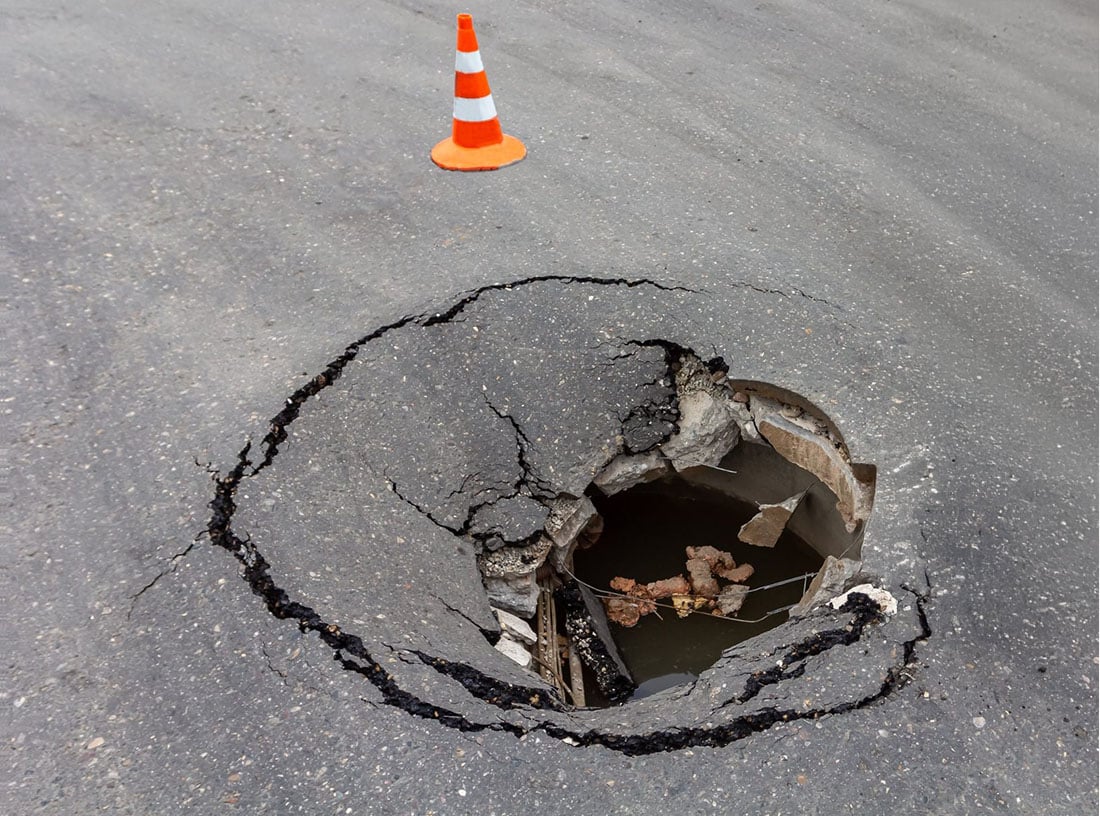
A circular depression in the yard, even a shallow one, is worth investigating. Sinkholes often form gradually from the top down, meaning the surface sags before it collapses. A depression that fills with water after rain and drains faster than surrounding areas can indicate a void pulling water downward through the soil.
Cracks in your concrete driveway or pool deck that were not there before, particularly those that spread or widen over weeks, can indicate soil movement beneath. Exposed tree roots without obvious cause can suggest that soil is eroding or dropping away from around them. Soft, muddy patches in the yard that do not dry out normally after rain are also worth noting, as they can signal water pooling above a void or loose soil structure.
None of these signs confirm a sinkhole on their own. But finding two or more of them concentrated in one area of your property is a strong reason to schedule a professional inspection.
What To Do If Something Suddenly Changes
A sudden and visible change in your yard or home structure calls for a calm, methodical response. Your first priority is always safety, and avoiding sinkhole-related property damage starts with proper documentation and immediate professional assessment.
A Simple First Response Plan For Homeowners
If you notice an obvious depression, crack, or structural shift that was not there before, follow these steps immediately:
- Keep people and pets away from the affected area until you know more.
- Do not add weight near the depression. Avoid parking vehicles or placing heavy equipment close to it.
- Mark the edges of any visible depression with stakes or spray paint so you can monitor whether it is growing.
- Take photos and video from multiple angles, including wide shots that show the surrounding yard for context.
- Check the surrounding area for additional signs, including any new cracks in the foundation, walls, or driveway.
- Contact your homeowner’s insurance company to report the observation and ask about your sinkhole loss coverage.
- Call a licensed geotechnical engineer or foundation specialist for a professional assessment before any repair decisions are made.
Avoid filling a depression yourself with soil, concrete, or gravel before an inspection. DIY filling hides the evidence engineers need to diagnose the cause and can make the problem worse by adding surface weight above a void.
When To Call For An Inspection Instead Of Waiting
You do not need a dramatic collapse to justify an inspection. A cluster of subtle signs, such as a sticking door, a soft spot in the lawn, and a new crack in the wall, is enough reason to call a professional. Waiting to see whether things get worse is a common mistake in this area because the underlying process often accelerates rather than slows once it starts.
If your neighbor has recently had a confirmed sinkhole event, that is also a reasonable trigger for getting your own property assessed. Sinkhole activity can cluster within a neighborhood because the underlying geology does not stop at a property line. An inspection provides documented information you can use for insurance purposes, even if no active problems are found.
How Properties Are Evaluated And Stabilized
A professional assessment goes far deeper than a visual walkthrough, relying on tools and testing methods that identify what is happening underground before any repair begins. The goal is to match the right repair method to the actual condition of the soil and limestone beneath your specific property.
What An Inspection May Look For
A licensed geotechnical engineer or foundation specialist typically begins with a thorough visual survey of the structure and surrounding ground. They document cracks, settlement patterns, drainage behavior, and any visible depressions. That surface review helps them identify which areas warrant subsurface investigation.
From there, the inspection may involve ground-penetrating radar, which sends radio waves into the soil to detect voids, loose material, or changes in soil density. Standard penetration testing uses a drilling rig to measure the resistance of the soil at various depths.
Zones that resist drilling less than expected can indicate loose, washed-out, or voided material. Together, these tools create a picture of what is happening underground that no visual inspection could reveal on its own.
Common Repair And Ground Improvement Methods
The two most widely used methods for sinkhole repair in Florida are compaction grouting and chemical grouting. Compaction grouting for sinkholes involves injecting a thick grout mixture under pressure into the soil to densify loose material and fill voids from the bottom up.
Chemical grouting uses a reactive liquid that expands and hardens within the soil, binding weak particles together and sealing pathways where water was washing material away.
For foundation stabilization, helical piers are sometimes used to transfer the structure’s load down through the compromised upper soil to a more stable layer below. Polyurethane foam injection can also lift and support concrete slabs and fill voids beneath pool decks, driveways, and foundations without major excavation.
The choice of method depends on the depth and extent of the void, the soil composition, and the condition of the structure above it. Completing a safe sinkhole stabilization process ensures the structure remains secure.
Protecting Peace Of Mind Over The Long Term
Long-term protection is less about one-time repairs and more about consistent habits and proper documentation. Small actions taken regularly reduce both the likelihood of problems developing and the financial impact if something does occur.
Maintenance Habits That Support Stable Ground
Drainage management is one of the most practical things you can do. Make sure gutters direct water away from the foundation rather than pooling at the base of your home. Grade your yard so that surface water flows away from the structure, not toward it. A yard that holds standing water near the foundation after every rain is slowly saturating the soil in exactly the location where you need it to stay firm.
Avoid planting large trees close to the foundation. Root systems pull moisture from the soil unevenly and can accelerate settlement in specific zones. Fix irrigation leaks promptly; a slow drip from an underground irrigation line can erode soil over months without any visible surface sign.
Walk your yard and check your foundation exterior at least twice a year, before and after rainy season. What you are looking for are changes, not perfection. A crack that appeared since your last check, or a soft spot that was not soft before, gives you a specific timeline to share with an inspector.
Insurance, Documentation, And Local Support
Understanding sinkhole repair insurance in Florida is vital, as state law distinguishes between two types of coverage. Catastrophic ground cover collapse is the minimum coverage most policies include, but it only applies when structural damage is visible, the foundation has failed, and the building has been condemned or requires vacating.
Sinkhole loss coverage is broader and covers damage caused by sinkhole activity even without a full collapse, but it is optional and must be added specifically to your policy.
Keep a home file with dated photos of your foundation, driveway, and yard taken at least once a year. If you ever need to file a claim, those photos establish a baseline that shows when a crack or depression first appeared. Also retain any repair invoices, engineering reports, and insurance correspondence related to soil stabilization.
A prior sinkhole stabilization on your property must be disclosed during a sale and will factor into future insurance assessments.
Pasco County’s Property Appraiser mapping system allows you to check whether your parcel or nearby parcels have flagged sinkhole-related history. That public resource is a practical starting point when you are researching your property’s risk.
Frequently Asked Questions
These questions address the most common things Land O’ Lakes homeowners ask when they start researching sinkhole risk, from where to find official records to what their insurance actually covers.
Is there any sinkhole activity reported today in the Land O’ Lakes area?
Real-time sinkhole reports are not available through a single public feed, but Pasco County maintains records of reported and confirmed sinkhole activity through the Property Appraiser’s office. For the most current information near your address, contact the Pasco County Property Appraiser directly or search the mapping system at maps.pascopa.com.
Where can I find an up-to-date map of reported sinkholes in Pasco County?
The Pasco County Property Appraiser offers a public mapping tool at maps.pascopa.com where you can search parcel-level sinkhole history. The Florida Department of Environmental Protection also maintains statewide geological data on sinkholes as part of its broader karst and environmental mapping resources.
How can I check the exact location of recent sinkhole reports near my neighborhood?
Start by searching your address on the Pasco County Property Appraiser’s mapping site, which flags parcels with documented sinkhole activity. For recent activity not yet in the database, contact the Pasco County government directly or check with your insurance company, which may have access to engineering reports from nearby claims.
Are there any free public resources to look up sinkhole reports and risk areas locally?
Yes. The Pasco County Property Appraiser mapping site is free and publicly accessible. The Florida Department of Environmental Protection maintains a statewide sinkhole database. The Southwest Florida Water Management District also publishes information on karst geology and sinkhole risk zones that is available to the public at no cost.
What signs should homeowners watch for that may indicate sinkhole development on their property?
Watch for stair-step cracks in walls, doors, or windows that suddenly stick or misalign, circular depressions in the yard, and concrete surfaces that crack or become uneven for no obvious reason. Finding two or more of these signs concentrated in the same area of your property is a strong reason to schedule a professional inspection rather than monitor and wait.
How does homeowners insurance typically handle sinkhole damage claims in Florida?
Florida law requires most insurers to offer sinkhole loss coverage as an optional add-on, separate from the basic catastrophic ground cover collapse protection. If you file a claim, the insurer must hire a licensed engineer or geologist to investigate. If sinkhole activity is confirmed, the insurer is required to pay for land stabilization and foundation repair according to the engineer’s recommendations, subject to your policy terms and coverage limits.
The Ground Beneath Your Feet Is Worth Watching
Land O’ Lakes has one of the highest concentrations of documented sinkhole activity in Florida, and that history makes routine attention to your property genuinely worthwhile. Catching a warning sign early, whether it is a sticking door or a soft patch in the yard, gives you options that disappear once conditions worsen.
You do not need to live in fear of the ground beneath your home, but you do need to stay informed and take action when something changes. Documenting your property, understanding your insurance coverage, and knowing when to call a professional are the habits that protect both your safety and your investment over time.If you notice signs that concern you, do not wait for the problem to confirm itself. Schedule a free, no-obligation inspection with Helicon to get an honest assessment of what your foundation and soil conditions actually look like, and what, if anything, needs to be done.