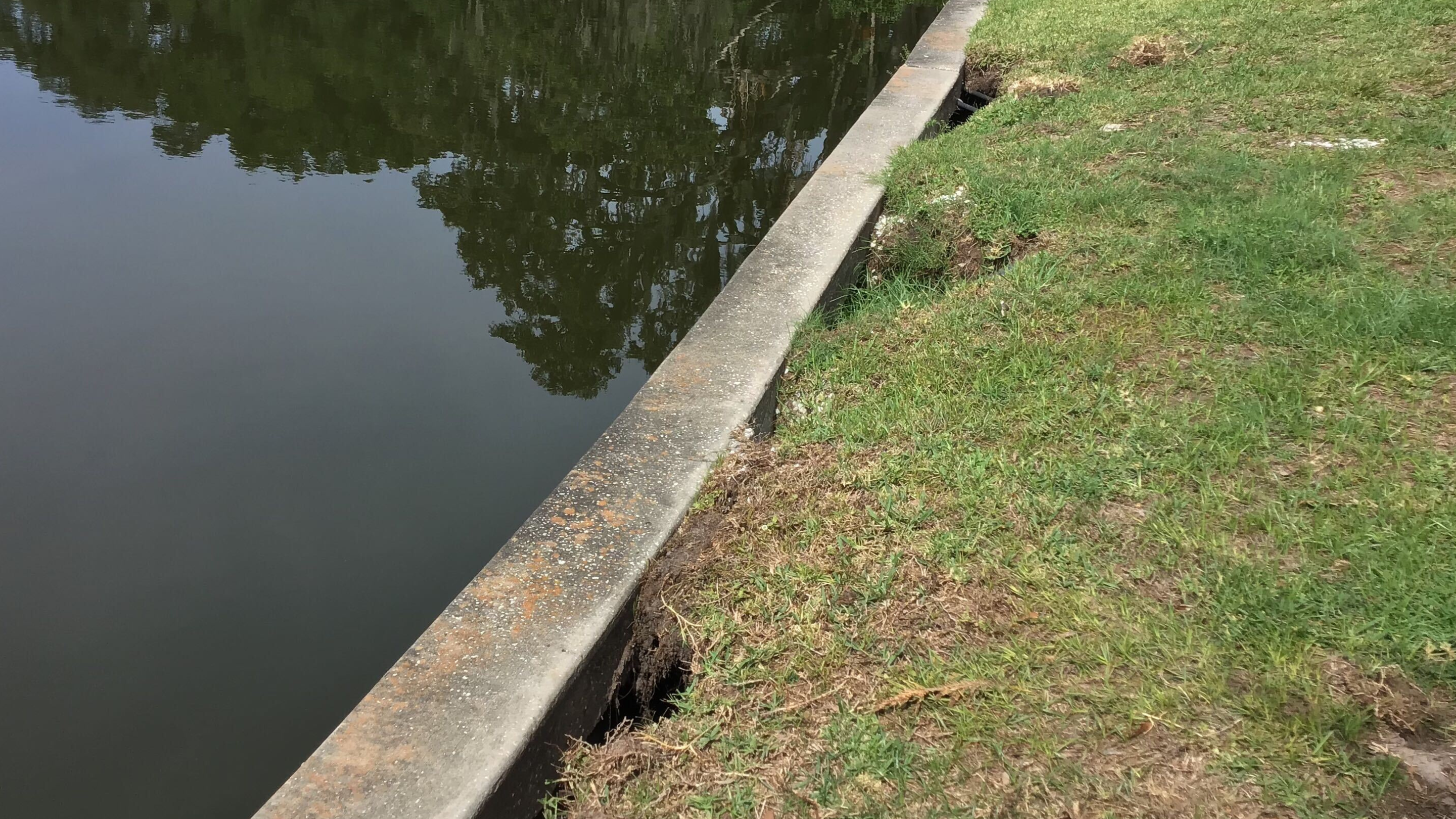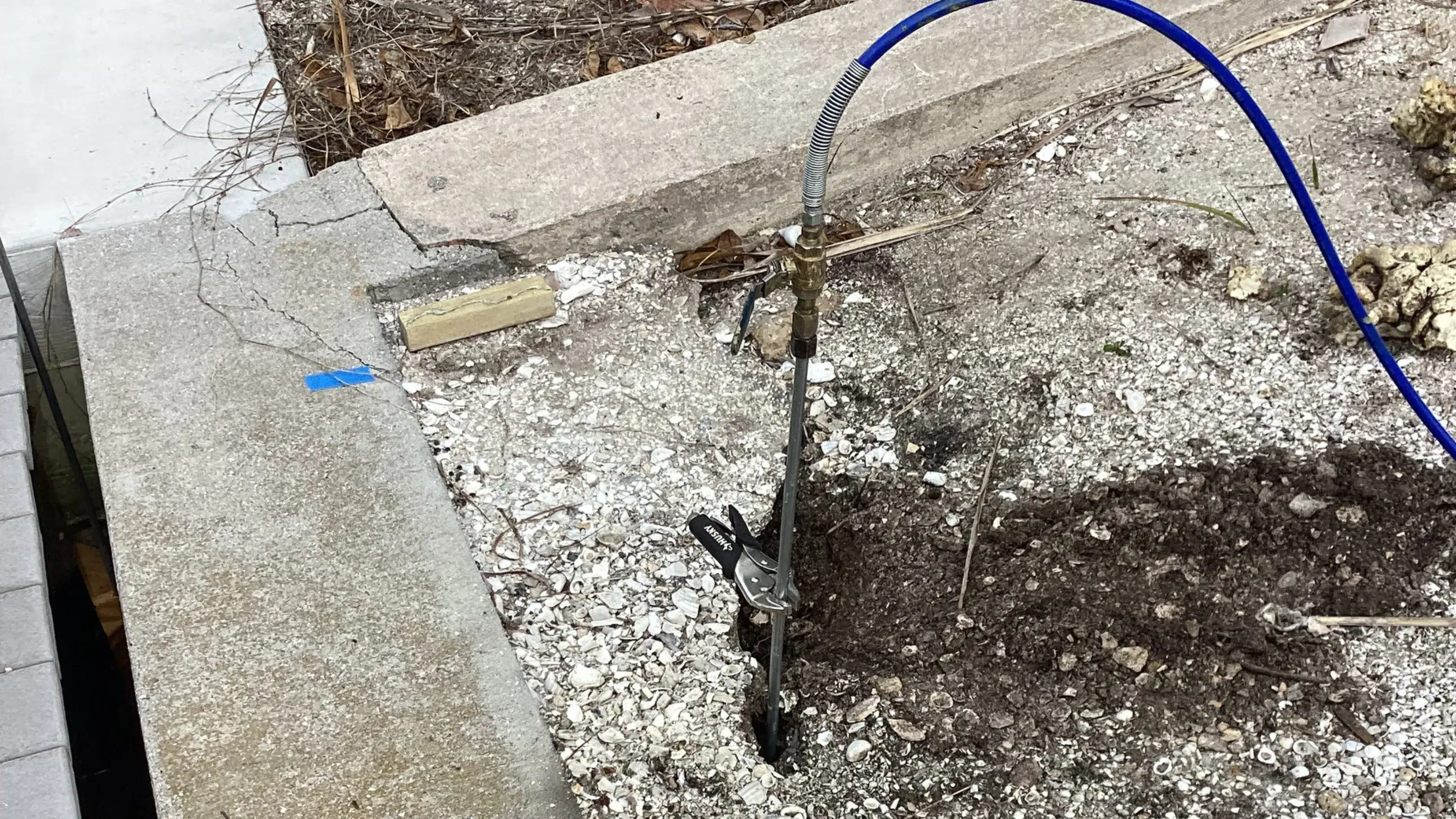
You noticed it while walking across the driveway or patio: a soft spot, a slight dip, maybe a hollow sound under your feet. That feeling isn’t in your head. Florida’s sandy soils, high water tables, and heavy summer storms create the exact conditions that let empty pockets form beneath a concrete slab.
These gaps grow. What starts as a small settling area becomes cracked concrete, an uneven walkway, or a slab that shifts every time it rains. Filling the void early is the difference between a modest repair and a structural problem.
Helicon has engineered concrete and soil repairs for Florida’s ground conditions since 2004, with more than 20 years in the field and a 4.9-star rating from homeowners across the state. This guide covers how voids form here, the signs that one is already under your slab, and which repair methods hold up in sandy, water-heavy soil.
Why Florida Slabs Lose Support
Step onto the sidewalk near your front door and feel it flex, or watch a dip form at the edge of the patio after a storm. That movement means the soil under the concrete has shifted or washed away.
Loose sandy soil, poor drainage, and a high water table combine to erode the base a slab depends on. Concrete spans a small gap without complaint, then fails suddenly when the gap gets wide enough.
Soil Erosion and Sandy Soil Composition
Florida sand doesn’t compact the way clay or loam does. Water moves through it quickly, carrying fine particles away and leaving small gaps behind. Those gaps widen under the weight of a slab, fastest on driveways and parking pads that carry vehicles. Restoring that base layer is a soil stabilization problem before it is a concrete one.
Poor Drainage, Heavy Rain, and Water Pooling
When water pools beside a slab instead of draining away, it saturates the soil underneath, and saturated sand loses strength fast. Repeated soaking through the rainy season accelerates everything. Downspouts aimed at the slab rather than away from it are the single most common contributor homeowners overlook, and the cheapest to correct.
Plumbing Leaks, Buried Debris, and Hidden Washout
A slow leak beneath a slab can wash out soil for months before anything shows on the surface. This is the most stubborn cause, because the damage happens where nobody can see it.
It also isn’t the only invisible cause. The Florida Geological Survey notes that depressions and subsidence often trace back to causes unrelated to true sinkholes, including broken sewer and drain pipes, failed septic tanks, soil that was never properly compacted after excavation work, and buried trash, logs, or organic debris that decomposes and compresses over time.
On newer construction, poorly compacted backfill is a frequent culprit. On older lots, it can be something a previous owner buried decades ago.
Warning Signs Beneath Concrete Surfaces
You tap your foot near a crack in the driveway, and it sounds hollow rather than solid. That one detail often tells you more than the crack does. Hollow sounds, edge gaps, and soft ground are the body language of a slab losing its support.
These conditions rarely reverse on their own, because the water that created the void keeps arriving.
Hollow Sounds, Edge Gaps, and Soft Ground
A drum-like sound when you walk or tap on concrete is the clearest single indicator of a void. Gaps opening along slab edges, or ground that feels spongy near the perimeter, point to the same thing.
Cracks, Settlement, and Uneven Slabs
Cracks that widen over time, sections sitting lower than their neighbors, and settlement at control joints all mean the support layer below has changed. Mark a crack’s ends with a pencil and date it. Whether it moves over a few weeks is the most useful thing you can hand an inspector.
When Sinking Concrete Creates Safety Risks
Uneven concrete is a tripping hazard on any walkway in daily use. A void under a driveway carries a different risk, since a parked vehicle concentrates weight on a slab that has lost its base.
Why Early Repairs Protect the Slab
You’ve confirmed the hollow sound isn’t going away. The question is timing.
Unsupported concrete over sandy soil does not stabilize by itself, and every storm adds water to an already weak base. The repair also gets more expensive as it changes category, from filling a space to replacing a slab.
How Unsupported Concrete Can Crack or Break
Concrete is strong in compression and brittle without even support beneath it. Once a void removes that support, ordinary weight from a vehicle or foot traffic is enough to crack or fracture the slab.
Void Filling Versus Concrete Leveling
These are two different jobs that often happen together. Void filling restores the base layer in the empty space. Concrete leveling repositions the slab back to grade. Filling a void under a slab that has already settled leaves you with supported concrete at the wrong elevation, so most lasting repairs need both steps.
Stopping the Water Source Before It Returns
Filling a void without fixing the drainage or downspout that created it invites the same problem back. Redirecting water away from the slab is part of the repair, not a follow-up suggestion.
How Professionals Locate and Assess the Problem
You know something is wrong under the concrete but not how large it is. Florida’s mix of sandy soil, high water tables, and karst geology means two properties with identical surface cracks can have entirely different causes underneath.
Worth knowing: the Florida Department of Environmental Protection does not inspect possible sinkholes, and directs homeowners who need an assessment to a certified home inspector or foundation specialist. The state does run an FGS Sinkhole Helpline at 850-245-2118 for questions, and publishes a homeowner’s guide to sinkholes, but the on-site diagnosis falls to a private specialist.
A typical assessment includes:
- Visual inspection of the slab, its cracks, and the surrounding grade
- Sounding tests to map hollow areas beneath the surface
- Soil composition and drainage review around the affected area
- Assessment of nearby plumbing lines for leak-related washout
- Evaluation of heavy load areas such as driveways and parking pads
Determining the Void’s Size, Depth, and Cause
Depth changes the method. A shallow void from surface erosion needs a different approach than a deep one tied to plumbing washout, and the cause determines whether the repair will hold.
Identifying Soil and Drainage Conditions
Soil composition and drainage patterns explain why the void formed. Addressing that root cause matters as much as filling the space.
Knowing When a Slab Needs Stabilization or Replacement
Most voids are correctable without removing concrete. Where cracking is extensive, or where movement traces to confirmed sinkhole activity, sinkhole repair or replacement becomes the honest recommendation instead of a fill.
Choosing the Right Support Restoration Method
Florida’s saturated sand responds to repair materials differently than firmer ground elsewhere, which is why the method matters as much as the decision to repair.
Polyurethane Foam Injection for Lightweight Support
Structural polyurethane foam expands to fill a void without adding meaningful weight to soil that is already struggling to bear load. It cures in minutes, which limits how long an open repair area sits exposed to Florida rain, and it resists water once cured.
How Mudjacking and Slabjacking Differ
Mudjacking, also called slab jacking, pumps a slurry of cement, sand, and sometimes gravel beneath the slab. It’s a proven method with one real tradeoff in this state: the slurry is heavy, and adding weight to saturated sand can accelerate the settlement you just paid to fix.
When Gravel, Cement, or Replacement May Be Considered
Denser materials still make sense under heavy loads, which is where commercial void filling work often differs from residential. Full replacement is reserved for slabs too damaged for leveling to correct, since lifting a slab that is already fracturing tends to break it.
Frequently Asked Questions
How do you fill a void under a concrete slab?
Small holes are drilled through the slab and material is injected directly into the void, most often polyurethane foam. The material expands to fill the space and support the concrete without removing the slab.
Can spray foam safely fill a void beneath concrete?
Structural polyurethane foam is used widely because it is lightweight, water-resistant, and cures quickly. It suits Florida’s sandy, moisture-heavy soil better than heavier fill. Note that this is engineered structural foam, not the canned spray foam sold for insulation.
Can I fill the void myself with sand or gravel?
Poured sand or gravel cannot reach the far edges of a void, cannot be compacted under a slab, and washes out through the same path the original soil took. It also tells you nothing about the void’s size or cause, which is the information the repair actually depends on.
What causes voids to form under concrete in Florida?
Soil erosion, poor drainage, plumbing and sewer leaks, and sandy soil that never compacts firmly. Less obvious causes include fill that was poorly compacted after excavation and buried organic debris that decomposes over years. Heavy rain and a high water table speed all of it up.
How much does it cost to fill a void under concrete?
Cost tracks the void’s size, depth, and cause, plus slab location and access. A shallow void under a walkway and a deep washout under a driveway are different projects. An inspection produces a real number instead of a range.
How long does the repair take, and when can I use the surface?
Most residential void filling is a same-day job. Polyurethane foam cures within minutes, so driveways and patios typically return to normal use the same day rather than after a curing period.
How can you tell if a slab has a void underneath?
Hollow sounds when tapping or walking, cracks that widen, sections sitting lower than others, and gaps along slab edges. Water pooling near the slab after rain is a supporting clue, since it points to the mechanism that creates voids.
Is filling a void under concrete a permanent repair?
It lasts when the root cause is corrected at the same time. Fill the void and leave the downspout aimed at the slab, and the void comes back along the same path.
Restore Support Before Damage Spreads
A hollow-sounding patch of driveway is not an emergency, but it is a slab telling you its support is gone. Florida’s soil and storms won’t stop testing it, and the fix stays small only while the problem stays small.
Helicon offers a free, no-obligation inspection for homeowners noticing sinking, cracking, or hollow-sounding concrete. The visit locates the void, identifies what caused it, and produces a recommendation rather than a guess.