You are standing at the edge of your driveway, staring at a slab that has dropped an inch or more on one side. Maybe a crack runs through it, or a puddle forms where water used to drain away. It looks worse every month, and now you’re trying to figure out who can actually fix it without tearing the whole thing out.
That search usually leads to a list of concrete leveling contractors, each promising a fast fix. The methods they use are not all the same, and the right choice depends heavily on what’s happening in the ground under your slab, especially here in Florida.
This guide breaks down how the two main leveling methods work, why one tends to hold up better in Florida’s sandy, moisture-heavy soil, and what a realistic repair might cost. Florida’s mix of sandy soils, seasonal downpours, and occasional sinkhole activity makes soil behavior under a slab just as important as the crew doing the work.
Why Florida Slabs Sink and Crack
You’ve probably noticed the driveway slab tilting toward the garage, or a walkway panel that used to sit flush now sitting an inch lower. It didn’t happen overnight. It’s the kind of gradual shift that makes you wonder if it’s just cosmetic or something worse happening underground.
Florida’s ground works against concrete in ways that other states don’t deal with as often. Loose, sandy soil shifts and erodes more easily than dense clay, and heavy rain events wash fine particles out from under slabs, leaving hollow pockets called voids. Once a void forms, the slab above it has nothing to rest on, and it drops under its own weight or the weight of a car.
Sandy Soils, Heavy Rain, and Hidden Voids
Florida’s native soil is often sandy and loosely packed, which drains fast but also compacts unevenly over time. Add a tropical storm or a season of heavy rain, and water moves sand and silt out from beneath slabs.
The Florida Department of Environmental Protection lists improperly compacted soil and water intrusion among the common causes of ground subsidence statewide, the same underlying process at work under a sunken driveway slab. The slab looks fine until it suddenly isn’t, because the void grows invisibly underneath it.
Drainage Failures and Water Near the Home
A clogged gutter, a downspout aimed at the foundation, or a low spot that collects water can all speed up settlement. Water pooling near a slab edge saturates the soil, softening it until it can no longer support the concrete above. Fixing the drainage issue matters as much as fixing the slab itself, since waterproofing the surrounding grade prevents the same failure from repeating.
When Surface Settlement May Point to Foundation Trouble
Not every sunken slab is a standalone problem. If you’re also seeing cracks in interior walls, sticking doors, or gaps around window frames, the settlement may extend beyond the driveway or patio. That’s when a broader foundation repair evaluation, not just slab leveling, becomes the right next step.
How the Two Main Lifting Methods Work
You’ve decided the sunken slab needs attention, but every contractor you call describes the fix differently. One mentions pumping in a slurry mix, another talks about foam injected through small holes. Both claim to raise the concrete back to level, so it helps to understand what’s actually happening underneath before you pick one.
Concrete leveling contractors generally rely on one of two established techniques, and the difference between them matters more in Florida than almost anywhere else in the country. Soil composition, moisture levels, and how each material behaves underground all affect how long the repair lasts.
Mudjacking With Cement-Based Slurry
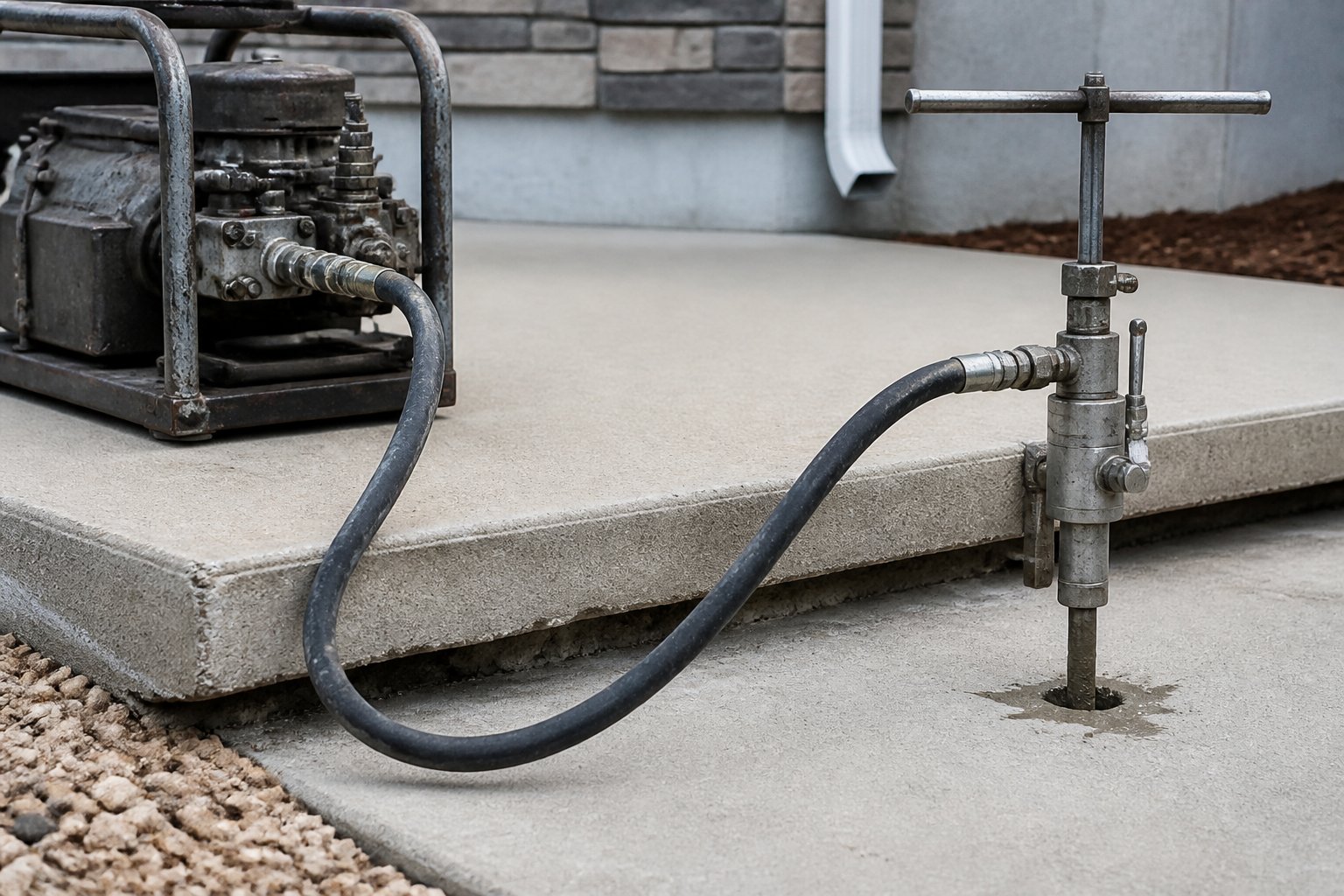
Mudjacking is the older of the two concrete lifting methods. A contractor drills holes through the slab and pumps in a mixture of cement, sand, and water, often called mud or slurry. The slurry’s weight pushes the slab upward as it fills the void below.
Polyurethane Foam Injection From Below
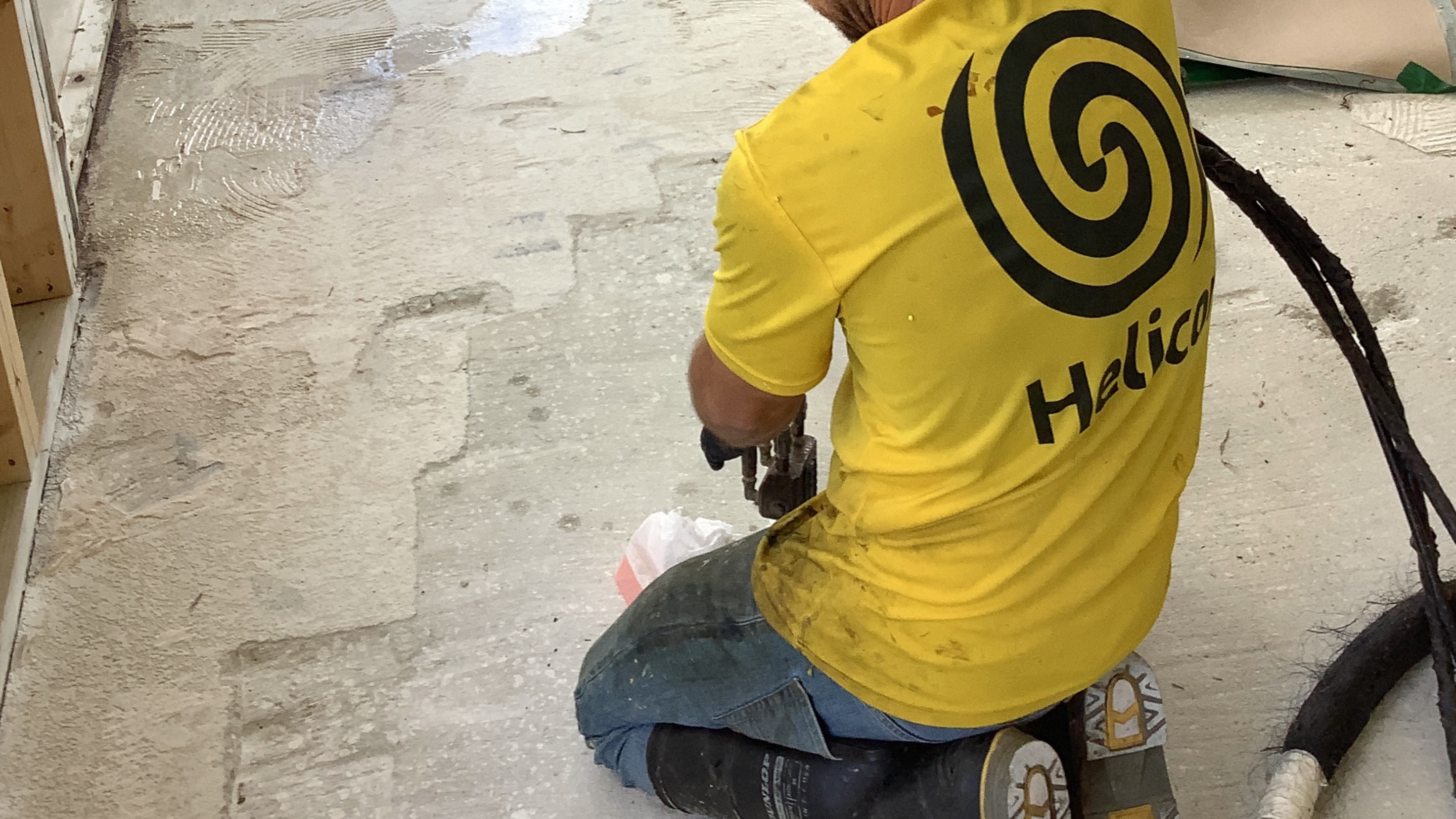
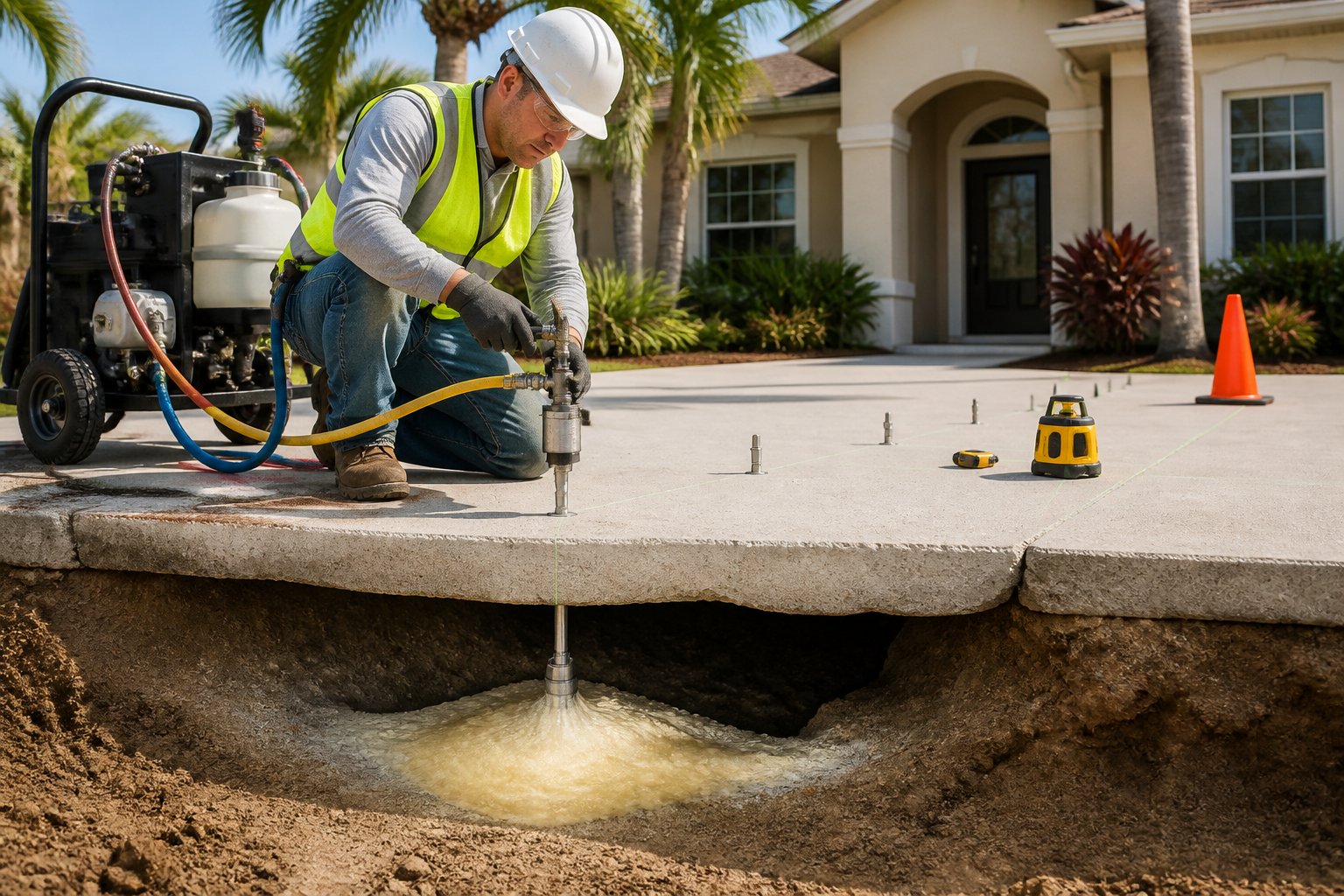
Foam injection uses a two-part polyurethane that expands after it’s pumped through small drilled holes. It fills voids, compacts loose soil, and lifts the slab with far less material than slurry requires. Foam concrete leveling typically finishes faster and requires smaller holes to patch.
The Concrete Leveling Process From Inspection to Cleanup
Whichever method a contractor uses, a proper job follows a similar sequence:
- An on-site inspection to check slab condition, soil type, and drainage
- Drilling a planned pattern of small holes, not random placement
- Injecting material slowly while monitoring the slab with a level
- Raising the slab in controlled increments
- Patching holes and cleaning the work area
Most residential jobs finish within a few hours, based on typical timelines described in a guide to what is concrete lifting.
Why Polyurethane Foam Fits Florida Conditions Better
You’ve compared quotes, and one contractor is pushing mudjacking while another recommends foam. The price difference has you wondering if the cheaper option is really just as good, especially with Florida’s soil doing what it does.
Concrete problems in Florida almost always trace back to moisture and loose sand, and that’s exactly where the two methods diverge. Mudjacking’s heavy slurry mix adds significant weight to already unstable ground, sometimes accelerating the very settlement it’s meant to fix.
A Lightweight Material That Does Not Add Soil Load
Cured polyurethane foam weighs only two to four pounds per cubic foot, compared with slurry, which can weigh over a hundred pounds per cubic foot. That lighter load means less pressure on soil that’s already prone to shifting.
Water Resistance and Void Filling in Moist Ground
Polyurethane foam doesn’t absorb water or break down when exposed to Florida’s high water table and frequent rain. Slurry mixes, being cement-based, can wash out or weaken in consistently damp soil, undermining the repair over time.
Controlled Lifting With Less Disruption and Faster Use
Foam cures in fifteen to thirty minutes, meaning the driveway or walkway can typically bear weight again the same day. Safe concrete lifting depends on incremental, monitored raising, and foam’s fast cure allows contractors to adjust lift height with more precision throughout the job.
What Florida Homeowners Can Expect to Pay
You’ve narrowed down your options, but the number that matters most right now is the bill. Quotes you’ve gathered so far range widely, and it’s hard to know if you’re comparing similar work or wildly different scopes.
Concrete leveling pricing varies by slab size, method, and how much soil correction the job requires. Getting an onsite cost estimate from more than one company gives you a realistic range instead of guessing based on online averages alone.
Typical Cost Ranges for Driveways, Walkways, and Pool Decks
Most residential leveling projects run a few hundred to a few thousand dollars, with the total driven by square footage and void depth. Larger driveways or pool decks with deeper voids tend to land at the higher end of that range.
Variables That Change an Onsite Estimate
Several factors shift the final price:
- Square footage and slab thickness
- Depth of the void and how much material is needed
- Soil condition and accessibility for equipment
- Method chosen, since foam often costs more per square foot but requires less material overall
Why the Lowest Quote May Not Address the Cause
A price far below every other bid usually means something is being skipped, whether that’s insurance, proper drilling patterns, or void depth assessment. Comparing concrete leveling companies on scope and warranty, not just price, protects you from paying twice for the same repair.
When Lifting Is the Right Repair and When It Is Not
You want the driveway fixed, but part of you wonders if leveling is even the right call or if you’re just delaying a bigger repair. That hesitation is reasonable, since not every sunken slab is a good candidate for lifting.
Concrete leveling works well for slabs that are structurally sound but sitting on settled or void-filled soil. It restores the surface without the cost and disruption of demolition and repour.
Good Candidates for Slab Raising
Slabs with minor to moderate settlement, hairline cracking, and intact concrete typically respond well to foam injection. Driveways, walkways, and pool decks that have sunk evenly across a section are strong candidates.
Signs the Concrete Needs Replacement Instead
Concrete that’s severely cracked, crumbling, or broken into multiple unstable pieces usually needs full replacement instead of lifting. If more than a third of the slab is compromised, leveling won’t produce a lasting or safe result.
When to Request a Foundation and Drainage Evaluation
If uneven concrete near the home coincides with interior wall cracks or sticking doors, the issue may extend into the foundation itself. In those cases, a foundation repair and drainage assessment should come before, or alongside, any slab leveling work.
Restore a Safer, More Stable Surface
Every time you walk across that sunken section of driveway or patio, you’re reminded it needs attention. Beyond the visual annoyance, an uneven edge or dip is a real trip hazard.
Keep reading to learn what a thorough inspection checks and why acting early keeps repair costs lower. Florida’s combination of loose sandy soils, seasonal flooding, and occasional sinkhole activity means a small dip today can become a larger structural concern later.
What a Professional Inspection Should Identify
A proper inspection checks slab condition, measures the height difference across the settled area, and probes for voids beneath the surface. It should also assess nearby drainage, since trip hazards often trace back to water pooling near the slab edge rather than the concrete itself.
Frequently Asked Questions
How much does it cost to level a sunken concrete driveway or patio?
Most residential jobs run from a few hundred dollars up to a few thousand, depending on square footage, void depth, and the method used. Foam injection often costs more per square foot than mudjacking but requires less material and finishes faster.
Is concrete leveling more affordable than replacing a cracked slab?
Yes, leveling typically costs a fraction of a full replacement because it skips demolition, disposal, and a full new pour. Replacement becomes necessary only when the concrete itself is too damaged to lift and hold.
How long will leveled concrete last in Florida’s sandy soil and storm conditions?
Foam-lifted slabs often last many years when you also address the underlying drainage issue. Slurry-based repairs tend to last less in Florida because moisture can weaken the cement mixture over time.
Can foam injection stabilize concrete near a sinkhole or washed-out soil?
Polyurethane foam can fill smaller voids and stabilize loose soil pockets, but confirmed sinkhole activity requires a full geotechnical evaluation first. A qualified inspection determines whether foam injection is appropriate or if deeper soil stabilization is needed.
What signs show that a sidewalk, pool deck, or driveway needs leveling?
Look for visible height differences between slab sections, pooling water after rain, and cracks that widen at one edge. A gap of a half inch or more between adjoining slabs is generally considered a trip hazard worth addressing.
How can I find a trusted local company to inspect and restore uneven concrete?
Look for a company with verifiable Florida experience, clear licensing, and a written warranty on the leveling work performed. Check online reviews and ask for recent local project examples to confirm the contractor understands Florida’s specific soil behavior.
Taking the Next Step Before Settlement Spreads
Concrete leveling contractors that provide a clear, written onsite cost estimate give you the information you need to decide with confidence. Waiting rarely improves the situation, since voids under a slab tend to grow rather than resolve on their own.
Not sure if that crack is cosmetic or structural? Helicon’s free inspection gives you a clear answer with no obligation.