
Melbourne, FL
The Project
The Challenge
The Solution
FREE INSPECTION REQUEST

Solution: Two-Part Structural Polyurethane Injections
Services: Foundation Repair
The homeowner had owned the property for only about two months when Helicon became involved.
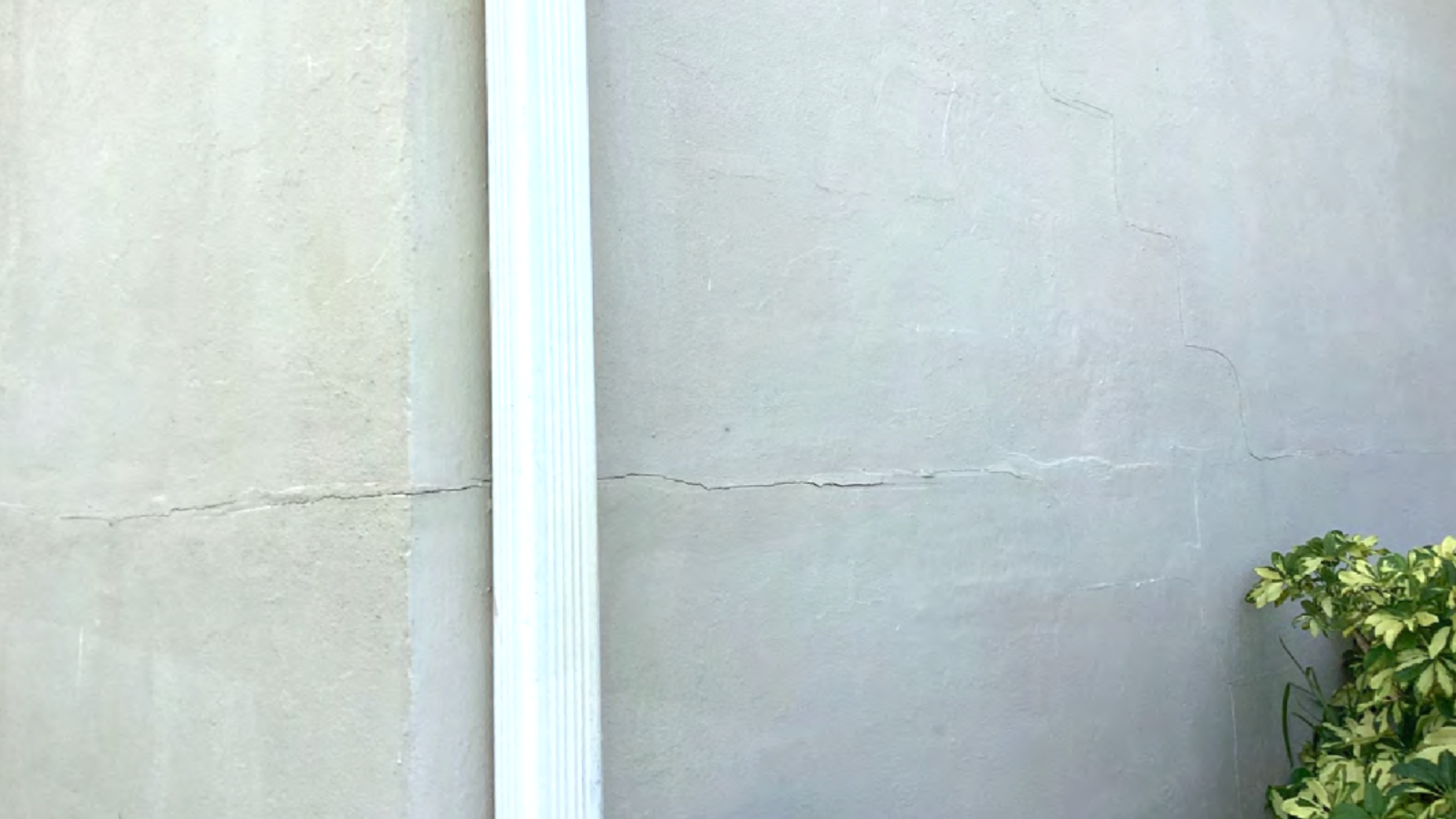
During that short period, the home already showed open stair-step cracking at the corners.
Stair-step cracks are often easy for homeowners to notice because they typically follow masonry joints in a stepped pattern. While a crack alone does not identify the exact cause of movement, multiple open cracks around the corners of a home deserve a closer look—especially when the property has challenging site conditions.
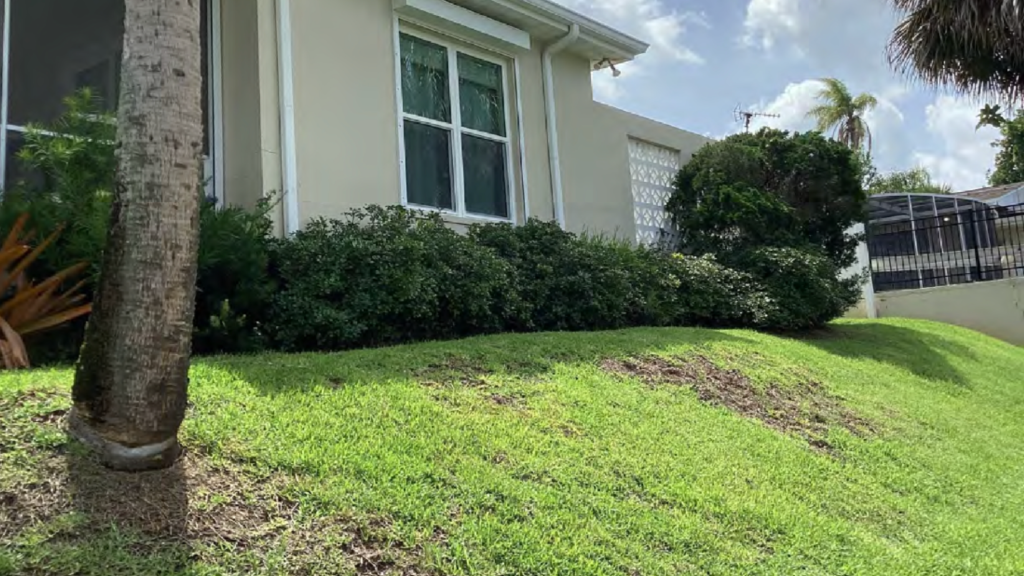
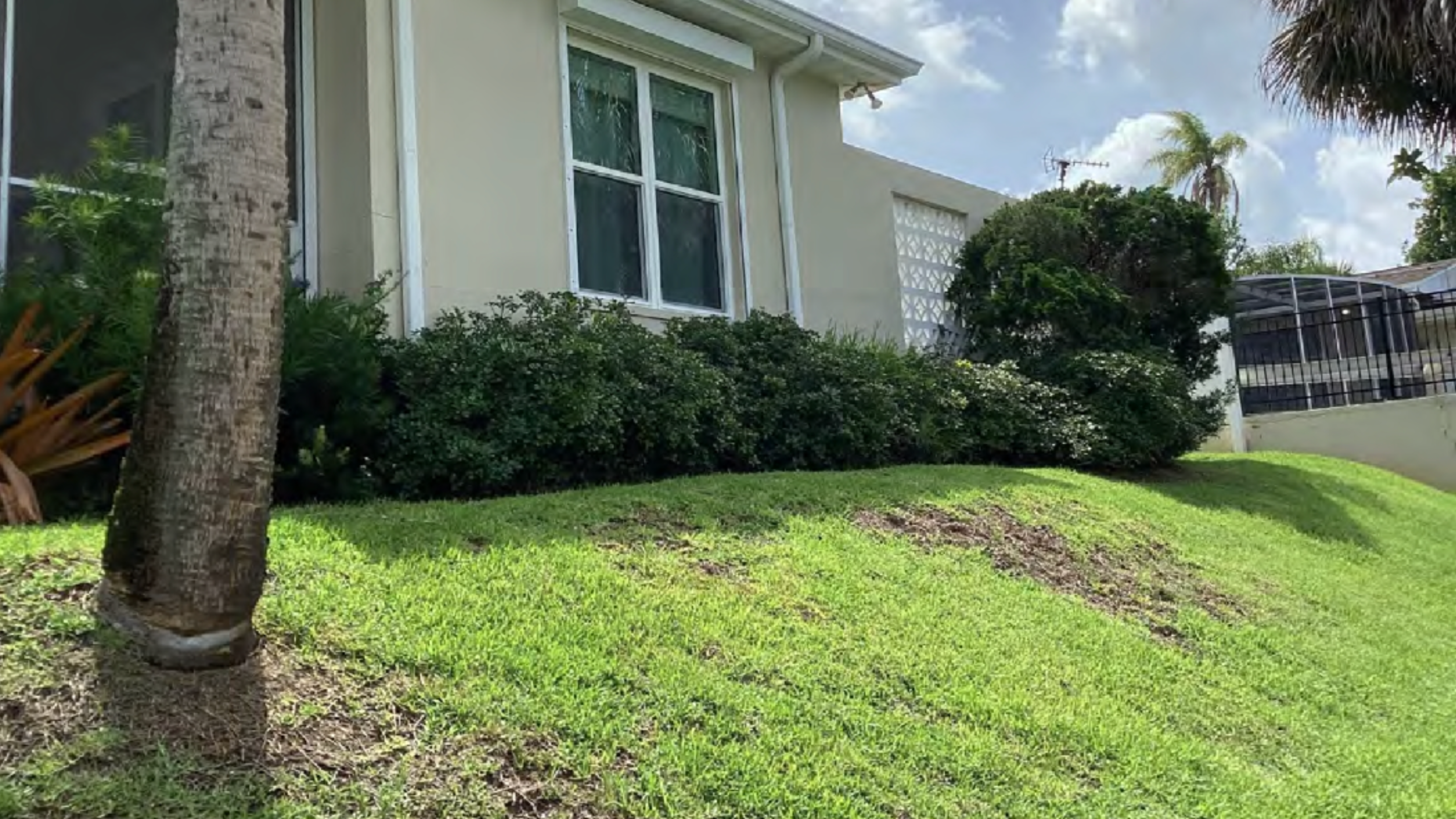
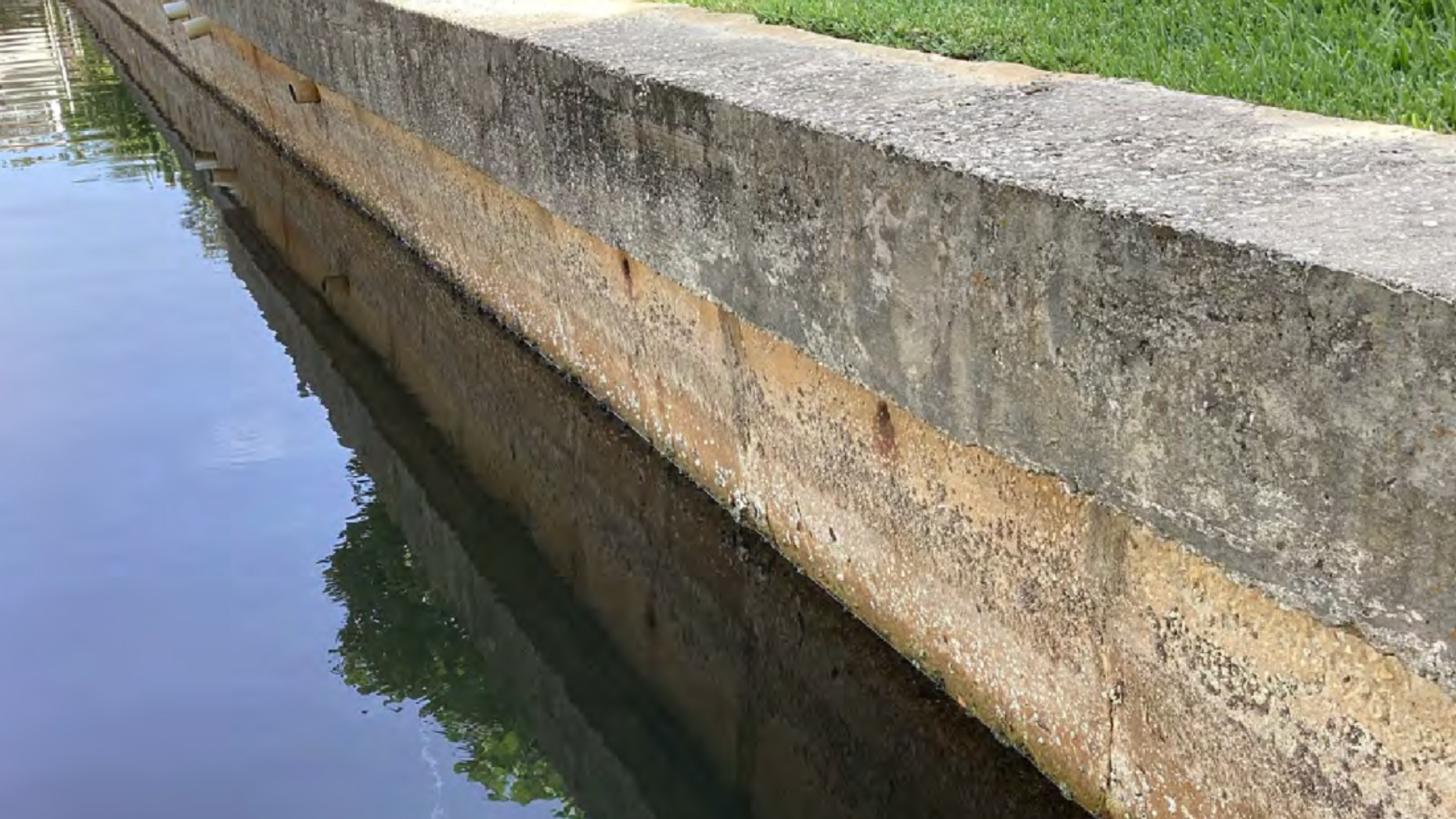
This particular home sat on a steep slope toward a canal. At the water’s edge, the property also had a concrete seawall showing signs of erosion.
The combination of visible structural cracking, a steep grade, and an eroding waterfront edge made stabilization a reasonable priority.
The homeowner was not looking for a temporary cosmetic repair.
The goal was to improve the support conditions beneath and around the home so the property had a more stable structural base moving forward.
Open stair-step cracks can indicate that one portion of a structure has moved differently from another.
Potential contributing conditions may include:
No single crack can diagnose an entire foundation problem by itself.
However, when open cracks appear at multiple corners of a recently purchased home, the homeowner is right to investigate before simply filling and painting them.
Cosmetic work can hide the visual symptom, but it does not improve the support beneath the house.
That is why foundation repair should come before cosmetic patching when structural movement is suspected.
The steep slope toward the canal was one of the most important features of the property.
Homes built near waterways can experience very different support conditions from properties on flatter inland lots.
What is documented is that:
Those conditions made a targeted structural stabilization plan especially important.
For this case study, the most realistic challenge is therefore not a dramatic field problem but a site-specific installation consideration.
Because the house sat on a steep slope toward a canal, the crew needed to approach the injection program carefully.
On a property like this, excessive injection pressure or poorly controlled material placement could potentially send expanding polyurethane toward unintended areas rather than keeping treatment focused beneath the slab and within the designated support zones.
The practical challenge was therefore to install the material in a controlled sequence, monitor the response of the treatment areas, and avoid over-pressurizing the ground near the waterfront side of the property.
Structural polyurethane reacts and expands after injection.
That expansion is what makes the material useful for filling voids and improving support, but it also means the installation has to be carefully managed.
The crew’s objective was not to chase dramatic lift or force movement.
The objective was to stabilize the designated areas and improve the support beneath the home.
Helicon used two-part structural polyurethane chemical grout for both slab and soil injections.
This allowed the team to treat two related but different support zones:
That combined strategy provided broader stabilization than a slab-only repair would have offered.
The slab portion of the project was substantial.
Helicon installed:
The purpose of these injections was to improve support directly beneath the concrete slab.
Structural polyurethane can help fill accessible voids and improve contact between the slab and the material below it.
For this project, the slab injections were intended to:
This was the largest material component of the repair.
Helicon also completed:
These injections targeted the designated soil treatment areas supporting the home.
The purpose was to improve stability around the structure and complement the support being added directly beneath the slab.
The soil injections helped create a more complete repair system by addressing not only the slab itself, but also the support conditions beneath and around the treated sections.
The strongest part of this Melbourne project was the combination of slab and soil treatment.
The 34 slab injection points focused on the area directly beneath the concrete.
The 9 soil injection points targeted the designated areas below and around the slab-support zone.
Together, these treatments created a layered stabilization plan.
That is especially valuable on a site with visible cracking and a steep canal-side grade, where the homeowner’s concern was broader than one isolated crack.
The repair improved support in the designated treatment areas and gave the homeowner a stronger structural base moving forward.
Key benefits included:
No contractor can guarantee that a home or surrounding ground will never move again.
However, the completed structural polyurethane program materially improved the support conditions in the areas Helicon treated.
Helicon helps Florida homeowners, property owners, contractors, and commercial clients address foundation settlement, sinking concrete, weak support conditions, seawall erosion, and related structural concerns.
Our team develops repair solutions based on the structure, observed conditions, site requirements, and project goals—with a focus on correcting problems where they often begin: beneath the surface.
If you are seeing stair-step cracking, foundation movement, slab settlement, or other signs of structural distress, repairing the visible cracks may only address the symptom.
Helicon provides foundation repair, structural polyurethane injections, slab stabilization, soil stabilization, concrete lifting, seawall repair, and related structural services throughout Melbourne and communities across Florida.
Call 844-HELICON to schedule a free inspection and learn which repair approach may be appropriate for your property.
FREE INSPECTION REQUEST