
Largo, FL
The Project
The Challenge
The Solution
FREE INSPECTION REQUEST

Market: Residential
Solution: Two-Part Structural Polyurethane Injections for Soil and Slab Stabilization
Services: Concrete Repair and Soil Stabilization
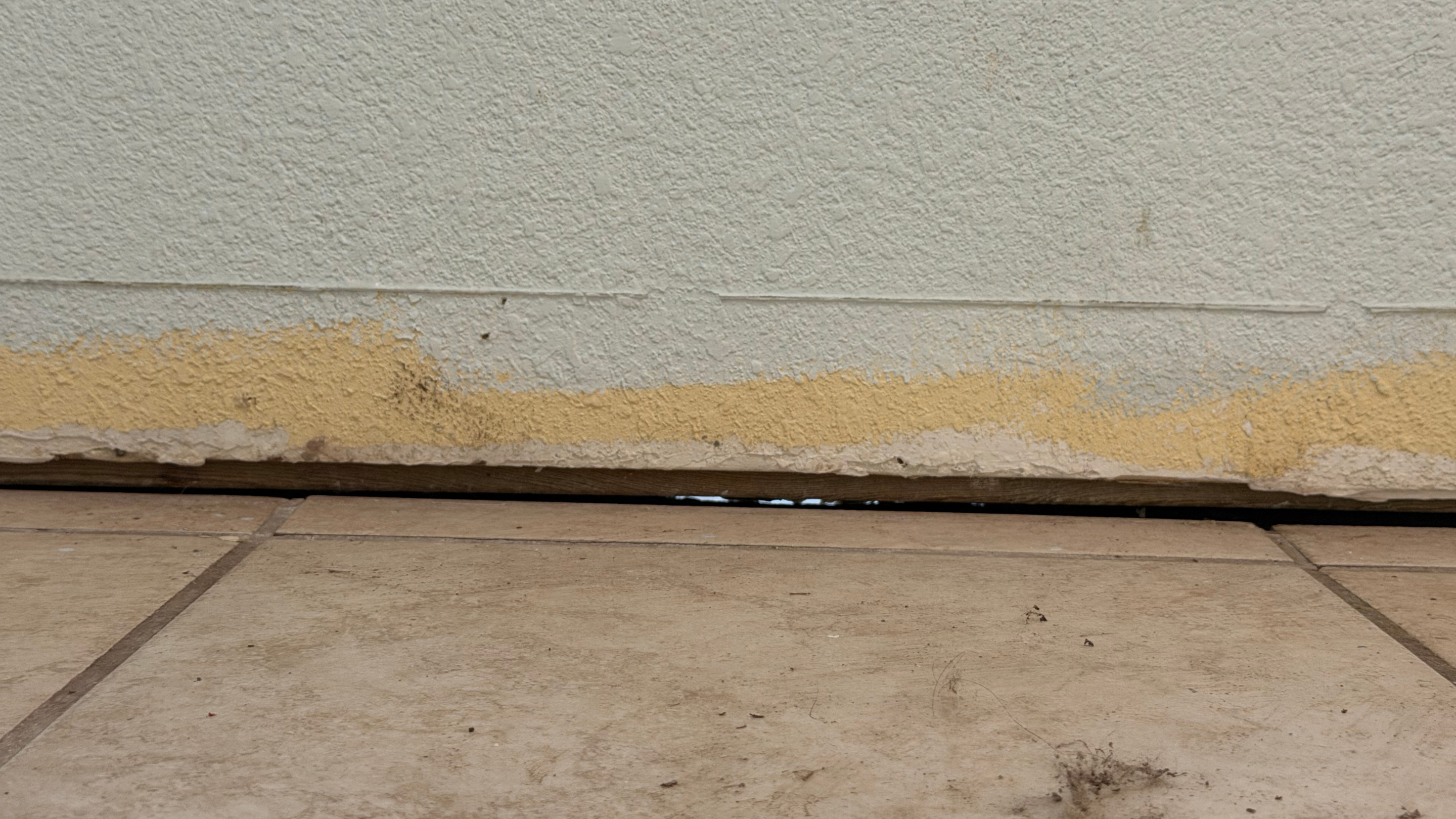
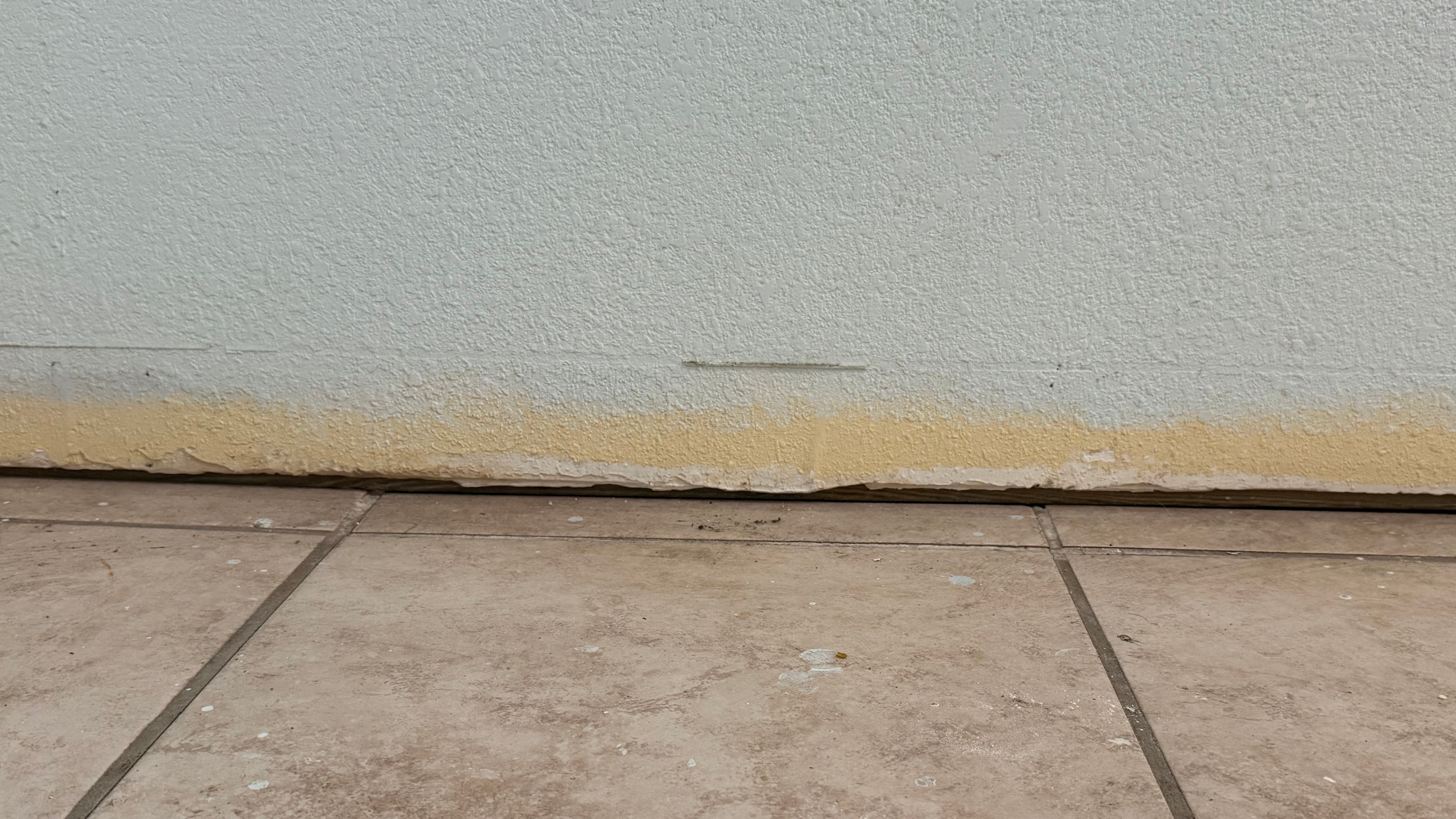
The most visible sign of movement inside the Largo home was a gap between the baseboard and the floor.
That gap developed because the floor slab had moved downward.
The cause was not simply age or a flooring defect. A plumbing leak had introduced a significant amount of water beneath the home. As the water moved through the subsurface material, it carried soil with it, creating erosion and voids beneath the slab.
Once those voids formed, portions of the concrete no longer had the same uniform support they once had.
Concrete slabs are designed to bear on supporting material beneath them. When that support is washed away, the slab can begin bridging over empty or weakened areas. Eventually, gravity and normal structural loads can cause the concrete to settle toward those unsupported zones.
That is what happened at this Largo property.
The situation was especially notable because the exterior of the home had previously been underpinned in 2005. However, that earlier foundation work did not prevent a later plumbing leak from changing the soil conditions beneath the interior slab.
The plumbing failure created a new support problem that needed a new repair strategy.
Yes. A plumbing leak beneath or near a slab can do more than create moisture problems.
When water escapes from a broken pipe or plumbing system, it can move through the supporting material beneath the concrete. Depending on the amount of water and the surrounding conditions, that movement may:
Fixing the plumbing leak stops the new water source, but it does not automatically repair the soil loss that already occurred.
That distinction was one of the most important aspects of this project.
The leak had to be repaired first. Then the homeowner needed to address the structural consequences created by the leak.
That is where professional soil stabilization became essential.
The homeowner wanted to move forward with interior repairs including:
But Helicon’s project team recognized that those improvements needed to happen after the subsurface support issue was treated.
If the homeowner installed new flooring or repaired gaps before stabilizing the slab, continued settlement could damage those new finishes.
A repaired baseboard could separate again. A newly installed floor could become uneven. Fresh drywall or paint could develop new cracking if movement continued.
The proper sequence for this type of problem is:
That sequence protects the homeowner’s investment in the visible repairs by first addressing the structural support below them.
The main challenge on this Largo project was not simply filling a void.
The repair had to address multiple layers of support beneath the home while carefully monitoring the existing structure during the slab-lifting process.
The plumbing leak had affected the interior slab, and the project team also believed some exterior support areas may have been weakened.
A successful repair therefore needed to treat:
Another important challenge was controlling the lift.
The homeowner naturally wanted the interior floor brought closer to its previous elevation. Improving that elevation could also reduce the need for self-leveling concrete or other corrective finish work later.
However, Helicon did not want to “chase elevation” at the expense of damaging the home.
Excessive lift can create stress in:
For that reason, the project was approached as stabilization first and lift second.
Any elevation improvement needed to happen gradually and only where the structure responded appropriately.
The first major phase involved deep soil injections.
Helicon installed injection rods to approximately 10 feet below grade at 18 locations around the slab.
Approximately 20 pounds of structural two-part polyurethane was installed at each point, representing roughly 400 pounds of material in the deep-injection phase.
These deep injections were designed to improve support below the slab by treating weakened areas created or affected by the plumbing leak.
The polyurethane was intended to:
This deep treatment was important because repairing only the upper few inches beneath the slab would not have addressed the broader support conditions identified during the project.
After establishing deeper support, Helicon also performed a grid-pattern injection program closer to the slab.
These injections were intended to reinforce the upper support zone directly beneath the interior concrete.
The purpose was to create a solid transition between the deeper stabilized soils and the slab above.
This layered approach is important in soil stabilization projects.
The deepest injections improve the lower support zone.
The shallow injections reinforce the material closer to the concrete.
Then the slab injections address the final interface directly beneath the floor.
Instead of relying on one repair depth, the project treated the entire support system more comprehensively.
The next phase involved injections directly beneath the interior slab.
Crew members drilled small access points through the existing concrete. Injection ports allowed the two-part structural polyurethane material to be placed directly beneath the floor.
As the polyurethane reacted and expanded, it helped fill voids and restore support beneath the concrete.
This part of the project served two related purposes:
The first priority was filling unsupported zones so the slab had a stronger base beneath it.
Once the support condition improved, the polyurethane could also be used to carefully raise portions of the slab where the concrete responded appropriately.
This is where concrete repair becomes more than simply patching a crack.
The visible floor is only one part of the system. Effective concrete repair often requires correcting the support conditions beneath the slab before the surface itself can perform reliably.
In many cases, yes. As structural polyurethane expands beneath a slab, it can create controlled upward pressure.
However, Helicon does not treat lift as a guaranteed result. Every slab responds differently.
Factors that influence lift may include:
For this Largo project, the primary objective was to stabilize the floor and prevent continued settlement in the treated areas.
Any lift was considered an additional benefit when it could be achieved safely.
Controlled lifting requires constant monitoring.
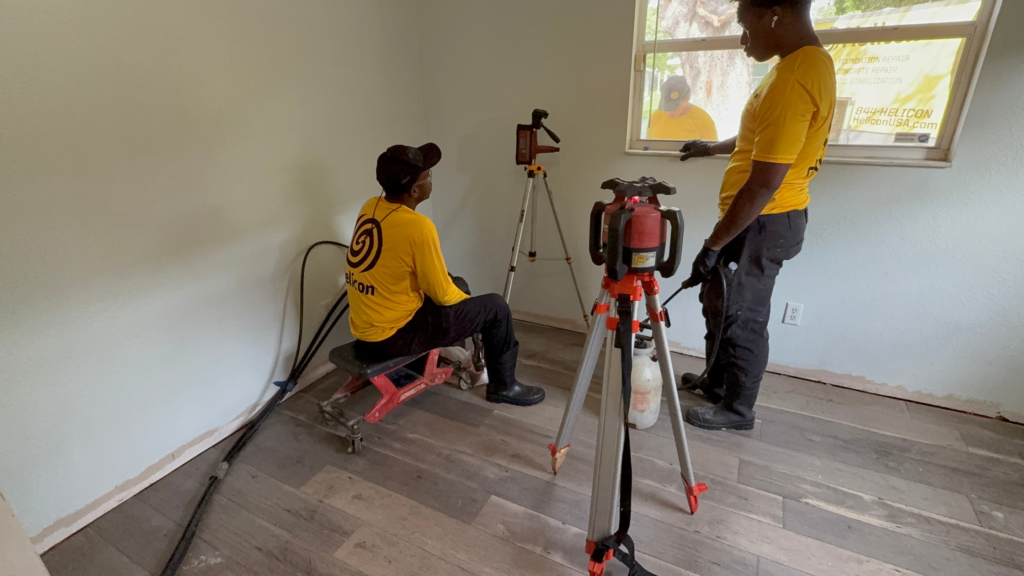
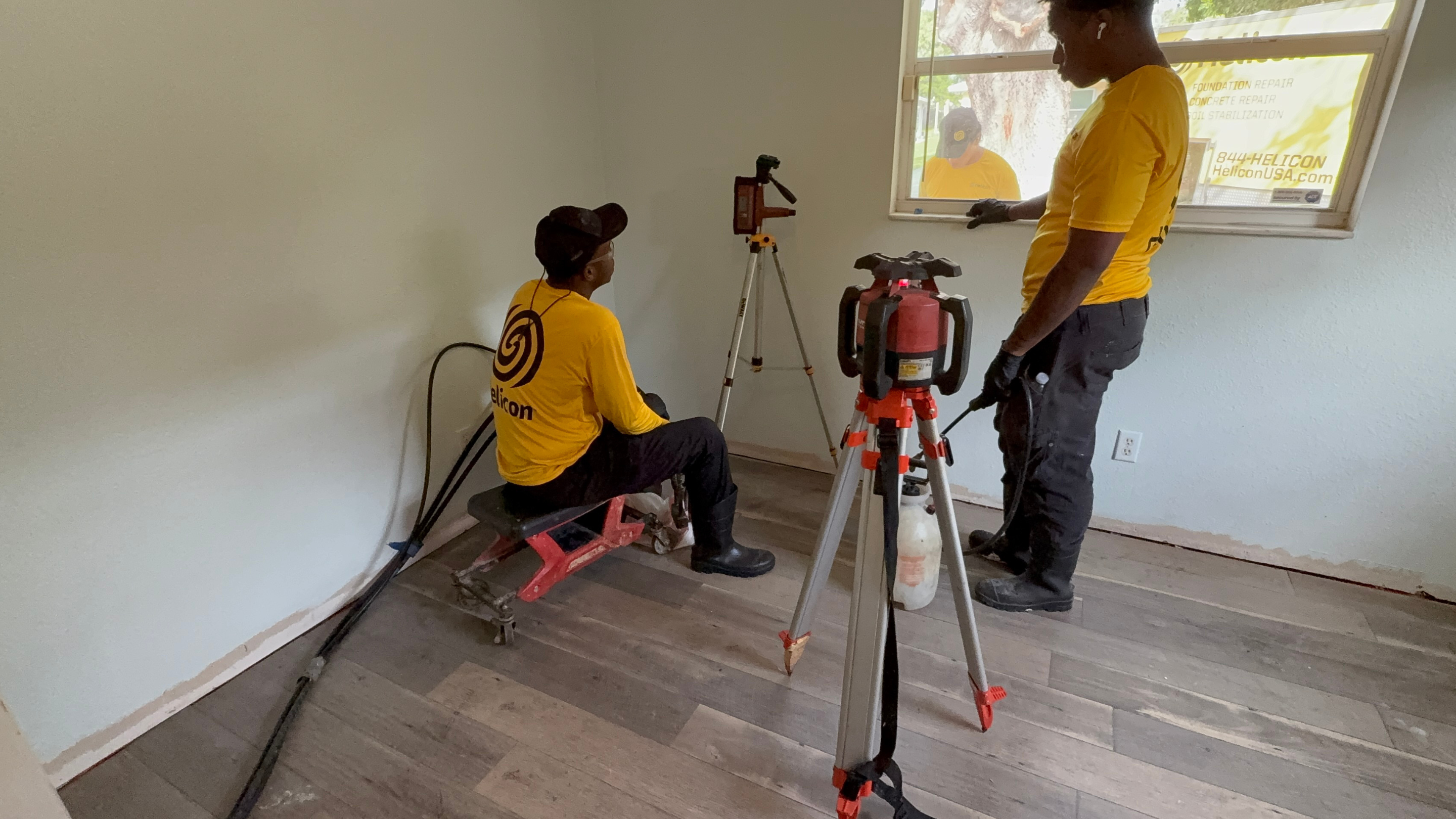
During the Largo project, the foreman applied polyurethane beneath the slab in small, controlled bursts.
Crew members monitored the floor using several methods.
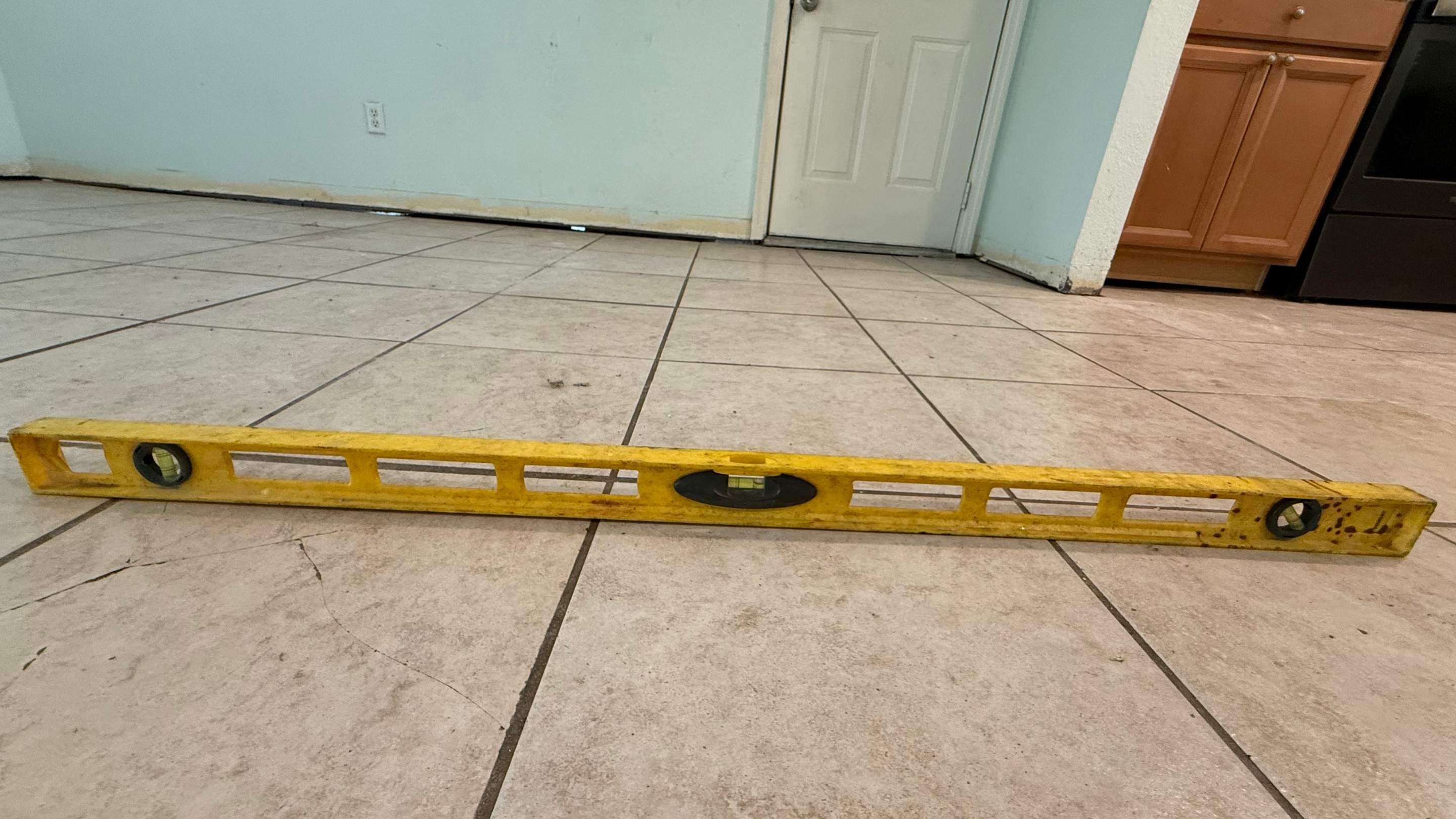
A laser level allowed the team to track subtle changes in floor elevation while the polyurethane expanded beneath the concrete.
Experienced technicians can often detect changes in the way a slab responds as voids are filled and support develops.
The lift was not monitored by one technician alone.
Team members inside and outside the home watched for:
This coordinated approach allowed the team to keep the repair controlled and precise.
The goal was not maximum lift. The goal was safe stabilization with appropriate elevation improvement where possible.
This Largo project is a strong example of why structural problems caused by plumbing leaks may require more than one type of polyurethane injection.
The repair included three levels of treatment:
Approximately 10-foot-deep injections helped improve support in the deeper soil zones.
Grid-pattern injections strengthened the upper support material beneath the slab.
Direct slab injections filled voids, improved bearing, and allowed Helicon to attempt controlled lifting.
Together, these phases created a more complete stabilization system.
The deeper treatment supported the upper treatment. The upper treatment supported the slab.
And the slab injections allowed the finished floor to regain more dependable support.
The repair was completed as part of an insurance claim related to the plumbing leak.
That detail is important because plumbing-related foundation and slab damage can involve multiple stages of restoration.
The plumbing system may need to be repaired first. Structural stabilization comes next.
Only then should interior finishes be restored.
According to the project information provided in the video, the interior slab-injection work included a 5-year warranty, while the exterior treatment included a 20-year warranty.
Those warranty terms gave the homeowner additional peace of mind after completing the stabilization program.
The completed Largo project addressed the support problems created after the plumbing leak washed away or displaced material beneath the slab.
Key benefits included:
Most importantly, the homeowner addressed the hidden support problem before completing expensive cosmetic work.
Helicon helps Florida homeowners and property owners address foundation settlement, sinking concrete, weak or eroded support conditions, seawall problems, and other structural concerns.
Our team develops repair solutions based on the structure, observed conditions, engineering requirements, and project goals—with the objective of solving problems where they often begin: beneath the surface.
If a plumbing leak has caused floor settlement, voids beneath a slab, sloping concrete, or gaps beneath baseboards, repairing the plumbing may only be the first step.
Helicon provides soil stabilization, concrete repair, slab stabilization, polyurethane injection, concrete lifting, foundation repair, and other structural solutions throughout Largo, Pinellas County, Tampa Bay, and communities across Florida.
Call 844-HELICON to schedule a free inspection and learn which repair approach may be appropriate for your home.
FREE INSPECTION REQUEST