Direct Answer
Concrete lifting is usually the better option when the concrete slab is still in good condition but has settled because of weak soils, poor compaction, soil washout, or voids beneath the slab. Lifting can raise the slab, fill voids, restore support, reduce trip hazards, and avoid the cost and disruption of tearing out and replacing the concrete.
Concrete replacement is usually the better option when the slab is too broken, severely cracked, crumbling, scaling, spalling, deteriorated, too thin, tree-root damaged, poorly poured, or no longer strong enough to lift successfully. Replacement may also be needed when the concrete surface, thickness, reinforcement, slope, layout, or finish is the main problem.
The most important question is not simply whether the concrete is sinking. The right question is: why did it sink, and is the existing slab still worth saving? If the soil problem is not addressed, replacing the concrete may only create a new slab over the same weak or washed-out soils.
Concrete lifting is usually the better option when the slab is still strong enough to save and the main issue is lost support beneath it. Concrete replacement is usually better when the concrete itself is too damaged or deteriorated to lift predictably. The best choice depends on two questions: what caused the concrete to sink, and is the existing slab still worth saving?
The Main Difference Between Concrete Lifting and Replacement
Concrete lifting and concrete replacement solve different problems.
Concrete lifting is designed to raise and support an existing slab that has settled. The goal is to save the concrete when it is still in good enough condition. Lifting is commonly used for driveways, sidewalks, walkways, pool decks, patios, lanais, garage slabs, and some interior slab areas.
Concrete replacement removes the existing slab and pours new concrete. Replacement is usually needed when the concrete is too broken, deteriorated, thin, root-damaged, poorly constructed, or not suitable for lifting.
This difference matters because sinking concrete is often a support problem below the slab, not just a surface problem. If the concrete is still sound, lifting may solve the settlement without demolition. If the concrete itself is no longer strong enough to lift, replacement may be the better choice.
A simple way to think about it:
- Concrete lifting saves the existing slab when the slab is worth saving.
- Concrete replacement starts over when the slab is too damaged to save.
The best repair depends on both the condition of the slab and the cause of the settlement.
When Concrete Lifting Is Usually the Better Option
Concrete lifting usually makes sense when the slab has settled but is still mostly intact.
The concrete may be uneven, hollow, sloped, or creating a trip hazard, but the slab itself still has enough strength and integrity to be lifted and supported.
Concrete lifting may be the better option when:
- The slab is sinking but mostly intact
- The concrete surface is still in fair or good condition
- The slab has settled unevenly
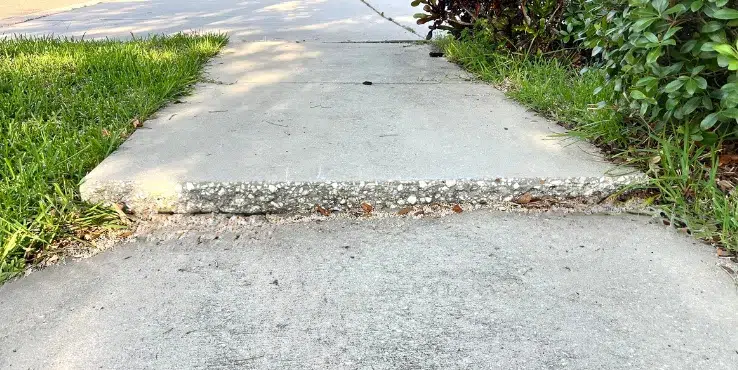
- There is a trip hazard between slabs
- The slab sounds hollow
- There is a visible gap or void beneath the slab
- The slab needs support more than a new surface
- The issue is caused by soil settlement, poor compaction, or washout
- You want a faster and less disruptive repair
- You want to avoid demolition when the slab can be saved
Concrete lifting can be a strong option for many settled driveways, sidewalks, walkways, patios, pool decks, lanais, garage slabs, and slab support areas.
Read more: Concrete Lifting
It is especially useful when the problem is lost support beneath the concrete. If a slab settled because of weak soils, voids, or washout, lifting can help restore the slab to a more usable position while filling or supporting the space below it.
The key is slab condition. If the slab is still strong enough to move as a section, lifting may be appropriate. If the slab is broken into many pieces, crumbling, or badly deteriorated, replacement may be more realistic.
When Concrete Replacement Is Usually the Better Option
Concrete replacement is usually the better option when the slab itself is too damaged to lift successfully.
Replacement may make more sense when:
- The slab is badly cracked into many pieces
- The concrete is crumbling, scaling, spalling, or deteriorated
- The slab is too thin or poorly constructed
- Tree roots have lifted and broken the slab
- The surface finish or appearance is the main problem
- The slab slope or layout is wrong and needs to be re-poured
- Drainage design requires reconstruction
- Reinforcement, thickness, or layout needs to change
- Lifting would not produce a predictable result
Concrete lifting works best when the slab is still strong enough to save. Replacement works best when the existing concrete has reached the point where lifting would only move broken, deteriorated, or unstable material.
For example, a driveway slab that settled two inches but remains mostly intact may be a good lifting candidate. A driveway that is cracked into many small sections, crumbling at the surface, and deteriorating throughout may be better suited for replacement.
Replacement can also be the better choice when the homeowner wants a new layout, a different finish, better drainage slope, or a complete surface redesign.
However, replacement does not automatically fix the reason the original concrete sank. If weak soils, poor compaction, voids, or drainage problems caused the old slab to settle, those conditions should be addressed before or during replacement.
Concrete Lifting vs Replacement
| Situation | Concrete Lifting May Be Better | Concrete Replacement May Be Better |
| Slab has settled but is mostly intact | Yes | Not always needed |
| Trip hazard between slabs | Often | If slab is too broken |
| Hollow-sounding slab | Often, if slab is sound | If slab is cracked or deteriorated |
| Void beneath slab | Often | If slab cannot be supported |
| Surface is badly crumbling | No | Yes |
| Slab is severely cracked into many pieces | Usually no | Yes |
| Tree roots have lifted and broken slab | Sometimes no | Often yes |
| Poor drainage caused washout | Maybe, with drainage correction | Maybe, but drainage still must be fixed |
| Slab is too thin or poorly poured | Maybe no | Often yes |
| Homeowner wants faster, less invasive repair | Often yes | Less likely |
| Decorative finish must be completely changed | Not usually | Yes |
| Soil below slab is weak or washed out | Yes, with stabilization or void filling | Replacement alone may not fix cause |
This table is a guide, not a diagnosis. The right choice depends on the slab condition, the cause of settlement, access, drainage, soil support, and the homeowner’s goals.
A settled slab that is still strong may be lifted. A badly deteriorated slab may need replacement. A slab that settled because of active water washout may need drainage correction no matter which option is chosen.
Checklist: Concrete Lifting or Replacement?
Concrete lifting may make more sense if:
- The slab is sinking but mostly intact
- The concrete surface is still in fair or good condition
- The slab has settled unevenly
- There is a trip hazard between slabs
- The slab sounds hollow
- There is a visible gap or void beneath the slab
- The slab needs to support more than a new surface
- The issue is caused by soil settlement, poor compaction, or washout
- You want a faster and less disruptive repair
- You want to avoid demolition when the slab can be saved
Concrete replacement may make more sense if:
- The slab is badly cracked into many pieces
- The concrete is crumbling, scaling, or deteriorated
- The slab is too thin or poorly constructed
- Tree roots have broken or lifted the slab
- The surface finish is the main problem
- The slab has major drainage or slope design issues that require re-pouring
- The concrete cannot be lifted safely or predictably
- You need a new layout, new thickness, or new finish
If you are not sure which side your concrete falls on, the slab should be evaluated before you commit to lifting, replacement, resurfacing, or coating.
Why Concrete Settles in Florida
Concrete settles when the soil beneath it loses strength, compresses, washes out, or was not compacted properly before the slab was poured.
In Florida, common causes of sinking concrete include:
- Poor soil compaction before slab placement
- Loose sandy soils
- Soil washout from drainage or water movement
- Voids beneath the slab
- Erosion along slab edges
- Heavy rainfall
- Plumbing leaks, irrigation leaks, or pool leaks
- Downspouts or poor grading sending water beneath concrete
- Settlement of fill soils
- Organic material decay beneath slabs
- Tree roots
- Poor concrete thickness or construction
- Sinkhole-related conditions in certain regions
These issues commonly affect driveways, sidewalks, pool decks, patios, lanais, walkways, garage slabs, and interior slab areas.
For example, a driveway may sink because water is washing soil from beneath the slab.
Read more: Why Is My Driveway Sinking in Florida?
A pool deck may settle near coping or drains because water, leaks, or failed mastic joints are allowing soil movement below the deck.
Read more: Pool Deck Sinking Near Coping: Causes and Repair Options
A sidewalk may become uneven because of soil washout, poor compaction, or root movement.
Read more: Uneven Sidewalks and Trip Hazards: What Homeowners Need to Know
A garage slab may settle near the garage door or driveway transition because of washout, poor compaction, or voids beneath the slab.
Read more: Why Is My Garage Floor Sinking?
An interior slab may move because of poor compaction, plumbing leaks, water washout, or voids beneath the home.
Read more: Interior Slab Settlement: Signs and Solutions
The visible problem may be sinking concrete, but the cause is often below the surface.
Why Replacing Concrete Does Not Always Fix the Problem
Replacement gives you new concrete. It does not automatically fix the soil problem that caused the old concrete to sink.
This is one of the most important points homeowners should understand.
If the old concrete sank because of weak soils, poor compaction, soil washout, voids, or drainage problems, removing and replacing the slab may not solve the cause. The new slab may look good at first, but if the same soil conditions remain, it can settle again.
Replacement may still be the right choice if the slab is too broken or deteriorated. But even then, the soil support and drainage conditions should be addressed before or during replacement.
Common problems that replacement alone may not fix include:
- Weak or loose soils beneath the slab
- Poorly compacted fill soils
- Voids beneath the concrete
- Water washing soil from under the slab
- Poor drainage sending water toward or beneath the concrete
- Pool leaks, plumbing leaks, irrigation leaks, or drain leaks
- Erosion along slab edges
- Soil loss near seawalls or waterfront areas
If the concrete is replaced without correcting the cause, the homeowner may pay for a new slab over the same unstable conditions.
This is why the first question should be, “Why did the concrete sink?” not just, “How do we make it look new again?”
Read more: Voids Under Concrete Slabs: What Causes Them and How to Fix Them
How Polyurethane Concrete Lifting Works
Polyurethane concrete lifting is a method used to raise and support settled concrete slabs.
The process typically involves drilling small holes through the concrete and injecting expanding polyurethane foam beneath the slab. The foam expands below the concrete, fills voids, helps restore support, and can lift the slab when conditions allow.
Polyurethane lifting can be used for many types of settled concrete, including:
- Driveways
- Sidewalks
- Walkways
- Pool decks
- Patios
- Lanais
- Garage slabs
- Some interior slab areas
The goal is to lift and support the existing slab without tearing it out. Once the foam cures, it helps support the concrete below the surface.
Polyurethane is often a good fit for Florida soil conditions because it is lightweight, fast-curing, less invasive, and does not add heavy material to already weak or loose soils.
Concrete lifting is not magic, and it is not right for every slab. The slab still needs enough strength and integrity to be lifted. If the concrete is too deteriorated, thin, or broken into pieces, replacement may be the better option.
Concrete Lifting vs Mudjacking vs Replacement
Homeowners often compare concrete lifting, mudjacking, slab jacking, and replacement.
Traditional mudjacking or slab jacking typically uses a cement-based slurry pumped beneath the slab to raise it. Polyurethane concrete lifting uses expanding foam instead of a heavier cement slurry.
Concrete replacement removes the old slab and pours new concrete.
Polyurethane Concrete Lifting
Polyurethane concrete lifting is:
- Lightweight
- Fast-curing
- Less invasive
- Installed through small injection holes
- Useful for filling voids beneath slabs
- Effective for lifting many settled slabs
- Less likely to add heavy weight to weak soils
- Often faster than replacement
Polyurethane is commonly used when the slab is still worth saving and the issue is support loss beneath the concrete.
Mudjacking or Slab Jacking
Mudjacking or traditional slab jacking uses a heavier cement-based slurry. It can lift certain slabs, but the material adds weight beneath the concrete.
In Florida, where soils may already be weak, loose, wet, washed out, or poorly compacted, adding heavy material below the slab may not always be ideal.
Concrete Replacement
Concrete replacement removes the existing slab and installs new concrete. Replacement may be best when the slab is too broken, crumbling, spalling, thin, root-damaged, poorly sloped, or deteriorated to lift successfully.
Replacement can improve appearance and allow a new layout, thickness, slope, or finish. But replacement still needs proper base preparation, compaction, drainage, and soil support to reduce the risk of future settlement.
Where Concrete Lifting Works Best
Concrete lifting works best where the slab is still structurally sound but has lost support underneath.
Common areas where lifting may be a good option include:
- Driveway sections that have settled but remain mostly intact
- Sidewalk slabs with trip hazards
- Walkways that have dropped or become uneven
- Pool deck sections that have settled but are not badly broken
- Patios and lanais with low spots or voids
- Garage slabs with hollow areas or settlement
- Interior slab areas where the slab is repairable and access allows injection
Lifting is often helpful when the problem is a support issue below the slab, not a failure of the concrete itself.
For example, if a sidewalk panel has dropped and created a trip hazard but remains intact, lifting may be better than replacement. If a pool deck has a void beneath it but the concrete surface is still usable, void filling and support may be appropriate. If a garage slab sounds hollow and has settled but is not severely cracked, slab support may be a good option.
The more intact the slab is, the better the chance that lifting can save it.
Where Replacement May Be Better
Replacement may be better when the concrete is too damaged, deteriorated, or poorly constructed to lift predictably.
Replacement may be the better option for:
- Concrete broken into many small pieces
- Severe cracking throughout the slab
- Crumbling or deteriorated concrete
- Scaling or spalling surfaces
- Very thin slabs
- Poorly poured slabs
- Slabs with major drainage slope problems
- Tree-root damaged slabs
- Slabs with major surface defects
- Slabs where appearance or finish is the main concern
- Concrete that needs a new layout, thickness, or reinforcement
A broken slab may not lift as one piece. Instead, lifting may move one section while another remains cracked, tilted, or unstable.
Replacement can also be better when the homeowner wants a new decorative finish, a new slope, a different layout, or a complete redesign.
The honest answer is that lifting is not always the right repair. The slab has to be worth saving.
Cost Comparison: Concrete Lifting vs Replacement
Concrete lifting is often less expensive and less disruptive than replacement, but cost depends on the slab type, size, access, voids, lift amount, soil conditions, and whether stabilization is needed.
Typical ranges may include:
- Concrete lifting or slab support: Around $1,500 to $8,000 depending on slab area, access, voids, and lift needed
- Smaller sidewalk or walkway lifting: Often around $1,500 to $3,500
- Driveway lifting: Often around $2,000 to $5,000
- Pool deck lifting: Often around $2,000 to $6,000
- Garage or interior slab lifting/support: Often around $2,000 to $8,000
- Polyurethane soil stabilization: Around $2,000 to $6,000 for smaller exterior slabs, or around $5,000 to $20,000 for broader home or foundation-related treatment
- Concrete replacement: contractor-specific, often more expensive when demolition, disposal, forming, pouring, finishing, curing time, and access are included
- Driveway replacement in Florida: Often around $10,000 to $15,000 or more depending on size, demolition, disposal, thickness, finish, site access, and conditions
*These are typical Florida pricing examples based on published industry resources and contractor pricing guides. They are intended for educational purposes only and are not Helicon’s pricing. Every home is different, and a professional inspection is the only way to determine the appropriate repair and provide an accurate quote.
Cost is not the only factor. A cheaper repair that does not address the cause may become expensive later.
For example, resurfacing settled concrete may improve appearance temporarily, but it does not fill voids or stabilize soils. Replacing a slab without correcting drainage or soil support may lead to future settlement. Lifting a slab that is too broken may not produce a good result.
The best value is the repair that solves the right problem.
What Homeowners Should Not Do
The biggest mistake homeowners make is replacing concrete without fixing the soil, drainage, or void problem that caused the settlement.
Homeowners should avoid:
- Replacing concrete without fixing the soil, drainage, or void problem
- Assuming all sinking concrete must be replaced
- Choosing the cheapest surface repair without addressing support below
- Resurfacing or coating settled concrete before stabilizing it
- Ignoring water pooling or soil washout
- Waiting until trip hazards or cracks get worse
- Assuming concrete lifting can fix concrete that is too broken or deteriorated
- Comparing quotes without knowing whether they solve the same cause
Concrete lifting, replacement, resurfacing, and patching are not interchangeable. Each solves a different problem.
If a slab is sinking, the cause should be understood before money is spent on a repair that only improves appearance.
How Helicon Evaluates Sinking Concrete
When Helicon evaluates sinking concrete, the inspection looks at both the slab and the support below it. The goal is to determine whether the concrete can be lifted, whether it should be replaced, and whether soil, water, drainage, or void conditions need to be corrected.
A proper evaluation may include:
- Looking at where the slab has settled
- Checking whether the slab is mostly intact or badly broken
- Reviewing cracks, trip hazards, slopes, and low spots
- Looking for hollow-sounding concrete
- Checking for visible gaps or voids beneath slab edges
- Reviewing soil washout around the slab
- Looking at drainage and water movement
- Checking whether water is pooling near or beneath the concrete
- Reviewing nearby slabs, pavers, pool decks, driveways, sidewalks, garage slabs, or patios for related settlement
- Looking for plumbing, irrigation, pool, or drainage leak concerns when relevant
- Checking whether nearby foundation warning signs are present
- Determining whether the issue appears isolated or part of a larger soil support pattern
The inspection should answer three questions:
- Why did the concrete sink?
- Is the slab still worth saving?
- Does the repair need lifting, void filling, soil stabilization, replacement, drainage correction, or a combination
Helicon’s goal is not to lift every slab. The goal is to determine whether the existing concrete is worth saving and whether the soil below it can be properly supported.
When to Schedule an Inspection
You should schedule an inspection if concrete is sinking, uneven, hollow, cracked, creating a trip hazard, or showing signs of soil washout.
Call an expert if you notice:
- A driveway section sinking
- A sidewalk trip hazard
- A pool deck settling near coping or drains
- A patio or lanai slab dropping
- A garage floor sinking or sounding hollow
- Interior slab movement or repeated flooring damage
- Visible gaps beneath the slab edge
- Soil washing out around the slab
- Water pooling near or beneath concrete
- Concrete rocking or moving
- Cracks widening or spreading
- Multiple exterior slabs settling near the home
- Nearby foundation warning signs
Not sure whether lifting or replacement is the better option? Helicon can evaluate the slab condition, voids, soil support, drainage, water movement, nearby settlement, and foundation warning signs when needed.
Read more: Foundation Repair
Why Florida Homeowners Trust Helicon
Helicon has been helping Florida homeowners solve concrete lifting, soil stabilization, foundation repair, seawall erosion repair, sinkhole repair, void filling, garage slab settlement, pool deck settlement, sidewalk settlement, driveway settlement, interior slab settlement, and slab support problems since 2004.
As a family-owned Florida company, Helicon understands the soil conditions, water movement, drainage issues, construction practices, plumbing-related soil washout, and settlement patterns that affect driveways, sidewalks, pool decks, patios, lanais, garage floors, interior slabs, foundations, and waterfront properties across Tampa Bay, Orlando, Southwest Florida, and surrounding areas.
We are not there to tell every homeowner that every sinking slab must be lifted. We are also not there to tell every homeowner that every settled slab must be replaced. We are there to determine what caused the settlement, whether the slab is worth saving, and which repair option makes the most sense.
Sometimes the right answer is polyurethane concrete lifting. Sometimes it is void filling. Sometimes it is polyurethane soil stabilization. Sometimes drainage correction is needed. Sometimes the concrete is too damaged and replacement is the better choice.
The goal is always the same: identify the cause, protect the property, and recommend the least invasive repair that provides a long-term solution.
Schedule a Free Concrete Lifting Inspection
If your concrete is sinking, uneven, cracked, hollow, or creating a trip hazard, Helicon can help.
Our team can evaluate the slab condition, visible settlement, hollow areas, gaps, soil washout, drainage, water movement, nearby settlement, and foundation warning signs when needed to help determine whether concrete lifting, void filling, soil stabilization, replacement, or another repair approach makes the most sense.
Schedule a free concrete lifting inspection with Helicon to find out what is causing the issue and what should be done next.
FAQ
Is concrete lifting better than replacement?
Concrete lifting is usually better when the slab is still in good condition but has settled because of weak soils, poor compaction, washout, or voids beneath it. Replacement is usually better when the slab is too broken, deteriorated, thin, root-damaged, or poorly constructed to lift successfully.
When should concrete be replaced instead of lifted?
Concrete should usually be replaced when it is severely cracked into many pieces, crumbling, scaling, spalling, deteriorated, too thin, poorly poured, root-damaged, or when the slope, layout, thickness, or finish needs to be changed.
Does replacing concrete fix sinking?
Not always. Replacement gives you new concrete, but it does not automatically fix weak soils, poor compaction, soil washout, voids, or drainage problems beneath the slab. If the cause is not addressed, the new concrete may settle again.
How does polyurethane concrete lifting work?
Small holes are drilled through the slab, and expanding polyurethane foam is injected beneath the concrete. The foam expands to fill voids, restore support, and lift the slab when conditions allow.
Is polyurethane lifting better than mudjacking?
Polyurethane lifting is often preferred because it is lightweight, fast-curing, less invasive, and does not add heavy slurry beneath already weak soils. Mudjacking or slab jacking uses a heavier cement-based material, which may not be ideal in many Florida soil conditions.
Can concrete lifting fix cracked concrete?
Sometimes. Concrete lifting can help when the slab is cracked but still mostly intact and strong enough to lift. If the slab is broken into many pieces, crumbling, or badly deteriorated, replacement may be the better option.
Is concrete lifting cheaper than replacement?
Concrete lifting is often less expensive than replacement because it avoids demolition, disposal, forming, pouring, finishing, and curing time. However, cost depends on slab size, access, voids, lift amount, and soil conditions.
How long does concrete lifting take?
Many concrete lifting projects can be completed faster than replacement because there is no full tear-out, re-pour, or long curing period. Timing depends on the slab size, access, injection needs, and site conditions.
What types of concrete can be lifted?
Many settled driveways, sidewalks, walkways, patios, lanais, pool decks, garage slabs, and some interior slabs can be lifted if the concrete is still in repairable condition.
When should I call Helicon?
Call Helicon if your concrete is sinking, uneven, hollow, cracked, creating a trip hazard, showing soil washout, or settling near a driveway, sidewalk, pool deck, patio, lanai, garage floor, interior slab, or foundation area.