You noticed it while mowing the lawn or watering the bed along the back property line. The retaining wall that has held your yard in place for years looks different now: a slight lean, a hairline crack, or a gap opening between the wall and the patio slab above it.
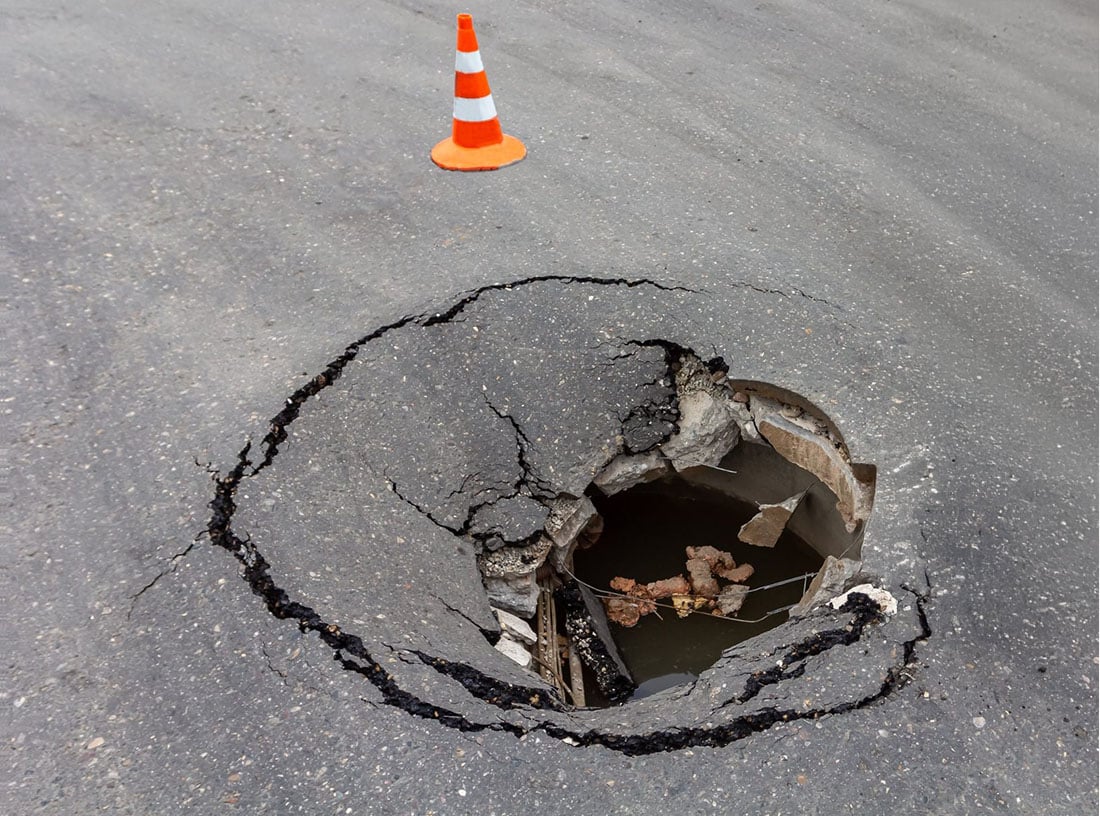
In Florida, that shift usually traces to sandy soils that drain fast but offer little resistance, rain events that saturate the ground behind the wall, or slow settling after years of storm cycles. Sandy fill, high water tables, and sinkhole activity in parts of the state put constant pressure on any structure holding back soil.
Helicon has engineered solutions for these conditions since 2004, with more than two decades in the field and a 4.9-star rating from Florida homeowners. This guide covers how retaining wall anchors work, which types suit different soil and access conditions, and the warning signs that mean it is time for a professional look.
How Anchoring Systems Stabilize a Wall
That lean did not happen overnight. It built up as soil pressure pushed against the wall face, inch by inch, accelerating after each wet summer softened the ground behind it. Anchors exist to counter that slow, steady force before it becomes a structural failure.
Two forces are working against your wall: lateral soil pressure and water buildup. Sandy soils and seasonal flooding mean many Florida walls carry lateral loads well beyond what their original design accounted for.
How Tiebacks Transfer Lateral Forces Into Stable Soil
Tiebacks connect the wall face to an anchor point set deep in soil that will not move. The rod or cable runs back from the wall, through the loose backfill, into ground with enough strength to resist pull-out. Instead of the wall alone fighting the soil, the anchor shares that load with stable earth behind it. On larger or waterfront structures, this is the same principle behind seawall tieback rods.
Why Water Pressure Can Push a Wall Out of Position
Hydrostatic pressure builds when water collects behind a wall faster than it drains away. Saturated soil gets heavier and pushes harder against the wall face, which is routine after a Florida summer storm.
Weep holes and drainage layers relieve some of that pressure, but a wall already under stress usually needs anchors to restore stability. Fix the anchoring without fixing the drainage, and the pressure simply rebuilds.
Comparing Reinforcement Options for Existing Walls
Not every leaning wall needs the same fix. A block wall on a tight lot faces different access limits than a taller wall along an open canal bank, and the right choice depends on both soil conditions and how much room a crew has to work.
Helical Tieback Anchors for Limited-Access Sites
Helical anchors screw into the soil on a shaft fitted with helical plates, reaching load-bearing ground without wide excavation. Because they install with hydraulic torque equipment rather than trenching machinery, they disturb far less of the yard, which makes them a strong fit for backyards with fences, pools, or mature landscaping.
Plate and Deadman Anchors for Wall Restraint
A deadman anchor is a buried block, usually concrete or steel, connected to the wall by a tie rod set well behind the active soil zone. An interior steel plate spreads the resisting force across the wall face instead of concentrating it at a single point. These suit shorter to mid-height walls where deep drilling is not required.
When Shoring or Slope Stabilization May Be Needed
Taller walls, and walls sitting on a failing slope, sometimes need temporary shoring during repair to hold soil in place while anchors go in. On those sites, earth retention and shoring work often accompanies the anchors, along with regrading or added drainage.
Warning Signs That Call for a Professional Evaluation
A crack near the top of a wall can look minor from the porch. Up close, it may mean the wall is already losing its argument with the soil behind it.
Cracks, Leaning, and Separation at the Top of the Wall
A wall that leans outward, even slightly, is telling you soil pressure has overcome part of its resistance. Horizontal cracks, or a widening gap between the wall and the hardscape above it, point to the same movement.
- Visible lean of more than an inch from vertical
- Horizontal or stair-step cracks across block joints
- A growing gap between the wall top and adjacent patio or driveway
Mark a crack’s ends with a pencil and date it, or set a stake and string line to measure lean. Whether either changes over a few weeks is the most useful thing you can hand an engineer.
Erosion, Wet Soil, and Failing Drainage Behind the Wall
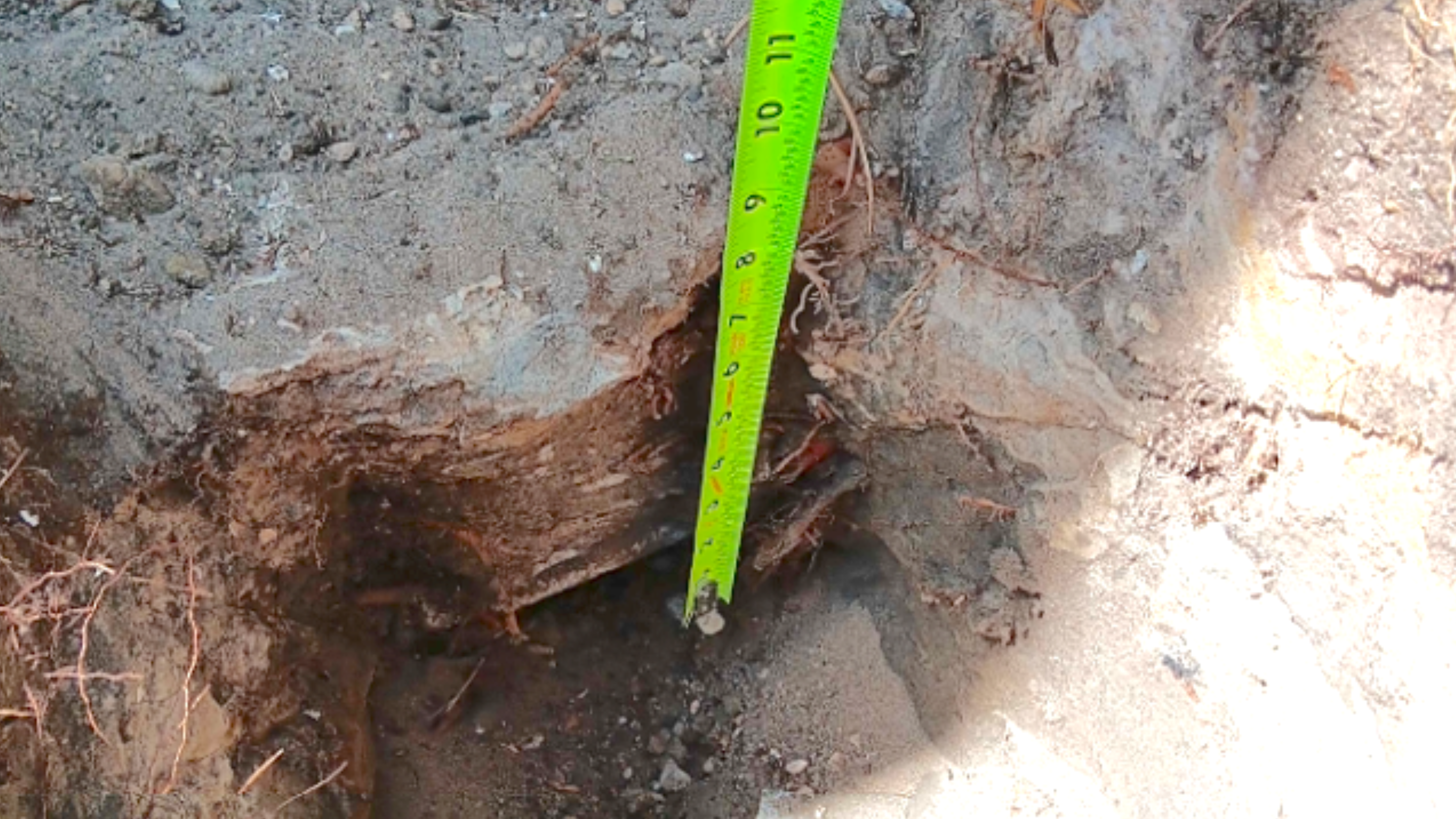
Erosion at the base of a wall shows up as small channels or exposed roots after heavy rain. Ground behind the wall that stays soggy while the weep holes stay dry is a clear sign drainage has stopped working, and that trapped water adds to pressure the wall is already struggling with.
Why Florida Ground Conditions Change the Repair Decision
Two walls built the same way can fail very differently depending on what sits beneath them. A wall on sandy coastal fill might bow within a decade while an identical wall on firmer inland soil holds for far longer.
Sandy Fill, Clay Soil, and Saturated Ground
Sandy fill compacts poorly and shifts once water moves through it, which reduces the soil’s ability to hold an anchor. Clay pockets swell when wet and shrink when dry, cycling pressure against the wall. Saturated ground from a high water table adds weight while reducing the friction anchors depend on for capacity.
Sinkhole Risk and Coastal Corrosion Considerations
Where limestone bedrock sits close to the surface, sinkhole activity can undermine the very soil an anchor bonds into, which is why sinkhole conditions sometimes have to be addressed before anchoring makes sense.
Near the coast, saltwater exposure accelerates corrosion on steel components. Corrosion protection is not an upsell in this environment. Federal guidance on ground anchors treats corrosion protection design as a core part of any permanent anchored system, and galvanizing, encapsulation, and sacrificial thickness all matter more here than in almost any other part of the country.
What Professional Anchor Evaluation and Installation Involve
Deciding a wall needs anchors is the first step. What happens between site evaluation and final testing determines whether the repair holds.
Engineering, Site Access, and Selecting the Required Capacity
An engineer reviews wall height, soil type, and site access before selecting anchor type and required load capacity. Tight yards often call for compact hydraulic rotary drilling equipment rather than full-size rigs. This stage sets the spacing and depth needed to resist the specific pressure behind your wall.
Installation Torque, Proof Testing, and Long-Term Monitoring
During installation, crews track installation torque to confirm each anchor is reaching the soil strength the design assumed. Load testing follows.
Proof and performance testing are standard practice on anchored systems, and the FHWA’s Geotechnical Engineering Circular No. 4 sets out how ground anchors are designed, tested, and inspected, including corrosion protection for permanent installations.
The point of testing is simple: an anchor that was never loaded to its design capacity is an assumption, not a repair. Periodic inspection afterward catches early movement before it becomes visible again at the wall face.
Frequently Asked Questions
How do I anchor a retaining wall in Florida’s sandy soil?
Sandy soil requires anchors that reach past the loose fill into denser load-bearing ground, often deeper than an equivalent clay or loam site would need. Depth and anchor type come from the soil profile at your specific wall, which is what an evaluation establishes.
What is the 1/3 rule for a retaining wall?
Be careful with this one, because the phrase is used for at least three different things. Some sources use it to mean the footing width should be roughly a third of wall height; others mean about a third of the wall should sit below grade.
In engineering practice, the related principle is the middle-third rule, which holds that the resultant of the earth pressure should act within the middle third of the base so no part of the footing goes into tension. All of these are preliminary rules of thumb rather than design, and none substitutes for an assessment of your soil, wall height, and drainage.
When does a retaining wall need deadman anchors?
Typically when a wall shows active lean or bulge and needs resistance beyond what its footing and drainage provide. They suit shorter to mid-height walls where there is room in the yard to set a buried block behind the active soil zone.
What types of anchors work for concrete retaining walls?
Tieback anchors, helical tiebacks, and plate or deadman systems, depending on wall height and soil. The deciding factors are how much lateral resistance the wall needs and how much access a crew has to work with.
How can I tell if a leaning wall needs stabilization?
A lean of more than an inch from vertical, new cracks, or a widening gap at the top are all strong signals. If the drainage behind the wall also looks wet or eroded, that combination moves the timeline up rather than out.
What drives the cost of anchoring a retaining wall?
Wall height, the number of anchors the design calls for, soil conditions at depth, and site access. A wall reachable by equipment costs less to stabilize than the same wall behind a pool and a fence. Drainage corrections and any shoring needed during the work also affect the figure, which is why a firm price follows an evaluation rather than preceding it.
How long do retaining wall anchors last, especially near saltwater?
Properly designed and tested anchors are intended as permanent support. Lifespan near the coast depends heavily on the corrosion protection specified, which is why galvanized or encapsulated components and appropriate sacrificial thickness matter on waterfront properties. Periodic inspection is what turns a long design life into an actual one.
Can I install wall anchors myself?
No, and the reason is not the digging. Anchor work depends on load calculations, torque control during installation, and proof testing afterward to verify capacity. Without testing, there is no way to know whether the anchor holds, and an anchor set in the wrong soil layer can shift load somewhere the wall was never designed to carry it.
Take the Next Step Toward a Stable Wall
A wall that has started to lean or crack will not recover on its own, and in shifting soil the pressure behind it tends to build rather than ease. The signs above are worth acting on while the repair is still anchoring rather than rebuilding.
Helicon has worked Florida’s sandy soils, high water tables, and sinkhole-prone ground since 2004. A free, no-obligation inspection gives you a documented read on your wall’s condition before you commit to any repair plan.