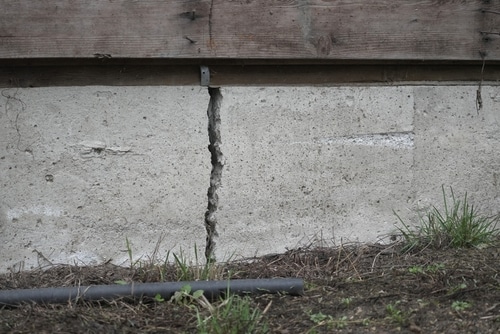
You noticed it while sweeping the driveway or walking barefoot on the pool deck: a thin, spiderweb-like line running across the concrete. It is not deep, it is not wide, and it does not look dramatic. But now you cannot stop looking at it every time you walk by.
That kind of thin crack is one of the most common concrete issues Florida homeowners deal with, and it raises a fair question. Is this just normal settling, or is it an early sign of something moving underneath your slab?
Most hairline cracks in concrete are cosmetic, but those that widen, run in a straight diagonal line, or appear alongside sloped floors or drywall cracks deserve a closer look.
This guide explains what these cracks mean, how Florida’s sandy soils and heavy rain change the picture, and what signs tell you it is time to stop wondering and start checking.
Identify the Crack Before You Repair It
You are standing over a crack in your concrete slab, trying to decide if it is something to patch on a Saturday or something to worry about. That decision starts with knowing exactly what type of crack you are looking at.
Not all cracks tell the same story. A crack that looks alarming can be harmless, and a crack that looks minor can point to real movement below the surface. Florida’s sandy soils and high water tables mean ground movement is a real factor here, more so than in states with denser clay or rocky subgrade.
What a Hairline Crack Looks Like
A hairline crack is a thin, narrow line, usually under 1/16 inch wide. It often looks like a single straight line or a faint, web-like pattern across the surface.
These cracks form as concrete cures and loses moisture. They are common in driveways, patios, pool decks, and interior slabs, and by themselves they rarely signal a structural crack.
Surface Crazing vs. a Deeper Crack
Crazing is a network of very fine, shallow lines that look like cracked glass. Crazing cracks form when the surface layer dries faster than the concrete underneath, and they almost never go deeper than the top skin of the slab.
A deeper crack behaves differently. It may run in one continuous line, follow a straight or diagonal path, and show a visible gap you can slide a coin into.
How to Track Width, Length, and Vertical Offset
Monitoring a crack over time gives you real information instead of guesswork. Mark each end of the crack with a pencil and the date, then check back in 30 and 60 days.
Watch for these three changes:
- Width growth, especially past 1/8 inch
- Length extension beyond the original marked points
- Vertical offset, where one side of the crack sits higher than the other
Any of these shifts suggest the slab is reacting to movement below it, not just settling as it cures.
Why Florida Concrete Develops Fine Cracks
Standing over that sinking driveway panel or the fresh hairline crack that showed up months after the pour, you probably want to know why it happened in the first place. Concrete cracking has specific, identifiable causes, and Florida adds a few of its own.
Sandy soils drain fast but shift easily, and that instability shows up in slabs faster than in states with firmer ground. Four main drivers explain most fine concrete cracking in Florida.
Rapid Drying During Placement and Curing
Plastic shrinkage happens when fresh concrete loses surface moisture before it fully sets. High evaporation rates from strong sun, low relative humidity, or fast wind velocity during placement all speed this up.
Florida’s heat pushes concrete and air temperatures above the ideal range for slow, even curing. Plastic shrinkage cracking is more likely whenever surface evaporation outpaces the concrete’s set time.
Mix, Finishing, and Jointing Problems
A high water-cement ratio makes concrete easier to pour but weaker once it dries, increasing shrinkage cracking. Poor workmanship, like uneven screeding or overworking the surface with a trowel, brings excess paste to the top and weakens it.
Missing or poorly spaced control joints and expansion joints also force the slab to crack wherever it wants, instead of along a planned line.
Sandy Soil, Heavy Rain, and Ground Movement
Florida’s sandy soils drain quickly but shift under heavy rain, and that movement transfers stress to the slab above. This is a major reason hairline cracks in concrete driveways form more often here than in states with denser soil types.
Tree roots pushing against slab edges and localized soil washout after storms add to the problem.
Seasonal Weather and Long-Term Deterioration
Florida’s temperature fluctuations between hot days and cooler nights cause slow expansion and contraction cycles. Over years, this combines with moisture changes, occasional freeze-thaw cycles in North Florida, and water infiltration to widen existing cracks.
Alkali-aggregate reactions in some concrete mixes can also cause slow, long-term cracking that shows up years after the original pour.
Warning Signs That Point Beyond a Cosmetic Issue
That crack you have been watching for a few weeks just did something new; maybe it widened, maybe water started seeping through after the last storm. This is when most homeowners start asking whether it is time to call someone.
A clear pattern shows up in the cracks that turn out to be more than cosmetic. The warning signs below are consistent, and they rarely appear alone. Florida’s sinkhole activity and high water table make these worth taking seriously, not dismissing.
Cracks That Widen, Leak, or Return After Repair
A crack that keeps growing after you patch it tells you the underlying cause is still active. Structural cracks often widen slowly over months, and some leak water even in dry weather if a void or drainage issue exists below the slab.
Uneven Slabs, Soft Spots, and Drainage Clues
Walk the perimeter of your driveway or patio and look for panels that sit lower than their neighbors. Soft or spongy spots in the soil next to concrete often mean water is washing sediment out from underneath, which is common in Florida’s sandy soils after heavy rain.
Foundation and Interior Wall Symptoms to Compare
Cracks outside rarely act alone. Inside the home, watch for:
- Vertical drywall cracks near door frames or windows
- Doors or windows that stick or no longer latch properly
- A noticeably sloped hallway or living room floor
- Gaps forming between baseboards and the floor
If any of these show up alongside your exterior crack, the slab issue may be connected to broader foundation movement.
When a Structural Engineer Should Inspect the Property
A structural engineer should evaluate the property if you see reinforcement corrosion (rust stains bleeding through the crack), concrete spalling near a retaining wall, or repeated cracking after waterproofing and concrete leveling work. These signs suggest the problem goes beyond the surface and affects overall structural integrity.
Choose the Right Repair for Crack Movement
You have looked closely at the crack, maybe measured it, and now you are standing there wondering which fix actually makes sense. The right answer depends entirely on whether the crack is stable or still moving.
The guiding principle stays the same on every job: match the repair method to the cause, not just the crack’s appearance. A sealant that works on a stable hairline crack will fail fast on a slab that is still settling. Sandy Florida soils mean many exterior slabs keep shifting slightly for years, which changes which repair actually holds.
When Monitoring or Surface Sealing Is Enough
If a crack has stayed the same width and length for several months, it likely just needs a cosmetic seal to block moisture. Concrete crack filler or a basic sealant applied with a caulk gun is often all you need.
How to Fill Stable Hairline Openings
For narrow, non-moving cracks, clean the area with a wire brush to remove debris, then apply a polymer-modified cement grout or rigid concrete crack filler with a putty knife for wider gaps. This method works well on interior slabs and garage floors that do not see much movement.
Flexible Sealants for Moving Exterior Slabs
Exterior slabs expand and contract with Florida’s heat, so rigid fillers often crack again. Flexible concrete caulk, polyurethane sealants, or latex caulking applied with a caulking gun flex with the slab instead of fighting it.
When Injection, Leveling, or Structural Repair Is Needed
If the crack is tied to soil movement, epoxy injection or polyurethane foam injected below the slab can fill voids and stabilize the ground. This approach addresses the cause rather than just the surface line, and it is the method most often used when a driveway panel has sunk or a crack keeps returning.
Reduce the Risk During a New Pour
Maybe your driveway is already showing cracks from a pour a year or two ago, and you don’t want to repeat the mistake on the next project. Prevention starts long before the concrete truck arrives.
Most problems trace back to a handful of avoidable mistakes. The good news is that prevention of hairline cracks is mostly about patience and the right process, not expensive materials. Florida’s heat and humidity swing fast, making curing conditions harder to control than in milder climates.
Use a Durable Mix and Avoid Extra Water
Stick to a proper water-to-cement ratio and consider supplementary cementitious materials like fly ash or silica fume for added durability. Chemical admixtures can also reduce shrinkage without weakening the mix, and using quality Portland cement matters more in Florida’s heat than in cooler climates.
Control Evaporation Before the Surface Sets
On hot, windy days, use fog nozzles to add moisture to the air above the slab, and set up windbreakers or sunshades to slow drying. Applying an evaporation retardant immediately after finishing helps prevent plastic shrinkage cracks from forming in the first hours.
Cure, Joint, and Protect the Slab Correctly
Apply curing compounds or cover fresh concrete with plastic sheeting to lock in moisture during the first several days. Cut control joints at the right spacing and depth, and consider microfibers in the mix to reduce shrinkage cracking across the surface.
Frequently Asked Questions
Are hairline cracks in a concrete slab normal?
Yes, hairline cracks are common and often appear during normal curing and shrinkage. Most stay narrow, don’t widen, and don’t affect the slab’s strength.
What causes hairline cracks to form in new concrete?
New concrete cracks mainly from plastic shrinkage, fast evaporation during curing, or a high water-cement ratio in the mix. Poor finishing, missing control joints, and Florida’s heat and wind also speed up early cracking.
Should I worry about hairline cracks in my concrete driveway or patio?
Most driveway and patio hairline cracks are cosmetic and do not need urgent attention. Start watching closely if the crack widens past 1/8 inch, shows a vertical offset, or appears alongside a sinking panel.
Will small cracks in concrete get worse over time?
Some stay exactly the same for years, while others slowly widen due to ongoing soil movement or moisture cycles. Tracking width and length every few months is the best way to know which category yours falls into.
How can I repair a hairline crack in concrete?
Stable, narrow cracks can be cleaned and filled with a concrete crack filler or flexible caulk for exterior slabs. Cracks tied to soil movement typically need injection or leveling work instead of a simple surface seal.
What size concrete crack requires a professional inspection?
A crack wider than 1/4 inch, one with a visible vertical offset, or one that keeps returning after repair usually calls for a professional look.
Knowing When a Crack Is Worth a Second Look
A hairline crack does not automatically mean trouble, and most of what you see on a Florida driveway or patio is simply the concrete settling in as it should. The signs that matter are consistent: widening, offset, leaking, or cracks that show up alongside sloped floors or drywall damage inside the home.
Tracking a crack for a few weeks gives you real information instead of a guess, and that small step often answers the question on its own. When the answer stays unclear, or the signs point to soil movement rather than simple shrinkage, a professional inspection can settle it quickly.
Call Helicon today and talk to a Florida foundation specialist who has seen this problem before. With a 4.9-star rating and work across the state since 2004, Helicon’s free inspection gives you a clear, honest answer about what your property actually needs.