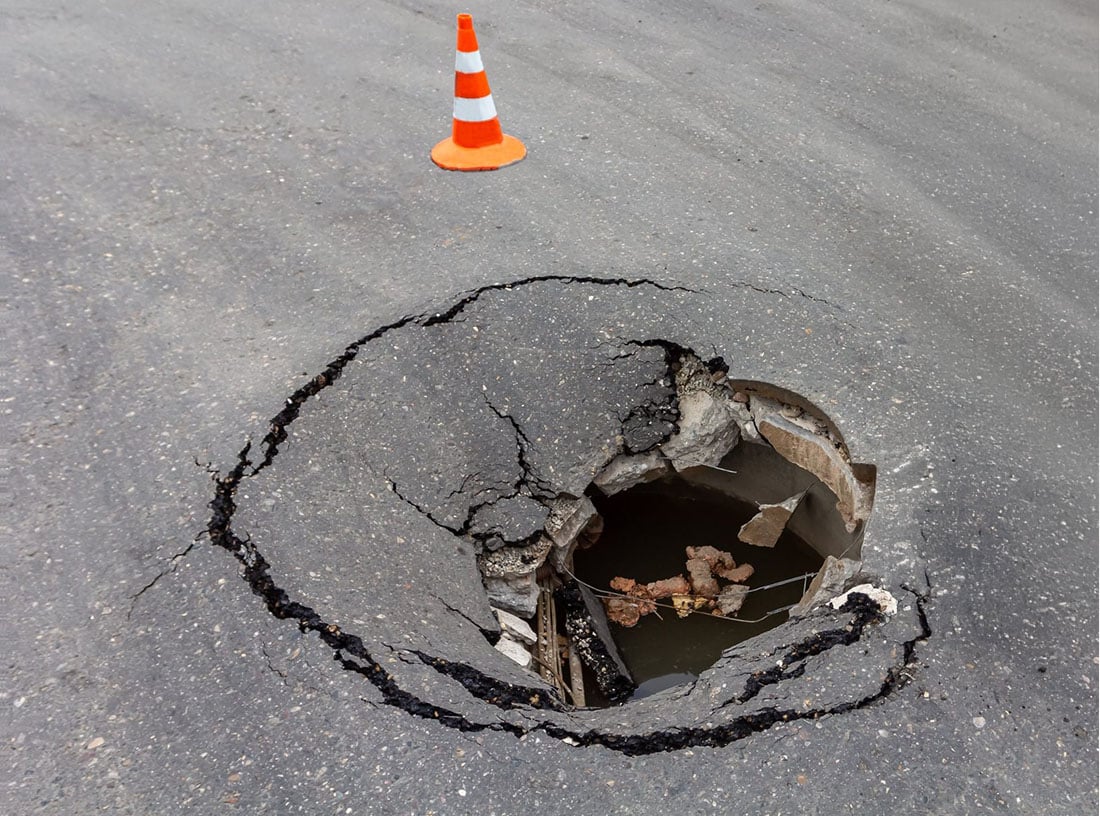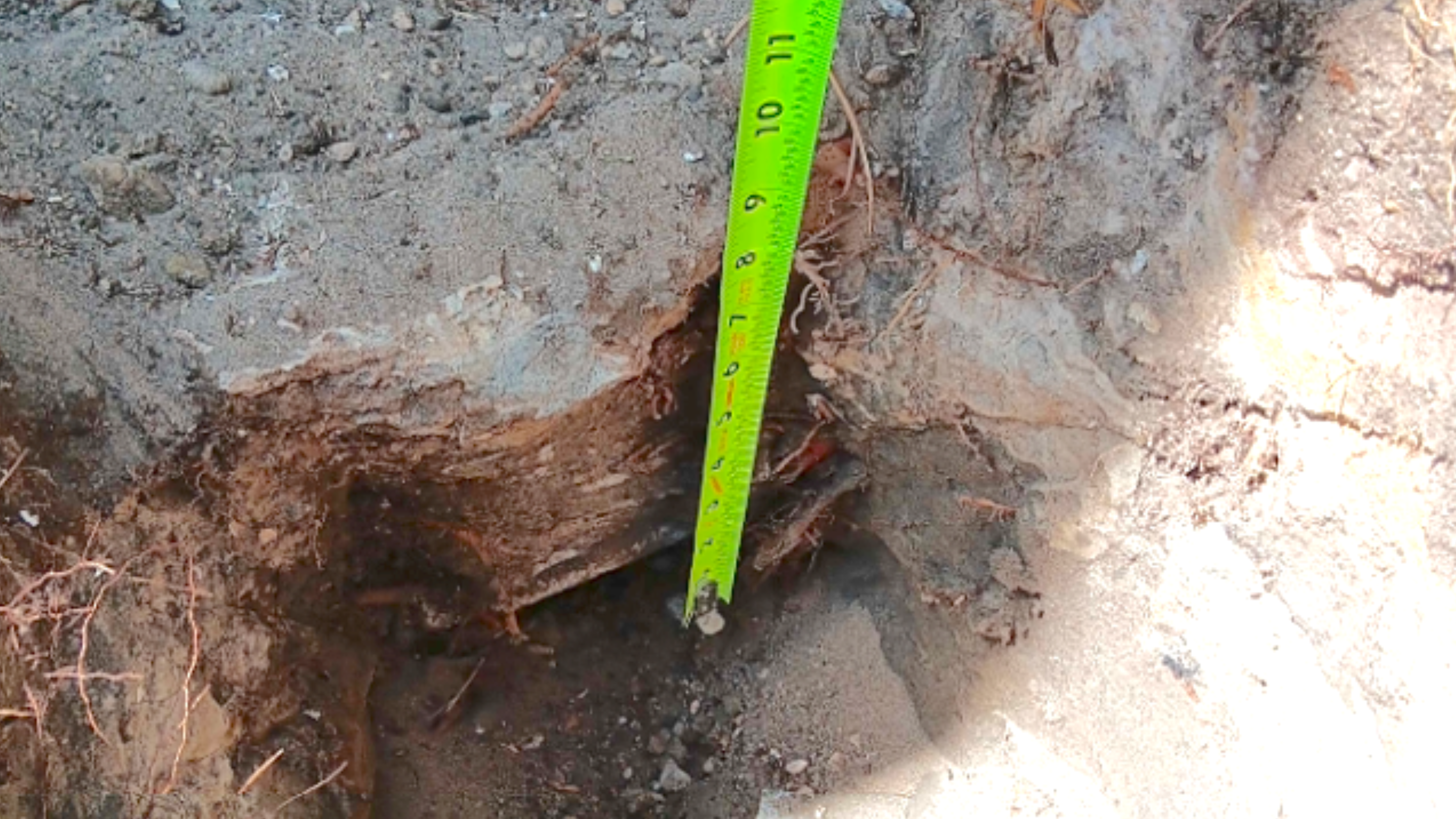
You are standing at the edge of it right now. One driveway panel sits lower than the one beside it, and the lip between them catches the mower wheel every time. Or the sidewalk slab by the front door has tipped just enough that visitors glance down. Or the pool deck rocks under a chair leg, and water that used to run off now pools in a corner.
The slab did not shrink. The ground under it moved, and the concrete followed. That distinction matters, because it means the fix has to address the space underneath rather than the surface you can see.
Concrete leveling raises a settled slab back to grade by filling that space and restoring support. Two methods dominate: mudjacking, which pumps a cement-based slurry, and polyurethane foam injection, which injects an expanding structural foam. Both lift concrete.
They behave very differently in sandy, wet Florida ground, and this guide compares them on the factors that actually decide which one holds.
When a Slab Is Worth Leveling
Not every uneven slab needs work, and not every uneven slab can be lifted. Two questions sort most cases.
How Much Height Difference Is a Real Problem
There is a useful benchmark for this. Accessibility standards treat a change in level up to a quarter inch as acceptable without any treatment, require a bevel at a maximum 1:2 slope between a quarter inch and half an inch, and require a ramp above half an inch.
The U.S. Access Board sets those thresholds for accessible routes in public spaces rather than private driveways, so nothing obliges you to meet them at home.
They are still the clearest yardstick available for what counts as a trip hazard. If your slab edge exceeds half an inch, you are past the point where a public walkway would need a ramp. And if you rent the property, run a business from it, or the walkway is an HOA common area, those thresholds may apply to you directly.
When Lifting Is the Wrong Answer
Leveling works on slabs that are structurally intact. A slab already broken into several pieces, badly spalled, or crumbling at the edges tends to crack further under lifting pressure, because the lift transfers load through concrete that can no longer carry it. Those slabs need replacement.
A slab that keeps sinking after a repair is a different signal. That usually means the cause was never addressed: a downspout discharging at the edge, a broken irrigation line, eroding fill, or in parts of the state, a developing void that calls for soil stabilization or sinkhole assessment before anyone lifts anything.
How Mudjacking Works
Mudjacking, also called slabjacking, is the older method, and it is straightforward. Crews drill holes through the slab, typically an inch and a half to three inches across, then pump a slurry of cement, sand, soil, and water beneath it under hydraulic pressure.
The slurry fills the void and, as pressure builds, floats the slab back toward grade. Once the slab reaches height, the holes are patched with a color-matched compound.
It has real advantages. The material is inexpensive and widely available, the equipment is simple, and on stable, well-draining ground with a modest void, mudjacking has lifted slabs successfully for decades. On a garage floor over firm compacted fill, it can be a perfectly sound choice.
The limitation is the material itself. A cement slurry is heavy; it needs time to cure, and it stays permeable to water.
How Polyurethane Foam Injection Works
Structural polyurethane foam takes a different route to the same result. Crews drill ports rather than holes, usually under half an inch, and inject a two-part polymer that reacts and expands underground within seconds. The expansion fills the void, then continues to build controlled pressure that lifts the slab from below.
Because the foam expands rather than being pumped as a mass, it travels into the irregular edges of a void that a heavier slurry can struggle to reach. It cures in minutes and is inert and closed-cell once set, meaning it does not absorb water.
One clarification worth making, because the question comes up constantly: this is engineered structural foam rated for load-bearing use, not the canned spray foam sold for insulating gaps. They share a chemistry family and nothing else.
Comparing the Two on Florida Conditions
Both methods lift a slab. What separates them here is how the material behaves once it is under the concrete and the ground starts moving again. Four factors decide it: weight, water, disruption, and cure time.
Weight on Soil That Is Already Weak
This is the decisive difference in Florida, and it is a matter of arithmetic. A cement slurry weighs somewhere around a hundred pounds per cubic foot. Cured polyurethane foam weighs a few pounds. Fill a sizeable void under a driveway with slurry, and you have added significant dead load to soil that just demonstrated it could not support what was already there.
On firm ground that is fine. On loose sand that lost material to erosion, adding weight works against the repair. Foam restores support while adding almost nothing for the soil to carry.
Water, and Why It Matters More Here
Florida’s rainy season saturates the ground beneath slabs for months. A cement-based slurry is permeable, so water moves through it, and over enough cycles it can soften, erode, and wash out along the same paths that carried away the original soil.
Cured foam is closed-cell and inert. Water does not degrade it, which means the repair does not quietly undo itself between one wet season and the next.
This is also why neither method is complete on its own. Filling the void without correcting the water source that created it invites the same failure back. Fix the downspout, the grading, or the leak alongside the lift.
Disruption to the Property
Mudjacking needs larger holes, heavier equipment, and more surface patching, which leaves a more visible result on a decorative driveway or a pool deck. Foam ports are small enough that patches are easy to miss, and the equipment is compact enough to reach a screened pool enclosure or a narrow side yard without tearing up landscaping to get there.
Cure Time and Getting the Surface Back
Foam cures in roughly 15 to 30 minutes, so a driveway is usually ready for vehicles the same day. A cement slurry needs longer before it carries full load, which can mean keeping cars off a driveway or traffic off a walkway for a day or more. On a working driveway or a rental property, that difference is practical rather than academic.
Long-Term Durability Under Florida Ground Movement
Ground here does not hold still. Water tables rise and fall seasonally, sand shifts, and storms deliver more rain in an afternoon than some regions see in a month. A repair material that resists water and adds negligible load has a structural advantage under those conditions, which is why foam has become the default for most residential concrete lifting in this state.
None of which makes mudjacking a bad method. It is a proven technique that still suits certain sites, particularly interior slabs over firm subgrade where weight and moisture are not in play, and where cost is the deciding factor. It is simply a poorer match for the conditions most Florida homeowners are actually dealing with outdoors.
Frequently Asked Questions
What is concrete leveling?
Raising a settled slab back to grade by filling the void beneath it and restoring support, without removing and repouring the concrete. The two common methods are mudjacking, which pumps a cement-based slurry, and polyurethane foam injection.
Is foam or mudjacking better for a Florida driveway?
Foam suits Florida conditions better in most cases. It weighs a fraction of a cement slurry, so it does not add load to soil that has already proven weak, and it resists water rather than absorbing it through the rainy season. Mudjacking remains viable on firm, well-draining subgrade.
How long does concrete leveling take?
Most residential slabs are a same-day job. Foam cures in 15 to 30 minutes, so driveways and patios typically return to normal use immediately. A cement slurry needs longer before it carries full load.
How much does concrete leveling cost?
Cost tracks slab size, void depth, the number of panels involved, and access. Mudjacking material is cheaper per unit, but the comparison that matters is cost over the life of the repair, since a lift that has to be redone is the expensive outcome. An on-site assessment gives a real figure.
How high a slab edge counts as a trip hazard?
Accessibility standards allow a vertical change up to a quarter inch, require a bevel between a quarter and half an inch, and require a ramp above half an inch. Those rules govern accessible routes rather than private homes, but they are the clearest benchmark available, and they may apply directly to a rental, a home business, or HOA common area.
Can every sunken slab be lifted?
No. Lifting needs a structurally intact slab. Concrete already broken into pieces, heavily spalled, or crumbling at the edges tends to fracture further under lifting pressure and usually needs replacement instead.
Will the slab sink again?
Only if the cause goes unaddressed. Voids form because water carried soil away or fill was never properly compacted. Correct the drainage, downspout, or leak that started it, and a properly executed lift holds. Skip that step and the void returns along the same path.
Is polyurethane foam the same as spray foam insulation?
No. Concrete lifting uses engineered structural foam rated to carry load and formulated to expand under a slab. Canned insulating foam has no structural rating and no place under concrete.
Get a Straight Answer on Your Slab
A raised edge or a rocking pool deck is telling you the ground underneath changed. Left alone, it tends to get worse, because the water that carried soil away in the first place keeps arriving every rainy season.
Helicon has engineered concrete repairs for Florida’s sandy, moisture-heavy ground since 2004, with a 4.9-star rating from homeowners across the state, and uses polyurethane foam injection precisely because it holds up in the soil conditions found here.
A free, no-obligation inspection identifies the void, its cause, and which method your specific slab actually needs. Schedule yours today.