Water management plays an important role in protecting a slab foundation, especially in Florida’s wet, shifting soil conditions. When drainage problems develop around your home, the right foundation drainage solutions for slab homes can help reduce soil movement, control moisture, and support long-term structural stability.
At Helicon, homeowners across Florida often deal with heavy rainfall, poor grading, and expanding soils that place extra pressure on slab foundations. Clear inspections, practical drainage planning, and straightforward explanations help you better understand which solutions make the most sense for your home.
This guide explains how water affects slab foundations, which drainage systems work best in different situations, and when it may be time to explore professional support. With the right approach, you can improve drainage, protect your foundation, and make informed decisions for your property’s future.
Why Slab Homes Need Fast Water Control
For slab foundations, water creates slow but steady problems. The longer moisture stays near your foundation, the more it affects both the surrounding soil and the concrete itself. Surface drainage, proper grading, and a reliable foundation drainage system all help move water away before it settles around the slab and causes damage.
How Water Around a Slab Leads to Settlement and Cracking
When water saturates the soil beneath and around your slab, the ground becomes unstable. Wet soil expands, then contracts as it dries, creating uneven pressure against the concrete above.
Over time, this cycle of expansion and contraction can lead to foundation cracks, sloping floors, and slab settlement. A foundation that once sat level can gradually shift as the soil beneath it moves.
Most slabs measure between 4 and 6 inches thick, which offers some durability. Still, concrete alone cannot fully resist continuous soil movement caused by poor drainage.
Early Warning Signs Near the Perimeter and Inside the Home
You do not need to wait for major structural problems before addressing drainage concerns. Most homes show early warning signs first.
- Standing water or soggy soil near the foundation after rain
- Cracks in drywall around doors and windows
- Doors or windows that suddenly stick or stop closing properly
- Uneven or sloping floors
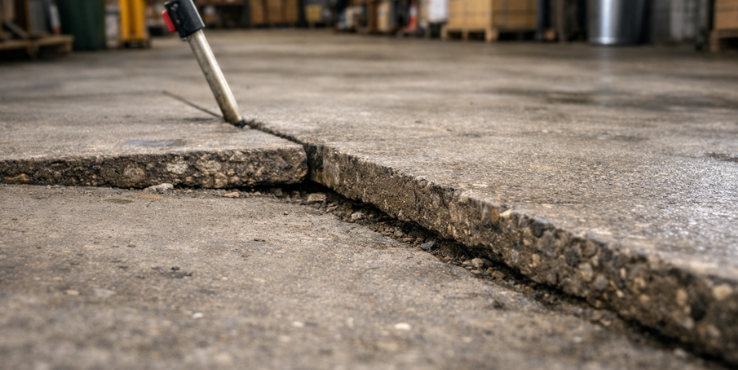
- Visible cracks along the slab edge or concrete flooring
Even without a basement, you may notice damp flooring or musty odors if moisture begins to move through the slab.
Why Slab-On-Grade Homes Differ From Basements and Crawl Spaces
In slab-on-grade construction, builders pour the concrete floor directly onto the soil. Because there is no crawl space or basement below, water has fewer places to drain if it collects beneath the slab.
Basements and crawl spaces provide additional space where drainage systems can more easily redirect moisture. With slab homes, exterior drainage is especially important because water management begins at ground level.
Start With Surface Runoff Fixes
Before installing underground drainage systems, it helps to evaluate what is happening at the surface. Simple improvements such as regrading, gutter adjustments, and catch basins often solve many drainage problems near slab foundations at a lower cost.
Yard Grading and Drainage Slope Basics
Yard grading plays a major role in foundation drainage solutions for slab homes. If the ground slopes toward your house instead of away from it, every storm sends water directly toward the foundation.
Ideally, the soil should drop at least 6 inches within the first 10 feet away from the home. That slope allows gravity to carry water away naturally. Over time, the soil around the foundation may settle, creating low spots where water collects. Regarding clean fill dirt, it usually corrects this issue effectively.
You can check the slope with a long board and a level. If water moves toward the house, regrading should become a priority.
Gutters and Downspouts With Proper Extension Placement
Your gutters and downspouts are an important part of your drainage system. When downspouts release water too close to the slab, they concentrate roof runoff directly beside the foundation.
Adding downspout extensions helps move water at least 4 to 6 feet away from the home. Rigid plastic extensions offer a simple and affordable solution. If you prefer a cleaner appearance, you can bury a solid drain pipe that carries water farther into the yard.
Redirecting or capturing roof runoff remains one of the most effective ways to manage drainage issues around slab homes. Check extensions seasonally to make sure they stay connected and clear.
Surface Drains, Catch Basins, and Permeable Pavers
If water consistently pools in certain areas, even after grading improvements, surface drains and catch basins can help. A catch basin collects water through a grated opening and redirects it through underground piping toward a safer drainage area.
Surface drains work similarly and often fit into driveways, patios, or walkways where adjusting the slope is difficult. Permeable pavers also provide a useful long-term solution because they allow water to pass through the surface and soak into the soil below.
These systems reduce runoff and help your drainage system perform better during heavy storms.
Best Exterior Systems for Slab Protection
Once surface drainage improves, exterior systems can help intercept water before it saturates the soil around your slab. These systems require more installation work, but they provide reliable long-term protection.
French Drains and Perforated Pipe Around the Perimeter
A French drain uses a gravel-filled trench and a perforated pipe to collect groundwater and move it away from the foundation. Water filters through the gravel, enters the pipe, and exits through a discharge point farther from the house.
Installing French drains around the perimeter of a slab home helps reduce hydrostatic pressure and prevent soil saturation near the footing. These systems work especially well in areas with high water tables or frequent rainfall.
For the best performance, installers should slope the pipe toward the outlet so that water continues to move. Filter fabric around the pipe also helps prevent clogs and extends system life.
Footing Drains and Exterior Foundation Drain Options
A footing drain, also called an exterior foundation drain, sits at the base of the foundation. Its purpose is to collect water before it builds pressure against the slab edge.
Drainage boards placed along the foundation wall work alongside footing drains by directing water downward into the drainage system instead of allowing it to collect against the concrete.
Builders commonly install footing drains during new construction. Existing slab homes may require perimeter excavation to add them later, but these systems often provide valuable protection for properties with persistent drainage problems.
Backfill, Drainage Pipe, and Drainage Outlet Planning
The material used during backfilling matters just as much as the drain itself. Clean, coarse gravel near the foundation allows water to flow freely toward the drainage pipe rather than becoming trapped in dense soil.
Solid piping then carries collected water toward a discharge point such as a daylight outlet, dry well, or storm drain. Proper slope is essential because standing water inside the pipe reduces system performance.
Careful outlet planning helps foundation drainage solutions for slab homes perform effectively over the long term.
Interior and Reactive Drainage Options
In some cases, exterior drainage alone may not fully solve the problem. Certain lot layouts or existing site conditions make exterior installation difficult, so interior drainage systems may provide additional support.
When Interior Drainage Makes Sense in a Slab Home
Interior drainage systems work best when exterior improvements cannot fully control moisture. If property limitations prevent proper exterior drainage or if water still reaches the slab surface, interior systems can help manage the remaining moisture.
For slab homes, interior drainage usually requires cutting into the concrete slab because there is no basement or crawl space below. Although this approach involves more labor, it helps control water that has already reached the slab area.
Sump Pits, Sump Pumps, and Pump Systems
A sump pump system offers a dependable reactive drainage option. Contractors install a sump pit below the slab and place a pump inside it. When water enters the pit, the system pumps it away from the home through a discharge line.
In slab homes, sump pumps work best when paired with an interior perimeter drain that channels water toward the pit. Battery backup systems also help maintain operation during storms when power outages occur.
Floor Drain Solutions for Water at the Slab Surface
Floor drains help remove standing water quickly from low areas on the slab. These drains usually connect to either a sump pump system or another drainage outlet.
They often work well in garages, utility rooms, or laundry areas built on slab foundations.
For the best results:
- Slope the slab toward the drain
- Keep drain grates free of debris
- Inspect drain lines regularly for clogs or improper slope
Floor drains provide a more localized solution and often work well for occasional moisture problems.
Choosing the Right Fix for Your Property
No single drainage solution works for every slab home. Soil conditions, rainfall levels, and property layout all affect which system will perform best.
Choosing the right combination of foundation drainage solutions for slab homes helps support long-term property stability and reduces the likelihood of recurring drainage issues.
Matching Drainage Solutions to Soil, Rainfall, and Lot Layout
Clay-heavy soils absorb water slowly and retain moisture longer, which increases the risk of soil expansion and contraction. In these conditions, French drains and footing drains often become more important.
Sandy or loamy soils drain more quickly, but improper grading can still direct water toward the foundation. High-rainfall areas also place greater demand on drainage systems, making both surface and subsurface drainage important.
Your lot layout matters too. Flat yards often trap water unless drainage systems create a clear discharge path, while sloped lots may allow grading improvements to handle runoff more effectively.
As explained in this drainage guide, soil conditions and property layout strongly influence both drainage system performance and installation costs.
DIY Drainage Solutions vs Professional Installation
Some drainage improvements work well as DIY projects. Homeowners can often install downspout extensions, clean gutters, improve small grading areas, or add basic surface drains without specialized equipment.
Simple improvements such as moving mulch away from the foundation or filling low spots with gravel can also help reduce moisture buildup near the slab.
However, more advanced systems like French drains, footing drains, and sump pump installations usually require excavation, pipe grading, and code compliance. Professional installation helps ensure the system works properly and protects the foundation over time.
Code Compliance and When to Call a Foundation Specialist
Many drainage projects require permits, especially when they connect to municipal drainage systems or involve significant excavation work near the foundation.
Following local building requirements helps ensure the drainage system performs safely and effectively during heavy storms.
You should consider contacting a foundation specialist if you notice:
- Active foundation cracks that continue widening
- Doors or windows that suddenly stop aligning properly
- Uneven or sloping floors
- Water intrusion that continues after surface drainage improvements
- Soil movement or settlement near the foundation
Sometimes, poorly installed drainage systems redirect water into new problem areas. A qualified foundation repair professional can evaluate the property, explain the underlying issue, and recommend practical next steps that align with local building requirements.
Protecting Your Slab Foundation With Better Drainage
Managing water around your home is one of the most effective ways to support long-term foundation stability. The right foundation drainage solutions for slab homes help control moisture, reduce soil movement, and provide a clearer path to protecting your property over time.
At Helicon, homeowners across Florida receive practical guidance built around local soil conditions, drainage challenges, and long-term repair planning. Clear inspections and straightforward recommendations help you better understand your options without adding unnecessary pressure or confusion.
If you have noticed standing water, soil movement, or early signs of slab settlement, schedule an inspection to get a clear repair plan and drainage strategy for your property.
Frequently Asked Questions
What causes drainage problems around slab foundations?
Poor grading, clogged gutters, short downspouts, and heavy rainfall often cause drainage problems around slab foundations. When water collects near the home, the surrounding soil can expand, shift, or erode over time, which may affect the slab’s stability.
How do I know if my slab foundation has drainage issues?
Common signs include standing water near the foundation, cracks in drywall, uneven floors, sticking doors or windows, and visible slab cracks. You may also notice damp flooring or musty odors if moisture begins moving through the concrete.
Are French drains a good option for slab homes?
French drains work well for many slab homes because they help redirect groundwater away from the foundation perimeter. They are especially helpful in areas with heavy rainfall, poor soil drainage, or recurring water buildup near the slab.
Can gutters and downspouts really protect a slab foundation?
Yes, gutters and downspouts play a major role in foundation drainage solutions for slab homes. Properly placed downspout extensions help move roof runoff away from the foundation and reduce excess moisture around the slab edge.
When should I consider installing a sump pump in a slab home?
A sump pump may help if water continues reaching the slab after exterior drainage improvements. Homes with poor drainage outlets, low-lying lots, or recurring interior moisture problems often benefit from a sump pump system.
Is regrading the yard enough to fix drainage issues?
Regrading can solve many surface water problems if poor slope is the main issue. However, properties with heavy clay soil, high groundwater, or severe runoff may also need additional drainage systems like French drains or footing drains.
When should I request a professional foundation inspection?
You should consider an inspection if you notice widening cracks, recurring water buildup, uneven floors, or signs of slab settlement. A professional evaluation can help identify the source of the drainage issue and outline practical repair or drainage options.