A sinkhole in the yard is frightening under any circumstances.
A sinkhole opening only a few feet from your house is something else entirely.
That was the situation at a home in Clearwater, Florida, where a cover collapse sinkhole opened in the front yard close to the structure. Unlike a subsidence sinkhole, which can develop gradually, a cover collapse sinkhole happens suddenly when the surface soils can no longer bridge the void below. The result can be a dangerous hole, fast-moving soil loss, and immediate concern about the safety of the house nearby.
In this case, the collapse did more than damage the yard. It also caused visible cracking and settlement near the front corner of the home. An engineer confirmed that immediate stabilization was required, and Helicon was brought in to perform a full sinkhole repair using multiple techniques to restore the home’s safety and long-term stability.
For homeowners in Clearwater, Palm Harbor, St. Petersburg, and the rest of Pinellas County, this project is a powerful reminder that sinkholes do not always develop slowly. Sometimes they appear after the exact kind of weather pattern Florida is known for: long dry periods followed by extreme rainfall. And when that happens near a home, the right repair has to do more than fill a hole. It has to stabilize the ground from deep limestone zones up through the shallow soils closest to the structure.
What Makes a Cover Collapse Sinkhole Different?
Not all sinkholes behave the same way.
Florida properties can be affected by both slower subsidence-style movement and faster cover collapse events. A cover collapse is especially alarming because the surface may appear stable right up until it fails. The sandy soils above can bridge an underground void for a while, then suddenly give way once the support below is no longer enough.
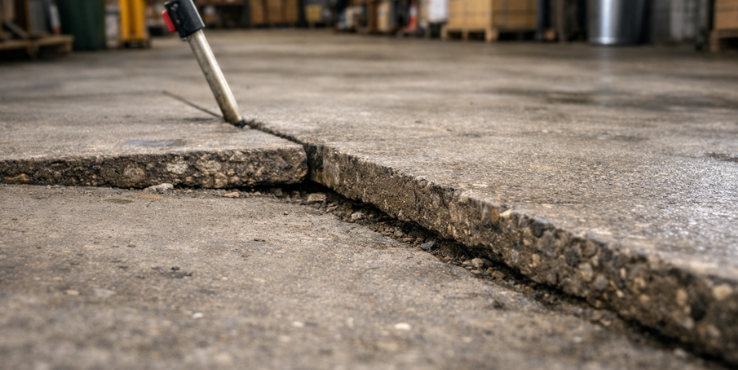
That sudden failure is one reason these events feel so unsettling to homeowners. You may not have months of obvious warning. You may simply have a hole appear, followed by cracking, settlement, or fear that the collapse could spread toward the house.
The Clearwater project fit that pattern. As Helicon’s field video explains below, the sinkhole opened after major rain events following a longer period of drought. That kind of sequence matters in Florida. Drought can dry and weaken certain soil conditions, while heavy rain can then accelerate erosion, raveling, and collapse once water starts moving through vulnerable ground.
Why Sinkhole Repair Near a House Is So Serious
The danger of a sinkhole near a home is not just the visible hole itself.
The bigger issue is what is happening below grade. If the collapse is tied to loose soils, voids, or weakened limestone conditions, the visible opening may only represent part of the affected zone. And if the sinkhole develops close to the structure, the foundation can begin responding almost immediately.
The Clearwater homeowner had visible cracking and settlement near the front corner of the home, especially in the area closest to the collapse.
For homeowners, that kind of movement is especially alarming because it raises several questions at once:
- Is the house still safe?
- Will the cracks keep growing?
- Is the front corner still supported?
- Could drilling or grouting make things worse before it gets better?
- How do you stabilize both the sinkhole and the home at the same time?
Those are exactly the questions that make sinkhole repair so different from a simple patch or cosmetic fix. The repair must restore deep support, protect the existing structure, and stabilize the shallow soils near the surface, so the home is not left vulnerable to future movement.
Why This Clearwater Repair Was More Complex Than It Looked
At first glance, someone might assume this was a “small” sinkhole because it was in the yard and not inside the house.
1. The sinkhole was close to the home
The collapse opened only feet from the structure, and cracking was already visible near the front corner. That meant the repair team had to think about the house and the sinkhole together, not separately.
2. The soil instability extended through multiple depths
According to the project summary, weak layers extended from shallow soils down to limestone-bearing zones. That meant one single repair technique would not be enough. The site needed deep stabilization, structural support, and upper-soil treatment.
3. Drilling and grouting had to be carefully managed
Sinkhole repair methods are effective, but they also require experience. Drilling and high-pressure grout injection can create additional agitation in unstable soils if they are not sequenced properly. In the field video, Jay Silver explains that underpinning was installed as a protective step before some of the compaction grouting work, because the drilling and mud rotary wash process could otherwise create more movement around the compromised front corner of the home.
Sequencing matters. It shows why real sinkhole remediation is an engineered stabilization project, not just a matter of pumping material into the ground.
How Helicon Repaired the Clearwater Sinkhole
Helicon used a three-phase stabilization plan to secure the property from top to bottom.
This layered approach is one of the best ways to understand how serious sinkhole repairs are handled. Each method in the sequence solved a different part of the problem, and together they created a more complete stabilization result.
Step 1: Compaction Grouting to Fill Voids and Densify Deep Soils
The first phase was deep compaction grouting.
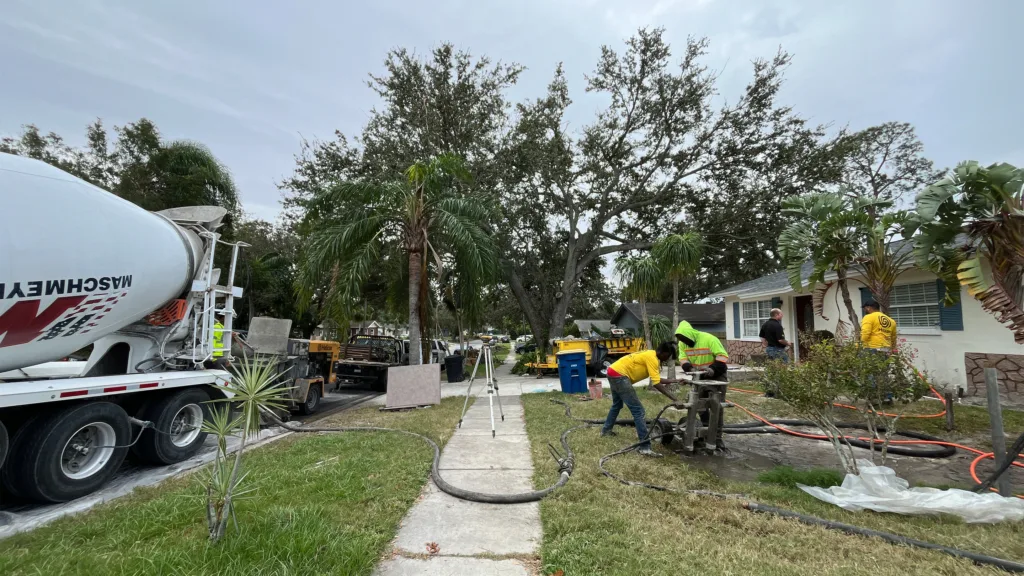
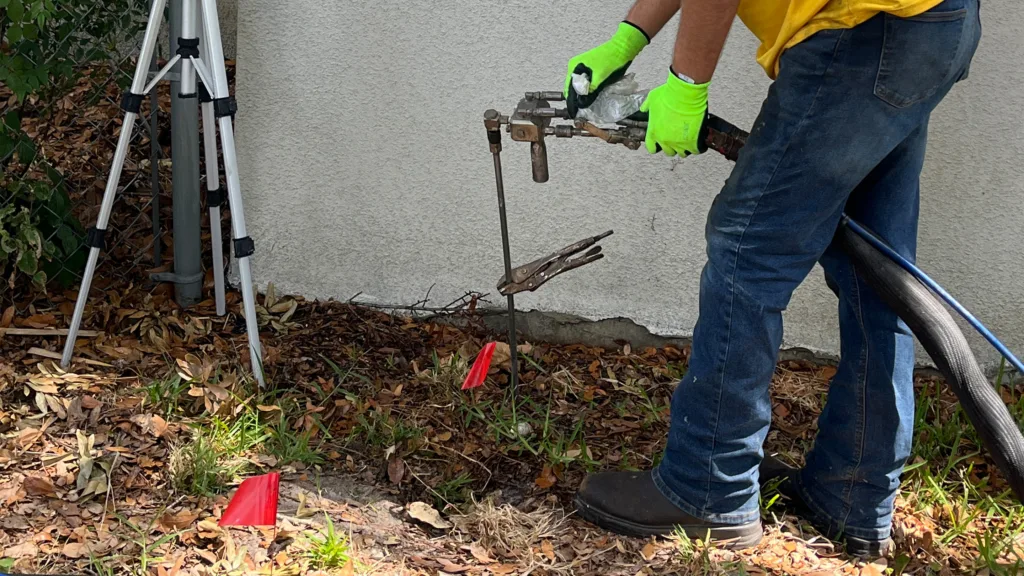
The repair included 1,035 linear feet of drilling to depths of 30 to 50 feet, reaching competent bearing zones. A total of 200 cubic yards of grout was then injected under pressure to fill voids, densify weak soils, and stabilize the affected area. Grout points were installed every 10 feet around the sinkhole area for full coverage.
A thick grout mixture is pumped under pressure into weak or voided zones. As it forms grout bulbs, it compacts loose soil, fills underground gaps, and seals the limestone surface to create a denser and more stable support layer.
In the Clearwater field video, Jay Silver describes this in practical terms. The sinkhole opening was first capped with flowable fill, creating what he referred to as a “plug” at the top of the hourglass-shaped sinkhole profile. From there, the crew worked in a circular pattern around the affected area, drilling down to refusal—typically limestone or another competent bearing stratum—and then grouting upward in stages. The operator monitored pressure and lift indicators to determine when each soil zone had been properly filled before moving to the next stage.
That upward-staging process is important because it shows how controlled the repair must be. This is not random injection. It is a measured stabilization method designed to strengthen the ground from the deep zones up.
Step 2: Underpinning to Protect the Front Corner of the House
Once the site had been evaluated and the sinkhole repair was underway, the structure itself needed direct support.
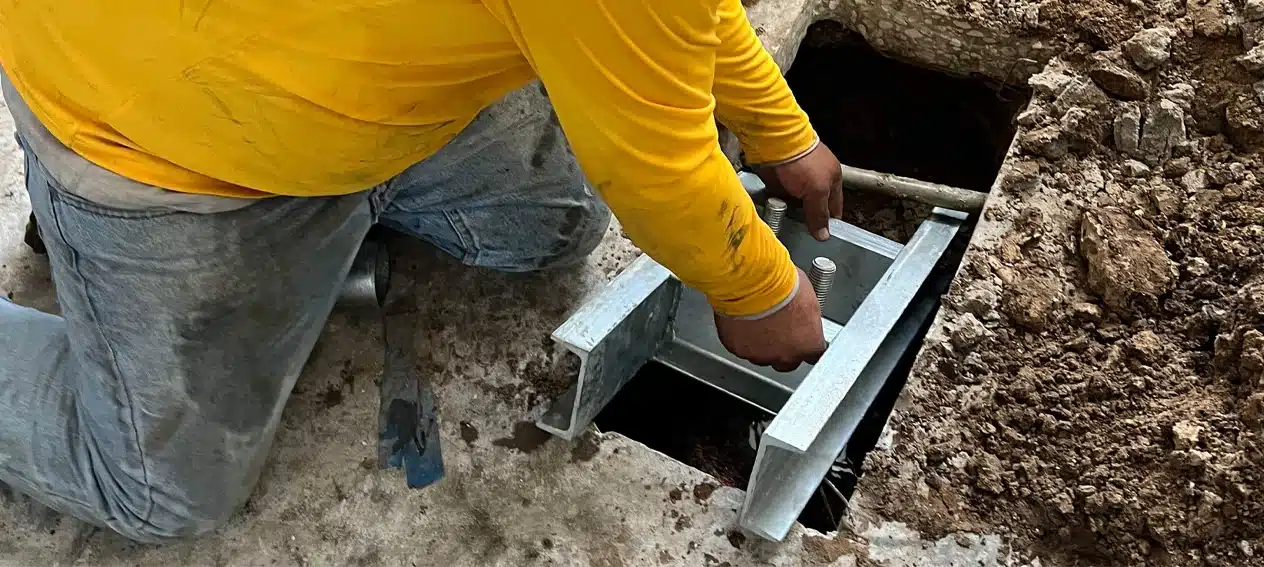
Helicon installed 12 underpinning push piers around the compromised front corner of the home. These push piers totaled 252 linear feet and were driven into stable strata to transfer the home’s load below the weak upper soils. Steel brackets connected the home to the piers and prevented additional settlement.
Underpinning is used when an existing structure needs to bypass weak near-surface soils and shift its load to deeper, more competent layers below. That makes it especially valuable when visible cracking or settlement is already occurring near a compromised part of the home.
In this Clearwater job, underpinning did more than protect the house after the repair. It also helped protect the front corner during the repair. In the video, Jay Silver explains that the team installed emergency underpinning as a precaution before some of the grouting work because drilling and grout injection can agitate already unstable soils. In other words, the piers were part of the structural safety plan from the beginning of the active repair process.
Step 3: Polyurethane Chemical Grouting to Stabilize the Upper Soils
The final phase focused on the shallow support zone closer to the surface and foundation.
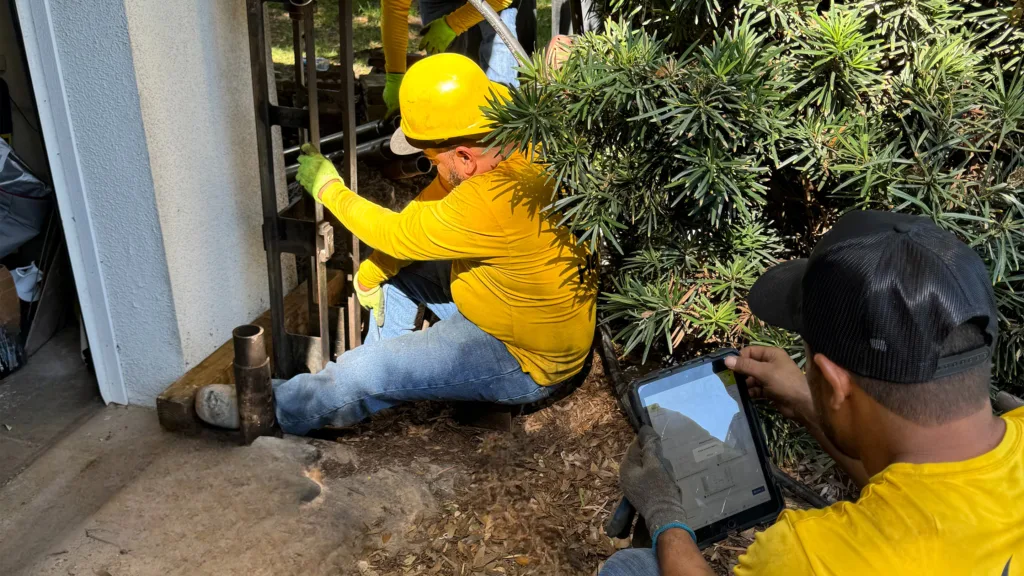
Helicon applied 500 pounds of two-part structural polyurethane foam to stabilize soils above the 15-foot depth range. The expanding foam filled near-foundation voids, created a dense and water-resistant layer, and worked with the compaction grout system to provide complete support from limestone depth to the surface.
Polyurethane grout expands rapidly to fill shallow voids, compact loose soils, and create a more stable upper-soil support layer. It is especially useful in zones where compaction grouting may stop and a lighter, more controlled near-surface stabilization method is needed.
That makes it the perfect complement to deep compaction grouting. The compaction grout handled the deeper sinkhole conditions and limestone interface. The polyurethane foam helped secure the shallower soils and reduce the risk of continued near-surface erosion or collapse.
Why This Layered Repair Approach Matters So Much
One of the most reassuring things about this Clearwater project is that Helicon did not rely on a single repair method.
The project used three distinct stabilization tools:
- deep compaction grouting for voids and weak layers at depth
- underpinning piers for direct structural support under the compromised corner of the home
- polyurethane foam for soil stabilization near the surface
That matters because sinkholes are rarely simple. A site can have instability in multiple zones at once. The house may need structural support. The deep soils may need densification. The upper soils may need reinforcement too.
Helicon’s safe sinkhole stabilization guidance reinforces this same concept: long-term repair often requires more than one method, with compaction grout and chemical grout working together as part of a customized plan to restore stability from multiple depths.
For a homeowner, that multi-layer approach is important because it creates confidence that the repair is not just treating the visible hole. It is treating the whole support system beneath and around the home.
Why Clearwater and Pinellas County Homes Need Sinkhole Awareness
Florida’s limestone-and-sand geology makes sinkhole awareness especially important in parts of Pinellas County.
This does not mean every crack in a house is a sinkhole, but it does mean homeowners in Clearwater, Palm Harbor, Dunedin, Largo, and St. Petersburg should take sudden ground movement, new stair-step cracking, or unexplained settlement seriously—especially after unusual weather patterns.
The weather sequence described in the field video is also worth remembering: long-term drought followed by record rainfall. That combination can create exactly the kinds of soil changes that reveal hidden weaknesses in Florida ground conditions.
What the Homeowner Gained After the Repair
By the end of the project, the Clearwater home was more than patched.
The home was fully stabilized from limestone depth to surface soils and reinforced with:
- 200 cubic yards of compaction grout
- 12 underpinning piers totaling 252 linear feet
- 500 pounds of polyurethane foam
The home was secured against both deep settlement and surface soil collapse, and the property now had a more stable, supported foundation backed by Helicon’s repair methods and warranty.
For the homeowner, that means something very practical: the home is safer, the risk of further movement has been dramatically reduced, and the property has been restored with a much stronger level of confidence than when the sinkhole first opened.
FAQ
What is a cover collapse sinkhole?
A cover collapse sinkhole is a sudden sinkhole that happens when the surface soils can no longer bridge the void below and give way quickly. It often appears with little warning compared with slower subsidence-style movement.
Why did Helicon use three different repair methods?
Because the site had instability at multiple depths, and the house itself needed direct structural support. Compaction grout stabilized the deeper sinkhole zone, underpinning supported the home, and polyurethane foam stabilized the upper soils.
Can drilling and grouting make a sinkhole worse if not done properly?
Potentially, yes. That is why sequencing, monitoring, and engineering oversight matter. In this project, underpinning was installed as a precaution before some of the grouting work to help protect the home during stabilization.
How do I know if new cracking after heavy rain could be serious?
It should be evaluated if the cracking is new, widening, stair-stepped, or paired with settlement, doors sticking, or visible ground changes. Sudden changes after unusual weather should never be ignored.
Final Takeaway
This Clearwater project shows what real sinkhole repair looks like when a sudden cover collapse threatens both the yard and the home.
The visible hole in the front yard was only part of the problem. The deeper issue was a full support-system failure extending from shallow soils down to limestone depth near a compromised corner of the house. Helicon’s repair solved that problem with a coordinated plan: 1,035 linear feet of drilling, 200 cubic yards of compaction grout, 12 underpinning piers totaling 252 linear feet, and 500 pounds of polyurethane foam to stabilize the upper soils. Together, those methods restored support from the bottom up and helped make the home safer than it was when the sinkhole first appeared.
For homeowners in Clearwater, Palm Harbor, St. Petersburg, and throughout Pinellas County, the bigger lesson is clear: when sudden collapse and cracking appear after major rain events, early professional stabilization can make the difference between a repairable problem and a much larger structural crisis.
Call 844-Helicon today for a free inspection or fill out the form on our site.