
Estero, FL
The Project
The Challenge
The Solution
FREE INSPECTION REQUEST

Market: Residential
Solution: Soil Stabilization & Concrete Repair
Services: Two-Part Structural Polyurethane Injections (Soil and Slab)
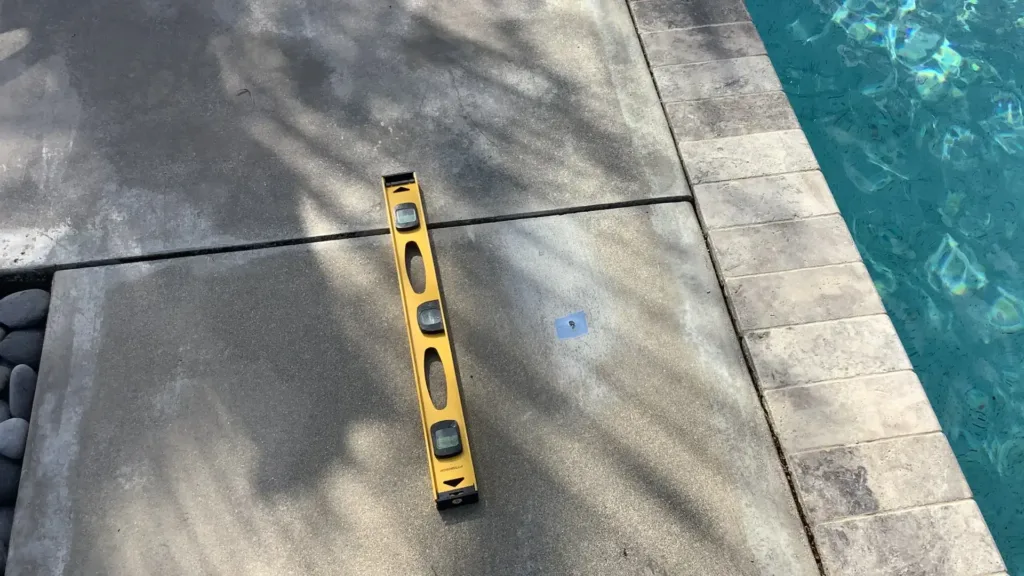
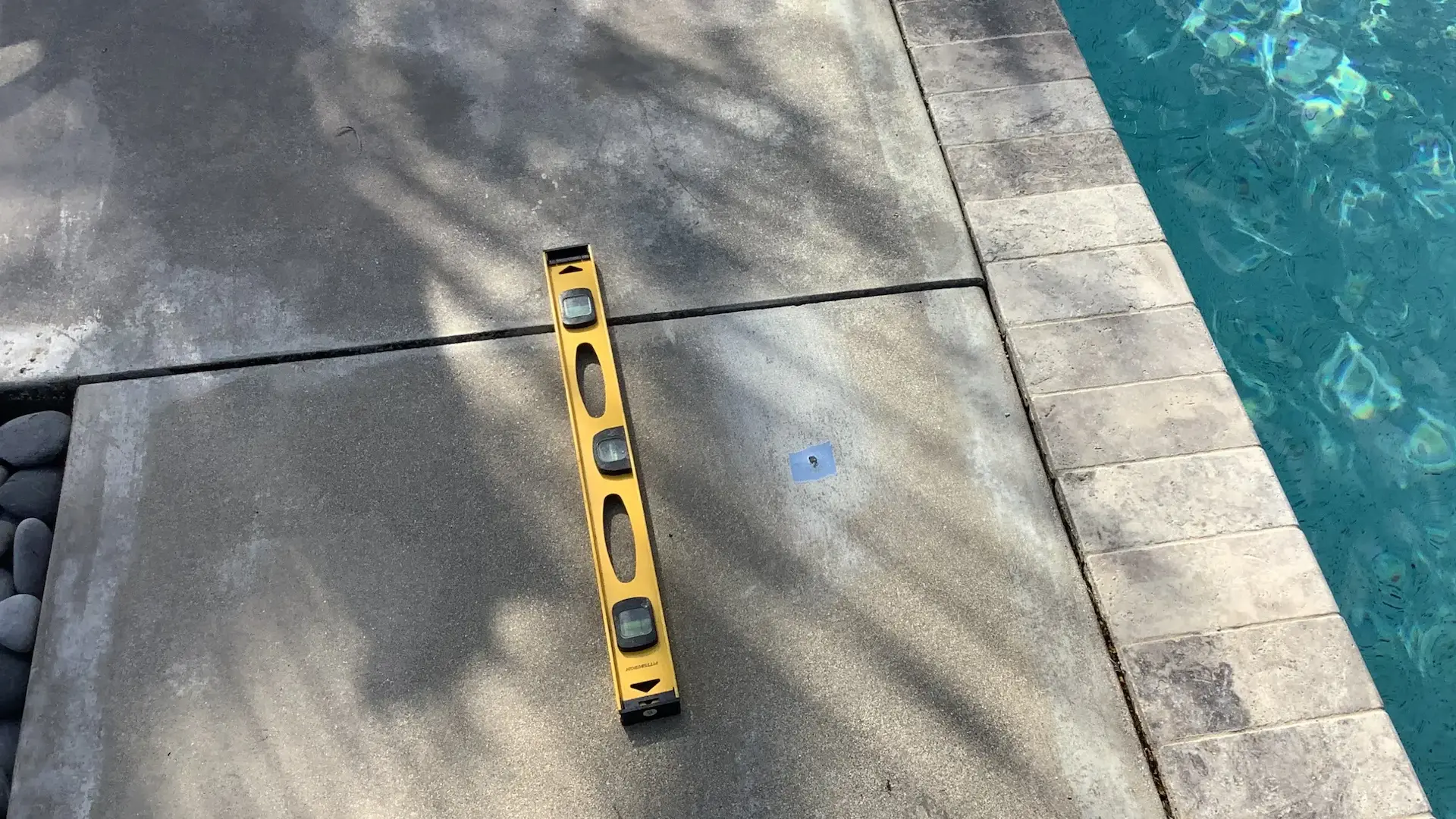
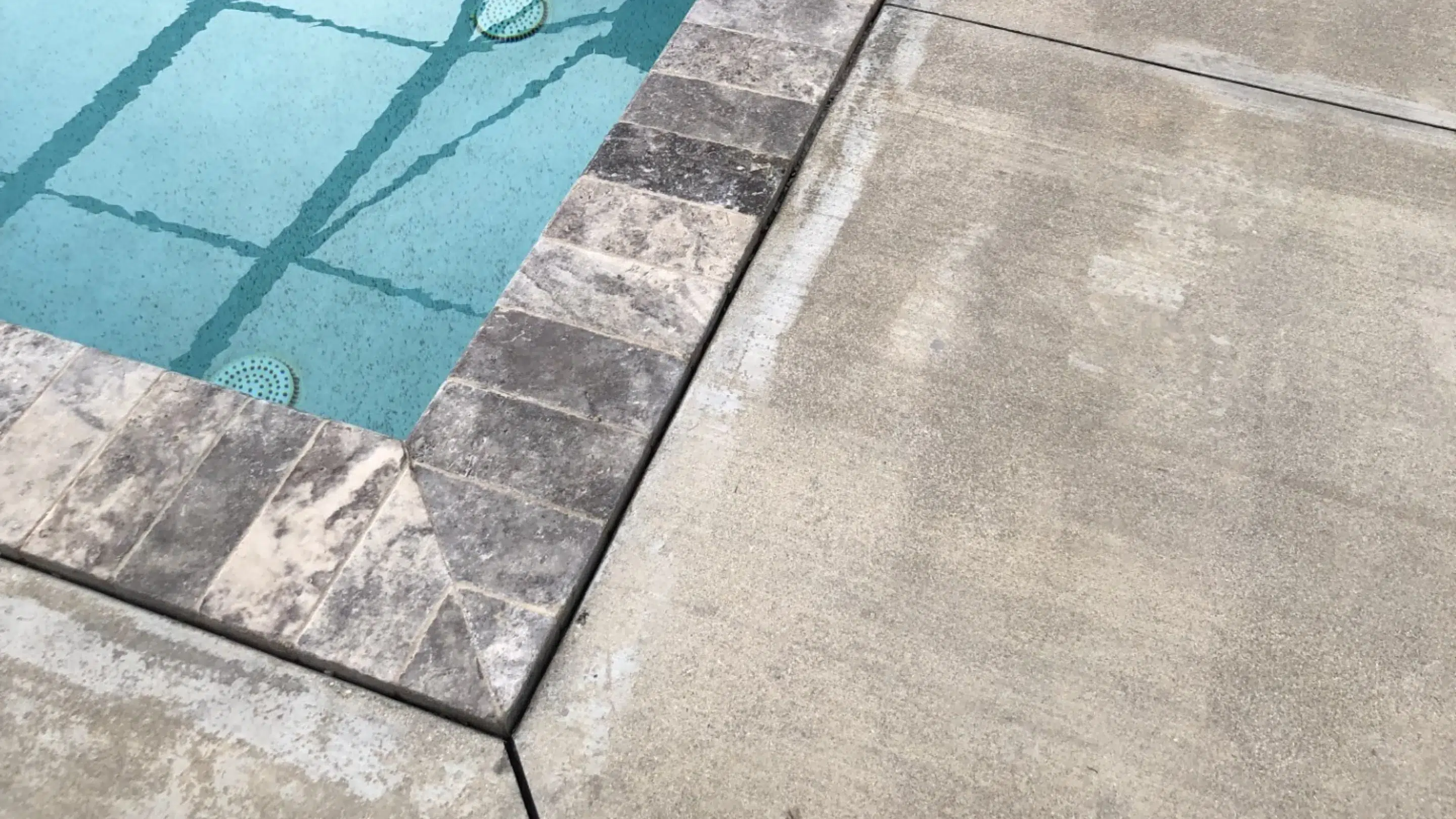
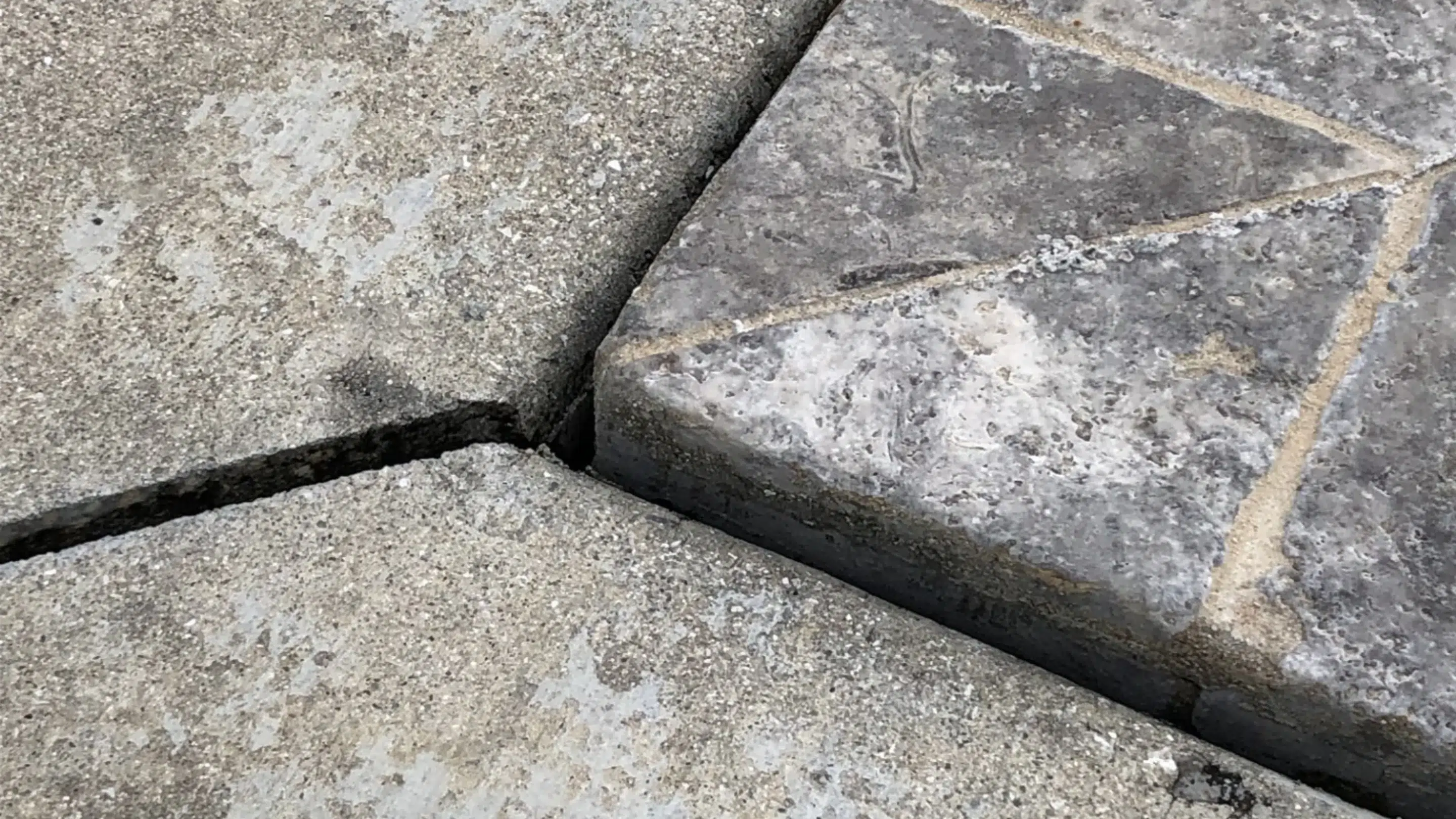
The homeowner first became concerned when the walkway next to the pool no longer appeared to be fully aligned with the pool cap. The developing gap suggested that the concrete was settling unevenly or losing support along one or more edges. Over time, this kind of separation can do more than affect appearance. It can create a tripping hazard, allow water to enter vulnerable joints, and put added stress on poolside finishes.
The homeowner also pointed out that the pool was built about eight years ago and that portions of the surrounding area contained dirt beneath a decorative rock section. That context matters because transitions between soil, rock, slab, and pool structure often create the kind of mixed-support environment where minor movement can begin.
The key concern was not simply to make the walkway look better. The owner wanted the area truly stabilized before it had the chance to get worse.
Pool decks and walkways in Estero, Bonita Springs, Fort Myers, and throughout Lee County are often built over sandy or variable fill soils. Even when a pool installation is structurally sound, the surrounding hardscape can still experience movement over time due to:
Once support begins to diminish, the concrete walkway may settle slightly away from the pool cap. That is especially noticeable at a rigid joint or edge, where even a small amount of movement becomes highly visible.
This is why soil stabilization is such an important part of poolside concrete repair. If the subgrade is not improved, patching or surface repairs alone will not correct the root cause.
This project was straightforward in concept but required careful planning in the field. The slab needed support. The soil beneath it needed to be densified. But the installation had to be performed without damaging nearby systems or disturbing areas the owner wanted left intact.
The homeowner’s priorities were clear: stabilize 100% for sure, and then attempt lift only if the slab response allowed it. That distinction is important. The project was fundamentally about stabilization, not about promising full elevation restoration. Helicon approached the repair accordingly.
The owner would be happy if the walkway could be brought back closer to flush with the pool edge, but they fully understood that lifting concrete near a pool is never guaranteed. The slab may respond partially, or not at all, depending on its condition and how the support has been lost. In this case, the right expectations were set from the beginning: stabilize first, then pursue measured movement if feasible.
Near the patio section where deep injections were planned, the owner explained that there was concrete beneath the tile, and they did not want the crew drilling through that section. That meant Helicon had to adjust the access strategy and perform the required deep injections from the outside instead. This is the kind of practical field adaptation that makes a difference in residential work—solving the structural issue while respecting the owner’s finish concerns.
As with many poolside projects, several obstacles had to be accounted for during the repair process:
– Irrigation lines
– Pool pipes
– Electrical for the pool light
Those utilities influenced how injection locations were selected and how material was delivered. Precision mattered.
An important part of the owner’s report was that there were no pool pipe leaks at all. That helps narrow the likely cause of movement and supports the idea that the issue was related to support loss and settlement rather than an active plumbing failure.
Helicon used two-part structural polyurethane grout to complete this project. This material is highly effective in residential soil stabilization and poolside slab support because it can be injected precisely, expand into weak zones, and improve bearing without requiring excavation.
The slab-support portion of the work used 107 pounds of material. These injections were designed to:
In this application, the slab injections were not simply cosmetic. They were part of a broader concrete repair and soil stabilization strategy designed to reconnect the slab with a more reliable supporting base.
In addition to the slab work, Helicon performed injections totaling 60 pounds across three points. These injections were aimed at densifying weak subsurface zones and improving the bearing condition beneath the walkway. By placing polyurethane chemical grout into the soil itself, the team addressed the support problem below the concrete rather than only working at the slab interface.
The purpose of the soil injections was to:
– Fill voids beneath the walkway
– Tighten loose or inconsistent soils
– Improve load transfer
– Support long-term stability of the repaired slab
This is where the value of soil stabilization becomes most clear. Surface slabs do not remain level if the soil below them is still weak. Stabilizing the soil gives the concrete a better chance to remain supported over time.
For this Estero project, chemical grout offered several advantages over more invasive alternatives:
In a setting like this, where the owner wanted structural stabilization but also wanted certain finished areas protected, polyurethane injections were a practical and effective choice.
Because the owner did not want the crew drilling through one tiled section with concrete beneath it, Helicon performed the required deep treatment from the outside access side rather than through the finish surface. This preserved the tile area while still allowing the repair team to reach the targeted weak zone.
Throughout the project, Helicon approached leveling as a secondary objective. The central purpose of the repair was to stabilize the walkway so that the owner could count on the structure to stop getting worse. Any lift achieved beyond that would be considered a bonus outcome—not the core promise of the project.
When the work was complete, the walkway had improved support beneath it and a more reliable soil condition along the settling edge.
This project also reduced uncertainty. Instead of moving forward with cosmetic fixes over unstable concrete, the homeowner now has a more dependable structural base to build on.
A common mistake in poolside hardscape work is to fix what is visible before fixing what is causing it. But the visible gap between the walkway and the pool cap was only part of the problem. The real issue was below the surface.
That is why this method was the right priority here. Without improving the underlying support condition:
– The slab could continue to settle
– New surface finishes could crack or separate
– Gaps at the pool edge could reopen
– The owner would end up paying twice for the same problem
By stabilizing the soil first and supporting the slab with polyurethane chemical grout, Helicon helped protect the homeowner from that cycle.
Helicon is Florida’s trusted expert in soil stabilization, foundation repair, concrete lifting, and sinkhole remediation. We serve homeowners across Estero, Lee County, and Southwest Florida, delivering engineered solutions that protect structures from the ground up.
If you are seeing pool walkway settlement, slab separation, or support loss around your home in Estero, Bonita Springs, or Fort Myers, Helicon can help. Our team provides targeted soil stabilization and polyurethane chemical grout solutions designed for Florida’s challenging sandy soils and poolside environments.
Call 844-HELICON today to schedule your free inspection and learn how structural polyurethane injections can restore support before the problem gets worse.
FREE INSPECTION REQUEST