
Melbourne, FL
The Project
The Challenge
The Solution
FREE INSPECTION REQUEST

Market: Residential
Solution: Two‑Part Polyurethane Injections (Soil & Slab)
Services: Soil Stabilization
Property Type: Single‑family residence with in‑ground pool and cast‑in‑place concrete deck
Location: Melbourne, FL (Brevard County)
Owner Objectives:
Pre‑Work Indicators:
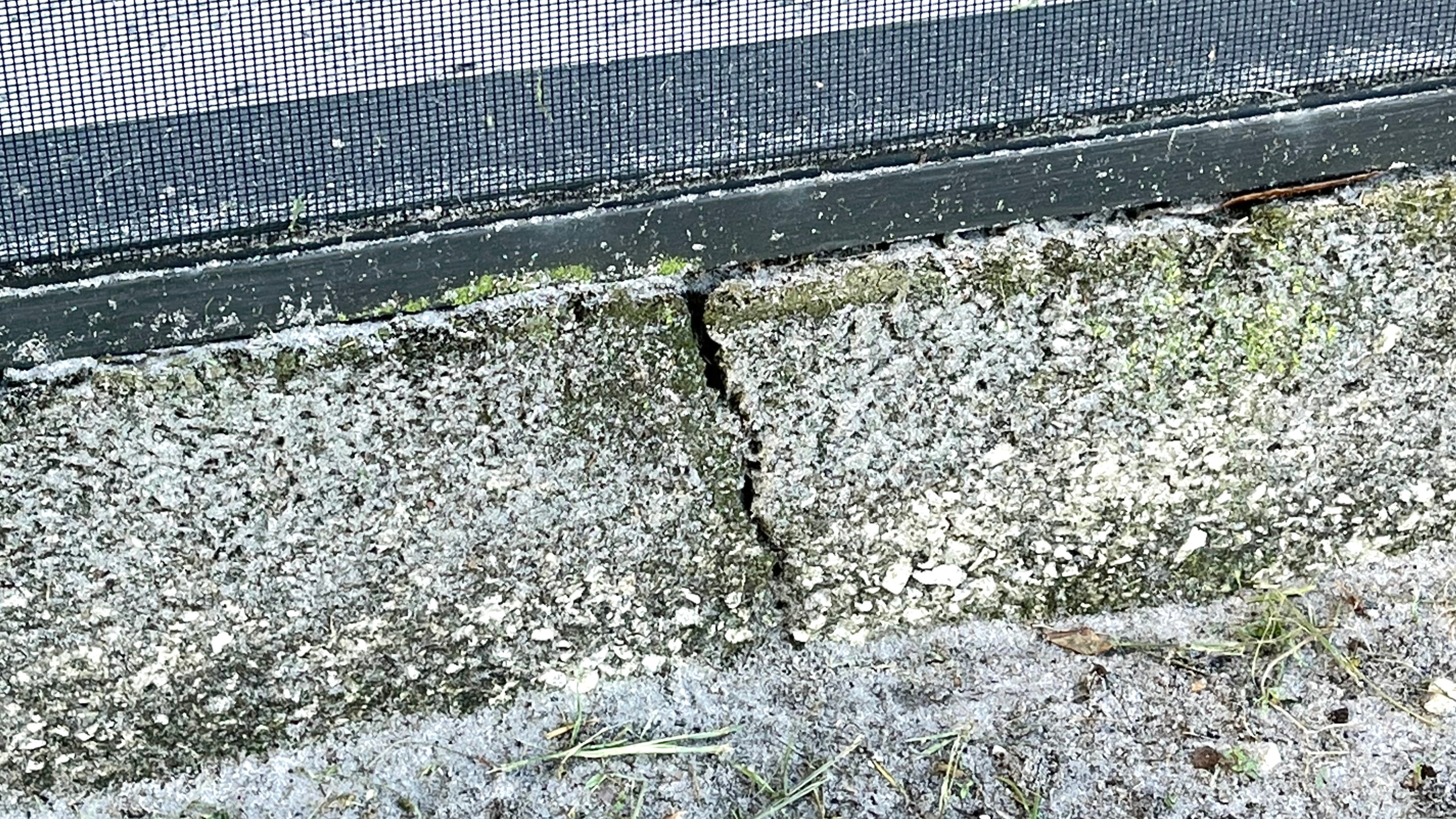
– Hairline to moderate cracking across sections of the deck.
– Localized panel settlement is most noticeable near edges and corners.
– Hollow response on percussion testing, indicating voids beneath certain panels.
Likely Contributors: Florida pool decks commonly experience support loss due to variable backfill, periodic moisture swings (irrigation and rainfall), washout toward the shell, and organics decay from former landscaping. These mechanisms undermine the near‑surface “influence zone” that directly supports slabs.
Pool decks are rigid surfaces that rely on a shallow bearing layer. When that layer loses density, slabs begin to bridge, and cracks develop from tension and differential movement. This project presented three constraints that shaped the plan:
Helicon deployed a two‑tier strategy using two‑part structural polyurethane injections, purpose‑built for soil stabilization and slab support.
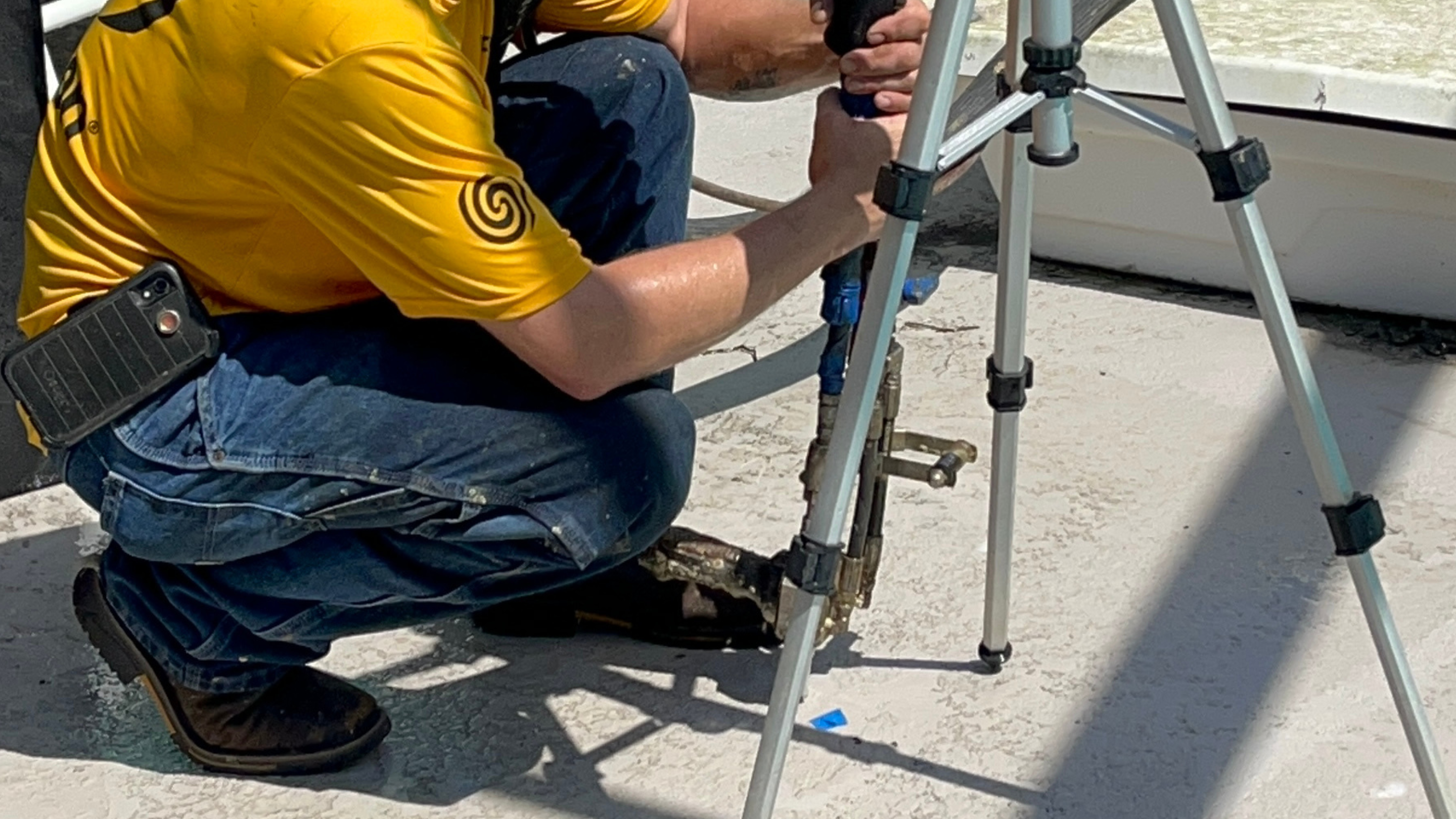
We placed 300 pounds of foam at 15 mapped injection points along the perimeter and influence zones. The foam, injected via probes into the shallow bearing layer, flows to low‑resistance pathways—voids, loose pockets, and channels—before expanding to lock grains together. This re‑couples the soil matrix, increases near‑surface stiffness, and reduces the risk of renewed settlement.
Why it matters: Slabs don’t stay level if the soil below is weak. Treating the soils first provides a stable platform for any subsequent contact restoration or minor elevation corrections.
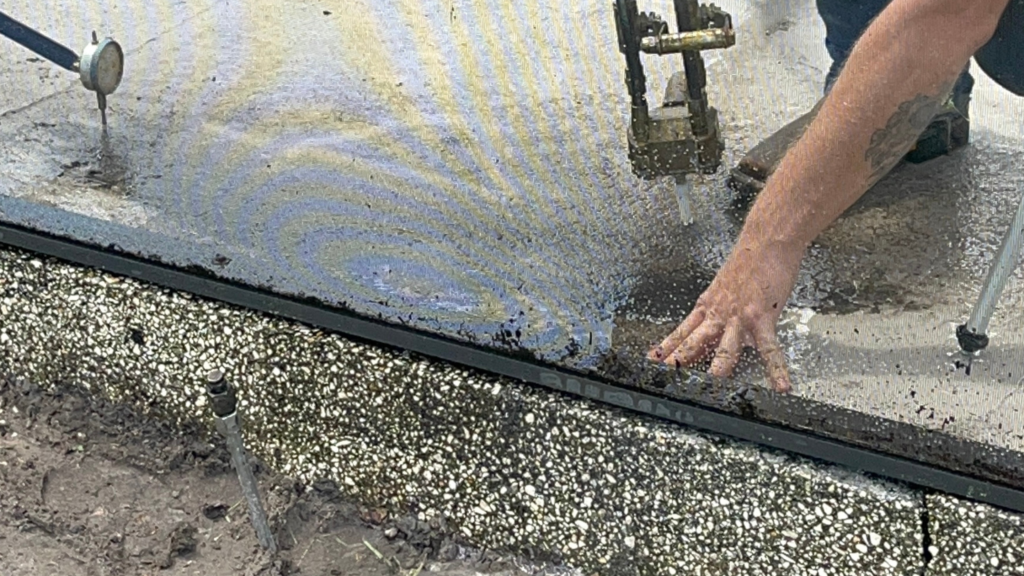
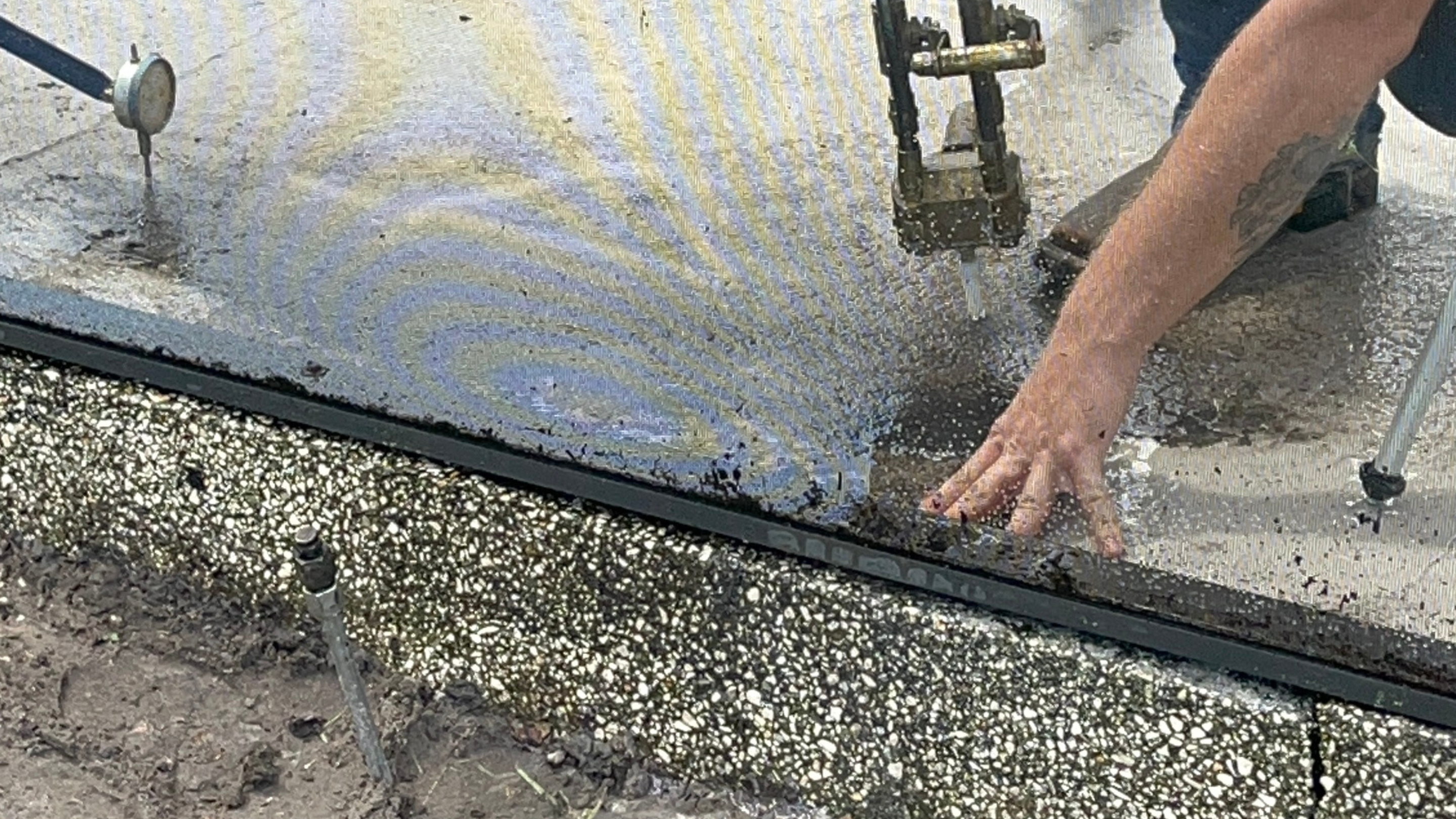
At the slab interface, we delivered 287 pounds of foam across 533 square feet of deck panels to fill residual voids and restore slab‑to‑soil contact. Technicians used short, metered shots and watched joints, edges, and transitions to avoid over‑correction. Because underpinning was not part of this project, any concrete lifting was limited to small corrections where the slab response was uniform and safe.
Because underpinning was not part of this project, any concrete lifting was limited to small corrections where the slab response was uniform and safe.
Why two‑part polyurethane:
– Lightweight: Adds minimal dead load versus cementitious fills.
– Fast cure: Returns areas to light service in minutes, not days.
– Small ports: Penny‑sized holes mean minimal patching and clean aesthetics.
– Moisture‑tolerant & inert: Stable in Florida’s humid, rain‑intense environment once cured.
“Perfectly level” is not sustainable if the soils beneath are not stable. The correct sequence is:
This approach protects finishes, avoids over‑correction, and delivers the most durable performance for pool decks in sandy Florida backfills.
Can you lift my pool deck back to “as‑new” level?
Not always. Without underpinning, lift potential is limited to modest, safe corrections. Our priority is permanent stabilization; elevation recovery is pursued only when the slab and soils respond uniformly.
How long will the repair last?
Two‑part polyurethane is inert after cure. Longevity depends on drainage, loading, and keeping cap/joint sealants maintained to limit water intrusion.
Will the injections damage plumbing or lights?
We map and respect conduits and use short, metered shots to control pressure. The goal is contact restoration without forcing material into conduits.
Will I see the injection ports?
Ports are small and patched at completion. They blend with typical deck maintenance.
Helicon is Florida’s trusted partner for soil stabilization, concrete lifting, foundation repair, and sinkhole remediation. We serve homeowners across Brevard County and the Space Coast, delivering engineered, minimally disruptive solutions that protect your property for the long term.
Seeing cracks or soft spots around your pool deck in Melbourne, Viera, or Palm Bay? Helicon’s soil stabilization and concrete lifting methods close voids, restore support, and deliver durable performance—often in one day. Call 844‑HELICON to schedule a free inspection and get a plan tailored to your home.
FREE INSPECTION REQUEST