
Clermont, FL
The Project
The Challenge
The Solution
FREE INSPECTION REQUEST

Solution: Concrete / Soil Stabilization
Services: Two-Part Structural Polyurethane Injections (Slab and Soil)
This project centered on a 100-year-old house and boathouse in Clermont, a detail that immediately changes how a repair like this must be understood. Older structures often carry unique design conditions, changing construction methods, layered additions, and hidden access complications that newer buildings do not. In this case, the homeowner was not just preserving an old structure for occasional use. He was actively remodeling the property and wanted the boathouse to become a more functional and reliable gathering space.
Specifically, the owner wanted the boathouse to be stable enough to host approximately 30 people during parties and gatherings. That type of future use increases the importance of structural confidence. Before spending more on surface upgrades, finishes, or remodeling, the owner wanted to make sure the slab and the soil beneath it were reliable. That decision reflects the right order of operations in structural work: stabilize first, resurface second.
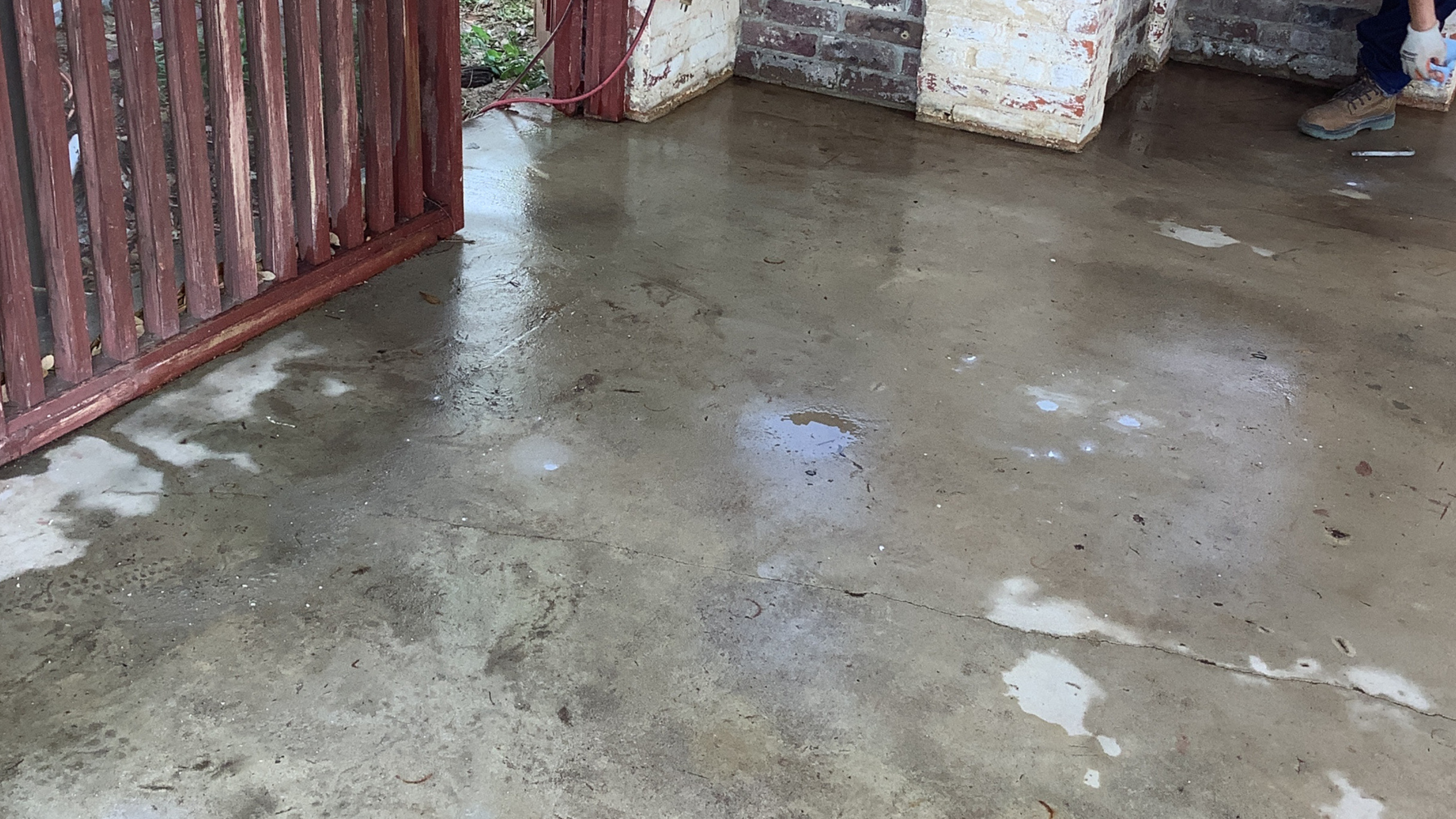
The owner had already noticed conditions that suggested the support system beneath the slab was no longer uniform. The field notes describe:
Each of those facts matters. A one-inch sag may not sound dramatic in isolation, but in a structural slab carrying columns and overlooking a garage below, even modest movement can justify proactive stabilization—especially when the owner plans to increase use and invest further in the structure.
In many renovation projects, owners are tempted to begin with what they can see: resurfacing, replacing finishes, improving appearance, or modernizing amenities. But if the slab beneath those improvements is already sagging or losing support, any cosmetic work installed on top becomes vulnerable.
That was the key decision point in this case. The owner wanted to move forward with remodeling the boathouse, but he did not want to waste money resurfacing a slab that might continue settling. He specifically wanted the base structure stabilized first.
That is exactly the right mindset for a structure like this because an elevated boathouse slab near water can face multiple long-term support challenges, including:
In a case like this, soil stabilization and slab support restoration become the foundation for every later improvement.
This project came with several field realities that made the repair far more nuanced than a routine slab stabilization job.
The boathouse is built on a significant slope that steps down toward the neighboring lake. That alone creates access complications, variable support conditions, and a more complex geometry for deep treatment. Working on sloped waterfront-adjacent properties requires crews to think carefully about equipment access, injection angles, and the way materials are delivered beneath the structure.
The footings on the stem wall with fill soil are approximately 3 to 4 feet deep but very difficult to access from the sides. The customer understood this and expected that most of the injections would need to happen from the interior, although the final determination would be made by the foreman in the field. This is one of the defining conditions of the job. The repair could not rely on a wide-open exterior work area. It had to be planned around limited side access and interior delivery paths.
Deep soil injections around the base near the garage walls could encounter a water table. That adds another layer of difficulty. Deep treatment in a waterfront-influenced environment is never just about reaching the target zone. It also requires the crew to manage changing subsurface conditions while still placing material where it will produce useful stabilization.
The structure included garage walls approximately 11 feet tall, with footings that could be about 36 inches wide. This indicates that the support system below the boathouse slab was not simple or shallow. The geometry of the structure meant that support conditions had to be understood in relation to a substantially lower-level space.
The East side of the boathouse had an old staircase that was being replaced to reach the garage level, and the field notes specifically warned crews to be careful walking across the wooden section of the staircase. That detail reinforces the reality of working in an aging remodel environment: access pathways themselves can be part of the hazard profile.
The owner and Helicon discussed other repair concepts, including piering options, but those options were difficult because of site access and lead time. According to the notes, the owner preferred chemical grout, and the west-side structure addition was not included in the repair. Given the site constraints, schedule considerations, and the need to stabilize the boathouse without major disruption, two-part structural polyurethane injections were the most practical and strategic solution.
Two-part structural polyurethane injections were a strong fit because they offered:
For this particular structure, the repair method matched the owner’s goals and the realities of the site.
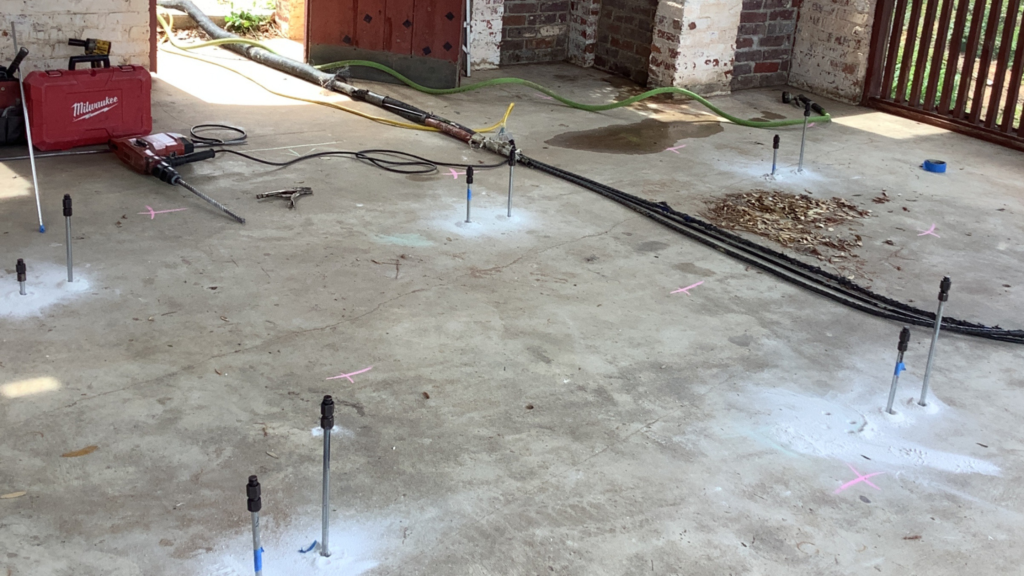
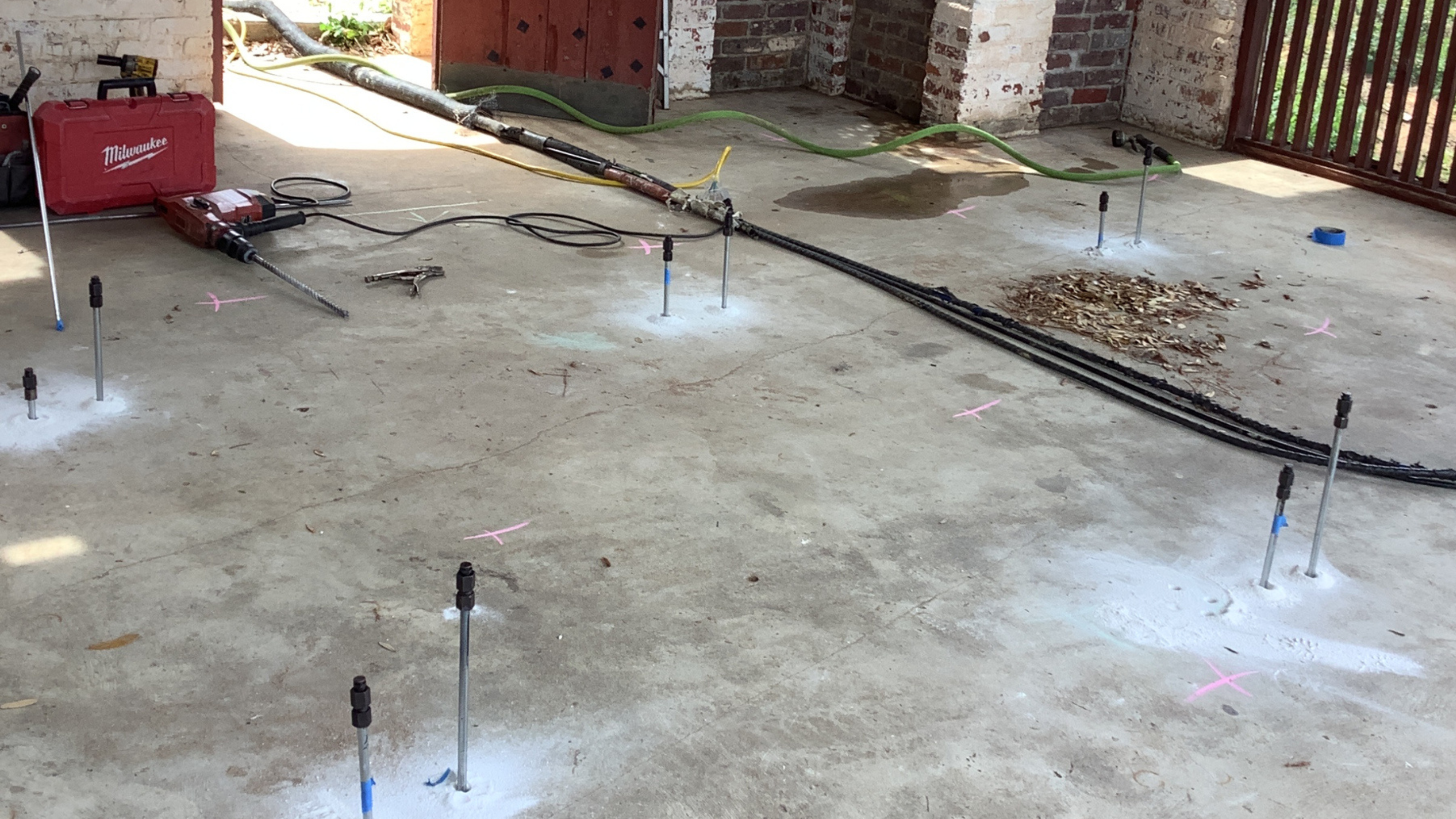
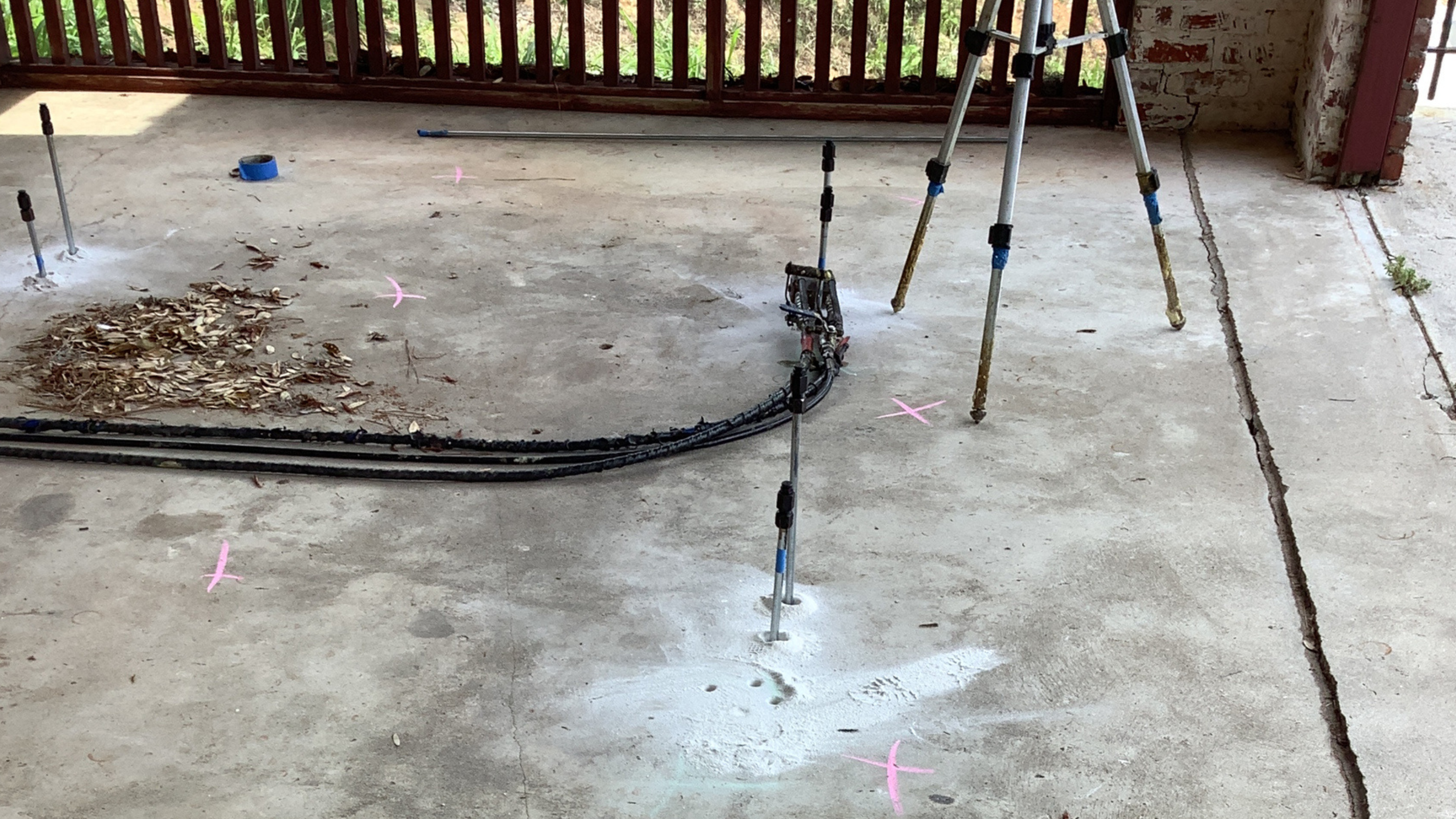
Helicon’s plan called for deep soil injections and slab injections to stabilize the structure. The customer understood that, due to access conditions, the work would likely be done from the interior side, which would mean holes approximately every 5 feet through the concrete to reach the treatment areas. This included 112 pounds of two-part polyurethane for the slab injections and 260 pounds for the interior soil injections. That expectation was discussed up front so the owner could make an informed decision before proceeding.
The injections were designed to:
This was not a cosmetic repair. It was a structural support project designed to make later cosmetic work worth doing.
One of the most useful aspects of this project is how clearly it demonstrates the proper sequence for remodeling an aging structure. The homeowner planned to pour a thin layer of concrete to resurface both areas after the building was stabilized. That is the right order.
If resurfacing had happened first, the owner could have ended up installing fresh concrete over a slab that was still losing support. By stabilizing the support condition before resurfacing, the project protected the value of the future finish work.
The owner also noted that additional stabilization projects may be needed later around the main house as the broader remodel continues. That suggests this boathouse repair may be part of a larger long-term property strategy—another reason it was important to start with a methodical, structurally sound approach.
Although the field notes focus more on planning than final measured movement, the value of the project is clear: the boathouse gained a stronger and more intentional support strategy before further remodeling moved forward.
Most importantly, the owner did not spend renovation dollars blindly. He invested first in the part of the structure that every future improvement depends on: the base support condition.
Older structures often tempt owners into one of two mistakes: overbuilding the wrong repair or spending on finishes before the structural condition is addressed. This project avoided both.
Instead of trying to force a difficult access underpinning program into a site that was poorly suited for it, the owner and Helicon selected a chemical grout stabilization approach that better matched the site. And instead of resurfacing first and hoping for the best, the owner chose to address the base support of the boathouse before proceeding.
That is why this project makes sense not only as a repair but as a strategy. It helps protect:
Helicon is Florida’s trusted expert in soil stabilization, foundation repair, slab stabilization, concrete lifting, seawall repair, and sinkhole remediation. We serve homeowners across Clermont, Lake County, and throughout Florida, delivering engineered repair solutions that protect structures from the ground up.
If you own an older waterfront structure, boathouse, or elevated slab system in Clermont, Lake County, or Central Florida, Helicon can help you stabilize the structure before cosmetic work or remodeling begins. Our team provides targeted soil and slab stabilization solutions designed for challenging sites and long-term value.
Call 844-HELICON today to schedule your free inspection and learn whether structural polyurethane injections are the right fit for your property.
FREE INSPECTION REQUEST