Maybe you noticed a low spot in the yard after the last heavy rain, or a crack that seems to be spreading along a wall. In Seffner, that kind of change carries extra weight, because the ground here sits over limestone that dissolves and shifts over time.
Hillsborough County has a long documented history of sinkhole activity, and homeowners here reasonably wonder whether what they are seeing is routine settling or something more.
The honest answer is that surface signs alone cannot tell you, and that is not a sales line. It is the reason the state itself refers homeowners to a specialist rather than assessing suspected sinkholes directly.
Helicon has worked Florida’s soils since 2004, with a 4.9-star rating from homeowners across the state. This guide covers what makes Seffner’s ground conditions distinct, the physical signs worth tracking, what the Faithway Drive site can and cannot tell you about your own property, and when to ask for an assessment.
Why Seffner’s Ground Conditions Deserve Attention
Most people give no thought to what lies beneath the yard until a fence post sinks or a patio slab cracks. Here, those changes earn a second look, because limestone bedrock, sandy soils, and heavy seasonal rain interact in ways that stay invisible until they surface.
Karst Limestone and Sandy Soils Beneath Hillsborough County
Much of the county rests on karst limestone, a rock soft enough to dissolve as mildly acidic water moves through it. As the Florida Geological Survey explains, rainwater is naturally slightly acidic and becomes more so passing through decaying plant material, then percolates through porous limestone and carries dissolved rock away in solution.
Over very long periods, that creates underground voids. Sandy soil sits above them with little cohesion to bridge a gap.
How Rainfall, Groundwater, and Soil Movement Create Voids
Heavy rain and shifting groundwater carry sand and soil particles downward into fissures in the limestone. That gradual loss of material hollows out pockets beneath a yard or foundation. Both storms and drought cycles contribute, since a rising water table adds load while a falling one removes support the overburden was relying on.
Why a Surface Change Cannot Confirm What Is Happening Below
A crack or dip tells you something changed at the surface, not why. The cause could be ordinary settling, a broken sewer line, poorly compacted fill from construction years ago, buried debris that has decomposed, or a developing void several feet down.
The Florida Geological Survey has a term for the unresolved case: a depression that no licensed geologist or engineer has verified is a subsidence incident, not a sinkhole. Telling them apart takes instruments.
Physical Changes to Watch for Around Your Property
A dip near the driveway edge or a door that suddenly refuses to latch is unsettling in a county with this history. These signs usually appear gradually rather than at once, and they matter most in combination.
- Circular or oval depressions forming in the lawn
- Patches of soft or spongy ground that used to be firm
- Cracks running diagonally from door or window corners
- Doors and windows that stick or no longer close evenly
- New pooling water or changed drainage patterns after rain
Circular Yard Depressions and Soft Ground
A round low spot that was not there last season is among the more recognizable signs. Ground that gives underfoot suggests soil below has begun to move or settle unevenly.
Cracks Around Door Frames, Windows, Slabs, and Driveways
Cracks running diagonally from a corner, rather than straight up and down, point to structural movement rather than drying and shrinkage. Photograph slab and driveway cracks, mark the ends with a pencil, and write the date on the photo. Whether a crack moves over several weeks is the single most useful piece of information you can give an inspector.
Doors and Windows That Suddenly Stick
When a door that opened smoothly starts catching, the frame may be shifting out of square as the soil beneath the foundation loses even support.
New Drainage Patterns, Ponding, or Shifting Landscape Features
Water pooling where it never did, or a fence line starting to lean, both suggest soil movement nearby. Easy to dismiss alone, harder to dismiss together.
What the Faithway Drive Site Can Teach Homeowners
The property at 240 Faithway Drive is the reason many people search for the Seffner sinkhole at all, and it is worth understanding accurately rather than through rumor.
The 2013 Collapse
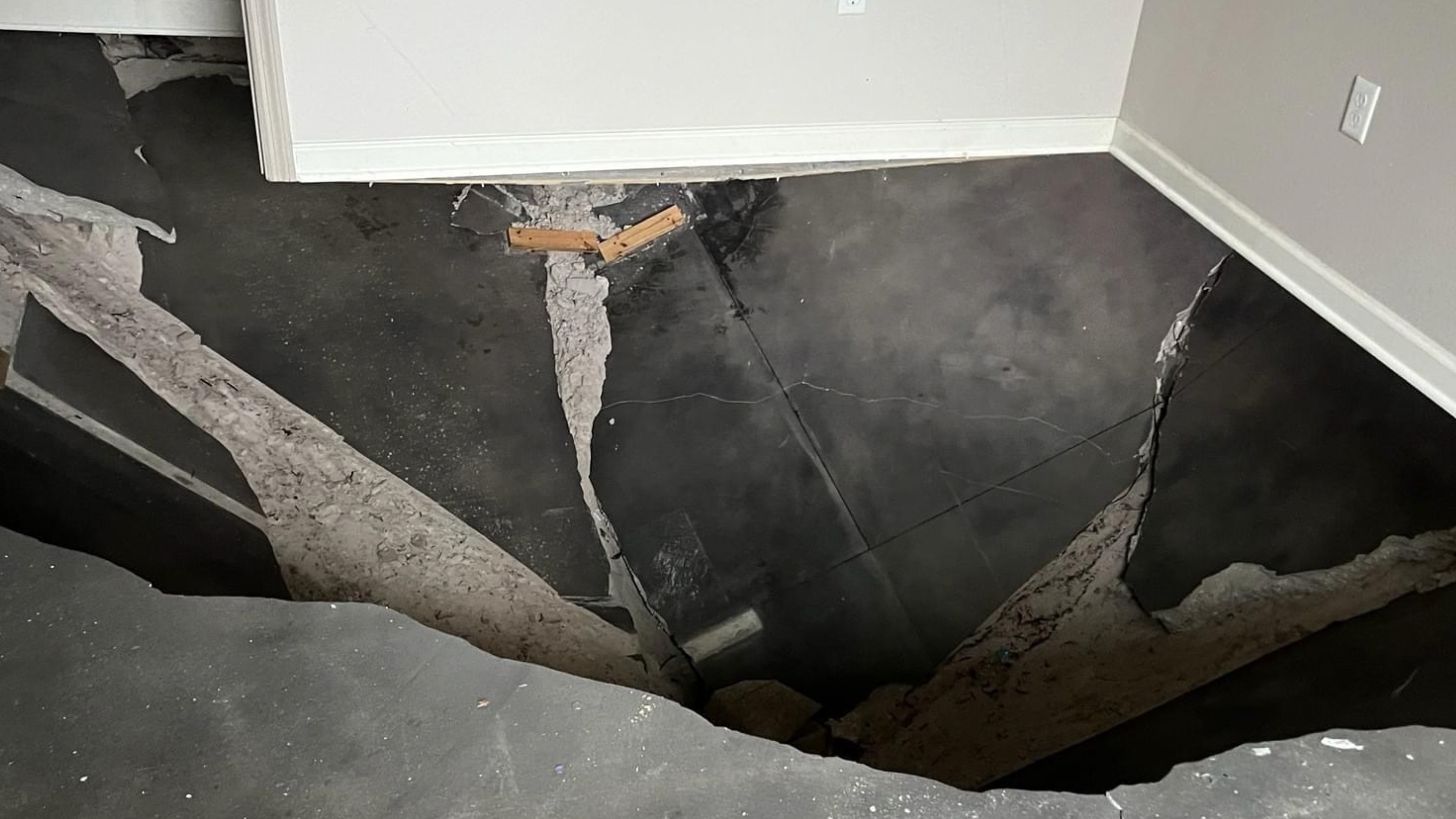
Late on February 28, 2013, the ground opened beneath a bedroom at that address, and Jeffrey Bush was lost in the collapse while he slept. His brother went in trying to reach him and was pulled to safety by a sheriff’s deputy at the rim.
Bush’s body was never recovered. The house and the homes on either side of it were demolished, and Hillsborough County purchased the property, filled the void, and enclosed the lot behind two layers of fencing.
Why the Site Reopened in 2015 and Again in 2023
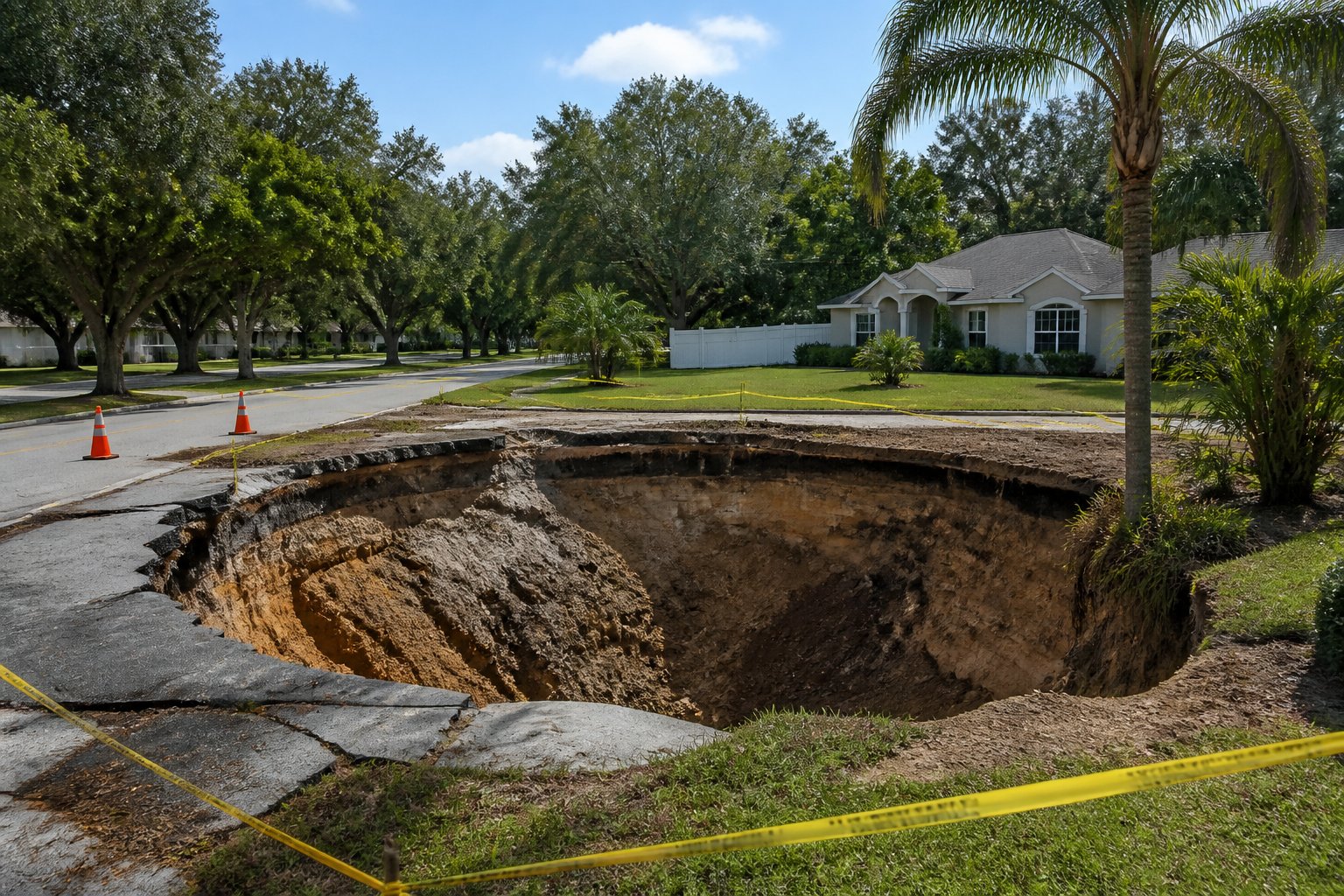
The same hole reopened in August 2015, measuring roughly 17 feet across and about 20 feet deep, close to the dimensions of the original. The county filled it again. In July 2023, it opened for a third time in ten years, and a remediation contractor was brought in to assess the site once more.
What the Containment Approach Actually Means
Here is the part that matters most to neighbors, and that most coverage buries. County officials have said the 2013 remediation was carried out specifically so that any future reopening would be contained to the original footprint without expanding outward.
That is what the record shows across all three events: the hole has come back in the same place, at a similar size, without spreading into adjacent properties. The sheriff’s office monitored the site overnight in 2023, and neighbors were told they could remain in their homes.
Two lessons follow. A void that is not fully resolved can return years later, so remediation quality matters. And proximity to a documented sinkhole is not the same as risk to your parcel, which is a question only testing on your own ground can answer.
When to Seek a Professional Ground Assessment
If you have spotted a crack that keeps growing or a depression that appeared after a storm, the practical question is how urgent it is. That depends on details a homeowner cannot measure from the surface.
When a New Depression or Changing Crack Needs Prompt Attention
A depression that grows over a few weeks, or a crack that visibly widens between looks, warrants attention sooner rather than later. Document sudden changes after heavy rain right away. If a depression looks new or is actively growing, keep people, pets, and vehicles off it, and if there is any risk of harm, call local law enforcement first.
What a Professional Inspection Evaluates
An inspector checks soil conditions, slab condition, and structural cracking, then weighs those findings against known ground conditions in the area. Where a void is suspected, confirming it takes subsurface testing such as ground-penetrating radar or soil borings.
Worth knowing before you start calling: the Florida Department of Environmental Protection does not inspect suspected sinkholes. It runs the FGS Sinkhole Helpline at 850-245-2118 for questions and publishes a homeowner’s guide, but for an actual assessment it directs residents to a certified home inspector or foundation specialist.
Stabilization Paths for Confirmed Voids and Weak Soils
Confirmed voids and weak soils are addressed through compaction grouting, soil stabilization, or helical pier support, depending on what the assessment finds. The method follows the diagnosis rather than the reverse.
Frequently Asked Questions
Where did the 2013 Seffner sinkhole occur?
At 240 Faithway Drive in Seffner, in Hillsborough County. It opened directly beneath a bedroom of the home that stood there. The lot is now county-owned and double-fenced.
How large was the Seffner sinkhole?
Roughly 17 to 20 feet across and about 20 feet deep. The 2015 and 2023 reopenings were close to the same dimensions, which reflects the containment design used when the original void was filled.
Was Jeffrey Bush ever recovered?
No. He was never recovered after the ground opened beneath him on February 28, 2013. His brother attempted a rescue and was pulled from the rim by a sheriff’s deputy before the site was judged too unstable to continue.
What caused the ground to collapse there?
Mildly acidic rainwater dissolved limestone beneath the property over a long period, creating a void the sandy soil above eventually could not bridge. That geology is common across much of Hillsborough County.
Is the site accessible today?
No. The county owns the lot, keeps it behind two layers of fencing, and has monitored it after each reopening.
Does a nearby sinkhole mean my property is at risk?
Not by itself. Shared geology raises the question; it does not answer it. Two properties on the same street can sit over very different subsurface conditions, which is why assessment happens parcel by parcel.
How can I check whether my property has recorded subsidence?
The Florida Geological Survey maintains a statewide database of subsidence incident reports. Read it with care: most entries were never field verified, and the absence of a record proves nothing, since reporting has always been voluntary. Helicon’s Florida sinkhole map and warning signs guide are useful starting points as well.
Which areas of Florida face the highest sinkhole risk?
Areas where karst limestone lies close to the surface, including much of Hillsborough, Pasco, and Hernando counties. Living in one of them is a reason to watch for warning signs, not a reason to expect a collapse.
Taking a Calm, Informed Next Step
Standing in the yard looking at a crack or a soft patch can feel overwhelming with this county’s history in mind. Most ground changes turn out to be manageable once they are properly assessed, and the ones that are not tend to give warning first.
Document what you see from a safe distance, date the photos, and stay off any area that has visibly sunk. Then get it looked at while the fix is still small.
Helicon offers a free, no-obligation inspection that gives you a documented answer about what is happening under your property rather than a guess.