Proudly serving all of Florida with offices in Tampa, Orlando, and Fort Myers

Welcome to Sinkhole Season

by | Jun 26, 2013

Having lived a part of my life in California, I was quite aware that some areas of the state, along the San Andreas Fault, would be more prone to earthquakes. Sinkholes are completely different geologically, but they too will sometimes form along a path of weakness underground. Once a sinkhole forms in a certain area, there is a strong possibility that more will appear just a few miles away. An article in the Tampa Bay Times, refers to this as a “fracture line” that connects many of sinkhole incidences together.

With the summer rains and tropical storms now upon us, the number of sinkholes has increased. We live, quite literally, on top of what was once an ocean floor, now a beautifully eerie underground landscape dotted by limestone caves. All that summer rain must go somewhere — part of it disappears into streams and springs, but a portion of it absorbed by the earth, making the ground heavy. In some cases, a clay layer is what covers a cavity under ground. That layer is often called a “bridge.” Once the weight of wet soils above ground is too much to bear, the bridge, or roof of a limestone cave, collapses — forming a string of sinkholes.

There is no point in worrying about where sinkholes will form, they’re unpredictable — all we know is that the geology of certain parts of Florida make them more likely to form. We really can’t prevent them from occurring either, even though there is evidence that some human activities can trigger them.

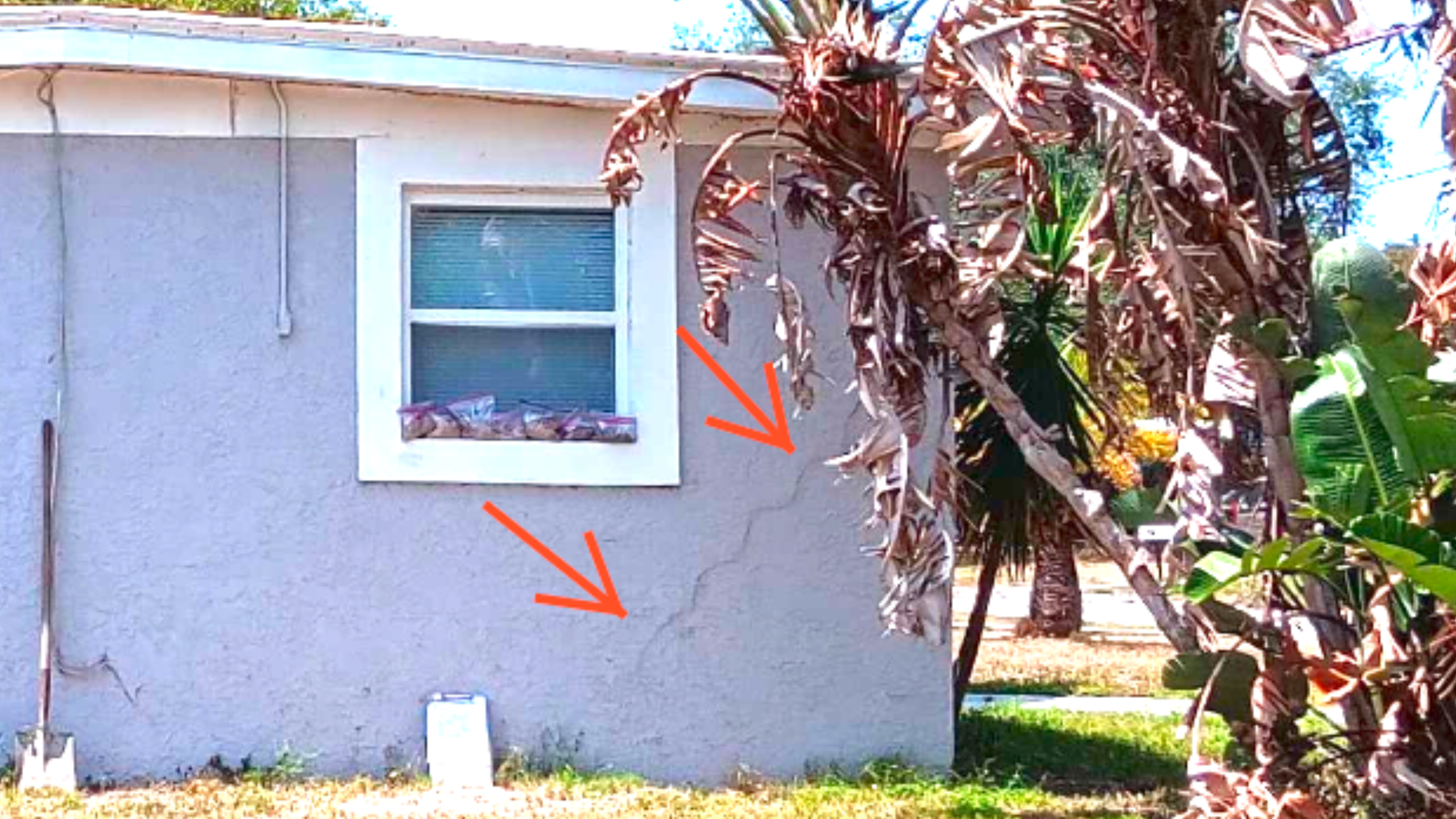
If you’re a homeowner, the best advice during our rainy “sinkhole season” is to be watchful. If you see damage to your house that wasn’t there before, have an expert take a look. If sinkholes are appearing in your neighborhood, talk to your neighbors and learn from them. Sinkholes are part of living in Florida. Being knowledgeable about them is your best defense.

If you have questions, call the professionals at Helicon. At Helicon, we keep our promises. For more information, call us today at 813-567-1065.

i 3 Table of Contents

Recent Blogs:

Helical Piers vs. Push Piers: What’s the Difference? 

Direct Answer  Push piers and helical piers are both steel foundation-support systems used to transfer structural loads away from weak or unsuitable shallow soils to deeper competent bearing soils or other suitable bearing material.  The biggest difference...

What Causes Sinkholes in Florida—and Should You Worry? 

Direct Answer  Florida sinkholes form primarily because much of the state is underlain by limestone and other carbonate rock that can slowly dissolve when exposed to slightly acidic groundwater.  Over time, this process can create underground openings. A...

What Is Soil Stabilization and How Does It Work? 

Direct Answer  Soil stabilization is the process of improving weak, loose, eroded, or poorly compacted ground so it can provide better support for a foundation, slab, or other structure.  For many Florida residential foundation and slab problems, one...

Featured Projects:

About the Author:

Jay Silver

Jay Silver is the Founder and President of Helicon, a family-owned and operated Florida geotechnical construction company specializing in foundation repair, underpinning, soil stabilization, concrete lifting, sinkhole repair, seawall repair, deep foundations, and ground improvement solutions.

Since starting Helicon in 2004, Jay has helped grow the company into Florida’s most trusted foundation repair company, serving homeowners, realtors, engineers, contractors, property managers, municipalities, commercial property owners, and builders across the state. Jay is passionate about educating the market and helping customers make confident decisions about foundation repair, soil stabilization, seawall repair, and geotechnical construction solutions.

Secret Link