You walk out to your driveway one morning and notice the surface looks rough, pitted, and flaky, like the top layer is slowly peeling away. That is spalling on concrete, and it is one of those problems that looks minor at first but quietly grows into something much more expensive. The longer you wait, the deeper the damage goes.
When you understand what is actually happening beneath that surface, you can stop the breakdown before it reaches your slab’s structure. Small repairs that cost a few dollars per square foot today can turn into full slab replacements if ignored long enough. That gap in time and money is worth taking seriously.
This guide walks you through what spalling really means, what causes it, how to tell when it becomes dangerous, and what repair options actually hold up. Helicon Foundation Experts has worked with damaged concrete across Florida properties for over two decades, and this article draws on that real-world experience to give you practical answers.
What Surface Breakdown Really Means
Spalling is not just cosmetic wear. It signals that the bond holding your concrete together is failing, and the surface breaking away often exposes deeper layers to even faster damage.
How Spalling Differs From Minor Flaking
Light surface dust or a thin powdery residue after rain is not the same as spalling. Minor flaking typically stays on the very top millimeter of the surface and does not expose the aggregate beneath.
Spalling goes deeper. You will see chunks of concrete lifting away, a rough gravel-like texture becoming visible, and sometimes pitting that goes several millimeters into the slab. The key distinction is that spalling removes actual material from the structural surface, not just a surface coating.
Once the aggregate is exposed, water enters the concrete much faster. That accelerates every other form of damage that follows.
Why Concrete Starts Shedding Its Top Layer
Concrete is porous. Water enters the tiny gaps between particles, and when pressure builds within those pores, the surface breaks apart from the inside. That internal pressure is the real driver behind most spalling.
In Florida, the constant cycle of heavy rain followed by intense heat puts that pressure cycle on repeat. Water saturates the slab, then heat drives moisture deeper while the surface dries unevenly. Over months and years, this weakens the top layer until it starts to pop loose.
Corroding steel reinforcement beneath the surface adds another layer of pressure, and understanding concrete foundation repair essentials is necessary as rust expands to three times its volume, pushing the concrete apart.
Early Clues You Should Not Ignore
The earliest signs of spalling are easy to miss because they resemble normal wear, but specific visual and tactile details distinguish surface aging from active deterioration.
Visual Damage Around Edges And Corners
Corners and edges fail first because they are exposed on two sides instead of one. If you notice chipping or crumbling at the edges of your driveway, patio slabs, or walkway joints, that is where spalling almost always starts.
Look for irregular patches where the surface has a different color or texture than the surrounding area. Fresh spalling often reveals a darker, slightly damp-looking interior even when the surface feels dry. That color difference tells you water has been sitting inside the slab.
Rust-colored staining around a chip or crack is a serious early sign; knowing how to maintain concrete foundations can help you address this before rebar corrosion pushes outward.
Texture Changes That Signal Deeper Trouble
Run your hand across the surface. A healthy slab feels smooth and consistent. A spalling slab has areas that feel gritty, rough, or slightly hollow when tapped, almost like a thin shell over empty space.
That hollow sound when you tap a section, often called “delamination,” means the surface layer has separated from the concrete below but has not yet fully broken away. It will. Once you find a hollow section larger than a dinner plate, you are past the early stage.
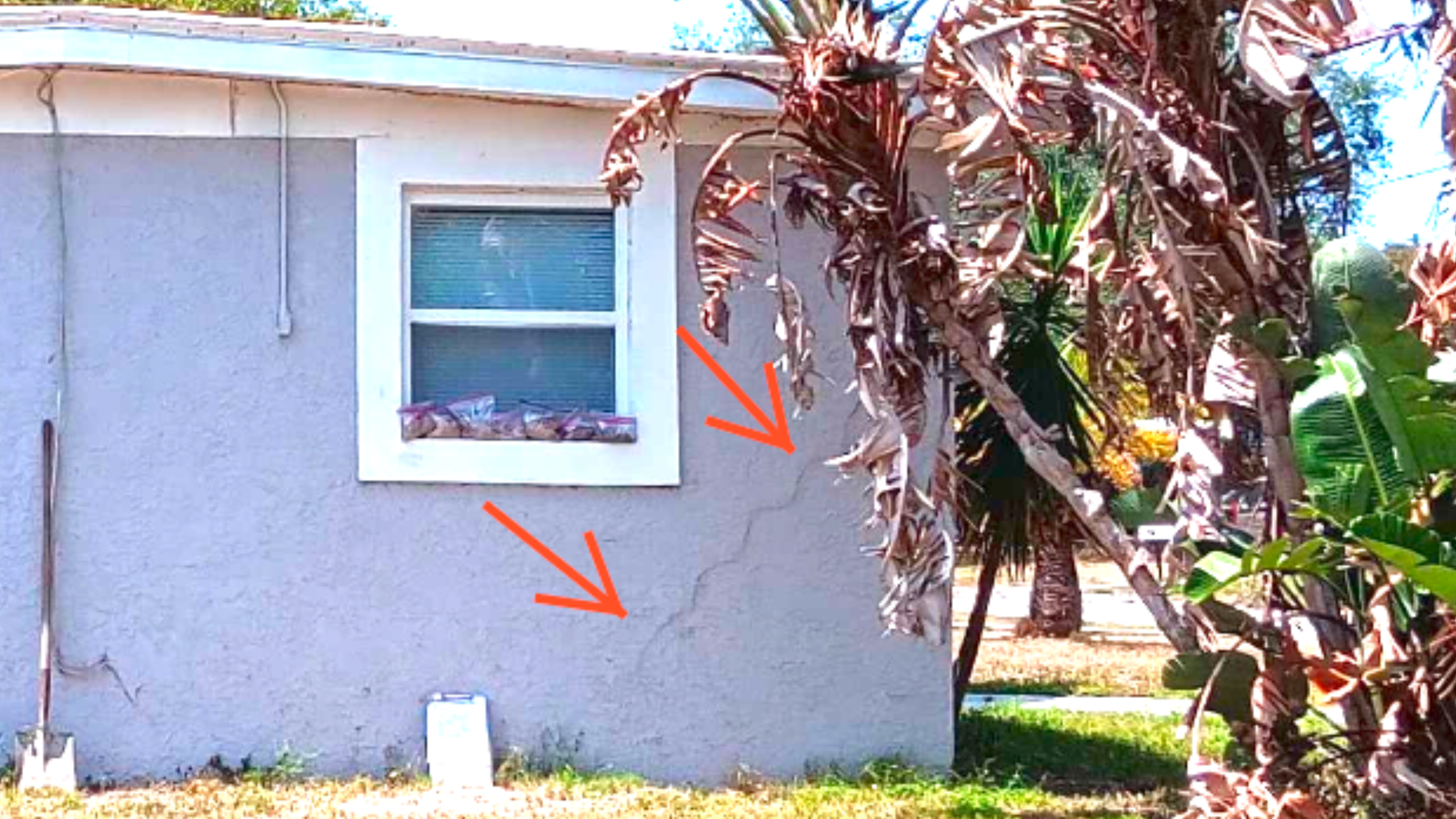
Hairline cracks that run in parallel patterns, especially near rebar lines, are also a texture-level signal that internal corrosion is driving the surface apart.
What Causes Concrete To Fail This Way
Florida’s specific environment creates conditions that push concrete toward failure faster than many other states. Moisture and heat are the two biggest factors, but they rarely act alone.
Moisture Intrusion And Repeated Saturation
Water is the most consistent cause of spalling in Florida properties. The state’s high water table means slabs often sit in contact with moisture from below, not just from rain above. That two-sided saturation gives water more opportunities to work into the concrete matrix.
Poor drainage makes this worse. When water pools against the edge of a slab or collects in a low spot on a driveway, it stays in contact with the concrete long enough to penetrate deeply. Each rain event pushes that saturation cycle further.
Without a high-quality penetrating sealer, concrete constantly absorbs and releases moisture. That repeated movement weakens the cement paste that holds aggregate particles together.
Reinforcement Corrosion Beneath The Surface
Concrete protects steel rebar through a natural chemical process that keeps rust from forming. That protection breaks down when water and oxygen reach the steel, which happens when cracks form or the concrete cover over the rebar is too thin.
Once corrosion starts, it generates significant expansive force. The rust pushes outward in all directions, cracking the concrete above and below it. You will often see a linear crack following the exact path of a rebar rod beneath the surface.
In coastal Florida areas, salt in the air and groundwater accelerates this process. Properties within a few miles of the coast tend to see rebar corrosion spalling sooner than inland properties, even with similar construction quality.
Poor Installation, Mix Issues, And Curing Problems
Concrete that was overwatered on-site starts with a weaker structure before it ever cures. Adding water to the mix makes it easier to work with, but it increases the water-to-cement ratio and creates more pores for moisture to enter later.
Inadequate curing time is another common root cause. Concrete that dries too fast, especially in Florida’s summer heat, develops surface tension cracks before the interior finishes gain strength. Those cracks become entry points for everything that follows.
Insufficient concrete cover over rebar, sometimes as little as half an inch in older pours, gives steel almost no protection once minor surface cracking begins.
When Cosmetic Damage Becomes A Safety Issue
Surface flaking looks like a maintenance problem, but there is a point where it crosses into a structural and physical safety concern. Knowing that line helps you decide how urgently to act.
Signs The Slab May Be Losing Strength
Spalling that extends beyond the top inch of a slab begins to reduce its load-bearing capacity. This matters most for slabs that support vehicles, heavy equipment, or a structure above them. A driveway with surface damage is one thing; however, utilizing advanced cracked foundation repair techniques is essential when a foundation slab shows deep pitting.
Watch for these warning signs:
- Sections of the slab that flex or move slightly when you walk across them
- Cracks that are widening over weeks or months
- Visible rebar that has started to show through the surface
- Areas where the slab has dropped or settled unevenly
Any one of these signals that the damage has gone past cosmetic and needs professional evaluation.
Why Pool Decks, Walkways, And Driveways Need Faster Action
High-traffic surfaces become trip hazards quickly once spalling creates uneven edges and raised sections. A pool deck with flaking concrete around the drain edge or near the coping can catch a bare foot and cause a serious fall.
Driveways develop potholes where spalled sections wash away completely, which can damage tires and create liability issues. Walkways near building entrances present similar risks for visitors and residents.
For pool decks specifically, the combination of water, pool chemicals, and Florida heat creates one of the fastest-deteriorating surface environments possible. Chlorine residue left on concrete after splashing accelerates chemical breakdown, making it vital to understand how to fix a cracked pool deck before spalling speeds up significantly.
Repair Paths And What They Actually Fix
The right repair depends on how deep the damage goes, not just how bad it looks. Surface-level fixes applied to deeper problems will fail within a season.
Patching, Resurfacing, And Full Replacement
For spalling that has not reached the rebar, a polymer-modified repair mortar fills the damaged area and bonds to the existing concrete. The damaged material gets removed first, a bonding agent is applied, and then the mortar is packed in and finished to match the surrounding surface.
When evaluating polyurethane vs epoxy for concrete repair, ensure the material matches the slab’s needs so the repair holds for a decade or more.
Resurfacing works when spalling is widespread but shallow, covering the entire slab with a thin bonded overlay. It restores a uniform surface but does not add structural strength. Think of it as a protective skin, not a structural repair.
Full replacement becomes necessary when:
- Rebar corrosion has spread across a large section
- The slab has cracked and separated structurally
- Spalling has gone past two inches in depth in load-bearing areas
Replacement costs more upfront but eliminates the conditions driving the failure, especially if drainage and soil issues are corrected at the same time.
When Lifting Or Soil Support May Also Be Needed
Spalling sometimes appears on slabs that have also settled or shifted. If the surface damage comes with uneven areas or visible gaps, professional concrete lifting and repair may be needed if the underlying soil is contributing to the problem.
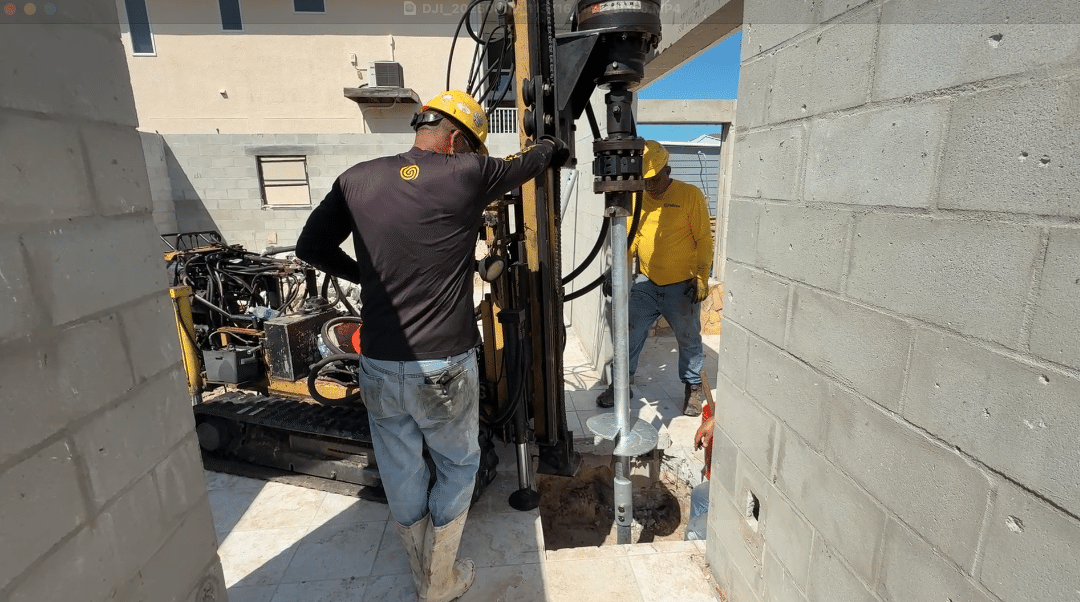
Polyurethane foam injection provides non-invasive concrete lifting to restore a settled slab back to its original position and fill voids beneath it without tearing out the concrete. This approach addresses the cause rather than just the surface symptom, which is why repairs hold longer when settlement is part of the picture.
Treating spalling on a slab that still sits over weak or eroded soil is like patching a roof without fixing the sagging rafters. The surface repair will not last.
Protecting Concrete For The Long Haul
Prevention is far less expensive than repair. The two most impactful habits you can develop are water management and routine visual checks.
Drainage And Water Management Habits
Water pooling against a slab edge is one of the fastest ways to accelerate spalling. Make sure your yard grades away from all concrete surfaces by at least one inch per foot for the first six feet. That simple slope change reduces how long water sits in contact with the slab.
Clean gutters and downspouts to direct water away from driveways, patios, and walkways. A clogged gutter that dumps water at the corner of a slab edge creates the exact saturation conditions that break concrete over time.
Apply a penetrating silane or siloxane sealer every three to five years. These sealers bond chemically with the concrete rather than sitting on top of it, which means they stay effective even under Florida’s intense UV exposure and heavy rain.
A Simple Inspection Routine For Florida Properties
Check your concrete surfaces twice a year, ideally in late spring before hurricane season and again in early fall after it ends. Walk each surface slowly and look for these specific things:
- New chips or flaking at corners and edges
- Rust stains, which signal rebar corrosion starting beneath the surface
- Areas that sound hollow when tapped with a knuckle
- Cracks wider than a credit card’s thickness
- Any section where the surface texture has changed from the last inspection
Take a photo of any damage you find. Comparing photos from one inspection to the next tells you whether a problem is growing, which matters more than the size of the damage at any single point in time.
Frequently Asked Questions
Common questions about spalling often come from people unsure whether what they are seeing is serious. These answers address the specific details that make the difference between acting now and waiting too long.
What causes surface damage and flaking on a concrete slab?
Moisture is the most common cause. Water enters the pores of the concrete, and repeated cycles of absorption and drying weaken the cement paste until the surface breaks away. Rebar corrosion, poor curing during installation, and chemical exposure from pool water or cleaning products can all trigger or speed up the process.
What is the difference between spalling and scaling on concrete surfaces?
Scaling affects only the very top layer, usually the first one to two millimeters, and is most often caused by salt exposure or very mild weathering. Spalling goes deeper, removing chunks of the structural surface and often exposing the coarse aggregate or rebar beneath. Scaling is easier to address; spalling typically requires a more substantial repair.
How can you repair a chipped or flaking concrete patio surface?
Remove all loose material first, then apply a bonding agent and pack in a polymer-modified repair mortar. For widespread shallow damage across the whole surface, a resurfacing overlay bonded to the existing concrete is an effective option. The repair needs to be sealed after it cures to prevent the same moisture intrusion from recurring.
Is surface flaking on concrete a sign of a structural problem?
Not always, but it depends on depth and location. Shallow flaking on a low-traffic patio is primarily cosmetic. Flaking that exposes rebar, covers a large percentage of the slab, or appears on a load-bearing foundation surface enters structural territory and requires professional assessment.
Why can concrete start deteriorating and breaking away after only a couple of years?
New concrete can spall early when the original mix had too much water added on-site, when it dried too quickly in hot weather without proper curing, or when the concrete cover over the rebar was too thin. In Florida, finishing a slab during high summer temperatures without curing compounds or wet curing is a common cause of early-onset spalling.
How much does it typically cost to repair damaged and flaking concrete?
Surface-level patching typically runs between $3 and $7 per square foot. Moderate repairs where rebar is exposed and needs treatment range from $8 to $15 per square foot. Structural repairs or full replacement can exceed $20 per square foot depending on the size and condition of the slab. Catching damage early keeps the cost in the lower range.
Stop the Damage Before the Damage Spreads
Spalling on concrete moves in one direction on its own: deeper. What starts as a few rough patches at a corner can reach the rebar within a couple of seasons in Florida’s wet, hot climate, and once corrosion takes hold, the scope and cost of repair grow significantly.
The good news is that surface spalling is one of the most manageable concrete problems you will face. Clean the area, apply the appropriate repair mortar, seal it properly, and address any nearby drainage issues. That sequence stops most spalling from progressing.If your slab has already settled, shows signs of voids beneath it, or sits on soil that remains saturated after rain, surface repair alone is not enough. Helicon Foundation Experts offers free, no-obligation inspections across Florida, so you can find out exactly what is happening under and around your concrete before committing to a repair approach. Schedule your free inspection today and get back on solid ground.