Direct Answer
Foundation repair may be covered by insurance in Florida, but only in certain situations. Coverage depends on your policy, the cause of the damage, whether the damage meets the policy’s definitions, whether sinkhole coverage is included, and whether the insurance company’s investigation confirms a covered loss.
The most important thing to understand is this: insurance coverage is based on the cause of the foundation damage, not the repair cost.
Insurance does not usually decide coverage based on how expensive the foundation repair is. It decides coverage based on what caused the damage and whether that cause is covered by the policy.
In many cases, standard homeowners insurance does not cover foundation repair caused by normal settlement, poor compaction, long-term soil movement, drainage problems, long-term or unresolved plumbing leaks, wear and tear, construction defects, tree roots, or maintenance-related issues.
Foundation repair is more likely to be considered for insurance coverage when the damage is caused by a covered event, such as certain sudden water losses, storm-related damage, catastrophic ground cover collapse, or verified sinkhole activity if the policy includes applicable sinkhole coverage.
Florida law requires authorized residential property insurers to provide coverage for catastrophic ground cover collapse, but that coverage category is narrow. Under Florida Statute 627.706, catastrophic ground cover collapse requires geological activity that results in all required conditions: abrupt ground collapse, a visible depression, structural damage to the covered building including the foundation, and the insured structure being condemned and ordered vacated by the proper government agency.
That is very different from optional sinkhole loss coverage. Florida law requires insurers to make sinkhole loss coverage available for an additional premium, but it may not automatically be included in every policy. Insurers may also require an inspection before issuing sinkhole loss coverage.
If you believe the damage may be tied to a covered event, contact your insurance carrier or agent before making major repairs when it is safe to do so. If there is a safety concern, protect people first.
If you see cracks, uneven floors, sticking doors, settlement, or a depression near the home, document the symptoms, review your policy, contact your insurance agent or carrier when appropriate, and schedule a foundation inspection to understand what may be causing the movement.
This article is for general homeowner education and is not legal, insurance, or claim advice. Coverage decisions are made by your insurance company under the terms of your specific policy.
Coverage Depends on the Cause, Not the Repair Cost
One of the biggest misunderstandings homeowners have is assuming that insurance coverage depends on how serious or expensive the repair is.
That is not usually how insurance works.
A $30,000 foundation repair may not be covered if the cause is gradual settlement, poor compaction, drainage, long-term soil movement, or another excluded condition. A smaller repair may be considered if the cause is a covered event under the policy.
The key question is not, “How expensive is the damage?”
The key question is, “What caused the damage, and is that cause covered?”
This is why it is important to understand the difference between:
- Normal settlement
- Poor compaction
- Slab voids
- Water-related washout
- Plumbing-related soil movement
- Sinkhole activity
- Catastrophic ground cover collapse
- Storm-related damage
- Flood or storm surge damage
- Construction defects
- Maintenance-related conditions
Two homes may have similar cracks but very different insurance outcomes because the causes are different.
Read more: Why Foundation Repair Quotes Vary So Much
Why Foundation Repair Insurance Coverage Is Complicated
Foundation repair insurance coverage is complicated because foundation movement can have many causes.
A Florida homeowner may see:
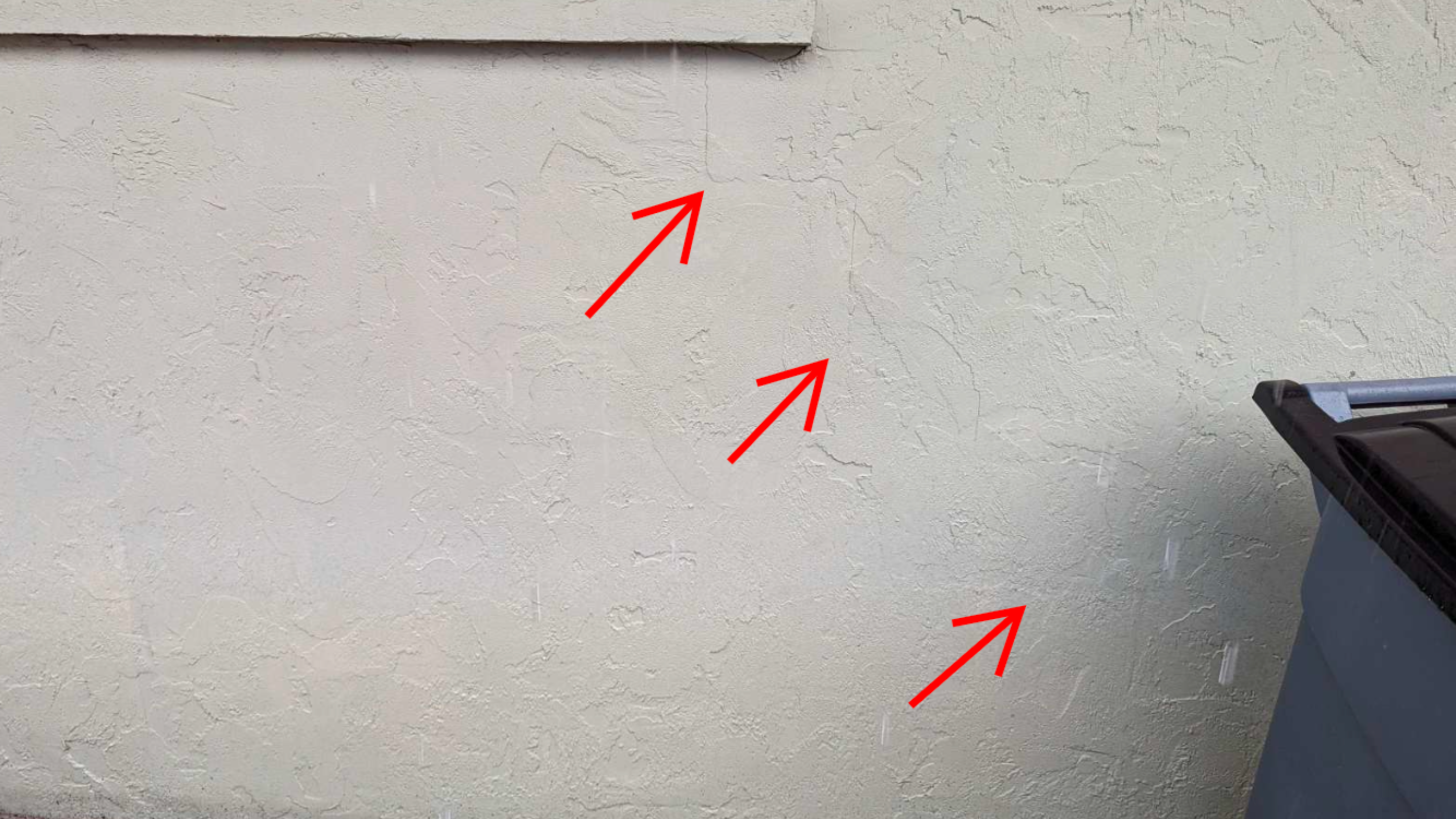
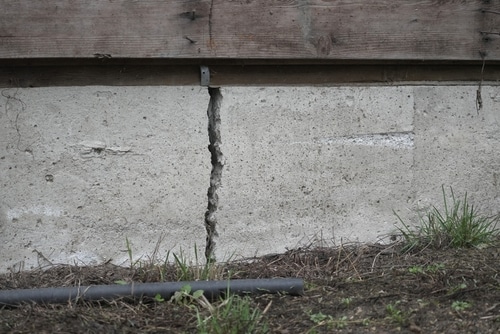
- Stair-step cracks in block walls
- Cracks around windows or doors
- Sticking doors and windows
- Uneven or sloping floors
- Interior slab settlement
- Garage floor settlement
- Gaps around trim, walls, ceilings, windows, or doors
- Cracks that reopen after repair
- Soil washout near the foundation
- Sinking concrete near the home
Those symptoms may look similar, but the causes can be very different.
Foundation movement may be caused by:
- Normal settlement
- Poor soil compaction
- Loose sandy soils
- Shallow soil weakness
- Voids beneath slabs
- Plumbing leaks
- Drainage problems
- Tree roots
- Construction defects
- Drought or moisture changes
- Erosion or washout
- Sinkhole activity
- Catastrophic ground cover collapse
- Storm-related damage
- A combination of issues
Insurance companies generally evaluate the cause of the loss before deciding whether foundation repair is covered. A cracked wall by itself does not automatically mean there is coverage. A sinking foundation by itself does not automatically mean there is coverage.
The question is usually: What caused the foundation damage, and is that cause covered under the policy?
Common Insurance Coverage Outcomes
| Foundation Damage Cause | Is It Commonly Covered? | Why It Matters |
| Normal settlement | Usually not covered | Often considered gradual movement or maintenance-related |
| Poor compaction | Usually not covered | Often treated as construction or soil preparation issue |
| Drainage problems | Usually not covered | May be considered maintenance or water management issue |
| Plumbing leak | Sometimes | Depends on policy language, timing, and whether the loss was sudden or long-term |
| Tree roots | Usually not covered | Often considered maintenance or external soil disturbance |
| Construction defects | Usually not covered | Typically excluded under homeowners policies |
| Sinkhole loss | Sometimes | Depends on whether sinkhole coverage is included and verified |
| Catastrophic ground cover collapse | Required in Florida policies | Narrow category with specific legal requirements |
| Storm-related damage | Sometimes | Depends on policy, cause, exclusions, and whether flood or wind coverage applies |
| Flood or storm surge-related foundation damage | Often excluded from standard homeowners policies | May require separate flood coverage or special policy terms |
These are general patterns, not coverage guarantees. Every policy is different.
If foundation movement is sudden and tied to a covered event, coverage may be possible. If the movement is gradual, long-term, or related to excluded causes, coverage may be denied.
Do Not Call It a Sinkhole Too Early
Many Florida homeowners use the word “sinkhole” when they see cracks, settlement, depressions, or holes near the home.
That is understandable, but it can create confusion.
Not every depression is a sinkhole. Not every foundation crack is a sinkhole loss. Not every void beneath a slab is sinkhole activity. In many cases, the cause may be poor compaction, shallow loose soils, drainage, plumbing leaks, erosion, or slab support loss.
Calling the issue a sinkhole before it has been investigated can create confusion with contractors, insurance companies, buyers, sellers, real estate agents, and future property records.
A better approach is to describe what you are actually seeing:
- Stair-step crack
- Uneven floor
- Sinking slab
- Depression near the home
- Soil washout
- Hole in the yard
- Cracks around windows or doors
- Garage slab settlement
- Interior slab movement
Then allow the cause to be evaluated.
The correct label should come after investigation, not before it.
Read more: Sinkhole Repair
Catastrophic Ground Cover Collapse vs Sinkhole Coverage
Florida homeowners often hear the terms “sinkhole coverage” and “catastrophic ground cover collapse” and assume they mean the same thing.
They do not.
Catastrophic Ground Cover Collapse
Catastrophic ground cover collapse, often shortened to CGCC, is required in Florida residential property policies issued by authorized insurers. But it is a narrow coverage category.
Under Florida law, catastrophic ground cover collapse requires geological activity that results in all of the following:
- Abrupt collapse of the ground cover
- A depression in the ground cover clearly visible to the naked eye
- Structural damage to the covered building, including the foundation
- The insured structure being condemned and ordered vacated by the authorized government agency
In plain English, catastrophic ground cover collapse is the extreme scenario: the ground visibly collapses, the home suffers structural foundation damage, and the government orders the home vacated.
Because all of those requirements must be met, many foundation problems do not qualify as catastrophic ground cover collapse.
A home may have cracks, settlement, or even sinkhole-related concerns without meeting the catastrophic ground cover collapse threshold.
Sinkhole Loss Coverage
Sinkhole loss coverage is different. It may provide broader protection for verified sinkhole-related damage, but it is not always automatically included in every homeowners policy.
Florida law requires insurers to make sinkhole loss coverage available for an additional premium. The insurer may require an inspection before issuing that coverage.
If a homeowner does not have sinkhole loss coverage and the damage does not meet the catastrophic ground cover collapse definition, the claim may not be covered.
This is why homeowners should not assume that “I have homeowners insurance” means “I have sinkhole coverage.”
What Is a Sinkhole Loss in Florida?
A sinkhole loss is not just any crack, depression, or settlement.
Florida’s Department of Financial Services explains that not all homeowners policies provide coverage for sinkhole damage. If a policy does include sinkhole coverage, the home generally must have damage that meets the definition of structural damage for sinkhole coverage to apply. The Department also notes that items such as interior wall cracks or popped floor tiles may not meet the statutory definition of structural damage.
In a sinkhole claim, the insurance company may inspect the property and, if the proper conditions are met and sinkhole loss is covered under the policy, involve a professional engineer or geologist to test and determine the cause of damage.
For homeowners, the practical point is simple:
A hole in the yard, cracks in the walls, or uneven floors do not automatically prove a sinkhole loss. The cause must be investigated, and the policy must provide applicable coverage.
When Foundation Repair May Be Covered by Insurance
Foundation repair may be covered when the cause of damage is a covered loss under the policy.
Possible coverage situations may include:
- Verified sinkhole activity when the policy includes sinkhole loss coverage
- Catastrophic ground cover collapse that meets Florida’s legal definition
- Certain sudden and accidental plumbing leaks, depending on policy language
- Certain storm-related structural damage, depending on cause and policy terms
- Damage tied to a specific covered event rather than long-term movement
Coverage is usually more likely when the event is sudden, documented, tied to a covered cause, and reported promptly.
For example, if a sudden plumbing failure causes rapid soil washout beneath part of a slab, the insurance company may evaluate whether the resulting damage is covered. If a covered storm event causes specific structural damage, the insurer may evaluate that claim under the policy.
But coverage depends on the facts and the policy. The same symptom may be covered in one situation and denied in another.
When Foundation Repair Is Usually Not Covered
Many foundation repair projects are not covered by insurance because they are tied to gradual or excluded causes.
Foundation repair is commonly not covered when caused by:
- Normal settlement
- Poor original compaction
- Loose fill beneath the slab
- Long-term soil movement
- Gradual erosion
- Drainage problems
- Improper grading
- Tree roots
- Drought-related soil movement
- Wear and tear
- Construction defects
- Poor workmanship
- Lack of maintenance
- Long-term plumbing leaks
- Pre-existing damage
- Cosmetic cracking without covered structural damage
This is frustrating for homeowners because the repair may be necessary even if insurance does not cover it.
Insurance is not designed to cover every foundation issue. It is designed to cover certain losses defined by the policy. Many foundation problems are treated as maintenance, construction, soil, drainage, or gradual movement issues.
Read more: How Much Does Foundation Repair Cost in Florida?
Plumbing Leaks and Foundation Damage
Plumbing leaks can complicate foundation insurance claims.
A sudden and accidental plumbing leak may be treated differently from a long-term leak that slowly washes soil away beneath a slab or foundation. Coverage often depends on policy language, whether the leak was sudden or gradual, when the homeowner discovered it, and whether the damage falls within the policy’s covered causes and exclusions.
Foundation problems related to plumbing may include:
- Voids beneath interior slabs
- Garage slab settlement
- Tile cracking or popping
- Interior slab movement
- Soil washout near the foundation
- Cracking caused by loss of support below the slab
If a plumbing leak is suspected, the homeowner should consider leak detection and notify the insurance carrier or agent as appropriate. The foundation repair contractor can evaluate the soil and slab support issue, but the insurance company determines coverage.
Read more: Interior Slab Settlement: Signs and Solutions
Storms, Flooding, and Foundation Damage
Florida storms can create confusing foundation damage situations.
Heavy rain, flooding, and storm surge can contribute to soil movement, erosion, slab settlement, or foundation problems. However, standard homeowners insurance may treat flood, storm surge, wind, drainage, and storm-related structural damage very differently.
A homeowner may need separate flood insurance for certain flood-related losses. Storm surge, rising water, and long-term drainage issues may not be covered under a standard homeowners policy.
Foundation movement after a storm should be documented carefully. Take photos, note dates, save repair records, and contact your insurance carrier or agent if you believe the damage may be related to a covered event.
Foundation repair contractors can inspect the property and identify signs of movement, soil loss, voids, or settlement. Coverage decisions are made by the insurer.
What to Do If You Notice Foundation Damage
If you notice possible foundation damage, take the issue seriously but do not panic.
Start with these steps:
- Document the symptoms.
- Take photos and videos.
- Write down when you first noticed the damage.
- Note whether the damage appeared suddenly or gradually.
- Look for related issues such as leaks, drainage problems, or storm damage.
- Avoid making major cosmetic repairs before documenting the condition.
- Review your insurance policy.
- Contact your insurance agent or carrier if you believe the damage may be covered.
- Schedule a foundation inspection to better understand the likely cause.
- Keep copies of inspection reports, engineering reports, repair proposals, and communication with your insurer.
Do not assume the damage is covered. Do not assume it is not covered. The cause needs to be understood first.
What Your Insurance Company May Do
If you file a foundation-related claim, your insurance company may:
- Ask when you first noticed the damage
- Request photos or documentation
- Inspect the property
- Review your policy coverage and exclusions
- Determine whether the damage appears sudden or gradual
- Investigate whether the damage may be caused by a covered loss
- Request plumbing, engineering, or geotechnical evaluation
- Hire a professional engineer or geologist if sinkhole loss coverage and statutory conditions apply
- Accept the claim
- Deny the claim
- Approve part of the claim
- Recommend a specific repair method if covered
Homeowners should read letters from the insurance company carefully and ask questions if the claim decision is unclear.
What If the Insurance Company Denies the Claim?
A denied claim does not always mean the foundation problem is not real. It means the insurer determined the damage was not covered under the policy or did not meet the required coverage conditions.
If your claim is denied, consider:
- Requesting a written explanation
- Reviewing the cited policy language
- Asking whether additional documentation would be considered
- Getting a foundation inspection or engineering opinion
- Reviewing whether sinkhole coverage was included
- Asking about your options under the policy
- Speaking with your insurance agent
- Consulting a licensed public adjuster or attorney if appropriate
For sinkhole-related disputes, Florida’s Department of Financial Services explains that homeowners may be entitled to participate in the Neutral Evaluation Program when they disagree with whether damage was caused by a sinkhole or the method of repair.
Helicon cannot decide insurance coverage, but we can help evaluate the foundation, soil, slab, and repair conditions so the homeowner better understands the problem.
Should You Wait for Insurance Before Repairing?
If the issue may involve insurance, homeowners should document the damage and contact their carrier before making major repairs when safe and reasonable.
However, if there is a safety concern, active movement, a sudden opening in the ground, or risk of additional damage, immediate protective steps may be needed.
For potential sinkhole or catastrophic ground cover collapse situations, Florida’s Department of Financial Services advises homeowners to prioritize personal safety, evacuate if necessary, notify the insurance company or agent, notify local building officials, and mark the hazard to warn others.
For less urgent foundation symptoms, homeowners should avoid rushing into cosmetic repairs before the cause is evaluated. Patching cracks, replacing flooring, resetting doors, or resurfacing concrete may hide symptoms that should be documented.
What Helicon Can and Cannot Do With Insurance Claims
Helicon can help homeowners understand the foundation repair side of the problem.
Helicon can:
- Inspect visible foundation symptoms
- Evaluate cracks, settlement, slab movement, and soil conditions
- Help identify whether the issue appears shallow, deep, slab-related, soil-related, water-related, sinkhole-related, or a combination
- Provide repair recommendations when work is needed
- Perform foundation repair, soil stabilization, slab support, concrete lifting, compaction grouting, sinkhole repair, and related geotechnical construction work
- Coordinate with engineers when appropriate
- Provide documentation related to the proposed repair scope
Helicon cannot:
- Guarantee insurance coverage
- Interpret your policy as legal advice
- Decide whether your claim will be paid
- Override the insurance company’s coverage decision
- Act as your insurance agent
- Replace legal advice from an attorney
- Replace claim advice from a licensed public adjuster
The insurance company decides on coverage. Helicon’s role is to help evaluate and repair the foundation, slab, soil, or ground support issue.
How Helicon’s Inspection Can Help Clarify the Problem
A foundation inspection can help clarify whether the visible damage appears more consistent with slab support loss, shallow soil movement, deeper settlement, water-related washout, or possible sinkhole-related activity.
When Helicon evaluates foundation damage, the goal is to understand the cause before recommending a repair.
A proper evaluation may include reviewing:
- Stair-step cracks
- Cracks around windows and doors
- Gaps around trim, frames, walls, and ceilings
- Sticking doors and windows
- Uneven or sloping floors
- Interior slab settlement
- Garage slab settlement
- Driveway, patio, walkway, or pool deck settlement
- Voids beneath slabs
- Drainage and water movement
- Soil conditions near the foundation
- Signs of shallow soil weakness
- Signs of deeper foundation settlement
- Possible sinkhole-related warning signs
- Whether engineering or additional evaluation may be needed
The inspection should help answer:
- What appears to be moving?
- Is the issue slab-related, foundation-related, soil-related, water-related, sinkhole-related, or a combination?
- Does the issue appear shallow or deeper?
- Is repair needed now, or is monitoring reasonable?
- What repair method may be appropriate?
- Is engineering or additional investigation recommended?
This information can help the homeowner understand the repair problem, even though the insurance company controls the coverage decision.
Foundation Repair Options If Insurance Does Not Cover the Damage
If insurance does not cover the foundation repair, the homeowner still has options.
Depending on the cause and severity, repair options may include:
- Monitoring if the movement is minor and stable
- Drainage correction
- Leak detection or plumbing repair
- Polyurethane soil stabilization
- Structural polyurethane void filling
- Concrete lifting or slab support
- Push piers
- Helical piers
- Drilled piers
- Compaction grouting
- Sinkhole repair
- Combined repair approaches
The right repair depends on the cause of movement, not whether insurance covers the project.
In some cases, a lower-cost stabilization or slab support repair may be appropriate. In other cases, deeper structural repair may be needed.
Read more: Foundation Repair
Common Mistakes Homeowners Make
Homeowners should avoid these mistakes when dealing with foundation damage and insurance:
- Assuming all foundation repair is covered
- Assuming no foundation repair is covered
- Waiting too long to document damage
- Repairing cosmetic cracks before taking photos
- Replacing flooring before evaluating slab movement
- Ignoring plumbing leaks
- Ignoring drainage problems
- Calling the issue a sinkhole before it has been investigated
- Assuming a yard depression proves sinkhole activity
- Assuming catastrophic ground cover collapse and sinkhole coverage are the same
- Forgetting to check whether sinkhole loss coverage is included
- Failing to keep copies of reports, photos, and correspondence
- Choosing a repair method before understanding the cause
- Waiting until damage becomes more expensive
The best approach is to document the damage, understand the cause, review the policy, and get qualified help.
When to Schedule a Foundation Inspection
You should schedule a foundation inspection if you notice symptoms that are growing, recurring, or appearing together.
Call an expert if you see:
- Stair-step cracks in block walls
- Cracks around windows or doors
- Cracks that reopen after repair
- Sticking doors or windows with other symptoms
- Uneven or sloping floors
- Gaps around windows, doors, trim, walls, or ceilings
- Interior slab settlement
- Garage floor settlement
- Sinking driveway, patio, walkway, or pool deck near the home
- Voids beneath slabs
- Soil washout near the foundation
- A depression or hole near the home
- Damage that appeared after a storm, leak, or sudden event
- Multiple symptoms in the same area
The sooner the cause is identified, the easier it is to understand repair options, insurance questions, and next steps.
Why Florida Homeowners Trust Helicon
Helicon has been helping Florida homeowners solve foundation repair, soil stabilization, concrete lifting, slab support, void filling, compaction grouting, sinkhole repair, seawall erosion repair, and related geotechnical construction problems since 2004.
As a family-owned Florida company, Helicon understands the soil conditions, water movement, drainage issues, slab types, construction styles, sinkhole concerns, and settlement patterns that affect homes across Tampa Bay, Orlando, Southwest Florida, and surrounding areas.
We know foundation repair and insurance questions can be stressful. Homeowners want to know whether the damage is serious, whether it is covered, whether they need an engineer, and what repair may be required.
Helicon’s role is to help clarify the foundation repair side of the problem. We evaluate the visible signs, explain likely causes, and recommend repair options when work is needed.
Schedule a Free Foundation Inspection
If you are wondering whether foundation damage may be covered by insurance, the first step is understanding what may be causing the movement.
Helicon can evaluate cracks, settlement, slab movement, soil conditions, drainage concerns, and possible repair options. While we cannot determine insurance coverage, we can help you understand the foundation problem and what repair may be needed.
Schedule a free foundation inspection with Helicon to get a clearer understanding of your foundation symptoms, likely causes, and repair options.
FAQ
Is foundation repair covered by insurance in Florida?
Foundation repair may be covered in Florida only when the damage is caused by a covered loss under the policy. Many foundation problems caused by normal settlement, poor compaction, drainage, gradual soil movement, or maintenance issues are not covered.
Does homeowners insurance cover foundation settlement?
Usually not if the settlement is gradual, normal, or related to poor compaction, soil movement, drainage, or construction conditions. Coverage depends on the specific policy and cause of damage.
Does Florida homeowners insurance include sinkhole coverage?
Florida law requires authorized residential property insurers to provide catastrophic ground cover collapse coverage, but optional sinkhole loss coverage is different and may require an additional premium. Homeowners should check their policy or ask their agent whether sinkhole loss coverage is included.
What is catastrophic ground cover collapse?
Catastrophic ground cover collapse is a narrow Florida insurance category requiring abrupt collapse of ground cover, a visible depression, structural damage to the building including the foundation, and the insured structure being condemned and ordered vacated by the proper government agency.
Is sinkhole coverage the same as catastrophic ground cover collapse?
No. Catastrophic ground cover collapse is required in Florida policies issued by authorized insurers, but it has a narrow definition. Sinkhole loss coverage is separate coverage that may be available for an additional premium and may provide broader protection if sinkhole activity and structural damage are verified.
Does insurance cover foundation damage from plumbing leaks?
Sometimes. Coverage depends on whether the leak was sudden or long-term, what the policy covers or excludes, when the damage was discovered, and what the insurer determines caused the damage.
Does insurance cover foundation damage from poor drainage?
Usually not. Poor drainage, long-term water movement, grading problems, and maintenance-related soil washout are often excluded or denied, but homeowners should review their policy and speak with their carrier.
Should I file an insurance claim for foundation cracks?
If you believe the damage may be tied to a covered event, sinkhole activity, sudden plumbing leak, storm damage, or catastrophic ground cover collapse, contact your insurance agent or carrier. Also document the damage and schedule a foundation inspection to understand the likely cause.
What should I do before repairing foundation damage?
Document the damage with photos and videos, note when you first noticed it, review your policy, contact your insurer if a covered loss may be involved, and schedule a foundation inspection before making cosmetic repairs that could hide symptoms.
Can Helicon tell me if insurance will pay for foundation repair?
No. Helicon can evaluate the foundation problem and recommend repair options, but the insurance company determines coverage under the policy. Homeowners should speak with their insurer, agent, public adjuster, or attorney for claim-specific advice.