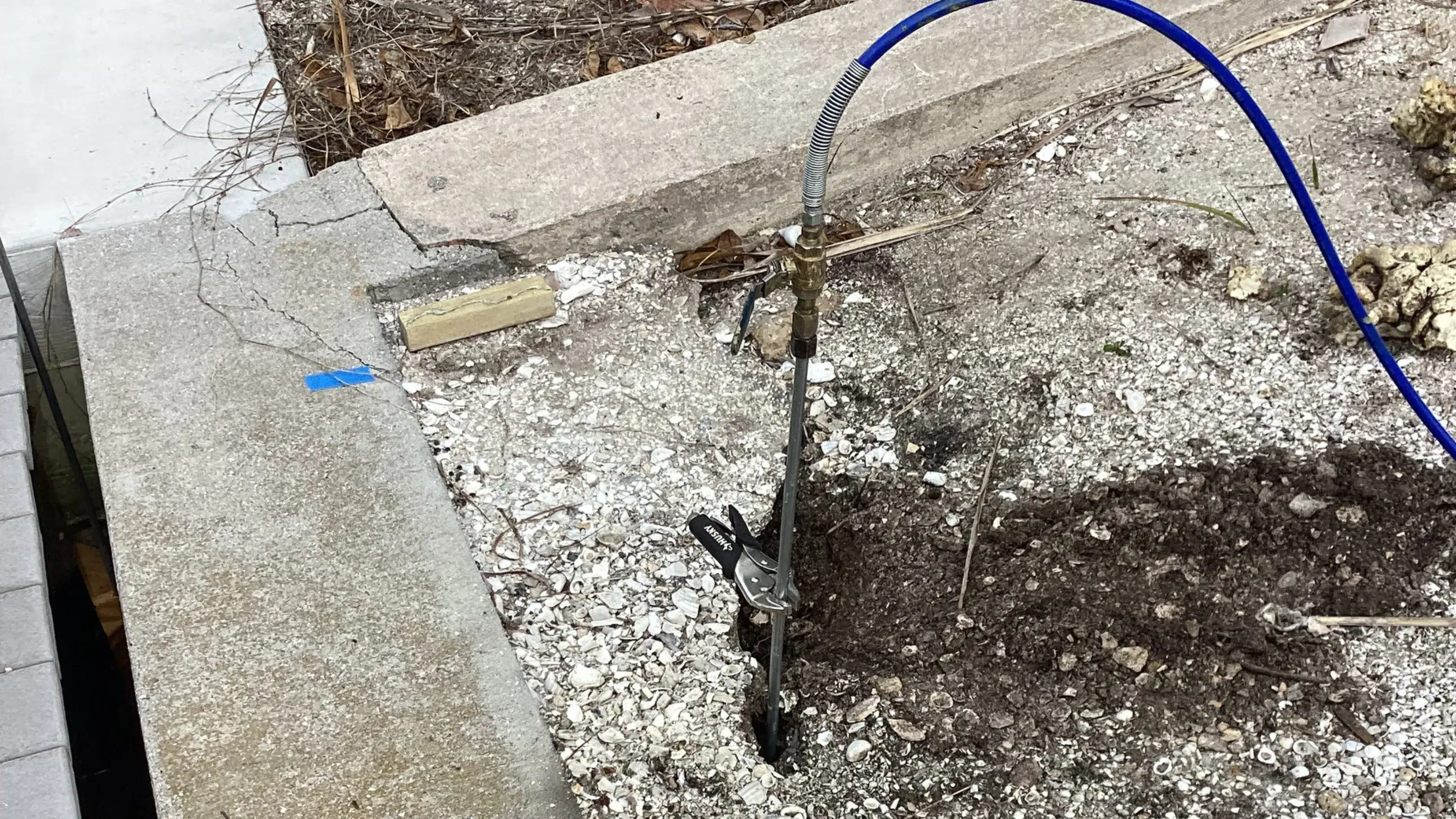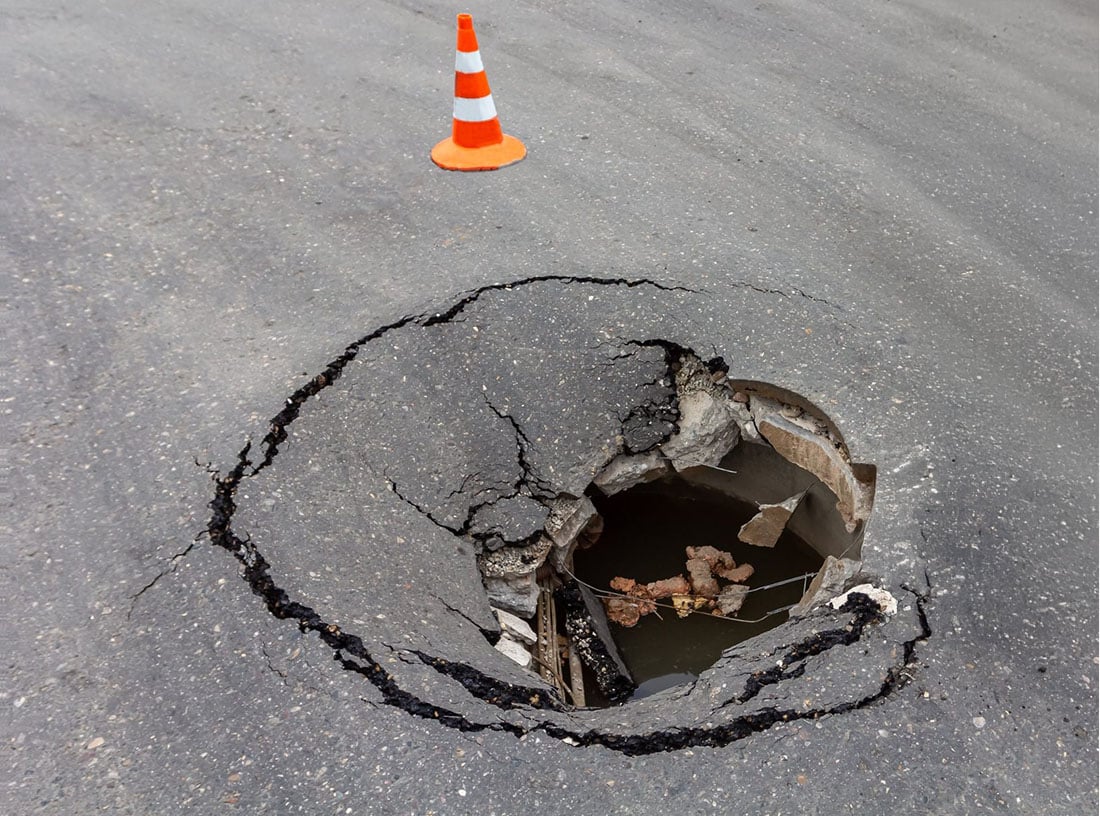
When a newly built road starts to crack or settle, most people assume the problem is in the pavement. In reality, visible distress is often only the final warning sign. The real issue may be underground, where water is escaping through a storm drain joint, carrying soil with it, and slowly removing the support the roadway depends on.
That was the challenge Helicon addressed in Wauchula, Florida, where a large stormwater drain had developed joint gaps that allowed water and soil movement around the pipe.
For municipalities and commercial infrastructure decision-makers, this is exactly the kind of problem that demands fast, practical thinking. Public works departments, utility owners, engineers, contractors, and infrastructure managers are often under pressure to protect public safety, preserve budgets, avoid disruptions, and extend the life of critical assets. When a storm drain starts losing soil and the roadway above begins to show stress, the real question is not just how to fix it. It is how to fix it in the most efficient, least disruptive way possible.
As the surrounding material eroded into the drain, the road above began showing settlement and stress. At that point, the city was facing a costly choice: tear out a brand-new road and storm system or find a targeted repair method that could stop the erosion and restore confidence in the infrastructure.
Helicon’s answer was permeation polyurethane grouting.
Why Storm Drain Joint Failures Become Roadway Problems
Stormwater systems depend on more than pipe strength. They also depend on stable surrounding soils and properly sealed connections.
When a pipe joint is not fully sealed, water can move through that breach and start transporting fine soils into the pipe. Over time, the soil around the structure loosens, support is reduced, and voids can develop outside the storm drain. That loss of support can migrate upward until it appears at the surface as cracking, soft spots, depressions, or roadway settlement.
The issue developed in a newly installed, five-foot-diameter vinyl storm drain beneath a new road. The gaps in the joints allowed water to seep through the connections and erode surrounding soil, which led to surface subsidence and safety concerns above the pipe. Instead of ripping out the new roadway and replacing the drain, the city chose a repair approach designed to seal the joints at a fraction of replacement cost.
Why Rip-Out and Replacement Was Not the Best Move
Traditional replacement can solve a storm drain defect, but it can also create a second problem: disruption.
For a municipality, that disruption can mean lane closures, resident complaints, project delays, budget overruns, and added pressure on public works teams. For commercial infrastructure owners, it can mean interrupted access, construction coordination issues, and unnecessary impacts on surrounding operations. That is why many want to know whether a buried infrastructure problem can be repaired from within the system before they commit to excavation from above.
Excavating a new roadway to replace a buried drain is rarely a small task. It can involve demolition, removal, dewatering, reconstruction sequencing, traffic impacts, environmental coordination, restoration work, and major cost escalation. On public and commercial infrastructure jobs, those impacts often extend far beyond the direct repair area.
Helicon’s permeation grouting service is specifically used to prevent water flow, stabilize granular material, fill voids and cracks, and improve the physical properties of soil or rock. The company describes the method as relatively economical, time-efficient, clean, and environmentally inert, all of which are especially relevant when working around active infrastructure.
For the Wauchula storm drain, that value proposition was clear. The choice was not simply between two repair techniques. It was a decision between reconstructing new infrastructure from above or solving the failure mechanism at the joint itself.
What Permeation Grout Does in a Storm Drain Repair
At a basic level, permeation grout helps solve two connected problems at the same time: leaking joints and soil loss around the structure. That matters because roadway settlement is usually not caused by the pipe alone. It happens when water movement starts carrying away the soils that support the pipe and the surface above it.
Permeation grouting is a low-pressure injection method used to move grout into voids, cracks, gaps, and permeable soils so the treatment zone becomes stronger, less permeable, and more resistant to further erosion.
With soil stabilization, chemical grouting can fill voids, cracks, and fissures in weak soils that are causing settlement problems. On the commercial side, permeation grouting can stabilize granular materials, block unwanted water migration, and improve soil properties without large-scale excavation.
In this storm drain application, the goal was straightforward but highly technical:
- stop the active soil loss into the pipe
- seal the leaking seams and joint gaps
- improve the surrounding support condition
- reduce the risk of continued roadway settlement
- avoid ripping out the newly constructed road and drainage line
This is what makes permeation grout such a strong fit for municipal and commercial infrastructure. It is not simply a surface repair. It is a way to intervene where the failure is actually happening.
Inside the Repair: How Helicon Sealed the Storm Drain Joints
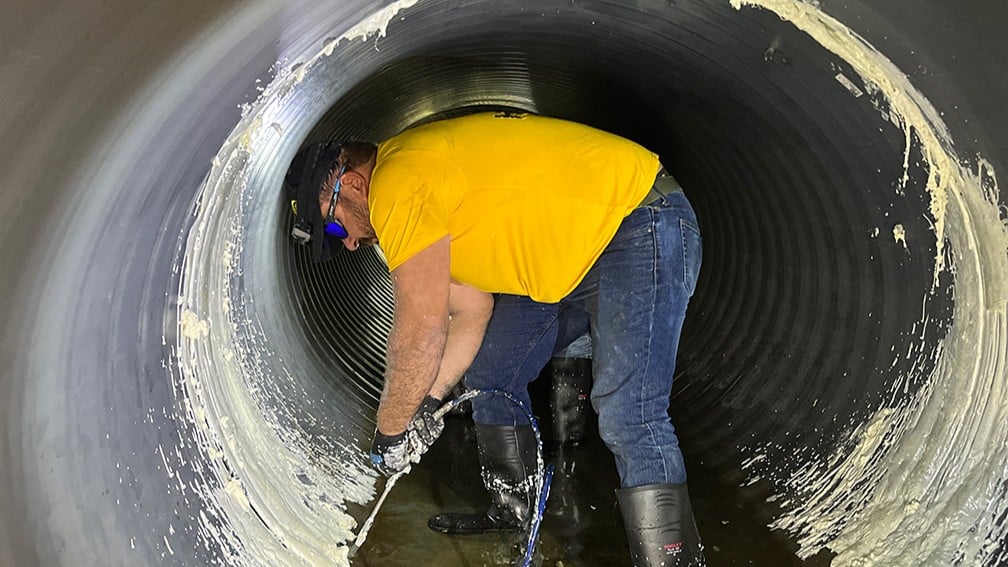
One reason this method is so effective is that it is controlled and targeted. Instead of removing the roadway and rebuilding the drainage system from the surface down, Helicon was able to work inside the storm drain and treat the failure where it was occurring.
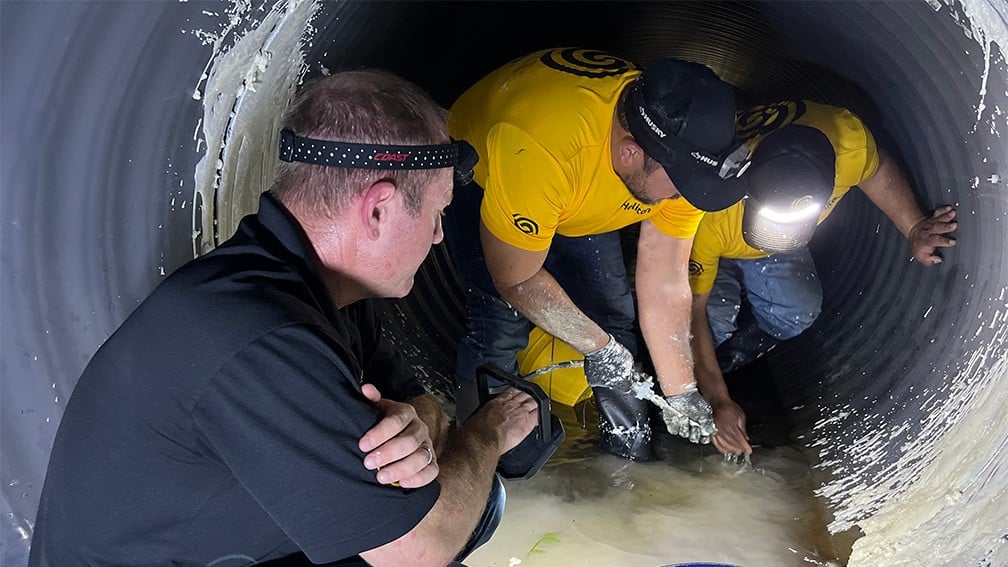
Helicon first worked within the approximately five-foot-diameter drain to locate the breached seams that were allowing erosion to occur. The team then used a staged sealing and injection process designed to control grout flow, build a base at the joints, and fully treat the leaking seams.
The repair used a two-step approach. First, oakum was soaked in F400 resin, a flexible hydrophobic polyurethane, and packed tightly into the joint gaps. This created a flexible gasket-like barrier and helped keep the next injection material from simply flushing into the storm drain. After that, small holes were drilled strategically around the joint and a high-expansion polyurethane resin, AP Fill 720, was injected to encapsulate the joint, fill surrounding voids, and tighten the soil around the pipe.
The crew worked the joint in a clock pattern, beginning at the six o’clock position and moving incrementally around the circumference toward twelve o’clock. This systematic approach ensured the joint was treated thoroughly rather than randomly, which is especially important in circular drainage structures where leakage can migrate around the seam.
As the material moved through the defect zone, the team observed bubbling and product emergence at the seam, visual confirmation that the grout was finding the cracks, voids, and soil loss pathways it was intended to treat. That is one of the major practical benefits of working with an experienced infrastructure grouting contractor: the crew does not merely inject material, it monitors how the structure responds and adjusts placement to improve the seal.
Why This Matters for Municipal and Commercial Infrastructure in Florida
Florida infrastructure does not get the luxury of uniform subsurface conditions.
Loose sands, fluctuating groundwater, erosion-sensitive soils, and heavy rainfall can all make buried structures more vulnerable when joints, seams, or support zones are compromised. Florida sites often contend with loose sands, organic soils, and changing groundwater levels, which is why tailored ground improvement methods are so important.
That matters whether the owner is a city, a county, a utility authority, a site developer, a general contractor, an industrial facility, or a commercial property manager responsible for buried drainage infrastructure.
The easier a repair method is to understand, the easier it is to explain to stakeholders. Permeation grouting is attractive for that reason. The concept is simple even though the execution is technical: stop the leak, stop the soil loss, seal the joint, and protect the roadway above. If a pipe joint is leaking and the surrounding soils are washing out, the cost of waiting is often higher than the cost of acting.
Permeation grout can be especially valuable in scenarios like these:
1. Storm drain and culvert joints leaking into surrounding soils
Injection can help seal defects and stop active erosion at the source.
2. Surface cracking or settlement above buried utilities
A roadway depression or cracking pattern may be a symptom of voiding below.
3. Infrastructure where excavation would be highly disruptive
Busy roads, municipal assets, commercial sites, and developed corridors often benefit from low-disruption rehabilitation options.
4. Situations where preserving new construction matters
No owner wants to tear out a recently completed road, parking area, or utility installation if a targeted structural repair can solve the issue.
Permeation Grout vs. Rip-Out Replacement
The table below shows why municipalities and commercial infrastructure leaders often explore permeation grouting before committing to excavation and replacement.
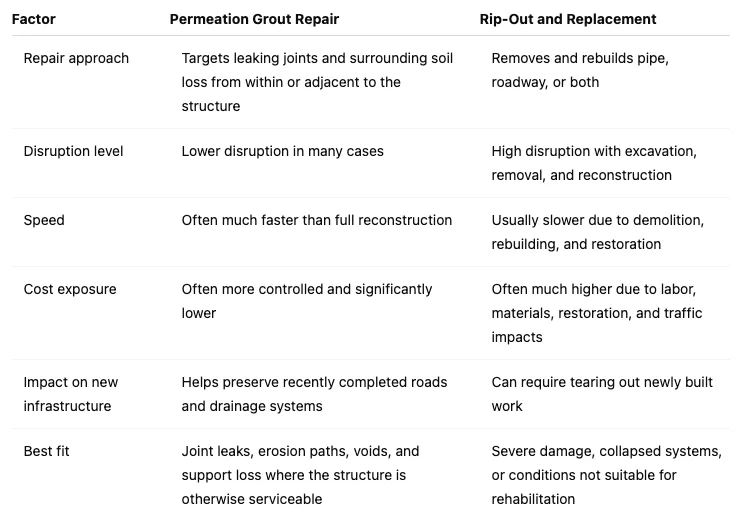
This is not to say replacement is never necessary. In some cases, it absolutely is. But when the structure is still largely intact, and the main problem is leakage and erosion at the joints, permeation grouting can be the smarter first option to evaluate.
Signs a Stormwater Structure May Need Immediate Evaluation
Commercial and municipal owners should not wait for a visible collapse to take drainage defects seriously. Warning signs often appear first as subtle field conditions, including:
- stress cracking in pavement above a pipe run
- shallow depressions forming near inlets, drains, or utility corridors
- visible erosion or soil loss near storm structures
- recurring washout after rain events
- evidence of water infiltration through pipe joints
- settlement adjacent to culverts, manholes, or drainage vaults
- unexplained soft spots in roadway or hardscape areas
Settlement, infiltration, erosion, voids, and surface depressions as leading indicators that infrastructure support may be compromised.
Why Helicon Is Well Positioned for This Type of Work
Helicon’s role is to evaluate the failure, understand the soil and water movement, and recommend the right repair path. For municipalities and commercial infrastructure owners, that consultative approach matters. The best outcome is not simply using grout. It is using the right method for the actual field condition.
This project also underscores something important for decision-makers: stormwater rehabilitation is not just about having grout on a truck. It requires judgment about soil behavior, joint sealing, injection sequencing, and how to treat active underground erosion without causing unintended consequences.
Helicon has performed permeation grouting programs for more than 10 years and uses pressure grout methods to prevent water flow, stabilize granular material, and improve the physical properties of soil and rock. The company also emphasizes chemical grouting and soil stabilization methods for municipal and commercial applications across Florida.
That experience matters when the job is inside critical infrastructure, and the owner needs a practical alternative to full replacement.
Final Takeaway
The Wauchula project is a strong example of what municipalities and commercial infrastructure leaders should be looking for in a repair strategy: targeted, cost-conscious, less disruptive, and designed to solve the real cause of the problem.
The most expensive storm drain repair is often the one that starts too late.
When joint gaps allow water and soil to move into a storm drain, the problem does not stay underground. It can show up in the form of roadway cracking, settlement, depressions, and growing risk to the infrastructure above. But as this project shows, that does not automatically mean the only solution is rip-out and replacement.
With the right repair design, permeation grouting can seal leaking seams, stop erosion, improve surrounding support, and help preserve infrastructure that would otherwise be facing major reconstruction.
If your roadway, storm drain, culvert, or buried infrastructure is showing signs of erosion, settlement, or joint leakage, Helicon can evaluate the failure mechanism and recommend whether permeation grout or another ground improvement method is the best path forward.
Call us today at 844-Helicon or fill out the form on our site for a free inspection.