The First Big Priority: Soil Stability Behind the Wall
The first key to maintaining a seawall is soil stability.
That might sound obvious, but it is the part many property owners do not fully see. A seawall is not only a wall holding back water. It is also holding back soil. If the soils behind it start washing out, settling, or losing confinement, the wall can slowly begin to shift, crack, lean, or separate.
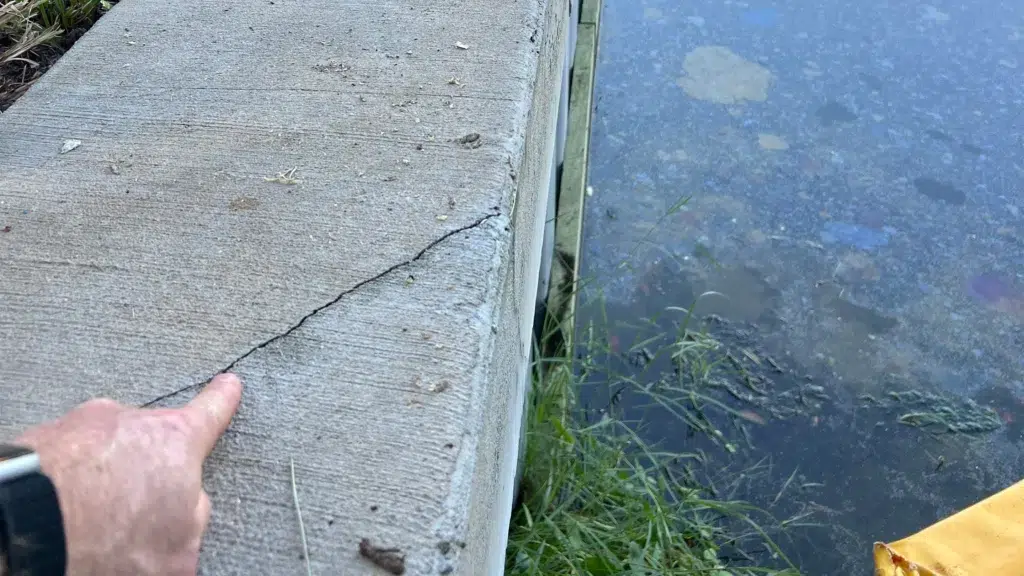
Seawall damage often starts when cracks, joints, or other weak points allow water movement that washes out supporting soils and creates voids behind the wall. Once that support begins to disappear, the wall becomes more vulnerable to movement and structural distress.
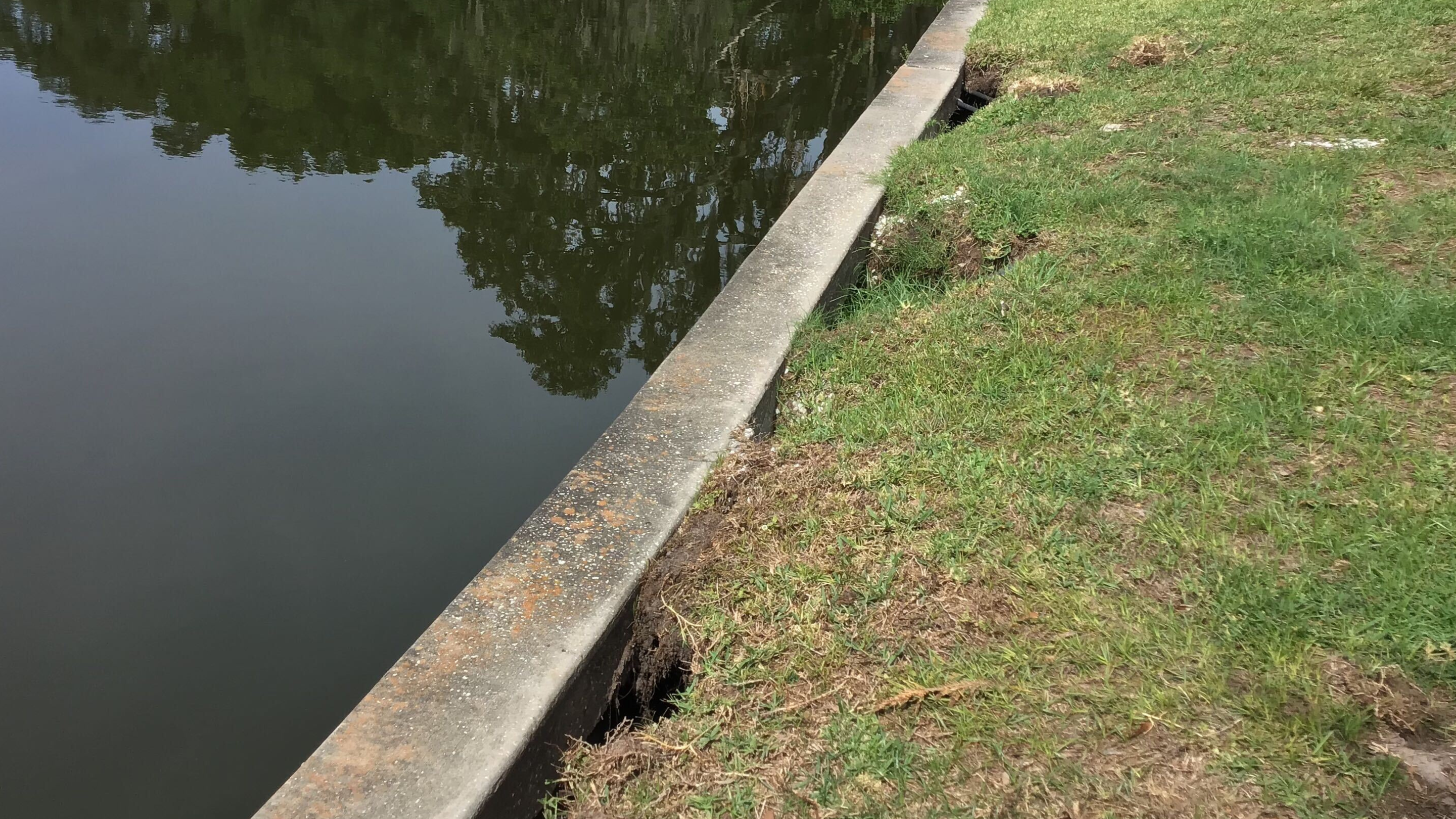
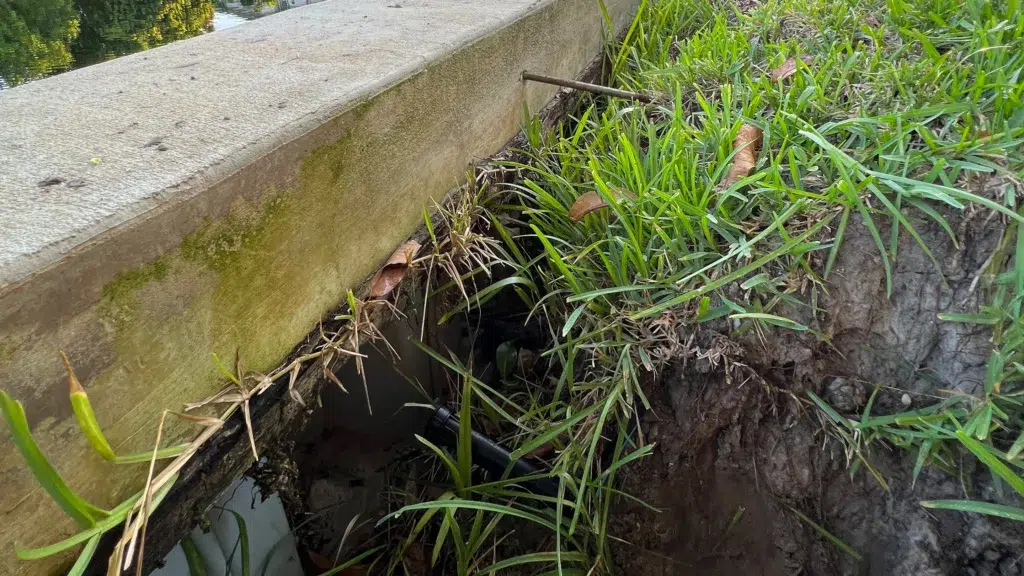
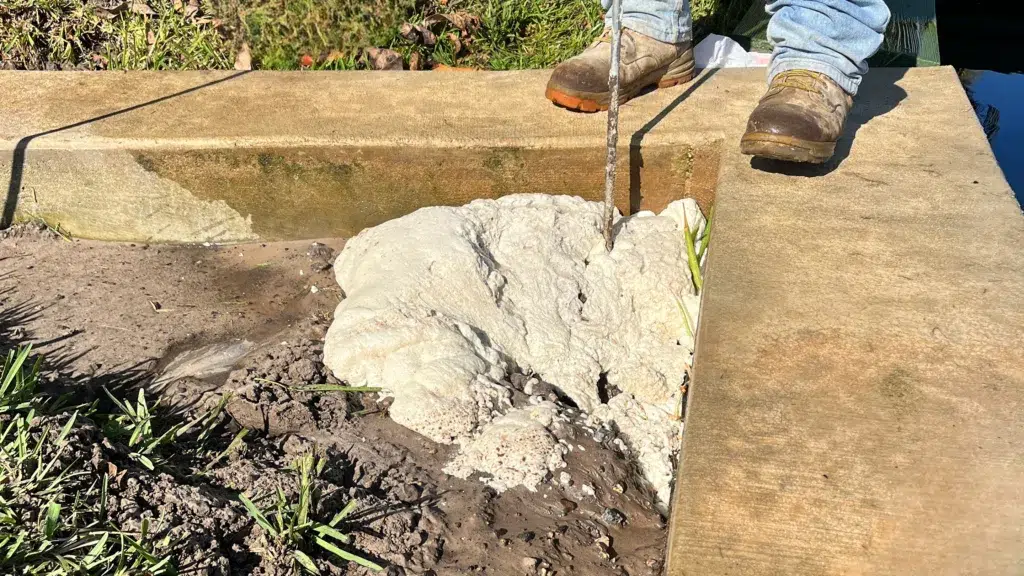
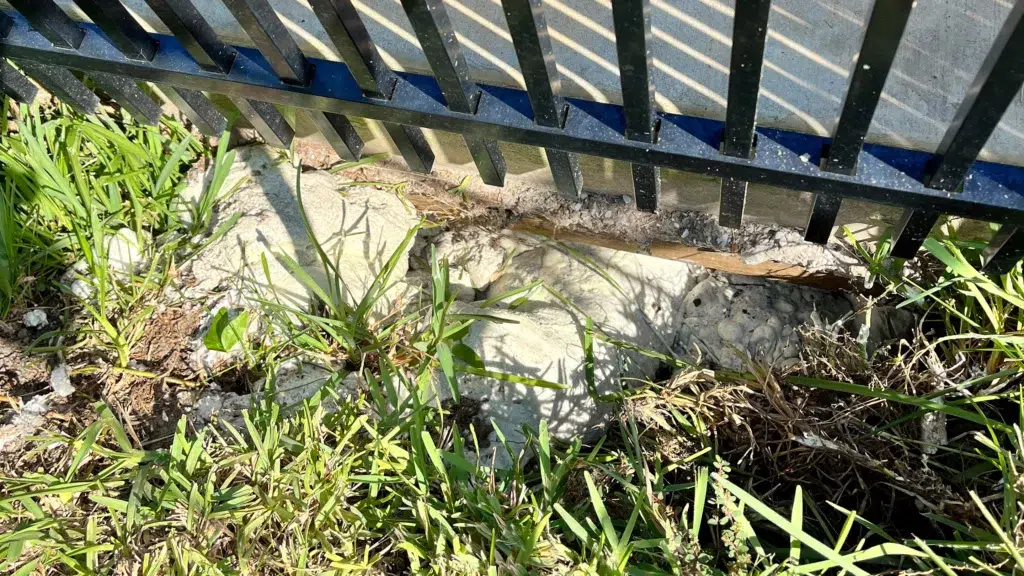
In the Merritt Island project, the soil behind the wall had become unstable enough that sand was actively migrating out, leaving visible signs on both sides of the seawall. Once that happens, the problem rarely stays small. Over time, the cap may begin to crack, anchor components can become more exposed, and the entire wall can start responding to the loss of support.
This is why small signs near a seawall should never be written off too quickly. A soft spot in the yard may not just be a drainage issue. A crack near the cap may not be cosmetic. Often, these are signs that water has found a pathway and is carrying soil away one tide cycle or storm event at a time.
The Second Big Priority: Pressure Relief
The second key to maintaining a seawall is proper pressure relief.
Even a strong wall can struggle if hydrostatic pressure builds behind it and has nowhere to go. Water pressure behind a seawall is one of the major forces that can contribute to wall movement, cracking, and long-term structural damage if it is not relieved properly.
That is why pressure relief valves, weep holes, and engineered drainage systems matter so much. Their job is to let water escape safely without allowing soil to wash out with it.
Helicon installed 11 JET Filters along the wall to provide controlled drainage and relieve hydrostatic pressure while retaining soil. These filters were paired with crack sealing and polyurethane injections so the repair could address both sealing and venting at the same time. That combination matters because sealing alone is not enough if trapped water pressure simply finds the next weak spot.
This is one of the most important lessons for waterfront property owners. A lasting seawall repair is usually not just about plugging leaks. It is about creating a better system behind the wall so water can drain in a controlled way without restarting the same erosion cycle.
How Seawall Problems Usually Progress
One reason seawall damage becomes expensive is that the failure pattern tends to build on itself.
It often starts with a crack, joint opening, or failed filter fabric. Water begins moving through that weak point. Soil starts washing away. Small voids begin forming behind the wall. As support is lost, the wall can shift slightly. That movement creates more cracking or more openings, which lets in more water and speeds up erosion.
This is known as the domino effect: seepage leads to soil erosion, erosion leads to voids, voids lead to movement, and movement creates even more ways for water to get in. If pressure relief is poor at the same time, the forces pushing on the wall get even worse.
That is why early maintenance matters so much. If you wait until the wall is leaning heavily or sections are failing outright, your options usually become more invasive and more expensive.
What Helicon Did on the Merritt Island Seawall
The Merritt Island project is a strong example of a systems-based seawall repair instead of a one-dimensional patch.
A three-part repair program tailored to the actual causes of the problem was implemented:
1. One-part polyurethane chemical grout injections
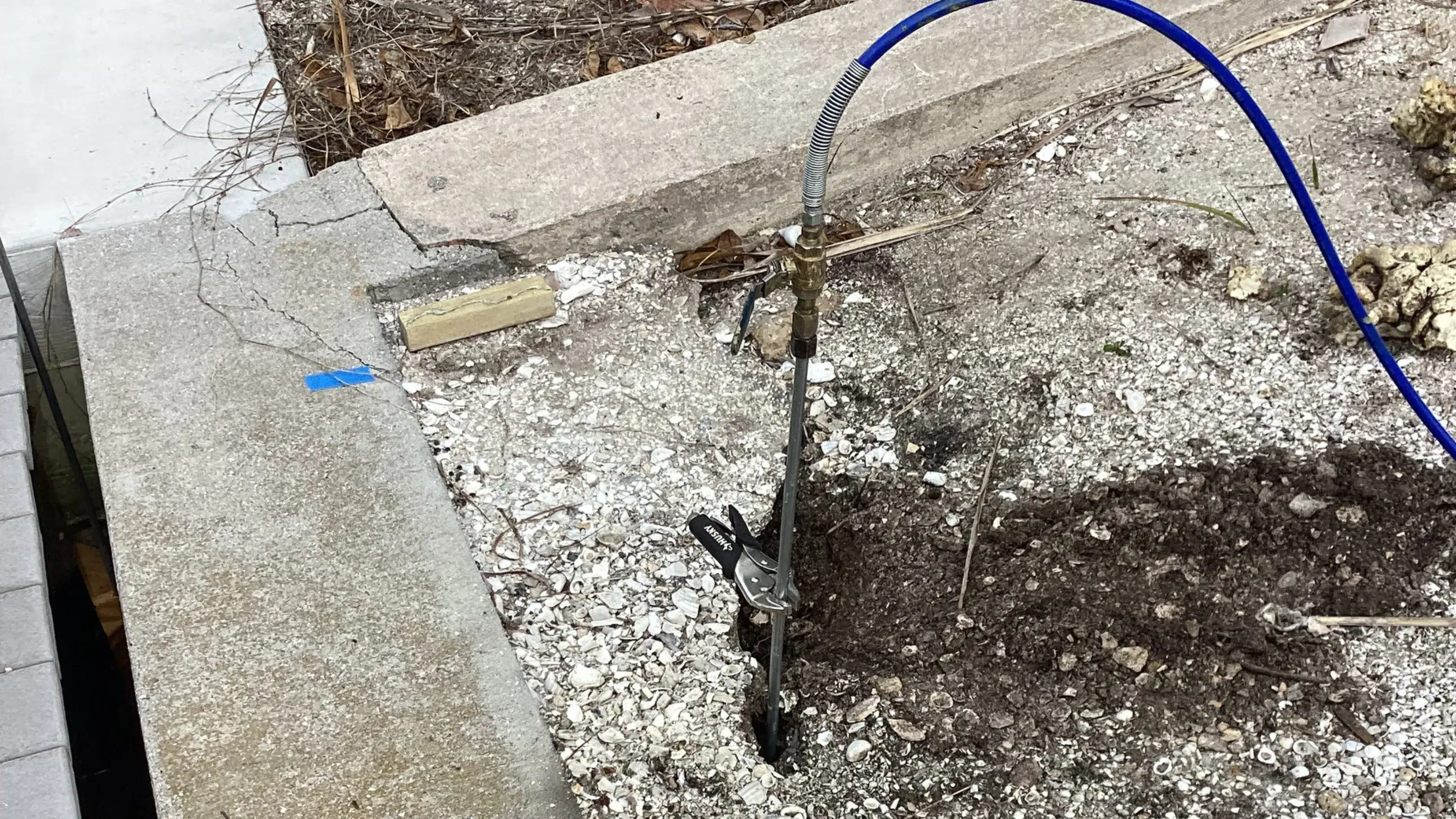
Helicon used a seawall-specific one-component polyurethane that reacts with moisture, expands, and forms a watertight, soil-binding matrix. The project used 19 mapped injection points and approximately 115 gallons of grout over the course of the work week. The injections were staged from deeper cavities upward and also targeted cap-adjacent pathways where water was entering through cracks and joints. This chemistry works well for active leaks and saturated soils because it can follow wet pathways before expanding to help seal and bind the soil mass.
2. Crack sealing along the seawall cap
Helicon also sealed the cracks and joints along the cap that had been acting as direct leak paths. That step helped reduce recurring inflow and protected the new soil-grout matrix from being undermined by fresh erosion cycles. In practical terms, this means the repair did not just treat the symptoms behind the wall. It also addressed one of the main ways water was getting there in the first place.
3. Hydrostatic pressure relief with JET Filters
Finally, Helicon installed 11 JET Filters to allow water to pass while retaining soil. This gave the wall a controlled drainage path and reduced the risk of pressure buildup that could otherwise reopen cracks or continue pushing the wall out of alignment. Paired with the injections and crack repairs, the filters helped turn the repair into a full-system solution rather than a temporary fix.
Why One-Part Polyurethane Works Well for Seawalls
For waterfront repairs, not every material behaves the same way.
Permeation polyurethane grout is moisture-reactive, which makes it especially effective for active leak paths and saturated conditions. Its low viscosity helps it move into fine pathways behind panels and joints. Once it reacts, it creates a soil-binding matrix that helps restore confinement without adding excessive mass to the wall system.
That matters because seawalls already deal with constant water exposure, fluctuating tides, and storm-driven loading. A repair method that can work in wet soils, react quickly, and avoid major excavation is often a major advantage on waterfront property.
Why This Matters in Merritt Island and Along the Space Coast
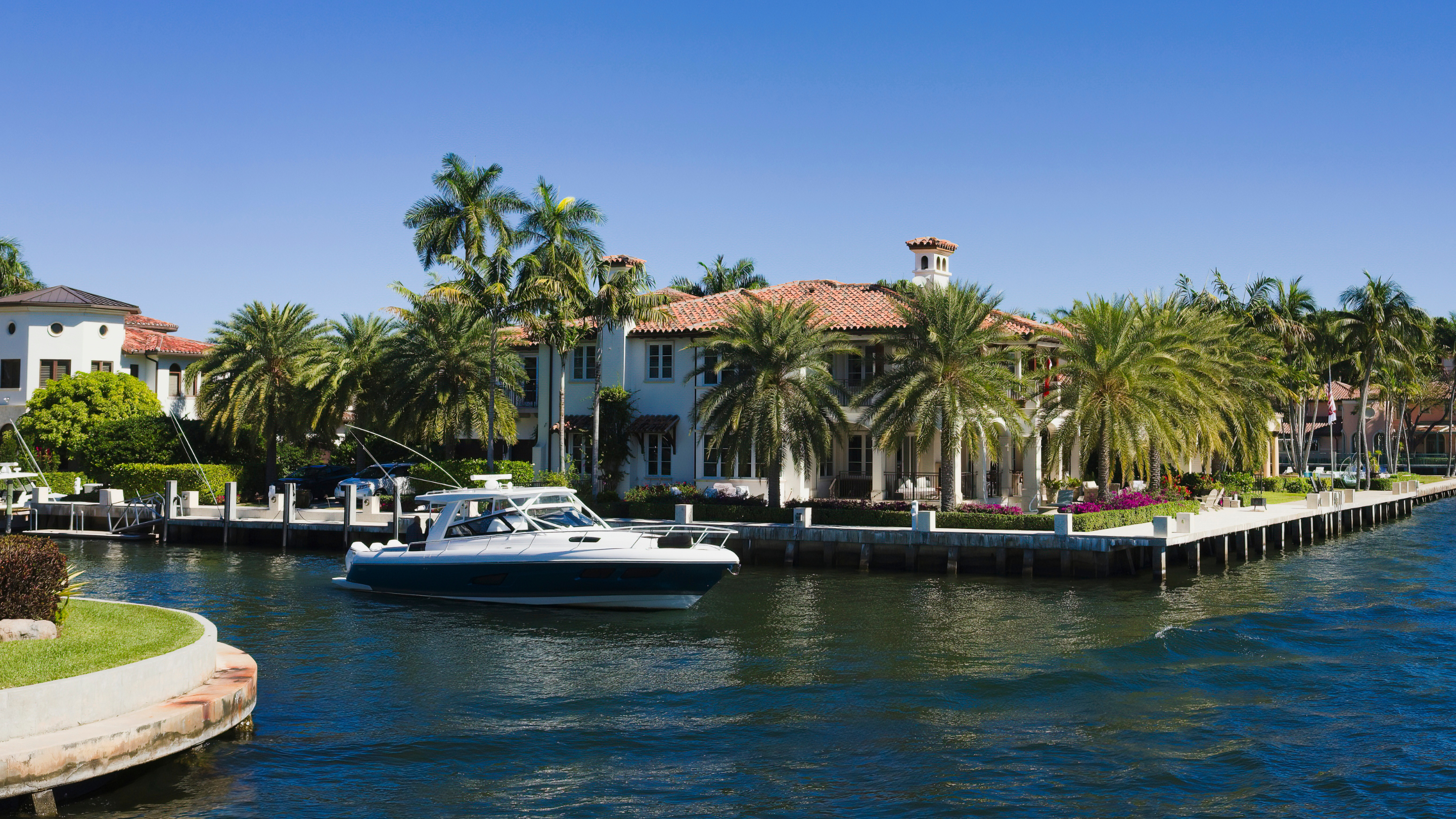
The Merritt Island project sits along the Banana River Lagoon, where tidal action, wind-driven waves, and seasonal storm surges are part of normal coastal life.
That regional context matters. Waterfront properties in Merritt Island do not just deal with one big storm every few years. They deal with repeated water movement, changing tide conditions, saltwater exposure, wind-driven waves, and ongoing shoreline stress. Nearby waterfront communities like Cocoa Beach, Cape Canaveral, Satellite Beach, and Melbourne often face many of the same conditions. Small weaknesses in a seawall system can turn into bigger ones faster when those forces are constantly working on the structure.
For that reason, routine observation and timely maintenance are especially important for Merritt Island waterfront owners. The sooner leak paths, voids, and pressure issues are identified, the more likely it is that the wall can be preserved without major reconstruction.
Warning Signs You Should Not Ignore
If you own or manage a waterfront property, these are some of the most important seawall warning signs to watch for:
- cracks along the cap or joints
- water seepage behind the wall
- depressions, sink-outs, or soft spots in the yard near the seawall
- exposed anchor components or deadman
- new movement in patios, decking, or landscaping near the waterfront edge
- signs that the wall is leaning, bowing, or shifting
- worsening conditions after major storms or unusually high-water events
Seawall guidance consistently points to cracks, soil loss, voids, and pressure-related movement as some of the most important early indicators that a wall is becoming compromised.
Seawall Preservation vs. Seawall Replacement
One reason this Merritt Island job is so useful as a case study is that it highlights the difference between preservation and replacement.
In many cases, property owners assume a damaged seawall will need to be torn out entirely. Sometimes replacement is necessary. this non-demolition approach extended the wall’s service life at significantly lower cost and disruption than partial wall replacement.
A preserved wall usually means less demolition, less disruption to the waterfront, less impact on landscaping and hardscape, and a faster path back to normal property use. Replacement, by contrast, may be necessary when the wall has already shifted too far, deteriorated too severely, or lost too much structural integrity to be safely preserved.
The table below helps explain the difference:
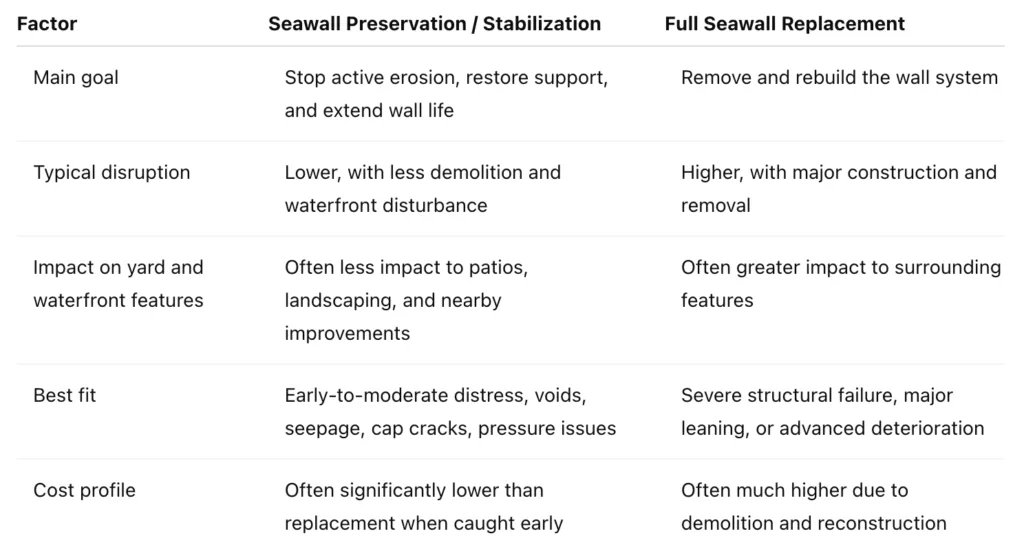
That is why regular maintenance is so valuable. The earlier the root causes are addressed, the more likely it is that the wall can be preserved.
Storm-Season Seawall Checkups: A Smart Habit for Merritt Island Owners
For Merritt Island waterfront homeowners, storm season is one of the best times to pay closer attention to seawall performance. Heavy rain, unusually high tides, wind-driven waves, and storm surge can all expose weak points that may not be obvious during calmer weather.
A simple seasonal check can go a long way. After major storms or unusually high-water events, look for new cracks along the cap, fresh seepage, sink-outs near the wall, movement in patios or pavers, or new soft spots in the yard. Also, pay attention to whether any existing issues look worse than they did before the storm.
The goal is not to alarm homeowners. It is simply to catch small changes early, when repairs are often more straightforward and more affordable. For many Merritt Island properties, a calm, consistent maintenance mindset is the best way to protect the seawall before small problems become larger ones.
FAQ
What are the two most important things for seawall maintenance?
The two biggest priorities are soil stability behind the wall and proper pressure relief. If soil begins washing out or water pressure builds without a controlled drainage path, the wall can start shifting and cracking over time.
Can polyurethane injections really help a seawall last longer?
Yes. Polyurethane grout can seal leaks, fill voids, and re-support the soil behind the wall. When combined with crack sealing and proper drainage, it can help preserve the wall and extend its service life.
Are JET Filters or weep systems really necessary?
They are often a critical part of a lasting repair because they help relieve hydrostatic pressure while retaining soil. Without pressure relief, water can keep forcing its way behind the wall and create new damage.
When should a property owner call for a seawall evaluation?
As soon as you see signs like new cracks, seepage, soft spots, sink-outs, or movement near the waterfront edge. Early evaluation can help catch erosion and pressure issues before they grow into a larger structural repair. This is especially important after major storms or unusually high-water events.
Final Takeaway
If you remember only two things about seawall maintenance, remember these: keep the soil behind the wall stable, and make sure the wall has a safe way to relieve water pressure.
Those two issues are often the difference between a seawall that lasts and a seawall that slowly starts failing from behind.
The Merritt Island project shows what happens when both are addressed together. Leak paths were sealed. Voids were stabilized. Cap cracks were repaired. Controlled pressure relief was added. And the owner was able to protect the yard, the waterfront edge, and the life of the seawall without tearing the whole system out.
For waterfront homeowners across Merritt Island, Cocoa Beach, Cape Canaveral, Melbourne, and the Space Coast, the lesson is clear: small seawall problems are easier and less expensive to solve when they are caught early.
Call 844-Helicon today for a free inspection or fill out the form on our site.