- Helicon
- 9
- Winter Park Driveway Soil Stabilization: Two‑Part Polyurethane Injections Protect a New Driveway
Winter Park Driveway Soil Stabilization: Two‑Part Polyurethane Injections Protect a New Driveway
Winter Park, Florida
Market: Residential
Solution: Soil Stabilization
Services: Two‑Part Polyurethane Grout Injections
The Project
Property Type: Single‑family residence
Location: Winter Park, FL (Orange County)
Owner’s Goals:
- Stabilize soil at the driveway edge to protect a new slab.
2. Eliminate the small depression in the lawn from returning.
3. Avoid disruptive excavation and keep the home accessible throughout.
Observed Conditions:
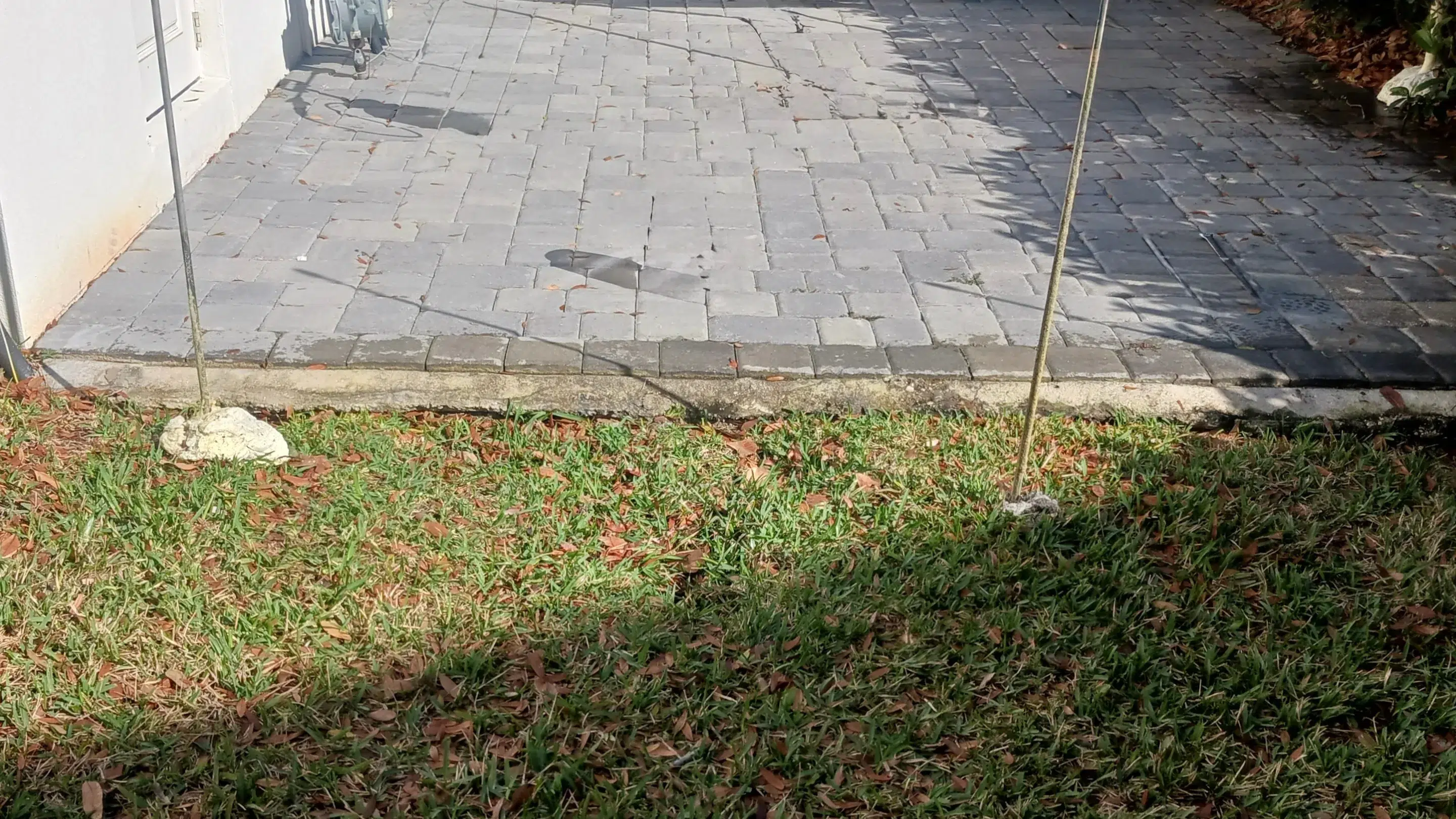
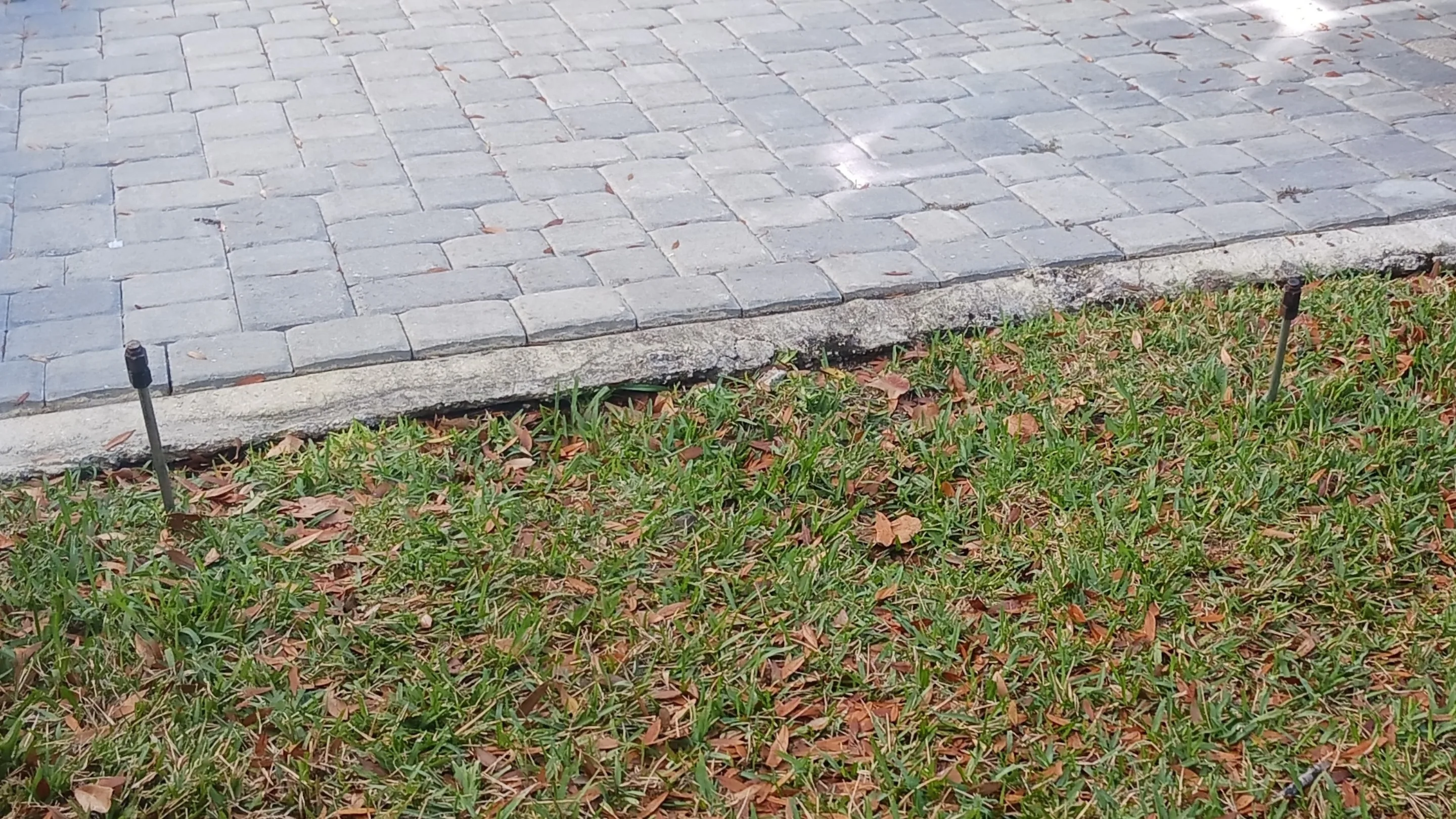
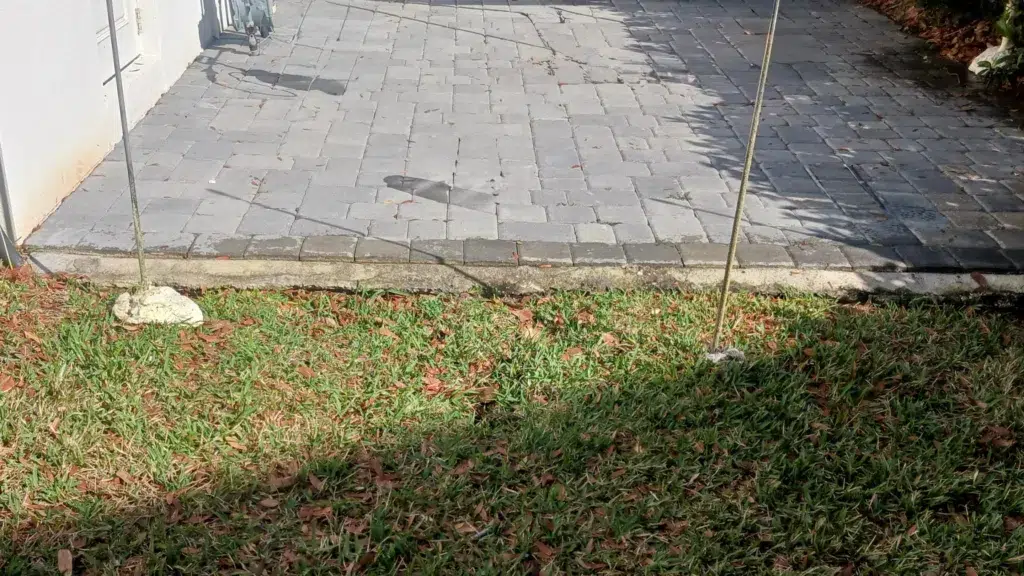
The homeowner reported a depression adjacent to the driveway that appeared 2–3 months before our evaluation. While the driveway itself still looked sound, the owner wanted a preventive fix. No slab lifting was requested; the objective was soil stabilization to preserve the slab’s performance.
The Challenge
Unlike many lifting jobs, this case did not call for slab elevation recovery. The key challenge was stabilization only, which meant identifying and treating the soil mechanisms driving the surface depression—without over‑pressurizing or disturbing the brand‑new driveway panel.
Based on site history and observations, two contributors stood out:
- Organic decay from an old tree: A tree stump removed 2–3 years prior likely left a root network that has been gradually decaying. As roots decompose, they leave voids and loose pockets in the soil mass, which can settle under light surficial loads such as landscaping or slab edges.
- Buried demolition debris: The owner’s previous house was demolished in 2015. It’s common for small amounts of residual debris (wood, masonry fragments) to remain in backfill. Over time, those inclusions can shift, crush, or rot, contributing to uneven support at the surface.
Additional considerations included preserving the aesthetics of the new driveway, protecting nearby utilities, and sequencing injections to respect drainage patterns around the house/yard interface.
The Solution
Two‑Part Polyurethane Soil Stabilization
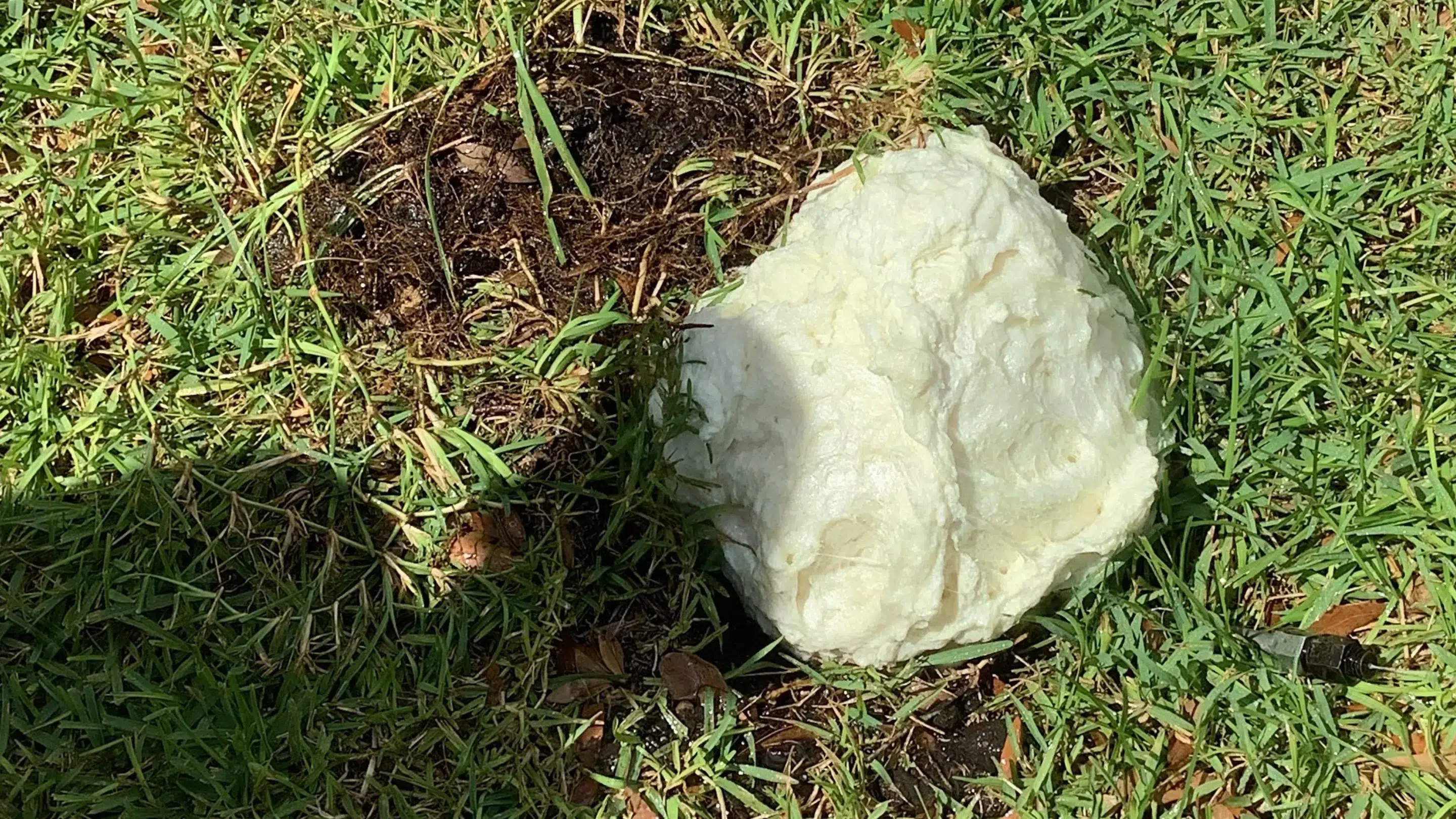
Helicon designed a mapped injection plan using two‑part structural polyurethane foam— a lightweight, fast‑curing material ideal for void filling, soil coupling, and localized densification in sandy, mixed backfills. The objectives were to fill hidden voids, tighten the soil matrix along the driveway margin, and restore uniform contact without lifting the slab.
Why Polyurethane for This Scenario
- Seeks voids, locks soils: When injected through small ports, expanding foam flows to low‑resistance zones, finds void pathways (e.g., decayed root channels), and expands to re‑couple grains for better load transfer.
- Lightweight & non‑invasive: Adds negligible dead load compared with cementitious fills; requires small diameter ports, minimizing surface patching.
- Rapid cure, low disruption: Typical cure occurs in minutes, enabling quick cleanup and same‑day return to routine use.
- Moisture tolerant: Two‑part foams are inert after cure and resist moisture—suited to Florida’s seasonal rain cycles.
Results & Benefits
- Stabilized Subgrade at the Driveway Edge
The injected foam filled hidden voids and re‑coupled soils along the driveway perimeter, providing a more uniform, supportive base for the young slab. - Depression Mitigated & Less Likely to Return
By addressing root‑void channels and debris pockets, the soil mass now behaves more consistently, reducing the likelihood of recurring surface settlement in the treated area. - Preserved a New Investment
The homeowner protected a recently poured driveway from premature edge settlement and crack propagation—an ounce of prevention that avoids a pound of replacement. - Low Disruption, Same‑Day Turnover
Small ports, quiet operations, and rapid cure meant minimal impact to the homeowner’s routine. The driveway remained intact and open for use shortly after completion. - Future‑Ready
The treated zone can be monitored visually. If adjacent areas show similar symptoms later, polyurethane stabilization is modular and can be extended as needed without major construction.
Homeowner FAQs
Do you ever need to lift the driveway slab?
In this case, no—the slab itself was true, and the goal was soil stabilization only. If a slab were uneven or had dropped, we could pair slab lifting injections with soil stabilization where appropriate.
How long does polyurethane last?
Once cured, the foam is inert and resists moisture. Performance depends on site drainage, surface loads, and avoiding new organics in backfill. We provide care tips to preserve benefits (see below).
Could the depression come back?
Addressing root voids and debris pockets greatly reduces the chance; however, all soils respond to moisture and time. If new symptoms appear elsewhere, stabilization can be surgically expanded.
Is this safe for nearby landscaping and utilities?
Yes. We use small ports and metered volumes away from utility alignments, and our approach avoids the water/soil displacement that can occur with large excavations.
Maintenance & Prevention Tips
- Surface Drainage: Keep downspouts extended and slope soil away from the driveway edge to prevent localized softening.
- Backfill Hygiene: Avoid burying organic matter (roots, mulch, stumps) near pavements; organics decay and leave voids.
- Landscape Planning: Choose plantings with modest root systems near slab edges; avoid large trees too close to hardscape.
- Monitor & Document: Photograph the area each season for the next year to confirm stable grades. If changes occur, call us for a quick check.
About Helicon
Helicon is Florida’s trusted partner for foundation repair, soil stabilization, concrete lifting, and sinkhole mitigation. We serve homeowners across Greater Orlando, with minimally disruptive methods that keep your property safe, level, and looking great.
Seeing soft spots or edge settlement near a driveway or walkway in Winter Park, Orlando, Maitland, or Casselberry? Helicon’s polyurethane injection can stabilize soils, fill voids, and protect new or existing slabs fast.
FREE INSPECTION REQUEST