When people hear the word sinkhole, they often picture a dramatic collapse in the yard or a giant hole swallowing part of a structure.
In reality, many Florida sinkholes begin much more quietly. A few cracks appear. A door starts sticking. A floor feels slightly uneven. Sometimes there are warning signs for weeks or months.
And sometimes there are almost none.
That is what made this Palm Harbor sinkhole repair such an anomaly.
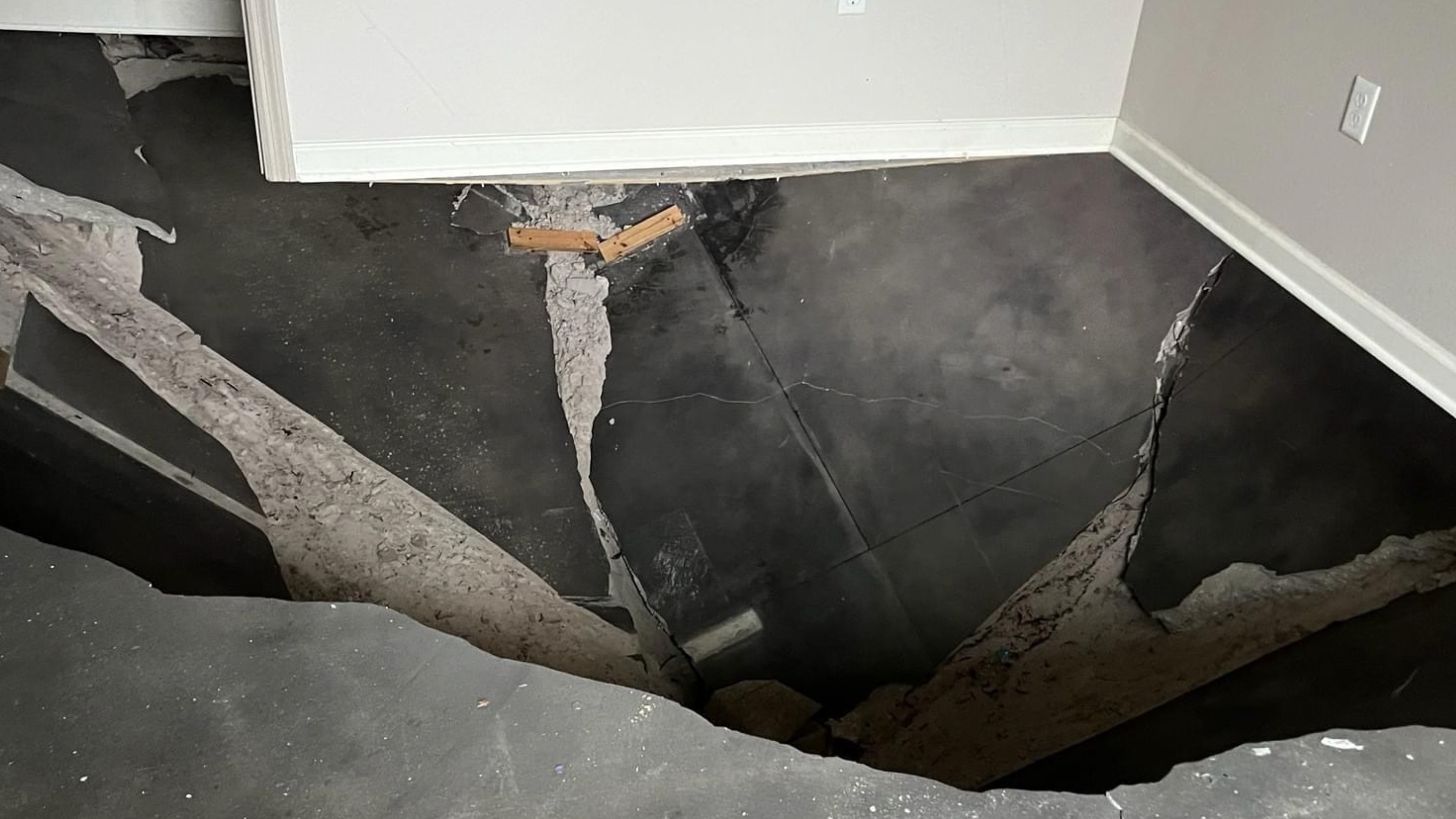
A family home in Palm Harbor, Florida became unsafe after a rare cover-collapse sinkhole opened inside the structure, forcing the homeowners to leave the property. What made the project especially striking was that the outside of the home showed very little visible distress. From the street, the property looked stable. Inside, it was a very different story.
Helicon’s project team was brought in to help stabilize the site and execute a permanent repair plan after emergency crews first placed flowable fill to make the area safe. This Palm Harbor repair became a large-scale remediation effort that ran from February through August 2024 and included drilling and casing installation, deep compaction grouting, Ground Penetrating Radar verification, and near-surface chemical grouting.
Although this specific project involved a home, the bigger lesson applies to many Florida property owners who worry about sinkholes, sudden settlement, and what it really takes to make a home safe again. For homeowners in Palm Harbor, Clearwater, Pinellas County, and the greater Tampa Bay area, this case shows what a full-scope ground stabilization strategy can look like when safety, peace of mind, and long-term property value are all on the line.
Why This Project Matters Beyond One Property
Large sinkhole events create more than structural damage. They create stress, displacement, uncertainty, and urgent financial decisions.
For a homeowner, the impact is deeply personal. A sinkhole or severe subsurface void event can affect safety, daily life, insurance questions, repair decisions, and confidence in the home itself. The structural issue is only part of the problem. The emotional stress of not knowing what is happening under the house can be just as difficult.
That is why major sinkhole repairs need to be understood as ground stabilization projects, not just damage-response projects. The goal is not merely to patch visible distress. The goal is to restore confidence in the soil below the home and create a documented, engineered path back to safe occupancy.
What Made This Palm Harbor Sinkhole So Unusual
One of the most unusual parts of this case was the lack of early warning signs. Many sinkholes present visible symptoms first, such as wall cracks, sticking doors, depressions, or settlement patterns. In this case, there were minimal to no visible indicators before the event.
That matters because it highlights a reality homeowners should take seriously: not every serious ground failure announces itself clearly from the outside.
In this Palm Harbor case, the exterior remained in relatively good shape while the interior experienced severe collapse conditions. That kind of mismatch can lead owners, managers, or even nearby stakeholders to underestimate the seriousness of a subsurface problem if they focus only on visible exterior symptoms.
For homeowners, that lesson is critical. A house can appear fairly normal from the curb while the real problem is developing below grade. That is one reason professional evaluation matters so much when something feels off, even if the exterior damage seems small.
The Challenge: Restoring Safety While the Owners Were Displaced
This was not a minor cosmetic repair.
It was a large-scale sinkhole remediation effort that required coordination with engineers, geotechnical specialists, and construction crews while the displaced family waited to return home. It also involved working both inside and outside the structure, managing safety, and addressing concerns from nearby neighbors who were understandably worried about surrounding properties.
That combination of technical repair and communication is one reason these projects demand an experienced sinkhole contractor. The challenge is not only to stabilize the ground. It is to do so through a process that is organized, engineer-directed, carefully monitored, and understandable to the family living through it.
For homeowners, that also means knowing what comes next. A serious sinkhole repair may involve temporary relocation, engineer oversight, staged repair work, cure times, and cosmetic restoration after the structural stabilization is complete. Understanding that process helps reduce fear and sets realistic expectations.
The Repair Strategy: Stabilization From Deep Limestone to Surface Soils
One of the strongest takeaways from this project is that Helicon did not rely on a single repair method.
Instead, the stabilization plan treated the site in layers.
That is often what durable sinkhole remediation requires in Florida: one approach for the deep unstable zones and another for the upper soil layers closer to the home.
In the Palm Harbor case, that layered strategy looked like this:
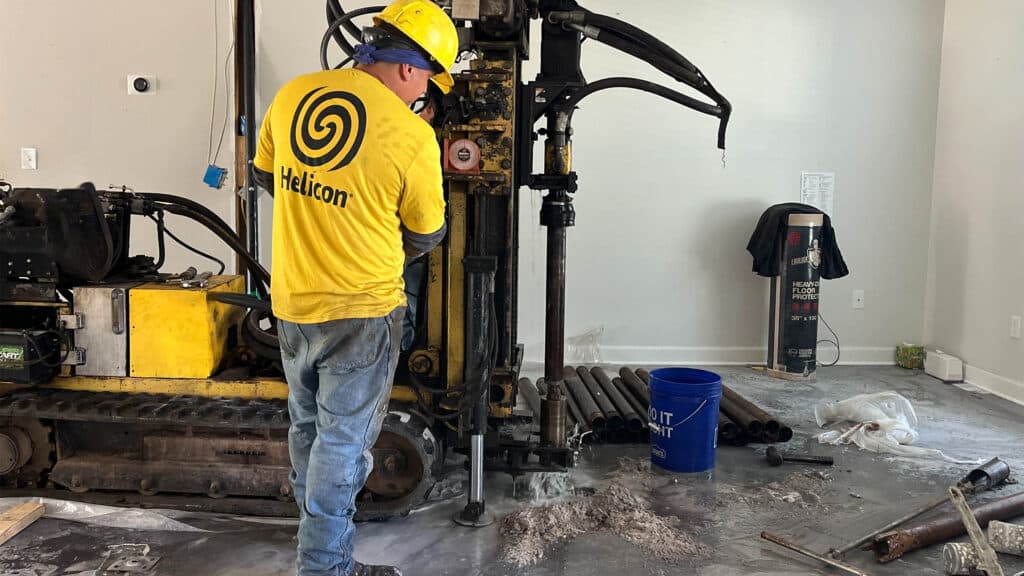
Step 1: Drilling and casing installation
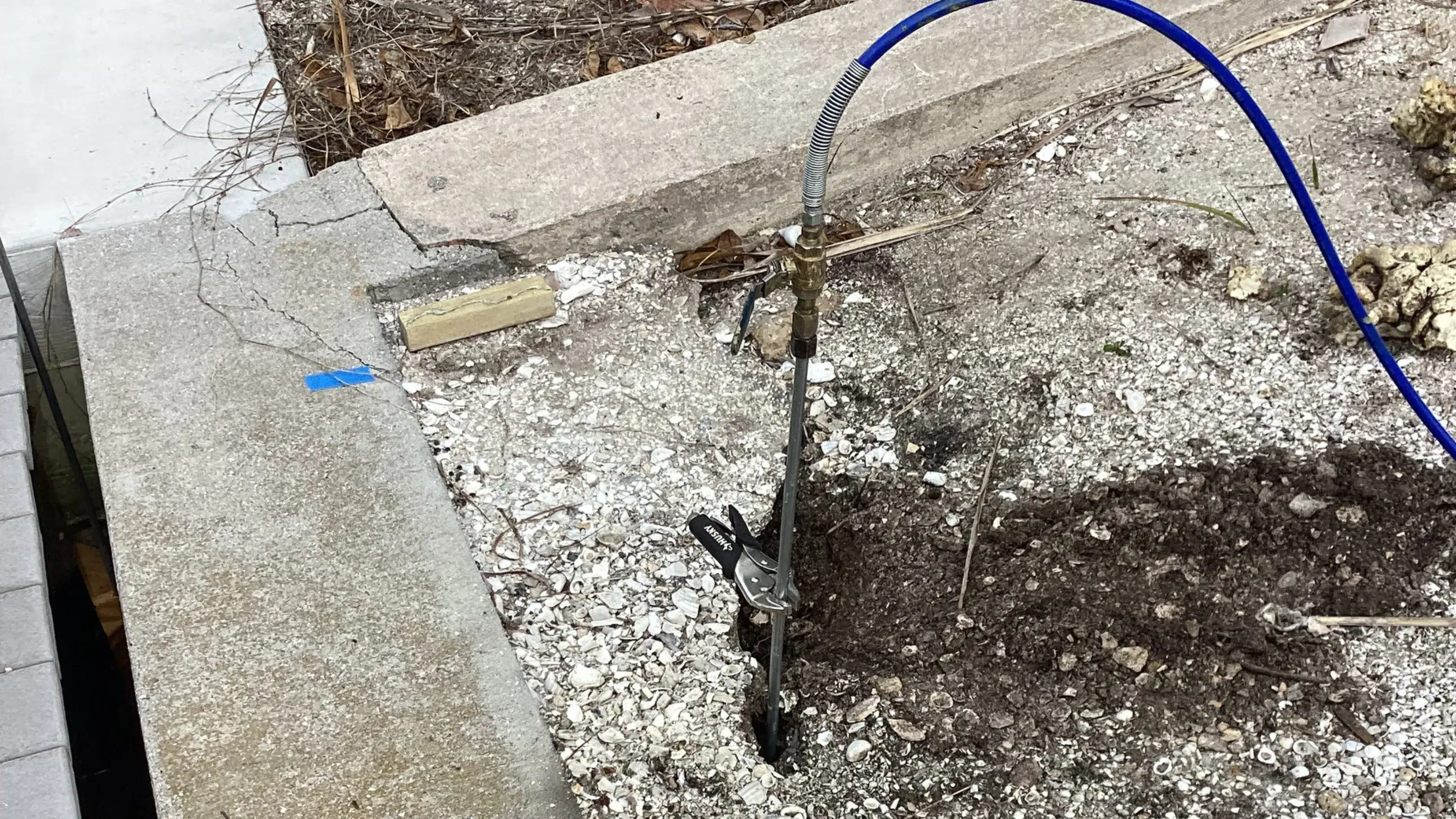
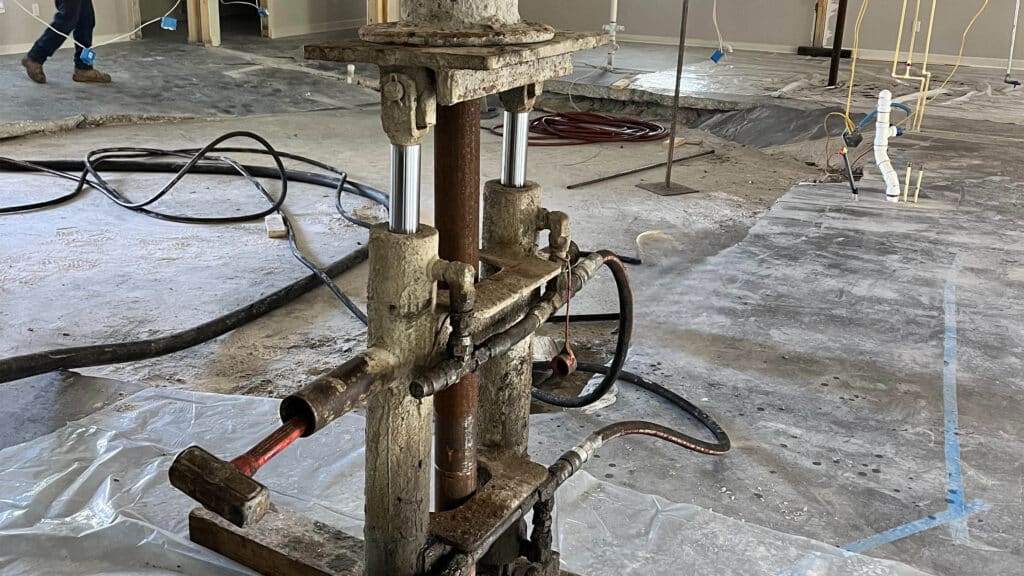
Helicon drilled 4,560 linear feet of casings in interior and exterior locations. These casings acted as delivery paths for deep compaction grout, targeting weak zones all the way down to bedrock.
This drilling phase matters because deep sinkhole repair is not a surface-only job. The repair has to reach the zones where support has been lost or where weak soils and voids are compromising the structure.
Step 2: Deep compaction grouting
Next, Helicon injected 700 cubic yards of high-strength compaction grout. This grout densified loose soils, displaced voids, and bonded directly to solid limestone bedrock to improve stability and load-bearing performance.
Compaction grouting is one of the most proven sinkhole repair methods in Florida because it does more than fill open space. It strengthens the surrounding soils and helps rebuild support in a controlled, engineered way. The process as a way to fill underground voids, stabilize weak soils, and create long-term ground stability in Florida’s difficult subsurface conditions.
Step 3: GPR verification
Helicon also used Ground Penetrating Radar to help map underground conditions, locate voids, and verify grout penetration so weak points would not be missed.
That level of verification matters for homeowners because it adds confidence to the scope. This is not guesswork. It is documented subsurface treatment supported by field data.
Step 4: Chemical grouting near the surface
After the deeper soils were stabilized, Helicon treated the near-surface soils and foundation support zones with 2,455 pounds of two-part structural polyurethane grout.
This upper-zone treatment is a key reason the overall repair is so effective. Deep compaction grout addresses the major weak zones below. Chemical grout addresses the shallower layers where loose soils and smaller voids can still affect performance near the structure.
Why a Multi-Phase Repair Is Often the Right Answer
One of the easiest mistakes in sinkhole conversations is oversimplifying the solution.
There is no single “magic fix” for every ground failure. A sinkhole can affect multiple depths, multiple soil conditions, and multiple parts of a structure at once. That is why Helicon’s repair approach in Palm Harbor is so instructive.
Instead of treating only the deepest failure zone or only the upper foundation area, the work created continuous treatment from bedrock to surface soils. That is exactly the kind of strategy that gives owners and insurers more confidence after a serious collapse event.
The table below shows why a layered repair plan is often more effective than relying on only one stabilization method.
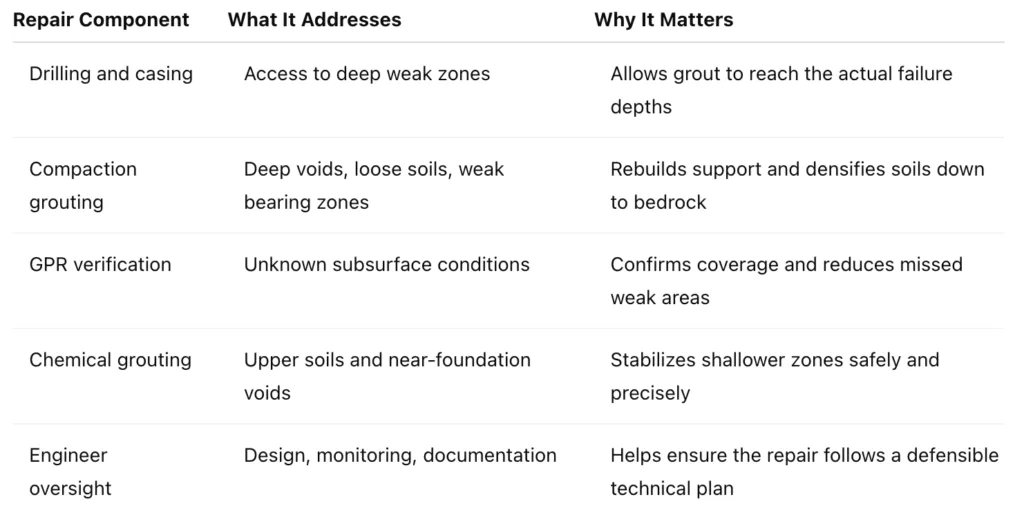
For homeowners, the bigger takeaway is that durable remediation is usually about coverage, sequencing, and engineering controls, not just material volume.
Why Palm Harbor, Clearwater, Pinellas County, and Tampa Bay Need Proactive Evaluation
Palm Harbor, Clearwater, and the surrounding region sit within Florida’s karst geology, where unstable soils and limestone conditions can contribute to sinkhole formation.
In practical terms, that means owners in Palm Harbor and greater Tampa Bay should not treat odd settlement signs casually.
Common contributing factors in Florida include limestone dissolution, groundwater movement, water table fluctuations, and underground void expansion. Those conditions do not affect every property the same way, but they do make early evaluation especially important in higher-risk regions.
For homeowners, the same mindset applies whether the property is in Palm Harbor, Clearwater, Dunedin, Tarpon Springs, Largo, St. Petersburg, or elsewhere in the Tampa Bay region. Early site review can help distinguish between ordinary settlement, local soil issues, and sinkhole-related risk before a problem becomes far more expensive.
What Homeowners Should Learn from This Case
The Palm Harbor project offers several important lessons for homeowners throughout Florida, especially in areas where sinkhole activity is a known concern.
1. Exterior appearance can be misleading
A structure may show limited outside distress while severe subsurface or interior conditions develop below.
2. Emergency stabilization is only the first step
Flowable fill and site safety measures may buy time, but permanent restoration requires a deeper engineered repair strategy.
3. Documentation matters
Engineer involvement, testing, monitoring, and verification make a major difference when the stakes include insurance, resale, safety, and peace of mind.
4. Layered treatment often performs better than one-dimensional treatment
Deep grout and shallow grout do different jobs. Using both can create a more complete stabilization result.
5. Property value can be restored when the repair is done correctly
By completion, the foundation had been stabilized from bedrock to surface level and the property’s safety and value were restored.
Warning Signs Nearby Homeowners Should Watch For
One of the more important parts of this Palm Harbor project was the concern it created for nearby homeowners. That response is understandable. When a serious sinkhole opens in one property, neighbors naturally start wondering whether they should be watching for signs on their own homes too.
That does not mean every nearby property has the same issue. But it does mean unusual changes should be taken seriously. Common signs that may justify a professional evaluation include:
- new cracks in walls, ceilings, tile, or exterior masonry
- doors or windows that suddenly stick or stop latching properly
- sloping or uneven floors
- depressions in the yard or landscape
- gaps forming around baseboards or cabinets
- cracks in driveways, pool decks, patios, or walkways
- unexplained settlement near the house foundation
- plumbing changes or odd sounds paired with floor movement
Not all of these signs mean there is a sinkhole. Some can be caused by ordinary settlement or other structural issues. But in Palm Harbor, Clearwater, Pinellas County, and the broader Tampa Bay area, they are worth checking if they appear suddenly, worsen quickly, or happen together.
Why This Repair Approach Builds Long-Term Confidence
For owners, the end goal of sinkhole repair is not only technical completion; it is peace of mind.
A successful project should leave the property safer, better documented, and far less vulnerable to repeat movement in the treated zones. Helicon’s sinkhole repair service emphasizes customized engineering, proven grouting techniques, and warranties designed to support long-term stability and market confidence after repair.
That is especially important for homeowners who want to feel safe in their home again and know the property is protected for the future.
A Few FAQ
Can a sinkhole-damaged home really be repaired?
Yes. Many sinkhole-damaged homes in Florida can be permanently stabilized when the repair is based on engineering, proper testing, and the right combination of deep and shallow ground improvement methods. The best repair plan depends on the site conditions, the depth of the problem, and how the soils below the home are behaving.
What are the most important sinkhole warning signs to watch for?
Some of the most common warning signs include new wall cracks, sloping floors, doors or windows that suddenly stick, depressions in the yard, gaps around baseboards, and settlement near the foundation. These signs do not always mean a sinkhole is present, but they should be evaluated if they appear suddenly or worsen quickly.
Will insurance cover sinkhole repair in Florida?
Coverage depends on the policy, the cause of the damage, and how the claim is defined by the insurer. Because coverage can vary, it is important for homeowners to document signs early, request a professional evaluation, and review their policy details carefully.
Final Takeaway
This Palm Harbor sinkhole project is a reminder that serious ground failure does not always look dramatic from the outside.
Sometimes the warning signs are minimal. Sometimes the real damage is hidden until conditions become unsafe. And when that happens, the right response is not a superficial patch. It is a full-scope stabilization strategy built around engineering, sequencing, verification, and treatment from the deepest weak zones up to the structure itself.
That is what made this Helicon repair so strong. The site was stabilized in phases. The deep soils were densified. The upper soils were reinforced. The repair was monitored and documented. And the property was restored with a path back to safe occupancy and long-term value.
For homeowners across Palm Harbor, Clearwater, Pinellas County, and the broader Tampa Bay region, that is the real lesson: when subsurface failure puts a home at risk, restoring the ground below is what protects everything above.
Call 844-Helicon today for a free inspection or fill out the form on our site.