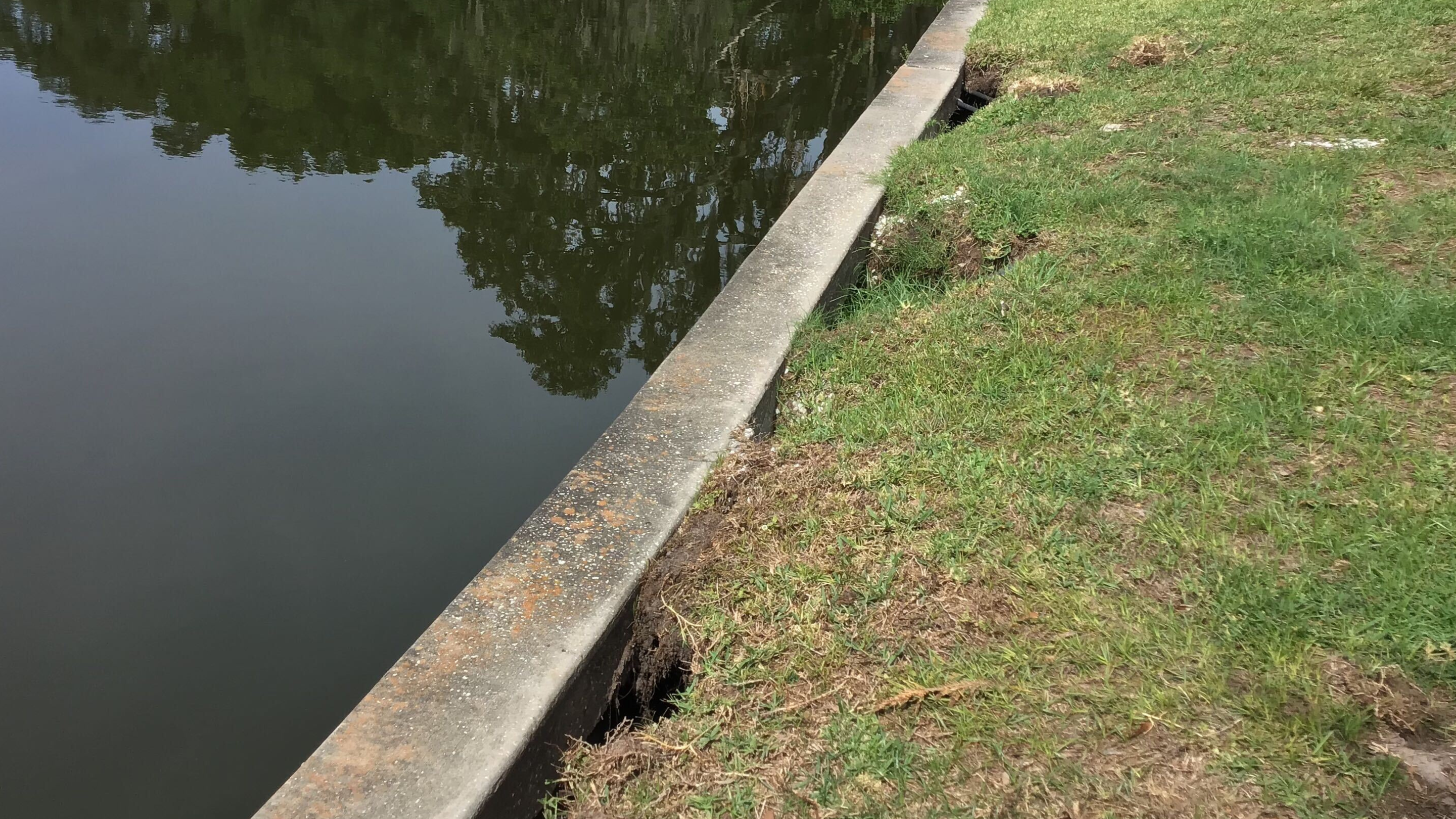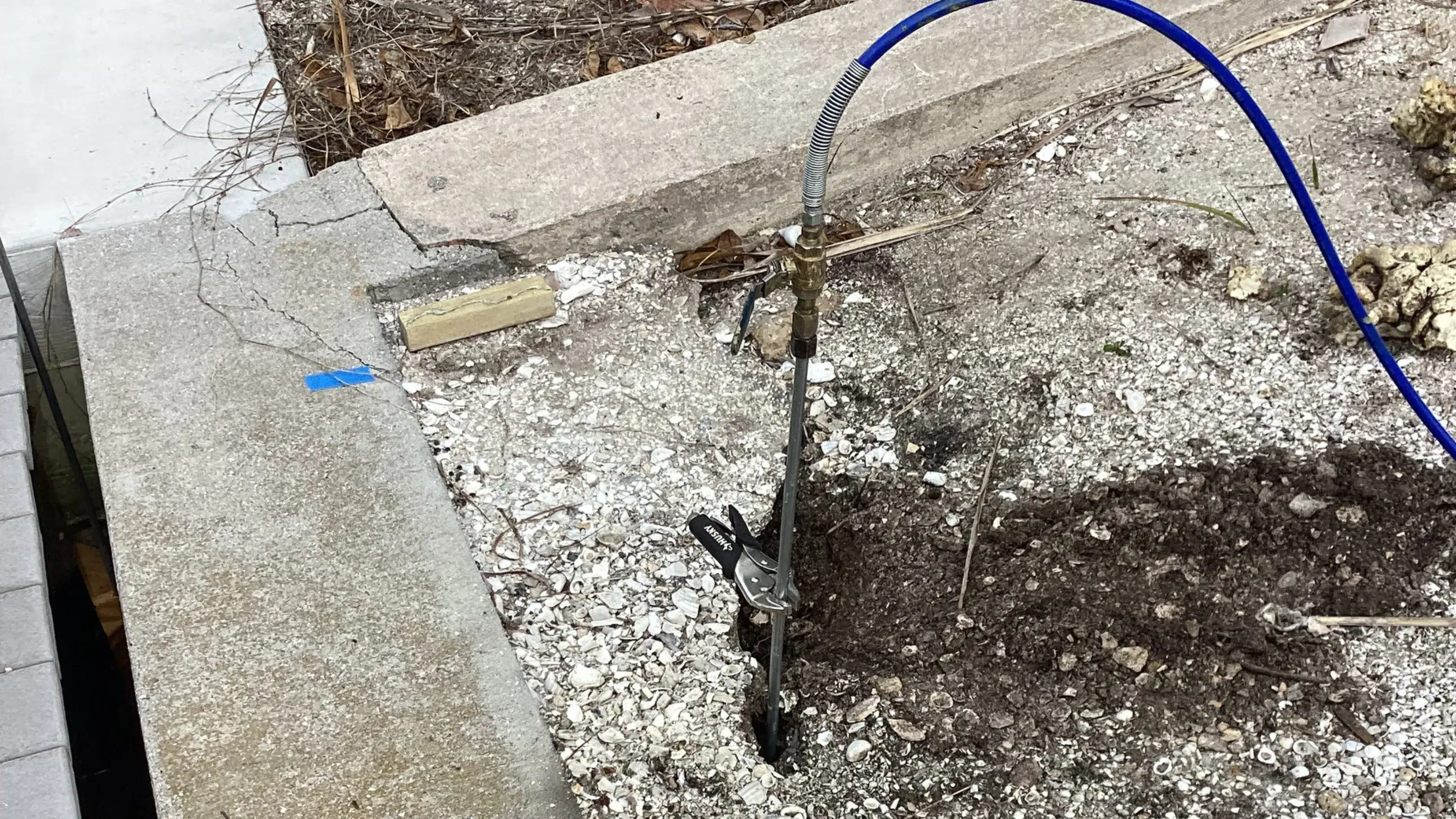
You may have noticed a low spot forming in your yard, a crack creeping across your driveway, or a contractor mentioning “voids” beneath your slab. These are the kinds of signs that lead Florida homeowners to ask about compaction grouting, soil stabilization Florida contractors use to fix ground that has lost its strength.
Sandy fill soils and limestone bedrock across Florida create weak spots that most homeowners never notice until damage shows up on the surface, whether that’s early-stage settlement or confirmed sinkhole activity. The explanations below reflect the engineering principles behind the technique, not a sales pitch for any single fix.
What Does Compaction Grouting Do Beneath a Florida Home?
Compaction grouting rebuilds strength in soil that has become loose, voided, or compressed by pushing a thick grout mixture into the ground until it displaces and compacts the surrounding material. The result is a denser, more supportive base beneath your foundation.
This method falls under the broader category of ground improvement, a set of techniques engineers use to correct soil that can no longer carry a structure’s weight. Unlike surface patches, compaction grouting works underground, targeting the exact zones where support has failed.
In Florida, this often means addressing damage tied to sinkhole activity, where limestone dissolves slowly underground and leaves cavities that soil eventually falls into. Once those voids are confirmed, compaction grouting can fill them while also strengthening nearby loosened soil.
Why Larger Voids and Lost Soil Density Matter
Not every soil problem needs this level of intervention. Compaction grouting is built for situations where soil has lost significant density, not for minor, uniform looseness that might respond to lighter treatment.
Large voids form for a few reasons in Florida:
- Limestone dissolution that creates underground cavities over years or decades
- Erosion from heavy rainfall washing sand and fine soil into cracks below the surface
- Poorly compacted fill soil left behind by older construction practices
- Water infiltration around foundations that gradually carries soil away
When these conditions combine, the ground beneath a home can settle unevenly, and cracks or dips on the surface are often the first visible clue.
How Ground Improvement Restores Foundation Support
Ground improvement techniques like compaction grouting rebuild the soil itself, rather than just supporting the structure on top of it. That distinction matters for long-term stability.
By restoring density to the soil column, compaction grouting spreads the building’s load more evenly and reduces the chance of continued settlement. This raises the next question: how does the grout behave once it enters the ground?
How Does Low-Mobility Grout Strengthen the Ground?
Low-mobility grout works because it stays put instead of spreading through the soil, which lets it push outward and compact everything around it. That behavior is what separates compaction grouting from other injection methods.
This stiff, low-slump mixture is sometimes called low-mobility grout precisely because it resists flowing. Engineers rely on that resistance to create controlled pressure at the injection point rather than letting the material wander through loose soil layers.
Why Stiff Grout Displaces Soil Instead of Permeating It
Thin grouts and chemical foams tend to seep between soil particles, filling small gaps without changing the soil’s overall density. Compaction grout behaves differently.
Because the mixture has a low slump, it forms a solid mass at the tip of the injection pipe rather than dispersing. That mass pushes soil outward and downward, compressing loose particles into a tighter, stronger arrangement. This is soil grouting in its most literal sense: the soil itself becomes denser, not just filled in around the edges.
How Grout Bulbs Form Compacted Columns
As more grout is injected, the pressure builds a bulb-shaped mass that grows in stages. Technicians control injection rates and monitor pressure closely so the bulb expands predictably rather than fracturing the surrounding soil.
Over multiple injection points, these bulbs form a series of grout columns beneath the structure. Each column acts as a dense support zone, and together they distribute the building’s weight across a much stronger foundation layer. Once the column pattern is complete, the next question is whether your site conditions match this approach.
What Site Conditions Favor Compaction Grouting?
Compaction grouting performs best where soil is loose enough to compact, and voids are large enough to justify the pressure and volume of grout required. It is not a one-size-fits-all fix for every soil problem.
Granular soils, like the sandy fill common across much of Florida, respond well to this method because individual particles rearrange easily under pressure. Clay-dominated soils behave differently, since their tightly packed, cohesive structure resists the same compaction force.
Large Voids and Loose, Densifiable Soils
Site conditions that typically call for compaction grouting include:
- Confirmed underground voids large enough to threaten foundation support
- Loose, granular soils with clear evidence of settlement or erosion
- Sinkhole activity that has already caused visible surface depressions
- Sites where excavation would be disruptive or impractical
Sandy soils near the surface, common throughout Central and West Florida, are especially prone to this kind of density loss after heavy rain events or long-term drainage problems.
Sinkhole Activity and Voids in Florida Limestone
Florida sits on a foundation of karst limestone, a rock type that slowly dissolves as slightly acidic groundwater moves through it over many years, as explained in the Florida Department of Environmental Protection’s sinkhole FAQ. That dissolution creates the underground cavities responsible for many of the state’s sinkholes.
When soil above these cavities settles or collapses, compaction grouting can seal the void and cap the limestone surface, reducing the chance that water will continue to erode the area below. This makes the technique especially relevant in counties where karst geology is common.
Treatment Beneath Existing Structures
One advantage of compaction grouting is that it works without major excavation, which matters for occupied homes and commercial buildings. Small drill access points allow technicians to treat soil directly beneath a slab or foundation without removing it.
This makes the method suitable for foundation stabilization on existing homes and commercial soil stabilization projects where downtime and disruption must stay limited. Knowing your site qualifies is only half the picture. The next step is understanding what actually happens once a crew begins the work.
What Happens During an Engineered Grouting Job?
An engineered grouting job starts with testing, moves through carefully controlled injection, and ends with verification that the soil has actually improved. Each stage depends on data, not guesswork.
These projects are planned around real subsurface information, not assumptions about what lies beneath the surface. That planning phase determines how successful the rest of the project will be.
Site Testing and Injection-Point Design
Before any grout goes into the ground, engineers evaluate soil conditions using borings and other subsurface testing methods. This data reveals soil density, void depth, and groundwater conditions that shape the injection plan.
Based on those findings, technicians map out injection points at specific depths and spacing. This stage customizes the plan to your property’s actual conditions rather than a generic template.
Controlled Injection and Movement Monitoring
During injection, crews pump grout in stages while closely monitoring pressure readings and any surface movement. This step-by-step control prevents overloading soil that could fracture instead of compacting under too much pressure.
Structural monitoring continues throughout the process, especially when work happens beneath an occupied structure. Engineers make real-time adjustments if pressure behaves unexpectedly.
How Engineers Check the Results
Once injections are complete, engineers verify that soil density and foundation support have actually improved. This can include reviewing pressure logs, checking for any structural movement, and confirming the grout has filled the intended zones.
This verification step is what separates engineered foundation repair from a rushed patch job. It also raises an important question: what happens when compaction grouting alone cannot fully solve the problem?
When Is Compaction Grouting Not Enough?
Compaction grouting has real limits, and certain soil and structural conditions call for additional repair methods. Recognizing these limits early prevents wasted time and cost.
Groundwater is one of the most common complicating factors in Florida. High water tables can dilute grout mixtures and make the compaction process less predictable, sometimes requiring extra site preparation before injection can begin.
Soil and Water Conditions That Can Limit Results
A few conditions can reduce how effective compaction grouting will be:
- Clay-heavy soils that resist compaction because of their dense, cohesive structure
- High groundwater levels that interfere with grout consistency
- Very deep voids, generally beyond 15 feet, that require specialized grout mixes and pressures
- Soil layers with unpredictable behavior under injection pressure
Tidal fluctuation near coastal properties can also affect groundwater levels close to the surface, adding another variable engineers factor into the design of a grouting plan.
When a Foundation Also Needs Underpinning
In some cases, soil improvement alone will not resolve existing foundation problems. If a structure has already settled unevenly or lost significant support, underpinning, which adds structural elements beneath the foundation itself, may be needed alongside or instead of grouting.
This combination approach preserves the structure’s integrity while addressing both the soil and the foundation directly. Understanding these limits helps set realistic expectations before choosing a repair path for your specific property.
Choosing a Site-Specific Path to Stable Ground
The right stabilization plan always starts with what your soil and structure actually need, not a single default method. Compaction grouting is one of several ground improvement tools, and its value depends entirely on site conditions.
Florida properties vary widely, from sandy coastal fill to deeper karst limestone zones further inland. A method that works well for one home’s soil profile might not suit another, even a few miles away.
Because compaction grouting restores foundation support without major excavation, it remains one of the more practical options for occupied homes and active commercial sites. Still, an accurate diagnosis matters more than the method itself. A property assessment that identifies soil type, void size, and groundwater conditions is what determines whether this approach, another grouting method, or a combined repair plan makes sense.
Frequently Asked Questions
How Much Does Compaction Grouting Cost in Florida?
Costs vary based on void size, depth, soil type, and the number of injection points a project requires. Pricing is site-specific, so an accurate number depends on a professional evaluation of your property, not a general estimate.
Can Compaction Grouting Lift a Settled Foundation?
Compaction grouting can help re-level some settled structures through a controlled process sometimes called grout jacking, where injected grout gradually raises the foundation. Whether lifting is possible depends on how much settlement has occurred and the condition of the structure itself.
How Long Does a Compaction Grouting Project Take?
Many residential compaction grouting projects finish within one to two days, though larger or more complex sites can take longer. Timing depends on the number of injection points, treatment depth, and soil conditions discovered during the work.
Will Compaction Grouting Prevent Another Sinkhole?
Compaction grouting fills existing voids and compacts loose soil, reducing the conditions that can lead to future collapse in the treated area. It cannot change the underlying limestone geology, so ongoing risk in karst-heavy regions depends on ongoing site conditions and monitoring.
How Do I Find Out Whether Compaction Grouting Is Right for My Property?
The only reliable way to know is a site-specific inspection that reviews your soil type, void size, and structural condition.
If your concrete is sinking or cracked, a free Helicon inspection will tell you what is happening beneath the surface and what it takes to fix it permanently.